
Theater
Behind the ‘Curtain’
Gay-themed Signature production explores 19th century musical creation

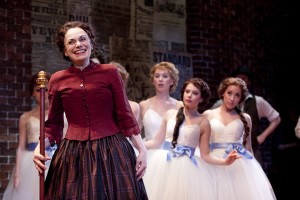
Alma Cuervo as Mme. Gimaud speaks on behalf of her French ballet troupe in 'And the Curtain Rises,' the current production at Signature Theatre in Arlington. It runs through April 10. (Photo by Scott Suchman; courtesy of Signature)
Signature Theatre’s “And the Curtain Rises” is definitely a backstage story — and nothing reinforces this more than set designer Beowulf Boritt’s clever rendition of a 19th century Manhattan theater.
For much of the new musical comedy, we observe the action from a traditional perspective; but at other times, when the set’s back wall opens to reveal a sea of red plush seating and the actors look upstage toward an imagined audience, suddenly we’re sharing their point of view. It’s a marvelous bit of stage magic that ups the immediacy of the experience.
A tribute to the American musical, “Curtain” revisits one of the first times music, words and dance came together on a New York City stage — the making of “The Black Crook,” an actual 1866 extravaganza that enjoyed a long run at Niblo’s Garden Theatre and toured the country for decades afterward. This groundbreaking musical prototype resulted after a French ballet troupe (stranded after the theater where they were booked burnt to the ground) joined forces with a cast of dramatic American actors and came up with something entirely new.
But as “Curtain’s” creators — composer Joseph Thalken, librettist Michael Slade and lyricist Mark Campbell (all of whom are gay, by the way) — relay in the program notes, while the trio has researched this post Civil War theater moment, they have totally re-imagined it in their own way, allowing them not only to focus on collaboration and community, but also to contrive a backstage tale riddled with duplicity, sex, love and rivalry.
Staged by New York-based director Kristen Hangii, the action kicks off auspiciously with Niblo’s cigar-chomping stage manager Timoney (William Diggle) casually lighting the stage’s gas footlights as he takes us back to a time before “wristwatches and electric lights” when today’s idea of a musical didn’t exist. Soon after however, things devolve, at least temporarily. The first act with its plodding storyline — novice director/producer William Wheatley (Nick Dalton) struggles to please both a disdainful playwright Charles Barras (Sean Thompson) and some unhappy actors while trying to turn a bad melodrama into a certain hit — is essentially a drawn-out set up for the musical innovation that takes place later in the show. It can be tiresome.
After intermission, things improve significantly: There’s a rousing can-can number (quite the scandal in the 1860s) and a budding same-sex romance between the company’s veteran actor played by the excellent Erick Devine, who is gay, and the ballet troupe’s talented Hungarian accompanist (Brian Sutherland); as well as memorable music including “Stay,” William’s balladic plea to his production’s leading lady, Millicent Cavendish (Rebecca Watson), an aging ingénue with whom he’s falling in love. Overall, the pacing quickens considerably and the jokes are less stale.
“Curtain” was especially commissioned by Signature as part of its American Musical Voices Project. As such the work benefits from the Tony Award-winning company’s full treatment: Boritt’s clever set is beautifully lit by Colin Bills. Kathleen Geldard’s post- Civil War period costumes are impeccable — from the men’s fine jackets and ladies’ hoop skirt dresses to the ballerinas’ pretty, Degas-inspired dance gear.
Mostly young but peppered with a few more seasoned performers (like the excellent Alma Cuervo as a resourceful ballet mistress), the energetic ensemble cast is terrific and in very good voice, particularly Dalton and Watson as William and Millicent. Thalken’s melodic score (superbly executed by a small orchestra conducted by Boko Suzuki) is contemporary for sure, but makes wonderful, sporadic reference to the waltz and the lively march, popular musical forms of the era.
Uneven but fun and well-produced, “Curtain” offers glimpses into the first days of American musical theater, onstage and off.





Theater
‘Andy Warhol in Iran’ a charming look at intersection of art, politics
Mosaic production plumbs kidnapping plot of iconic artist for humor
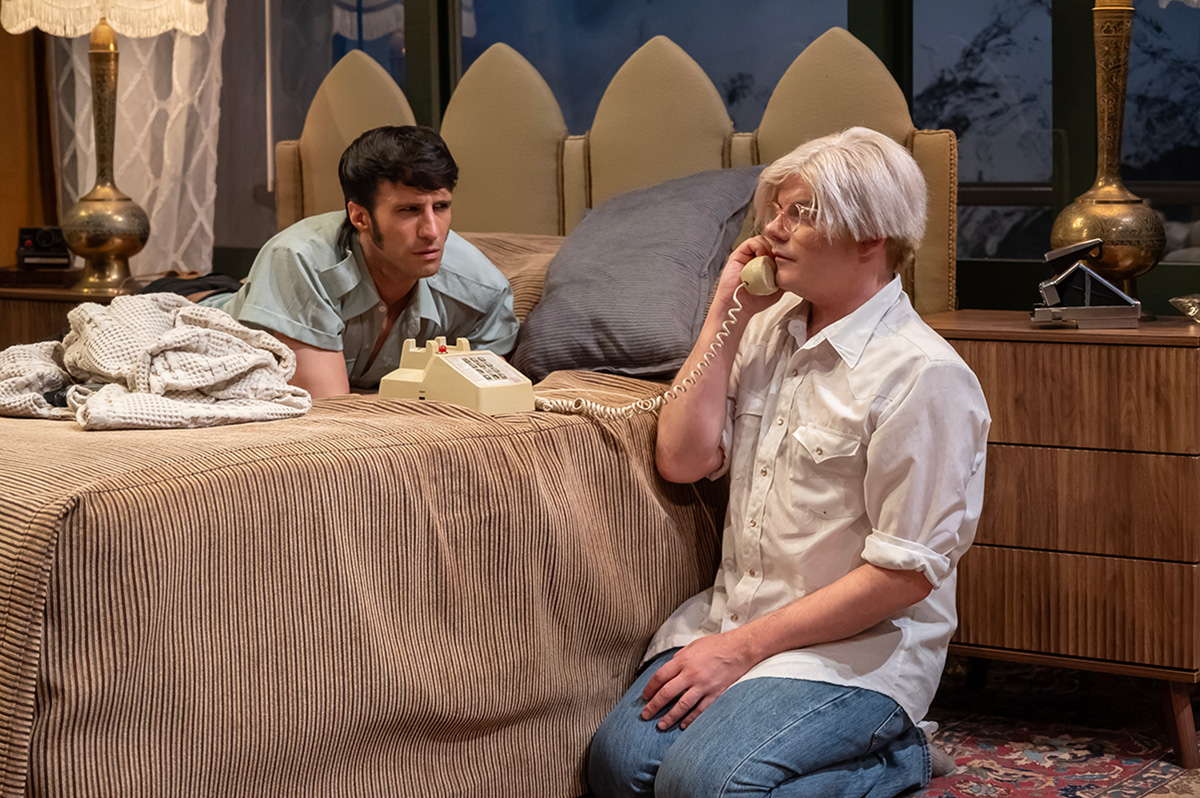
‘Andy Warhol in Iran’
Through July 6
Mosaic Theater Company at Atlas Performing Arts Center
1333 H St., N.E., WDC
$70
Mosaictheater.org
Behind the blasé veneer, Andy Warhol was more curious than people knew. Particularly when it came to money. He kept a close eye on how the ultra-rich lived, what fellow artists were being paid and who was paying them, and, of course, all the new and more saleable ways of making and selling art.
In playwright Brent Askari’s “Andy Warhol in Iran,” now playing at Mosaic Theater Company, Warhol (Alex Mills) is brought outside of his usual area of interest when he lands face to face with a young revolutionary. While Warhol could be artistically revolutionary, he didn’t connect with the idea of forgoing the pursuit of money and fame for the infinitely more difficult task of achieving social justice.
The 90-minute play is not fully factual, but rather inspired by Warhol’s real life 1976 trip to Tehran to make portraits of the royal Pahlavi family in the waning days of their reign, with a focus on Farah Diba, the Shah’s elegant wife and Iran’s last empress.
The action unfolds in a Tehran hotel suite boasting a glorious view of the snowcapped Alborz Mountains not far from Iran’s vibrant and bustling capital. It’s here, disguised as room service, that Farhad (played by Nathan Mohebbi) gains entrance to Warhol’s rooms, seeking to kidnap the pop art star to garner attention for the university students’ movement.
Warhol meets the armed intruder with a sort of wide-eyed wonderment, flummoxed why he has been selected for abduction. Warhol can’t understand why a young man like Farhad wouldn’t prefer to be paid a big ransom on the spot, or be cast as a star in one of the Warhol Factory flicks.
When Farhad replies it’s because Warhol is the most decadent artist in the world, Warhol mistakenly takes it for the ultimate compliment. After all, his biggest successes had been connected to celebrity and consumerism (think Campbell’s Soup Cans. 1962).
For Warhol, decadence is aspirational. He made portraits of financiers, movie stars, and jet setters. In fact, he’d been obsessed with the lives of the rich and famous since he was a small kid in Pittsburgh thumbing through Photoplay Magazine while bed bound with Saint Vitus Dance.
Accompanying Warhol to Tehran (unseen) are his business manager Fred Hughes, and Bob Colacello, editor of Interview magazine. Together, they make a merry trio of gay social climbers. These kinds of trips were a boon to the artist. Not only did they solidify a new strata of high society contacts, but were also superbly lucrative, thickly padding the painter’s pockets.
While in Iran, Warhol wanted only to view Farah’s vast world-class collection of jewels, sample the caviar on tap, and get his Polaroids. Then he’d fly first class back to New York and transfer the images to silk screen and sell the portraits to the Persian royals at a hefty price. He didn’t foresee any obstacles along the way.
Serge Seiden’s direction is spot on. He’s rendered a wonderfully even two-hander with a pair of terrifically cast actors. And Seiden plumbs the piece for humor mostly drawn from the absurdity of the situation without missing any of the serious bits.
As Warhol, out actor Mills is instantly recognizable as the eccentric artist. He’s wearing the button-down shirt, jeans, blazer, glasses, and, of course the famed shock of white hair wig (here a little more Karen than Andy). His portrayal is better than an imitation. He gives a bit of the fey and confused, but has also infuses him with a certain dynamism.
The energy works well with the intensity of Mohebbi’s would-be kidnapper Farhad. And while it isn’t a romance, it’s not impossible to think that Warhol might fall for a handsome male captor.
The connection between art and politics is almost always interesting; and though not a super deep dive into the era or the life of an artist, “Andy Warhol in Iran” is a compelling, charming, and sometimes funny glimpse into that intersection.
Theater
‘Hunter S. Thompson’ an unlikely but rewarding choice for musical theater
‘Speaks volumes about how sad things land on our country’

‘The Untitled Unauthorized Hunter S. Thompson Musical’
Through July 13
Signature Theatre
4200 Campbell Ave., Arlington, Va.
$47 to $98
Sigtheatre.org
The raucous world of the counterculture journalist may not seem the obvious choice for musical theater, but the positive buzz surrounding Signature Theatre’s production of Joe Iconis’s “The Untitled Unauthorized Hunter S. Thompson Musical” suggests otherwise.
As the titular, drug addled and gun-toting writer, Eric William Morris memorably moves toward his character’s suicide in 2005 at 67. He’s accompanied by an ensemble cast playing multiple roles including out actor George Salazar as Thompson’s sidekick Oscar “Zeta” Acosta, a bigger than life Mexican American attorney, author, and activist in the Chicano Movement who follows closely behind.
Salazar performs a show-stopping number — “The Song of the Brown Buffalo,” a rowdy and unforgettable musical dive into a man’s psyche.
“Playing the part of Oscar, I’m living my Dom daddy activist dreams. For years, I was cast as the best friend with a heart of gold. Quite differently, here, I’m tasked with embodying all the toxic masculinity of the late ‘60s, and a rampant homophobia, almost folded into the culture.”
He continues, “My sexuality aside, I like to think that Oscar would be thrilled by my interpretation of him in that song.
“Our upbringings are similar. I’m mixed race – Filipino and Ecuadorian and we grew up similarly,” says Salazar, 39. “He didn’t fit in as white or Mexican American, and fell somewhere in the middle. Playing Oscar [who also at 39 in 1974 forever disappeared in Mexico], I pulled out a lot of experience about having to code switch before finally finding myself and being confident just doing my own thing.
“As we meet Oscar in the show we find exactly where’s he’s at. Take me or leave me, I couldn’t care less.”
In 2011, just three years after earning his BFA in musical theater from the University of Florida in Gainesville, Salazar fortuitously met Iconis at a bar in New York. The pair became fast friends and collaborators: “This is our third production,” says George. “So, when Joe comes to me with an idea, there hasn’t been a moment that I don’t trust him.”
In “Be More Chill,” one of Iconis’s earlier works, Salazar originated the role of Michael Mell, a part that he counts as one of the greatest joys of artistic life.
With the character, a loyal and caring friend who isn’t explicitly queer but appeals to queer audiences, Salazar developed a fervent following. And for an actor who didn’t come out to his father until he was 30, being in a place to support the community, especially younger queer people, has proved incredibly special.
“When you hear Hunter and Oscar, you might think ‘dude musical,’ but I encourage all people to come see it.” Salazar continues, “Queer audiences should give the show a shot. As a musical, it’s entertaining, funny, serious, affecting, and beautiful. As a gay man stepping into this show, it’s so hetero and I wasn’t sure what to do. So, I took it upon myself that any of the multiple characters I play outside of Oscar, were going to be queer.
Queer friends have seen it and love it, says Salazar. His friend, Tony Award-winning director Sam Pinkleton (“Oh, Mary!”) saw Hunter S. Thompson at the La Jolla Playhouse during its run in California, and said it was the best musical he’d seen in a very long time.
“Since the work’s inception almost 10 years ago, I was the first Oscar to read the script. In the interim, the characters’ relationships have grown but otherwise there have been no major changes. Still, it feels more impactful in different ways: It’s exciting to come here to do the show especially since Hunter S. Thompson was very political.”
Salazar, who lives in Los Angeles with his partner, a criminal justice reporter for The Guardian, is enjoying his time here in D.C. “In a time when there are so many bans – books, drag queens, and travel — all I see is division. This is an escape from that.”
He describes the Hunter Thompson musical as Iconis’s masterpiece, adding that it’s the performance that he’s most proud of to date and that feels there a lot of maturity in the work.
“In the play, Thompson talks to Nixon about being a crook and a liar,” says Salazar. “The work speaks volumes about how sad things land on our country: We seem to take them one step forward and two steps back; the performance is almost art as protest.”
Theater
A hilarious ‘Twelfth Night’ at Folger full of ‘elegant kink’
Nonbinary actor Alyssa Keegan stars as Duke Orsino
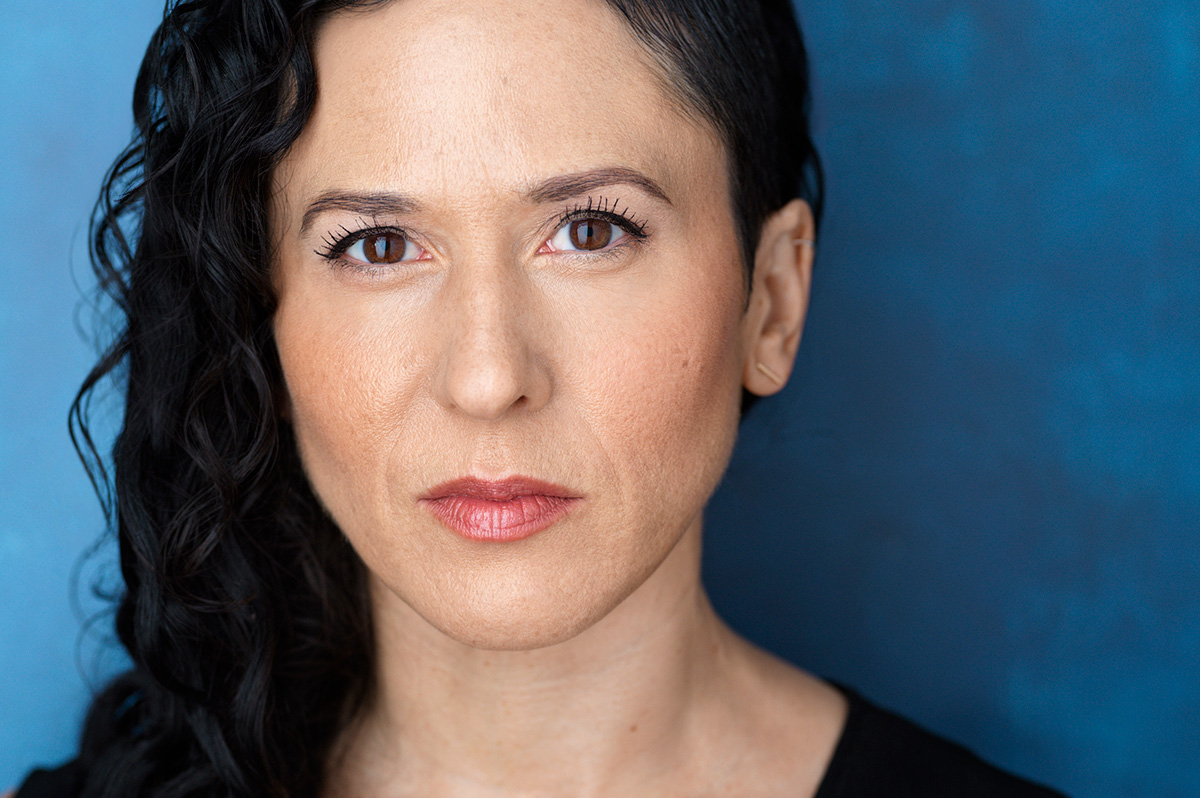
‘Twelfth Night’
Through June 22
Folger Theatre
201 East Capitol St., S.E.
$20-$84
Folger.edu
Nonbinary actor Alyssa Keegan (they/them)loves tapping into the multitudes within.
Currently Keegan plays the melancholic Duke Orsino in Folger Theatre’s production of Shakespeare’s romantic comedy “Twelfth Night.” Director Mei Ann Teo describes the production as “sexy, hilarious, and devastating” and full of “elegant kink.”
Washington-based, Keegan enjoys a busy and celebrated career. Her vast biography includes Come From Away at Ford’s Theatre; Cat on a Hot Tin Roof (Helen Hayes Award, Best Actress) and Paula Vogel’s How I Learned to Drive, both at Round House Theatre; Diana Son’s Stop Kiss directedby Holly Twyford for No Rules Theatre Company; and Contractions at Studio Theatre, to name just a few.
In addition to acting, Keegan works as a polyamory and ethical non-monogamy life and relationship coach, an area of interest that grew out of personal exploration. For them, coaching seems to work hand in hand with acting.
WASHINGTON BLADE: You’re playing the lovesick Orsino in Twelfth Night. How did that come about?
ALYSSA KEEGAN: The director was looking to cast a group of actors with diverse identities; throughout auditions, there were no constraints regarding anyone’s assigned sex at birth. It was really a free for all.
BLADE: What’s your approach to the fetching, cod-piece clad nobleman?
KEEGAN: Offstage I identify as completely nonbinary; I love riding in this neutral middle space. But I also love cosplay. The ability to do that in the play gives me permission to dive completely into maleness.
So, when I made that decision to play Orsino as a bio male, suddenly the part really cracked open for me. I began looking for clues about his thoughts and opinions about things like his past relationships and his decision not to date older women.
Underneath his mask of bravura and sexuality, and his firmness of feelings, he’s quite lonely and has never really felt loved. It makes sense to me why his love for Olivia is so misguided and why he might fall in love with the Cesario/Viola character.
BLADE: As an actor, do you ever risk taking on the feelings of your characters?
KEEGAN: Prior to my mental health education, yes, and that could be toxic for me. I’ve since learned that the nervous system can’t tell the difference between real emotional distress and a that of a fully embodied character.
So, I created and share the Empowered Performer Project. [a holistic approach to performance that emphasizes the mental and emotional well-being of performing artists]. It utilizes somatic tools that help enormously when stepping into a character.
BLADE: Has changing the way you work affected your performances?
KEEGAN: I think I’m much better now. I used to have nearly debilitating stage fright. I’d spend all day dreading going onstage. I thought that was just part of the job. Now, I’ve learned to talk to my body. Prior to a performance, I can now spend my offstage time calmly gardening, working with my mental health clients, or playing with my kid. I’m just present in my life in a different way.
BLADE: Is Orsino your first time playing a male role?
KEEGAN: No. In fact, the very first time I played a male role was at the American Shakespeare Center in Staunton, Va. I played Hipolito in Thomas Middleton’s The Revenger’s Tragedy.
As Hipolito, I felt utterly male in the moment, so much so that I had audience members see me later after the show and they were surprised that I was female. They thought I was a young guy in the role. There’s something very powerful in that.
BLADE: Do you have a favorite part? Male or female?
KEEGAN: That’s tough but I think it’s Maggie the Cat. I played the hyper-female Maggie in Tennessee Williams’ Cat on a Hot Tin Roof at Round House. In the first act she didn’t stop talking for 51 minutes opposite Gregory Wooddell as Brick who barely had to speak. That lift was probably the heaviest I’ve ever been asked to do in acting.
BLADE: What about Folger’s Twelfth Night might be especially appealing to queer audiences?
KEEGAN: First and foremost is presentation. 99% of the cast identify as queer in some way.
The approach to Shakespeare’s text is one of the most bold and playful that I have ever seen. It’s unabashedly queer. The actors are here to celebrate and be loud and colorful and to advocate. It’s a powerful production, especially to do so close to the Capitol building, and that’s not lost on any of us.

PHOTOS: Fredericksburg Pride

Two teens shot steps from Stonewall Inn after NYC Pride parade

Anaya Bangar challenges ban on trans women in female cricket teams

Zohran Mamdani participates in NYC Pride parade

La marcha LGBTQ desafía el silencio en El Salvador

Supreme Court upholds ACA rule that makes PrEP, other preventative care free

Supreme Court rules parents must have option to opt children out of LGBTQ-specific lessons

Indian court rules a transgender woman is a woman

Evan Wolfson on the 10-year legacy of marriage equality

Senate parliamentarian orders removal of gender-affirming care ban from GOP reconciliation bill
-
 U.S. Supreme Court3 days ago
Supreme Court upholds ACA rule that makes PrEP, other preventative care free
-
 U.S. Supreme Court3 days ago
Supreme Court rules parents must have option to opt children out of LGBTQ-specific lessons
-
 India5 days ago
Indian court rules a transgender woman is a woman
-
 National4 days ago
Evan Wolfson on the 10-year legacy of marriage equality