
Living
Spring planning brings summer reward
With a little care, hydrangeas can bring a nice pop of color to lawns and gardens
Environmental Enhancements, Inc. is a customer-focused full-service Landscape Design/Build firm that is passionate about building a personal relationship with you.
We deliver custom landscape solutions by listening to you and utilizing our creativity so that you can be truly confident that your vision will become a reality. We all know Washington is known for its spring blooming trees and shrubs. As the spring blooms fade, now is the time to consider what will be blooming in your summer landscape.
Everyone loves hydrangeas, and I believe there is a reason. Whether they are reminiscent of your grandmother’s garden or you enjoy their midsummer bold punch of color after your spring display has faded. Hydrangeas are a very popular landscape plant and are prized for their abundant blooms and easy care. But often the question is “When do I prune my hydrangea?” How you care for and prune the hydrangeas will depend on what type you have.
There are four categories of common hydrangeas. These are Hydrangea macrophylla, commonly called Big Leaf, Mophead or Lacecap hydrangeas; Hydrangea arborescence, which includes “Annabelle” and its relatives, also known as Smooth hydrangeas; Hydrangea quercifolia, also known as Oakleaf hydrangeas; and finally, Hydrangea paniculata, which are commonly called PeeGee hydrangeas.
Big Leaf hydrangeas are some of the most popular hydrangeas in landscapes. Most of these bloom in July to August in either blue or pink, although a few varieties are white. Except for the white varieties, any of these can be grown as either blue or pink, depending on the acidity of the soil they’re grown in.
If your Big Leaf hydrangea needs to be pruned, this should be done in early summer, before the flower buds are formed for the next season. These hydrangeas bloom on old wood, which is wood that was formed during the previous growing season. The flower buds are formed in August through October, so do any necessary pruning in the summer, prior to August. Prune out any dead wood each year, and after the plant has reached five years old about a third of the stems can be pruned back to the ground each summer to help revitalize the plant.
Annabelle hydrangeas are a popular landscape shrub because it will bloom reliably even after heavy pruning or a severe winter. In some harsh winters, the plant will die back to the ground, send up new growth in the spring and still bloom profusely. The blooms tend to be quite heavy, sometimes bending the stems to the ground. The stems may be staked to prevent this, or pruned to about 24 inches to help the stems become stronger and better able to support the heavy blooms. Annabelle hydrangeas bloom on new wood, and should not be pruned in the spring while they are preparing to bloom. They can be pruned any other time of year, but it isn’t necessary to prune Annabelle each year except for removing dead wood or branches that don’t contribute to a nicely shaped plant.
Oak leaf hydrangeas are native to the U.S., and as their name suggests, they have large, deeply lobed leaves. The white blooms of oak leaf hydrangeas are beautiful in early to mid summer, tending to turn pink as they age. Oak leaf hydrangeas also add beautiful color to the landscape in the fall as the large leaves turn brilliant red, burgundy, orange or yellow, especially if they receive some sun. These hydrangeas are more tolerant of sun and dry conditions than other types, but they will not tolerate wet feet. Oak leaf hydrangeas should be pruned at the same time and in the same manner as the Big Leaf hydrangeas.
Like the oak leaf hydrangeas, PeeGee’s white blooms tend to turn pink as they age. PeeGees often grow very large, up to 8-10 feet tall and just as wide, and should be planted where they’ll have ample room. They do like some shade in hotter climates, and are tolerant of sun if they receive enough moisture. PeeGee may be pruned at any time except in midsummer when they are preparing to bloom, and they can also be pruned to a tree shape.
Hydrangeas don’t require much special care after planting. You may want to give them a balanced, slow-release fertilizer once a year in late spring to keep them happy. Spread the fertilizer under the plant, but not right next to the trunk, and remember that not enough fertilizer is always better than too much.
The list of various Hydrangea cultivars continues to grow and is becoming more interesting each season. At Environmental Enhancements, Inc. we have found ourselves using Hydrangeas in designs whenever the conditions call. The showy flowers in mid-summer, when most other shrubs have finished their blooming have earned their right to becoming a staple in the Mid-Atlantic landscape. If you are interested in a multi-seasonal garden that is well designed and custom tailored to your lifestyle, we look forward to hearing from you.

Did you melt like the Wicked Witch of the West this week?
As summer temperatures rise, keeping your home or apartment cool during a heat wave can become both a comfort issue and a financial challenge. One of the most effective ways to keep a home cool is to prevent heat from entering in the first place. Sunlight streaming through windows can significantly raise indoor temperatures. Consider the following solutions:
• Close blinds or curtains during the hottest parts of the day. Blackout curtains or thermal drapes can reduce heat gain by up to 30%.
• Install reflective window films to block UV rays and reduce solar heat without sacrificing natural light.
• Use outdoor shading solutions such as awnings (yes, the ones you removed because they were “dated”) and shutters to limit direct sunlight.
Fans are a cost-effective way to circulate air and create a wind-chill effect that makes rooms feel cooler.
• Ceiling fans should rotate counterclockwise in the summer to push cool air down.
• Box fans or oscillating fans can be placed near windows to pull in cooler evening air or push hot air out.
• Create a cross-breeze by opening windows on opposite sides of your home and positioning fans to direct airflow through the space.
• For an extra cooling effect, place a bowl of ice or a frozen water bottle in front of a fan to circulate chilled air.
To optimize natural ventilation, open windows early in the morning or late in the evening when outdoor temperatures drop. This allows cooler air to flow in and helps ventilate heat that built up during the day.
Appliances and electronics generate a surprising amount of heat. To reduce indoor temperatures:
• Avoid using the oven or stove during the day; opt for no-cook meals, microwave cooking, or grilling outside.
• Run heat-producing appliances like dishwashers and clothes dryers in the early morning or late evening.
• Unplug electronics when not in use, as even standby power can add heat to your space.
• Switching to energy-efficient LED lightbulbs can also reduce ambient heat compared to incandescent lighting.
If you do use an air conditioner, maximize its effectiveness by:
• Setting it to a reasonable temperature—around 76–78°F when you’re home and higher when you’re away.
• Cleaning or replacing filters regularly to maintain airflow and efficiency.
• Sealing gaps around doors and windows to prevent cool air from escaping. (Didn’t we all have a parent who said, “Close the door. You’re letting all the cool out?”)
• Using a programmable thermostat to optimize cooling schedules and reduce energy use.
If it is not cost-prohibitive, adding insulation in attics and walls can greatly reduce heat transfer. Solar panels that reflect heat can also help, as well as offset the cost of their installation. Adding weatherstripping around doors and windows, sealing cracks, and using door sweeps can make a significant difference in keeping heat out and cool air in.
Natural and eco-conscious methods can also help cool your home.
• Snake plants, ferns, or rubber trees can improve air quality and slightly cool the air through transpiration.
• White or reflective roof paint can reduce roof temperatures significantly.
• Cooling mats or bedding can make sleeping more comfortable without cranking up the A/C.
For renters or those who can’t make permanent modifications, there are still plenty of ways to keep cool.
• Use portable fans and A/C units instead of built-in systems, making sure they are the correct size for your space.
• Removable window film or static cling tinting can reflect heat without violating your lease.
• Install tension rod curtains or temporary blackout panels instead of hardware-mounted window coverings.
• Add draft blockers and weatherstripping tape that can be applied and removed without damage.
• Cover floors with light-colored rugs to reflect heat rather than absorb it.
• If allowed, use temporary adhesive hooks to hang reflective materials or light-filtering fabrics over windows.
Even if your space is warm, you can still take steps to help your body stay cool.
• Wear light, breathable fabrics like cotton or linen.
• Stay hydrated and avoid caffeine or alcohol during peak heat hours.
• Take cool showers or use damp cloths on your neck and wrists to bring your body temperature down.
Keeping your home or apartment cool in the summer doesn’t have to be expensive or energy-intensive. With a few adjustments such as blocking sunlight, optimizing airflow, using fans effectively, and making renter-friendly upgrades, you can create a more comfortable indoor environment while keeping energy bills in check.
Valerie M. Blake is a licensed Associate Broker in D.C., Maryland, and Virginia with RLAH @properties. Call or text her at 202-246-8602, email her at DCHomeQuest.com, or follow her on Facebook at TheRealst8ofAffairs.
Real Estate
The world’s on fire and D.C. is on sale (sort of)
Prices are up, but then again, nothing makes sense anymore

ICE is disappearing people, revered government agencies are shuttering, and who knows if we’ll be in World War III next week? But can you believe prices in D.C. are actually still up 6.3% since last year? It doesn’t make sense, and perhaps that does make sense, because nothing seems to make any sense any more.
That said, there are some parts of our market that are truly suffering. The interest rates, which have been up, up, up for about four years now, are the ongoing rain on our market’s military parade. Combine that with 75,000 federal employees taking a buyout nationwide, and DOGE cuts eliminating around 40,000 federal jobs in the District (per estimates by the D.C. CFO), not to mention thousands of other job losses in non-governmental organizations due to funding and program cuts, and you’ve got a case of uncertainty, and downright unaffordability in the pool of otherwise would-be buyers.
This has had a marked impact on properties that starter-home buyers and low- to mid-level employees would otherwise buy, most notably condominium and cooperative apartment units. These properties have already slowed in our market thanks to the profound impact that higher interest rates have had on their monthly carrying costs—pair that with job insecurity, and a lot of condos are proving to be very difficult to sell indeed.
So how is the average sale price up in our market?
The increase is almost entirely due to the resounding strength of the single-family home market, especially in upper Northwest D.C., where it is still quite common to see bidding wars, even on properties pushing past the $3M mark. It seems that buyers in that echelon are less impacted by a few percentage points in the interest rate, and less concerned about their job security. Notably, those buyers are often married with children and have an absolute need for more space, must stay in the area due to one spouse’s job, or the kid’s friend group, regardless of whether the cost of owning is thousands of dollars more per month than it would have been in 2020 or 2021. The continued appreciation in these neighborhoods defies imagination.
So, what to do if you are not one of those lucky enough to be shopping for a $3M home? The short answer: wait. If you want more space, rent your current place out and learn the joys of being a landlord while someone else pays your mortgage. Need the equity from your current home to buy your next place? Get a home equity line of credit, or loan, and pull the equity out of your current place to buy the next one. Or—and I have never recommended this before in 21 years of being a Realtor—rent for a few years. Sure, I’d love to list and sell your condo so you can climb the real estate ladder, but it might just be a waste of time, money or both if you could just ride out this storm and sell in a DOGE-less future.
All this said, there are some condos that seem to be immune from this recent negative news. Anecdotally, it feels like it’s the truly special ones that do just fine no matter the market. Our recent listing in Capitol Hill had a view from every one of its 15 windows of the Supreme Court. Sold in five days with six offers. Another condo was on the top two floors of a townhouse and had the coolest black wood floors that gleamed like a grand piano. Sold in four days at full price.
So, all is not for naught if you have a condo or home in an area that people want to be in, with nice space, light, amenities and a certain je ne sais quois. And, as long as we have a democracy in a few years, my experience says our market will be back, stronger than ever, really soon.
David Bediz is a Realtor and mortgage loan broker for the Bediz Group LLC and Home Starts Here, LLC. Reach him at [email protected].
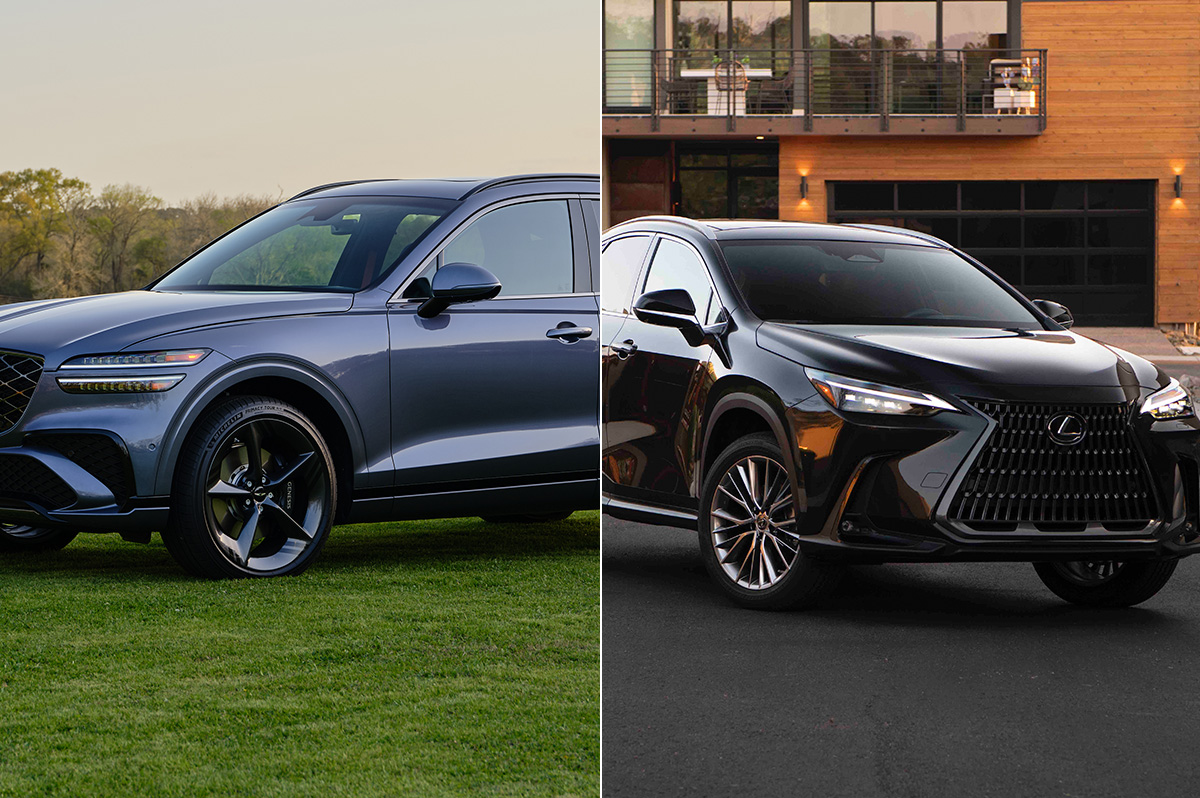
In this corner, there’s the Genesis QV70, newly updated and full of glitzy gizmos. And in the opposing corner, there’s the Lexus NX, a fan fave known for comfort and reliability.
Both are strong contenders. Both have proven to be equally adept at bobbing and weaving through traffic. And both can go toe to toe with pricier competitors.
And yet, what would happen when they sparred against each other? Here’s your ringside seat to find out.
GENESIS QV70

$50,000
MPG: 22 city/28 highway
0 to 60 mph: 5.9 seconds
Cargo space: 28.9 cu. ft.
PROS: Stylish. Good value. Lots of standard amenities.
CONS: So-so fuel economy. Quirky dash controls.
IN A NUTSHELL: When it comes to speed, the Genesis QV70 is faster on its feet than the Lexus NX. Neither of these crossover SUVs is a lightweight, but the QV70 offers more potent powerplants—including an all-electric version that zips from 0 to 60 mph in just 3.8 seconds. In other words, Porsche Macan S territory.
The two gas-powered options—a four-cylinder turbo and twin-turbo V6—also got my blood pumping. So did the velvetlike suspension mixed with deft handling and stop-on-a-dime braking. But this adrenaline rush comes at a cost: sacrificing fuel economy.
As for the automaker’s design philosophy—“athletic elegance”—it’s on full display here: an oversized grille inspired by the Genesis emblem, the dramatically arcing silhouette, and those distinct quad headlights and taillights. It’s not easy to stand out when 25% of all vehicles sold in the U.S. are compact crossovers, so kudos to the QV70 for being such a head-turner.
The mod-yet-minimalist styling carries over to the cabin, with its high-quality materials: real-wood accents, soft-touch plastics and a tasteful glass shift knob. New this year is a sweeping 27-inch dashboard monitor, which houses the gauge cluster and infotainment touchscreen. Alas, this display is positioned a bit far from the driver (though I must admit reaching for it did help stretch a few tight back muscles).
Instead of being a costly extra, this gigantic monitor comes standard. So do synthetic leathers seats, nine-speaker stereo, smartphone/wireless connectivity, hands-free liftgate, tons of safety gear and more. Options include a panoramic sunroof, three-zone climate control, 16-speaker Bang & Olufsen audio, synthetic suede headliner, sound-reducing rear windows, automated parking and other goodies.
What’s the score so far? Despite some minor quibbles, the Genesis QV70 is a worthy challenger that pulls no punches.
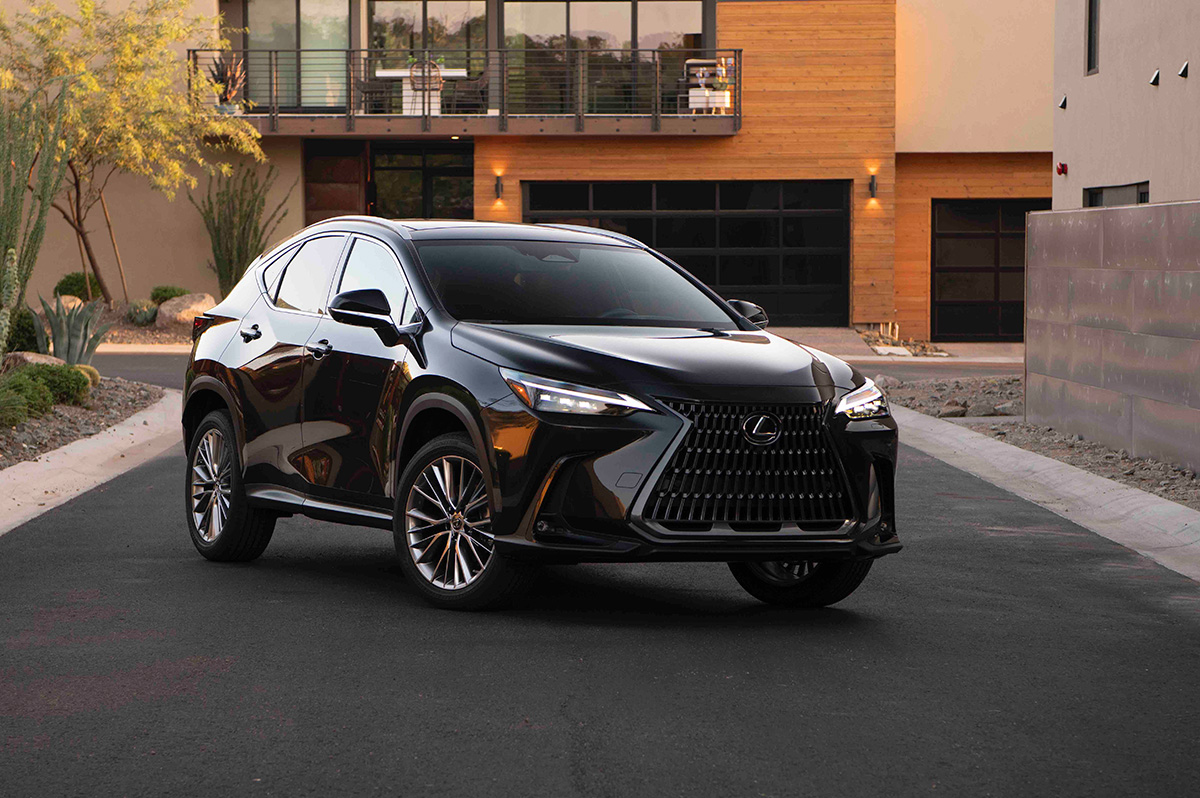
LEXUS NX
$43,000
MPG: 26 city/33 highway
0 to 60 mph: 8.2 seconds
Cargo space: 22.7 cu. ft.
PROS: Fuel efficient. Comfy seats. Rock-solid reliability.
CONS: Pokey base model. Limited rear storage.
IN A NUTSHELL: Sure, the Lexus NX isn’t as speedy as the Genesis QV70. But, as with the tortoise and the hare, sometimes slow and steady wins the race. And really, it’s only the entry-level NX that feels sluggish, such as when trying to quickly merge into freeway traffic.
Other trim levels, including two hybrid options, are just fine. And no matter the engine choice, the counterpunch here is that these vehicles get better gas mileage: 20% higher fuel economy than in either the four-cylinder or V6 in the Genesis. The two NX hybrids are even more green, with the high-end plug-in version able to travel up to 37 miles on electric power alone. One downside: There is no all-electric NX—well, at least not yet.
As with parent-company Toyota, Lexus offers stellar vehicle reliability—often ranked No. 1 in dependability and crash-test surveys year after year. Lexus vehicles generally hold their value better than Genesis, because this newer brand has a shorter history. Lexus also has a larger dealer network, though the number of Genesis dealerships is growing.
But when it comes to cargo space, the NX is about two inches shorter and narrower than the QV70, which has more stowage area. And Genesis handling is sportier, though the Lexus feels sure and well-grounded.
Luxe interior amenities are basically the same in both vehicles. But interior styling in the QV70 is trendy, while the NX is more understated. In other words, a choice between sassy and classy.
This is a very competitive vehicle segment, with Euro models like the Audi Q5, BMW X3 and Mercedes GLC also duking it out in what seems like a clash of the titans.
But as for the Genesis QX70 or Lexus NX, which is the winner? For me, both are real knockouts—so I’d call it a draw.

PHOTOS: Fredericksburg Pride

Two teens shot steps from Stonewall Inn after NYC Pride parade

Anaya Bangar challenges ban on trans women in female cricket teams

Zohran Mamdani participates in NYC Pride parade

La marcha LGBTQ desafía el silencio en El Salvador

Supreme Court upholds ACA rule that makes PrEP, other preventative care free

Supreme Court rules parents must have option to opt children out of LGBTQ-specific lessons

Evan Wolfson on the 10-year legacy of marriage equality

Senate parliamentarian orders removal of gender-affirming care ban from GOP reconciliation bill

Wilmington, Del. leaders paint city’s first rainbow crosswalk
-
 U.S. Supreme Court3 days ago
Supreme Court upholds ACA rule that makes PrEP, other preventative care free
-
 U.S. Supreme Court3 days ago
Supreme Court rules parents must have option to opt children out of LGBTQ-specific lessons
-
 National5 days ago
Evan Wolfson on the 10-year legacy of marriage equality
-
 Congress4 days ago
Senate parliamentarian orders removal of gender-affirming care ban from GOP reconciliation bill