Arts & Entertainment
Flocking together
Gay playwright explores celebrated bird pairings

‘Birds of a Feather’
Through Aug. 7
The Hub Theatre @
The New School
9431 Silver King Court, Fairfax
703-674-3177
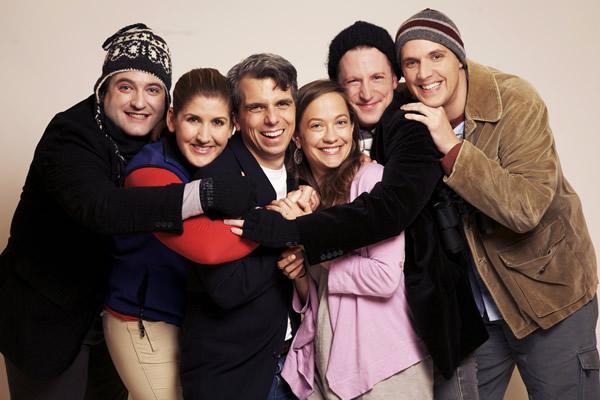
From left, Matt Dewberry, Jjana Valentiner, playwright Marc Acito, director Shirley Serotsky, Dan Crane and Eric Messner. (Photo by C. Stanley Photography; courtesy of Hub Theatre)
Much of gay writer Marc Acito’s work is ripped from the headlines. This applies to his National Public Radio commentaries, and it’s also true about his funny new play “Birds of a Feather” now making its world premiere at the Hub Theatre in Fairfax.
Inspired by two Manhattan stories that got a lot of press about seven years ago, the comedy focuses on gay penguins that fall in love and hatch an egg in the Central Park Zoo, and a messy-but-devoted pair of straight hawks who famously make their home high atop a tony Fifth Avenue co-op. Acito explores what he imagines to be the birds’ motivations as well as the ways in which humans react to these two feathered families.
“What most interested me about the bird stories,” says Acito by phone from his home in New York, “is that both elicited such a huge response from the public. There was a lot of anthropomorphizing going on — the hawk Pale Male was praised as a good father, and the co-op was accused of attempting to unjustly evict a lovely family. The hetero normative hawks were pretty much unanimously supported.”
On the other hand, says Acito, 45, the longtime pair-bonded male penguins Silo and Roy who together hatched an abandoned egg weren’t entirely celebrated. In fact, an award winning children’s book about the penguins’ nontraditional family “And Tango Makes Three” ranks as one of America’s most controversial books, and has been challenged or banned in numerous libraries and school districts.
When “Birds of a Feather” was first read two summers ago at JAW Playwright’s Festival in Portland, (Acito’s home from around 1990 until last year), Hub Theatre artistic director Helen Pafumi contacted Acito. She was eager to mount the show in Fairfax. “There had been controversy about the children’s book in neighboring Loudon County, and Helen thought my play was relevant to the community. Part of Hub’s mission is to facilitate conversation among different factions who live side by side.”
“Hub is a real gem waiting to be discovered,” Acito says. “I realize it might be a little out of way, but I’m hoping gay theatergoers will be willing to make the trek out of curiosity. They can attend a matinee and be back in town for happy hour. If nothing else I know my audiences.”
Staged by Shirley Serotsky, “Birds of a Feather” features a talented quartet who play the penguin and hawk couples (the aptly named Dan Crane and Matt Dewberry), a female zookeeper (Jjana Valentiner) whose best friend is gay man, a birder (Eric Messner), as well as myriad other characters including Mary Tyler Moore, Paula Zahn and a bevy of Catholic school girls.
“All the facts of the play are true, but of course I fictionalize what the birds are thinking,” Acito says. “I certainly feel qualified to write about relationships. My partner and I have been together for 25 years. And while gay relationships are unique in many ways, the fundamentals of living with a partner are the same for everyone.”
Growing up in New Jersey, Acito starred in high school musicals. He describes himself as the guy darting about in Capezio dance shoes and leg warmers. Later he dropped out of Carnegie Mellon’s drama program due to “artistic differences.”
“I thought I could act. They didn’t,” he says.
After more study, he began a professional opera career: “I played character parts — drunks and hunchbacks mostly. It was fun and I learned a lot about comedy and western history, but for me opera was a shoe that never really fit. Ultimately I decided that I needed to create art rather than recreate it onstage, so I began writing.”
He started with the gay press. Next he wrote “How I Paid for College: A Novel of Sex, Theft, Friendship and Musical Theater,” a cult novel about theater people. A successful sequel followed. When the bottom fell out of publishing, he returned to theater and relocated to New York, but this time as a writer. Currently he’s collaborating with composer Jeffrey Stock on a musical adaptation of E.M. Forster’s classic “A Room with a View” slated to premiere at the Old Globe in San Diego next spring. Buzz is good.
Today Acito is thrilled to have found new meaning in his life and career. “There’s an audience that understands my message and aesthetic, and they’re very much in the theater. This time, I feel that I’ve found the shoe that really fits.”
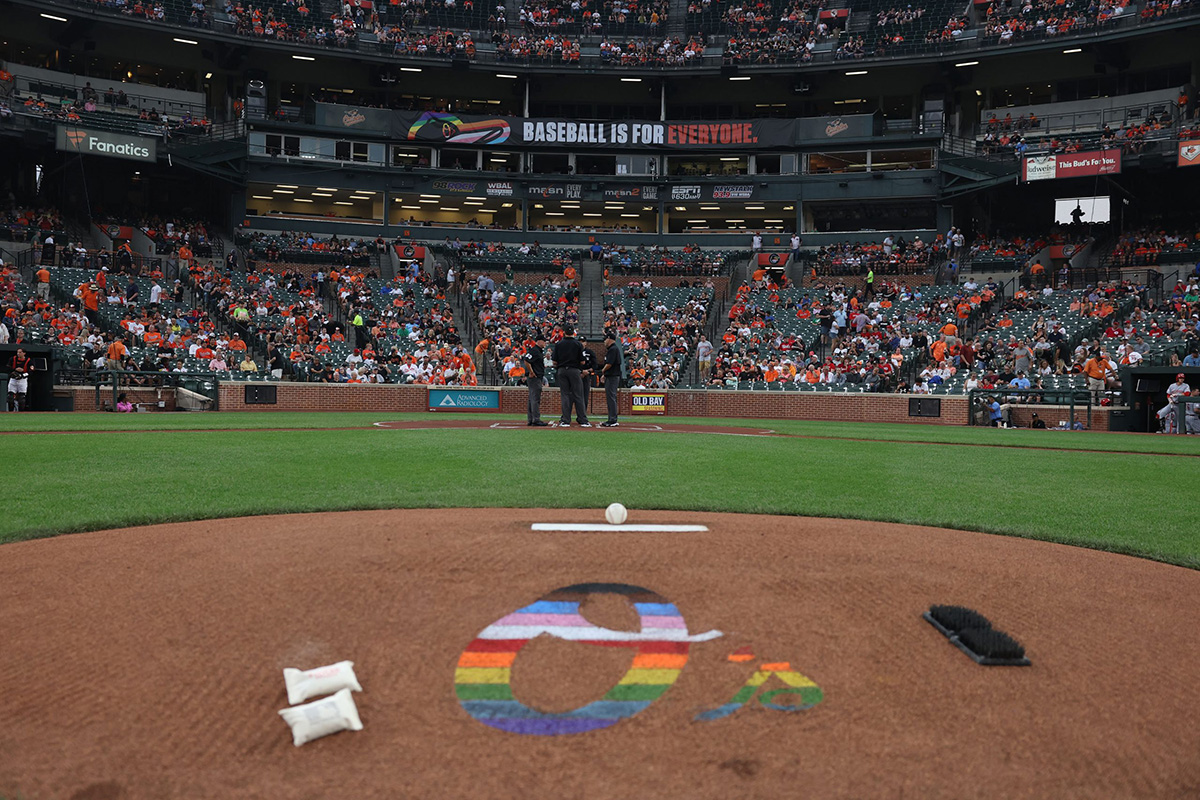
The Baltimore Orioles will take on the Washington Nationals on Friday, June 26 at 7 p.m. for Pride Night at Oriole Park.
The first 15,000 fans will receive an exclusive Pride Night Orioles jersey. The Washington Blade is a media sponsor of this event.
To purchase tickets, visit Orioles.com/Tickets.
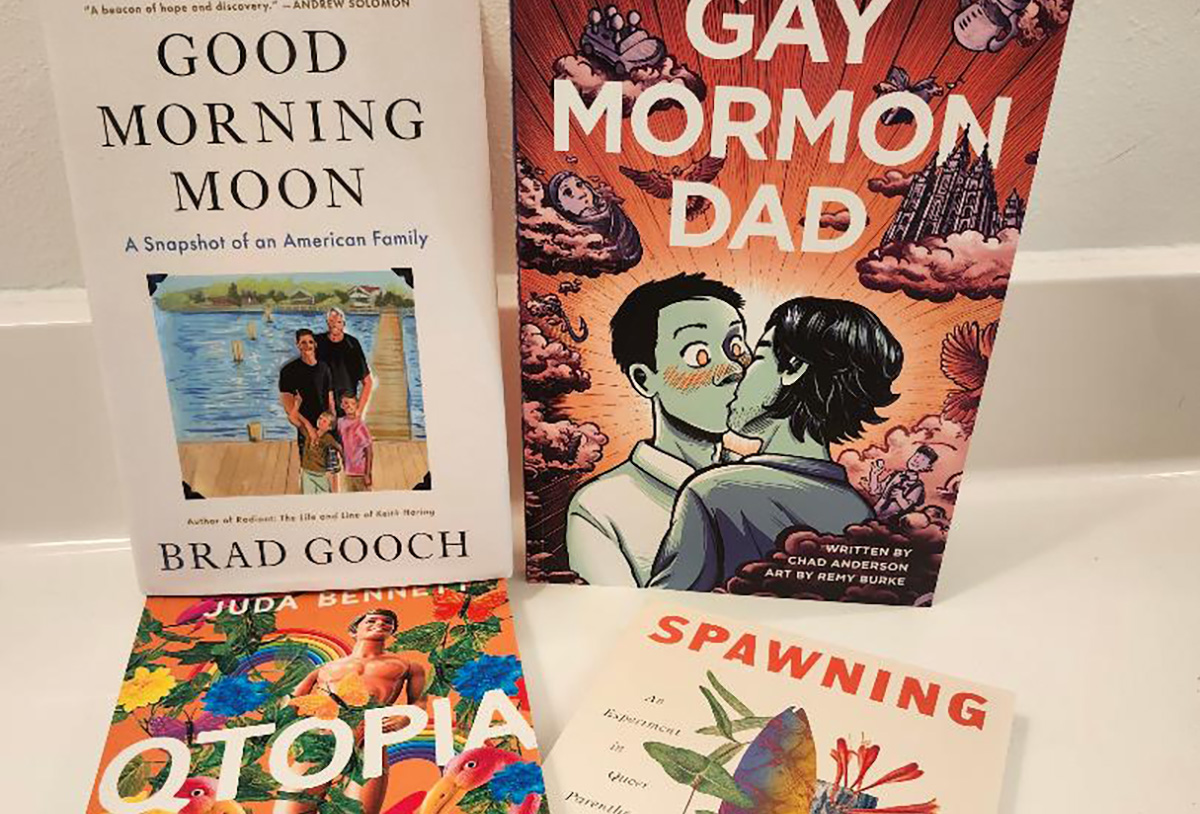
Books for Pride by various authors
c.2026, various publishers
$18.95 – $29.00
How many times have you marched so far this month? Seems like there’s always a reason to gather and walk during Pride, but save some time for yourself, too. You’ll want to reflect, rest, and read these great books about living your best Pride month.
No doubt, you’ve thought once or twice about stepping away from society as it is, and moving somewhere more accepting. So read “Qtopia: A Memoir of Love, Land, and Liberation” by Juda Bennett (University of Wisconsin Press, $18.95), the story of doing exactly that, and how it turned out.
Back in the ‘70s, Bennett fled the suburbs and all it represented, and went “back to the land,” to a commune named Lavender Hill. Some of the places he’d lived before then had promised way more than they delivered, but Lavender Hill was different – more rural, more open, more queer, much better. But you know all good things must end, and that includes “queer utopia.” The only thing left was to re-enter the mainstream, a journey unto itself, and one worth reading.
Speaking of memoirs, in “Gay Mormon Dad” by Chad Anderson, art by Remy Burke (Graphic Mundi, $21.99), you’ll read about Anderson’s life as a husband (to a woman), a father, and a man who seemingly had it all but it wasn’t right, and he wasn’t happy. He was gay, but acknowledging it, telling his family and his church family, could mean the loss of everything he loved. It’s a story that may be familiar to you, in some way, and it’s a quick read.
For most of his life, Joseph Osmundson dreamed about getting pregnant and having a family. The former didn’t happen and, as for the latter, as he writes in his memoir, “Spawning Season: An Experiment in Queer Parenthood” (Bloomsbury, $27.99) the journey for a gay man to become a father can have plenty of roadblocks.
When two women approach Osmundson to be a sperm donor, it appears that his ultimate dreams are about to come true. Things go swimmingly – until race enters the conversation. Are the words “donor” and “dad” the same? Read this powerful book, and think about it.
And finally, if parenthood as a gay person is something that’s a case of maybe-later, then “Good Morning Moon: A Snapshot of an American Family” by Brad Gooch (Harper, $29) is a book to find. It’s the story of late-life love, surrogacy, and identity as Gooch learns about himself as he learns to be a good Dad. This is a great book for older fathers, and anyone who’s on the parental fence, later in life.
If these great books aren’t enough for you, or if you’re looking for something different for Pride, then head to your favorite bookstore or library and ask the staff there to help you find your next best read. They’ve got a lot of books to put in your hands, a lot of sunny afternoons full of relaxing and promise, so march on out, get a new book, and happy Pride!
Out & About
Writers’ association hosts Capital Love LitFest
Inaugural literary salon scheduled for Sunday
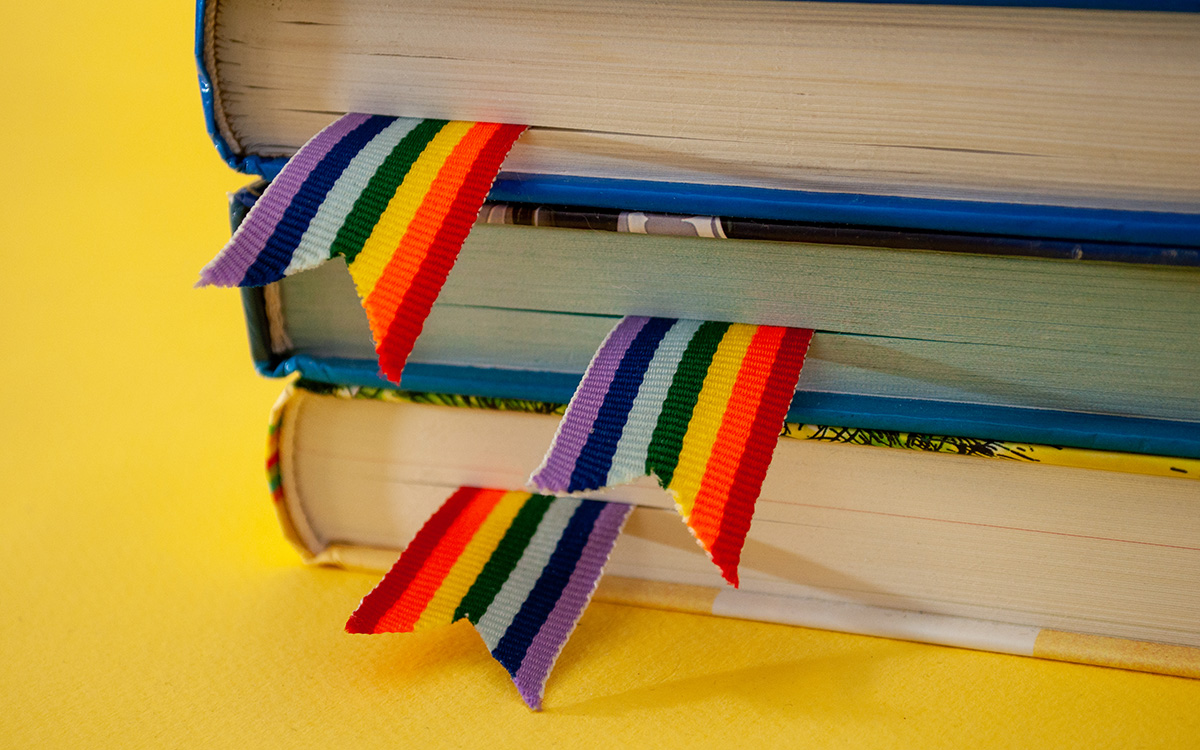
The Washington Writers’ Publishing House (WWPH), the nation’s longest continuously operating cooperative nonprofit literary press, will present the inaugural “Capital Love LitFest” on Sunday, June 28 at 10 a.m. at The Writer’s Center in Bethesda, Md.
Designed as a full-day literary salon and cultural gathering, the event will feature more than 25 writers, nine workshops, and panel discussions, readings, and conversations centered on love, relationships, identity, healing, creativity, and connection in divisive times. Admission is pay-what-you-can, beginning at free.
The LitFest celebrates the release of “Capital Love,” WWPH’s new anthology featuring 55 writers from across the DMV, including contributors from Baltimore, D.C., Maryland, and Virginia. The pocket-sized collectible anthology explores love in its many forms through poetry and prose and serves as a literary response to today’s social and political climate.
For more details, visit Washington Writers’ website.

Orioles take on Nats for Pride Night

My boyfriend is almost perfect

The boy they refused to forget

Reflect on Pride season with these engaging books

Does Pride decor resemble Trump’s design aesthetic?

US no longer refuge for LGBTQ refugees

Abelardo de la Espriella elected Colombia’s next president

Capital Pride draws tens of thousands to D.C.

British Prime Minister Keir Starmer to resign