
Local
Police chief meets with LGBT activists for third time in month
Captain reinstated as head of liaison units

D.C. Police Chief Cathy Lanier disclosed in an Aug. 31 meeting with LGBT activists that she has reinstated a popular police captain as head of the department’s Special Liaison Division, which oversees the Gay and Lesbian Liaison Unit (GLLU).
Lanier’s action comes four months after she drew criticism from activists and rank and file officers for replacing Capt. Edward Delgado as head of the liaison division with a civilian police official who had little experience in crime-fighting activity.
The chief’s appointment in May of Enrique Rivera, who specialized in internal administrative and policy matters, as Delgado’s replacement was viewed by some department insiders as a signal that she was diminishing the influence of the liaison units, including the GLLU. Lanier denied those claims, saying Rivera would provide strong leadership to the division.
Her announcement this week that Rivera was retiring from the department and Delgado would return to head the SLD was warmly received at her meeting Wednesday with representatives of several local LGBT organizations, according to gay activist Peter Rosenstein, who attended the meeting.
The meeting marked the third time Lanier has met with representatives of the LGBT community since Aug. 4, when she met with officials of Gays and Lesbians Opposing Violence (GLOV). That meeting followed a widely publicized incident in which D.C. police officers refused to take a report of an assault against five lesbians in the city’s Columbia Heights neighborhood by two men who shouted anti-gay names at the women.
Lanier said the conduct of the officers was under investigation and told GLOV officials the officers could be fired depending on the findings of the investigation.
The meeting on Wednesday came less than a week after an off-duty D.C. police officer was arrested for firing a handgun at three transgender women and two male friends who were sitting in a car at First and Pierce streets, N.W. One month earlier, a transgender woman was shot to death in Northeast D.C., with activists expressing concern that police took too long to alert the LGBT community about the incident.
“I genuinely believe Chief Lanier and all of her senior leadership team are sensitive to and concerned about problems with the LGBT community,” said Aisha Moody-Mills, a D.C. lesbian activist who attended Wednesday’s meeting.
“But I’m still extremely concerned that their values are not trickling down to the patrol officers on the street,” Moody-Mills said. “There’s a disconnect there, and I’m not sure how the chief will address this.”
Rosenstein said he was optimistic that Lanier was taking steps to address a number police related issues that have troubled the LGBT community over the past few years.
Police spokesperson Gwendolyn Crump said her office was preparing a comment on Wednesday’s meeting and Lanier’s assessment of how it went.
Jeffrey Richardson, director of the Mayor Vincent Gray’s Office of GLBT Affairs, who organized Wednesday’s meeting with Lanier at Gray’s request, said he, too, was optimistic over Lanier’s efforts to address the LGBT-police related issues troubling the community.
“This was an opportunity to bring other people into the discussion with the chief,” said Richardson.
Rosenstein said Lanier, among other things, told those attending the meeting she would ensure that officers list on police crime reporting forms that a crime is a hate crime whenever the victim indicates he or she was a target of hate violence. The appropriate police investigator would then make a final determination of whether the incident is a hate crime, Rosenstein reported Lanier as saying.
He said she also promised to try to boost the number of full-time officers assigned to the GLLU but could not commit to that due to a department wide reduction of police personnel related to budget reductions. According to Rosenstein, the chief also promised to look into the possibility of putting in place an internal department mediation process to facilitatate complaints by citizens that officers mistreated members of the LGBT community. Under an existing labor agreement with the police union, such a change couldn’t be made without the union’s approval, Lanier said.



Virginia
Walkinshaw wins Democratic primary in Va. 11th Congressional District
Special election winner will succeed Gerry Connolly
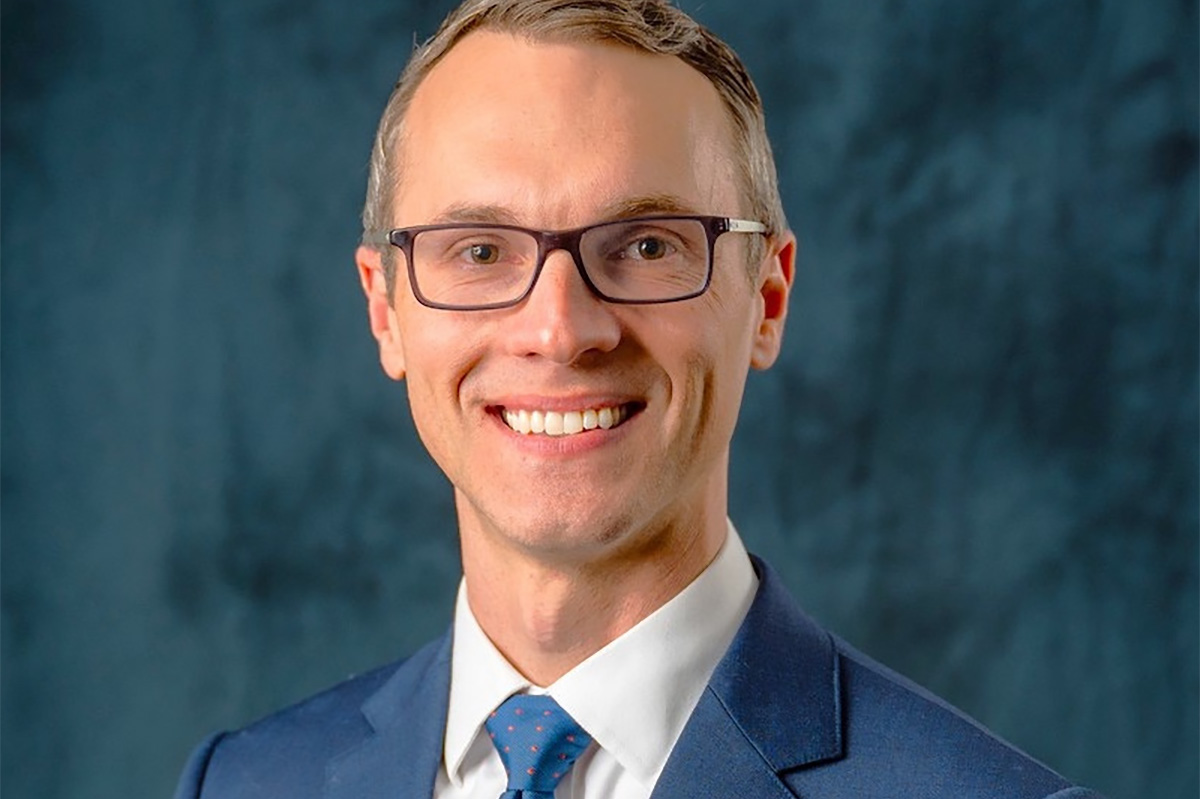
On Saturday, Fairfax County Supervisor James Walkinshaw won the Democratic primary for the special election that will determine who will represent Virginia’s 11th Congressional District.
The special election is being held following the death of the late Congressman Gerry Connolly, who represented the district from 2008 until 2024, when he announced his retirement, and subsequently passed away from cancer in May.
Walkinshaw is not unknown to Virginia’s 11th District — he has served on the Fairfax County Board of Supervisors since 2020 and had served as Connolly’s chief of staff from 2009 to 2019. Before he passed away, Connolly had endorsed Walkinshaw to take his place, claiming that choosing Walkinshaw to be his chief of staff was “one of the best decisions I ever made.”
The Democratic nominee has run his campaign on mitigating Trump’s “dangerous” agenda of dismantling the federal bureaucracy, which in the district is a major issue as many of the district’s residents are federal employees and contractors.
“I’m honored and humbled to have earned the Democratic nomination for the district I’ve spent my career serving,” Walkinshaw said on X. “This victory was powered by neighbors, volunteers, and supporters who believe in protecting our democracy, defending our freedoms, and delivering for working families.”
In addition to protecting federal workers, Walkinshaw has a long list of progressive priorities — some of which include creating affordable housing, reducing gun violence, expanding immigrant protections, and “advancing equality for all” by adding sexual orientation and gender identity to the Fair Housing Act.
Various democratic PACs contributed more than $2 million to Walkinshaw’s ad campaigns, much of which touted his connection to Connolly.
Walkinshaw will face Republican Stewart Whitson in the special election in September, where he is the likely favorite to win.
Maryland
LGBTQ suicide prevention hotline option is going away. Here’s where else to go in Md.
Changes will take effect July 17

By ANNA RUBENSTEIN | The national suicide prevention hotline will no longer offer specialized support to LGBTQ people, starting July 17, the Trump administration announced last week.
Dialing the hotline at 988 will still be available for crisis support. But callers will no longer be able to reach specific LGBTQ services by pressing Option 3. The change worries advocates because their data shows the LGBTQ community has a disproportionally high suicide rate.
Even after the option ends, here’s how to receive tailored support if you’re in Maryland.
The rest of this article can be found on the Baltimore Banner’s website.
Maryland
Silver Spring holds annual Pride In The Plaza
‘Today means inclusion. It means to build resilience’
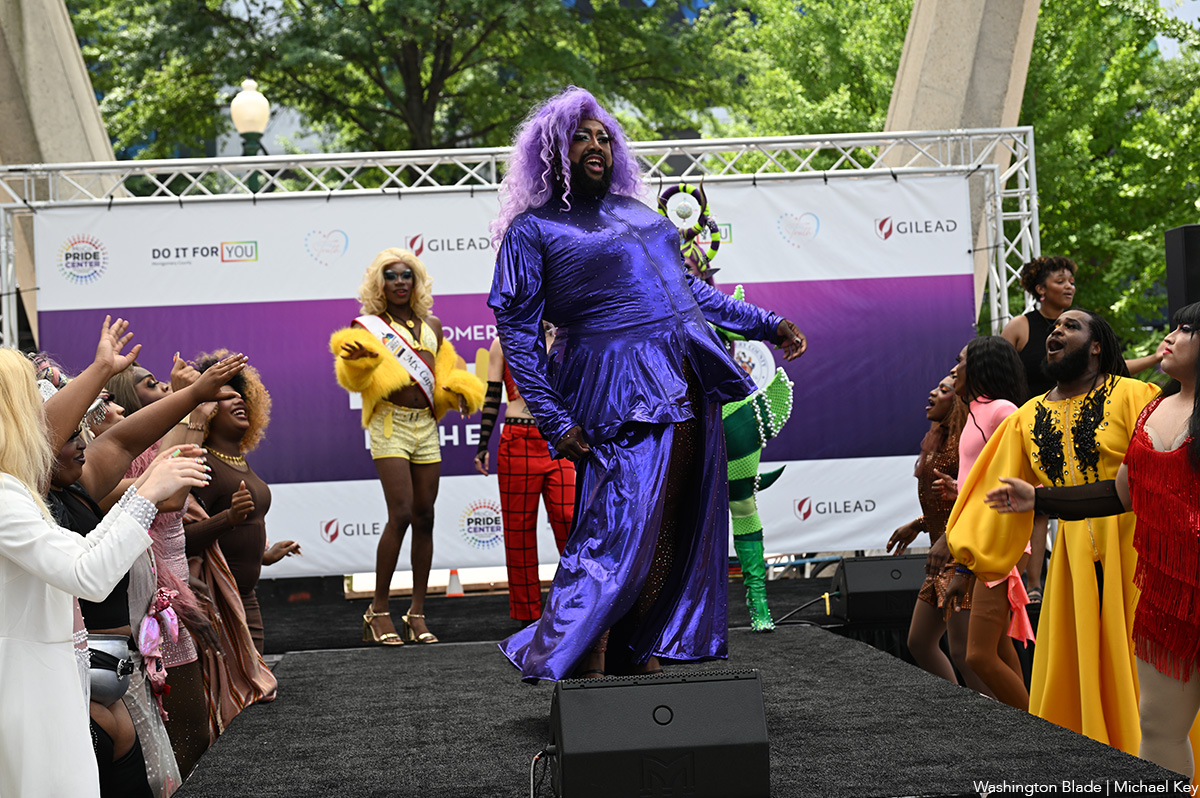
Silver Spring’s annual Pride in the Plaza event took place on Sunday to celebrate the LGBTQ community and emphasize inclusion and resilience.
“Today means inclusion. It means to build resilience, love,” Robyn Woods, program and outreach director for Live In Your Truth, which organized the event, said. “I mean, just being surrounded by the community and so many great entrepreneurs, business owners, and just being a part of this whole rainbow coalition that we call the LGBTQIA to be about.”
With the event being her first time organizing for Live In Your Truth, Woods said she felt emotional to see the support and love at the event.
“Some people (are) bringing out their children, their babies, their grandparents,” Woods said. “It’s a lot more allies here than anything else. That type of support to me means so much more than just support from my community; just outside support, inside support, so much support around it, so much love. Everyone’s smiling outside, helping each other.”
Attendees of the event were able to head over to the Family Fun Zone, an air-conditioned Pride Cool Down Lounge, or watch live drag performances in the main stage area.
Along with entertainment and a shaved-ice stand, rows of information tables stood along the plaza, including FreeState Justice, the Washington Spirit, Trans Maryland, Moco Pride Center, and the Heartwood Program, an organization that offers support, therapy, education, and resources to the LGBTQ community.
“I want people to know about our services, and I love what we have to offer,” Jessica Simon, psychotherapist for Heartwood Program’s Gender Wellness Clinic, said. “I (also) want to be part of a celebration with the community, and so it feels good to be here with other people who have something they want to give to the community.”
She added that within today’s political climate, to which she called an “antidote to shame,” it’s important to be celebrating Pride.
“There’s a lot of demonization of LGBTQI people,” Siena Iacuvazzi, facilitator for Maryland Trans Unity, said. “(Pride) is part of the healing process.”
Iacuvazzi said she was taught to be ashamed of who she was growing up, but being a part of a community helped her flourish in the future.
“I was taught how to hate myself. I was taught that I was an abomination to God,” she said. “But being a community is like understanding that there are people who have experienced the same thing, and they’re flourishing. They’re flourishing because they’re willing to stand up for themselves as human beings and discover themselves and understand what’s true for themselves.”
She added that Pride allows for a mutual understanding to take place.
“It’s more of a sense of belonging … and just taking that home and understanding you’re not alone,” Iacuvazzi said. “We’re each taking our own journey — we’re not putting that on each other. It’s just walking away with a sense of belonging and humanity.”
Similar to Iacuvazzi, Woods said she hopes attendees’ biggest takeaways would be family, fun, resilience, and pride.
“Being proud of yourself, being happy for who you are, and representation and how much it matters,” she continued. “And I think all these young people that are walking around here get to see versions of themselves, but older. They get to see so many different lesbian, gay, bisexual, pansexual people that are successful, that are showing love, that care, and it’s not how we’re portrayed in the media. It’s lovely to see it out here. (It’s) like we’re one big old, happy family.”

UPenn erases Lia Thomas’s records as part of settlement with White House

House Democrats oppose Bessent’s removal of SOGI from discrimination complaint forms

Protests, demands for rights define Pride month in Latin America

PHOTOS: Montgomery County Pride in the Plaza

Walkinshaw wins Democratic primary in Va. 11th Congressional District

Supreme Court upholds ACA rule that makes PrEP, other preventative care free

Supreme Court rules parents must have option to opt children out of LGBTQ-specific lessons

‘White Lotus,’ ‘Severance,’ ‘Andor’ lead Dorian TV Awards noms

Berkshire Choral to commemorate Matthew Shepard’s life

We can’t afford Medicaid cuts in fight against HIV
-
 U.S. Supreme Court4 days ago
Supreme Court upholds ACA rule that makes PrEP, other preventative care free
-
 U.S. Supreme Court4 days ago
Supreme Court rules parents must have option to opt children out of LGBTQ-specific lessons
-
 Television5 days ago
‘White Lotus,’ ‘Severance,’ ‘Andor’ lead Dorian TV Awards noms
-
 Music & Concerts5 days ago
Berkshire Choral to commemorate Matthew Shepard’s life