Arts & Entertainment
Savage views
Gay advice columnist has new MTV sex show
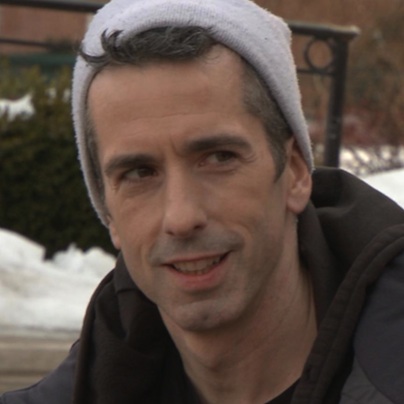
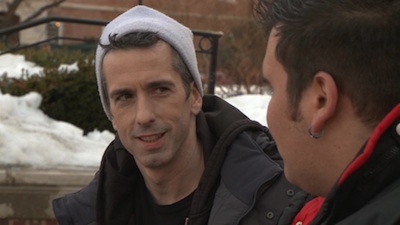
Dan Savage chats with a young gay University of Maryland student about his sex life in an early episode of ‘Savage U,’ a new MTV sex advice show. (Photo courtesy MTV)
The Blade caught up with Dan Savage last week — he’s plugging his new MTV show “Savage U” (Tuesdays at 11 p.m.) and took a few minutes out of a dizzying schedule of writing advice columns, editing newspapers, hosting the new show and being an anti-bullying advocate — in addition to being a family man — to riff on this and that.
BLADE: There’ve been so many cable sex advice shows over the years — the old MSNBC shows, Sue Johanson and even MTV’s own “Loveline” with Dr. Drew and Adam for those of us old enough to remember it. What can yours add that hasn’t been done before or does every generation need its own sex advice show?
SAVAGE: Hopefully what I bring to it is what I bring to “Savage Love” (his syndicated advice columnist which runs locally in City Paper) — a sex-positive, kink-positive take and one that embraces pleasure as a legitimate goal that celebrates people’s desire. A lot of what I’ve seen is really kind of sex negative that starts first with no, then with maybe. “Savage Love” works its way from maybe to yes to yes, definitely … there’s a school of thinking that says, “Oh my God, you can’t have sex if there’s any risk,” but there’s risk in all kinds of things. What needs to be discussed is how to mitigate the risk as much as possible but then at a certain point yes, you have a right to go for it. You also have to be able to shoulder the consequences. … There’s always a risk but you don’t hear people advocating against sky diving or snowboarding. There’s a whole bunch of people who will drop dead today from eating chicken salad and yeah, you’d be an idiot to leave it out in the sun for three days and then eat it, so we can apply that same brainy shit to sex.
BLADE: How do you get these college students to go on the air and say, “I have herpes” or “I’m a virgin.” Are you involved in finding them or do producers do that?
SAVAGE: There are producers who do that ahead of time. I need to be hearing about their stories for the first time when we film, so there are layers of producers who vet them ahead of time. There are a lot of old farts like me who think YouTube and Facebook and Twitter and all that is something new and always will be, but for somebody who’s 19 and basically grew up with this stuff, they have different attitudes about privacy … we’ve started some taping and then stopped ….
BLADE: Why? What would be an example of someone whose story shouldn’t be aired?
SAVAGE: This was someone who obviously had a deeper-seated medical issue that became evident on camera and we felt talking about the issue would have unfairly outed the person and would have been kind of dishonest so we unplugged the mics … we try to be honest and honor the kids without exploiting anyone.
BLADE: You seem so much nicer on the show than in your column where you often seem very exasperated and caustic. Why?
SAVAGE: Well I told someone in the premiere episode they were an idiot so I’m a little caustic here and there on the show but I think in the column, some of it is having to boil so much down to fit the space that it can make me seem more caustic and sarcastic than I am. I’ve had people say for the podcast I seem so much nicer but that’s the benefit of being able to run my mouth. It’s a different venue … also on the show, I’m a lot more willing to cut these kids some slack because they’re 18. I’m a lot more patient with an 18-year-old fuck up than I am with a 38-year-old fuck up. It’s like of course you’re fucked up when you’re 18 because 18 is fucked up anyway.
BLADE: Are you of the school of thought that a Santorum nomination would have been better for Obama than a Romney nomination or does any Santorum success cause you to shudder?
SAVAGE: I agree with Bill Maher on that — I don’t trust the American people enough to have (had) Santorum be the nominee. This is a country that elected Bush, at least once, he stole it the first time, but I would take Romney over Santorum though they’re two bars set so low they’re basically on the floor.
BLADE: What is the most pressing sex question you see from gay men?
SAVAGE: Male fear of intimacy is real and so it’s doubled with gay men. That comes up a lot. I also hear from young gay guys, like 15, 16, 17, 18 who say there’s no one for them to date. Their straight peers have been dating since the middle school dances but they’ve been alone or they say there are only older gay guys to date and I tell them dating starts later a lot of times for us so they don’t have a lot of options. Also monogamy comes up a lot. Gay guys are also guys so often it becomes an issue of non-monogamous relationships that are grounded in trust and disclosure rather than lying and cheating and running around.
BLADE: How do you have time to add a show to your busy schedule?
SAVAGE: Terry is a stay-at-home dad — that hetero-normative model of having a stay-at-home wife, that shit is awesome if you can afford it. We’re lucky in that regard.




Celebrity News
Madonna to perform at World Pride in Amsterdam
‘Confessions II’ album released earlier this month to rave reviews

Editor’s note: International News Editor Michael K. Lavers and Photo Editor Michael Key will be on assignment in the Netherlands through Aug. 10. They will be covering World Pride in Amsterdam.
AMSTERDAM — Madonna on Saturday will perform at World Pride in Amsterdam.
She is scheduled to appear alongside Stuart Price, Honey Dijon, and other “special guests” at the World Pride Music Festival at AFAS Live concert hall. The Amsterdam Pride Canal Parade will take place earlier on Saturday.
MISTR, a telehealth platform that offers free access to PrEP, Doxy PEP, STI testing, and long-term HIV care, is organizing Madonna’s performance.
Madonna on July 2 released her new album, “Confessions II,” to rave reviews.
She appeared at The Abbey in West Hollywood, Calif., in April. Madonna in June celebrated Pride month with a pop-up performance in New York’s Times Square.
“Everyone here is a work of art,” says the World Pride Music Festival performance poster, referring to a line from “Danceteria” on “Confessions II.”
Movies
‘Heartstopper Forever’ delivers satisfying conclusion
Beloved queer phenomenon shows us hope can belong to everyone

When I wrote my review of the first season of “Heartstopper,” I said that if the series could only be summed up in one word, it would be “adorable.”
After an additional two seasons and a movie length series finale (which began streaming on Netflix July 17), I’m going to make up a new rule and say that I can choose a second word to close things out. By the time I reach the end of my review of “Heartstopper Forever,” in which our adorable Nick and Charlie must face the possibility that their tender young romance may not be able to survive their graduation to college, I hope I’ll have figured which word it would be.
Directed by Wash Westmoreland and written (as always) by Alice Oseman, artist and creator behind the YA webcomic/graphic novel that launched the whole “Heartstopper” phenomenon, this final installment finds a very different Nick and Charlie than we met in those early episodes – yet in many ways they’re still very much the same. Far from the timid and bullied queer lad of the first season, Charlie (Joe Locke) is now boldly out and confident enough to win the election for “head boy” in his final year at school, and Nick (Kit Connor) no longer struggles with being open about his bisexuality; yet as the stress of their impending separation – each to a different college in a different city – begins to become more urgent, both of them fall back on old patterns.
To those of us who have been around long enough to re-examine such a crisis with 20/20 hindsight, that’s bound to strike chords of recognition. To the younger “Heartstopper” fans, however, it’s likely to feel like high drama – exactly as it did for us when we were going through it ourselves. It’s not just Nick and Charlie, either; other characters, like transgender prodigy Elle (Yasmin Finney) and her cis-het boyfriend Tao (William Gao), must also come to terms with the changing dynamics of their relationships. The result is multiple mirrors through which queer teens can see their own experience reflected, which has always been the appeal of “Heartstopper” in the first place. And as it has from the beginning, Oseman’s intent to provide her teen audience with positive perspectives shines through, ensuring that the story’s final chapter lands in a place where hope can belong to everyone.
That doesn’t mean it doesn’t have its share of dark moments – it wouldn’t be “Heartstopper” if it didn’t, would it? Part of the show’s value for its fans, young and old alike, has always come through its various characters’ growing pains; their missteps and misjudgments, their confused emotions, their fumbling efforts at “first times,” their struggles toward self-esteem. All these and more have provided the necessary “weight” to counter the show’s bubbly optimism and keep it from becoming as insubstantial as spun sugar. More importantly, these issues have always been the real core of the story: We love the sweetness of the romance, but the deeper satisfaction comes from watching these young people navigate all their challenges, sometimes alone but more often together, and build a community through the shared experience of working through them.
The final installment, having brought Charlie, Nick, and all the rest to the cusp of young adulthood, brings a suitably more mature level of problems into the mix. Sure, Charlie has grown into the hero he once needed himself, but the uncertainty that emerges between himself and Nick as they ponder their impending separation is enough to spark a relapse of his eating disorder; likewise, Nick may be confident and unguarded about his sexuality and openly proud of being Charlie’s boyfriend, but that doesn’t stop him from slipping back into self-doubt (and bad behavior) when he contemplates the possibility that their love story might be coming to an end. We know they have the “tools” to get back on track, but with everything so up in the air, will they be able to remember how to use them?
So, too, throughout the series, we have seen these kids come to terms with their individual queerness, navigating those personal journeys and learning how to embrace who they are in an environment where, for the most part, they get a lot of support. At the same time, there have been shadows around the edges, encounters and circumstances that remind them (and us) that, outside the protective circle provided by their school and each other, bigotry still exists. In “Heartstopper Forever,” those reminders are still there, and they feel all the more ominous – not just because of the worldwide rise in anti-LGBTQ+ sentiment, though that’s tied to it, but because these bright young things will soon be moving into a larger world where safety and shelter from the hate is not quite so certain.
Still, it’s Nick and Charlie’s story above all else, and naturally the main focus of this finale is on them. There has always been a too-good-to-be-true perfection to their romance, but Locke and Connor are so good at bringing it to life we believe it; here, fittingly for a final chapter, these boys finally face the crossroad that comes with adulthood – the recognition that, one way or another, there will be an ending to their relationship. How they handle that, we won’t spoil; once again, though, this is “Heartstopper,” one can feel sure that Oseman’s characters will work their way through it in the most imperfectly perfect – and emotionally satisfying – way possible.
Deserving of mention: characters like Isaac (Tobie Donovan), Imogen (Rhea Norwood), and Charlie’s sister Tori (Jenny Walser) return to get their fair share of the spotlight, and gay teachers Mr. Ajayi (Fisayo Akinade) and Mr. Farouk (Nima Taleghani) get the chance for a new beginning of their own; and out UK acting legend Derek Jacobi (“I, Claudius”) appears alongside real-life partner Richard Clifford as an elderly couple in a quiet but important scene at the cafe where Charlie works.
With any “franchise” as popular as “Heartstopper,” the task of bringing closure to a story that has emotionally involved so many fans is almost always a thankless one (just ask George Lucas), so there are sure to be some who have objections to the way Oseman brings her beloved story to an end; but it’s her story to end, and in choosing to uphold its sensational (yet sentimental) imagining of the world as it could be, “Heartstopper Forever” doubles down on the idea that we can make it the way that it should be.
That’s why my choice for the second word we can use to sum up “Heartstopper” is “aspirational.” In the relative innocence and un-ironic preciousness of Nick and Charlie’s enduring love story, we can find no excuses; not all of us can keep our first love alive for an entire lifetime (nor, often, should we), but maybe we can learn to follow our hearts as surely and openly as they do.
That’s about as aspirational as any of us can hope to be – but don’t worry: it’s still adorable, too.
a&e features
Rainbows in Revolt on a mission to make LGBTQ artists’ voices heard
Rainbows in Revolt on a mission to make LGBTQ artists’ voices heard
Last month’s Pride celebration in D.C. was so fun. Walking around my first Capital Pride with a $15 lemonade I was loving the madness and the color. Artists and small businesses battling banks you’ve never heard of collecting your personal information so you can spin a wheel to snag free merch. Great music blaring, people actually smiling and enjoying themselves, the “Great” American State Fair could never!
The Monument Stage was on Pennsylvania Avenue, directly in front of the National Gallery of Art and I can’t think of a better venue to see live music. How does someone get on the lineup for Pride? How do we accelerate the visibility of the most talented voices in our community to perform in places like this?
There is certainly not a talent gap, but there is a visibility gap. Chappell Roan went from playing for two people in a parking lot to owning the main stage at Coachella in one year. Whether it is shadowbanning or bias in AI, algorithms have been shown to suppress queer artists. In a digital age, how can queer people break through and show the world how talented they are?
Allison and Matt of Rainbows in Revolt are on a mission to make openly LGBTQ+ artists’ voices heard. Their goal is to find “musicians whose queerness is central to their identity as an artist,” and accelerate them to a place where they can actually reach fans.
The only time queer events seem to be in the spotlight is June, but this should be year round, according to Allison and Matt. Rainbows in Revolt wants to act as a “nucleus” for different sub-communities, finding common ground in the universal language of music.
Matt and Allison founded Rainbows as a way to make cheaper, higher quality merchandise for queer artists. While Rainbows has already pledged 20% of their profits to the LGBTQ+ community, with 10% to Whitman-Walker Health and 10% to LGBTQ+ organizations in need, this is just the beginning of the work that they do.
Rainbows “does the dirty work” that artists normally struggle to do on their own with limited resources. Interviews, artist profiles, social promotion, playlist discovery, radio outreach, and merch-funded support. This work is normally expensive, time consuming, and requires lots of different skills. Musicians don’t want to be editing clips to post online. Standup comedians don’t want to make graphics for their tour dates. They want to write more. They want to focus on their craft.
In addition to helping artists find their audience, Rainbows has built other digital tools to help queer people connect, including an interactive Safe Space Map for most major cities. It is hard to know which places are truly safe and supportive just from a simple Google search. Attitudes and actions change, and there should be a simple way for queer people to find other places that align with them. The Safe Spaces Maps are all up to date, and are tagged and filterable. Instead of relying on forums and word of mouth, Rainbows has created a centralized way to find authentic community quickly.
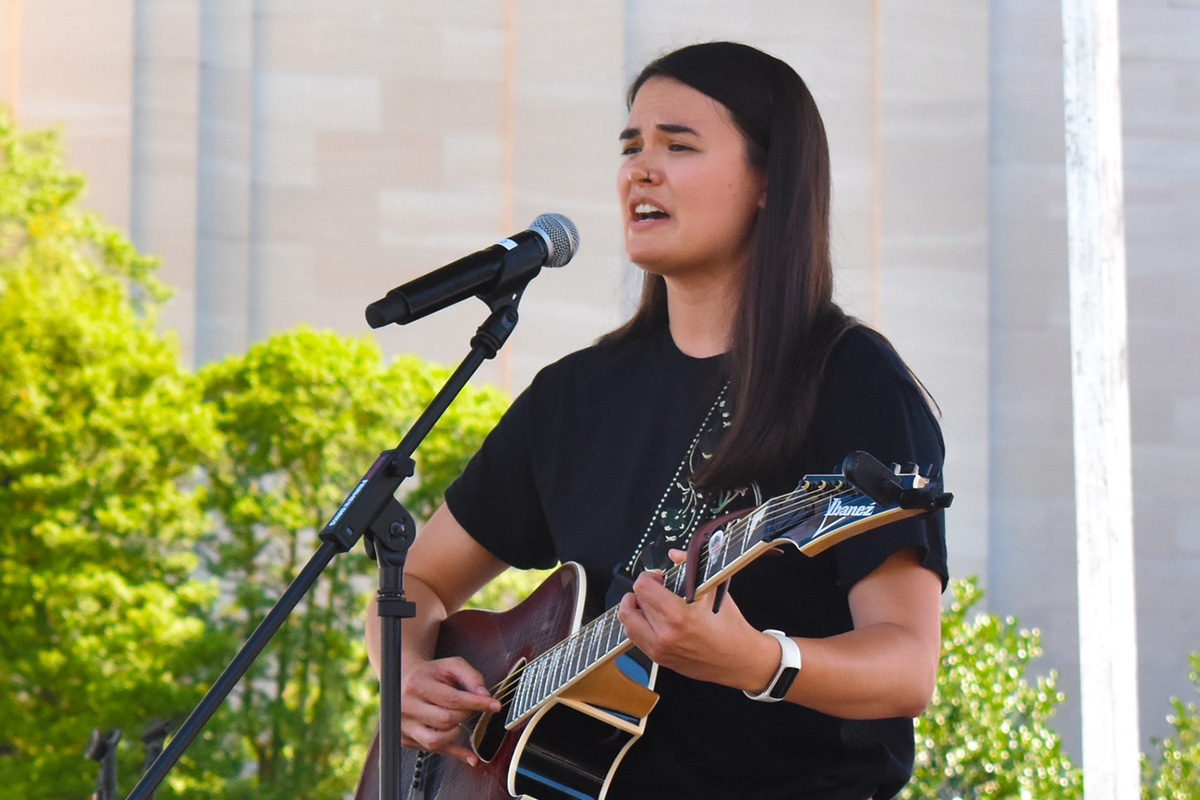
I had a chance to talk with Allison and Matt at Pride where Lily Erin, one of their signature artists, was performing on the Monument stage. Lily Erin is a folk singer who is familiar and forging her own path. Her bittersweet sound echoes through Acadia, and her garb mirrors the New England athletes I grew up with. Gorp Core meets streetwear. A graphic tee, hiking shorts, and creamsicle Jordans.
Her debut single, “Bus Stop,” tells a sad story about unconditional love, and the conditions that still seem to come with it. Graduating into lockdown, Erin needed a new way to connect with herself and others. Lily made “Bus Stop” without an intention to share it, but doing so was a liberation. People have been responding to her honesty around queer-ness, family, and the “ghosts which haunt us” even in the daytime.
Rainbows in Revolt has helped Lily Erin go from bars and backyards to The Monument Stage at Pride. This is a meteoric rise, and a testament to both Erin’s talent and the work of Rainbows to promote her. “A little encouragement goes a long way with early artists,” and by “planting a seed” Rainbows is already seeing their artist garden grow. Community is power, and Erin is a perfect example of how effective simple modern techniques of promotion can be.
A next step for Rainbows is putting on shows themselves. On Oct. 3, Rainbows in Revolt will host an Evening with Ray Boltz at the National City Christian Church. Boltz grew up in the Catholic Church and for many years was the soundtrack to many services, youth camps, and church groups. He was celebrated by millions until he came out in 2008. Allison remembers her community “never playing his music again.”
Rainbows in Revolt is helping him to return to the church, and proving that identity does not need to be exclusive. We live in a complicated world with complicated lines being drawn. Boltz proves that these lines don’t exist, and will be breaking down barriers to bring together communities. To Allison, “a trans woman standing next to a straight white man in church is a powerful teacher.”
The Safe Space maps bridge all types of spaces, and one of the unlikely ones is, perhaps, churches. Matt said that “BYU has only nine safe spaces around their campus and seven of them are churches.” Not all churches are anti-gay, and many times they are the only place for people to find community.
Rainbows in Revolt is just getting started bridging gaps and building community.

BLADE ENDORSEMENT: Susan Stewart for mayor of Rehoboth Beach

Madonna to perform at World Pride in Amsterdam

‘Heartstopper Forever’ delivers satisfying conclusion

Matthew Rosenstein in ‘Make Me French’ a hit at Clear Space Theatre

White House orders warning signs at Smithsonian over gender identity exhibits

D.C. summer theater offers something for every taste

Summer in the City: Free exhibits, movies, more fill D.C.’s calendar

With gas prices soaring again, a staycation is a good plan

Gary Sutton, known for ‘warmth and laughter,’ dies at 62

White House threatens Anne Arundel schools over gender identity policy
-

 Theater4 days ago
D.C. summer theater offers something for every taste
-
a&e features4 days ago
Summer in the City: Free exhibits, movies, more fill D.C.’s calendar
-
Real Estate4 days ago
With gas prices soaring again, a staycation is a good plan
-
Obituary4 days ago
Gary Sutton, known for ‘warmth and laughter,’ dies at 62