Local
Equality Maryland names interim leader
Lynne Bowman not pursuing permanent role

Equality Maryland, in a statement released to the Blade, announced this week that Lynne Bowman would become the group’s new interim executive director effective May 2.
Bowman has served as director of programs and services for the Equality Federation, a national association of state LGBT groups. She is also a founder of Equality Ohio and most recently served as campaign manager for Ohio Lt. Gov. Lee Fisher’s U.S. Senate bid.
“During Lynne’s time with the Equality Federation and as executive director of Equality Ohio, Lynne consistently demonstrated strong, visionary leadership,” said Rebecca Isaacs, executive director of the Equality Federation in a statement.
Equality Maryland said it would now begin the search for a permanent executive director.
Bowman told the Blade that she is not in the running for the permanent director’s position. She said her appointment lasts until the end of August but can be extended if a new permanent director isn’t in place at that time.
“I will be assisting the board in conducting the search,” she said. “That’s something I’ve done a number of times in my background. So rather than focusing on trying to secure a job for myself, I’ll be focusing on stabilizing the organization and moving the agenda forward.”
She acknowledges that she has never worked with the Maryland Legislature before. But Bowman said she believes her background in working with legislators in other states and her experience in managing non-profit organizations will enable her to keep Equality Maryland on track in pushing its legislative goals in the eight months before the Maryland Legislature convenes its 2012 session in January.
“I think that every legislature or assembly is similar in that fact that they are different,” she said. “And it takes figuring out the personalities and some of the targets and the issues, which could be done, I would say, fairly easily by partnering with the people who are already there.”
Bowman added, “So I’m not going to come in and assume that I know anything or anyone without working with the folks who have been doing the work in the General Assembly. And it’s going to be very important for me to create those partnerships, get to know those personalities so that we can move the strategies forward and make sure that we’re ready.”
She plans to take steps to arrange meetings with members of the State Senate and House of Delegates – including the contingent of eight openly gay or lesbian legislators — as soon as she arrives for work next week, she said.
Bowman said she has considerable experience in fundraising and is looking forward to strengthening Equality Maryland’s donor base. But she said she hadn’t had a chance to examine the group’s finances in detail and could not determine, at least until she arrives on the job on Monday, whether it would be prudent to hire a new development director immediately or to do so at a later date.
“If I would say anything else at this point it would be that a strong state-based organization is critical to passing state based legislation” like the marriage equality and gender identity non-discrimination bills that came up but failed this year, she said.
“And regardless of the bumps and bruises that may have happened in the last couple of months, getting behind Equality Maryland and the coalition of groups – local, state and national organizations that are trying to pass legislation – is going to be critical if folks want to see things move forward,” she said.
“Equality Maryland is thrilled to have a nationally known and respected leader at the helm of the organization,” the group said in a joint statement to the Blade from Chuck Butler, board chair of Equality Maryland, and Patrick Wojahn, chair of the Equality Maryland Foundation.
The announcement follows the departure of former executive director Morgan Meneses-Sheets after a tumultuous tenure in which the Maryland Legislature failed to pass marriage equality and transgender non-discrimination measures. The board said her departure was a mutual decision, but Meneses-Sheets said last week that the decision was not hers.



District of Columbia
Campaign launched to elect more LGBTQ candidates to ANC seats
Capital Stonewall Democrats behind Queering ANCs effort

The Capital Stonewall Democrats, D.C.’s largest local LGBTQ political group, announced on July 7 it has launched a campaign to help elect large numbers of LGBTQ candidates to the city’s Advisory Neighborhood Commissions.
The D.C. local government is believed to be unique among U.S. cities in currently having 46 Advisory Neighborhood Commissions consisting of 345 single-member districts in neighborhoods throughout the city in which unpaid Advisory Neighborhood Commissioners are elected for two-year terms.
The commissions are charged with considering a wide range of policies and programs impacting their neighborhoods, including traffic, parking, recreation, street improvements, liquor licenses, zoning, economic development, police protection, sanitation and trash collection, and D.C.’s annual budget, according to the ANC website.
Although the ANCs do not have authority to set or reject policies or proposals, such as applications for liquor licenses, city agencies are required to give “great weight” to ANC recommendations, according to the law creating the ANCs.
Kent Boese, a gay former ANC commissioner, currently serves as executive director of the D.C. Office of ANCs.
“We are launching the most ambitious hyperlocal LGBTQ+ candidate pipeline initiative in the country,” said Stevie McCarty, the Capital Stonewall Democrats president, in a July 7 statement that announced the Queering ANCs campaign.
“As an ANC member, I know firsthand how these seats shape our neighborhoods, from housing and public safety to sanitation,” McCarty says in the statement. “I’m proud to lead this effort to ensure more LGBTQ+ Washingtonians see themselves as leaders in their communities,” he said.
The ANC Rainbow Caucus, which was created by LGBTQ ANC members, shows on its website that there are currently 38 caucus members consisting of elected LGBTQ ANC commissioners serving in the current 2025-2026 two-year term.
The website shows there are LGBTQ commissioners who are caucus members in each of the city’s eight wards, with six in Ward 1, eight in Ward 2, one in Ward 3, six in Ward 4, five in Ward 5, three in Ward 6, eight in Ward 7, and one in Ward 8.
The Washington Blade couldn’t immediately determine how many of them will be running for re-election in D.C.’s general election in November. But McCarty said Capital Stonewall Democrats hopes to recruit many more LGBTQ candidates to run for ANC seats.
The D.C. Board of Elections website shows the deadline for filing 25 required petition signatures to be placed on the ballot is Aug. 5.
A Queering ANCs website launched this week by Capital Stonewall Democrats provides details on how to run for an ANC seat and offers help for those interested in running.
“Think of someone in your building, neighborhood, friend group, community organization, or professional network who cares deeply about D.C. and would make a strong leader,” McCarty says in his statement. “Send them QueeringANCs.org and personally ask them to consider running,” he said.
The website can be accessed at QueeringANCs.org.
Baltimore
Ron Singer, owner of popular Mount Vernon gay bar Leon’s, dies
66-year-old’s funeral to take place Friday
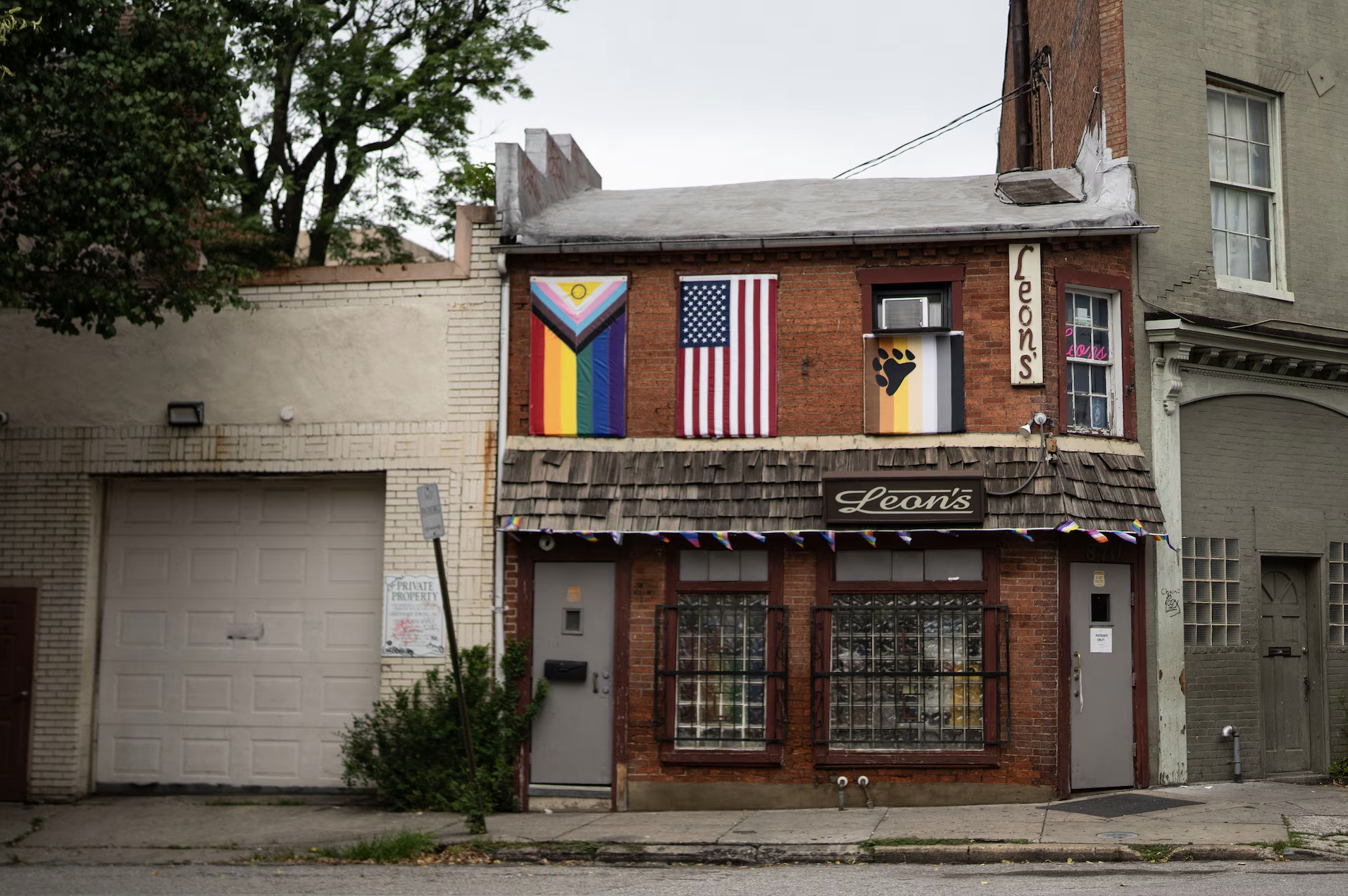
By CAYLA HARRIS | Ron Singer, the owner of Baltimore’s popular gay bar Leon’s Backroom, died Tuesday, the venue announced in a social media post. He was 66.
“For more than 20 years, Ron made Leon’s a place so many people were proud to call home,” the post reads. “He will be deeply missed.”
The Mount Vernon bar, typically open from 4 p.m. to 2 a.m. daily, is still open Thursday, but doors will close at midnight so staff can attend his funeral Friday morning. Services are scheduled to begin at 9:30 a.m. at Sol Levinson’s Chapel.
The rest of this article can be read on the Baltimore Banner’s website.
District of Columbia
Mary’s House founder, CEO retires
Dr. Imani Woody played leading role in opening DC’s first home for LGBTQ seniors
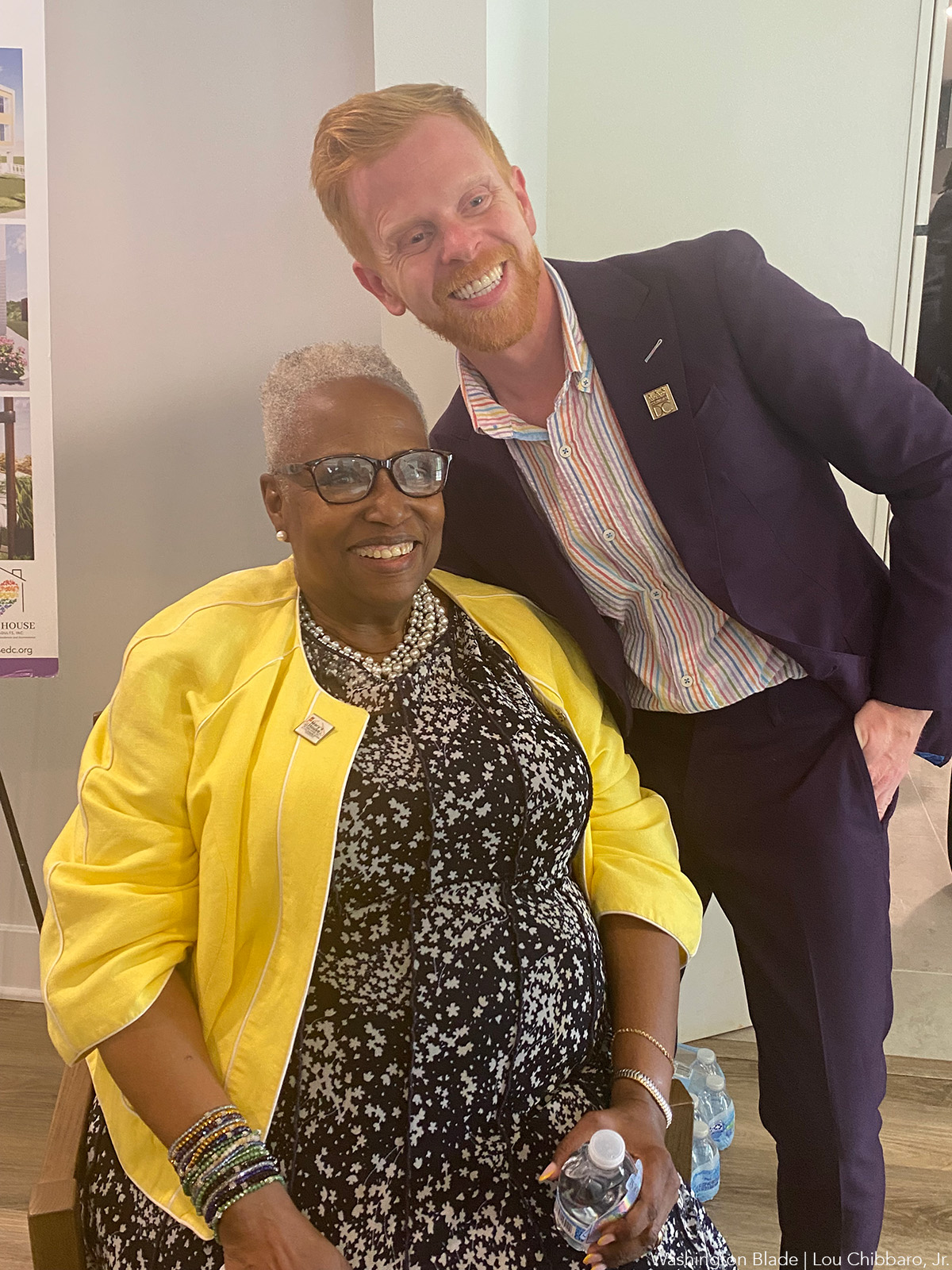
The board of directors for Mary’s House for Older Adults, DC’s first official home dedicated to providing affordable housing for LGBTQ seniors, announced on July 7 that its founding president and CEO, Dr. Imani Woody, has retired.
Woody, who holds a PhD in Human Services, is credited with playing a leading role over many years in arranging both city and private funding needed to construct and operate the Mary’s House three-story building located at 401 Anacostia Road, S.E., in the city’s Fort Dupont neighborhood.
The house, which opened in March 2025, with a grand opening ceremony held in May 2025, includes 15 single-occupancy residential units and more than 5,000 square feet of shared communal living space.
“It is with profound gratitude and hearts full of celebration that the board of directors of Mary’s House for Older Adults, DC (MHFOA) announces the retirement of our visionary founder, Dr. Imani Woody, from her role as president and CEO,” the Mary’s House board says in a statement.
“Dr. Woody’s journey with Mary’s House began with her vision and a kitchen table gathering of women with a bold, urgent, and loving vision: to create safe, affirming, affordable housing for LGBTQ/SGL older adults in Washington, DC,” the statement says.
It adds, “What started as a dream has grown into DC’s first affordable LGBTQ+/SGL affirming communal living space for adults 60 and over, a 15-room community residence at 401 Anacostia Road in Southeast Washington.”
The statement says Woody will continue to serve on Mary’s House board.
“The board will be sharing information about the leadership transition process in the coming weeks,” the statement continues. “We are committed to honoring Dr. Woody’s legacy by ensuring Mary’s House continues to thrive and grow in faithful service to LGBTQ/SGL elders experiencing housing insecurity and isolation.”

Campaign launched to elect more LGBTQ candidates to ANC seats

Gay librarian to discuss new novel at Green Lantern

Calendar: July 10-16

Gay Fla. Democrat Elijah Manley sees opportunity in Trump’s second term

Ron Singer, owner of popular Mount Vernon gay bar Leon’s, dies

‘My Favorite Sociopath’ debuts at Shepherdstown’s CATF

Under-the-radar Delaware beach towns smart buyers are targeting

In Trump’s divided America, Michael Weinstein’s AHF responds

Turkish authorities refuse to allow gay cruise to dock in country

When a church fears the rainbow
-

 Theater5 days ago
‘My Favorite Sociopath’ debuts at Shepherdstown’s CATF
-
Real Estate5 days ago
Under-the-radar Delaware beach towns smart buyers are targeting
-
Politics4 days ago
In Trump’s divided America, Michael Weinstein’s AHF responds
-
Turkey4 days ago
Turkish authorities refuse to allow gay cruise to dock in country