Local
HRC store vandalized; radical queer group claims responsibility
The Dupont Circle Human Rights Campaign store was vandalized last night by a group claiming to be paying homage to the Stonewall Riots.

WASHINGTON — The Dupont Circle Human Rights Campaign store was vandalized last night by a group claiming to be paying homage to the Stonewall Riots.
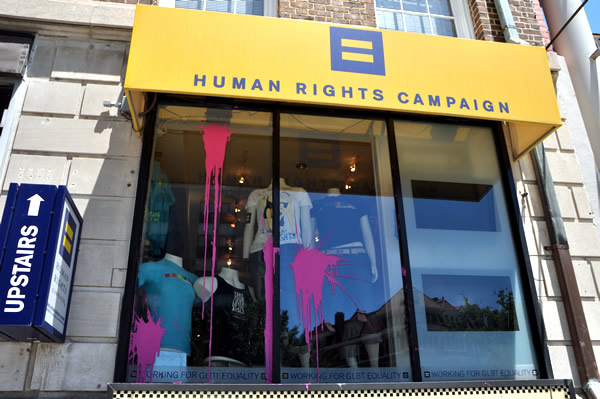
Damage to the HRC store in Dupont Circle was minimal. (Washington Blade photo by Michael Key)
The group, which called themselves “The Right Honorable Wicked Stepmothers’ Traveling, Drinking and Debating Society and Men’s Auxiliary,” claims to have “poured pink paint into light bulbs, grabbed hammers,” before vandalizing the store, which according to HRC offers “a unique fusing of education and grassroots advocacy with HRC’s signature merchandise.”
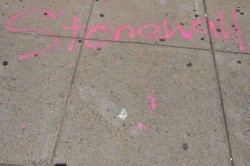
All damage appears to be mostly cosmetic, with paint splatters visible on the windows of the store, and the word “Stonewall” spray-painted on the sidewalk immediately in front of the store.
Michael Cole-Schwartz, Director of Communications for the Human Rights Campaign, said in response to the vandalism, “HRC’s DC Action Center and Store was vandalized last night with paint on the front windows and an LGBT group has claimed responsibility for the crime. It’s unfortunate that after a marriage win in New York that represented an unprecedented coming together of LGBT groups, some are more interested in fostering division in the community.”
The full text of the offending group’s press release is bellow:
ROWDY QUEERS TRASH AND GLAMDALIZE HUMAN RIGHTS CAMPAIGN GIFT SHOP IN WASHINGTON, DC ON THE 42nd ANNIVERSARY OF THE STONEWALL RIOTS
The word Stonewall painted on the sidewalk in front of the HRC store. (Washington Blade photo by Michael Key)
(In the wee hours of June 29, 2011)
—The Human Rights Campaign (HRC) gift shop in Dupont Circle in Washington, DC is a god awful monstrosity. We were in there yesterday and between wiping our genitals on the clothing and discovering that the snow globes wouldn’t properly fit up our bums, we got to thinking:
“This place would look great with a bit of shattered glass and splattered paint.”
So we strapped on our riot chaps, poured pink paint into light bulbs, grabbed hammers, and went party party party! all over that tacky testament to the transformation of radical queer liberation into consumer junk.
We’ve got good reason. This week marks the 42nd anniversary of the Stonewall Riots.
On the night of June 28, 1969, New York City’s Public Morals Squad did a routine raid of an East Village gay bar called the Stonewall Inn. Everything was going fine until, in the midst of the standard genital check that police forced on draq queens, a lesbian beaned a cop straight in the head with a ripped-up parking meter. And so queer liberation was born.
The modern LGBT movement owes its success to three days of smashing, burning, punching, and kicking–all of it happily indiscriminate–and the confrontational tactics of groups like ACT-UP that followed in the decades since. Yet, somehow we’ve forgotten our riotous roots.
Gay Pride, for example, wasn’t always a suburban county fair with less fanny packs and lined with banks and politicians. The first Pride was the 1970 Christopher Street Liberation Day march, a celebration of the riots the year before (and to this day, Pride festivals the world over are celebrated in June).
But we’ve been snorting ritalin and drinking whiskey all night and this manifesto tomfoolery is wearing us down so let’s bring it home, shall we?
Why, you’re asking, did we specifically target the HRC, a massive national gay rights non-profit as opposed to vomiting urine on Rick Santorum or something equally fun?
Put simply, they suck. What do they suck? Cash. Lots of it.
The HRC rakes in something approaching 50 million dollars a year in revenue–their executive director, Joe Salmonellamayonaisemanese pulls in a salary of several hundred grand. What have we gotten out of this bloated carcass? Not a thing worth mentioning and every now and then, they eagerly sell trans people up the river. Seriously, this is an organization that hordes money and does nothing useful. It’s a sad, sick dinosaur.
Meanwhile, in Washington, DC violence against the LGBT community is on the rise; DC’s only LGBT center is forced to go hat in hand to real estate developers and beg for space, only to face eviction a few years down the road; We lack a homeless shelter for queer youth and services for our community are the victims of budget cuts. Can you think of something better to do with a few million dollars?
(Did you know that 50 million dollars can buy about 300 thousand pounds of glitter?)
Everyone: We know you mean well, but stop giving these idiots your money. Stop putting that equal sticker on your car. Stop going to their lame galas. And for the love of Judy Garland’s Ghost and Robert Mapplethorpe’s Zombie Bones, stop saying “It Gets Better” and hoping for a miracle from up on high. We don’t expect you to riot (although we swear you’ll love it once you get going!) but it’s time for us to quit with the passivity, move to action, build community and care for each other instead of hoping the Gay Non-Profit Industrial Complex will ever get anything done.
Sincerely,
THE RIGHT HONORABLE WICKED STEPMOTHERS’ TRAVELING, DRINKING AND DEBATING SOCIETY AND MEN’S AUXILIARY
The group posted a copy of their press release here.




Baltimore
Ron Singer, owner of popular Mount Vernon gay bar Leon’s, dies
66-year-old’s funeral to take place Friday
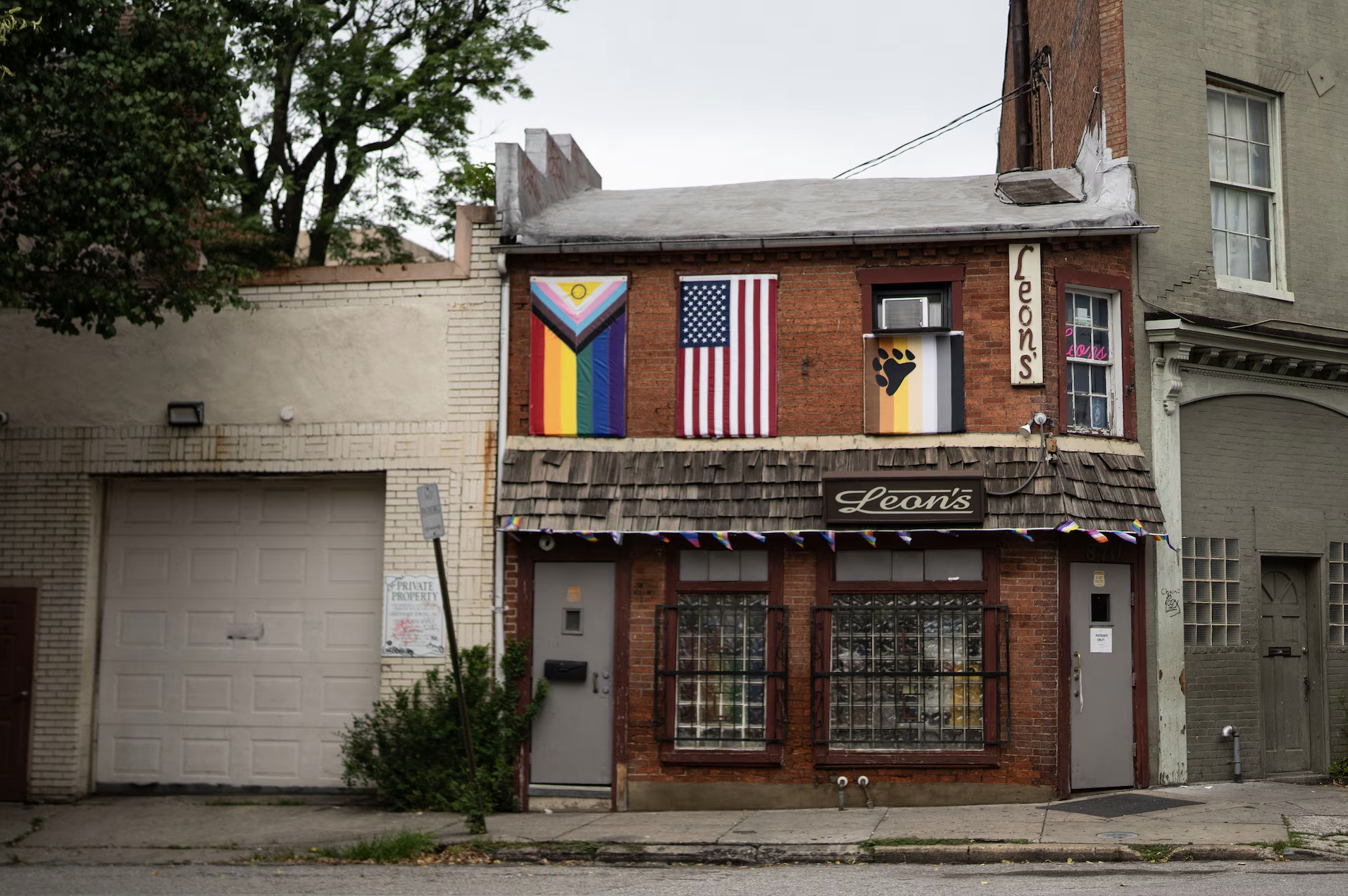
By CAYLA HARRIS | Ron Singer, the owner of Baltimore’s popular gay bar Leon’s Backroom, died Tuesday, the venue announced in a social media post. He was 66.
“For more than 20 years, Ron made Leon’s a place so many people were proud to call home,” the post reads. “He will be deeply missed.”
The Mount Vernon bar, typically open from 4 p.m. to 2 a.m. daily, is still open Thursday, but doors will close at midnight so staff can attend his funeral Friday morning. Services are scheduled to begin at 9:30 a.m. at Sol Levinson’s Chapel.
The rest of this article can be read on the Baltimore Banner’s website.
District of Columbia
Mary’s House founder, CEO retires
Dr. Imani Woody played leading role in opening DC’s first home for LGBTQ seniors
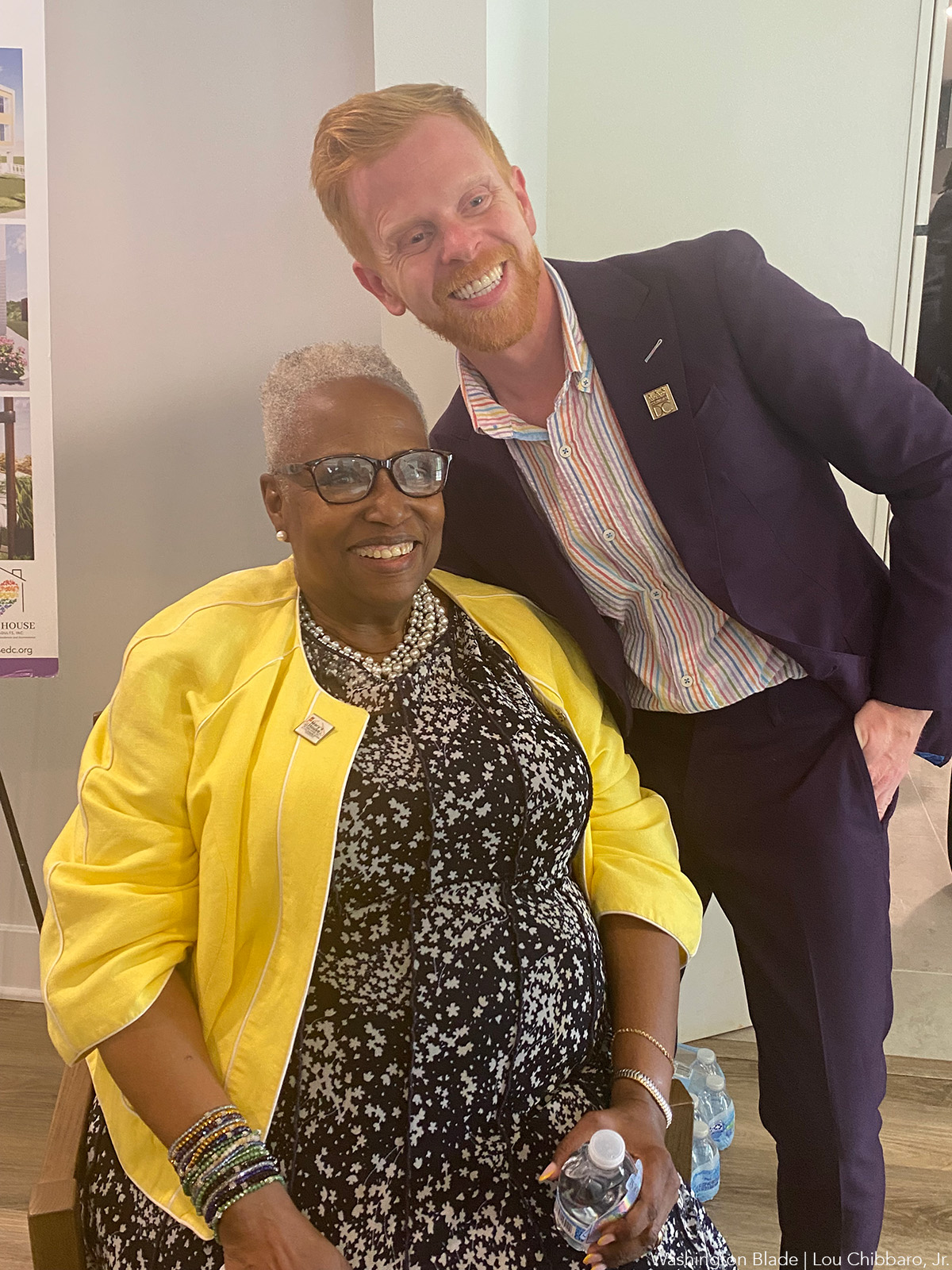
The board of directors for Mary’s House for Older Adults, DC’s first official home dedicated to providing affordable housing for LGBTQ seniors, announced on July 7 that its founding president and CEO, Dr. Imani Woody, has retired.
Woody, who holds a PhD in Human Services, is credited with playing a leading role over many years in arranging both city and private funding needed to construct and operate the Mary’s House three-story building located at 401 Anacostia Road, S.E., in the city’s Fort Dupont neighborhood.
The house, which opened in March 2025, with a grand opening ceremony held in May 2025, includes 15 single-occupancy residential units and more than 5,000 square feet of shared communal living space.
“It is with profound gratitude and hearts full of celebration that the board of directors of Mary’s House for Older Adults, DC (MHFOA) announces the retirement of our visionary founder, Dr. Imani Woody, from her role as president and CEO,” the Mary’s House board says in a statement.
“Dr. Woody’s journey with Mary’s House began with her vision and a kitchen table gathering of women with a bold, urgent, and loving vision: to create safe, affirming, affordable housing for LGBTQ/SGL older adults in Washington, DC,” the statement says.
It adds, “What started as a dream has grown into DC’s first affordable LGBTQ+/SGL affirming communal living space for adults 60 and over, a 15-room community residence at 401 Anacostia Road in Southeast Washington.”
The statement says Woody will continue to serve on Mary’s House board.
“The board will be sharing information about the leadership transition process in the coming weeks,” the statement continues. “We are committed to honoring Dr. Woody’s legacy by ensuring Mary’s House continues to thrive and grow in faithful service to LGBTQ/SGL elders experiencing housing insecurity and isolation.”
Maryland
Va., Md., advocates brace for next fight after Supreme Court sports ruling
Neither state has statewide ban on trans student athletes
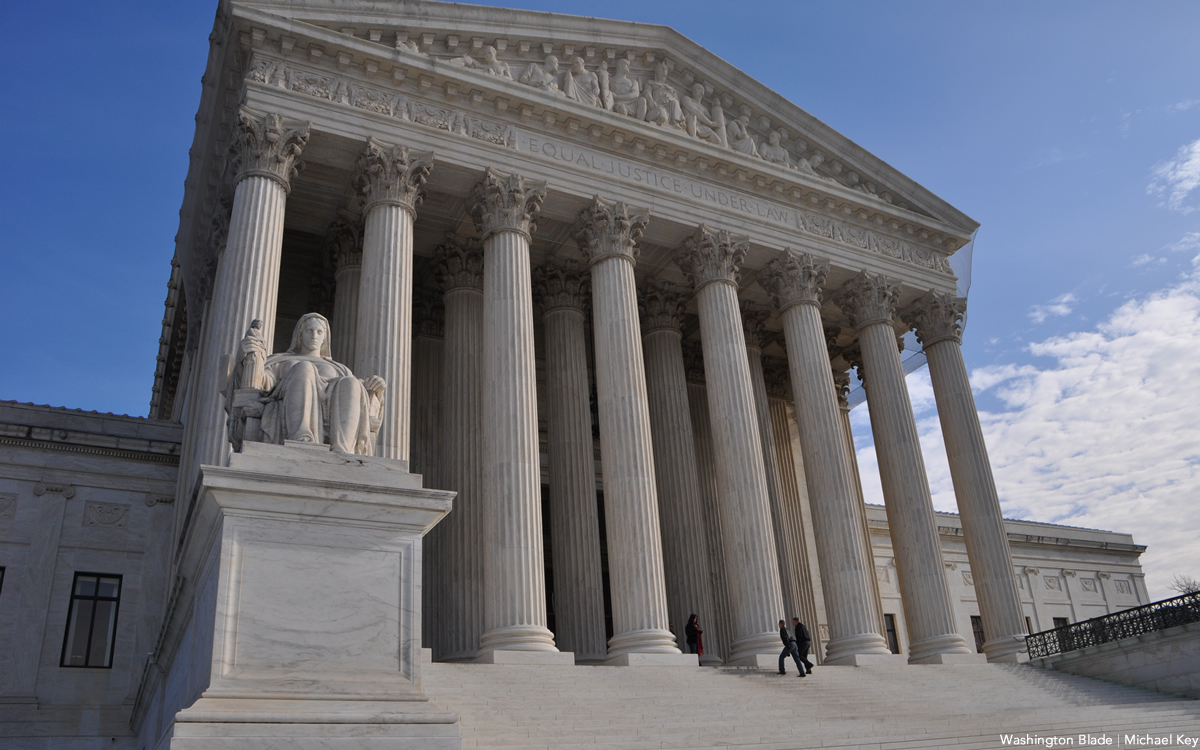
On June 30, the U.S. Supreme Court cleared the way for states to enforce laws barring transgender students from participating on school sports teams consistent with their gender identity, a decision LGBTQ advocates say could encourage additional restrictions across the country.
While neither Maryland nor Virginia currently has a statewide ban on trans student athletes, advocates say the decision could reshape future legislative battles and school policies throughout the region.
Directly following the case, attorneys for trans student athletes spoke out about the case and how detrimental it could be to students.
“This ruling is deeply harmful for transgender women and girls who only asked for the ability to participate in sports with their peers,” said Sasha Buchert, senior attorney and director of the Nonbinary and Transgender Rights Project for Lambda Legal, in a press release from the American Civil Liberties Union.
The next step is figuring out how states will move forward, specifically in Maryland and Virginia.
As of right now, neither state has bans on trans athletes in schools. The new Supreme Court decision also does not require states to enact bans, only that bans are allowed if states or school districts choose to enforce them.
According to the ACLU, 27 states have banned trans youth from participating in school sports since 2020. Most of these states also require sex testing, which the organization says is invasive for all female athletes.
Equality Virginia Executive Director Narissa Rahaman said that while she has heard a lot of frustration following the decision, people are ready to take action.
“Families, parents and youth have lived through disappointing changes to the Virginia Department of Education’s model policies for the treatment of transgender students, and the Virginia High School League’s decades-old policy that allowed transgender students an opportunity to play sports with their friends,” Rahaman said in a statement to the Washington Blade.
She believes they are not ready to give up this fight quite yet.
As of now, trans and nonbinary students are protected under Virginia law, and Rahaman wants that to continue.
“This ruling will likely embolden right-wing members of the General Assembly to pursue trans athlete bans, and we will continue to defeat every bill like we have the past five legislative sessions. Now is our time to be proactive,” Rahaman said.
She also calls upon Democratic Gov. Abigail Spanberger to defend trans youth in Virginia from what she describes as bullies and to continue to stand up to federal attacks on the trans community in general.
For trans students, Rahaman wants to ensure that they continue to know that they belong and have a place in school sports.
“To the transgender young people watching this decision unfold: you belong on your team, in your school, in your community, and here in Virginia. This ruling does not change that. A single Supreme Court decision cannot define your worth or your future,” Rahaman said.
For people who may be outside the community but want to help, she encourages them to speak with trans and nonbinary people in their community, befriend the families of youth to show their support, and continue to speak up on these issues when needed.
According to ACLU of Virginia, high schooler Eliza Munshi was told she could not compete on the girls’ track team because she was trans. To prove a point, she decided to compete with the boys.
She had previously competed on the girls’s track team before her Virginia school decided to enforce the ban demanded by President Donald Trump. With pink hair and pink makeup, she decided to continue her love for the sport alongside boys. According to Munshi, her entire community rallied for her.
“I did it to prove a point. I knew I could do it. I knew it wouldn’t phase me. My gender itself and that label has been the least important part of my transition: I want to look how I want to look. I want to dress how I want to dress. If you don’t like that, then that’s not my business,” Munshi said.
DOE has launched Title IX probe against Md. school districts
In the weeks leading up to the ruling, multiple Maryland school districts were included in a Title IX probe stating that not enforcing sex-based protections guaranteed by federal law. Currently, there have been no updates on the lawsuit or the district’s decisions.
According to the U.S. Department of Education, the federal probe is based on parent complaints that the school districts were violating a specific Trump-Vance administration addition to Title IX, stating it aligned the sex-based protections “with biological reality, not ideological fantasy.”
According to FreeState Justice, an LGBTQ advocacy group in Maryland, while this is a disappointing ruling to see, they will continue to fight for trans student-athletes in Maryland and want trans youth to know that they belong.
“Every young person deserves the opportunity to participate in school and community life without being singled out because of who they are. These decisions send a harmful message to transgender youth that they are somehow less deserving of that opportunity,” said Phillip Westry, the group’s executive director.
Westry wants to make sure the community knows that their commitment to the organization has not changed and will continue to provide the same legal services they have prior and to advance policy solutions, to ensure “every LGBTQ+ Marylander can live with dignity, safety, and equal opportunity.”
Another issue brought up by trans advocates is the issue of testing women to determine whether they are biologically female or not.
According to Human Rights Watch, as of 2023, World Athletics required cis women with increased testosterone levels to undergo medical procedures to have it reduced to avoid advantages. Other forms of “sex verification” may include genetic testing, screenings of an athlete’s anatomy or chromosomes.
However, this can become detrimental because not all women have ovaries, a uterus, or XX chromosomes, meaning cisgender women could potentially be included in these bans, depending on how the specific state plans to enforce them.

Gay librarian to discuss new novel at Green Lantern

Calendar: July 10-16

Gay Fla. Democrat Elijah Manley sees opportunity in Trump’s second term

Ron Singer, owner of popular Mount Vernon gay bar Leon’s, dies

Egyptian authorities refuse to allow gay cruise to dock in country

‘My Favorite Sociopath’ debuts at Shepherdstown’s CATF

Under-the-radar Delaware beach towns smart buyers are targeting

In Trump’s divided America, Michael Weinstein’s AHF responds

Turkish authorities refuse to allow gay cruise to dock in country

When a church fears the rainbow
-

 Theater5 days ago
‘My Favorite Sociopath’ debuts at Shepherdstown’s CATF
-
Real Estate5 days ago
Under-the-radar Delaware beach towns smart buyers are targeting
-
Politics4 days ago
In Trump’s divided America, Michael Weinstein’s AHF responds
-
Turkey4 days ago
Turkish authorities refuse to allow gay cruise to dock in country