Opinions
One AIDS march that should end
As D.C. prepares to walk, let’s remember those suffering in Vietnam

On Saturday, Oct. 29, thousands of people in Washington will walk to raise attention and money for HIV/AIDS. AIDS walks in cities throughout the world are an occasion to remember those who have died and to renew our hopes for an end to the epidemic.
There was an AIDS walk in southern Vietnam last year too, in Lam Dong province, and in some ways it looked like any other. People walked behind a banner reading “No prejudice and discrimination against HIV/AIDS patients.” There were speeches, films and performances, many around the theme of “universal access and the right to health care.”
But looking closer, it became clear that this wasn’t a walk in solidarity, or remembrance, or hope. It was a forced march.
Hundreds of marchers stood in rows, in identical clothes. There were no smiles or frivolity. No demands were chanted for the government to do more. No joyful or tearful reunions. The march did not pass through the gay district nor did it wind its way downtown to the halls of government and power.
The march was at the “School for Education, Vocational Training and Job Placement No. 2.” Despite its benign-sounding name, the “school” is really a detention center for drug users. Detainees face years of forced labor and physical abuse, including torture.
The HIV epidemic in Vietnam is concentrated among injection drug users, who desperately need community-based, effective services for drug dependency treatment and HIV prevention and care. But something is seriously rotten when “education” centers operating as forced labor camps organize AIDS marches under slogans calling for an end to prejudice against people living with HIV.
It is equally perverse that some of the world’s most significant bilateral and multilateral donors fund services inside these centers, seeming to turn a blind eye to the abuses there.
Vietnam’s forced labor centers are a remnant of a hard-line communist approach. Drug users were one of many social groups rounded up and subjected to “re-education through labor” following the victory of North Vietnam in 1975.
But as Vietnam’s economy has modernized, the system has expanded. In 2000, there were 56 drug detention centers across Vietnam; by early 2011, that number had risen to 123. The length of time in detention has steadily grown.
Human Rights Watch interviewed people who had been held in various centers under the control of Ho Chi Minh City authorities. Many were afraid they could be sent back to detention, where they would face more forced labor and abuse. Three had been held in “School No. 2.” They told us they husked cashews, made shopping bags and sewed clothes, all in the name of “labor therapy.” Detainees who refused to work were beaten or put in punishment cells.
Even when they received some payment, those wages were garnished for food, lodging and “management fees.” People told us of leaving “rehabilitation” centers owing money that they, or their families, had to pay.
Rates of HIV inside the centers are hard to state with any certainty: estimates have ranged from 15 to 60 percent. Most centers offer no medical care, so donors such as the [US] President’s Emergency Plan for AIDS Relief (PEPFAR), the Global Fund to Fight AIDS, Tuberculosis and Malaria, and the World Bank have supported programs for detainees.
It’s easy to understand why the donors are there. The government centers hold thousands of drug users, and it’s harder to reach drug users outside of detention when they live in fear of being arrested. Donor agencies told us that they couldn’t turn their back on people in these centers, who might die without their support.
Yet donors are turning their backs when it comes to documenting abuses in the centers, and demanding that the Vietnamese government shut them down. Without doubt, HIV treatment can be life-saving. However, under Vietnamese law, HIV-positive people in detention have a right to be released if drug detention centers can’t provide appropriate medical care. Donor support for expanded HIV treatment inside centers can have the perverse impact of enabling the government to continue detaining people living with HIV, maximizing profits while still denying detainees effective drug dependency treatment.
In 2009, more than $100 million was provided by international funders for AIDS programs in Vietnam. That sort of money should buy a lot more accountability than has been seen. The centers have been shown repeatedly to be ineffective at treating drug dependence and should be immediately shut down. Until they are, donors should demand that Vietnam stop detaining new drug users and release all those currently living with HIV. Donors should support community-based drug treatment, which is less expensive, more effective and more respectful of human rights.
“No prejudice against HIV/AIDS patients.” That’s a banner worth walking behind. To make it real in Vietnam will require those walking in Washington to ask tough questions of U.S. global AIDS policies. Act locally, think globally. Those who are out on Saturday should raise money for local efforts to fight AIDS, but walk in solidarity with those who are locked up, tortured and forced to march in Vietnam.
Joe Amon is the director of the health and human rights division at Human Rights Watch.



Commentary
‘Live Your Pride’ is much more than a slogan
Waves Ahead forced to cancel May 17 event in Puerto Rico

On May 5, I spoke by phone with Wilfred Labiosa, executive director of Waves Ahead, a Puerto Rico-based LGBTQ community organization that for years has provided mental health services, support programs, and safe spaces for vulnerable communities across the island. During our conversation, Labiosa confirmed every concern described in the organization’s public statement announcing the cancellation of “Live Your Pride,” an event scheduled for Sunday in the northwestern municipality of Isabela. But beyond the financial struggles and organizational challenges, what stayed with me most was the emotional weight behind his words. There was pain in his voice while describing what it means to watch spaces like these slowly disappear.
This was not simply the cancellation of a community event.
“Live Your Pride” had been envisioned as a celebration and affirming gathering for LGBTQ older adults and their allies in Puerto Rico. In a society where many LGBTQ elders spent decades hiding parts of themselves in order to survive, spaces like this carry enormous emotional and social significance. They become places where people can finally exist openly, without fear, apology, or shame.
That is why this cancellation matters far beyond Isabela.
What is happening in Puerto Rico cannot be separated from the broader political climate unfolding across the U.S. and its territories, where programs connected to diversity, inclusion, education, mental health, and LGBTQ visibility increasingly find themselves under political attack. These changes do not always arrive through dramatic announcements. More often, they happen quietly. Funding disappears. Community organizations weaken. Safe spaces become harder to sustain. Eventually, the absence itself begins to feel normal.
That normalization is dangerous.
For years, organizations like Waves Ahead have stepped into gaps left behind by institutions and governments, particularly in communities where LGBTQ people continue facing discrimination, social isolation, economic instability, and mental health struggles. Their work has never been limited to organizing events. It has involved accompanying people through loneliness, trauma, rejection, depression, aging, and survival itself.
“Live Your Pride” represented much more than entertainment. It represented visibility for LGBTQ older adults, many of whom survived decades of family rejection, religious exclusion, workplace discrimination, violence, and silence. These are individuals who came of age during years when living openly could cost someone employment, housing, relationships, or personal safety. Many learned to survive by making themselves invisible.
When spaces like this disappear, something deeply human is lost.
A gathering is canceled, yes, but so is an opportunity for healing, connection, recognition, and dignity. For many LGBTQ older adults, especially in smaller municipalities across Puerto Rico, these events are not secondary luxuries. They are reminders that their lives still matter in a society that too often treats aging and queer existence as disposable.
There are still political and religious sectors that portray the rainbow as some kind of ideological threat. But the rainbow does not erase anyone. It illuminates people and stories that society has often tried to ignore. It reflects the lives of young people forced out of their homes, transgender individuals targeted by violence, older adults aging in silence, and families that spent years defending their right to exist openly.
Perhaps that is precisely why the rainbow unsettles some people so deeply.
Its colors expose abandonment, hypocrisy, inequality, and fear. They force societies to confront realities that are easier to ignore than to address honestly. They reveal how fragile human dignity becomes when political agendas decide that certain communities are no longer worthy of protection, funding, or visibility.
The greatest concern here is not solely the cancellation of one event in one Puerto Rican town. The deeper concern is the message quietly taking shape behind decisions like these — the idea that some communities can wait, that some lives deserve fewer resources, and that safe spaces for vulnerable people are expendable during moments of political tension.
History has shown repeatedly how social regression begins. Rarely with one dramatic act. More often through exhaustion, silence, budget cuts, and the slow dismantling of organizations doing essential community work.
Even so, Waves Ahead made one thing clear in its statement. Although “Live Your Pride” has been canceled, the organization will continue providing mental health and community support services through its centers across Puerto Rico. That commitment matters because people do not survive on slogans alone. They survive because somewhere there are still open doors, trained professionals, supportive communities, and people willing to remain present when the world becomes colder and more hostile.
Puerto Rico should pay close attention to what this moment represents. No healthy society is built by weakening the organizations that care for vulnerable people. No government should feel comfortable watching community groups struggle to survive while attempting to provide services and compassion that public institutions themselves often fail to offer.
The rainbow has never been the problem.
The real problem is the discomfort created when its colors force society to confront the wounds, inequalities, and human realities that too many people would rather keep hidden.
Opinions
LGBTQ community must say NO to Janeese Lewis George
Mayoral candidate should disavow Jauhar Abraham

Unless she disavows the support, and words, of those like Jauhar Abraham, which she hasn’t done, the LGBTQ community should say a resounding NO to voting for Janeese Lewis George. I don’t know her personally, but I do know what Abraham said about my community, and I know George not only accepted his endorsement, but went to help celebrate his birthday with him.
Abraham called gay men ‘fags.’ He then ranted, including saying gay men, who he called ‘sissies,’ should not be allowed to teach his children in our public schools. We have spent too many years fighting for our rights and dignity as gay men, and have come too far, to have a mayor who will not call out that kind of language, and the person who uses it.
Another issue on which I criticized George is her asking for, and getting, the endorsement of the Democratic Socialists of America (DSA), a group that is considered antisemitic. The DSA calls for the abolishment of the State of Israel, from ‘The river to the sea’ and tells endorsed candidates they may not meet with any Zionist organization, among other things. Her response to being called out on this by Ron Halber of the Jewish Community Relations Council of Greater Washington, was to have a private meeting with some Jewish leaders, where she blamed the answers to the questionnaire she submitted asking for the DSA endorsement, on a staffer. She neither fired the staffer, nor said which statements the staffer made she disagreed with. She has never disavowed the positions of the DSA. No one at that meeting was satisfied, and the same week she headlined, with others, a DSA rally. She claimed she is only a member of the Metro DSA group, but you cannot be a member of the local group, without being a member of the national organization. She also said she is a member of the Democratic Party, and doesn’t always agree with all they say. Well, it’s simple. In both cases, tell us what you disagree with in both their platforms. She has refused to do this.
I want the next mayor of D.C. to be willing to take responsibility for what they do, and say. I never agree 100% with any politician I have supported, and never expect to. But I want honest politicians. When something gets screwed up in the mayor’s office, will George blame it on a staffer?
It is also clear she doesn’t fully understand the tightrope a D.C. mayor must walk because we are not a state. George is clearly trying to emulate the campaign Mamdani ran for mayor in New York City. It was a great campaign. Mamdani is a great speaker, and charismatic. He also had the benefit, George doesn’t have, to run against a totally flawed candidate. Mamdani deserved to win.
I also want my adopted city of D.C., having moved here in 1978, to succeed. But what we are seeing in New York as Mamdani tries to make good on his promises, is his needing the help of the governor, and the state legislature. What George apparently misses completely, is, we have no governor, or state legislature. In reality, our governor is the felon serving as president, and the state legislature is Congress. We have seen generally how unwilling they are to help, and in most cases would rather try to hinder us from moving forward. It requires the mayor to be a constant advocate, but while doing that, also walking a tightrope. While fighting for statehood, and in the meantime, budget and legislative autonomy, the mayor has to deal with what exists today. Even if Democrats win back Congress in 2026, and I think we will, the felon will be there for the first two years of our next mayor’s term. Because of that, it is even more crucial they understand how to deal with him. Whether it’s housing policy, our court system, the national guard, parks department, or a host of other agencies and issues, we don’t have full control.
So, for all these reasons, I urge the LGBTQ community, and all voters, to say NO to Janeese Lewis George. She is wrong for D.C. at this time. I urge voters to say YES to, and cast their ballot, for Kenyan McDuffie for mayor. All my reasons to vote for him can be found in a column I wrote previously for the Blade. Let’s make sure our city, a city we all love, moves forward for ALL of us.
Commentary
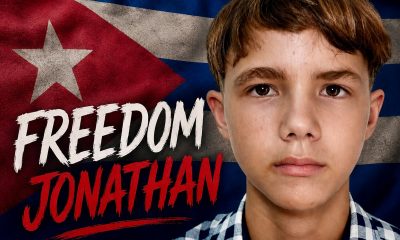
He is 16 and sitting in a Cuban prison
Jonathan David Muir Burgos arrested after participating in anti-government protests
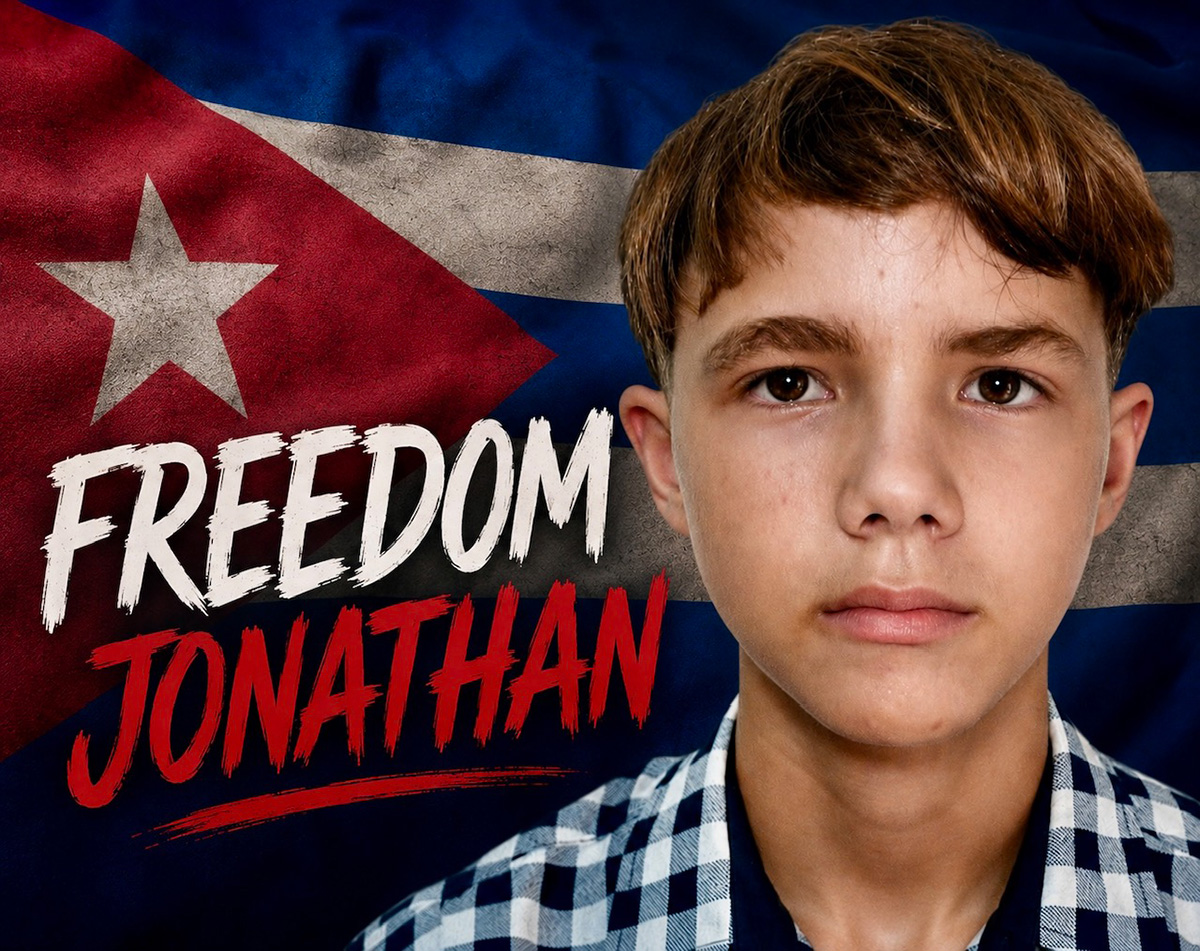
Jonathan David Muir Burgos is 16-years-old, and that fact alone should force the world to stop and pay attention. He is not an armed criminal, nor a violent extremist, nor someone accused of harming others. He is a Cuban teenager who ended up behind bars after joining recent protests in the city of Morón, in the province of Ciego de Ávila, demonstrations born out of exhaustion, desperation, and the growing collapse of daily life across the island.
Those protests did not emerge from privilege or political theater. They erupted after prolonged blackouts, food shortages, lack of drinking water, unbearable heat, and a level of public frustration that continues to deepen inside Cuba. People took to the streets because ordinary life itself has become increasingly unbearable. Families are surviving for hours and sometimes days without electricity. Parents struggle to find food. Entire communities live trapped between scarcity and silence.
Jonathan became part of that reality.
And today, he is sitting inside a Cuban prison.
The World Health Organization defines adolescence as the stage between approximately 10 and 19 years of age, a period marked by emotional, psychological, and physical development. That matters deeply here because Jonathan is not simply a “young protester.” He is a minor. A teenager still navigating the fragile years in which identity, emotional stability, and personal growth are being formed.
Yet the Cuban government chose to place him inside a high-security prison alongside adults.
There is something profoundly disturbing about a political system willing to expose a 16-year-old boy to the psychological brutality of prison life simply because he exercised the right to protest. A prison is never only walls and bars. It is fear, humiliation, emotional pressure, intimidation, and uncertainty. For a teenager surrounded by adult inmates, those dangers become even more alarming.
The situation becomes even more serious because Jonathan reportedly suffers from severe dyshidrosis and has previously experienced dangerous bacterial infections affecting his health. His condition requires proper medical care, hygiene, and adequate treatment, precisely the kind of stability that is difficult to guarantee inside the Cuban prison system.
Behind this story there is also a family living through a kind of pain impossible to fully describe.
Jonathan is the son of a Cuban evangelical pastor. Behind the headlines there is a mother wondering how her child is sleeping at night inside a prison cell. There is a father trying to hold onto faith while imagining the emotional and physical risks his teenage son may be facing behind bars. Faith does not erase fear. Faith does not prevent parents from trembling when their child is imprisoned.
And this is where another painful contradiction emerges.
While a Cuban pastor watches his son remain incarcerated, there are still political and religious voices outside Cuba romanticizing the Cuban regime from a safe distance. There are people who speak passionately about justice while remaining silent about political prisoners, repression, censorship, and now even the imprisonment of adolescents.
That silence matters.
Because silence protects systems that normalize abuse.
For too long, parts of the international community have spoken about Cuba through ideological nostalgia while refusing to confront the human cost paid by ordinary Cubans. The reality is not romantic. The reality is families surviving in darkness, young people fleeing the country in massive numbers, parents struggling to feed their children, and now a 16-year-old boy sitting inside a prison after joining a protest born from desperation.
No government has the moral right to destroy the emotional and psychological well-being of a teenager for exercising freedom of expression. No ideology should stand above human dignity. And no institution that claims to defend justice should remain indifferent while a child becomes a political prisoner.
Jonathan David Muir Burgos should not be in prison.
A 16-year-old boy should not have to pay for protest with his freedom.

‘The Inheritance’ is most-nominated at this year’s Helen Hayes Awards

HIV Vaccine Awareness Day set for May 18

DC Black Pride is around the corner

United Night Out set for Saturday

Calendar: May 15-21

America’s broken pipeline of mental healthcare for trans youth

PHOTOS: ‘Studio 69’

Blade finalist for D.C. Society of Professional Journalists awards

He is 16 and sitting in a Cuban prison