National
Richard Hatch maintains his innocence
Gay ‘Survivor’ winner sees judicial system as ‘corrupt’

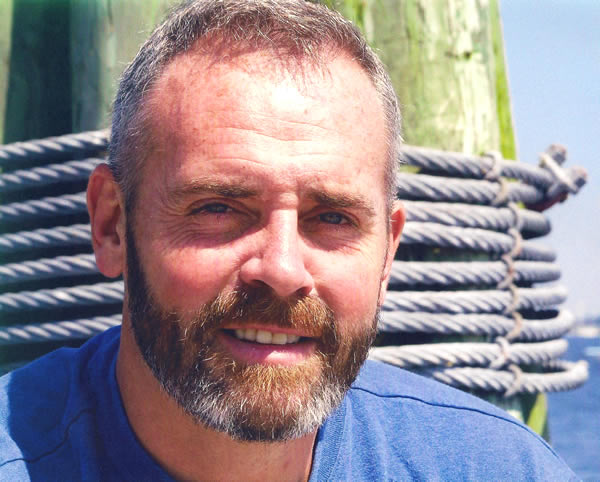
‘Survivor’ Richard Hatch is out of prison again and still maintains his innocence against tax evasion charges. (Photo courtesy Richard Hatch)
Richard Hatch became the first winner of the hit CBS show “Survivor” in 2000, but in the 11 years since, he’s had to survive more than backstabbing teammates, physical challenges and meals consisting of insects.
In 2006, Hatch, who is gay, was sentenced by a judge in Rhode Island to 51 months in federal prison on tax evasion charges, and was freed on probation in 2009. Prosecutors argued that Hatch failed to report his $1 million in winnings from “Survivor,” and money from subsequent public appearances. Hatch denied all charges. Earlier this year he was back in prison on charges of violating his parole after prosecutors claimed the 50-year-old reality TV star failed to re-file his 2000 federal income tax returns, a charge that Hatch denies.
“The prosecutor in this case is nothing short of a bully, and what I’ve been subjected to is nothing short of institutionalized bullying by the prosecutors, the probation department and the judge involved,” Hatch told the Blade just days after his Dec. 12 release from prison. “That’s provable, that’s observable by any objective viewers.”
“I’m absolutely innocent and have been since day one,” Hatch insisted.
Since winning “Survivor,” Hatch has been in and out of legal trouble, including a short arrest in 2009 as a result of granting several interviews with media outlets that were seen as a violation of the terms of his probation. Since his legal woes began in 2005, Hatch has maintained he never intentionally broke the law.
“It’s 2011 and they haven’t yet determined if something is owed for 2000,” Hatch told the Blade. “And all the prosecutor has done is prevented us from getting to the truth by lying to the court and claiming that my arguments aren’t valid when the IRS agents have verified everything I’ve claimed all along from day one.”
He continued, “They convicted me of attempting to evade taxes in 2006 that to this day have never been determined to be due,” Hatch said. “I filed that return in 2002 at the instruction and direction of the IRS using the numbers that they told me to use, I’ve been working with them through a tax attorney and a CPA ever since, and they have yet to complete the assessment for that year, 11 years later now.”
Hatch says he’s fully complied with the terms of his probation.
“When I was on probation, ‘Survivor’ created a show for me this ‘Redemption Island’ they invited me back to face Russell [Hantz],” Hatch told the Blade. “I’d completed my entire sentence, was on probation, perfectly compliant with anything and everything they ever asked, and probation fought the return of my passport, and prevented me, basically, from going on ‘Survivor.’”
“That’s twice now that I’ve been invited and they’ve refused to give me my passport while hypocritically lying, claiming I owe taxes — which I don’t — and arguing with the court that I’m refusing to pay them,” he continued. “So they’re blocking my ability to earn an income, and at the same time telling the court that I won’t pay. And none of it’s true.”
Hatch said that his jail time is the result of bias.
“I’ve learned how absurd these courts are. The original judge, who was biased against me, and held off his retirement to hear the case because he’d been admonished in an earlier case of mine for overstepping his bounds, he should have recused himself and didn’t — [Earnest C.] Torres — and this current judge, his mentee, his protege, William Smith, know so little about taxes they just don’t care. They listen to the prosecutor’s lies, and do whatever they tell them to do.”
“That in itself is reprehensible,” he added.
Hatch declined to answer questions about whether he’s found a job and a place to live after several media reports claimed that Hatch was homeless after his stint in prison.
“It’s just nobody’s business where I’m living and what I’m doing. I have much on my plate, I have some really fascinating opportunities that I’m working on. I’m not interested in talking about it.”
When asked whether he is homeless, Hatch replied, “Again, report whatever you’d like, I’ll give you the same answer, I don’t know where I’m staying.”
Hatch views the American justice system as deeply flawed.
“It’s not just because of my notoriety. It’s mostly because of my unconventionality, part of which is because I’m gay.”
Hatch said that unconventional people like himself — gay people, women, and African Americans — are unfairly targeted and “bullied” by a broken justice system.
“When you have people who want to take advantage of you, abuse you, persecute you, continue to feed the media caricature of this negative image, just because I’m an unconventional guy, that’s what they’ll do.”
Hatch said that the homophobia he claims he faced during his ordeal was not in prison, but in the court system.
“In prison I didn’t face anything significant that’s worth talking about as far as negativity from my peers,” he said. “I faced the same variety of subtle indignities that are brought by people in positions of power who don’t respect those positions and are insecure and otherwise mentally ill. And do things to abuse people who aren’t able to defend themselves.”




Florida
Former Fla. gubernatorial candidate Andrew Gillum arrested on drug charges
Democrat narrowly lost to DeSantis in 2018, later came out as bisexual
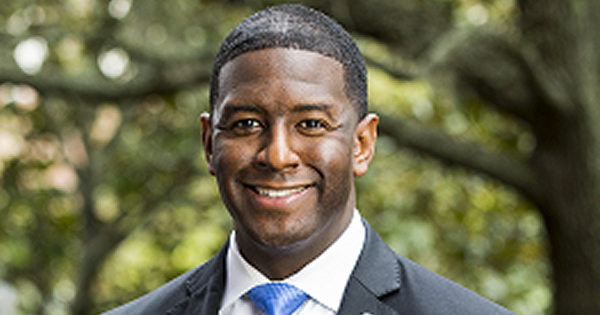
Andrew Gillum, the former Democratic nominee for governor of Florida and former mayor of Tallahassee, was arrested on drug possession charges in Alabama last week.
Police in Daphne, Ala., said they pulled Gillum over for erratic driving and found marijuana and methamphetamine in his vehicle. He was charged with possession of marijuana and unlawful possession of a controlled substance, according to the Daphne Police Department. Jail records show he was arrested on July 2 and released on July 3, the Associated Press reports.
Gillum, the first Black nominee of a major political party for governor in Florida, lost the 2018 election to current Republican Gov. Ron DeSantis in a highly contentious race.
Once considered a rising star in national politics, Gillum served in Tallahassee’s local government, first as a city commissioner and then as mayor of Florida’s capital from 2014- 2018.
The Daphne Police Department said officers stopped Gillum’s vehicle around 10:45 p.m. and initiated a probable cause search after one officer noticed a glass pipe on the center console.
During the search, officers found several rolled marijuana cigarettes and three packages containing a substance that tested positive for methamphetamine, police said.
The day after his arrest he was charged with possession of dangerous drugs, use or possession of drug paraphernalia, and possession of marijuana.
In 2020, Gillum was involved in a similar incident when he was found in a Miami Beach, Fla., hotel room with a man identified as an escort who had apparently overdosed on drugs. Police also found three bags of suspected crystal methamphetamine in the room. The man survived, and no one was ever charged with a crime.
Later that year, Gillum came out as bisexual during an appearance on “The Tamron Hall Show,” where he discussed his struggles with drug and alcohol addiction and his decision to seek treatment following the 2020 incident.
In the same interview he shed light onto this, saying his substance use was a byproduct of the emotional struggles he experienced after losing the 2018 gubernatorial race to DeSantis.
This is not the first time Gillum has faced legal scrutiny.
During his 2014 mayoral campaign, he faced allegations of misconduct after hiring private equity investor Adam Corey as his campaign treasurer, raising questions about a potential conflict of interest. However, the FBI ultimately concluded there was no conflict of interest.
Pennsylvania
Philadelphia murder suspect remains at large
Two killed, one injured in attacks motivated by victims’ sexual orientation
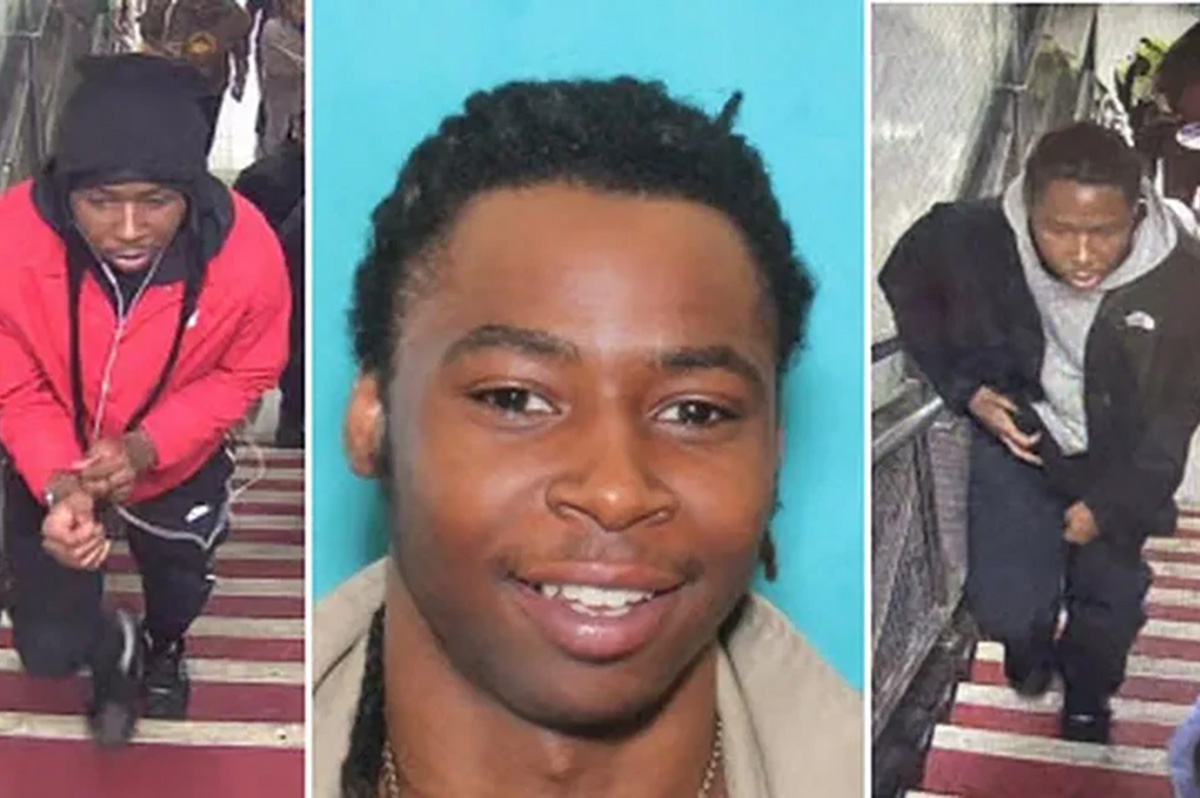
Police seek the public’s support in finding a suspect wanted in connection with three Philadelphia shootings, including two murders, who may have targeted his victims because they were gay. All three shootings took place near Hunting Park Recreation Center between May 29 and June 26.
The suspect is 21-year-old Jahylin Melchur, who has not been located by police and is not in police custody as of July 7. Police seek the public’s support in tracking down the suspect, whose image was captured on surveillance cameras. Previous reporting underlined that Melchur should be considered armed and dangerous.
Each of the victims was found partially clothed between 10 and 11 p.m.
On May 29, a 55-year-old in Juniata Park was found two miles from the rec center. The victim, who survived the encounter with critical injuries, said a man approached him and announced his intention to rob him, before shooting him in the elbow and torso.
Martin Higgins, 45, was pronounced dead on the bleachers of the rec center’s baseball field on June 20, suffering from a gunshot wound to the abdomen. Sharef Holman, 29, was found near the basketball courts on June 26, suffering from multiple gunshot wounds. He was transported to Temple University Hospital but died shortly thereafter.
Deputy Police Commissioner Frank Vanore declined to answer the Philadelphia Inquirer’s question regarding whether the victims may have met Melchur on a dating app, citing the ongoing investigation. Sources told the Philadelphia Inquirer that investigators are exploring this possibility
Although robbery may be at least part of the motive in the first shooting, other movies are unclear.
NBC10 reported that law enforcement sources told the station all three victims were targeted because they were gay, but the Philadelphia Police Department did not confirm this.
The Philadelphia Police Department replied to PGN’s questions with an email stating, “This remains a very active investigation, and investigators are looking at all aspects of the case, including underlying motivations for committing these crimes.
“At this point, we can confirm that Melchur is wanted for two homicides by shooting and one non-fatal shooting, all of which occurred in the Hunting Park area.
“The investigation has not established that the victims were specifically targeted because of their sexual orientation.”
The Philadelphia Police Department is urging anyone with information to contact the Homicide Unit at 215-686-3334 or submit an anonymous tip by calling the PPD Tip Line at 215-686-TIPS (8477).
(This story is republished with permission of the Philadelphia Gay News.)
National
Madonna roundup: Reviews, sales, and love for ‘Danceteria’
Pop legend’s new album ‘Confessions II’ earning raves
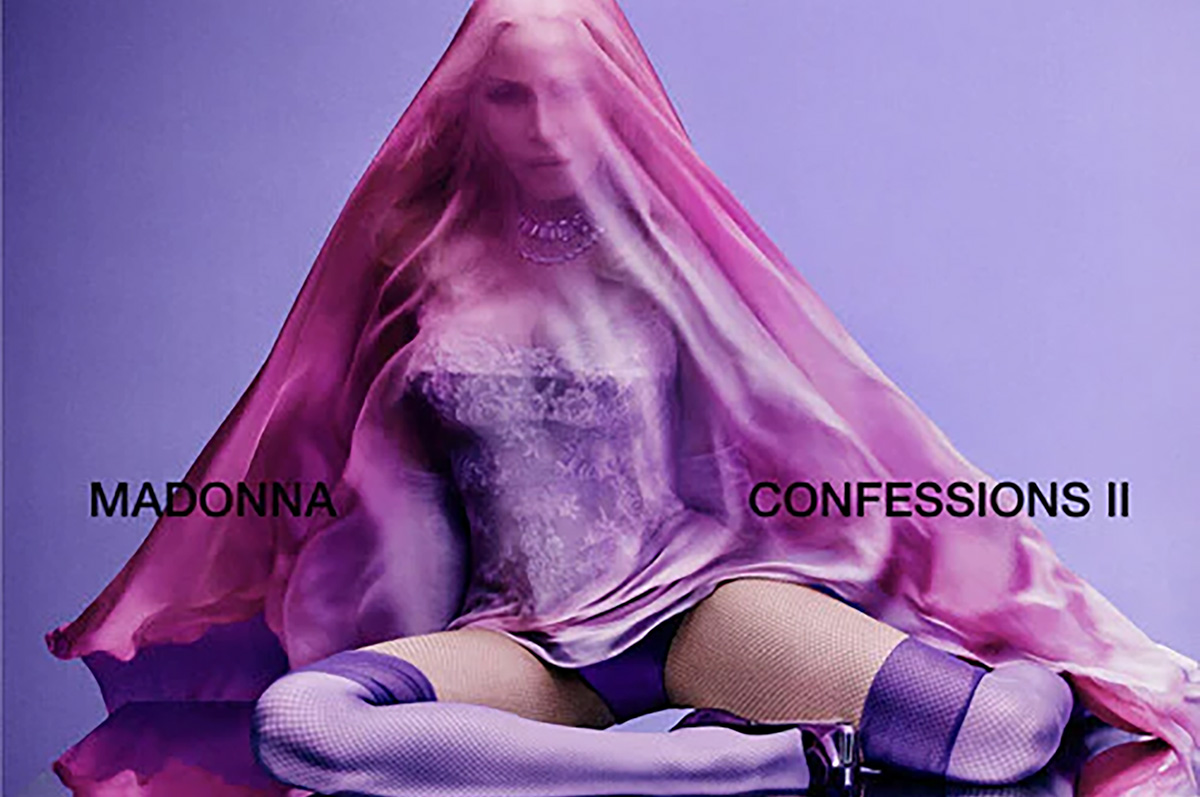
Madonna isn’t just back, she’s ubiquitous.
From a Times Square takeover to Graham Norton’s couch, the pop legend is busy promoting her new album, “Confessions II,” a sequel to 2005’s “Confessions on a Dance Floor,” that is earning rave reviews.
“Madonna’s back in peak form with a fresh and honest dance record that’s not only her best in 20 years, but a genuinely vital addition to her canon,” says Pitchfork.
“Facing grief and loss has made Madonna’s music deeper than it’s been in 20 years, but also more alive,” the Guardian proclaims.
“If everyone in the club is a work of art, as ‘Danceteria’ says, then to live loudly is to make an indelible mark,” according to Vulture.
The album features upbeat dance productions along with some melancholic views on death and loss. On the song “Betrayal,” she reflects on the recent death of her stepmother Joan, singing, “You’ll never take my mother’s place … you betrayed me, you enslaved me.”
On “L.E.S. Girl,” she revisits her early days living on the Lower East Side and struggling to pay the rent. “Bizarre” seems to reference her failed 1980s marriage to actor Sean Penn. “Test” is a duet with daughter Lola Leon, in which she sings, “I wish I knew / The pain I’ve caused / My butterfly / Was always being watched.”
But the emotional high point of the album comes on “Fragile,” which she wrote about the death of her brother Christopher. The two were close early in Madonna’s career and he designed sets for early tours, including “Blonde Ambition.” But they had a falling out after her marriage to Guy Ritchie and he wrote a scathing tell-all book about his sister that led to years of estrangement. The two reconciled after Christopher’s cancer diagnosis and shortly before he died in 2024 at age 63. She sings, “Late last night I was fast asleep/You came to me in a dream/You said, ‘Don’t forget about me/Don’t forget to be happy.’”
Death emerges again but in a much more upbeat context in “Danceteria,” an ode to the iconic New York nightclub that has emerged as a gay favorite single and seems destined to be the song of the summer in queer nightlife. She recounts her pre-fame days trying to convince a DJ to play her first single “Everybody” at the club and name checks Jean-Michel Basquiat, Keith Haring, best friend Debi Mazar, and DJ Mark Kamins on the track.
Streaming numbers and sales are strong for the new album with projected first week sales of 100,000 ensuring a No.1 debut in the U.S.
Former Fla. gubernatorial candidate Andrew Gillum arrested on drug charges

Dutch prime minister scheduled to open World Pride human rights conference

Philadelphia murder suspect remains at large

Mary’s House founder, CEO retires

Va., Md., advocates brace for next fight after Supreme Court sports ruling

Under-the-radar Delaware beach towns smart buyers are targeting

‘My Favorite Sociopath’ debuts at Shepherdstown’s CATF

In Trump’s divided America, Michael Weinstein’s AHF responds

When a church fears the rainbow