Local
Woman charged in IHOP shooting of gay man
Hate crime designation uncertain
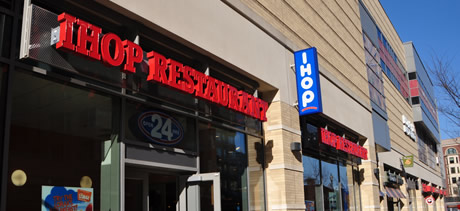
D.C. police on Monday arrested a 27-year-old woman in connection with the March 11 shooting of a gay man at the International House of Pancakes restaurant in Columbia Heights that police listed as an anti-gay hate crime.
At a news conference Monday afternoon, D.C. Mayor Vincent Gray and Police Chief Cathy Lanier announced that police charged LaShawn Yvonne Carson with aggravated assault while armed.
D.C. Superior Court records show that Carson appeared at a presentment hearing on Monday shortly before the news conference. Court records show that Judge Diana Harris Epps ordered Carson held without bond pending a preliminary hearing scheduled for 9 a.m. Thursday.
“I am pleased and relieved to announce that a suspect in this dastardly crime has been arrested,” Gray said in a statement released at the news conference.
“As I said at the time of the shooting, while all crime is horrific and destructive to the fabric of our community, hate crimes are particularly insidious because they instill fear in an entire group,” he said. All of our residents should have the right to walk the streets of our neighborhoods free of fear that they will be targeted because of their identities beliefs or characteristics.”
Lanier said at the news conference that although police classified the shooting as a bias crime related to the victim’s sexual orientation, it would be up to the United States Attorney’s Office to decide whether to add a bias related designation to the charge of aggravated assault while armed.
Matt Jones, a spokesperson for the U.S. Attorney’s office, said Tuesday that prosecutors with the office don’t make a decision on whether to designate a case as a hate crime until it comes before a grand jury further along in the prosecution.
“Our investigation in the case is onging,” he said. “That is not something we normally charge at this point.”
Under the D.C. hate crimes law, those convicted of a hate designated crime of violence are subjected to a greater penalty, including additional time served in prison.
“This is an enormous relief,” said D.C. Council member Jim Graham (D-Ward 1), in commenting on the arrest. Graham, who’s gay and who spoke at the news conference, called the shooting “an insane act” that created an atmosphere of fear in the community.
“To shoot somebody at breakfast in a public restaurant over a perceived slight is insane behavior by any standard,” he said “So this is a great relief for the community that I represent,” said Graham, noting that the IHOP restaurant is located in his ward.
Police said the 31-year-old male victim in the shooting reportedly had been subjected to anti-gay name calling. The victim’s cousin, who was present during the incident, told the Blade that a scuffle broke out near the entrance of the restaurant when the woman and two male friends blocked the victim’s path when he got up to pay the bill. Police said witnesses saw a scuffle break out and heard the firing of a gun.
Assistant Police Chief Peter Newsham said last week that the incident may have been captured on a video surveillance system at the restaurant.
Police said the victim had been treated in a hospital for a non-life threatening gunshot wound.
The shooting took place one day before two other incidents of anti-LGBT violence surfaced in the city. A 29-year-old gay man was badly beaten and robbed a short distance away at Georgia Avenue and Irving Streets, N.W. about 9:30 p.m. on March 12. Police and the victim’s partner said attackers called the victim anti-gay names.
Police listed the incident as an anti-gay hate crime
At about 11:45 p.m. that same day, a transgender woman was knocked unconscious at West Virginia Avenue and Mt. Olivet Road, N.E. by at least two assailants, police said. Police said the woman was unable to hear whether the attackers used anti-trans language during the attack and have insufficient evidence so far to list the incident as a hate crime.
The three incidents prompted friends of the 29-year-old victim to organize a march through the streets of Columbia Heights and other parts of the city last week to draw attention to anti-LGBT violence. Close to 700 people turned out for the event.
“I would like to thank the mayor, chief of police and the MPD for the swift response and arrest of a suspect in the heinous shooting of a member of the LGBT community at the IHOP in Columbia Heights,” said gay activist Peter Rosenstein. “No one, no matter what their cultural background, color or sexual orientation should feel unsafe in our community.”


District of Columbia
D.C. Black Pride set for Memorial Day Weekend
Dozens of events to reflect theme of ‘New Black Renaissance’
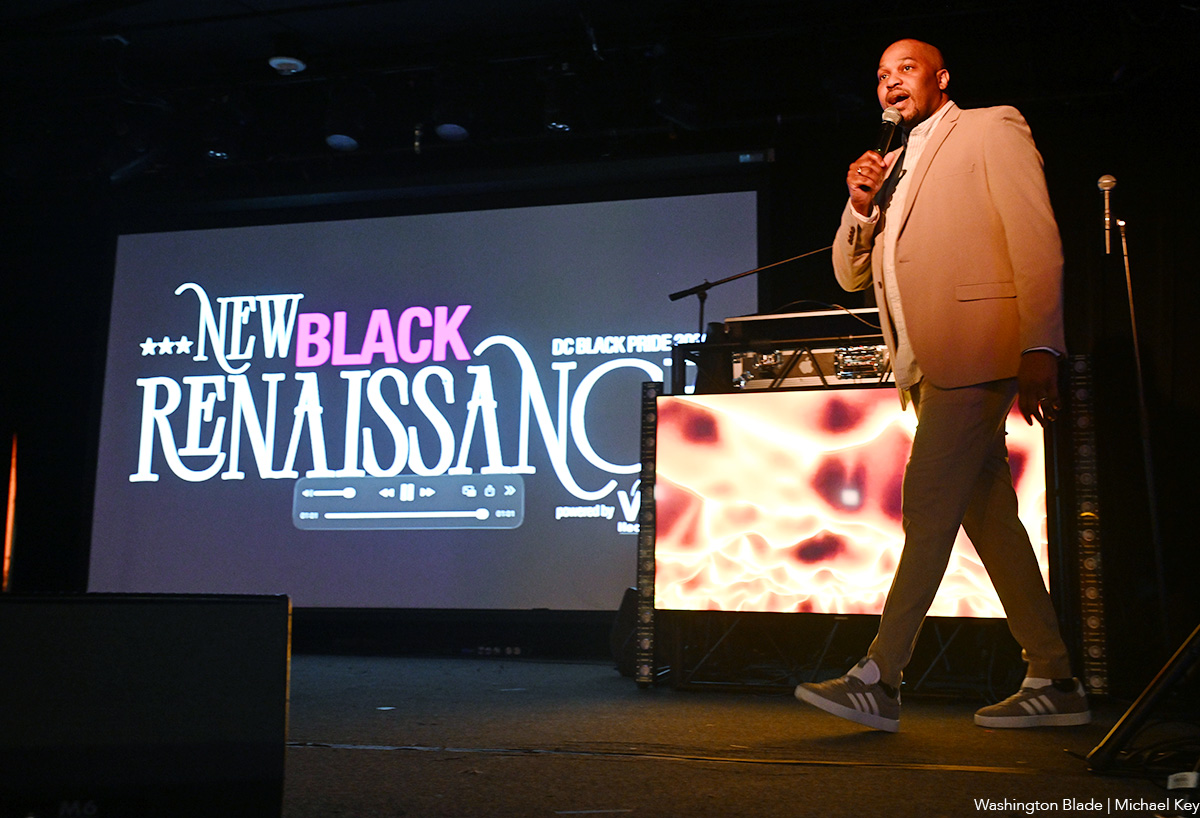
D.C.’s annual LGBTQ Black Pride celebration is scheduled to take place May 22-25 as it has since its founding 35 years ago on Memorial Day Weekend with several dozen events in locations across the city.
Like recent years, most of the official events are scheduled to take place at the Westin D.C. Downtown Hotel, including the Opening Reception on Friday, May 22, when Grammy Award-winning singer-songwriter Durand Bernarr was scheduled to be among the performers.
“This high-energy reception brings together community leaders, creatives, tastemakers, and visitors from across the globe for a night rooted in connection, joy, and celebration,” according to a statement on the Black Pride website.
Also, like past years, the second day of official Black Pride events set for Saturday, May 23, will include a dozen workshop sessions on a wide range of issues and topics. The workshop sessions will take place at the Westin Hotel.
On that same day, Black Trans Pride is scheduled to take place at the hotel from 1- 6 p.m., according to the official schedule of events.
“The goal is and always has been to make sure we have events for everybody, regardless of their financial situation, regardless of their agenda,” said Kenya Hutton, president and CEO of the Center For Black Equity, the D.C. LGBTQ group that organizes D.C. Black Pride.
Hutton said this year for the first time there will be a D.C. Black Pride Fun Run. The Black Pride website says the 5k run will take place Saturday, May 23, from 8 a.m.-12 p.m. starting at the Frederick Douglass Bride near the D.C. Navy Yard.
He said another first will be a film screening of the documentary film “Not Your Average Girl,” about the life of trans woman, author, and advocate Hope Giselle, scheduled for May 22 at the nearby Eaton Hotel.
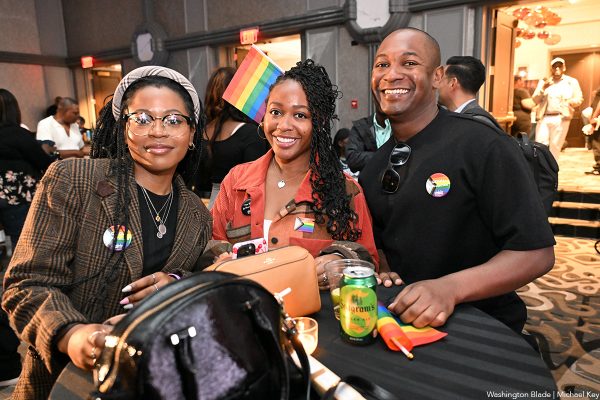
Also, like in past years, this year’s Black Pride will feature a Rainbow Row organization and vendor expo at the Westin from 5-9 p.m. Friday and 10 a.m. to 8 p.m. on Saturday that includes information tables set up by organizations and vendors.
The annual Pride In The Park event will take place Monday, May 25, from 12-7 p.m. at Fort Dupont Park located at 3600 F St., S.E. And the seventh annual “Brunch & Babes” drag event was scheduled for Sunday, May 24, at Hook Hall nightclub at 3400 Georgia Ave., N.W.
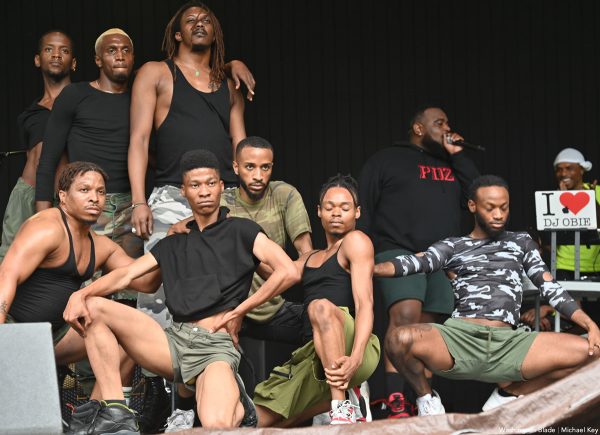
Among the other events taking place at other locations is a Sunday, May 24 “G-Spot Day Party” organized by local gay activist Geno Dunnington to be held at Bravo Bravo nightclub at 1001 Connecticut Ave., N.W. from 3-9 p.m. Dunnington told the Washington Blade the event will include the playing of house music, which he says played a role in local D.C. Black LGBTQ culture and in the first Black Pride celebration in 1991. The Black Pride website includes a write up of how that came about.
“From 1976 until1990, the ClubHouse in Washington, D.C. was a remarkable nightclub founded by Black members of D.C.’s LGBTQ community, widely known for its signature event – the Children’s Hour,” the write-up says. “This event was a true celebration and took place annually during Memorial Day weekend,” it says.
“When the ClubHouse closed in 1990, many feared the Memorial Day tradition would be lost,” the write-up continues. “However, three men – Welmore Cook, Theodore Kirkland, and Ernest Hopkins – envisioned creating an event that would continue the tradition of the Children’s Hour while also bringing awareness to the growing HIV/AIDS epidemic in their community.”
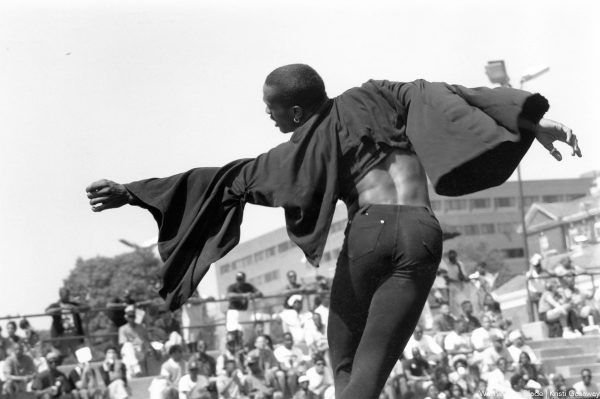
The write-up adds, “Their vision and hard work gave life to the first Black Gay and Lesbian Pride event on May 25, 1991, on the grounds of Banneker Field,” which is located near Howard University. “This first event drew 800 people, who were centered around the theme of ‘Let’s All Come Together.’”
It says organizers expanded the scope of the Black Pride events over the next several years as it evolved and prompted Black Pride events in other cities and the formation of the International Federation of Black Prides, which later became the Center for Black Equity.
“D.C. Black Pride was the catalyst for what is now regarded as the Black Pride Movement,” the writeup says. “Since its birth, more than 50 other Black Pride celebrations now take place throughout the world, many using D.C. Black Pride as its model.”
It adds, “Today, more than 500,000 members of the lesbian, gay, bisexual and transgender community of African descent and their allies come to Washington, D.C. on Memorial Day weekend to celebrate the beauty of a shared community and raise awareness and funding for HIV/AIDS in the name and spirit of Black Pride.”
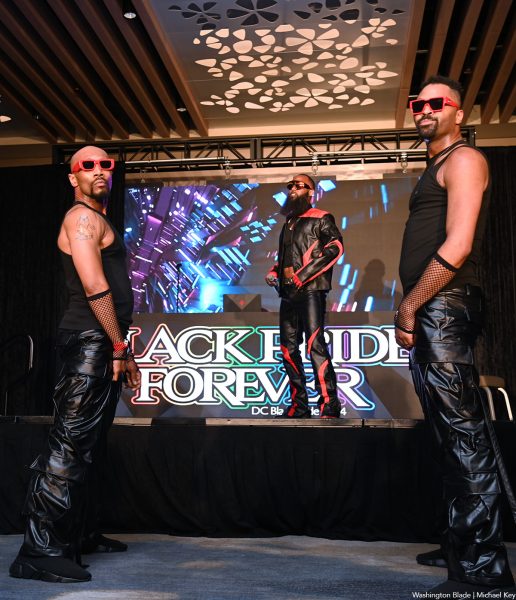
Hutton said D.C. Black Pride has grown to a point where organizers cannot keep track of all the unofficial events taking place.
“There are a number of events that are not even on our website,” he said. “They’re parties. People are having cookouts. There are all kinds of things that are happening over the weekend, that are official listed events, partner events, and non-partner events.”
As she has in recent past years, D.C. Mayor Muriel Bowser this year issued an official mayoral proclamation declaring May 22-25, 2026 as “DC BLACK PRIDE WEEKEND.”
A list of the official 2026 D.C. Black Pride and partner events and their locations can be accessed at dcblackpride.org.

The Comings & Goings column is about sharing the professional successes of our community. We want to recognize those landing new jobs, new clients for their business, joining boards of organizations and other achievements. Please share your successes with us at [email protected].
The Comings & Goings column also invites LGBTQ college students to share their successes with us. If you have been elected to a student government position, gotten an exciting internship, or are graduating and beginning your career with a great job, let us know so we can share your success.
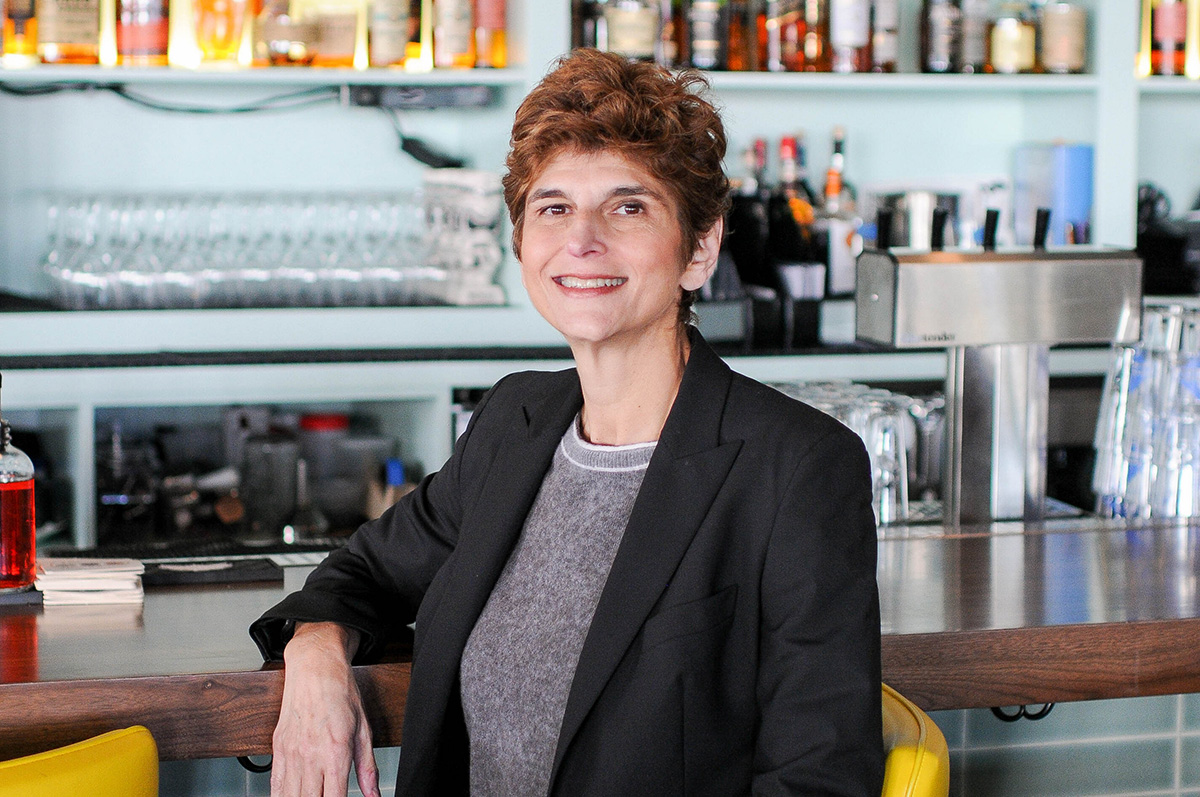
Congratulations to Jamie Leeds, chef extraordinaire, and owner of Hank’s Oyster Bars, as she ventures into some new areas. Leeds is an award-winning Washington, D.C.–area chef, restaurateur, and entrepreneur with more than three decades of experience shaping the region’s dining scene.
Her first new venture is a restaurant opening in Alexandria this week. It will be called Hank’s Pasta Bar, bringing a personalized twist to classic Italian dining with a hiddenrestaurant-inside-a-restaurant in Old Town, Alexandria. The new trattoria is above Hank’s Oyster Bar, and will feature a build-your-own menu, marking a new direction for Leeds in partnership with chef Darren Norris. Norris brings more than three decades of experience to Hank’s Pasta Bar, with a foundation grounded in Italian cooking. The grand opening was scheduled for May 14. The elevated casual eatery blends an inventive chef-driven menu with an easy-going, sit-down dining experience that puts guests in charge. Hank’s Pasta Bar bridges the gap between elevated fast casual, like Norris’s Shibuya, and full-service dining, like Leeds’s Hank’s Oyster Bar. Diners order electronically at the table, but unlike fast casuals, food and beverages are delivered on plate ware, and a server is on site at all times.
The restaurant-inside-a-restaurant, welcomes guests to dine in with a full bar, including Italian wines and craft cocktails, maintaining its focus on traditional Italian fare with contemporary touches, including a build-your-own pasta bowl experience starting at $16. Create your own pasta bowl from seven artisanal pastas (including gluten-free), nine made-in-house sauces, proteins, vegetables, and toppings. Leeds said, “It’s the kind of place you’d find down a side street in a Tuscan hill town, after being tipped off by a friend who says, ‘trust me.’ If you know, you know.”
The restaurant will continue Hank’s community partnerships, including with Real Food for Kids, supporting programs that improve school food and nutrition equity.
In addition to this you should try Jaimie’s other new venture. Back Door Taco at Hank’s in Dupont Circle. You walk down the alley from 17th Street to the back door of Hank’s, and enter a small patio to partake of great tacos and interesting cocktails.
District of Columbia
HIV Vaccine Awareness Day set for May 18
Whitman-Walker joins nationwide recognition of efforts to develop vaccine
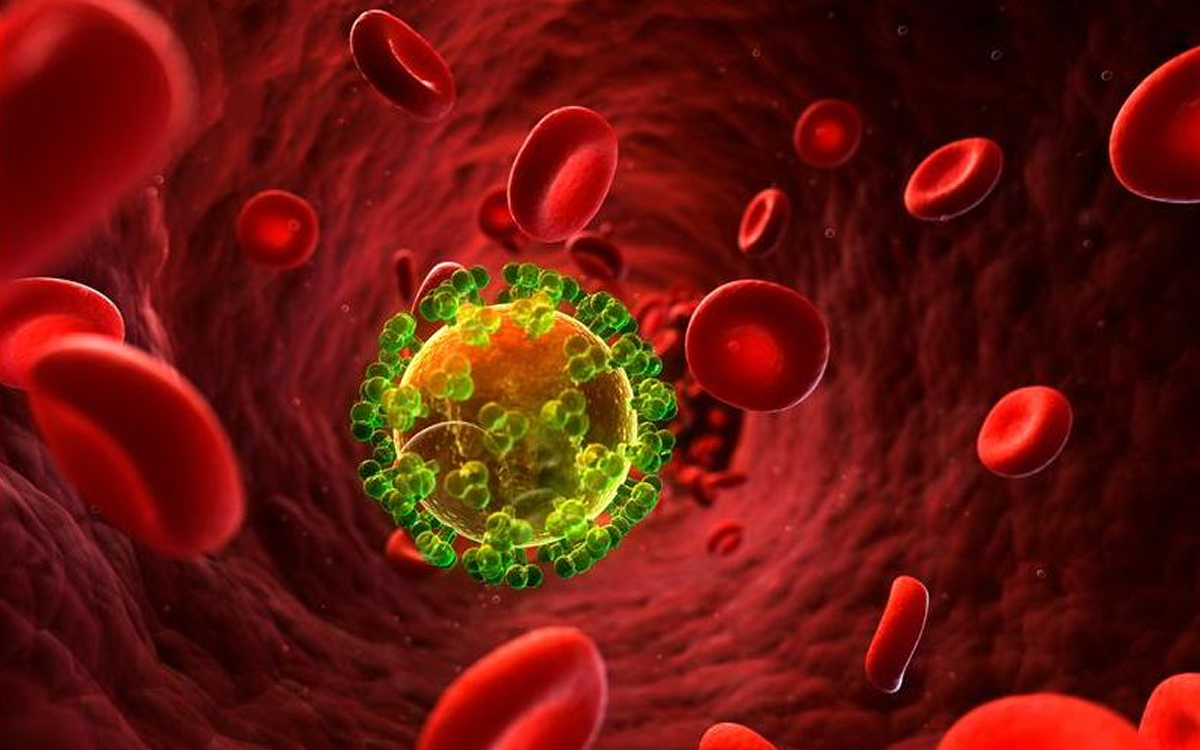
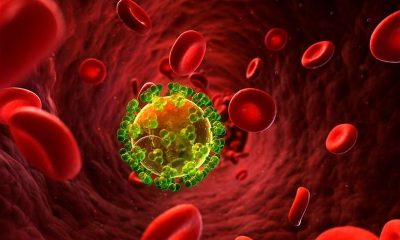
Whitman-Walker Health, the D.C.-based community healthcare center that specializes in HIV/AIDS and LGBTQ-related health services, will join health care advocates from across the country to support efforts to develop an HIV vaccine on HIV Vaccine Awareness Day on May 18.
“HIV Awareness Day, observed annually on May 18, was established to recognize and thank the volunteers, scientists, health professionals, and community members working toward a safe and effective prevention HIV vaccine,” Whitman-Walker said in a statement.
“Led by the National Institutes of Health’s National Institute of Allergy and Infectious Diseases (NIAID), the day is also an opportunity to educate communities about the critical importance of preventive HIV vaccine research,” the statement says.
It adds, “The reality is that any new vaccine discovery must be built community by community, institution by institution, and then it must reach everyone – especially the communities who have carried the heaviest burden of this epidemic.”
On its own website, the National Institutes of Health says HIV Vaccine Awareness Day also highlights its longstanding efforts, coordinated by its Office of AIDS Research, to support researchers’ efforts to develop an HIV vaccine.
“Researchers are making promising headway in efforts to develop a safe, effective HIV vaccine,” it says in a statement on its website.
A Whitman-Walker spokesperson said Whitman-Walker was not holding a specific event to observe HIV Vaccine Awareness Day, but it will recognize the day as a way of encouragement for its ongoing work to address the AIDS epidemic and support for vaccine research.
“Today, no one has to die from HIV,” said Whitman-Walker’s Health System division’s CEO, Dr. Heather Aaron in the Whitman-Walker statement. “We have the treatments, the technology, and the research to change outcomes, and yet people in our community are still dying from HIV//AIDS,” she said in the statement.
“That is unacceptable, and it is exactly why our work continues,” she added. “Here in D.C. with more focus on Southeast D.C., the Whitman-Walker Health System remains committed to making a difference through cutting-edge research, policy advocacy, and philanthropy, because fair access to life-saving treatment is not a privilege. It is a right.”

A case of retaliation, not stalking

PHOTOS: Equality Prince William Pride

D.C. Black Pride set for Memorial Day Weekend

Anti-LGBTQ commentator Tyler O’Neil to testify in Southern Poverty Law Center probe

Texas Children’s Hospital reaches $10 million settlement with DOJ over gender-affirming care

HIV Vaccine Awareness Day set for May 18

‘The Inheritance’ is most-nominated at this year’s Helen Hayes Awards

Calendar: May 15-21

United Night Out set for Saturday