
Local
A later last call
D.C. gay clubs ponder mayor’s proposal to extend bar hours
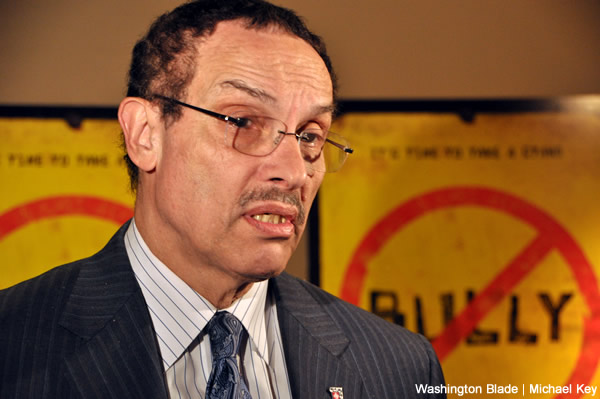
D.C. Mayor Vincent Gray has proposed allowing nightlife venues to extend the time they may serve alcoholic beverages from 2 a.m. to 3 a.m. during the week and from 3 a.m. to 4 a.m. on weekends. (Washington Blade photo by Michael Key)
Customers and owners of the city’s gay bars and nightclubs have joined other city residents in discussing a proposal by Mayor Vincent Gray to allow establishments serving liquor to stay open one hour later each night of the week.
Gray surprised many of the city’s civic activists and Advisory Neighborhood Commission members by attaching the proposal to his fiscal year 2013 budget rather than making it a freestanding bill.
The proposal would allow bars, nightclubs, restaurants and hotels to extend the time they may serve alcoholic beverages from 2 a.m. to 3 a.m. during the week and from 3 a.m. to 4 a.m. on weekends.
“I think there are probably some who like it and some who don’t,” Gray told the Blade last week at a budget briefing he held in Ward 5. “A lot of people who like nightlife are very supportive of it. There are people who say let’s make this a kind of city that has a global and international feel.”
According to Gray and the city’s chief financial officer, Natwar M. Gandhi, the proposal would yield a projected additional sales and excise tax revenue of $3.21 million for fiscal year 2013 and $12.84 million over a four-year period. Gray said the additional revenue would come at a time when the city faces a possible budget shortfall that could result in cuts to important social services programs.
The proposal must be approved by the 13-member D.C. City Council, which is expected to take up the matter later this month or early next month as part of its consideration of the city budget.
Gay D.C. Council member Jim Graham (D-Ward 1), who chairs a Council committee that oversees the Alcoholic Beverage Regulation Administration (ABRA), has come out against the proposal. At a committee hearing Tuesday night, Graham said he agrees with concerns raised by civic groups and a number of ANC commissioners that allowing bars and clubs to remain open another hour would have a harmful impact on many neighborhoods throughout the city.
Opponents testified at the hearing that bars and nightclubs in certain parts of the city, especially in Adams Morgan and Georgetown, would result in noise, heavy traffic congestion, and sometimes disturbances and crime in those neighborhoods. Extending by one hour the closing time for such businesses would only prolong the noise and other problems associated with such businesses, several ANC commissioners said.
Among other concerns, Graham said the city’s public transportation system, especially Metro rail service, would not be operating at the time bars close. Thousands of people who consume alcohol and many who are intoxicated might seek to drive home, putting the public in jeopardy, Graham said.
A clear majority of the more than 40 witnesses that testified before Graham’s Committee on Human Services Tuesday night expressed opposition to the proposal. Most of those opposing the proposal were members of neighborhood civic groups and ANC members.
Gay D.C. Council member David Catania (I-At-Large) has yet to take a position on the mayor’s proposal, according to spokesperson Brendan Williams-Kief, who said Catania is assessing the potential impact of extending bar closing hours.
The D.C. Nightlife Association, whose members include many bars and restaurants, including gay bars, strongly supports the proposal, saying it would boost the city’s economy by strengthening a nightlife industry that accounts for a large number of jobs in the city.
Nightlife Association Executive Director Skip Coburn testified that extending the hours of bar closing times would decrease the problems cited by opponents by staggering the times customers leave and ending the current situation where thousands leave the clubs at the current 3 a.m. closing time on weekends.
Gay nightlife advocate Mark Lee, who also testified before the committee, told the Blade that he and others supportive of the proposals don’t believe civic activists and ANC commissioners always represent the sentiment of a majority of the residents in their districts.
“Those testifying in opposition are the traditional opponents to alcohol licensing regulatory reform and are the relatively few individuals and representatives of small civic groups and ANCs who protest liquor licensing applications and battle to impose so-called ‘voluntary agreements’ and operating restrictions on establishments,” Lee said.
“I, for one, did not find the level of participation by opponents at the hearings to be that significant, as they represented only portions of the city, including only a few areas of the city with prominent dining and entertainment districts,” said Lee, who writes a Blade column on city business issues.
Similar to Coburn, Lee said extending closing hours would create a “calming effect” in high-density entertainment areas.
Other nightlife advocates testifying said not all bars and clubs would choose to stay open until 3 a.m. during the week or 4 a.m. on weekends.
Lee, similar other nightlife advocates, urged the Council not to restrict the extended closing hours to certain parts of the city, such as the downtown business district, as some have suggested.
“Not only will doing so impose a distinct competitive disadvantage to businesses outside a targeted zone, but the benefits of naturally staged patron departures will be eliminated by artificially limiting eligibility,” he said.
Ed Bailey, part owner of the D.C. gay nightclub Town and the gay bar Number 9, said he was especially concerned about allowing the extended hours in some locations but not others.
“That would be an unfair advantage to our competitors,” he said.
Bailey said Town, located at Florida Avenue and 8th Street, N.W., already has permission under the terms of its liquor license to stay open until 5 a.m. on weekends as long as alcohol service stops at 3 a.m. He said the club usually stays open until 3:30 or 4 depending on how late customers decide to stay. But he said the extended hours prevent problems faced by other clubs where large numbers of people leave at the same time.
He said Town has yet to take an official position on the mayor’s proposal.
“We want to provide the best possible event for our patron,” he said. “But we also realize we need to respect our neighbors. We want to make sure we don’t step over any boundaries that are inappropriate for the neighborhood.”
An informal survey by the Blade found that most gay bars in the city favor the mayor’s proposal to extend the closing hours, with a number of them saying they may only choose to remain open an additional hour on certain occasions.
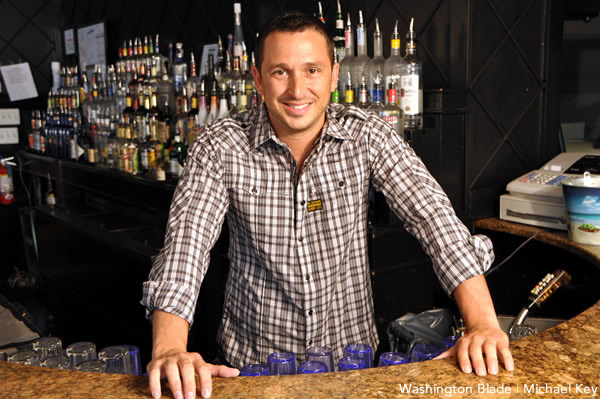
Mark Rutstein, general manager of Cobalt, said Cobalt and JR.’s support the mayor’s proposal to extend the time nightlife venues may serve alcohol. (Washington Blade photo by Michael Key)
“It would come in handy when we need it,” said Greg Zehnacker, owner of the gay bar Green Lantern near 13th and L streets, N.W. “We would do it at times like Gay Pride week.”
Mark Rutstein, general manager of Cobalt, a gay bar on the 17th Street, N.W. entertainment strip near Dupont Circle, said Cobalt and nearby gay bar JR.’s, which are owned by the same company, support the mayor’s proposal. But he said he and other bar and club owners in the popular 17th Street neighborhood are concerned that existing voluntary agreements with the Dupont Circle ANC could lead to serious financial hardship for those clubs.
Rutstein and other club representatives noted that city officials have said ANC voluntary agreements, which are ratified by the city’s Alcoholic Beverage Control Board, would take precedent over the mayor’s proposal for extending bar hours if the ANC agreements call for closing at an earlier hour.
If competing bars and clubs in other parts of the city are not bound by earlier closing hours imposed by ANCs, those establishments could likely draw away customers from the clubs that must close earlier, Rutstein said.
Jerry Griswell, manager of the Dupont Circle gay bar Fireplace, was the only gay bar representative reached who expressed opposition to the mayor’s proposal.
“I don’t like the idea of people drinking another hour at night,” Griswell said. “I don’t think our employees would want to spend another hour at work. I don’t support it.”




Virginia
Va. court allows conversion therapy despite law banning it
Judge in June 30 ruling cited religious freedom.

In 2020, the state of Virginia had banned the practice of conversion therapy, but on Monday, a county judge ruled the ban violates the Virginia Constitution and Religious Freedom Restoration Act, allowing the therapy to start once more.
The conversion therapy ban, which can be seen in Va. Code § 54.1-2409.5 and 18VAC115-20-130.14, was overturned on June 30 as a result of two Christian counselors who argued that their — and all Virginia parents’ — constitutional right to freedom of religion had been encroached upon when the state legislature passed the ban.
A Henrico County Circuit Court judge sided with John and Janet Raymond, two Christian counselors represented by the Founding Freedoms Law Center, a conservative organization founded in 2020 following Virginia’s conversion therapy ban. Virginia’s Office of the Attorney General entered a consent decree with FFLC, saying state officials will not discipline counselors who engage in talk conversion therapy.
Conversion therapy, as the legislation described it, is considered to be “any practice or treatment that seeks to change an individual’s sexual orientation or gender identity, including efforts to change behaviors or gender expressions or to eliminate or reduce sexual or romantic attractions or feelings toward individuals of the same gender.” The ban’s reversal will now allow parents to subject their children to these practices to make them align better with their religion.
This decision comes despite advice and concern from many medical and pediatric organizations — including the American Psychiatric Association, American Psychological Association, American Association for Marriage and Family Therapy, and the American Counseling Association, to name a few — all of which denounce conversion therapy as dangerous and harmful to those subjected to it.
The American Medical Association, the largest and only national association that convenes more than 190 state and specialty medical societies, says that “these techniques are the assumption that any non-heterosexual, non-cisgender identities are mental disorders, and that sexual orientation and gender identity can and should be changed. This assumption is not based on medical and scientific evidence,” with attached data indicating people subjected to conversion therapy are more likely to develop “significant long-term harm” as a result of the therapy.
The AMA goes as far as to say that they outright “oppose the use of reparative or conversion therapy for sexual orientation or gender identity.”
FFLC has a clear goal of promoting — if not requiring — conservative ideology under the guise of religious freedom in the Virginia General Assembly. On their website, the FFLC argues that some progressive policies passed by the Assembly, like that of freedom from conversion therapy, are a violation of some Virginians’ “God-given foundational freedoms.”
The FFLC has argued that when conservative notions are not abided by in state law — especially when it involves “God’s design for male and female, the nuclear family, and parental rights” — that the law violates Virginians’ religious freedom.
A statement on the FFLC’s website calls gender dysphoria among children a “contagion” and upholds “faith-based insights” from counselors as equal — in the eyes of the law — to those who use medical-based insights. This, once again, is despite overwhelming medical evidence that indicates conversion therapy is harmful.
One study showed that 77 percent of those who received “sexual orientation change efforts,” or conversion therapy, experienced “significant harm.” This harm includes depression, anxiety, lowered self-esteem, and internalized homophobia. In addition, the study found that young LGBTQ adults with high levels of parental or caregiver rejection are “8.4 times more likely to report having attempted suicide,” with another study finding that “nearly 30 percent of individuals who underwent SOCE reported suicidal attempts.”
Virginia Senate Majority Leader Scott Surovell, a Democrat representing Fairfax, said that the overturning of the ban on religious merit disregards the entire concept of having professionally licensed counselors.
“I have no problem if somebody wants to go look at religious counseling from their priest or their minister, their rabbi, their imam — that’s perfectly fine,” Surovell told the Virginia Mercury. “When somebody goes to get therapy from somebody licensed by the commonwealth of Virginia, there’s a different set of rules applied. You can’t just say whatever you want because you have a license. That’s why we have professional standards, that’s why we have statutes.”
District of Columbia
GenOUT Chorus offers solace, strength to LGBTQ teens
Summer camp held from June 23-27
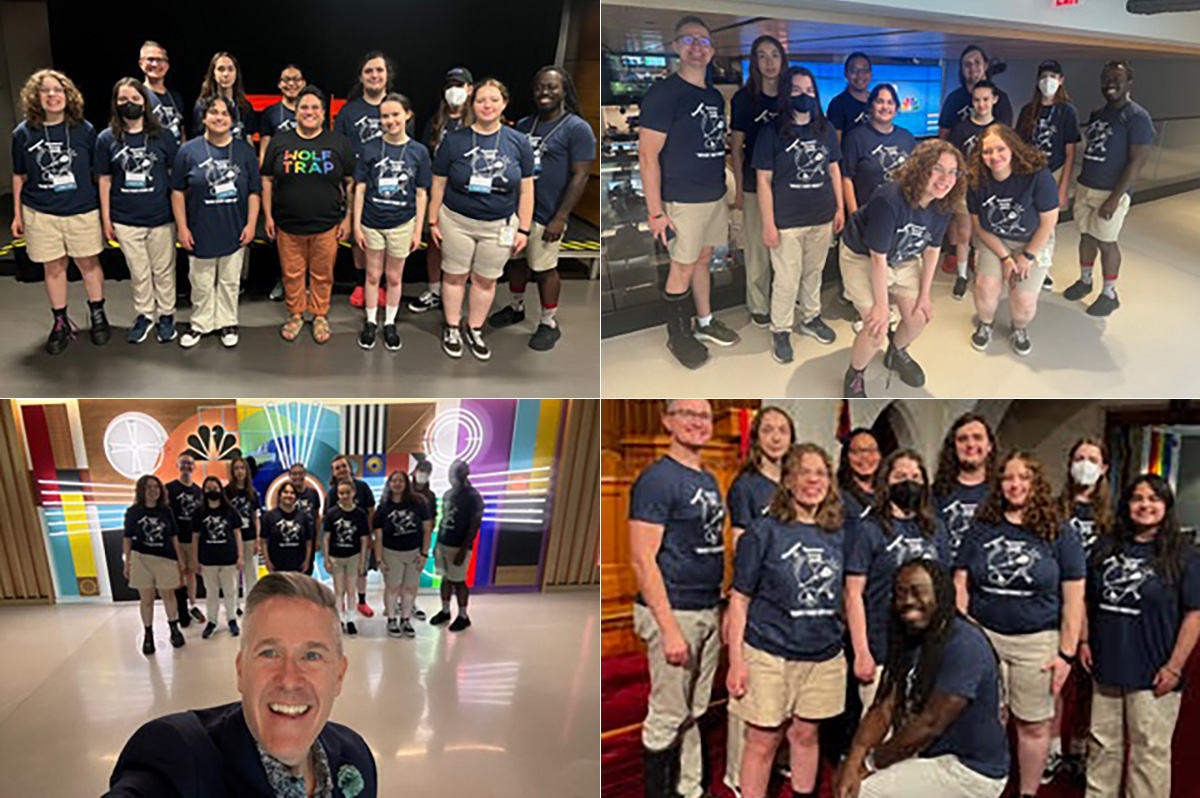
As Pride month draws to a close and Washington begins to take down its rainbow flags and WorldPride decorations, it can be easy to confine the ideas of LGBTQ liberation to June. One historic organization in Washington has been speaking out — or singing out if you will — to ensure that LGBTQ youth are allowed to explore and be themselves every month of the year.
The Gay Men’s Chorus of Washington is one of the oldest and largest LGBTQ choruses in the world. With more than 300 members and more than 40 years in the D.C. LGBTQ community, to say it is an institution would be an understatement.
Beginning in 1981, following an inspiring performance by the San Francisco Gay Men’s Chorus at the Kennedy Center, a group of 18 gay men — led by a “straight” woman and friend of Washington’s gay community, Marsha Pearson — created the GMCW. Since its establishment the organization has only grown in number and relevance within the city. From hosting multiple concerts a year, international equality trips, and creating a dedicated space to “inspire equality and inclusion with musical performances and education,” the GMCW is one of the cornerstone organizations in the Washington LGBTQ community.
One of the most remarkable parts of the GMCW is its youth outreach program and choir: GenOUT. The outreach ensemble specializes in providing a space for Washington’s LGBTQ and allied youth, ages 13-18, to find their voice through song and connect that voice to community. The GenOUT program has been around since 2001, and since 2015 has provided a platform for their voices to be heard — literally — making it the first LGBTQ youth chorus in the Washington area.
The Washington Blade sat down with GenOUT Director C. Paul Heins and member Ailsa Ostovitz to discuss why GenOUT, and more specifically the GenOUT summer camp, which was held from June 23-27, has become an essential space for LGBTQ youth in the D.C. area to find their voice amid less-than-supportive administration and rising anti-LGBTQ rhetoric in the nation.
“This is my 11th season with GenOUT, and also the 11th season with Gay Men’s Chorus of Washington,” Heins said when explaining how he ended up in the director role for the self-selected, no audition required youth outreach ensemble. “I was hired in August of 2014 to start GenOUT. I spent that first fall researching other choruses, figuring out the infrastructure, promoting the chorus, and building relationships with schools, organizations, and faith communities. And then we started in January of 2015 with nine brave singers and since then, we’ve had 150+ singers from 80 or more schools in the DMV participate.”
Ailsa Ostovitz, on the other hand, being in high school had not had as much experience with choirs — yet her commitment and unwavering passion for the work she — and the other performers within GenOUT provide to each other was unmistakable.
“I’ve been a part of the course since April of 2022, and that was like seventh grade— which is wild to think about,” Ostovitz said when reflecting on how long she had been a part of GenOUT. She explained how she had begun to develop a drive for filling leadership roles within GenOUT after gaining valuable experiences and education from the organization.
“This is my first year in leadership,” she added. “The rest of the years, I kind of hung back. I really wanted to — especially last season — kind of put myself in the position of a peer and think ‘What would I want from people that are supposed to represent me to the adults? What would I want out of that?’”
And with those questions in mind, Ostovitz explained she buckled down and worked hard to get to where she is now as a member of the leadership team within the GenOUT choir.
“I spent a lot of time working with my section leader, and, looking up at him and being like, ‘What are you doing now that I can do in the future?’ And so this year, I ran for leadership,” Ostovitz said. “I got section leader, and that was cool. I’ve just spent a lot of time — most of my time in this course — learning leadership skills to kind of help me in all sorts of things in life, because I like to take control of things, and I like doing stuff.”
These leadership skills are just a handful of the things that students like Ostovitz learn while participating in the program. This year’s theme was “Make Them Hear Us!: Empowering LGBTQ+ and Allied Youth Through Music, Media, and Community,” and provided multiple opportunities for GenOUT’s members to engage with new concepts, ideas, and experiences.
From field trips to mentoring opportunities to an end-of-camp performance, it becomes clear when speaking to those familiar with the GenOUT experience: it is not your traditional summer day camp.
“The title of the camp references the anthem that GMCW has sung for many years,” Heins said. “‘Make Them Hear You’ from the musical ‘Ragtime’ encourages us to share important stories — stories that honor the fights that we’ve been fighting, the rights that we have won, affirmations that we seek for every human being, and the focus on media — specifically developing young people’s understandings of the kinds of media that they can access and use to share their voice.”
The camp offers singing and dancing lessons, creative writing exercises, LGBTQ+ history lessons, and open discussions about identity — providing an outlet for students to figure out who they want to be and find their voice.
“What this camp does, I believe, is it helps foster young people’s voices and not only encourages them to speak, but to give them the skills to speak in a way that will be heard meaningfully,” Heins added. “I have noted that youth in queer choruses like GenOUT have said that singing in a chorus allows young people to express themselves more honestly and with greater passion than other forms of expression. They’ve also said that singing with others that understand you on a very deep, profound level, makes the expression much easier and more beautiful. I think that experience is what really makes this a special opportunity for young, LGBTQ and allied people.”
Ostovitz echoed Heins’s sentiment, emphasizing that the space GenOUT provides allows her to feel empowered in ways more than by creating leadership skills that will help her later in life. GenOUT has allowed for her to see the humanity and similarities LGBTQ youth all face in a straight world.
“Joining the chorus and being in this camp, it really gives people a chance to see that every person is going through the same experience you are, on a level of finding your own identity and being confident in that,” Ostovitz said. “It really, really serves a purpose by showing there are still queer people. They’re not fizzling out — young people are queer. We want to use our voices to express what we feel and how things are affecting us, and I think that using music to do that is probably one of the most powerful ways to do that.”
In addition to allowing for internal growth and honing their singing abilities, both Ostovitz and Heins pointed out the other valuable skills students learn while in the GenOUT program. Ostovitz explicitly highlighted the mentorship program GenOUT has with GMCW, and how it has helped students like her figure out their future.
“Because we are so connected with GMCW, we run a mentorship program where, if you want to explore career, identity, whatever, we can connect you with somebody from GMCW,” Ostovitz said. “You get to spend a whole semester with a person working on your voice or your career or your what you want to do in higher education. It’s not only for things related to your queer identity, but it’s also just for life. It’s really cool.”

This year’s theme, centering around media and the many ways people can share their voice, was highlighted through the camp’s field trips to two legacy media organizations — WAMU and NBC Washington — and a discussion with staff from the Washington Blade, including Publisher Lynne Brown and International News Editor Michael K. Lavers.
“GenOUT provides a chance to get to know people from all around this area, but it also connects you to older folks, It connects you to people from the past, as well as we learn about LGBTQ history,” Heins said. “I think a camp specific thing is we want young people to understand how they can share their stories beyond just talking to their friends. There are these forms of media that are out there to share your stories, to have your voices heard, and to have a sense that these media are there for everyone. It’s not just a thing for people aged 21 and over. That was something that Lynne and Michael from the Blade were sharing with; that anyone can write in a letter to the editor. It doesn’t mean it’s going to be published, but that anyone has that opportunity. And I think that’s a great way for them to say the Blade is open to you to share your voice.”
The concept that there are people who want to, or may need to hear queer voices represented is one that is not lost on Ostovitz.
“There is something Thea says that has kind of integrated into our chorus — that someone out there needed to hear you, needed to hear your voice, needed to hear your story,” Ostovitz said. “That’s something that I kind of live by in this chorus, where I’m like, ‘I believe that there is someone out there that needed to hear this song for whatever reason, whatever it did for them. And I’m hoping to learn how much more can this chorus do for not just our little community, but how much more can it do around the world or the country — especially now.”
Living in the political center of the U.S., Ostovitz explained, has impacted how she approaches her identity, her education, and the urgency of using her voice — both as a student and as a young queer person navigating an increasingly hostile national climate.
“Being so close to the political center of the country and also a student at the same time has not been the easiest thing in the world as of late,” she said. “You’re thinking a lot about ‘Oh, I wonder if this program in my school will still exist next year,’ because a lot of the funding for physics and science programs in general has been cut. So I’m fortunate enough that Maryland has been pretty good about going against this administration. And so being in this chorus gives me a second to step back from my academics and just go somewhere for the two hours of rehearsal.”
For Ostovitz, just having those two short hours a week to focus on music — without thinking about the political climate that paints her and her choir peers as nefarious for being LGBTQ — provides solace.
“Everybody else is going through the same thing as I am, but we’re all also working towards the same goal, which is acceptance and uplifting of everybody and everyone — no matter who they are,” she said. “It kind of settles you down and grounds you. And then you just make music with people, and it’s really like a stress reducer for me.”
“Is it too trite to say that that would make people feel less alone, knowing that it’s not just a DMV thing, but that there are queer people all over?” Heins asked Ostovitz.
“No, it’s not — for sure,” Ostovitz responded. “It was a bit eye-opening.”
“A lot of us are fortunate enough to have families that support us enough to trust us and help us be passionate and mean what we do with the work that we do in this chorus — because it is optional,” Ostovitz added. “It is optional to have the courage that we have to practice and commit as much as we do, and the fact that we have a whole organization backing us on that is pretty cool.”
“We often say that we sing for those who can’t sing in a chorus like ours,” Heins said. “We sing for people who don’t have the freedom or the option to live their authentic lives. I think that’s very powerful.”
“It’s a very unique experience to be surrounded by so many people that get it,” Ostovitz said. “It’s a very joyful experience when we perform our big shows at the Lincoln Theater, being part of that production is also a very unique experience. So I think everything about this chorus is very joyfully unique.”
“I feel very proud, and I feel very inspired,” Heins said. “I feel inspired by the young voices. I feel a sense of inspiration in my own music-making, when I am able to take a piece from its very beginning all the way to the stage in a polished form. And I feel that sense of pride in knowing that I’ve helped this group of young people develop their confidence to do really amazing things.”
“GenOUT sang 22 times last year, which for any chorus is a big deal, but for a youth chorus coming from thither and yon, it is really a big deal,” Heins added. “I’m just really inspired and proud, and know that when I am in a nursing home somewhere and these folks are still out working and I know the country will be in good hands.”
Virginia
Walkinshaw wins Democratic primary in Va. 11th Congressional District
Special election winner will succeed Gerry Connolly
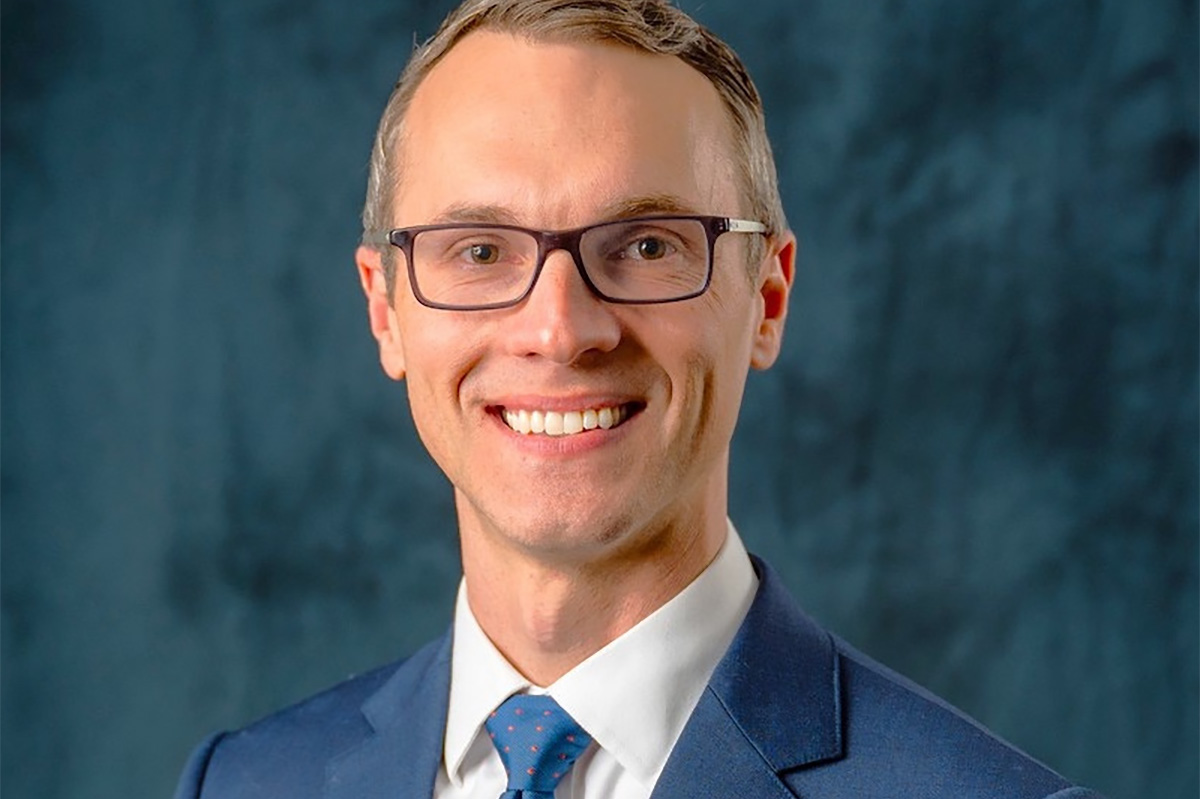
On Saturday, Fairfax County Supervisor James Walkinshaw won the Democratic primary for the special election that will determine who will represent Virginia’s 11th Congressional District.
The special election is being held following the death of the late Congressman Gerry Connolly, who represented the district from 2008 until 2024, when he announced his retirement, and subsequently passed away from cancer in May.
Walkinshaw is not unknown to Virginia’s 11th District — he has served on the Fairfax County Board of Supervisors since 2020 and had served as Connolly’s chief of staff from 2009 to 2019. Before he passed away, Connolly had endorsed Walkinshaw to take his place, claiming that choosing Walkinshaw to be his chief of staff was “one of the best decisions I ever made.”
The Democratic nominee has run his campaign on mitigating Trump’s “dangerous” agenda of dismantling the federal bureaucracy, which in the district is a major issue as many of the district’s residents are federal employees and contractors.
“I’m honored and humbled to have earned the Democratic nomination for the district I’ve spent my career serving,” Walkinshaw said on X. “This victory was powered by neighbors, volunteers, and supporters who believe in protecting our democracy, defending our freedoms, and delivering for working families.”
In addition to protecting federal workers, Walkinshaw has a long list of progressive priorities — some of which include creating affordable housing, reducing gun violence, expanding immigrant protections, and “advancing equality for all” by adding sexual orientation and gender identity to the Fair Housing Act.
Various democratic PACs contributed more than $2 million to Walkinshaw’s ad campaigns, much of which touted his connection to Connolly.
Walkinshaw will face Republican Stewart Whitson in the special election in September, where he is the likely favorite to win.

Manchester is vibrant tapestry of culture, history, and Pride

Embracing the chaos can be part of the fun

Lesbian feminist becomes South African MP

‘A Wrinkle in Time’ comes to Arena Stage

Celebrate the power of homeownership this Fourth of July

Supreme Court to consider bans on trans athletes in school sports

Celebrate the Fourth of July the gay way!

Va. court allows conversion therapy despite law banning it

Can we still celebrate Fourth of July this year?

GenOUT Chorus offers solace, strength to LGBTQ teens
-
 U.S. Supreme Court3 days ago
Supreme Court to consider bans on trans athletes in school sports
-
 Out & About4 days ago
Celebrate the Fourth of July the gay way!
-
 Virginia4 days ago
Va. court allows conversion therapy despite law banning it
-
 Opinions4 days ago
Can we still celebrate Fourth of July this year?