Virginia
Va. court allows conversion therapy despite law banning it
Judge in June 30 ruling cited religious freedom.
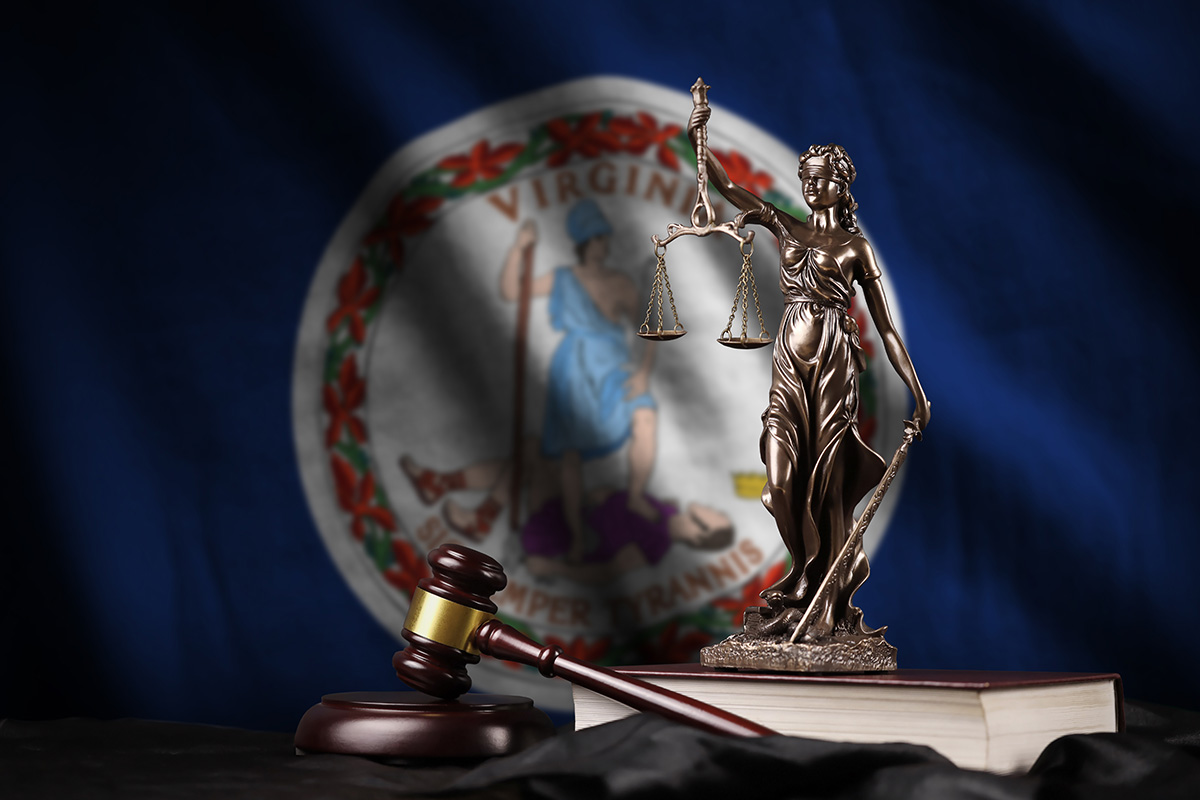
In 2020, the state of Virginia had banned the practice of conversion therapy, but on Monday, a county judge ruled the ban violates the Virginia Constitution and Religious Freedom Restoration Act, allowing the therapy to start once more.
The conversion therapy ban, which can be seen in Va. Code § 54.1-2409.5 and 18VAC115-20-130.14, was overturned on June 30 as a result of two Christian counselors who argued that their — and all Virginia parents’ — constitutional right to freedom of religion had been encroached upon when the state legislature passed the ban.
A Henrico County Circuit Court judge sided with John and Janet Raymond, two Christian counselors represented by the Founding Freedoms Law Center, a conservative organization founded in 2020 following Virginia’s conversion therapy ban. Virginia’s Office of the Attorney General entered a consent decree with FFLC, saying state officials will not discipline counselors who engage in talk conversion therapy.
Conversion therapy, as the legislation described it, is considered to be “any practice or treatment that seeks to change an individual’s sexual orientation or gender identity, including efforts to change behaviors or gender expressions or to eliminate or reduce sexual or romantic attractions or feelings toward individuals of the same gender.” The ban’s reversal will now allow parents to subject their children to these practices to make them align better with their religion.
This decision comes despite advice and concern from many medical and pediatric organizations — including the American Psychiatric Association, American Psychological Association, American Association for Marriage and Family Therapy, and the American Counseling Association, to name a few — all of which denounce conversion therapy as dangerous and harmful to those subjected to it.
The American Medical Association, the largest and only national association that convenes more than 190 state and specialty medical societies, says that “these techniques are the assumption that any non-heterosexual, non-cisgender identities are mental disorders, and that sexual orientation and gender identity can and should be changed. This assumption is not based on medical and scientific evidence,” with attached data indicating people subjected to conversion therapy are more likely to develop “significant long-term harm” as a result of the therapy.
The AMA goes as far as to say that they outright “oppose the use of reparative or conversion therapy for sexual orientation or gender identity.”
FFLC has a clear goal of promoting — if not requiring — conservative ideology under the guise of religious freedom in the Virginia General Assembly. On their website, the FFLC argues that some progressive policies passed by the Assembly, like that of freedom from conversion therapy, are a violation of some Virginians’ “God-given foundational freedoms.”
The FFLC has argued that when conservative notions are not abided by in state law — especially when it involves “God’s design for male and female, the nuclear family, and parental rights” — that the law violates Virginians’ religious freedom.
A statement on the FFLC’s website calls gender dysphoria among children a “contagion” and upholds “faith-based insights” from counselors as equal — in the eyes of the law — to those who use medical-based insights. This, once again, is despite overwhelming medical evidence that indicates conversion therapy is harmful.
One study showed that 77 percent of those who received “sexual orientation change efforts,” or conversion therapy, experienced “significant harm.” This harm includes depression, anxiety, lowered self-esteem, and internalized homophobia. In addition, the study found that young LGBTQ adults with high levels of parental or caregiver rejection are “8.4 times more likely to report having attempted suicide,” with another study finding that “nearly 30 percent of individuals who underwent SOCE reported suicidal attempts.”
Virginia Senate Majority Leader Scott Surovell, a Democrat representing Fairfax, said that the overturning of the ban on religious merit disregards the entire concept of having professionally licensed counselors.
“I have no problem if somebody wants to go look at religious counseling from their priest or their minister, their rabbi, their imam — that’s perfectly fine,” Surovell told the Virginia Mercury. “When somebody goes to get therapy from somebody licensed by the commonwealth of Virginia, there’s a different set of rules applied. You can’t just say whatever you want because you have a license. That’s why we have professional standards, that’s why we have statutes.”





Virginia
Virginia Anti-Violence Project struggles to fill federal funding gaps
Group has lost 54 percent of funding since 2020
A loss of federal funding has threatened to adversely impact the Virginia Anti-Violence Project’s work in the state.
The group’s mission is to assist LGBTQ and BIPOC (Black, Indigenous and people of color) victims of domestic, sexual, interpersonal, and state violence with direct support, education, and advocacy. The VAVP seeks to build a future where LGBTQ and BIPOC individuals can live freely without a sense for worry about violence.
“Virginia Anti-Violence Project helps to close the distance between services existing and LGBTQIA+ survivors actually being able to reach safety, stable housing, and support that they can trust,” VAVP Executive Director Ebony Clark told the Washington Blade on Tuesday. “Our mission is to provide direct services and advocacy to LGBTQ+ survivors across Virginia.”
Clark said obtaining state and federal funds has become increasingly difficult.
“One of the reasons that we can talk about is politics and how you know queer diverse, queer communities are targets when it comes to politics, and so that may be a reason why the funding is decreasing in in very niche areas, but overall, state funding, federal funding has been lost or significantly reduced when it comes to culturally specific marginalized populations,” Clark said. “The bigger picture is that funding that was purposed for diversity, equity, inclusion, marginalized populations, or you know culturally competent programming, those funds have been strategically reduced or eliminated on state and federal levels overall.”
Even more so with the current Trump-Vance administration.
Data shows federal funding for one “major federal victim-services funding stream in” Virginia has dropped 54 percent over the last six years: from $25.1 million in fiscal year 2020 to $11.6 million in fiscal year 2026.
Clark noted some federal funding has been denied due to VAVP’s DEI policies — it has had to “water down” their language. These cuts have forced VAVP to limit housing and economic support, which has resulted in fewer resources for its clients.
The organization has set up a goal for receiving between $250,000-$300,000 a year that would allow it to operate — and focus on client housing.
“Housing is fundamental to safety,” Clark told the Blade. “If you know leaving violence puts someone on the street or forces them back to the person harming them, that means the crisis isn’t over. So there needs to be other prevention strategies and reactive strategies in place to be able to prevent further violence from folks.”
VAVP has set up a link for anyone who is interested in making a donation. It is here.
The VAVP website is also accepting donations.
Virginia
Winsome Earle-Sears ‘Life and Marriage Tour’ to include Northern Va. stops
Voters to consider marriage equality, reproductive rights referenda in November
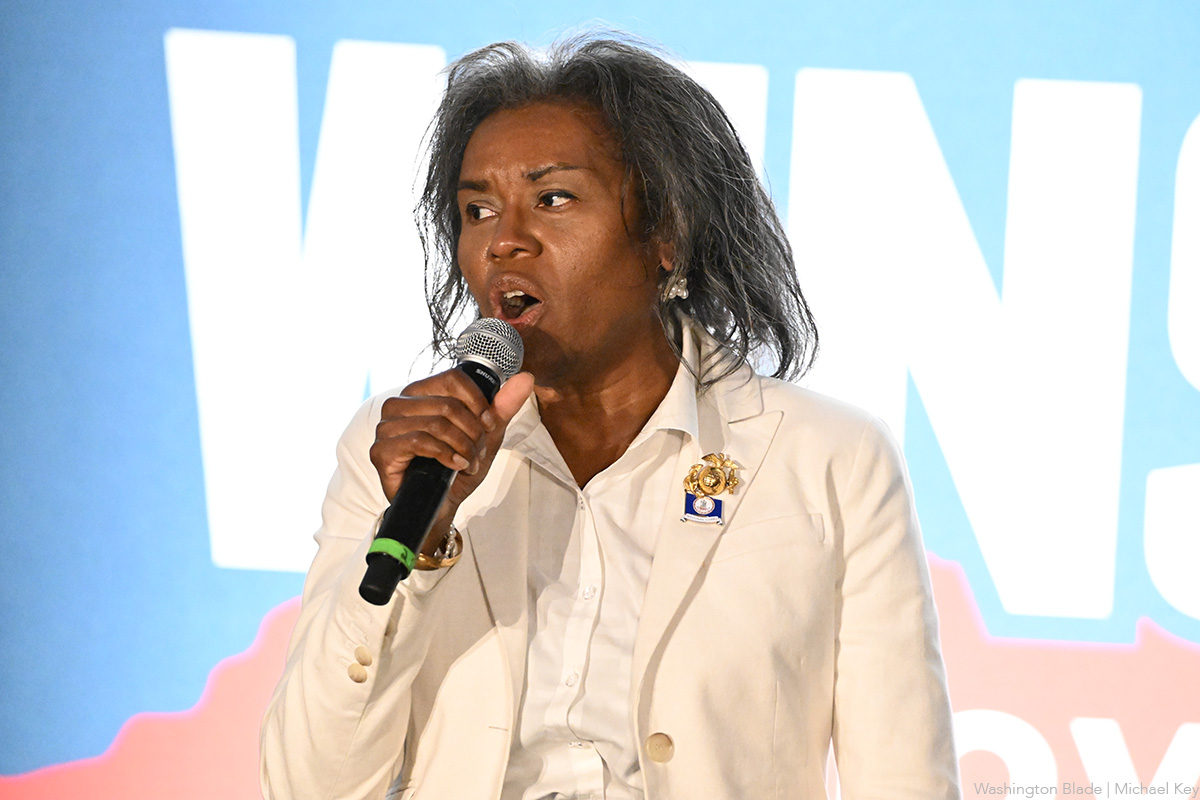
Former Virginia Lt. Gov. Winsome Earle-Sears has announced her campaign against efforts to enshrine marriage equality and reproductive rights in the state constitution will make several stops in Northern Virginia.
Her “Life and Marriage Tour” will include stops in Manassas, Winchester, and Harrisonburg. Earle-Sears said the “Life and Marriage Tour” will also travel to Virginia Beach, Lynchburg, Roanoke, Charlottesville, and other cities across Virginia “throughout September and October.”
The announcement did not include specific dates.
“Virginia, you’ve been asking where the Life and Marriage Tour is headed — here’s a look at our current tour locations,” she said on X on Tuesday. “We’ll be traveling across the commonwealth throughout September and October, and we’re still building the journey.”
Current Gov. Abigail Spanberger, a Democrat, last November defeated Earle-Sears, a Republican, in the race to succeed Republican Glenn Youngkin.
Voters in 2006 approved the Marshall-Newman Amendment, which defined marriage in Virginia as between a man and a woman.
Same-sex couples have been able to legally marry in Virginia since 2014. Youngkin a decade later signed a bill that codified marriage equality in state law.
Two successive legislatures must approve a proposed constitutional amendment before it can go to the ballot.
Spanberger signed bills that finalized the marriage equality and reproductive rights referenda’s language.
The referenda will take place on Nov. 3.
Virginia
Doug Ollivant to face Eugene Vindman in Va. 7th Congressional District
Republican defeated challengers in Tuesday’s primary
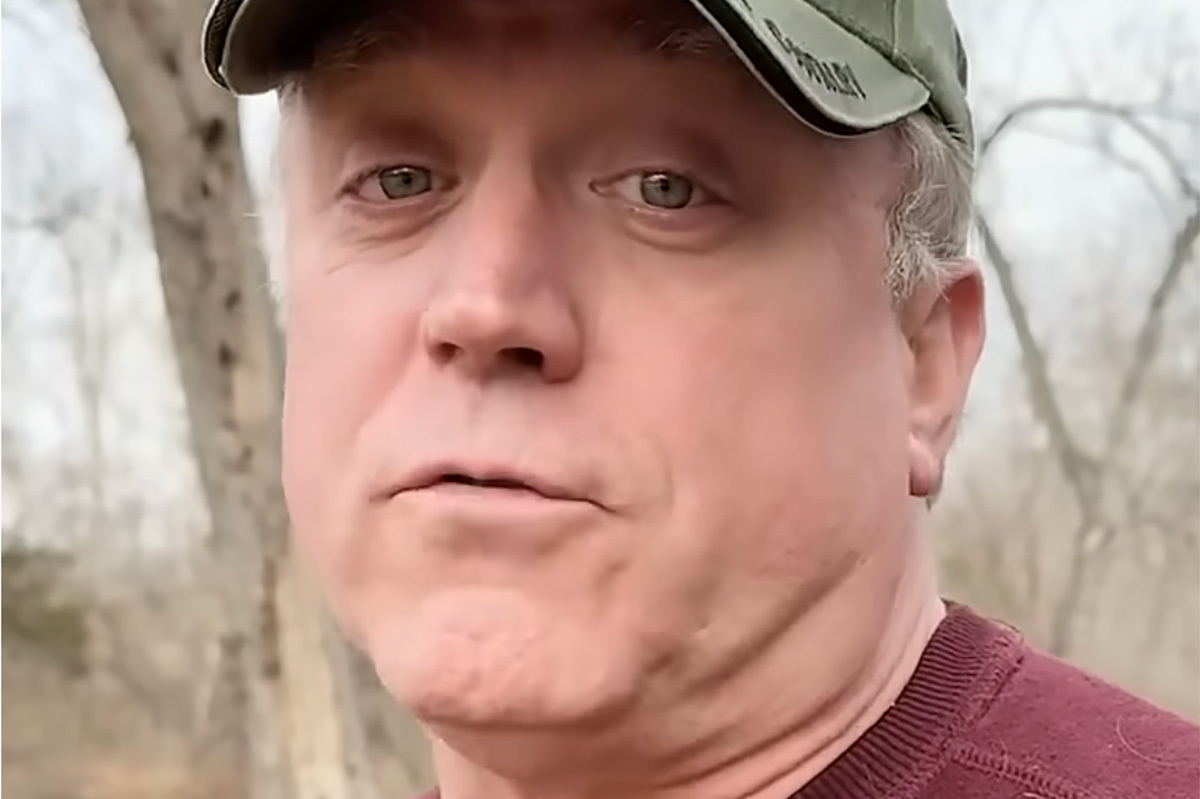
Republican Doug Ollivant will face off against incumbent U.S. Rep. Eugene Vindman (D-Va.) in Virginia’s 7th Congressional District.
Ollivant defeated his Republican opponents in Tuesday’s primary. Vindman ran unopposed.
Vindman in 2024 ran to succeed then-Congresswoman Abigail Spanberger in the U.S. House of Representatives after she ran for governor. Spanberger succeeded Republican Gov. Glenn Youngkin in 2025.
U.S. Sen. Mark Warner (D-Va.) on Tuesday easily won his primary. All other Democratic incumbent members of Congress from Northern Virginia also won their respective primaries.

Trump asks Supreme Court to allow restrictions on gender-affirming care in prisons

Education Department rolls back protections for LGBTQ students under Title IX

Debbie Allen shares on loss, love, and the power of speaking out

Baltimore’s oldest gay bar to reopen this week

Dr. Fauci ‘honored to be part of’ LGBTQ history

Colombia withdraws from Equal Rights Coalition

Trump-appointed judge restores White House TV pool access

Writing a play about Lincoln leads down a rabbit hole to a closet

Philadelphia event to launch 2026 LGBT History Month

Being a female firefighter comes with unique risks, and rewards
-

 Colombia5 days ago
Colombia withdraws from Equal Rights Coalition
-
White House5 days ago
Trump-appointed judge restores White House TV pool access
-
a&e features5 days ago
Writing a play about Lincoln leads down a rabbit hole to a closet
-
National5 days ago
Philadelphia event to launch 2026 LGBT History Month