National
NAACP approves resolution endorsing marriage equality
103-year old civil rights group joins President in supporting same-sex marriage

(image courtesy NAACP)
The NAACP announced on Saturday its board has voted in a favor of resolution endorsing same-sex marriage on the basis that marriage rights for gay couples is consistent with equal protection under the U.S. Constitution.
The National Association for the Advancement of Colored People, founded 103 years ago to advocate for the civil rights of black Americans, made the resolution public after the board voted in favor of the measure. The vote tally wasn’t immediately available.
The resolution affirms the NAACP’s commitment to equal protection under the Fourteenth Amendment while at the same time states a commitment to religious freedom under the First Amendment.
“The NAACP Constitution affirmatively states our objective to ensure the ‘political, education, social and economic equality’ of all people,” the resolution states. “Therefore, the NAACP has opposed and will continue to oppose any national, state, local policy or legislative initiative that seeks to codify discrimination or hatred into the law or to remove the Constitutional rights of LGBT citizens. We support marriage equality consistent with equal protection under the law provided under the Fourteenth Amendment of the United States Constitution. Further, we strongly affirm the religious freedoms of all people as protected by the First Amendment.”
The endorsement from the Baltimore-based organization comes on the heels of President’s Obama’s announcement in support of same-sex marriage. Within the span of a couple weeks, the nation’s first black president and the country’s premier organization for civil rights of black Americans have come out in favor of same-sex marriage. Other prominent black Americans — actor Will Smith, rapper Jay-Z and House Assistant Democratic Leader Jim Clyburn (D-S.C.) — have also followed Obama’s lead.
Leaders within the NAACP said support marriage equality is consistent with the organization’s advocacy for civil rights.
Roslyn Brock, board chair of the NAACP, said, “The mission of the NAACP has always been to ensure political, social and economic equality of all people. We have and will oppose efforts to codify discrimination into law.”

NAACP’s Benjamin Jealous (Photo courtesy NAACP)
“The NAACP’s support for marriage equality is deeply rooted in the Fourteenth Amendment of the United States Constitution and equal protection of all people,” Jealous said. “The well-funded right wing organizations who are attempting to split our communities are no friend to civil rights, and they will not succeed.”
Previously, the NAACP had no position on marriage equality. Julian Bond, chairman emeritus of the organization, has personally advocated for LGBT rights and same-sex marriage, saying the goals of the LGBT rights movement were consistent with the goals of the black civil rights movement.
Even though the NAACP had no official position in favor of marriage equality, the organization had advocated against legislative ban on same-sex marriage. Among these actions included stated opposition to the Defense of Marriage Act and constitutional bans on same-sex marriage in North Carolina and California.
LGBT rights groups hailed the NAACP’s announcement in support of marriage equality as a milestone in the pursuit of marriage rights for gay couples.
Evan Wolfson, president of Freedom to Marry, was among the LGBT advocates who had high praise for the organization.
“The NAACP has long been the nation’s conscience and champion for an America where all share equally in the promise of liberty and justice for all,” Wolfson said. “Today the NAACP resoundingly affirmed that the freedom to marry is a civil right and family value that belongs to all of us, and that discriminatory barriers to marriage must fall.”
Joe Solmonese, president of the Human Rights Campaign, said the vote is “another example of the traction marriage equality continues to gain in every community.”
“It’s time the shameful myth that the African-American community is somehow out of lockstep with the rest of the country on marriage equality is retired — once and for all,” Solmonese said. “The facts and clear momentum toward marriage speak for themselves.”
Black Americans have been seen as among the minorities within the country that are least supportive of marriage rights for gay couples. In November, a Washington Post-Kaiser Family Foundation poll found 58 percent of black Americans believe same-sex marriage was“unacceptable,” while 35 percent deemed it “acceptable.”
But views may be changing. Following the Obama’s endorsement of same-sex marriage, a Washington Post-ABC News poll published Tuesday found that 54 percent of black Americans had a favorable view of the president’s announcement, while 37 viewed it unfavorably.
Anti-gay groups have accused of trying to exploit racial tensions as part of efforts to oppose same-sex marriage. Internal documents from the National Organization for Marriage, obtained by the Human Rights Campaign and made public in March, reveal the organization tried to “drive a wedge between gays and blacks” as part of its strategy.
“The strategic goal of this project is to drive a wedge between gays and blacks—two key Democratic constituencies,” one documents reads. “Find, equip, energize and connect African American spokespeople for marriage, develop a media campaign around their objections to gay marriage as a civil right; provoke the gay marriage base into responding by denouncing these spokesmen and women as bigots.”
Solmonese said the NAACP’s endorsement of same-sex marriage demonstrates that NOM’s strategy to exploit the black community has failed.
“NOM has pursued ugly racial politics seeking to divide people, but what is becoming crystal clear is that its strategy is not working,” Solmonese said. “Americans from all walks of life are uniting to support love, commitment, and stronger families.”
NOM didn’t immediately respond to a request to comment on the NAACP’s endorsement.
One state with a significant black population could soon be deciding the issue of same-sex marriage. In Maryland, where opponents of same-sex marriage are seeking to place a referendum of the law on the ballot, an estimated 29 percent of the population is black.
Josh Levin, campaign manager for Marylanders for Marriage Equality, praised the NAACP for the endorsing marriage equality and said it demonstrates growing black support for same-sex marriage.
“We could not be more pleased with the NAACP board decision to support marriage equality,” Levin said. “It is yet again reflective of the growing momentum within the African-American community — like all communities — to support stronger families and protect children.”
Among the groups that have been working to preserve the Maryland same-sex marriage law, Levin said, is the Baltimore branch of the NAACP.
“The signs are clear: a majority of all Marylanders — people of all backgrounds — support making families stronger and protecting all children equally under the law,” Levin said.




National
Queen Jean is Tony’s first transgender winner
Designer/activist wins for work on ‘Cats: The Jellicle Ball’
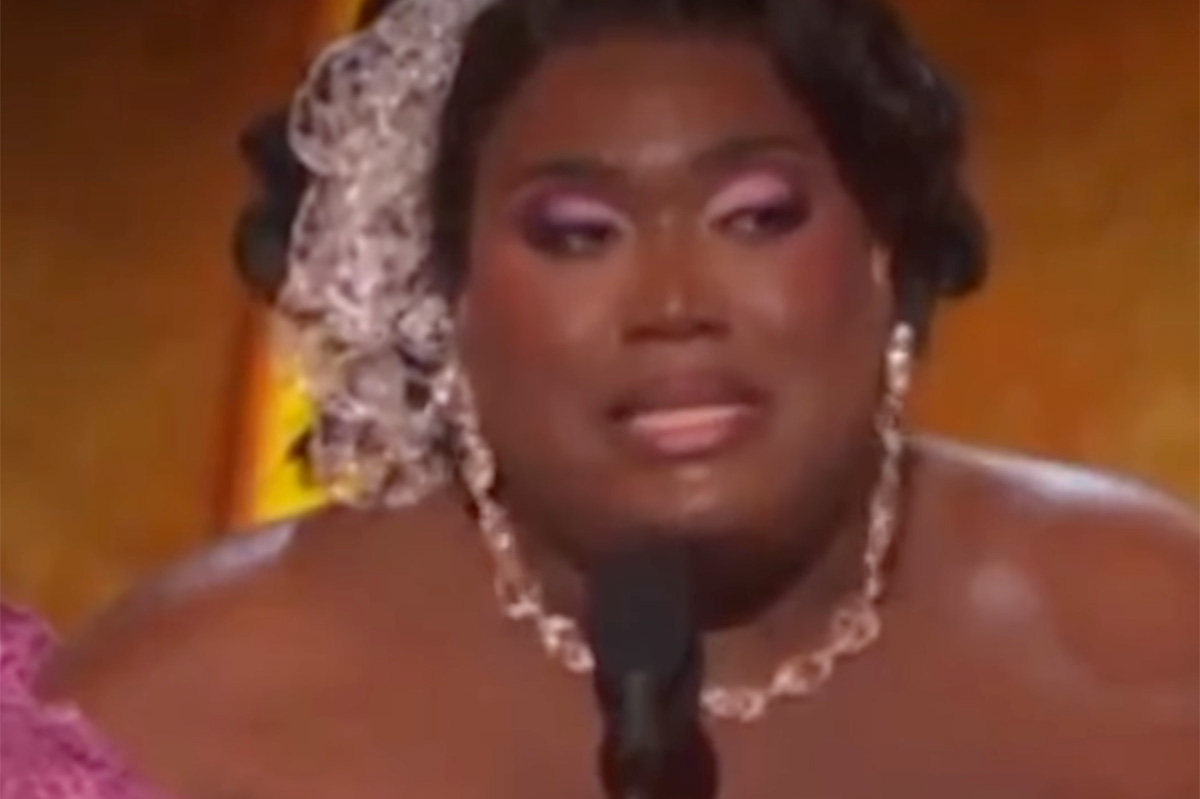
It was a historic night at the 79th annual Tony Awards on Sunday as Queen Jean won the award for Best Costume Design of a Musical, making her the first out transgender person to win a Tony.
“This experience has been monumental. We are here for the legacy of queer people, trans people,” she said. “We are taking up space in ways we have to take up space. We have to shift the paradigm. So I just want to say, thank you all so much for this incredible honor. The world right now is deeply, deeply combating so many ailments, and we know as a society that when we come together, we can make real, permanent change.”
She won the award for her work on “Cats: The Jellicle Ball” and was also nominated for best costume design of a play for “Liberation.”
In addition to her stage work, Queen Jean is the founder of Black Trans Liberation, an organization that supports trans and gender-nonconforming people in New York City.
National
Madonna turns Times Square into massive dance floor
Pop icon celebrates Pride month with surprise performance
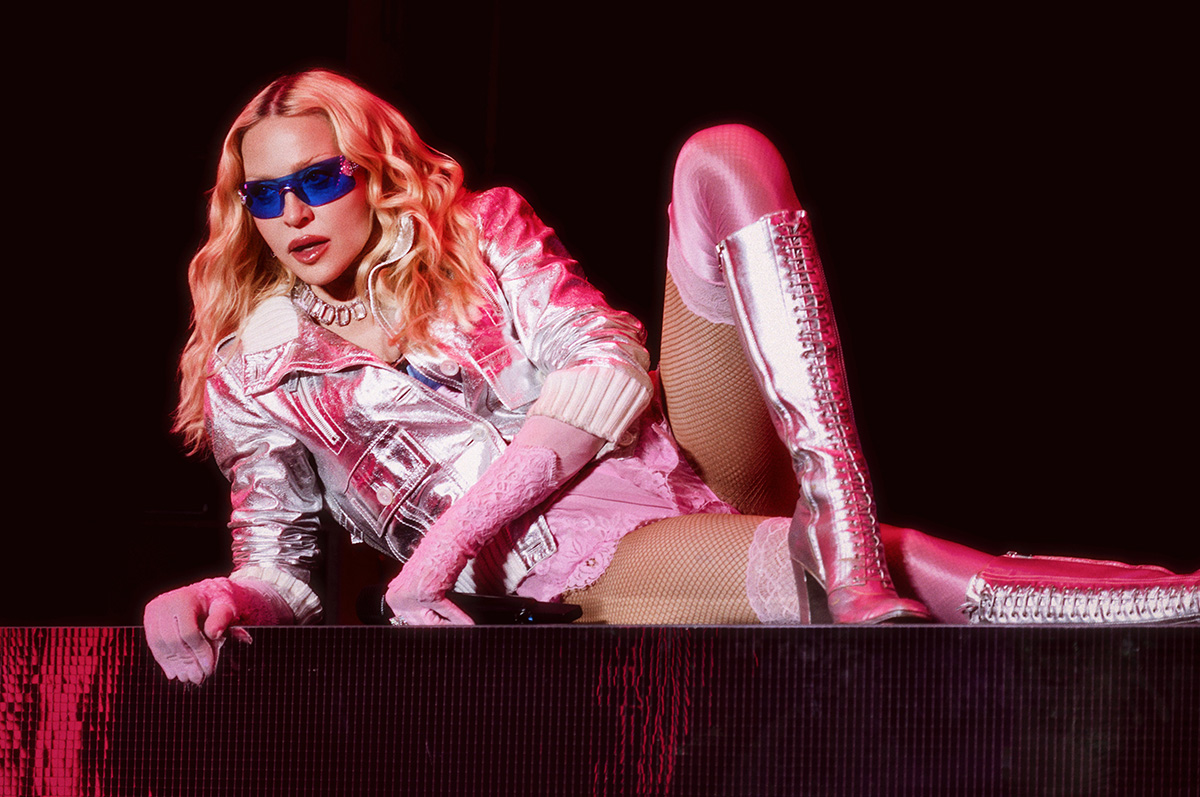
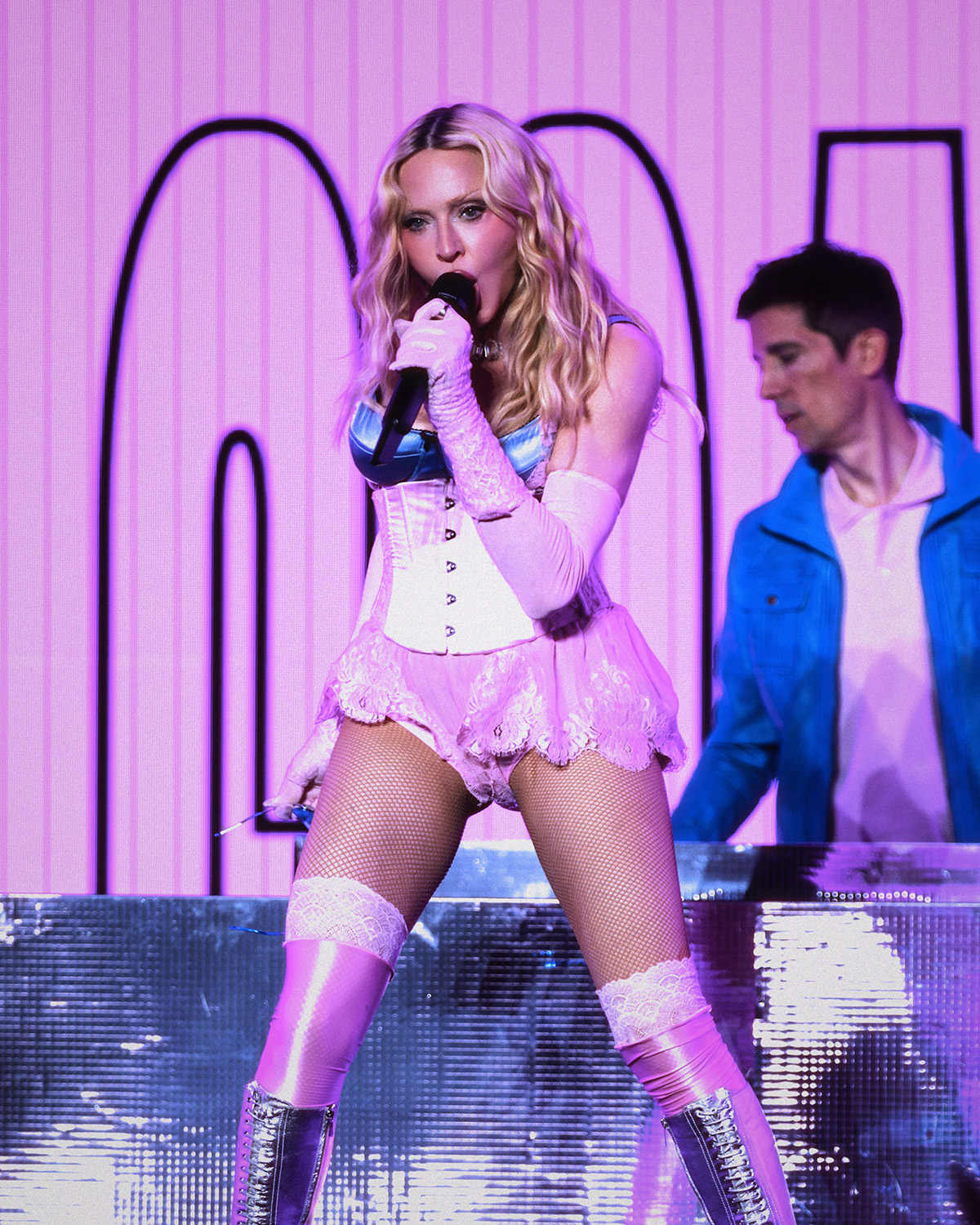
Pop icon Madonna celebrated Pride month with a pop-up performance in New York City’s Times Square on Thursday to the delight of 50,000 fans.
She performed for about 15 minutes high above street level, including several songs from her new album “Confessions II” due on July 3, along with a trio of songs from the first “Confessions on a Dance Floor.”
In addition to the brand new “Love Sensation,” she performed “I Feel So Free” and “Bring Your Love,” plus “Hung Up,” “Get Together” and “I Love New York.” She wished the crowd a happy Pride season; the event was shared with audiences through Grindr’s first-ever livestream.

National
Gallup finds LGBTQ support among Americans is dropping
Marriage equality support lowest since 2016
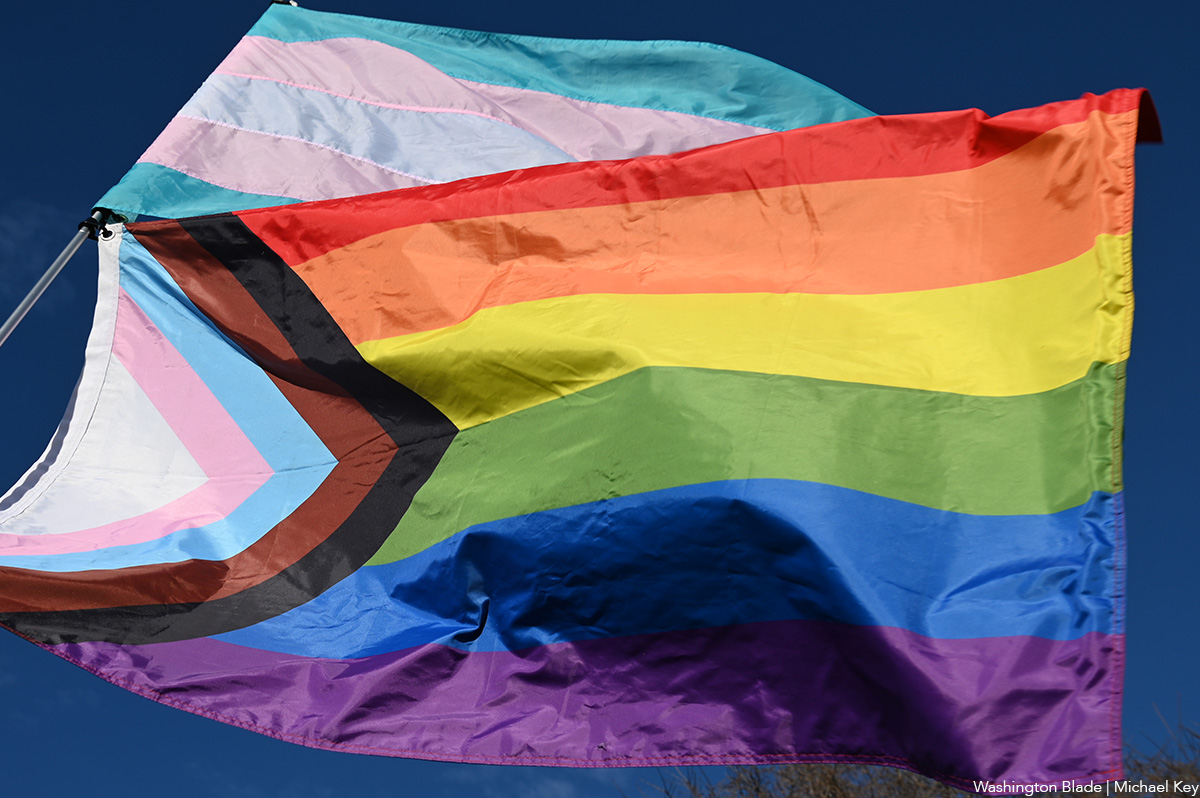
Gallup, one of the leading organizations in public opinion polling, has found that LGBTQ support among Americans is dropping.
The poll, whose data was collected using Gallup’s annual Values and Beliefs survey, was conducted in May and was published on Wednesday. The data was collected through telephone interviews from a sample of more than 1,000 adults living in all 50 states and D.C. using random digit dialing.
It highlights declining attitudes surrounding LGBTQ issues in multiple areas — from support for same-sex marriage to views on gender identity and the morality of one’s sexuality.
One of the most striking findings was that support for marriage equality fell six points from its 2022-2023 high.
The survey also found that 62 percent of Americans view gay and lesbian relations as morally acceptable, the lowest level since 2016 just after same-sex marriage was legalized nationwide by the U.S. Supreme Court.
One newer question on the poll found that the perceived morality of changing one’s gender has dropped eight points since 2021, indicating the American public is less supportive of transgender people.
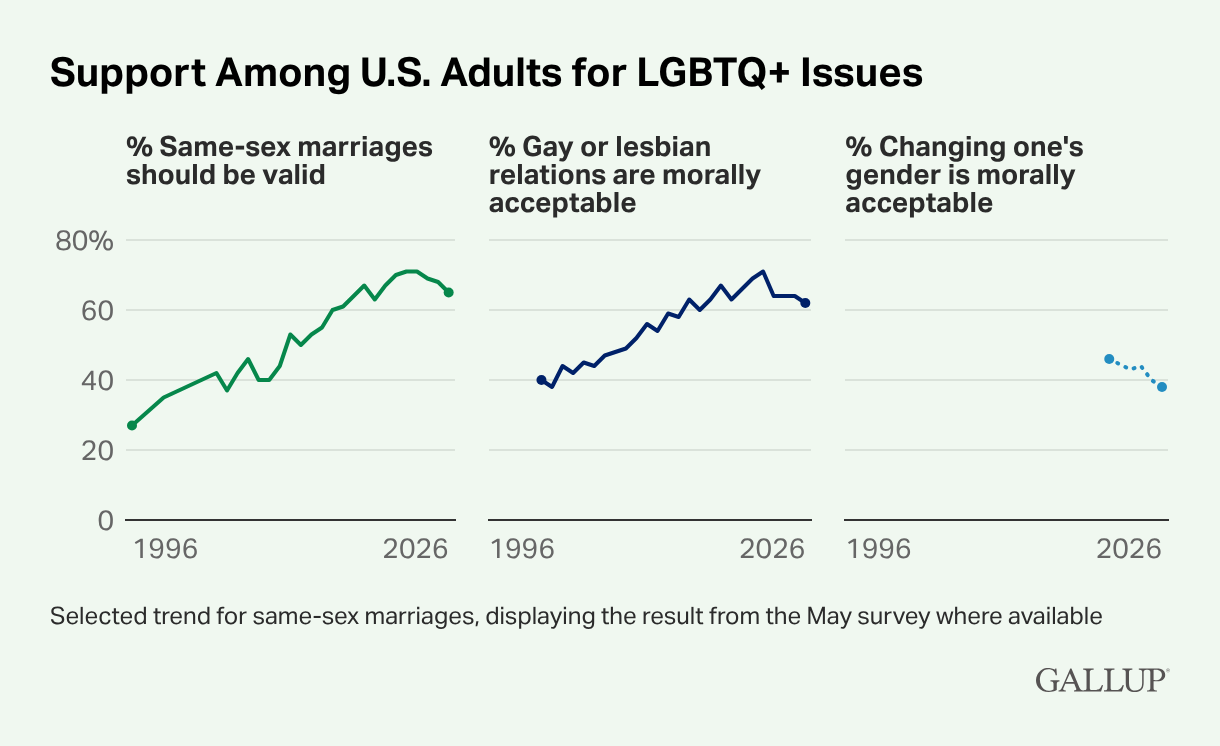
The data attributes much of the decline to shifting Republican views alongside the party itself. Conservative leaders have pushed back against diversity, equity, and inclusion programs that were intended to foster greater acceptance of LGBTQ people and other historically disadvantaged groups.
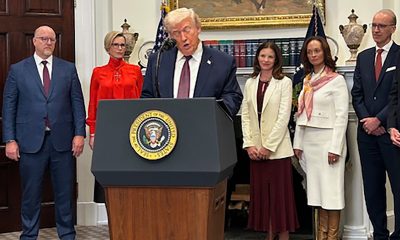
President Donald Trump has been a guiding force behind waves of anti-LGBTQ sentiment, particularly when it comes to trans rights. The president has enacted multiple executive orders, including Executive Order 14168, “Defending Women from Gender Ideology Extremism and Restoring Biological Truth to the Federal Government,” which mandates that gender be defined by one’s sex assigned at birth. He also signed Executive Order 14183, “Prioritizing Military Excellence and Readiness,” which barred qualified trans applicants from joining the military and led to the removal of trans service members already serving in the armed forces.
Additionally, he signed Executive Order 14201, “Keeping Men Out of Women’s Sports,” which prohibits trans female athletes from participating on women’s and girls’ sports teams.
In February, Gallup found that an estimated 9 percent of Americans identified as part of the LGBTQ community in some form.
The organization also found that 23 percent of adults under age 30 identify as LGBTQ, compared with 10 percent of those ages 30 to 49 and 3 percent or less among those ages 50 and older.

PHOTOS: Fairfax City Pride

EXCLUSIVE: Pelosi reflects on four decades of LGBTQ advocacy

D.C. prepares to party as Pride celebrations kick off Saturday

David Archuleta, Monroe Alise named D.C. Pride parade marshals