Arts & Entertainment
Meet the allies
Straight supporters play key roles in LGBT movement
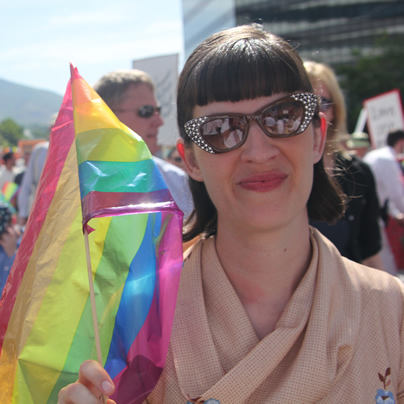
President Obama’s historic announcement endorsing marriage equality stands as perhaps the most prominent example of straight ally support for the LGBT rights movement. But there are many allies working hard to advance equality, from U.S. senators to ministers to community volunteers. Here, we introduce a few straight allies making a difference.
SEN. KIRSTEN GILLIBRAND
U.S. Sen. Kirsten Gillibrand (D-N.Y.) remains one of Capitol Hill’s most visible allies, a role she embraces.

Sen. Kirsten Gillibrand (D-N.Y.) (Blade file photo by Michael Key)
She co-sponsored a Senate bill that would repeal the Defense of Marriage Act and championed the repeal of “Don’t Ask, Don’t Tell” in late 2010.
“I strongly believe that equality is an inalienable American right and should not be ascribed based on gender, race, religion or sexuality,” Gillibrand told the Blade, noting that the end of the ban on openly gay and lesbian service members strengthened national security. “Every American, no matter who you are, or who you love, should be able to serve their country with honesty and integrity.”
Gillibrand had previously backed civil unions for gays and lesbians, but she enthusiastically endorsed marriage rights for same-sex couples once then-New York Gov. David Paterson appointed her to succeed Secretary of State Hillary Clinton in the U.S. Senate in 2009. Gillibrand described President Barack Obama’s endorsement of nuptials for gays and lesbians during an ABC News interview last month as “a watershed moment in American history” that will provide the “leadership needed to finally repeal DOMA and win the unfinished fight for equality for all Americans.”
She also officiated at a same-sex wedding after New York’s law that allows same-sex couples to legally marry in the state took effect last July.
“I have more friends getting married this summer, which I’m looking forward to,” says Gillibrand. She became “teary eyed” when she watched New York City Council Speaker Christine Quinn and her long-time partner Kim Catullo walk down the aisle with their fathers at their May 19 wedding in Manhattan. “I wish them an enormous life of happiness together.”
During a 2010 interview with the Fire Island News, the senator said she’s a former partner in the New York law firm that David Boies, the lawyer who argued against California’s Proposition 8 in federal court alongside former Solicitor General Ted Olson, co-founded in 1997. Gillibrand did not cite a specific moment that prompted her to become an ally, but she referenced her own family when referring to marriage and other LGBT rights.
“It is just clear to me that these issues fundamentally go right to the core founding principles of this country — equality, justice and fairness,” Gillibrand says. “All of America’s families should be protected by the federal rights and benefits that accrue to families. My gay friends who are married, or have children, deserve every bit of protection that my husband and I enjoy. It’s a matter of right versus wrong, it’s a matter of core values of humanity and fairness and freedom and the ability of life, liberty and the pursuit of happiness.”
MICHAEL LAVERS
STAY ON TOP OF ALL THINGS PRIDE! DOWNLOAD THE DIGITAL PRIDE GUIDE TODAY!
MISSY TOMS
When Missy Toms marched in the Capital Pride parade last year, her first, it was a monumental event.
“I had never been in it or even seen it before,” she says. “But I tell you what, when we turned the corner and saw all those people at Dupont Circle, just seeing the joy, the excitement, they were just so proud and happy and just in that moment, it just all clicked for me that this is such an important thing that brings all these different people together. Every age, every level of income, they’re just all there and celebrating and it was such a beautiful experience for me. I was thinking, ‘Oh my gosh, this is how it should be everyday.’”
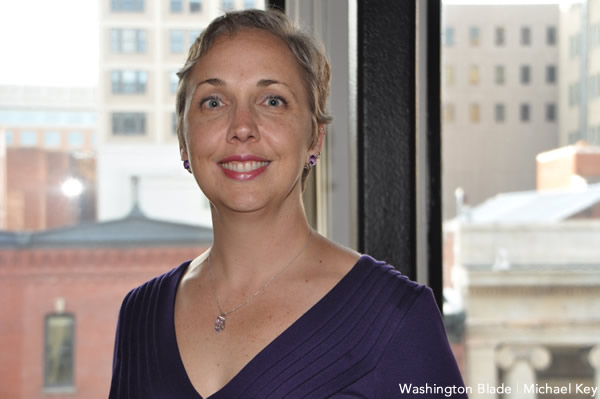
Missy Toms (Blade file photo by Michael Key)
Toms is the director of external affairs for Capital Pride and handles the fundraising and marketing for the organization. This is her second year in the job and she splits her time between D.C. and Cleveland where she and her husband and three children (ages 13, 9 and 5) live. She knew former Capital Pride president Mike Lutz and saw the chance to do the job last year as a good way to be around her mother who was battling cancer at the time and lived in D.C. (she died in January).
“I knew she was in her last year so it just worked out that I got to be here a lot and spend a lot of time with her last year,” she says. “My contract is on a year-to-year basis, so I’m doing it again this year.”
But aside from personal logistics, Toms says Pride is important. Her brother came out to her when he was 17 and her best friend from college (“It sounds so cliché, but it’s true,” she says), Steve, was gay.
“It was just always something I was familiar and comfortable with,” she says. “I wasn’t political about it then. I got much more aggressive about that as I got older.”
Toms says it’s been surprisingly easy teaching her kids about gay issues.
“We explained to them about marriage, about ‘Don’t Ask, Don’t Tell,’ and my brother got married a few years ago in D.C. right after the law was passed here, so they got to see a gay wedding and I explained to them why this was so important so they completely understand. Kids are so ahead of adults a lot of times on these issues.”
JOEY DiGUGLIELMO
REV. CHRISTINE WILEY
Rev. Christine Wiley, who co-pastors D.C.’s Covenant Baptist United Church of Christ with her husband, Rev. Dennis Wiley, doesn’t remember knowing many LGBT people in her childhood or young adult life, but she does recall her mother teaching her about discrimination.
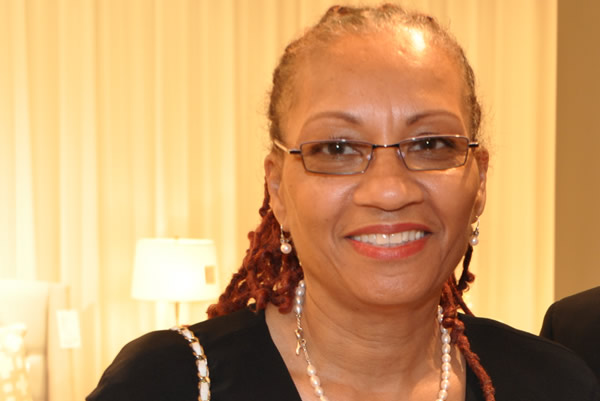
Rev. Christine Wiley (Blade file photo by Michael Key)
“I remember my mother saying to me, and this was a British-born black woman who grew up in the poor parts of London. Her mother was a white woman who was married to a man from the Caribbean in the ‘30s, you can imagine there was all kinds of discrimination she knew with that situation, but she said, ‘Don’t ever believe you’re better than anyone else,’” Wiley says. “She told me, ‘Some people don’t like whores and funny men,’ but she said they were some of the nicest people in the world. People used to say if someone was gay, they were funny. … Even as a young adult, I never remember having any bad feelings about gay people and I remember being annoyed when other people would say things … I always remember thinking that God made all people and I couldn’t figure out how people could say they were bad or were going to hell for this.”
The Wileys — Dennis is on sabbatical now and was unavailable for comment — are iconoclasts in the D.C. black church world as Baptist ministers whose church is unabashedly open and affirming to LGBT worshipers. Their church, located in Ward 8’s Bellevue neighborhood, has been through major changes in the 27 years they’ve been there (Dennis’s father was the former minister). Though they have roughly the same number of attendees on an average Sunday morning — about 400 give or take — as they had a decade ago, about half the congregation left after they conducted their first same-sex union ceremony in 2007.
“It was over a period of about five years,” she says. “It wasn’t like a mass exodus, but we did lose a lot of people but … on the other hand, we’ve been continually gaining as well and had a lot of people come who have a much stronger social justice stance. Many people identify us by our stance on LGBT issues but that’s not really the biggest part of who we are. It just happens to be one of the things we teach and believe.”
In addition to a belief that scriptural passages seeming to condemn gay sex have been misconstrued over the centuries, Wiley says the bigger picture for her is her belief in what she calls “liberation theology.”
“We see Jesus as the great liberator and Jesus is a person who was not afraid to count the cost,” she says. “You see this example so often in the Bible, with so many of the prophets of the Old Testament who were not afraid to speak truth to power. Part of our stance is that we cannot be politically correct all the time. We must do what we feel the Bible has called us to do. Was it hard at first? Yes. But when you really take injustice issues and see that as a big part of your life, there’s no other way. Can you speak to every single social injustice issue that’s out there? No. But this is one issue that we’re very clear that we’ve been called to speak to.”
JOEY DiGUGLIELMO
SHARON LETTMAN-HICKS
Sharon Lettman-Hicks, executive director and CEO of the National Black Justice Coalition, chooses her words carefully. She prefers to think of herself as a “sister of the movement,” and says the word ally is, for her, a misnomer. She’s also very clear about what she sees as her role at the helm of the large black LGBT political organization she oversees.
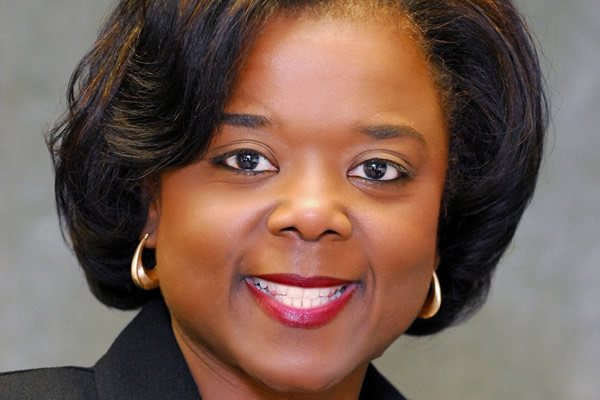
Sharon Lettman-Hicks (Photo courtesy NGJC)
“I don’t see it that I’m fighting to help straight people understand,” she says. “I feel I’m teaching non-LGBT people to see the errors in their judgment. I don’t feel I have the license to speak on behalf of my brothers and sisters in that way, but to be a mirror for non-LGBT people to show them the conduct they should be affording my brothers and sisters. I think it’s a very nuanced way of looking at it and I don’t feel that LGBT people should have any necessity to explain why they should be treated equally.”
In practical ways, she understands being dubbed an ally is one way to look at it, but she prefers words that resonate more deeply with black Americans. And she’s not afraid to be blunt.
“From a business perspective, yes, I’m an ally, but culturally speaking, black people understand family, so when I’m speaking as an ally, it sounds like a cultural transaction. You’re doing something for me and we should be grateful. But I don’t think any LGBT person should feel grateful for getting respect. We should demand it. Thank you for accepting me? How dare you? Get out of my way. You don’t legislate people. Don’t think I’m going to let your rhetoric go unchallenged. I see my role as educating people on why their thought process of discrimination, homophobia and judgment is misplaced, inappropriate and unwelcome.”
Lettman-Hicks, who joined the Coalition in 2009 after eight years with People for the American Way, says the discrimination she felt as a child — she describes herself as an “Afro-Latina who was relatively obese for much of my life” — has informed her activism. Her work at People for the American Way and also some LGBT people she knew personally whom she says “were struggling,” was also a catalyst for her work, which she said in time, she has recognized as “a calling.”
“I started to think, ‘OK, what is my social responsibility here,’” she says. “It became kind of a matter of, ‘OK Sharon, step up to the plate or get out of the game’-type situation for me. ‘I know you’re not going to just accept the status quo and sit back and see this stuff going on.’ I grew up in an era where black liberation was a do-it-yourself kind of mindset but we could never ignore that there were many allies in the struggle for civil rights. I don’t consider myself an ally for black LGBT equality, but a sister of the movement, because it’s very much a black family affair, of righting the wrongs that black people have put on our own children, neighbors … I see it as people for whom society has seen as an invisible community and I am honored to be on the front lines of helping my brothers and sisters live authentic lives.”
JOEY DiGUGLIELMO
REV. DEAN SNYDER
While at Foundry United Methodist Church, Rev. Dean Snyder has fought to change his denomination’s ban on same-sex marriages being performed by the church’s ministers or even in Methodist churches. In 2010, the Foundry congregation voted 367-8 to allow same-sex marriages to be performed in the church.
Snyder’s beliefs on LGBT inclusion and equality in the church began at his first ministerial post when a man came to talk to him about his feelings of attraction to other men.
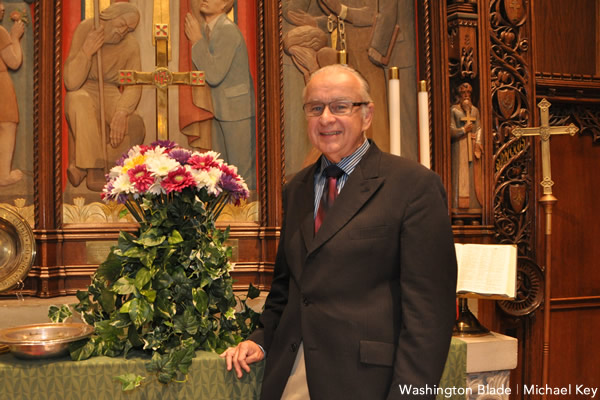
Rev. Dean Snyder (Washington Blade photo by Michael Key)
“Whatever degree of awareness I have about human sexuality and same-gender attraction is due to him sharing his story with me and causing me to read and study … and listen to gay people,” Snyder says. “His story was the beginning of the path.”
When interviewing for a post as a campus minister, Snyder was asked to list his core commitments, one of which was increased acceptance of gays and lesbians within the church. This belief became well known and a lot of gay people, especially gay men, came to talk to him.
Snyder’s path as a straight ally may have began nearly 40 years ago, but his beliefs are as strong as ever with his continual fight for equality and inclusion within the United Methodist Church.
In 1996, the denomination’s legislators voted against performing holy unions, covenants and other marriage-like ceremonies for same-sex couples. This addition to the church’s laws also prohibited United Methodist clergy from performing gay unions.
A large portion of Foundry’s congregation is LGBT, including couples that have been in committed relationships for decades. This brought Snyder to question the church’s laws.
“We started doing services to honor gay and lesbian committed relationships, which we argued were not a violation of the rules because we weren’t actually consecrating a marriage,” Snyder says. “But then … when it was clear marriage was going to become legal in Washington, D.C., then we couldn’t fudge anymore. It was either marriage or it wasn’t.”
Snyder says there are many who argue that conducting same-sex unions is against denominational law, but he feels LGBT believers deserve credit for being open with both their faith and their sexual orientation.
“The reason that the various congregations are where they’re at … that have attempted to be inclusive … is because of gay and lesbian people who have taken the risk of being honest about saying they are Christian and they are gay,” Snyder says. “I think the real heroes of this movement are the gay and lesbian people who have taken … an enormous risk … and been honest.”
JULIETTE EBNER
DON BLANCHON
Don Blanchon has served as executive director of Whitman-Walker Health since May 2006 and throughout his tenure, he has made many changes to the organization.
“I have the amazing job of leading one of the best LGBT non-profits on the planet,” Blanchon says.

Don Blanchon (Blade file photo by Michael Key)
Just this year, Whitman-Walker announced that its revenue in 2011 left the health center with a $2.6 million budget surplus. This is the second year in a row the center has posted a surplus.
Blanchon’s work as a straight ally comes from his relationship with his younger brother, Robert, who died in 1999 from complications of HIV/AIDS.
The two were very close, considered to be “Irish twins,” born 14 months apart, and Blanchon credits his brother, who was out at an early age, for making him who he is today.
“I saw first hand how he struggled with coming out … saw him struggle to fight HIV every day and … ultimately what the complications from HIV did to him from a health perspective,” Blanchon says. “If you love somebody dearly like I love my brother, when you see somebody really struggle … then ultimately lose their life to something like HIV … it has a tremendously powerful impact on how you’re living and how you make decisions about how you use your time.
Born and raised in New England, Blanchon says he always had an independent view of things, believing in equality and social justice. His parents believed in the importance of community, however it’s defined.
“It’s a personal conviction from my upbringing,” Blanchon says of his work for the LGBT community.
Blanchon says he always circles back to the idea that people love one another. Because of the political atmosphere in D.C., he believes Washingtonians sometimes are more divisive in how some problems are approached as opposed to trying to work together.
“This is something that I’m learning as a straight ally … we do a lot of labeling … both inside and outside the LGBT community and what often times we miss is each of us is especially unique and has gifts and talents and is deserving of love and friendship,” Blanchon says.
JULIETTE EBNER
KATE KELLY
It may seem surprising to find an LGBT ally within the Mormon Church, but Kate Kelly proves change is possible in the conservative church.
The 31-year-old Vienna, Va., resident grew up in a conservative religious home in Oregon and studied at Brigham Young University. It was while she was in Utah that she made what she calls her “first nudge toward becoming an ally.”
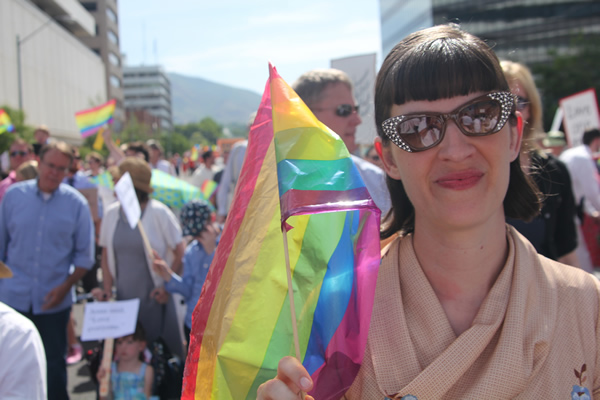
Kate Kelly (Photo by Neil Ransom)
Kelly attended her friend’s 2004 same-sex commitment ceremony. Ominous storm clouds had gathered above the garden in which the couple and their friends had gathered, but a rainbow suddenly appeared as the men began to exchange their vows. “It was shockingly beautiful,” Kelly says. “After that ceremony I began to awaken to the possibility that God could approve of a same-sex union.”
Kelly moved to California after she graduated from BYU, but she soon found herself at the epicenter of the debate over the repeal of the state’s same-sex marriage law. Mormon leaders backed Proposition 8 that voters approved in 2008. The backlash against the Church of Jesus Christ of Latter-day Saints was swift.
“This was a terrible time to be a Mormon, and the whole campaign and Mormon participation in it made me sick with worry and agony,” she says. “I was really torn by the pounding of the drums for Prop 8 by the church, and what I felt was right. In the end I voted against Prop 8, but it was a very difficult decision because the church was so heavy handed about the issue.”
A family tragedy made Kelly realize more than ever that her voice within the church was vitally important.
Her husband’s cousin took his life in 2010 — Kelly noted that Todd Ransom was the third gay person to commit suicide in Utah that month. She emotionally recalled at an LGBT Mormon conference at a Northwest Washington church in April that Ransom’s family responded to his sexual orientation as though it was a burden that had been placed upon them.
“Attending his funeral made me realize that active Mormons need to act up and change the dialogue in the Mormon Church and help families accept and love unconditionally their gay children,” Kelly says.
Kelly, whose brother came out as gay last year, concedes that Mormon allies are “certainly few and far between.” She was among the 300 who marched in the Utah Gay Pride Parade through downtown Salt Lake City on Sunday. Kelly remains optimistic that she and others whom she describes as “paradigm pioneers” are making a real difference in the church.
“Change will come,” she says. “I changed my mind and so I know that others can too.”
MICHAEL LAVERS
ADAM STRASBERG
Adam Strasberg, founder of the political media consulting firm Bright Idea Creative, is the son of legendary acting teachers Anna and Lee Strasberg.
He’s been married to his wife Nora for more than 10 years and says he still plays Dungeons and Dragons. But every Sunday in spring and fall, Adam is known on Carter Barron Field as the captain and quarterback of Tie Dye Blue Tsunami — named by Strasberg’s two boys, ages 8 and 5. They’re the first undefeated team in the history of the D.C. Gay Flag Football League. He’s been the straight guy in the gay league since the late 1990s.
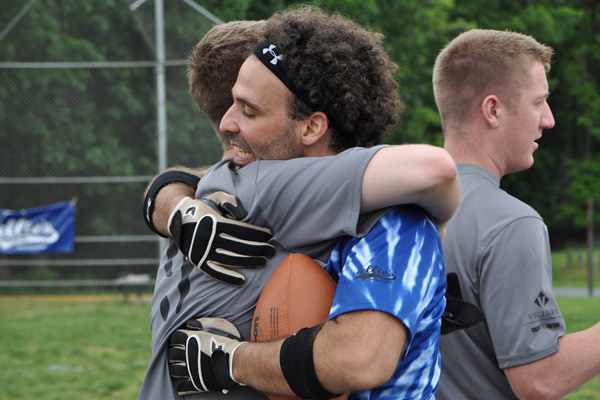
Adam Strasberg (Blade file photo by Michael Key)
“Before there was an organized league, we were just some guys playing pickup on the Mall,” Strasberg says about how he got involved in the game. “I didn’t know it was gay guys for a long time. Basically it was a game with some friends … and I just played for like a year and a half or something, and one day I got there early waiting for the guys to come set up, and a guy showed up, and said, ‘Is this the game that they advertised in the Blade?’”
Strasberg says after more than a decade of play with the group, he’s always felt accepted, and that he’s even recognized and thanked for his involvement in the league, especially since members of the league recorded an It Gets Better video.
“The only time it was ever an issue was last year at Gay Bowl, there was an issue about how many straight guys can be on a team,” says Strasberg of the Houston championship, saying such exclusion never happens in Washington. “It was kind of a silly thing.”
Strasberg says he’s been a member of other flag football leagues in the past, but has dropped out because he didn’t feel comfortable. In the D.C. Gay Flag Football League, he’s always felt a great sense of camaraderie.
“The guys are super competitive, but everybody has the right spirit,” Strasberg said. “I would never think of leaving.”
Strasberg says it’s a privilege to play with the league.
“Here’s the great thing about gay flag football. It’s an opportunity for people to express who they really are, in all senses of the word. I feel like I’m the one who is honored to be part of the league.”
PHIL REESE
LEA GILMORE
Lea Gilmore is more than just an internationally renowned, classically trained pianist and an award-winning blues, gospel and jazz singer who has appeared in more than 45 musical and dramatic theater productions. She is also a deeply religious humanitarian who sings the praises of justice and equality all over the world.
The quest for marriage equality in Maryland is one of many causes that Gilmore firmly believes in and has worked hard to achieve.
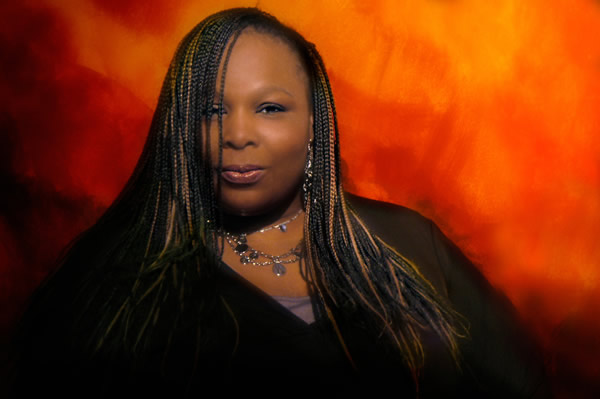
Lea Gilmore (Photo courtesy Marie Jeanne Smets)
She’s a former deputy director of the American Civil Liberties Union of Maryland and a founding member of the Maryland Black Family Alliance. The group advocates for fairness, justice and equality for Maryland black families, including those headed by same-sex households. Over the years she has worked to urge passage of bills that would legalize marriage for same-sex couples.
“Before I went to college, I had never met gay people and had never known any in my Baptist church,” Gilmore says. “When I was a student at Morgan State, I was heavily involved in theater and through that involvement I met many gays. In addition, I saw some family members come out as gay or lesbian and was upset at the ostracism.”
This affected her. “Injustice against a group of people is unacceptable,” she says.
Gilmore feels African-American clergy who oppose same-sex marriage, “should know better as to how the Bible has been used in the past to keep us in our place.” She bristles at some pastors in the media spotlight, such as Del. Emmett C. Burns, Jr. (D-Baltimore County) and Rev. Derek McCoy who vehemently oppose same-sex marriage and use the Bible as a rationale.
In her testimony against an anti-marriage equality bill sponsored by Del. Burns in the House Judiciary Committee in 2010, Gilmore argued, “As African Americans, we know more than most how discrimination is wrong, hurtful and detrimental to all communities …While we respect those with differing opinions, religious traditions should never be used as a weapon against our fellow citizens, or given as the rationale to defeat civil protections. We have trod that dark path before.”
Two years later, on March 1, Gov. Martin O’Malley signed the law that legalizes same-sex marriage in Maryland. Gilmore, who has been married for more than 28 years, told the Blade then, “This is a day that is just so amazing for me. I along with so many others have longed for this day. This is a day we got to see justice happening in Maryland.”
Gilmore not only draws on her talents to make beautiful music, but to help realize equality for all. “I am deeply committed to the fight for LGBT equality, and as my grandmother said ‘I ain’t tired yet.’”
STEVE CHARING
JACK EVANS
Since his election in 1991 as a member of D.C. City Council from Ward 2, Democrat Jack Evans has been the lead sponsor or co-sponsor of virtually every LGBT-supportive bill or resolution that has come before the legislative body.
He announced his support for allowing same-sex couples to legally marry in the city years before Council voted 11-2 in 2009 to approve the city’s same-sex marriage law. Evans was among the 11 Council members to vote for the law.
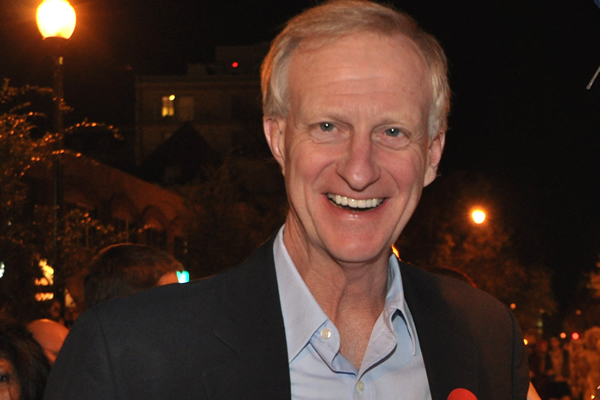
Jack Evans (Blade file photo by Michael Key)
In his first year in office, Evans emerged as a leader in efforts to repeal the city’s sodomy law, which classified gay sex as a crime, even if engaged in within the privacy of the home. Working with the late D.C. gay rights leader Frank Kameny, who in 1993 drafted a proposed bill to repeal the sodomy law, Evans and other Council members shepherded the bill through Council, which passed it later that year.
Evans also played a key role in working with local gay rights leaders in introducing or co-sponsoring a series of domestic partnership bills, which Council passed in the early to middle 2000s. LGBT advocates noted that the bills provided same-sex couples with all of the legal rights and benefits of marriage under D.C. law.
At the time, LGBT advocates determined it wasn’t feasible to ask Council members to pass a same-sex marriage law because the Republican-controlled Congress was certain to overturn such a law or impose on the city an outright ban on gay marriage.
When Democrats gained control of Congress and Barack Obama took office as president in 2009, Evans co-sponsored the bill introduced by gay Council member David Catania (I-At-large) to legalize same-sex marriage in D.C.
Evans has also spoken out against anti-LGBT hate crimes, calling on D.C. police to aggressively investigate hate crimes cases and for the U.S. Attorney’s office to make sure persons arrested for committing hate crimes are “prosecuted to the full extent of the law.”
Evans is running for re-election unopposed this year with the strong backing of LGBT activists, including the Gertrude Stein Democratic Club.
“I have served Ward 2 with pride since 1991 and will continue to fight on behalf of the GLBT community to ensure that everyone enjoys the same rights and privileges,” Evans said in a statement. “More than that, I will continue to speak out against discrimination and prejudice when I see it.”
LOU CHIBBARO JR.
ELEANOR HOLMES NORTON
Since her election to the House of Representatives in 1990 as D.C.’s congressional delegate, Eleanor Homes Norton (D) has become known as one of the strongest supporters of LGBT rights in Congress.
In addition to being an outspoken defender of LGBT equality on the House floor, activists say Norton has worked tirelessly behind the scenes to lobby her congressional colleagues in support of pro-LGBT legislation and against anti-gay bills and amendments.
Among other things, Norton has been credited with helping persuade her House colleagues to oppose and defeat attempts to attach various anti-gay amendments to the city’s budget, which Congress must approve every year.
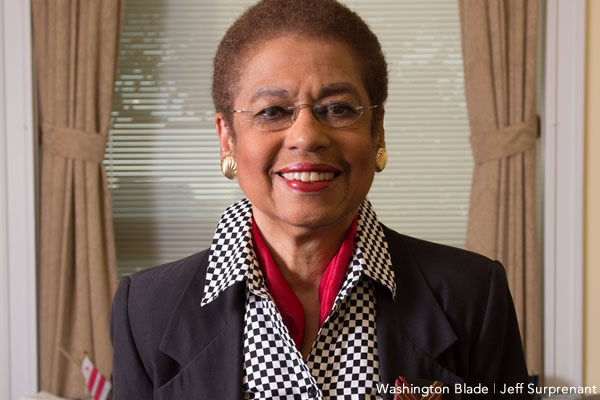
Del. Eleanor Holmes Norton (D-D.C.) (Blade file photo by Jeff Surprenant)
Rick Rosendall, vice president for political affairs of the Gay and Lesbian Activists Alliance, has said Norton worked closely with a coalition of local and national LGBT groups in mapping a strategy for avoiding congressional interference when D.C. Council approved the city’s same-sex marriage law in 2009.
A native Washingtonian, Norton received a law degree from Yale University and began her career in the 1960s in New York City as assistant legal director of the American Civil Liberties Union.
In connection to her ACLU work, Norton spoke out in support of gay rights as early as 1967, two years before New York’s Stonewall Riots of 1969, according to Cartwright Moore, a member of Norton’s congressional staff.
In 1970, then-Mayor John Lindsay appointed her as head of the New York City Human Rights Commission, where she served until 1977. Norton served from 1977 to 1981 as head of the U.S. Equality Employment Opportunity Commission in Washington under President Jimmy Carter.
Since 1982 and continuing through her tenure in Congress, Norton has served as a professor of law at Georgetown University.
Local gay activists have said they were impressed with Norton’s knowledge and understanding of the gay rights movement when she entered the race for the city’s congressional delegate seat in 1990 in the Democratic primary. Norton’s main opponent was then-D.C. Council member Betty Ann Kane (D-At-Large), a strong supporter of LGBT rights.
Although impressed with Norton’s grasp of LGBT issues, the Gertrude Stein Democratic Club, an LGBT group, endorsed Kane over Norton, saying Kane had a longstanding record of support on gay issues during her tenure as a Council member.
Norton beat Kane in the primary by a 39-33 percent margin and easily won the general election in November 1990. The Stein Club and nearly all the city’s LGBT political activists have backed Norton in every election since that time, including her bid this year for her 12th term in office, in which she’s running unopposed.
LOU CHIBBARO JR.
MEGHAN McCAIN
The Republican Party is further along on LGBT rights and same-sex marriage than you might guess, according to Meghan McCain.
“As a Republican, I just meet a lot of Republicans that privately say they don’t think gay marriage is that big of an issue,” McCain said. “They privately support it, but publicly they don’t want to because it goes against the grain of being a Republican. I just feel like if everyone would start being honest about the actual feelings about the issue that more progress would be made.”

Meghan McCain (Photo by David Shankbone via wikimedia)
McCain — the daughter of Sen. John McCain (R-Ariz.) — gained notoriety during the 2008 presidential campaign for her blog, McCain Blogette, about her experience on the campaign trail. A supporter of same-sex marriage, McCain spoke at the 2009 convention of the Log Cabin Republicans, posed in a NOH8 campaign photo and criticized congressional candidate Samuel Joseph Wurzelbacher, or “Joe the Plumber,” for saying he wouldn’t want “queers” around his children.
“I do a lot of television and people pay me to speak my opinion, and I’m always honest,” McCain said. “And I believe that in America … how can you regulate who gets to do one thing while others don’t? It just completely goes against the ideal America was founded on.”
In addition to speaking out for LGBT rights, McCain has become a contributor to The Daily Beast and MSNBC and published a book this year with Michael Ian Black called “America, You Sexy Bitch: A Love Letter to Freedom.”
Asked about her views on the upcoming presidential election, McCain had harsh words for both President Obama and presumptive Republican presidential nominee Mitt Romney, saying they both were deficient on LGBT issues.
McCain faulted Obama for coming out in favor of same-sex marriage personally but not backing legislation mandating marriage rights for gays, saying “it’s a myth to say that President Obama has been such an advocate” for the LGBT community.
As for Romney, McCain said, “I don’t think he would be a bigot … but I can’t sit here in good conscience and say Mitt Romney is going to be this great LGBT advocate because most likely he probably won’t.”
McCain said she plans to continue to speak out in hopes of changing minds.
“There was a time in this country when black people couldn’t vote, when women couldn’t vote,” McCain said. “If you go to history, any kind of prejudice for one person being different always ends up failing. And history looks back on it with disgust. … Do you want to have your children and your grandchildren look back on this time and think that you’re on the wrong side of history?”
CHRIS JOHNSON



a&e features
Tickets on sale for chef Patrick O’Connell’s book launch event
Sept. 18 kickoff to feature José Andrés, Tom Sietsema

Acclaimed chef Patrick O’Connell is preparing to publish his new memoir, “Main, Middle & Gay” in September and he’s launching the book with an event on Sept. 18 at 6 p.m. at Lisner Auditorium featuring Chef José Andrés and former Washington Post food critic Tom Sietsema.
Tickets for the event go on sale Tuesday, July 21 at Ticketmaster; prices start at $55.
O’Connell, who’s gay, is the pioneering Michelin-starred chef and longtime proprietor of the Inn at Little Washington. He spoke with the Blade about the September event and the launch of his first memoir.
“I’ve known [Andrés and Sietsema] for more than 25 years and I have great respect for them,” O’Connell said. “I felt that it would allow us to add a different dimension rather than just have an interviewer. The chemistry will be fun and lively and unpredictable and exciting. I think we’re all different personalities and we’ll compliment each other.”
O’Connell has published cookbooks but this is his first memoir. The event will feature a short film that will highlight his work and the Inn.
“What I hope to do with the event is bring the book to life visually,” he said. “So we’re producing a short film that will be part of it. Most of the audience will not have read the book so it’ll give them a visual flavor of the book. It parallels the evolution of American cuisine over 50 years. It’s a rare perspective to be in the trenches for that long.”
The book’s title refers to the location of the garage on the corner of Main, Middle, and Gay streets in Washington, Va., where he launched his restaurant that became an international culinary destination.
The Blade will publish the rest of its wide-ranging interview with O’Connell in September in conjunction with the book’s release.
Arts & Entertainment
Sci-fi has long been at vanguard of LGBTQ representation
Story lines now criticized as ‘woke’ is weird
Since I was a teenager, I have liked sci-fi because of the depth with which it explores social issues. At the time, I didn’t know that I was autistic and queer, so I couldn’t see myself in other autistic and queer people. Instead, I saw myself in androids, mutants, telepaths, and sometimes aliens who were portrayed as minorities persecuted by the human majority. It was a universal language for talking about alienation, systemic discrimination, conversion therapy, segregation, and internalized self-hatred.
Now, when so many sci-fi stories are being criticized online as “woke,” it seems weird for me. This is especially true when we are talking about franchises, such as the British TV series “Doctor Who” and American franchise “Star Trek,” both of which have always been remarkably progressive by the standards of their own time.
Let’s take a closer look at “Doctor Who.”
In June 2026, the BBC cancelled the planned Christmas special, saying that viewers would have to wait longer for the next season after internal studio issues, and now the BBC is looking for new production partners. “Doctor Who” is the longest-running science fiction television series in the world, originally airing from 1963 to 1989 before returning in 2005. The future of the franchise is currently unclear, and many people online immediately began blaming “wokeness” for what had happened to their favorite show.
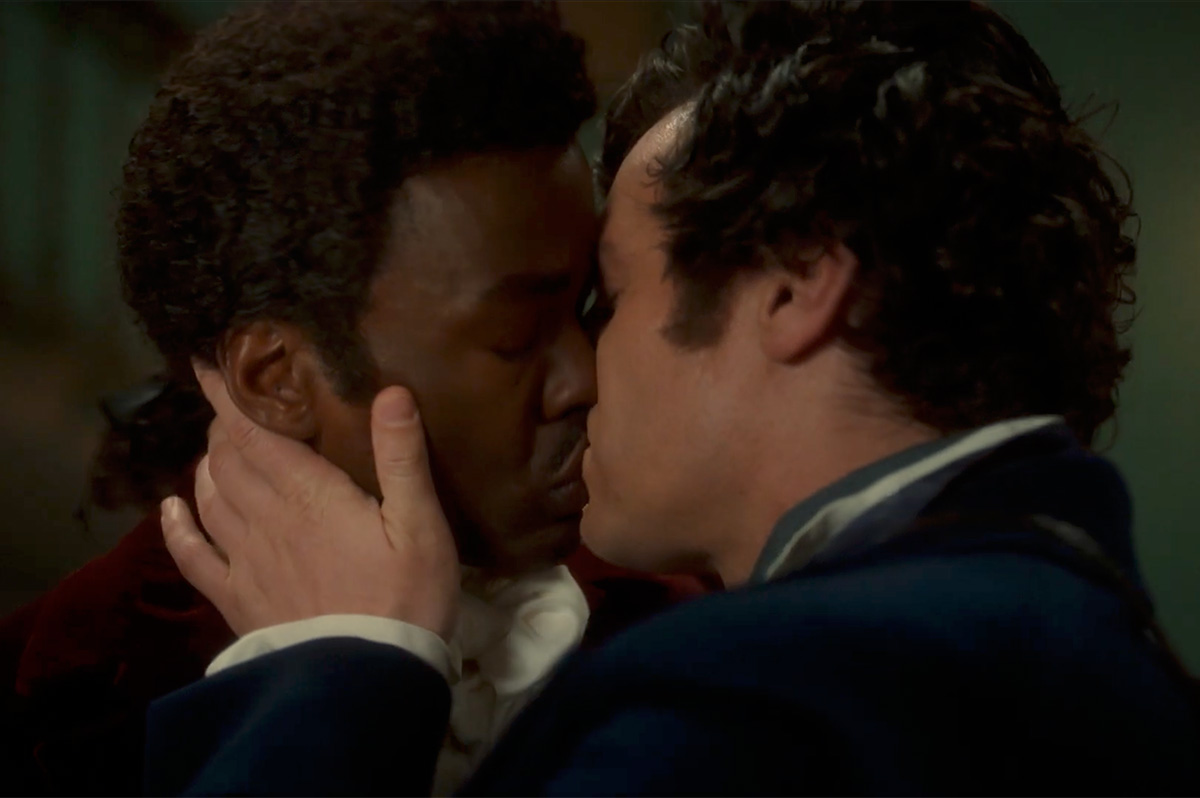
After all, the Doctor, an alien Time Lord who can regenerate and literally change faces, had traditionally been played by white men. But the last, Fifteenth Doctor was played by Ncuti Gatwa, a Black Scottish-Rwandan actor who has publicly identified as queer (and the doctor himself was first presented as queer character after a queer romantic episode where he kissed a man), while the Thirteenth Doctor was played for three seasons by Jodie Whittaker, the first woman to portray the Doctor. In 2023, the series also introduced Rose Noble, a trans feminine nonbinary teenager and supportive character played by transgender English actress Yasmin Finney.
But despite popular stereotypes online, “Doctor Who” did not suddenly “go woke.” The program has existed in two main eras: the classic series, which aired from 1963 to1989, and the modern revival, which has been broadcast on BBC One since 2005.
Even in the 1960s, one of the program’s earliest stories, “The Daleks” (1963–64), presented an obvious allegory for fascism, racial purity, bigotry and the horrors of war. Throughout the classic era, the Doctor frequently opposed militarism, authoritarian governments, and dictatorships. Many fans have also pointed to moments of queer coding and subtext throughout the classic series.
However, openly queer characters appeared as soon as the modern revival began.
The 2005 revival introduced Captain Jack Harkness, played by John Barrowman, one of the first openly queer recurring characters in the “Doctor Who” universe. He openly flirted with people regardless of their gender and later became the lead character of the spin-off series “Torchwood.” “Torchwood” went even further with LGBTQ representation, featuring multiple queer characters, including trans and nonbinary characters whose identities were treated as a normal part of the story.
“Doctor Who” has always been remarkably progressive for its time. The franchise doesn’t suddenly change its values, it’s always been “woke.”
The same happened with the American franchise “Star Trek.”
It is widely known as one of the most openly left-wing and progressive television franchises ever broadcast. The original series, which aired from 1966-1969, was created during the Cold War and featured the utopian United Federation of Planets, a society without poverty or money that can be characterised as socialist or even communist. It also featured Lt. Uhura, played by Nichelle Nichols, a Black woman serving as a highly respected bridge officer at a time when Black women weren’t portrayed in positions of authority on American television. The series also included one of the first interracial kisses in modern American television, between Capt. James T. Kirk (William Shatner) and Uhura in the 1968 episode “Plato’s Stepchildren,” a moment that had a significant cultural impact.
Gene Roddenberry, the creator of the franchise, said that he had wanted to include openly queer characters as well, but believed it would have been impossible to keep the show on the air because it had already pushed social boundaries in so many other ways.
Today, many viewers — including Elon Musk — claim that “Star Trek” has only recently become “woke.” In reality, I think it actually became less radical than the original series. Even queer characters are not a recent addition to the franchise. One of the earliest major queer characters appeared in “Star Trek: Deep Space Nine” (1993–1999): the Trill officer Jadzia Dax, played by Terry Farrell. In the 1995 episode “Rejoined,” she shared one of the first same-sex kisses in the history of the franchise.
However, for some reason, it was the openly gay couple Paul Stamets (Anthony Rapp) and Hugh Culber (Wilson Cruz) in “Star Trek: Discovery” (2017–2024), together with the trans Trill character Gray Tal, played by trans actor Ian Alexander, that triggered a major backlash among conservative parts of the fandom. That backlash reached another peak with “Star Trek: Starfleet Academy,” which features the canonically gay Klingon cadet Jay-Den Kraag. The actor has spoken about receiving abuse and threats because of the role, despite the fact that there was nothing especially ideological about his character. He was simply a gay character whose sexuality was only one aspect of who he was. In fact, considering the ideals of the original “Star Trek,” I was more surprised that the franchise still includes relatively few trans or polyamorous characters, and that they are not part of the lead cast. After all, the franchise was created to imagine a future that was ahead of its time.
So why do conservatives and anti-LGBTQ people continue to watch franchises that have always been deliberately progressive? And why do they keep claiming that these shows have only recently “gone woke”?
A more logical explanation is that parts of the audience have become less willing to accept the same kinds of progressive ideas that these franchises have embraced for decades. In other words, it is not the shows that fundamentally changed. Some long-time viewers have become more conservative than they were in their youth, while newer conservative audiences have joined them and begun criticizing franchises without knowing their real history.
In many ways, geeks have changed more than these shows have. Sci-fi hasn’t “gone woke.” Some of its fans have simply become less comfortable with the same progressive values these franchises have promoted for decades.
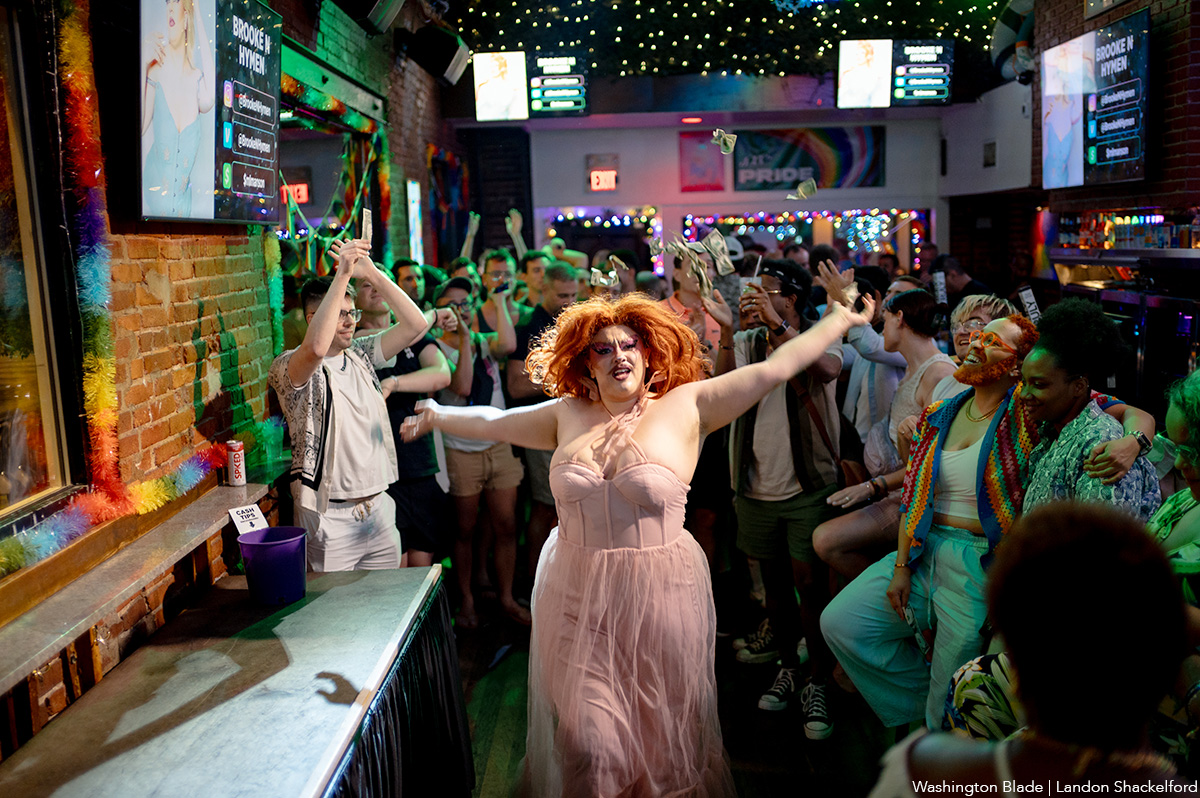
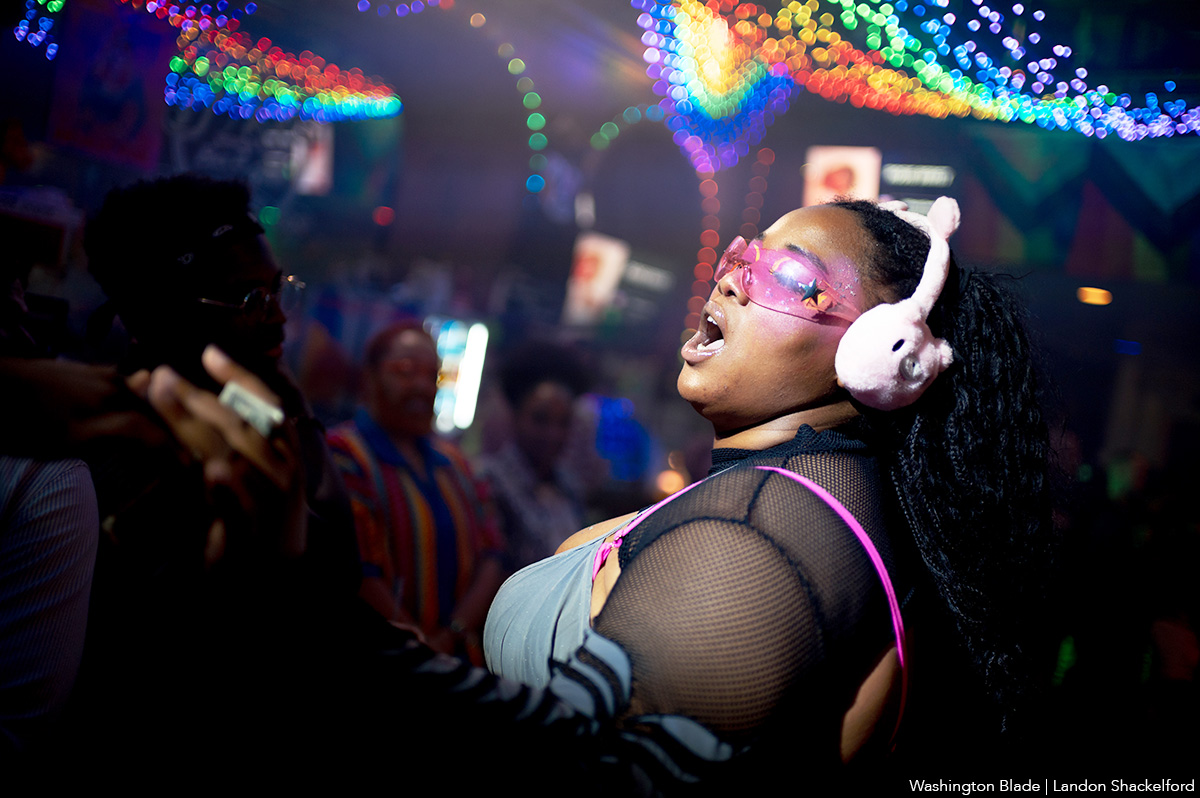
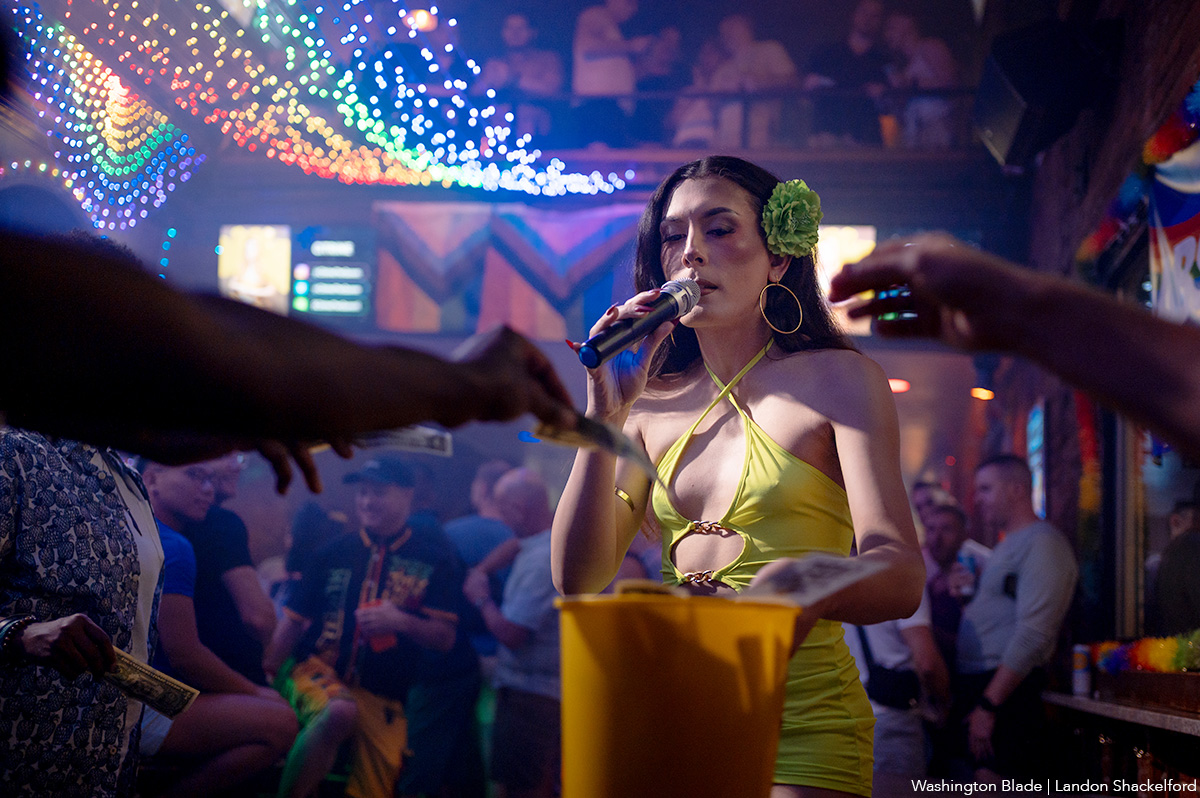
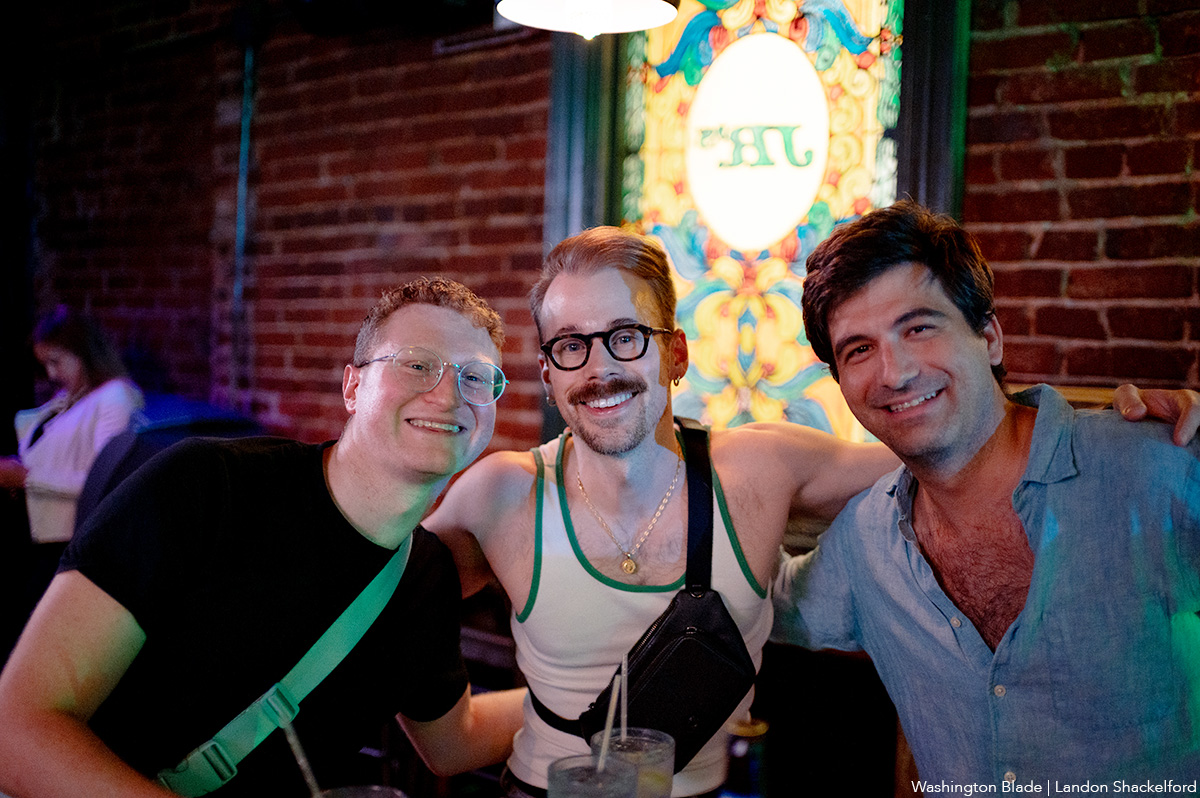
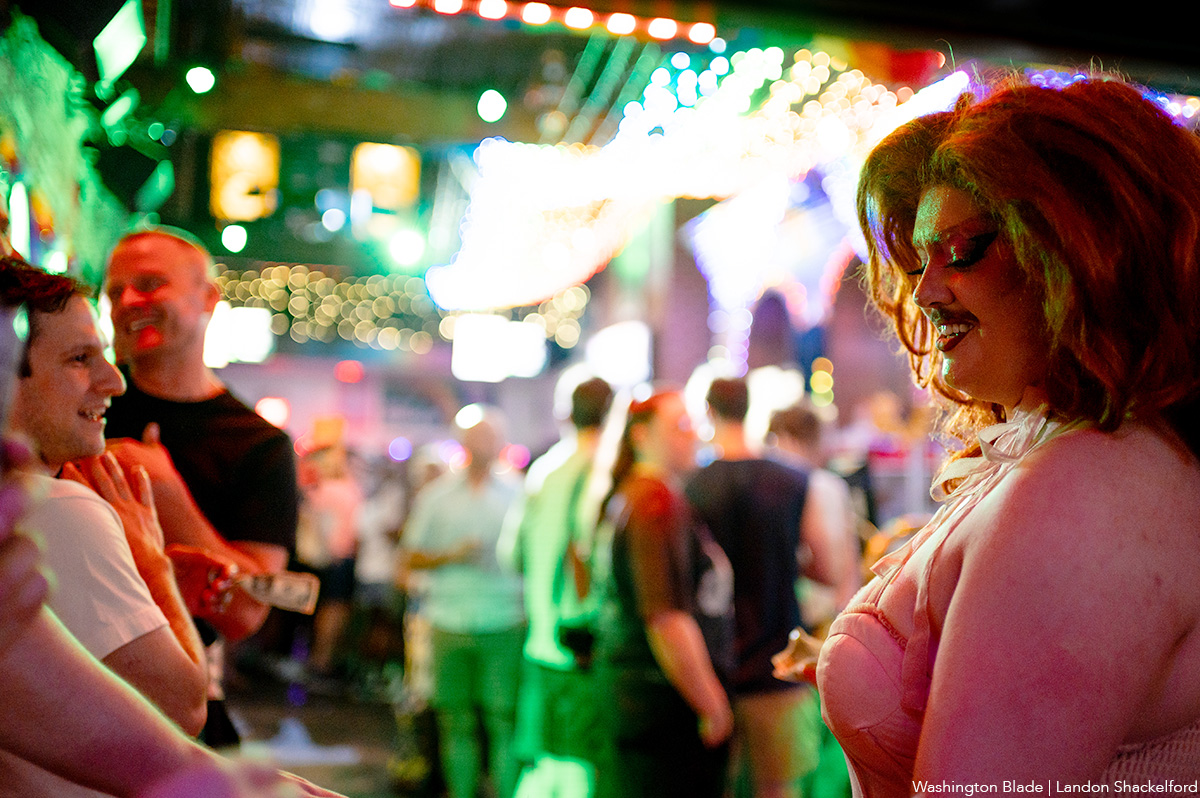
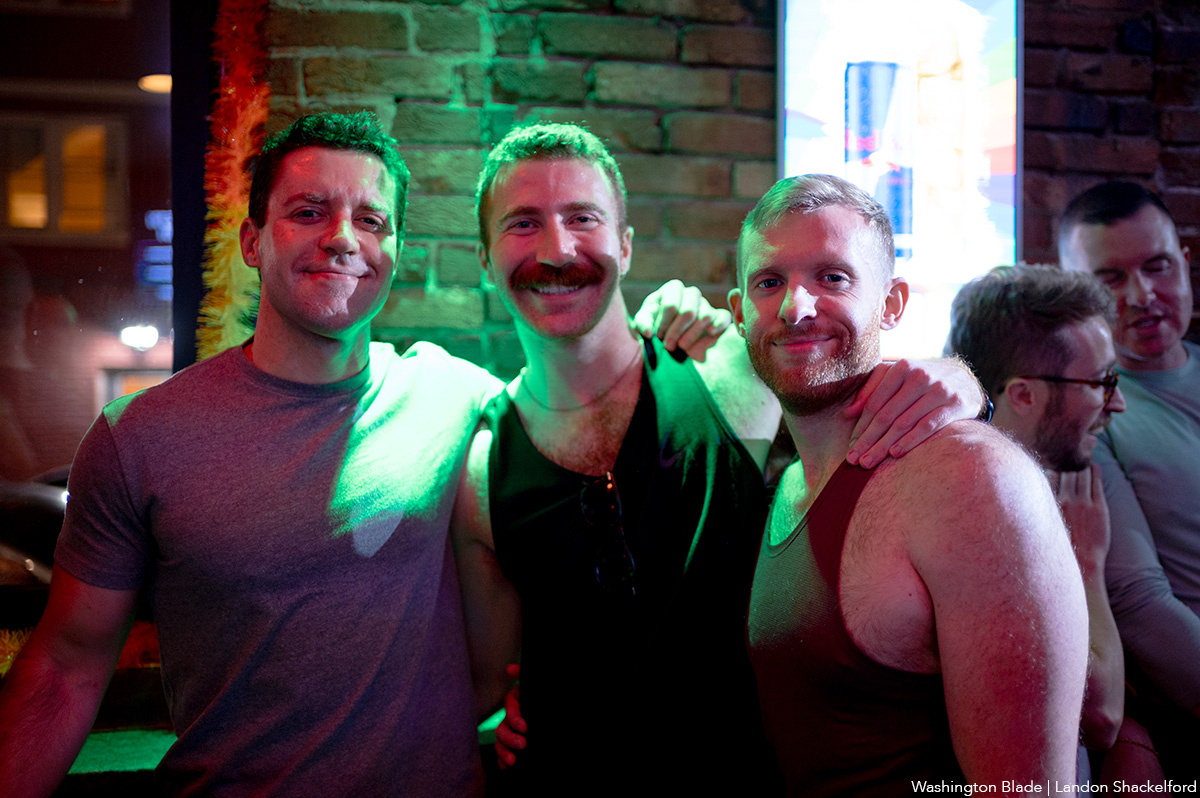
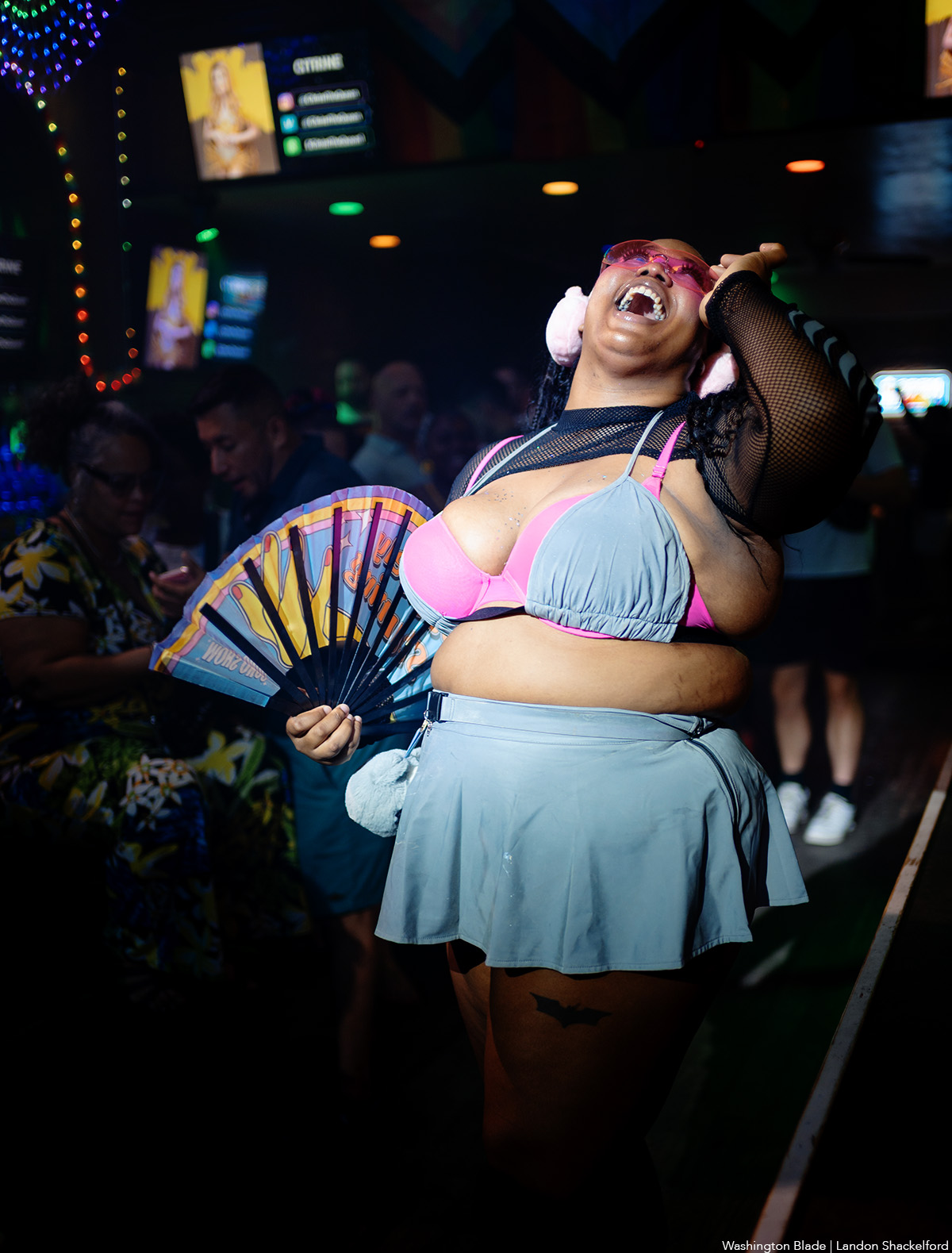
JR.’s Bar held a “RuPaul’s Drag Race: All Stars” watch party followed by a live drag show on Friday, July 17. The Vitamin C weekly drag show was hosted by Citrine with performers Brooke N Hyman and Rosie Beret.
(Washington Blade photos by Landon Shackelford)





Polish president vetoes same-sex relationship recognition bills

In the middle of the Bible Belt, a summer camp lets trans kids exhale

Tickets on sale for chef Patrick O’Connell’s book launch event

Remembering Victoria Cruz, Stonewall veteran and beloved trans activist

Wanda Alston Foundation announces passing of founding executive director Brian Watson

Calendar: July 17-23

Whitman-Walker to host legal services workshop

30 years on, ‘The Birdcage’ remains a landmark

Comings & Goings