Arts & Entertainment
Queery: Walter Lundy
The toy drive organizer answers 20 gay questions
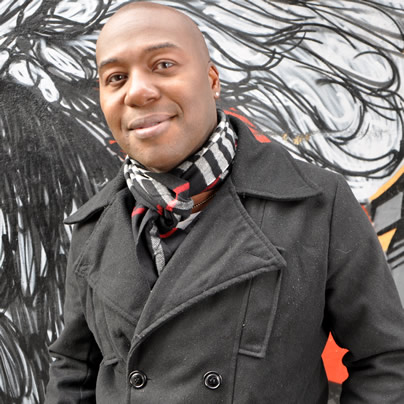
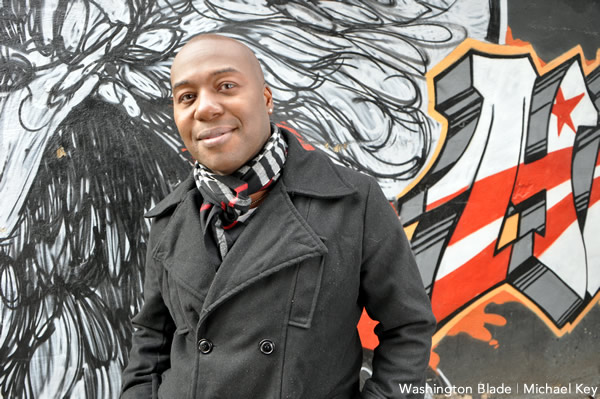
Walter Lundy (Washington Blade photo by Michael Key)
Walter Lundy says handing out donated toys to needy Washington-area kids has become the Christmas-related activity he most looks forward to.
It started modestly last year with what he calls his “Red-Themed Toy Drive Party.” He hosted last year’s event out of his Bloomingdale home. Guests wore red and brought gifts to his house the weekend before Christmas. On Christmas Eve, he and a group of friends delivered about 100 toys to about 40 children in seven or so families.
This year, the Dec. 22 party, which Lundy held at Halstead Tower in Alexandria, yielded about 250 guests/toys that were delivered to about 100 kids in 10 local families and a local group home. Lundy worked with the D.C. Department of Human Services and its “Strong Families” program, the Greater Urban League of Washington, the Hubbard Place and the Williams Life Center of Greenbelt, Md., to identify needy families.
“It’s a very gratifying experience and it’s become the complete focus of my holiday experience,” the Petersburg, Va., native says. “I feel like this is the proper way to end the calendar year for me and I intend to do it every year.”
Lundy hosted the event with his friend JoVone Pender. They paid for the party themselves and Lundy says it’s an important component of the event.
“I guess I’m just a party type-of guy,” he says. “I love the toy part of it, of course, but it’s also rewarding to give something to the community as well. We deserve it.”
Though not a gay-specific event, Lundy guesses “about 90 percent” of the friends who help him deliver the gifts are also black gay men, not all of whom are out. He says they’re just friends he knows “from all over — just guys I know in the same-gender-loving male community.”
Lundy works for the D.C. government but declines to give specifics. He’s also in a relationship but says, “We’ll just leave it at that.”
Lundy lived in Ohio for much of the ‘90s, but settled in Washington in 2003. He lives in Bloomingdale in the fifth Ward and enjoys tennis, NASCAR, exercising, writing, cooking and socializing in his free time.
How long have you been out and who was the hardest person to tell?
Not fully out but I guess I am now. But my family has known for about 14 years and my mother was the most difficult person to tell.
Who’s your LGBT hero?
Don’t really have a hero, but I admire all professional and college athletes who come out.
What’s Washington’s best nightspot, past or present?
The Park at 14th — great food, amazing drinks and awesome people. I love that place — it’s a place where everyone can go to have a great time.
Describe your dream wedding.
Going to the Caribbean with a small group of friends and family and getting married on the beach, walking in the sand with the blessing of the powerful waves in the background.
What non-LGBT issue are you most passionate about?
Getting Hillary Clinton elected president in 2016.
What historical outcome would you change?
I would erase the 2010 earthquake in Haiti. The Haitian government reported that an estimated 316,000 people died, 300,000 had been injured and 1 million made homeless. The greatest catastrophe of my life time. I break down and cry every time I think about it.
What’s been the most memorable pop culture moment of your lifetime?
How appropriate — I remember when I first when to New York and partied in Times Square for News Year’s Eve. Something that I had always seen on TV as a child, I was now finally experiencing live as an adult and it was the most amazing and electrifying experience. It’s an American tradition that everyone should do at least once.
On what do you insist?
I insist that people in my circle of friends treat all people the same regardless of their education or social economic status.
What was your last Facebook post or Tweet?
I don’t Tweet but I did post a link to a gospel sermon by Bishop Noel Jones talking about how “God Grows You” and that one has to have an enormous challenge in order to have an enormous outcome. I thought this was a powerful word heading into the new year.
If your life were a book, what would the title be?
“Shattered Dreams”
If science discovered a way to change sexual orientation, what would you do?
I wouldn’t take advantage of the discovery because I am finally happy with myself, but I would certainly understand and respect those who took advantage of the science.
What do you believe in beyond the physical world?
I believe in God and that there is a heaven. I also believes that the universe is a powerful force that influences our physical presence. I know it sounds silly but I believe that the universe is a surrogate power of God and has his blessings to influence our physical lives. I have so much respect and admiration for the power of the universe.
What’s your advice for LGBT movement leaders?
Educate the youth and teach them about life and being independent and responsible. The value of an education, a career and life goals — we get so caught up in trying to affirm them that we forget to hold them accountable to being successful and independent human beings. We can’t baby them — we have to demand excellence and high standards.
What would you walk across hot coals for?
To save the life of my baby sister.
What LGBT stereotype annoys you most?
Some of the most educated, family oriented, financially stable men in our community are GBT, especially in the black community, yet we are often not viewed as real men when we are usually the backbone to a fragmented and unstable family structure. We endure and take on so much emotional hardship that it’s amazing that more of us are not suicidal.
What’s your favorite LGBT movie?
“The 24th Day”
What’s the most overrated social custom?
Celebrating birthdays. Eight years ago I had unexpected life-threatening heart surgery and I now have a strong appreciation for life every single day. So for me, every day is a day to celebrate.
What trophy or prize do you most covet?
I covet the acceptance of my Lord and Savior into his Kingdom.
What do you wish you’d known at 18?
I wish I had known my parents were going to die at a young age. I would have spent more time fostering a more meaningful and lasting adult relationship that I can forever cherish. I was so busy on my education and career grind that I lost track of time. I now regret that choice.
Why Washington?
I am from Virginia and need to be close to my siblings as I am their primary caregiver and provider.




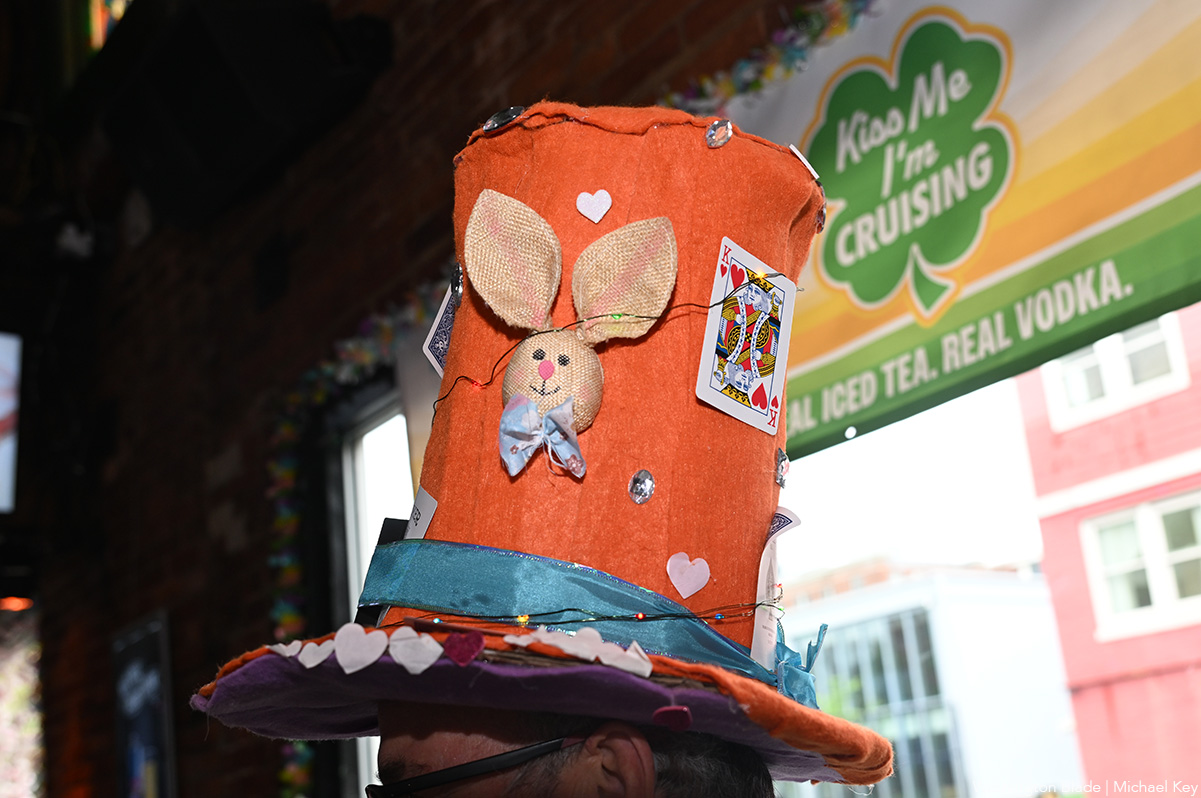
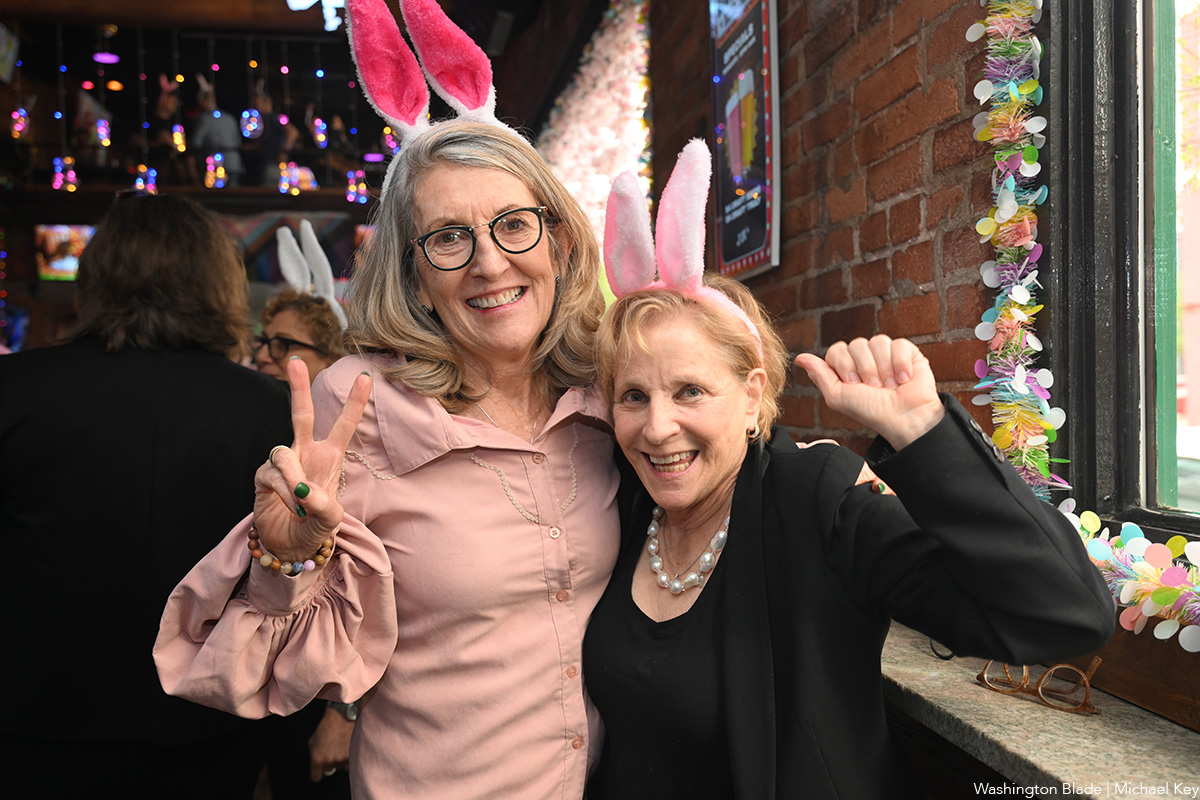
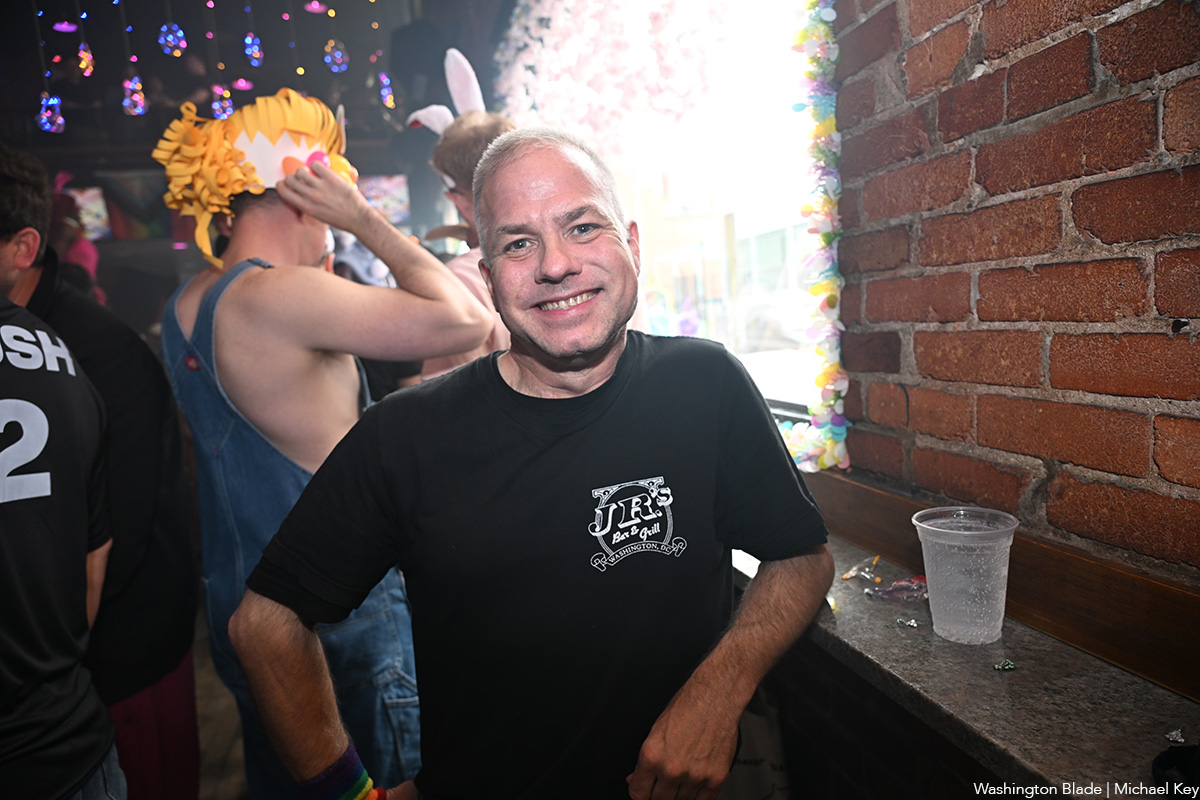
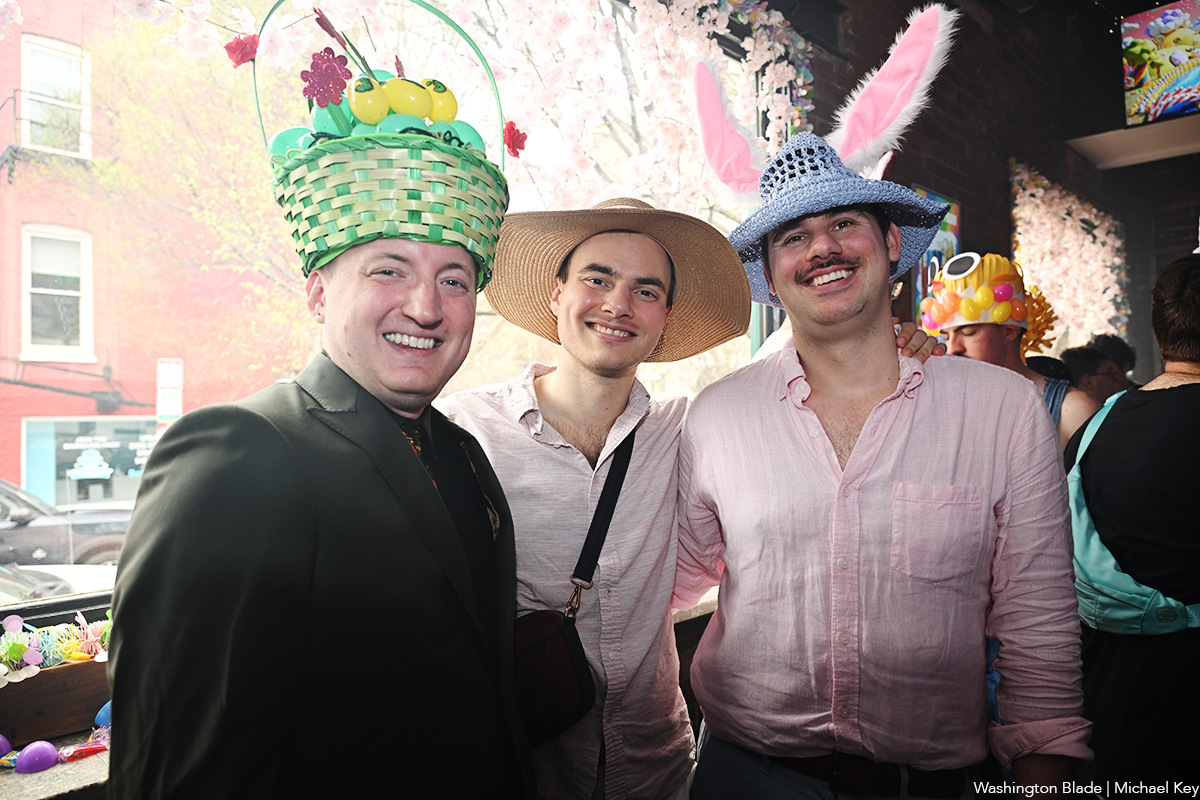
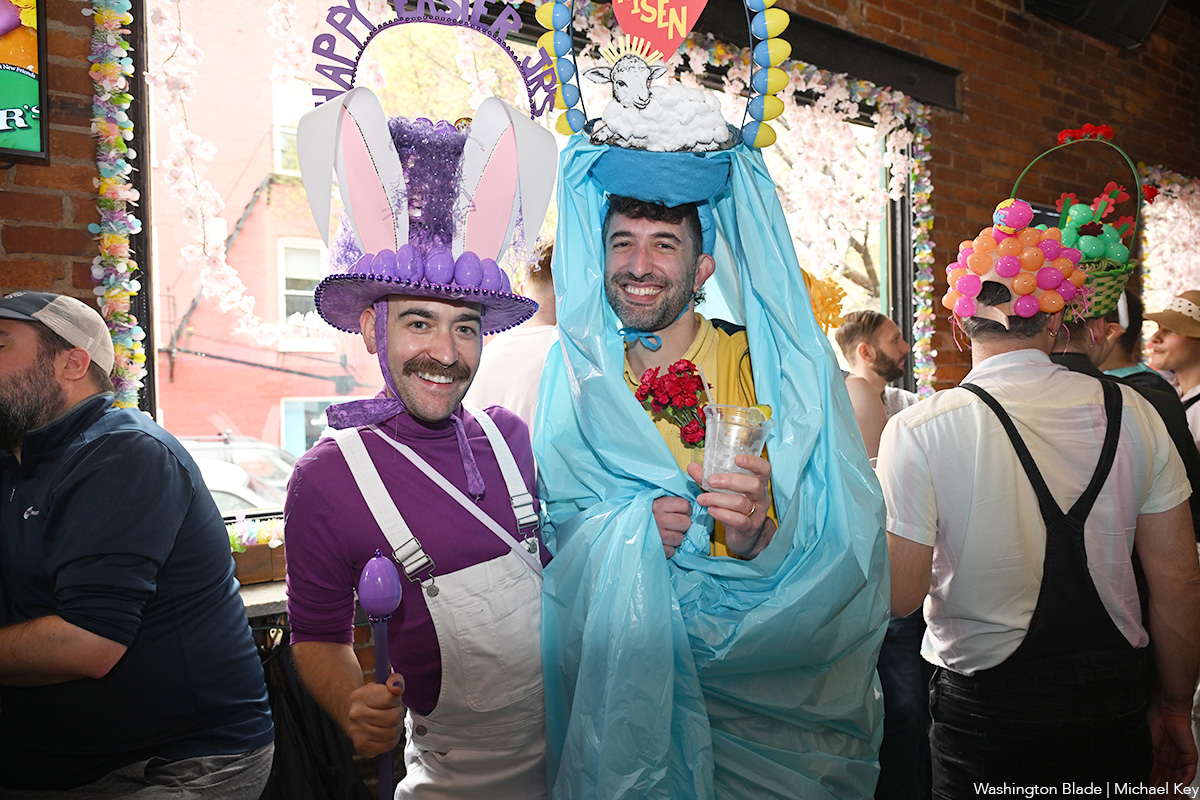
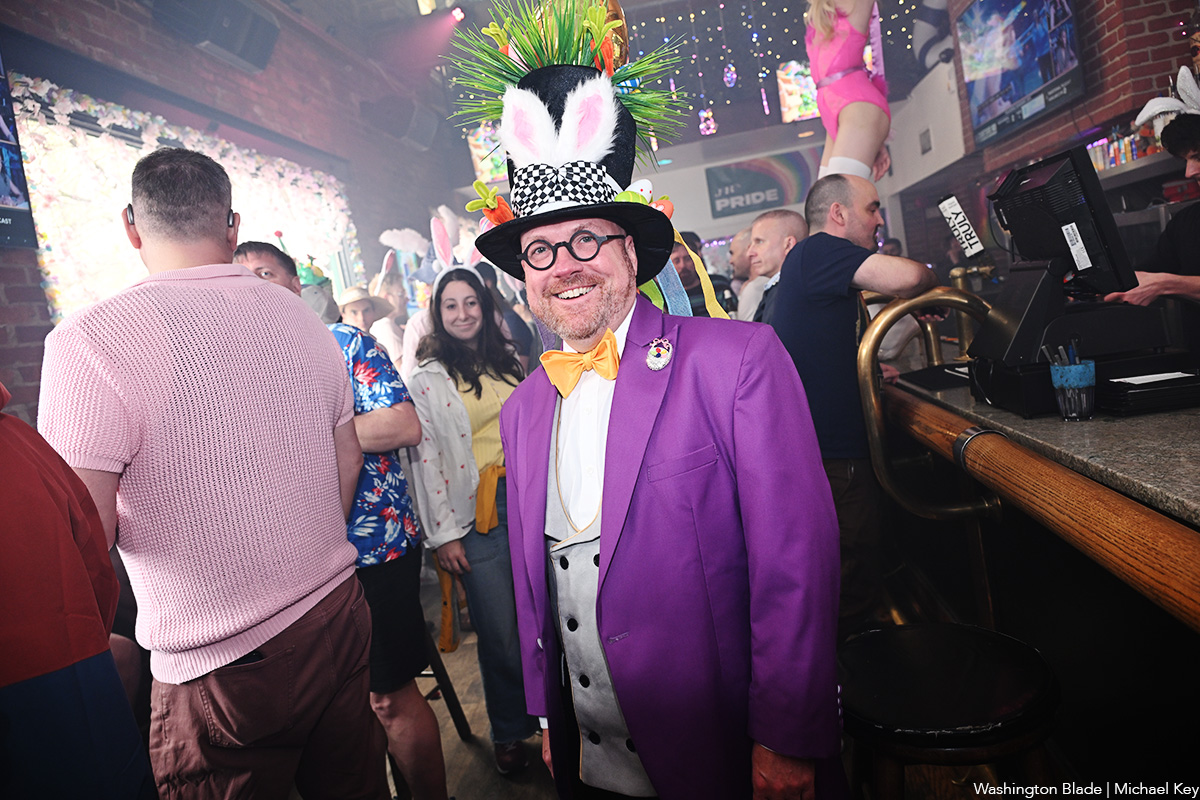
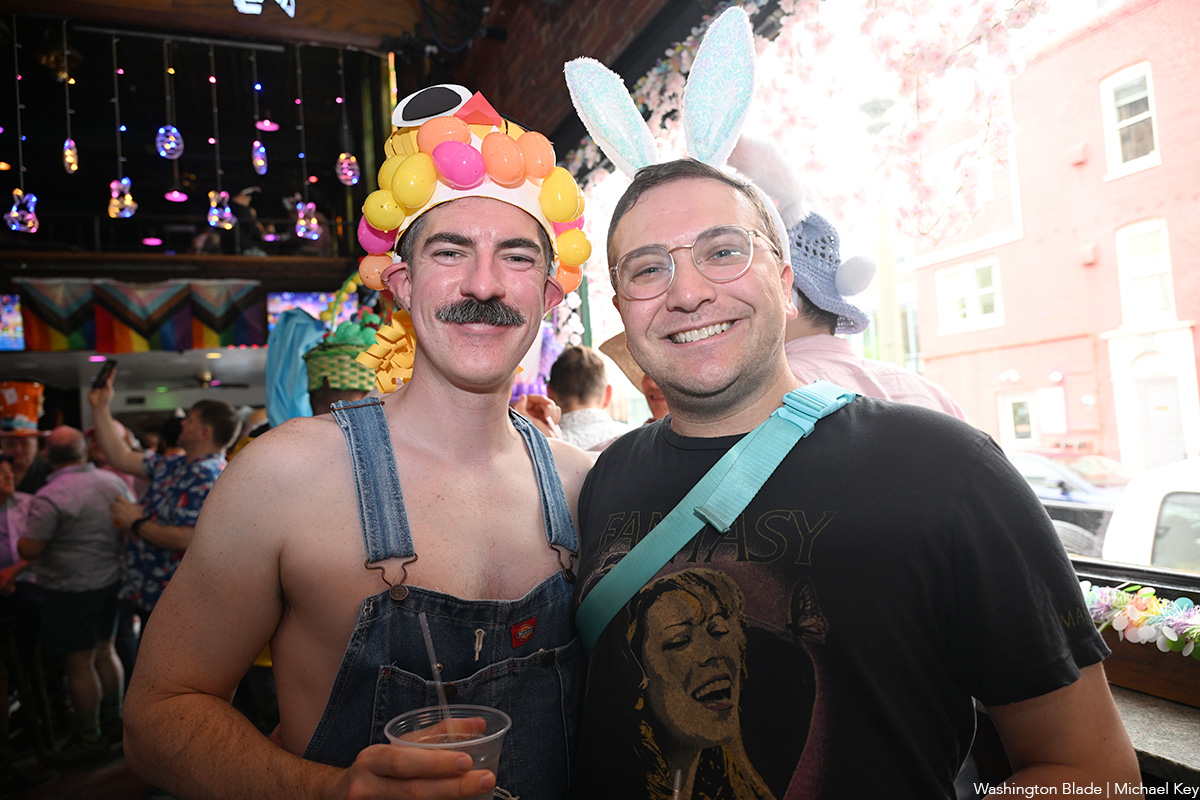
The Bonnet Ball was held at JR.’s Bar (1519 17th St., N.W.) on Sunday.
(Washington Blade photos and video by Michael Key)




Books
Risking it all for love during World War II
New book follows story of Black, gay expat in Paris
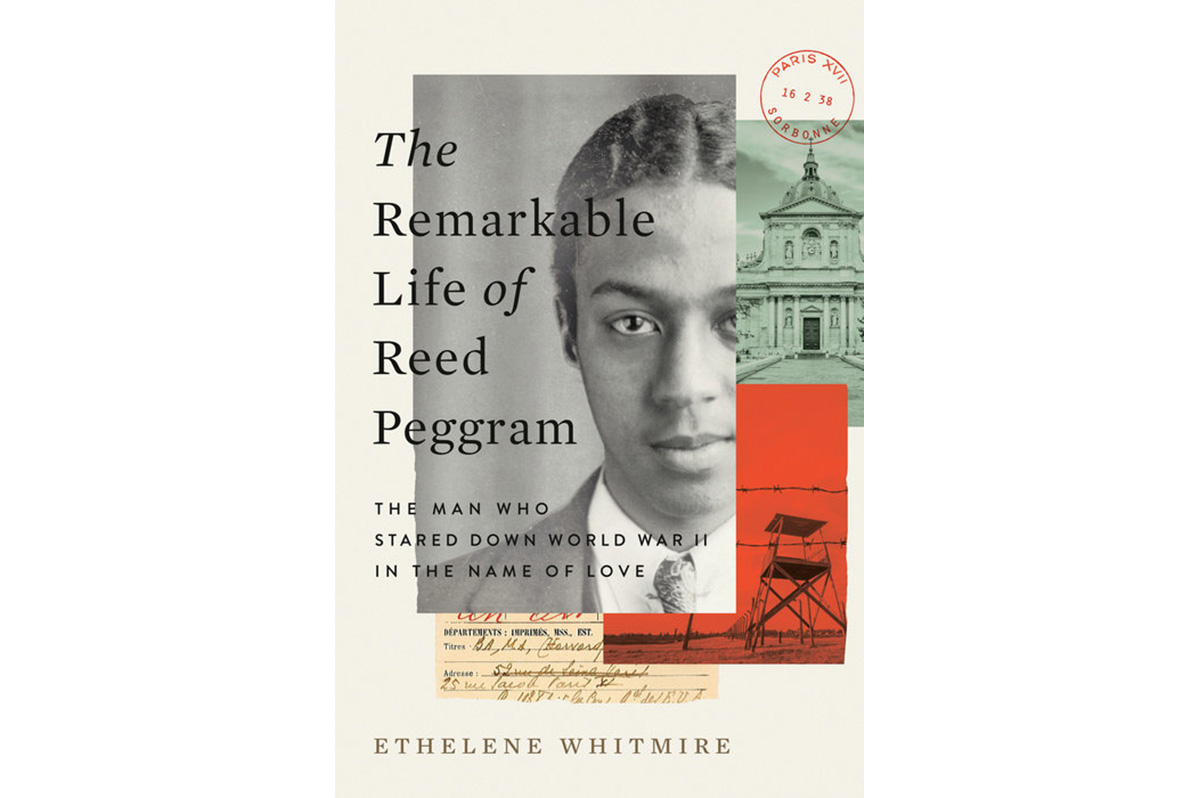
‘The Remarkable Life of Reed Peggram’
By Ethelene Whitmire
c.2026, Viking
$30/308 pages
You couldn’t escape it.
When you fell in love, that was it: you were there for good. Leaving your amour’s side was unthinkable, turning away was impossible. You’d do anything for that person you loved – even, as in the new biography, “The Remarkable Life of Reed Peggram” by Ethelene Whitmire, you’d escape toward danger.

On Aug. 28, 1938, Reed Peggram boarded a ship from Hoboken, N.J., hoping to “become a proper gentleman” and fulfill his dreams. A prolific writer and Harvard scholar of comparative literature, he’d recently been awarded the Rosenwald Fellowship, which put him in the company of literary stars like Du Bois, Hurston, and Hughes.
Both Peggram’s mother and grandmother were then domestic workers, and they had big expectations for him. Reed himself was eager to study abroad, for professional and personal reasons; he was “determined to become a French professor and an accomplished linguist” and “He also hoped to find love.”
What better place to do it than in Paris?
Outgoing and confident, Peggram made friends easily and had no trouble moving “through the world of his white male peers.” Where he faltered was in his lack of funds. He relied on the kindness of his many friends – one of whom introduced Peggram to a “man who would become so pivotal in his life,” a Danish man named Arne.
Peggram and Arne had a lot in common, and they began to enmesh their lives and dreams of living in the United States. But there were complications: homosexuality was largely forbidden, World War II was in its early stages, and it quickly became apparent that it was dangerous to stay in Europe.
And yet, Peggram loved Arne. He refused to leave without him and so, while most visiting Black Americans fled the war in Europe, “Reed was trying to stay.”
There’s so much more to the story inside “The Remarkable Life of Reed Peggram,” so much to know about Reed himself. Problem is, it’s a long haul to get to the good stuff.
In her introduction, author Ethelene Whitmire explains how she came to this tale and yes, it needs telling but probably not with the staggering number of inconsequential details here. Peggram moved homes a lot, and many people were involved in keeping him in Europe. That alone can be overwhelming; add the fact that costs and other monetary issues are mentioned in what seems like nearly every page, and you may wonder if you’ll ever find the reason for the book’s subtitle.
It’s there, nearly halfway through the book, which is when the tale takes a tender, urgent turn — albeit one with determination, rashness, and a dash of faux nonchalance. Also, if you’re expecting an unhappily-ever-after because, after all, it’s a World War II tale, don’t assume anything.
Reading this book will take a certain amount of patience, so skip it if you don’t have that fortitude. If you’re OK with minuscule details and want a heart-pounder, though, “The Remarkable Life of Reed Peggram” might be a good escape.
The Blade may receive commissions from qualifying purchases made via this post.
Theater
Iconic Eddie Izzard takes on 23 characters in ‘Hamlet’
Energized take on role offers accessible way to enjoy Shakespeare

‘The Tragedy of Hamlet’
Through April 11
Shakespeare Theatre Company’s Klein Theatre
450 7th St., N.W.
Tickets start at $90
Shakespearetheatre.org
Eddie Izzard is an icon.
Best known for her innovative standup and film roles, the famed British performer is also a queer activist who over the years has good-naturedly shared details from her decades long trans journey. What’s more, Izzard has remarkably run 43 marathons in 51 days for charity.
And now, Izzard finds a towering new challenge with the worldwide tour of “The Tragedy of Hamlet” (at Shakespeare Theatre Company’s Klein Theatre through April 11), in which she plays 23 characters (Hamlet, King Claudius, Queen Gertrude, the ghost, etc.) in a solo performance running just over two hours.
At a recent performance, Izzard, before slipping into character, appeared on the unadorned stage to say that though infused with comedy, “Hamlet” is definitely a tragedy, a story of a family and country both tearing themselves apart. She also warns that there’ll be a lot of breaking the fourth wall. After all, it didn’t exist in 1600 around the time when “Hamlet” was written.
The play unfolds in flurry of movement and scandal as the Danish prince begins to plot revenge after learning that his father, the old king was conspired against and murdered.
While some of Izzard’s character shifts are shown only by a subtle change in stance or modulation of voice, others are more obviously displayed like court sycophant Polonius walking with a stiff leg and mimed cane, or his ill-fated daughter Ophelia trotting girlishly across the upstage platform.
Delivered downstage at the intimate Klein venue, Izzard’s Hamlet soliloquies are performed with striking clarity. The one actor play is adapted and edited by Mark Izzard (the star’s older brother) and directed by Selina Cadell who successfully fosters the visceral connection between the actor and the house. Directly addressing an audience is something Izzard does exceedingly well. You feel as if she’s looking at/speaking to only you.
Cuts and choices are made that might not please traditionalists. The stabbing of eavesdropping Polonius might prove disappointingly underplayed to some. Whereas, the subsequent satisfying dual/death scene is long and precisely choreographed. Fear not, Izzard doesn’t flag a bit, not even when battling a cough (as was the case on the night of No Kings Day).
Not surprisingly, Izzard leans into the comedy. Her deliciously placed pauses, lines read ironically, and double takes, all gifts of comedy sharpened to perfection over a long career that kicked off as a street performer in the early eighties in London’s Covent Garden.
The play within a play scene finds Hamlet slyly rattling the conscience of King Claudius. As played by Izzard, it’s wickedly delightful and especially good. And the back and forth between the grave diggers done as a clever Cockney and his green assistant is a master class in how to play a Shakespearean clown.
Kitted out in a black peplum jacket over leather leggings and boots, Izzard gives gender fluid shades of contemporary diehard scenester and a Renaissance courtier. (Design and styling by Tom Piper and Libby DaCosta)
Attention has been paid to the blonde high ponytail, crimson lips and matching lacquered nails. The hands are important. Whether balled into fists or fingers fluttering, they’re in use, especially when playing Hamlet’s ex-friends Rosencrantz and Guildenstern (a clever surprise that can’t be spoiled).
Tom Piper’s set is wonderfully minimal. It’s an empty white walled space with three narrow windows that appear cut deeply into stone like those of a castle. These white flats serve as the ideal canvas for lighting designer Tyler Elich’s looming shadows, ghostly green light, and other unexpected flourishes of drama.
Izzard fills the stage. Her presence is huge, and her acting first-rate. At times, you forget it’s a one-person show.
I’d like to say, prior knowledge of the Bard’s best tragedy isn’t necessary to enjoy this fast-paced production. Despite a halved runtime and obscure words replaced with modern equivalents (“tedious old git” Hamlet says of Polonius), familiarity with the play is helpful.
With “The Tragedy of Hamlet,” Izzard secures a place among fellow queer Brits like Miriam Margolyes (“Dickens’ Women”), Sir Ian Mckellan (“Ian McKellen on Stage”), and more recently Andrew Scott (“Vanya”) in the solo players’ pantheon.
Izzard’s energized take on Hamlet is terrific. The way her powerful public persona bleeds into the work without taking over is exciting, and a uniquely accessible way to enjoy Shakespeare.

D.C. Council member honored by LGBTQ homeless youth group

Vance speaks at Orbán rally in Hungary

White House ends protections for trans students in multiple school districts

Amendments to India’s transgender rights law criticized

Cuba under pressure and without answers

Belarusian lawmakers approve bill to crackdown on LGBTQ rights

How new barriers to health care coverage are hitting D.C.

Kenyan advocacy groups launch LGBTQ voter mobilization campaign

Women’s FEST returns to Rehoboth Beach next week

Calendar: April 3-9
-

 Belarus5 days ago
Belarusian lawmakers approve bill to crackdown on LGBTQ rights
-
District of Columbia5 days ago
How new barriers to health care coverage are hitting D.C.
-
Kenya5 days ago
Kenyan advocacy groups launch LGBTQ voter mobilization campaign
-
Rehoboth Beach5 days ago
Women’s FEST returns to Rehoboth Beach next week