National
Still waiting for first LGBT Cabinet appointment
‘Muted’ pressure as Perez said to be considered for labor secretary
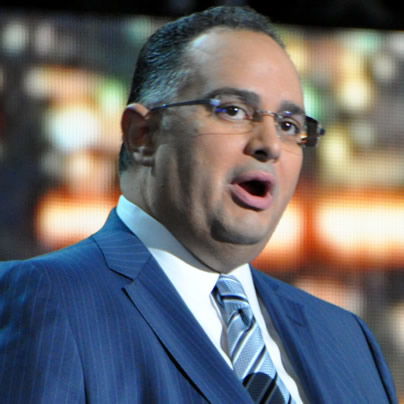
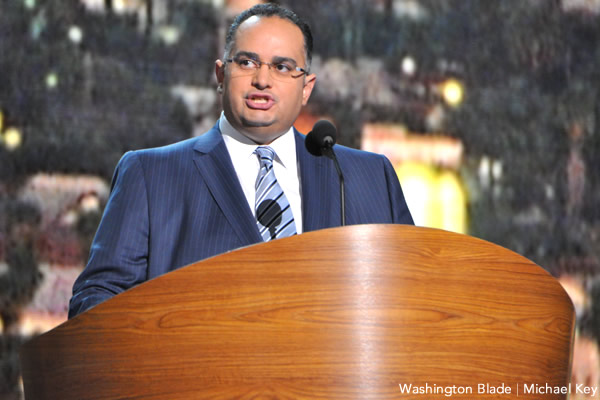
California Assembly Speaker John A. Perez is set to be in contention as labor secretary, but are LGBT groups pushing for his nomination? (Blade file photo by Michael Key)
President Obama is facing a flurry of requests to take administrative action on behalf of the LGBT community at the onset of his second term. One call that has so far been ignored is for the appointment of an openly LGBT Cabinet member.
In recent months, LGBT groups — such as the Human Rights Campaign and the Gay & Lesbian Victory Fund — have said the appointment of an openly LGBT Cabinet member is important because it would provide visibility to the community and break a key remaining glass ceiling. No president has ever appointed an openly LGBT Cabinet member.
In November, Fred Sainz, HRC’s vice president of communications, told the Washington Blade the LGBT community is “rightly interested” in a Cabinet appointment as well as a G-20 ambassadorship.
But in comparison to other requests, such as participation in the lawsuit before the U.S. Supreme Court against California’s Proposition 8 or an executive order barring anti-LGBT workplace discrimination among federal contractors, the issue of appointing an LGBT Cabinet member hasn’t yet received significant attention.
Richard Socarides, a gay New York-based advocate and proponent of an LGBT Cabinet appointment, said he couldn’t say whether action from advocacy groups on the appointment is sufficient because he doesn’t know what’s happening behind the scenes, but acknowledged the public pressure is “rather muted.”
“I think that right now the organized political gay community in Washington has a very strong connection with, and relationship with the president, and he has delivered for us in many ways,” Socarides said. “So I think that there is, no doubt, a reluctance to rock the boat for the most part.”
Jim Burroway, a gay editor of the Tuczon, Ariz.-based blog Box Turtle Bulletin, said he hasn’t given the issue the “thought it deserves,” but acknowledged the importance of pushing for high-profile LGBT appointments.
“I’m always reluctant to say that this appointment or that appointment needs to be an LGBT person, but in the general scheme of things, it’s certainly time that an appointment somewhere reflects the diversity of the nation, or even of corporate America, when it comes to LGBT inclusion,” Burroway said.
HRC and the Victory Fund had no comment last month when Obama selected Sally Jewell, a Washington State-based businessperson, for the role of interior secretary, even though that selection meant John Berry, the gay head of the U.S. Office of Personnel Management, didn’t get the job. Although Berry was passed over, Jewell is a known advocate of the LGBT community and helped drive business support for marriage equality when it was on the ballot last year in her state.
Media speculation that Berry would be tapped to head the Interior Department was widespread because of his close ties to the administration and his background as a lower-level official in the department during the Clinton years and service as head of the National Wildlife Federation and National Zoo.
Comparatively, LGBT groups like HRC and OutServe-SLDN were aggressive in calling on Defense Secretary Leon Panetta to extend the available benefits to gay troops with same-sex partners, which ultimately led to the Pentagon taking action.
Michael Cole-Schwartz, an HRC spokesperson, said in response to the comparative silence that HRC has “been clear from the start” that it would like high-profile LGBT appointments during Obama’s second term.
“We have not called for any specific position to be filled by any specific individual and it is not our intent to comment on every personnel decision,” Cole-Schwartz said. “As the president continues to make nominations in his second term, there remains an abundance of exceptional LGBT Americans willing and able to serve and it is our hope that we will see an openly gay Cabinet secretary and other historic appointments.”
Denis Dison, a Victory Fund spokesperson, touted the success of the Presidential Appointments Project in response to a similar inquiry. The Project has helped facilitate the appointment of at least 260 openly LGBT officials within the Obama administration.
“The Project continues to advocate for qualified, experienced openly LGBT individuals who are capable of becoming leaders at all levels of government, including at the Cabinet level,” Dison said. “Because personnel decisions are by their nature sensitive, we believe our advocacy is best done privately.”
Even though the position of interior secretary will be off the table once Jewell receives Senate confirmation, other positions are open in the Cabinet that are possibilities for LGBT appointments.
One that has sparked media attention recently is the potential appointment of gay California Assembly Speaker John Perez as a replacement for Hilda Solis as labor secretary.
John O’Connor, executive director of Equality California, said Perez would be an excellent choice as labor secretary because he’s a champion of both LGBT people and the working class.
“Perez has built bridges between the LGBT community and labor,” O’Connor said. “Given his legacy of accomplishment in our state, we are incredibly supportive of his candidacy and would be so proud to see it happen.”
Fred Hochberg, the gay head of the U.S. Export-Import Bank, has been viewed as a potential candidate for the role of commerce secretary. In December, an administration official told the Blade the White House is “looking carefully” at Hochberg for the position. However, he may have been passed over as well if media reports are correct that Obama is close to nominating banker Penny Pritzker for the role.
Shin Inouye, a White House spokesperson, said in response to a Blade inquiry on whether the administration values sexual orientation and gender identity as an element of diversity in high-profile appointments that he has “no personnel announcements.”



North Carolina
Authorities investigate officer-involved shooting outside Asheville gay bar
Incident took place near Shakey’s on Wednesday

An officer-involved shooting outside of a gay dive bar, Shakey’s, in downtown Asheville, N.C., left one man dead Wednesday.
The bar released a statement the following morning regarding the incident, stating that bar staff had asked a patron to leave earlier in the night citing concerning behavior. The bar said that later the man was spotted with a gun in the parking lot.
The bar proceeded to call 911, locked the doors to the establishment, and followed dispatcher instructions on how to keep patrons of the bar safe while officers arrived. These protocols included getting patrons away from the windows and staying low to the ground.
According to Shakey’s, shots were fired outside of the business. When the Asheville Police Department officers arrived, they fired back. The individual died from their injuries, according to the police.
“Because of everyone’s quick actions, cooperation, and concern for one another, every customer and every employee inside Shakey’s made it home safely. We are incredibly thankful,” Shakey’s said on their Instagram page. They thanked Asheville police, emergency dispatchers, EMS, and all first responders who were on scene.
On Thursday, a spokesperson for the North Carolina State Bureau of Investigation, Chad Flowers, stated that the suspect involved in the shooting was Arturo Castillo Palomar.
The Washington Blade reached out to the North Carolina State Bureau of Investigation for a comment regarding the possibility of the event being considered a hate crime. They said the issue is currently under investigation and that the findings would be turned over to the district attorney for review.
Pentagon
Hegseth announces testosterone initiative as trans troop ban continues
SPARTA Pride criticized Pentagon policy

The U.S. military will begin testing and treating service members with hormone therapy despite banning similar medical care for transgender service members.
Defense Secretary Pete Hegseth said Wednesday that troops ages 30 and older will be subject to annual testosterone screenings, while younger service members will have the option to voluntarily opt in. Some troops may then be recommended for hormone therapy, he explained in a video posted to social media.
“Under the supervision of our world-class medical professionals, warfighters age 30 and older are going to be tested annually as part of their periodic health assessment,” Hegseth said in a video posted to X, captioned “The High-T Department of War.”
This push to test testosterone levels, as the hormone is commonly referred to as “T,” runs counter to current medical guidelines. Physicians are generally advised to discuss testosterone therapy only with men who have symptoms consistent with low testosterone and documented low hormone levels on two separate blood tests.
Testosterone is a vital sex hormone that all humans naturally produce. It helps regulate muscle mass, bone density, and sex drive. In men, it is primarily produced in the testicles, while in women it is produced in the ovaries and adrenal glands.
Natural testosterone levels in men decline with age and have long been associated with issues such as erectile dysfunction, low libido, mood changes, and weight gain. However, experts continue to debate whether these conditions should routinely be treated with testosterone therapy.
Hegseth’s announcement aligns with other actions taken by the Trump-Vance administration — including efforts by Health Secretary Robert F. Kennedy Jr. — to make testosterone therapy more accessible for men, particularly those assigned male at birth.
Last month, the Food and Drug Administration proposed easing prescribing restrictions on testosterone gels, pills, patches, and injections following a December advisory panel that recommended reducing regulatory hurdles to expand access to testosterone therapy.
Currently, FDA labeling specifies that these medications are approved only for men with hypogonadism, a medical condition that causes abnormally low testosterone levels.
The announcement came as a shock to many LGBTQ advocates because Hegseth and the Defense Department have cited the use of hormone therapy by trans service members as justification for their dismissal under President Donald Trump’s 2025 executive order, “Prioritizing Military Excellence and Readiness.“
The Pentagon continues to pursue implementation of the trans military ban as litigation proceeds. As a result, many trans service members have had their gender-affirming medical care halted, even as similar hormone therapy is now being expanded for cisgender service members. Under the executive order, the military currently disqualifies individuals diagnosed with gender dysphoria and has begun formal administrative separation proceedings for trans personnel.
SPARTA Pride, a nonpartisan nonprofit organization made up of trans service members, veterans, and their allies, issued a statement to the Washington Blade following Hegseth’s announcement.
“If hormone therapy helps warfighters perform at their best, then it cannot simultaneously be used as evidence that transgender service members are unfit to serve,” said Kara Corcoran, executive director of SPARTA Pride. “The same class of evidence-based medical treatment cannot be characterized as readiness-enhancing for one group and readiness-destroying for another.”
The legal fight over trans military service remains ongoing.
On June 1, the U.S. Court of Appeals for the D.C. Circuit ruled that trans service members already serving in the military could continue to do so, while allowing the armed services to continue refusing to enlist new trans recruits.
The Blade reached out to the Pentagon to ask why cisgender service members could receive hormone therapy while trans service members could not, but did not receive a response by the time of publication.
National
Democrats are trying to disqualify trans candidates. Here’s how
Jordan Korgood suspended Mass. Governor’s Council candidacy after opponent questioned residency
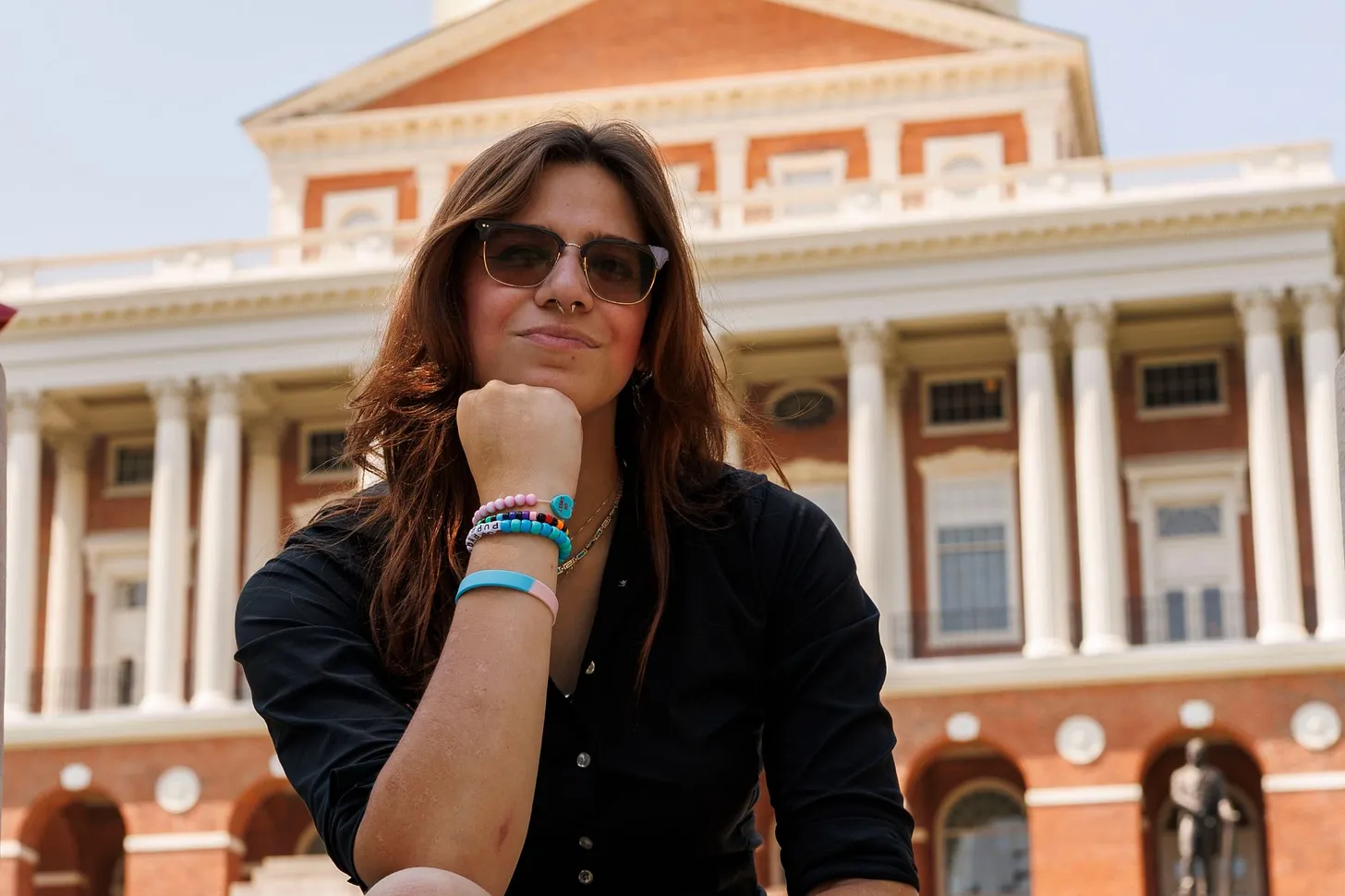
Uncloseted Media published this article on July 14.
By HOPE PISONI | Jordan Korgood has come a long way. In 2023, she ran into financial difficulties while studying at Northeastern University in Boston and ended up unhoused. Ordinary shelters are hotbeds of discrimination and mistreatment for transgender women like her, and the only trans shelter was full. So for five months, she slept in her car, in public libraries and anywhere she could find in order to continue her studies and campus activism.
Korgood, now 24, started a bid in March for a seat on Massachusetts Governor’s Council, a state board tasked with approving judicial candidates. Despite running against an incumbent who has been in office for 41 years, she secured key endorsements from local Democrats and racked up more than 7,000 Instagram followers, the equivalent of nearly one-tenth of primary voters during the last election cycle.
But last month, her momentum was ripped away. It started when Ronald Iacobucci, one of her opponents, noticed that she was still registered to vote in the 2024 election with an old New York address. He proceeded to file an objection with the state, alleging that Korgood didn’t meet the five-year residency requirement. While Korgood has lived in Massachusetts since 2019, she didn’t have a valid address to register in the state while she was unhoused. So she used her mother’s address, where she had lived before moving.
In an email to Uncloseted Media, Iacobucci wrote: “Because serious questions have arisen concerning compliance with those requirements, an objection was appropriate so the matter can be reviewed through the lawful process established by the commonwealth. This objection was nothing personal, it was always about the integrity of the process.”
While most residency challenges like this fail in Massachusetts, the State Ballot Law Commission disqualified Korgood on June 18. While she initially attempted to appeal the decision, the financial and logistical burden became too much — she estimates it drained about 40 percent of her campaign funds. So on July 10, Korgood suspended her campaign.
“I am incredibly frustrated that this is what I have to do at this point,” Korgood told Uncloseted Media. “I’ve spent thousands of hours, I’ve sacrificed my own mental health, my social life, friendships, my professional aspirations and advancement to work on this campaign, and this is how they’re ruling.”
“These are cherry-picking remote issues to target specific individuals,” Eliot Tracz, assistant professor of law at New England Law Boston, told Uncloseted Media. “They’re legitimate laws, but what they’re looking for is a selective application.”
Korgood isn’t the only trans candidate facing barriers. While a 2025 report by the LGBTQ+ Victory Institute found that trans representation among elected officials has increased by over 700 percent since 2017, candidates still face major hurdles.
Uncloseted Media found examples of trans candidates running for public office in Ohio and Michigan who have been threatened with disqualification over challenges to their eligibility. Often, the challenges come from their primary opponents: fellow Democrats.
“It should be voters, not political opponents, who decide who represents them,” Daniel Hernandez, vice president of political programs at the LGBTQ+ Victory Fund, a nonprofit supporting queer candidates for public office, told Uncloseted Media. “This is not a legitimate way to fight — if you have a disagreement on policy, that’s one thing, but to try and target trans people just because of who they are is completely unacceptable, especially in a Democratic primary.”
A growing strategy
The first widely publicized eligibility challenge against a trans candidate Uncloseted Media identified took place in Stark County, Ohio, in 2024. The Stark County Board of Elections, which has the same chairman as the county’s Democratic Party, disqualified Vanessa Joy, a trans woman who was running for a seat in the state legislature. The board cited an obscure state law requiring candidates who changed their name in the last five years to list their former name on candidacy petitions — in Joy’s case, her deadname.
“The original spirit of the law I kind of agree with,” Joy told Uncloseted Media. “But there’s hardly any information about this law ever being enforced.”
Days later, Arienne Childrey and Bobbie Arnold, two other trans candidates, had their eligibility challenged based on this law. While both candidates were cleared to run, that wasn’t the case for Joy, who never made it on the ballot.
Tom Sutton, a political science professor at Baldwin Wallace University, told Spectrum News 1 he had never seen this law enforced in his 30 years of study. At the time, the relevant forms didn’t include a space to list former names, an omission that has since been corrected.
“The only way to find out about it was to dig deep into all of the additional documents on their website,” says Joy. “They used this law against me.”
Similar challenges cropped up in Michigan this year. Joanna Whaley, a trans woman running for a seat in the state legislature, faced a legal complaint from her Democratic primary opponent Frank Liberati, who claimed in April that she should have filed campaign paperwork under her deadname.
“Because both the original and amended affidavits of identity filed by ‘Joanna Michelle Whaley’ contain FALSE statements, she/he cannot be certified to appear on the Aug. 4, 2026, primary election ballot,” the complaint argues.
The county clerk denied the challenge, which deadnames Whaley, because she had legally changed her name. Liberati’s complaint was widely condemned, with the Michigan Legislative LGBTQ+ Caucus calling it “meritless” and “transphobic.”
“It completely backfired on him,” Whaley told Uncloseted Media. “We tripled our cash on hand within a week because of the support that we’ve gotten from our community, and actually are in a stronger position now to win this race.”
While Whaley benefited from the challenge, that’s not the norm. Toni Mua, a trans woman running for a seat in the Michigan legislature, received a complaint from political activist Robert Davis in April who alleged that she also should have run under her deadname.
One of Mua’s opponents, Democrat Arthur Harrington, had discussed the challenge with Davis before it was filed, according to DeNiro Jones, Harrington’s former campaign manager. Jones told Uncloseted Media he sat in on a meeting between the two where they discussed the plan.
Jones also sent Uncloseted Media a screenshot of what he says is a text thread that Harrington sent him. In the screenshot, Davis tells Harrington, “The transgender candidate will be eliminated,” and Harrington responds that “Toni also won’t have the money to fight it.” Those texts were from April 22, two days before Davis filed the challenge.
In an email to Uncloseted Media, Davis called this story “baseless and meritless” and referred to Mua as “an illegitimate candidate seeking attention.”
“A candidate who happens to identify as transgender clearly violated Michigan Election Law and should not have been allowed to appear on the ballot,” Davis wrote. “A person’s sexual orientation nor identity played no part in the litigation seeking to have the person who filed a false affidavit of identity properly removed from the ballot.”
Arthur Harrington did not reply to multiple requests for comment. But in a June statement to Michigan Advance, he denied allegations that he was involved in Davis’s challenge.
These legal fights cost a lot. Korgood paid her lawyer $5,000. And while Mua defeated her challenge, she also had to use an estimated 40 percent of her campaign funds, or $10,000, to fight it.
In its opinion rejecting Davis’s challenge of Mua’s candidacy, the state court of appeals wrote, “Plaintiff misreads the statute … The Court of Claims did not err by concluding that Mua complied with the law or that the Wayne County Clerk did not err in rejecting plaintiff’s challenge.”
“I had to leave my job to run for this open seat,” Mua told Uncloseted Media. “It truly pisses me off, because [Democrats] have always said that they were better than this, and it’s showing truly where their support lies.”
Quinn Allred, executive director at Let Us Lead, a youth-focused voting rights nonprofit, finds these eligibility challenges from Democrats “despicable.”
“Instead of saying ‘trans people shouldn’t be running,’ [they’re entering] into this respectability politics and saying ‘oh, it’s actually because the names don’t match up, or it’s because of this residency law,’” Allred told Uncloseted Media. “[It’s a] special brand of cowardice that it takes for a Democrat to target a queer person who is also running for office.”
Uneven enforcement
While challenges to candidates’ residency aren’t uncommon in Massachusetts, they usually fail, according to Western Mass Politics & Insight, a long-running blog by local political and legal analysts.
The blog says most officials with authority over elections have a “great reluctance … to remove an individual from the ballot.” This makes Korgood’s removal unusual.
And while the State Ballot Law Commission says it considers many factors when determining a candidate’s residency and “no factor standing alone can be dispositive,” it largely cited Korgood’s voter registration in its decision despite other evidence that supports her eligibility, including apartment leases and membership in city programs.
“While there’s an undertone of legitimacy to some of those claims, it’s very selective,” Tracz says. “Most of us, when we move to a new state, don’t bother to go through the process of getting rid of our registration to vote in the prior state.”
Throughout history, Massachusetts candidates who faced similar challenges have been left on the ballot. These include former Massachusetts Gov. Mitt Romney, who received a tax credit in Utah reserved for primary residences, and Brockton, Mass., mayoral candidate Hamilton Rodrigues, who had gotten his voter registration in Brockton removed and hadn’t voted in the city for over 10 years.
Months after Joy’s disqualification in Ohio, the Mahoning County Board of Elections struck down a similar challenge against Republican Tex Fischer, a cisgender man who changed his legal name. They allowed him to stay on the ballot.
Tracz says a judge would likely find selective enforcement like this questionable.
“[That rule is] applicable to any candidate, and the question then becomes ‘Is this only being enforced against a select group of candidates?’” he says. “Why are we only investigating a specific type of candidate? I think that will give some courts pause.”
Making existing challenges worse
Trans candidates face hurdles beyond eligibility challenges. A June report from the LGBTQ+ Victory Institute found that nearly two-thirds of LGBTQ candidates face in-person harassment and nearly 80 percent of them face online harassment.
“Whether it’s threats of violence, coordinated harassment campaigns, attempts to remove people from the ballot, the cumulative effect is the same: public service becoming more difficult and less accessible to the LGBTQ community,” says Hernandez of the Victory Fund.
Whaley says the increased attention from Liberati’s challenge brought even more harassment her way. She says she reports death threats to the police weekly and has a security detail at every public appearance. Security has become her second-largest campaign expense, and for good reason; in October, her team intervened when a man wearing a Make America Great Again hat followed her around with a gun at a No Kings rally.
“At the end of the day, I want to get home to tuck my kids in bed,” Whaley says. “We could be using that money for other things, but we’re having to use it to just keep me alive.”
Eligibility challenges distract from the candidates’ policies. Childrey remembers one woman telling her she couldn’t vote for her because she’s “only about the rainbow people.”
“Most of what [I’m] talking about is affordability, funding for our public schools … bread and butter issues,” Childrey told Uncloseted Media. “There is an assumption, because we’re trans, that that’s all it is.”
Barriers also pile up intersectionally. Nearly one-third of trans people experience homelessness at some point in their lives, a rate eight times higher than the general population. This means barriers for unhoused people disproportionately affect trans candidates.
“Trans youth, trans people of color, students, those who are unhoused like [Korgood] was, or who are disabled or low-income — those barriers only compound,” Allred says.
What could change?
Zein Murib, a political science professor at Fordham University, says these incidents demonstrate the need for more leniency with official documentation, arguing that a candidate’s deadname or legal sex aren’t relevant information. Today, 45 states accept common-law names, or the name a person uses in everyday life regardless of their ID, for other legal procedures, and Whaley says this should apply to campaigns as well.
Besides these policy changes, Allred says LGBTQ advocacy groups should allocate more funds to defend trans candidates from eligibility challenges. And Hernandez says that more people should condemn these tactics and show support for those targeted.
“We need to make sure that we set the expectation that everyone … is rejecting these tactics that are disproportionately burdening our trans candidates,” he says. “We have to call it out when we see it, and we have to make sure that we are not just letting candidates fight these fights themselves.”
Mua says that she doesn’t see a future for herself or other trans people with the Democrats unless the party stands up for them. “I refuse to put myself into a party where I don’t see my safety and protection being vital.”
While Korgood says she is saddened by this outcome, she doesn’t intend for her political career to end.
“I’m incredibly proud of what we were able to accomplish, and while I am beyond disappointed and frustrated that this is how this is ending, I am so grateful that I earned the support and the attention of thousands of people in this race.”
Uncloseted Media also reached out to the Stark and Mahoning County Boards of Elections as well as the office of the Secretary of State in Ohio, and the Elections division of the Secretary of the Commonwealth of Massachusetts, under which the State Ballot Law Commission serves. None replied.

PHOTOS: Rehoboth Beach Pride Festival

Liza’s book a tale that’s better than most celebrity memoirs

Hot hatchbacks: Honda Civic, Subaru Impreza

When buying a home, it’s decisions, decisions, decisions

Authorities investigate officer-involved shooting outside Asheville gay bar

Expected India Supreme Court ruling could shape future LGBTQ rights cases

Celebrate Pride in Rehoboth Beach this weekend

Christa Tichy hopes to preserve LGBTQ representation in Md. House of Delegates

Advocacy groups join Venezuela earthquake relief efforts

Rehoboth’s Aqua to celebrate 20th anniversary Sunday
-

 India4 days ago
Expected India Supreme Court ruling could shape future LGBTQ rights cases
-
Rehoboth Beach4 days ago
Celebrate Pride in Rehoboth Beach this weekend
-
Maryland4 days ago
Christa Tichy hopes to preserve LGBTQ representation in Md. House of Delegates
-
Venezuela4 days ago
Advocacy groups join Venezuela earthquake relief efforts