Sports
Out and embracing it
Catching up with Kirk Walker, first out coach in Division I NCAA
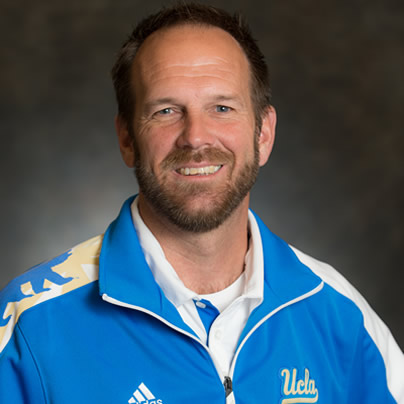
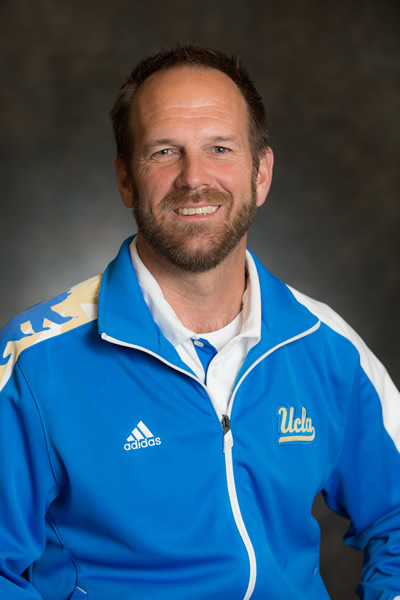
Kirk Walker left Oregon State University as the ‘all-time winningest’ softball coach in the school’s history. (Photo courtesy of Kirk Walker)
When Kirk Walker and his partner Randy Baltimore decided to adopt a child in 2005, the process required the couple to fill out public records, which led to Walker making the important decision to do what no other head coach in Division I NCAA had ever done — come out to his team and the world. (Since his announcement, Sherri Murrell, head women’s basketball coach at Portland State, has also come out.)
“For probably five or six years before I came out, I was definitely in a place where I would not hide it and I wouldn’t lie about it, but I wasn’t necessarily sharing it and it wasn’t a point of conversation,” he says. “It certainly wasn’t something I shared with my team. In fact, my team was a very big turning point for me in terms of being more vocal.”
Walker was in his 11th season as head softball coach with Oregon State University at the time and it was important to him that his players learn he was gay from him, rather than through the news reports that were certain to follow.
FIND MORE OF THE WASHINGTON BLADE SPORTS ISSUE HERE.
Kirk Walker on the field at the University of California at Los Angeles, his current coaching post and alma mater. (Photo courtesy of Kirk Walker)
“I brought up the topic and I shared it with them,” he says. “For the next year or so, I was a little reluctant to do a lot of articles and interviews, because I didn’t want that to be the first thing listed on my resume, that I was the ‘gay coach,’ and that was partly my ego. I wanted my record to stand from my coaching world for who I was.”
Eventually, Walker decided that he was being selfish and that his attitude was diminishing the impact he could have, and proudly wore the label as “the coach who came out.”
Last season, Walker was offered an assistant coaching position for UCLA’s softball program and decided to make the move. He was an alumnus of the school and had previously served as a coach for the Bruins from 1984-1994, helping his alma mater to six NCAA National Championships.
Walker left OSU as the Beavers’ all-time winningest softball coach, with a 594-491 record, and led the team to 10 postseason appearances, including the College World Series in 2006 and the NCAA regionals in 2012.
Somewhat surprisingly, Walker believes he is making a bigger impact with LGBT students in his new role.
“As the role of a head coach, I know I was an example for people and they were respectful and appreciative, but a head coach is someone who is hard to seek out and share personal issues,” he says. “Now, being an assistant, I am in a different role and I certainly see more accessibility to me as a resource.”
In April, Walker, in conjunction with UCLA Athletics and UCLA Recreation, held an event for Athlete Ally, an organization that educates athletes, coaches and fans on issues regarding sexual orientation and sports. UCLA released a “You Can Play” video, which encourages acceptance and tolerance for gay athletes in all levels of athletics, and UCLA head football coach Jim Mora became the first current major college football coach to encourage gay athletes to play for his team.
“Coach Mora is fantastic and has been since I was hired,” Walker says. “I didn’t doubt for one minute that he wouldn’t be on board with the video we were producing and I certainly was very pleased he was so honest about how he felt, and I believe that was very powerful.”
Athletes from throughout the UCLA program — male and female — were on-board and Walker was impressed with the younger generation’s acceptance and support for teammates and individuals who might be LGBT.
Walker was happy that NBA player Jason Collins felt secure enough to come out and doesn’t believe that moments like this are as big a deal as many others do, calling it a safer climate today.
“I think anytime a high-profile person identifies as LGBT, especially in the sports world, it’s important, but I often said that there are many people in the media and the LGBT community who believe the first pro athlete or first football player or first basketball player that came out would be an earth-shattering moment, but I never really ascribed to that,” he says. “I think it’s fantastic, I think it’s great, but I don’t think an event like that means everything has changed.”
So, when contemplating why more athletes aren’t following Collins’ lead, Walker admits part of it is the perception of the public and part the perception of teammates. Still, he thinks the external struggle is the greatest challenge.
“For high-profile athletes, they worry, “Will I still be one of the guys? Will they still value me as a teammate and want me to be part of their family?’ and I think that’s a big roadblock,” Walker says. “I think the dialogue and having more conversations about LGBT athletes, coaches and individuals has created an opportunity in the locker room where there are some vocal people who will stand up and be supportive.”
As the new UCLA softball season is set to get underway, Walker is looking forward to more excitement and success from the team in his role as assistant to coach Kelly Inouye-Perez.
“I have relished the opportunity to be back in that role as an assistant and it’s been great. I have no regrets about making the move at this point in my career,” he says. “My passion in coaching is about changing lives and building individuals into the best person they can be moving into the real world.”





Sports
New IOC policy bans trans women from Olympics
New regulation to be in effect at 2028 summer games in Los Angeles
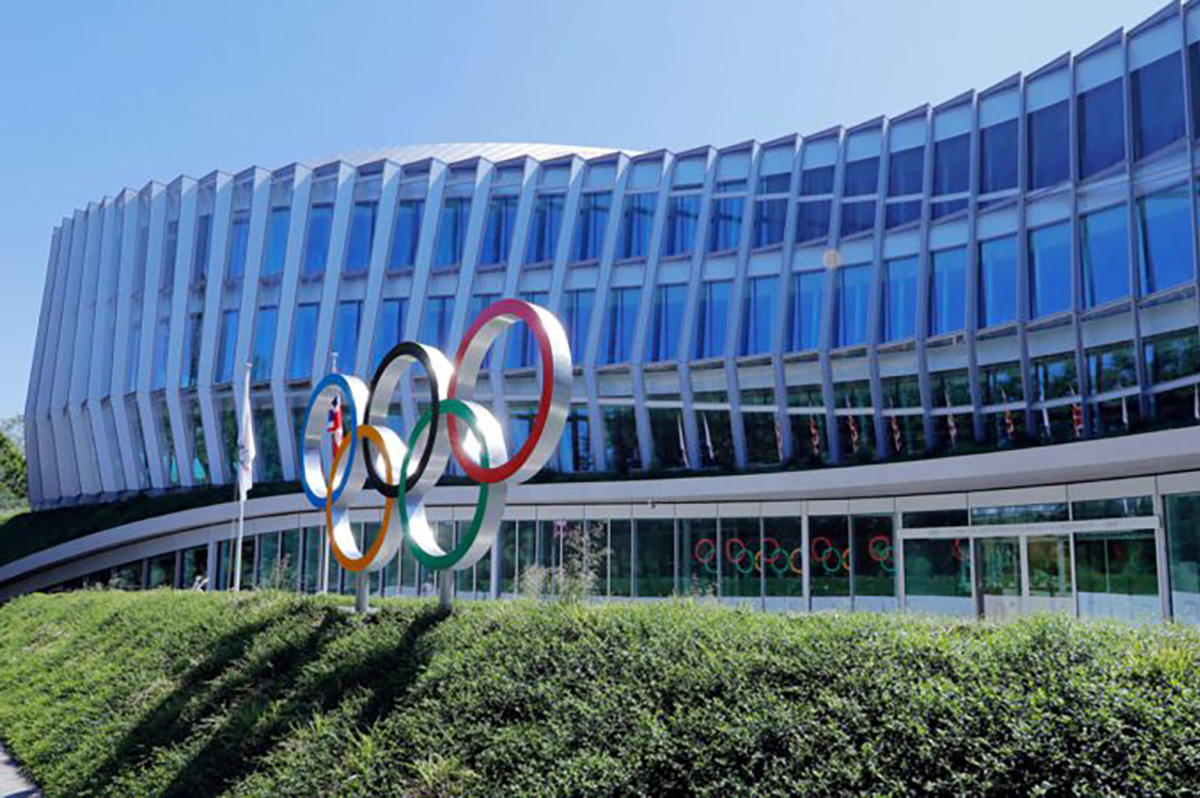
The International Olympic Committee on Thursday announced it will not allow transgender women from competing in female events at the Olympics.
“For all disciplines on the Sports Program of an IOC event, including individual and team sports, eligibility for any Female Category is limited to biological females,” reads the new policy.
The policy states “eligibility for the Female Category is to be determined in the first instance by SRY Gene screening to detect the absence or presence of the SRY Gene.”
“On the basis of the scientific evidence, the IOC considers that the SRY (sex-determining Region Y) Gene is fixed throughout life and represents highly accurate evidence that an athlete has experienced or will experience male sex development,” it reads. “Furthermore, the IOC considers that SRY Gene screening via saliva, cheek swab or blood sample is unintrusive compared to other possible methods. Athletes who screen negative for the SRY gene permanently satisfy this policy’s eligibility criteria for competition in the Female Category.”
The policy states the test “will be a once-in-a-lifetime test” unless “there is reason to believe a negative reading is in error.”
The new regulation will be in place for the 2028 Summer Olympics in Los Angeles.
“I understand that this a very sensitive topic,” said IOC President Kirsty Coventry on Thursday in a video. “As a former athlete, I passionately believe in the rights of all Olympians to take part in fair competition.”
“The policy that we have announced is based on science and it has been led by medical experts with the best interests of athletes at its heart. The scientific evidence is very clear: male chromosomes give performance advances in sport that rely on strength, power, or endurance,” she added. “At the Olympic Games, even the smallest margins can be the difference between victory and defeat. So, it is absolutely clear that it would not be fair for biological males to compete in the female category. In addition, in some sports it would simply not be safe.”
(Video courtesy of the IOC)
Laurel Hubbard, a weightlifter from New Zealand, in 2021 became the first trans woman to compete at the Olympics.
Imane Khelif, an Algerian boxer, won a gold medal at the 2024 Summer Olympics in Paris. Khelif later sued JK Rowling and Elon Musk for cyberstalking after they questioned her gender identity.
Ellis Lundholm, a mogul skier from Sweden, this year became the first openly trans athlete to compete in any Winter Olympics when he participated in Milan Cortina Winter Olympics in Italy.
President Donald Trump in February 2025 issued an executive order that bans trans women and girls from female sports teams in the U.S.
The U.S. Olympic and Paralympic Committee last July banned trans women from competing in female sporting events. Republican lawmakers have demanded the IOC ban trans athletes from women’s athletic competitions.
“I’m grateful the Olympics finally embraced the common sense policy that women’s sports are for women, not for men,” said U.S. Sen. Tom Cotton (R-Ark.) on X.
An IOC spokesperson on Thursday referred the Washington Blade to the press release that announced the new policy.
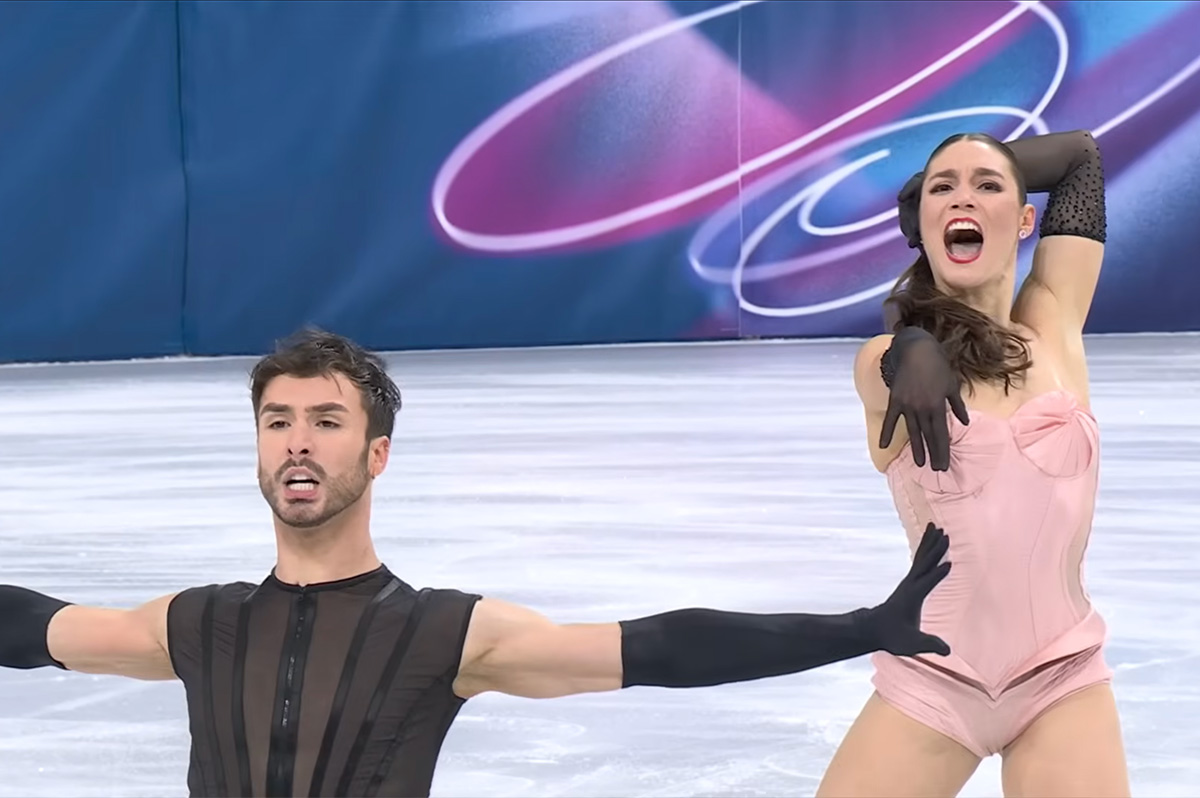
More than a dozen LGBTQ athletes won medals at the Milan Cortina Winter Olympics that ended on Sunday.
Cayla Barnes, Hilary Knight, and Alex Carpenter are LGBTQ members of the U.S. women’s hockey team that won a gold medal after they defeated Canada in overtime. Knight the day before the Feb. 19 match proposed to her girlfriend, Brittany Bowe, an Olympic speed skater.
French ice dancer Guillaume Cizeron, who is gay, and his partner Laurence Fournier Beaudry won gold. American alpine skier Breezy Johnson, who is bisexual, won gold in the women’s downhill. Amber Glenn, who identifies as bisexual and pansexual, was part of the American figure skating team that won gold in the team event.
Swiss freestyle skier Mathilde Gremaud, who is in a relationship with Vali Höll, an Austrian mountain biker, won gold in women’s freeski slopestyle.
Bruce Mouat, who is the captain of the British curling team that won a silver medal, is gay. Six members of the Canadian women’s hockey team — Emily Clark, Erin Ambrose, Emerance Maschmeyer, Brianne Jenner, Laura Stacey, and Marie-Philip Poulin — that won silver are LGBTQ.
Swedish freestyle skier Sandra Naeslund, who is a lesbian, won a bronze medal in ski cross.
Belgian speed skater Tineke den Dulk, who is bisexual, was part of her country’s mixed 2000-meter relay that won bronze. Canadian ice dancer Paul Poirier, who is gay, and his partner, Piper Gilles, won bronze.
Laura Zimmermann, who is queer, is a member of the Swiss women’s hockey team that won bronze when they defeated Sweden.
Outsports.com notes all of the LGBTQ Olympians who competed at the games and who medaled.
Sports
US wins Olympic gold medal in women’s hockey
Team captain Hilary Knight proposed to girlfriend on Wednesday
The U.S. women’s hockey team on Thursday won a gold medal at the Milan Cortina Winter Olympics.
Team USA defeated Canada 2-1 in overtime. The game took place a day after Team USA captain Hilary Knight proposed to her girlfriend, Brittany Bowe, an Olympic speed skater.
Cayla Barnes and Alex Carpenter — Knight’s teammates — are also LGBTQ. They are among the more than 40 openly LGBTQ athletes who are competing in the games.
The Olympics will end on Sunday.

VIDEO: Gay journalist detained for booing Trumps at ‘Chicago’ opening night

Idaho Gov. signs harshest anti-trans bathroom bill in the country

Award-winning D.C. chef reaching new culinary heights

Trans-driven ‘Serpent’s Skin’ delivers campy sapphic horror

Now more than ever: the importance of LGBTQ activism

‘Out for McDuffie’ event held at D.C. gay bar

‘Jonah’ an undeniably compelling but unusual memory play

The Oscar-losing performance that’s too good to miss

Thousands attend ‘No Kings’ protests in D.C.