Obituary
Longtime D.C. activist Barrett Brick dies
Former GLAA president remembered for array of interests
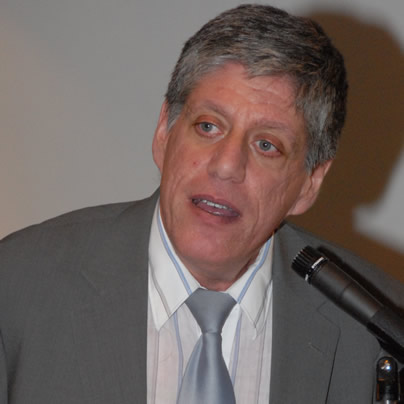

Barrett Brick (Washington Blade file photo by Henry Linser)
Barrett Brick, 59, a D.C. attorney who is credited with playing a lead role in advocating for LGBT equality on a local, national and international level for more than 30 years, died Sunday, Sept. 22, at a hospice care facility in Bethesda, Md. His death followed a 10-year battle with cancer.
Brick spent most of his professional career as an attorney in Washington working for the Federal Communications Commission.
But friends and colleagues said Brick devoted much of his free time beginning with his student days at Columbia University in New York as a key player and leader of a wide range of LGBT organizations.
He served as president of the D.C. Gay and Lesbian Activists Alliance from 2006 through 2009 after having served as the group’s treasurer, according to current GLAA President Rick Rosendall. He served on the board of the then Capital Area Log Cabin Republicans from 1995 to 1998.
Brick served as president of D.C.’s Congregation Bet Mispachah, which reaches out to the LGBT Jewish community, from 1984 to 1985 after serving on the congregation’s board from 1980 to 1984, a GLAA biography of Brick says.
The GLAA biography says Brick served as executive director of the World Congress of Gay and Lesbian Jewish Organizations from 1987 to 1993.
He served in the 1990s as co-chair of the Committee on Sexual Orientation and Gender Identity of the American Bar Association.
“In a town swarming with partisan hackery, Barrett consistently stood up for principle and put the greater good before self-interest,” said Rosendall. “His wide-ranging interests brought him multiple circles of friends,” he said, adding that Brick’s role as a longtime GLAA collaborator and adviser was “beyond price.”
Brick received a bachelor’s degree from Columbia University in 1976 and a law degree from Columbia University Law School 1979. During his undergraduate studies he served as treasurer and vice president of Gay People of Columbia and founded the Columbia Gay and Lesbian Law Students Association in 1979.
D.C.’s Rainbow History Project, which inducted Brick as a Community Pioneer credited with helping to strengthen Washington, D.C.’s LGBT community, said Brick was a leader in pushing for immigration rights for LGBT people beginning in the 1990s. In 2012, the national LGBT rights organization Immigration Equality selected Brick as a recipient of its Global Vision Award in recognition of his advocacy for LGBT immigrants and their families.
The Rainbow History Project also credits Brick with working with fellow GLAA member Craig Howell’s campaign in the early 1980s to persuade founders of the soon-to-be-opened U.S. Holocaust Memorial Museum in Washington to include homosexual victims of the Nazi death camps as part of its exhibits and stories of the Holocaust.
“With Howell, he met members of the Jewish Community Council in February 1983 to make the case for inclusion,” the Rainbow History Project states in its biography of Brick. A short time later, with the full support of Jewish leaders and holocaust expert Elie Wiesel, the Council agreed to include gay Holocaust victims as part of the museum’s commemoration of all victims of Nazi persecution, the biography says.
Brick spoke about the significance of including gay Holocaust victims as part of the museum during an event held one day after the Holocaust Memorial Museum was formally dedicated in April 1993. The dedication took place during the same week LGBT people from across the country came to Washington for a national march for LGBT equality.
“For the living and for the dead, for ourselves and for future generations, we and this museum bear witness to the truth of our heritage and our history – of community and survival, of terror and death, of love and resistance,” Brick said. “We preserve our stories, and we tell them.”
Howell, who worked closely with Brick on LGBT rights projects through GLAA, said he was “always witty, passionate and dedicated to our community’s welfare.” Added Howell, “Barrett made himself a truly indispensable man for so many years in so many ways.”
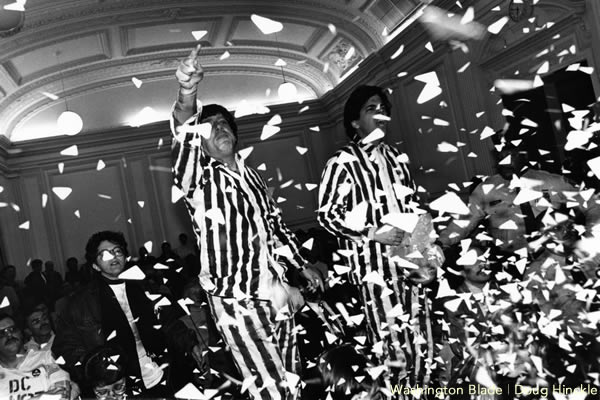
Barrett Brick (left) at a 1988 protest in the City Council chamber. (Washington Blade archive photo by Doug Hinckle)
In addition to his numerous LGBT political activities Brick was an avid soccer fan and reader of science fiction literature. His friends say that similar to his political involvements, Brick pushed for LGBT visibility in these two areas. He was an active member of the Screaming Eagles, an organization of soccer fans in the D.C. area that roots for the D.C. United professional soccer team.
He also served on the planning committee for Gaylaxicon 2008, the annual international science fiction, fantasy and horror convention for LGBT fans.
Antonio Ruffini, Brick’s husband, said the two met in September 1999 at a science fiction conference in Melbourne, Australia. As a native and resident of South Africa, Ruffini said he and Brick soon began a bi-continental relationship, with each traveling to one another’s country as often as possible.
Among Brick’s wide range of interests was astronomy and “eclipse chasing,” Ruffini said. Brick’s practice of traveling the world to witness an eclipse and on many occasions taking Ruffini with him gave the two a unique opportunity to spend time together in such places as Egypt, Mongolia and Pacific Islands.
“He saw 14 eclipses in different parts of the world and had been among the top 10 eclipse watchers,” said Ruffini, who points out that Brick was proud of the accomplishment of spending a total of 44 minutes and 57 seconds under the darkness of an eclipse.
“Barrett was very multi-dimensional,” Ruffini said. “The energy he had to get involved in all of these interests was quite something.”
In January 2009 the couple married in Johannesburg in a legally recognized ceremony under South Africa’s constitution, which includes a provision guaranteeing equal rights for gay people.
“Our plan was for him to move to South Africa,” said Ruffini, who noted that Brick had hoped to make the move in 2010 when he retired from the FCC after just over 30 years of government service.
But Brick’s bout with cancer, which had been mostly in remission since diagnosis and early treatment in 2003, resurfaced around the time of his retirement, requiring that he undergo aggressive medical treatment in Washington, Ruffini said.
He said Brick was scheduled to be buried Tuesday in his family’s cemetery plot at Beth Israel Memorial Park in Woodbridge, N.J.
Bet Mishpachah will hold a memorial service on Sunday, Sept. 29 at 5 p.m. in the party room of the Van Ness East condominium building at 2939 Van Ness St., N.W. Van Ness East is two blocks east of Connecticut Avenue and within walking distance of the Van Ness/UDC stop on the Red Line. There is limited valet parking available on site; street parking is available on Van Ness Street. All visitors must enter at the front desk, which will provide directions on accessing the party room.


Obituary
Thomas A. Decker of Arlington dies at 73
Active in visiting AIDS patients, urging Congress to fight HIV
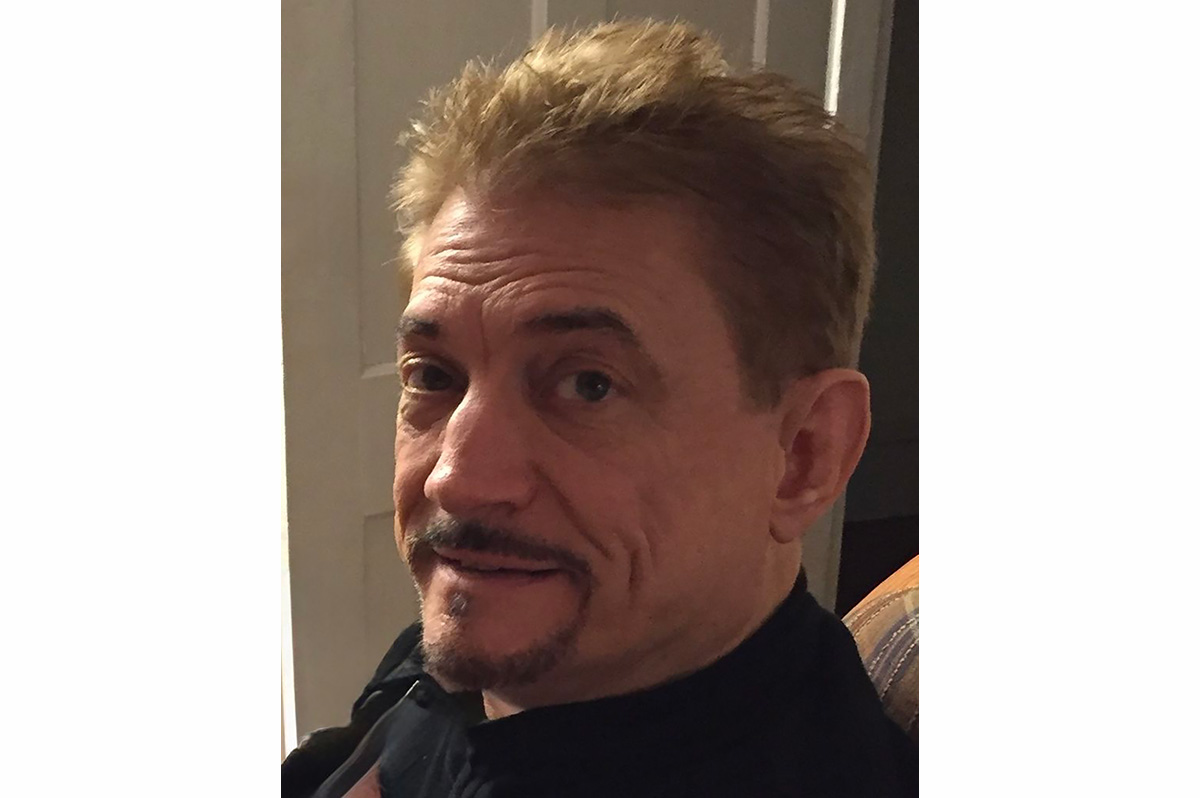
Thomas A. Decker Jr, of Arlington, Va., died March 3, 2026 following an extended illness, according to a statement released by his family. He was 73.
Born and raised in Canton, Ohio, Decker attended the University of Akron and earned his bachelor’s degree in political science. He then moved to the Washington, D.C. area and accepted a position with Beaver Press where he worked for 32 years, according to the statement.
He later worked in the Inova Juniper Program working with HIV/AIDS clients to assist them with support services and was active as a volunteer visiting AIDS patients in the hospital or advocating on Capitol Hill for HIV funding.
Tommy, as he was called by family, is survived by three sisters, a sister-in-law and two brothers-in-law: Carol Decker and Kathryn Kramer of West Newbury, MA, Margaret and Thomas Williams of Bluffton, SC, Mary Sue and Timothy Desiato of New Philadelphia, Ohio, Niece’s Trina and Chad Wedekind of Jacksonville Fl and great niece Isabella, Lindsay and Will Burgette of Dublin, Ohio and great nephews Colin and Luke and Nephews David Williams of Jacksonville, Florida, and Michael and Lucy Desiato of Dublin, Ohio and great nieces Lena and Stella. In accordance with Tom’s wishes, he will be buried at Calvary Cemetery in Massillon, Ohio.
District of Columbia
Acclaimed bisexual activist, author Loraine Hutchins dies at 77
Lifelong D.C.-area resident was LGBTQ rights advocate, sex educator
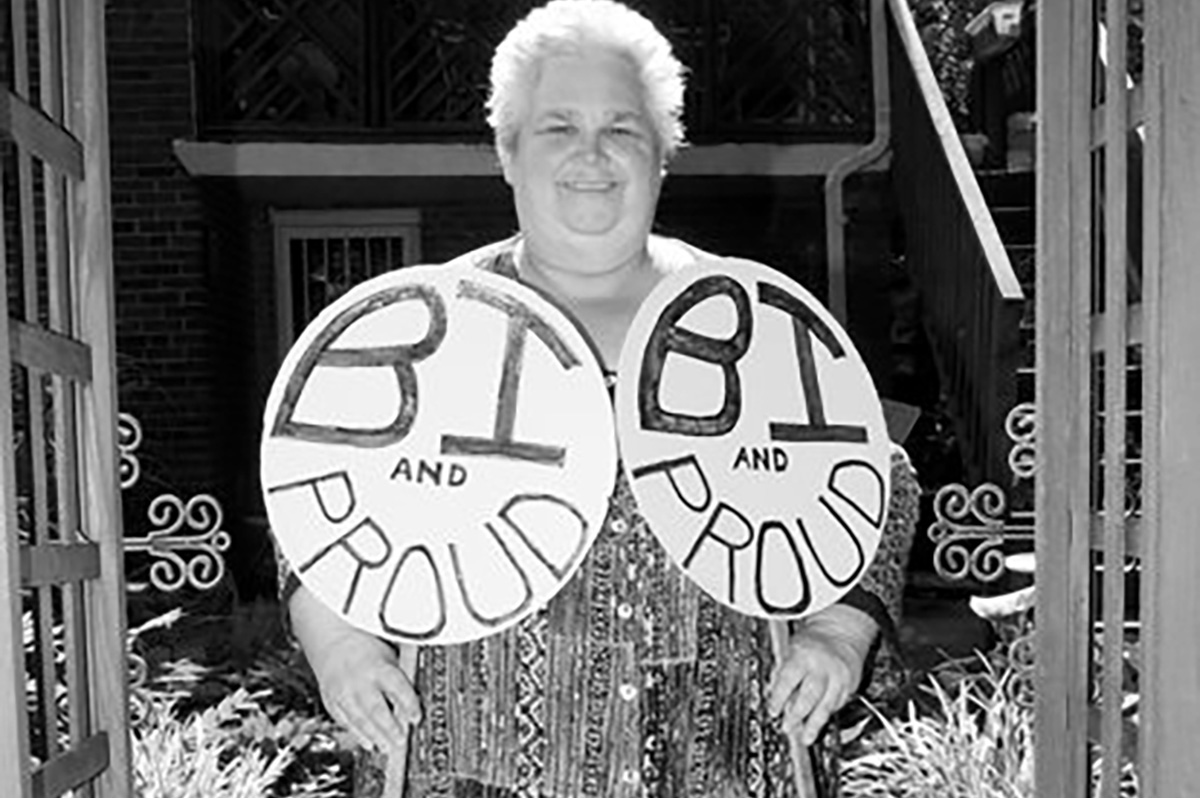
Loraine Adele Hutchins, a nationally known and acclaimed advocate for bisexual and LGBTQ rights, co-author and editor of a groundbreaking book on bisexuality, and who taught courses in sexuality, and women’s and LGBTQ studies at a community college in Maryland, died Nov. 19 from complications related to cancer. She was 77.
Hutchins, who told the Washington Blade in a 2023 interview that she self-identified as a bisexual woman, is credited with playing a lead role in advocating for the rights of bisexual people on a local, state, and national level as well as with LGBTQ organizations, many of which bi activists have said were ignoring the needs of the bi community up until recent years.
“Throughout her life, Loraine dedicated herself to working and speaking for those who might not be otherwise heard,” her sister, Rebecca Hutchins, said in a family write-up on Loraine Hutchins’s life and career.
Born in Washington, D.C., and raised in Takoma Park, Md., Rebecca Hutchins said her sister embraced their parents’ involvement in the U.S. civil rights movement.
“She was a child of the ‘60s and proudly recalls attending Martin Luther King’s ‘I Have a Dream’ speech with her mother on the D.C. Mall,” she says in her write-up. “She was steeped in the civil rights movement, was a member of the Student Non-Violent Coordinating Committee, and was proud to say she had an FBI record.”
The write-up says Hutchins received a bachelor’s degree from Shimer College in Mount Carroll, Ill. in 1970, and a Ph.D. in 2001 from Union Institute. It says she was also a graduate of the Institute for the Advanced Study of Human Sexuality’s Sexological Bodyworkers certification training program.
The family write-up says in the 1970s Hutchins became involved with efforts to assist tenants, including immigrant tenants, in affordable housing programs in D.C.’s Adams Morgan neighborhood.
“In 1991, she co-authored the groundbreaking book, ‘Bi Any Other Name: Bisexual People SPEAK OUT’ with friend and colleague Lani Ka’ahumanu,” the write-up says. It notes that the acclaimed book has been republished three times and in 2007 it was published in Taiwan in Mandarin.
According to the write-up, Hutchins delivered the keynote address in June 2006 at the Ninth International Conference on Bisexuality, Gender and Sexual Diversity. In October 2009, D.C.’s Rainbow History Project honored her as one of its Community Pioneers for her activist work.
“Loraine is one of the few people who has explained, defended and championed bisexuality and made sure the “B” got into the LGBT acronym,” the Rainbow History Project says on its website in a 2009 statement. “Sensitivity to bisexual issues, civil rights, and social justice issues is Loraine’s life work,” the statement concludes.
The write-up by her sister says that up until the time of her retirement, Hutchins taught women’s and LGBT studies as well as health issues in sexuality at Montgomery Community College and Towson University in Maryland.
“She was a friend and mentor to many in the LGBTQ community,” it says. “She thoroughly enjoyed adversarial banter on the many topics she held dear: sexuality, freedom of speech, civil rights, needs and support of those with disabilities, especially in the area of mobility, assisted housing, liberal politics and many other causes,” it points out.
She retired to the Friends House community in Sandy Springs, Md., where she continued her activism, the write-up concludes.
Hutchins was among several prominent bisexual activists interviewed by the Washington Blade at the time of her retirement in June 2023 for a story on the status of the bisexual rights movement. She noted that, among other things, in her role as co-founder the organizations BiNet USA and the Alliance of Multicultural Bisexuals, she joined her bi colleagues in prodding national LGBTQ advocacy organizations to improve their advocacy work for bisexuals, which Hutchins said had been inadequate in the past but had been improving in recent years.
Hutchins is survived by her sister, Rebecca Hutchins; her husband, Dave Lohman; nephew, Corey Lohman and his wife Teah Duvall Lohman; and cousins, the family write-up says.
It says a private memorial service was scheduled for December and a public memorial service recognizing her contributions to the LGBTQ community will be held in the spring of 2026.
Obituary
Acclaimed disability rights advocate Thomas Mangrum dies at 61
Lifelong D.C. resident also served as ‘cherished’ Capital Pride volunteer
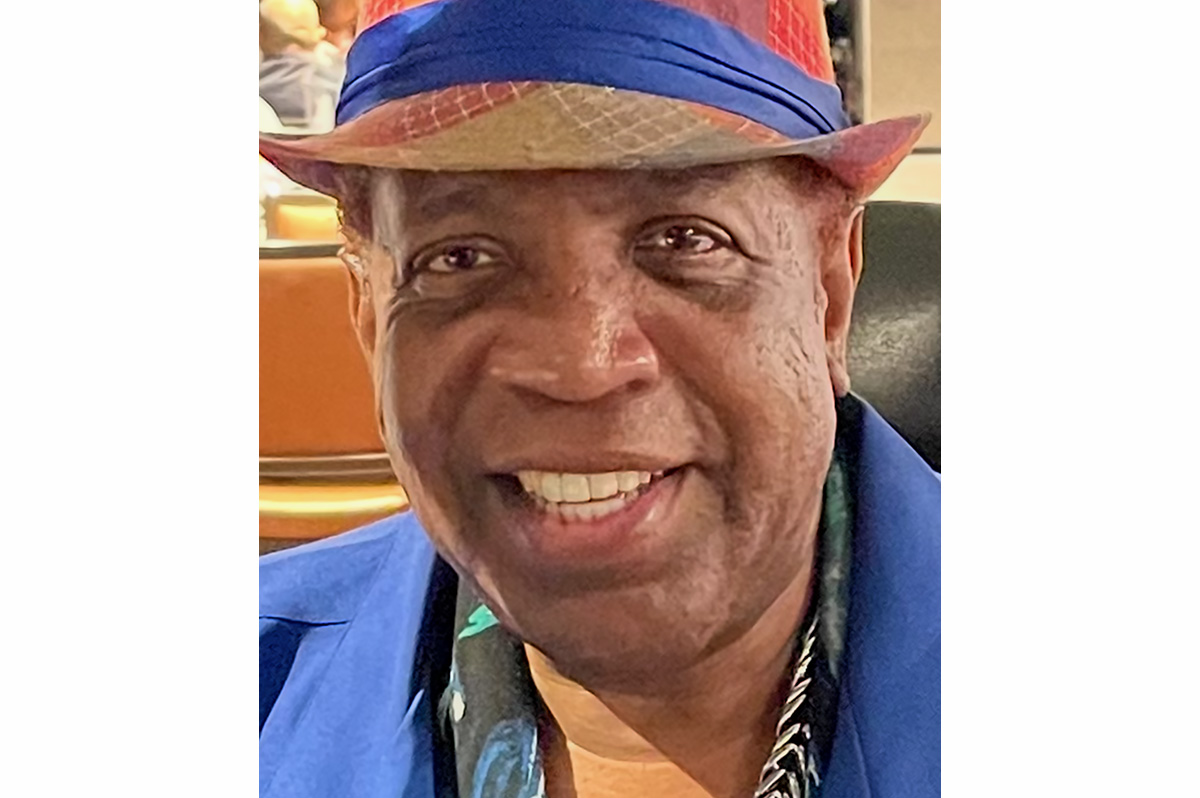
L. Thomas Magnum Jr., a lifelong D.C. resident, widely recognized and acclaimed advocate for people with disabilities, and LGBTQ rights activist involved in the city’s Capital Pride events, died Sept. 17 from complications related to stomach cancer. He was 61.
A statement released by Project ACTION!, a local disability advocacy organization for which Mangrum served for 15 years as co-president, says he worked for more than 20 years for the D.C.-based Maurice Electric Supply company before retiring in 2002 and devoting his efforts to disability-related projects and programs.
Phylis Holton, an official with the D.C. organization Quality Trust For Individuals With Disabilities and a longtime friend of Mangrum, said as a person with a developmental disability Mangrum devoted his life to supporting others with all forms of disabilities. She said that due to a separate spinal condition, Mangrum used a wheelchair for about 15 years prior to his passing.
Holton said Mangrum had a mild form of developmental disability, which the U.S. Centers for Disease Control and Prevention describes as “a group of conditions due to an impairment in physical, learning, language or behavior areas” that usually develops before a child is born during pregnancy.
Holton said Mangrum was an active member of Project ACTION! for 15 years prior to the 15 years he served as the organization’s co-president.
“He traveled nationally and presented at conferences, was featured on webinars and podcasts on a variety of topics related to self-advocacy, accessibility, equality, and more,” Holton told the Washington Blade in a statement.
“He shared his lived experience of being a Black man with a disability, and being gay, and how it impacted how he was treated in the community,” Holton said. “He was a strong advocate and co-facilitated trainings for independent advocacy organizations that Thomas supported and was a key advocate in their advocacy work,” she said.
Holton added, “He would answer a late request to train a group of attorneys, present at a meeting or testify before City Council or meet with an advocacy group to advance pending legislation that impacted people with disabilities.”
She said Mangrum also enjoyed participating in LGBTQ Pride events and last year traveled to the New York Pride events. According to Holton, he looked forward to participating in WorldPride 2025 events earlier this year in D.C. “but his illness prevented him from doing so.”
In a statement announcing Mangrum’s passing, Capital Pride Alliance, the group that organizes D.C.’s annual LGBTQ Pride events and served as the lead organizer of WorldPride 2025 in D.C., called Mangrum a “cherished volunteer” for D.C. Pride events.
June Crenshaw, the Capital Pride Alliance Deputy Director, said Mangrum served as a volunteer for D.C.’s LGBTQ Pride events “for many years” and was involved in many of the planning activities for WorldPride before his illness prevented him from participating in WorldPride earlier this year.
“He certainly in my interaction with him made me very aware of making sure that Capital Pride was thinking about accessibility always, and making sure that we had a welcoming, affirming accessible space for participants and staff with disabilities,” Crenshaw said.
In its statement on Mangrum’s career and accomplishments in life, Project ACTION! says he helped to advance the needs of people with disabilities through service on many boards and commissions. Among them were Lifeline Partnership, the D.C. Developmental Disabilities Council, the D.C. Center for Independent Living, the Washington Metropolitan Area Transportation Authority’s Accountability Advisory Committee, “and many more.”
“His leadership, passion, and unwavering commitment to equity and inclusion made a lasting impact on all who had the privilege to know and work alongside him,” the statement says.
It adds, “Thomas showed us the power of perseverance, courage, and the importance of standing together. His spirit will continue to guide us and strengthen our community for generations to come.”
A funeral for Mangrum was scheduled for Oct. 9, at D.C.’s Westminster Presbyterian Church at 400 I Street, S.W., with a viewing at 10 a.m. followed by a program at 11 a.m. A burial was scheduled to take place that same day at Heritage Memorial Cemetery at 13472 Poplar Hill Road in Waldorf, Md.
Holton said in lieu of flowers, donations may be made to Project ACTION! for a Celebration of Life and advocacy scholarship in Mangrum’s name. A date and location for the Celebration of Life for Mangrum was to be announced later, according to Project ACTION!

‘Jonah’ an undeniably compelling but unusual memory play

The Oscar-losing performance that’s too good to miss

Trump tells Fox News he won the ‘gay vote’ — but polls tell a different story

Anti-trans visa ruling echoes Nazi regime destroying trans documents

Japanese Supreme Court to consider marriage equality

Menaka Guruswamy celebrated as India’s first openly LGBTQ MP

UPDATED: Trans-led HIV clinic in Portsmouth struggles amid funding cuts

DeSantis signs emergency bill that restores Fla. ADAP funding

Pa. House passes bill to codify marriage equality in state law

Introducing the Torchbearers Awards honoring queer, trans women and nonbinary people
-

 India5 days ago
Menaka Guruswamy celebrated as India’s first openly LGBTQ MP
-
Health5 days ago
UPDATED: Trans-led HIV clinic in Portsmouth struggles amid funding cuts
-
Florida5 days ago
DeSantis signs emergency bill that restores Fla. ADAP funding
-
Pennsylvania4 days ago
Pa. House passes bill to codify marriage equality in state law