Living
Queery: Ron Simmons
The Us Helping Us president answers 20 gay questions
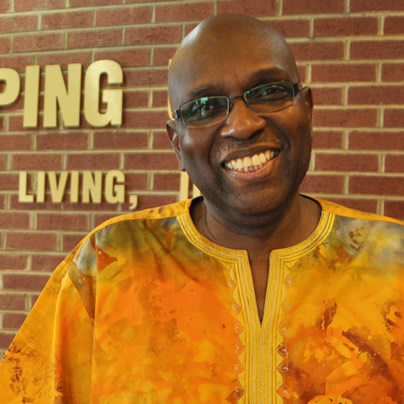
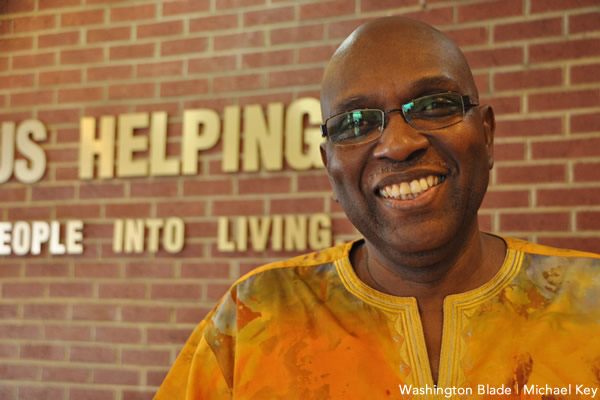
Ron Simmons (Washington Blade photo by Michael Key)
Us Helping Us has grown by leaps and bounds since its humble origins. Founded in 1985 but incorporated in 1988, the black AIDS organization has its 25th anniversary event Monday night.
“What started as a support group in living rooms is now a certified treatment center with more than a dozen HIV and AIDS services from prevention support, service programs, HIV testing, screening, treatment adherence, behavioral intervention and more,” says Ron Simmons, president of the organization.
“A Passion for Living,” the agency’s anniversary event, is from 6-9 p.m. Monday at Arena Stage (1101 Sixth Street, S.W.). The agency will present awards to Dr. Theo Hodge, Darlene Nipper, Dana Fonville and others. Broadway actress/singer Jennifer Holliday (of “Dreamgirls” fame) will perform a 30-minute set. Proceeds from sales of the $150 tickets (tickets.arenastage.org) benefit Us Helping Us. Tickets are still available.
Simmons says it was apparent early on that something for black gay men was needed.
“Given the racism in this country, many of the people doing HIV work were just not culturally competent in dealing with black gay men,” he says. “We had people go to support groups early on and it would be mainly white guys talking about having to sell their second house to make ends meet whereas many of our guys couldn’t even make rent. There was just a disconnect between our issues and their issues,” Simmons says.
The agency, located at 3636 Georgia Ave., N.W., has 17 on staff and an annual operating budget of about $1.8 million. It tests about 2,000 people per year for HIV and about 3,000 come through its doors for various services.
Simmons, a 63-year-old Brooklyn native, came to Washington in 1980. After teaching mass communications at Howard University for about 12 years while earning a doctorate, he joined Us in 1992, the first year in a volunteer capacity. He’s single and lives in Petworth.
How long have you been out and who was the hardest person to tell?
I have been out since 1968. Fortunately, it wasn’t hard to tell my parents. They caught my lover and me in a compromising position when they returned from a movie early. We were fully clothed but had obvious guilty facial expressions. The next morning I woke up feeling like a heavy weight was off my shoulder. The secret was out. I’ve been smiling ever since.
Who’s your LGBT hero?
Black lesbian activist Mandy Carter.
What’s Washington’s best nightspot, past or present?
Past would be the Clubhouse, the Delta Elite, the Edge and the Brass Rail when it was on 13th Street, N.W. Presently I go out three times a year, usually to the Bachelor’s Mill to see friends and hear house music.
Describe your dream wedding.
Something small and outdoors, but I would let my spouse decide. If he wanted a big church wedding, so be it.
What non-LGBT issue are you most passionate about?
Economic inequality. Having hungry people in the richest nation upsets me.
What historical outcome would you change?
The assassinations of Malcolm X and Dr. Martin Luther King.
What’s been the most memorable pop culture moment of your lifetime?
Seeing LaBelle at the New York City opera house and watching Patti descend from the ceiling.
On what do you insist?
Honesty.
What was your last Facebook post or Tweet?
My essay, “Some Thoughts on the Challenges Facing Black Gay Intellectuals.”
If your life were a book, what would the title be?
“The Road Less Traveled”
If science discovered a way to change sexual orientation, what would you do?
Nothing. I like being me.
What do you believe in beyond the physical world?
A spiritual realm and a supreme being encompassing all beings.
What’s your advice for LGBT movement leaders?
Move beyond the “gay-only” agenda, and collaborate with others fighting economic, racial, gender and political oppression.
What would you walk across hot coals for?
An end to poverty.
What LGBT stereotype annoys you most?
That gay people only think about gay issues.
What’s your favorite LGBT movie?
“Tongues Untied” and “Pariah”
What’s the most overrated social custom?
Judging people based on their physical attractiveness.
What trophy or prize do you most covet?
A MacArthur Genius Award
What do you wish you’d known at 18.
That being gay is a blessing, not a curse.
Why Washington?
I am from New York. It was too fast and I didn’t want to live like that. But compared to New York, most cities are too slow. D.C. was just right. It’s cosmopolitan. I love it here.


Autos
Wagons ho! High-class, head-turning haulers
Automakers still offer a few good traditional station wagons
As a teenager, one of the first cars I drove — and fell in love with — was our family’s hulking full-size wagon. It stretched over 19 feet in length and weighed a whopping 5,300 pounds. That’s three feet longer and 1,000 heavier than, say, a Ford Explorer today.
But this Leviathan felt safe and practical, especially when tootling around town with my crew or traveling solo cross-country. Of course, this hauler was also an eco-disaster.
Luckily, that’s not the case today. And even though the number of traditional station wagons keeps shrinking, automakers are still offering a few gems.
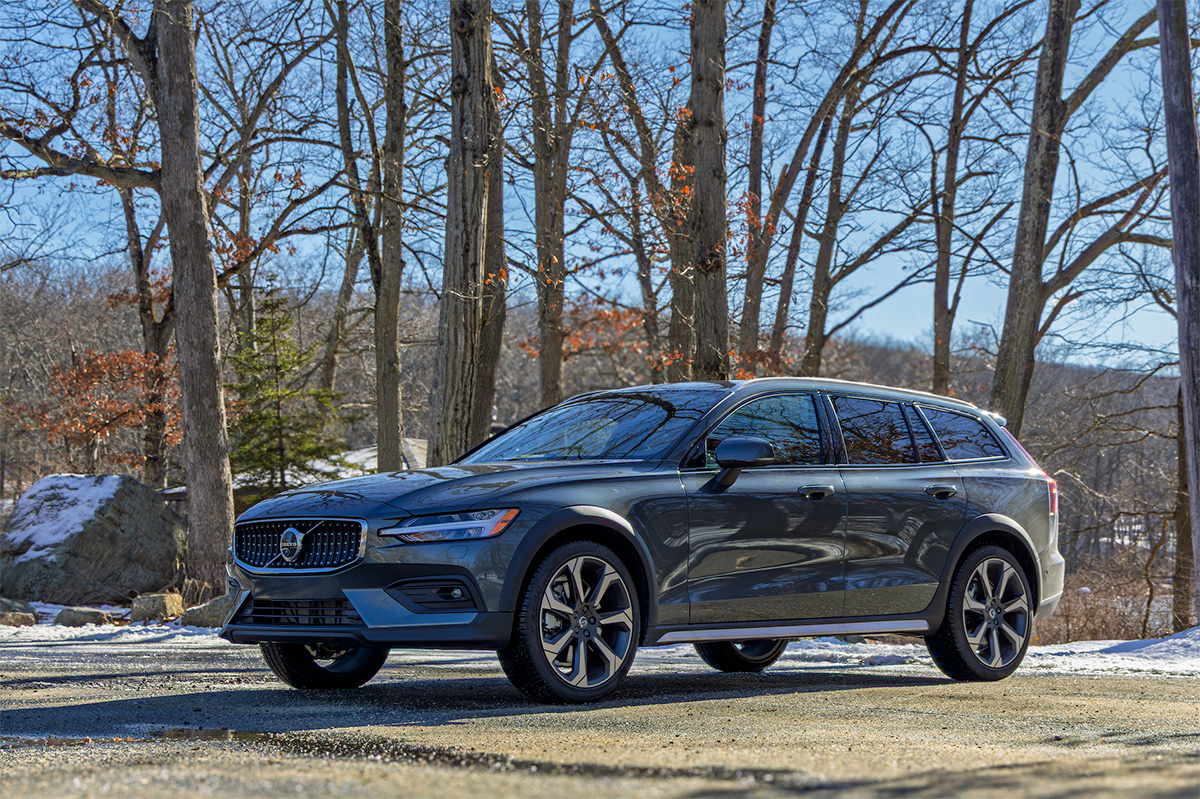
VOLVO V60 CROSS COUNTRY
$54,000
MPG: 23 city/31 highway
0 to 60 mph: 6.6 seconds
Cargo space: 51 cu. ft. (rear seats folded)
PROS: Elegant design. Composed handling. Top safety features.
CONS: So-so power. Modest rear legroom. Only two trim levels.
The 2026 Volvo V60 Cross Country doesn’t cry for attention — and that’s the point. This is the automotive equivalent of Kristen Stewart, a celebrity who’s confident in her own skin and sees no need to post about it.
Under the hood, there’s a four-cylinder turbo engine paired with a mild-hybrid system, producing 247 horsepower. You won’t outrun other drivers, but there is a sense of calm authority when accelerating. The standard all-wheel drive and 8.1 inches of ground clearance mean this wagon is ready for dirt roads, bad weather or a spontaneous weekend jaunt.
And inside? Scandinavian minimalism at its finest. Clean lines. Gorgeous materials. Google-based infotainment that mostly works — though occasionally the system could be a bit faster, at least for my taste. The ride is smooth, composed and quiet, even if acceleration feels more “measured sip” than “espresso shot.”
But here’s the twist: After more than a decade, this is the final Volvo wagon in the U.S. Its farewell tour ends in 2026. That alone gives it collector-car status.
MERCEDES-AMG E53 WAGON
$95,000
MPG: 21 city/25 highway
0 to 60 mph: 3.4 seconds
Cargo space: 64.6 cu. ft. (rear seats folded)
PROS: Supercar vibe. Hybrid versatility. Stunning interior.
CONS: Some fussy controls. Can feel heavy when cornering.
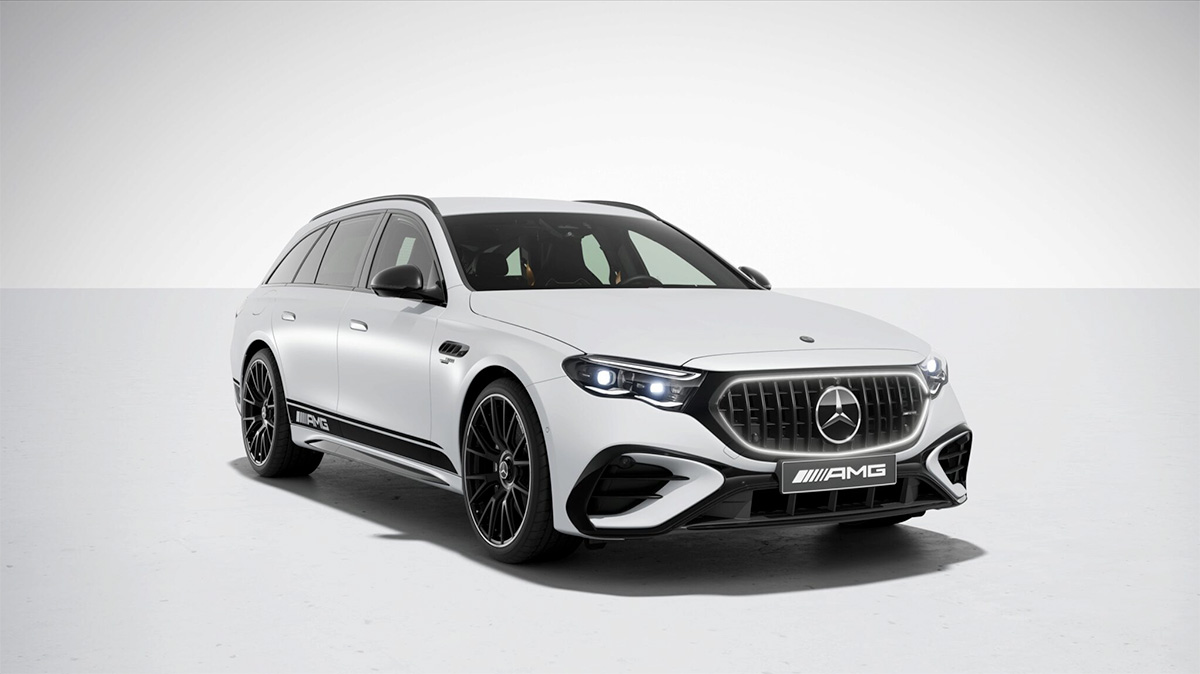
If the Volvo V60 Cross Country is subtle, the 2026 Mercedes-AMG E53 Wagon is a screamer. It’s like being at a Lil Nas X concert: flashy, high energy, and full of shock and awe.
This performance wagon — a plug-in hybrid, no less — pushes well over 500 horsepower (and in some configurations over 600 horsepower), launching from 0 to 60 mph as fast as a $300,000 Aston Martin supercar.
Yes, deep down, this is still a wagon. But you also can do a Costco run in something that could embarrass sports cars at a stoplight. That duality is delicious.
Inside, Mercedes leans all the way in. The high-tech Superscreen setup stretches across the dash. Ambient lighting glows like a curated art installation. The 4D surround-sound audio literally pulses through the seats. It’s immersive. Borderline excessive. And entirely the point.
Rear-axle steering helps mask the size of this car, but there’s no hiding the weight — it’s a big, powerful machine. Still, this hauler handles far better than physics suggests it should.
PORSCHE TAYCAN CROSS TURISMO
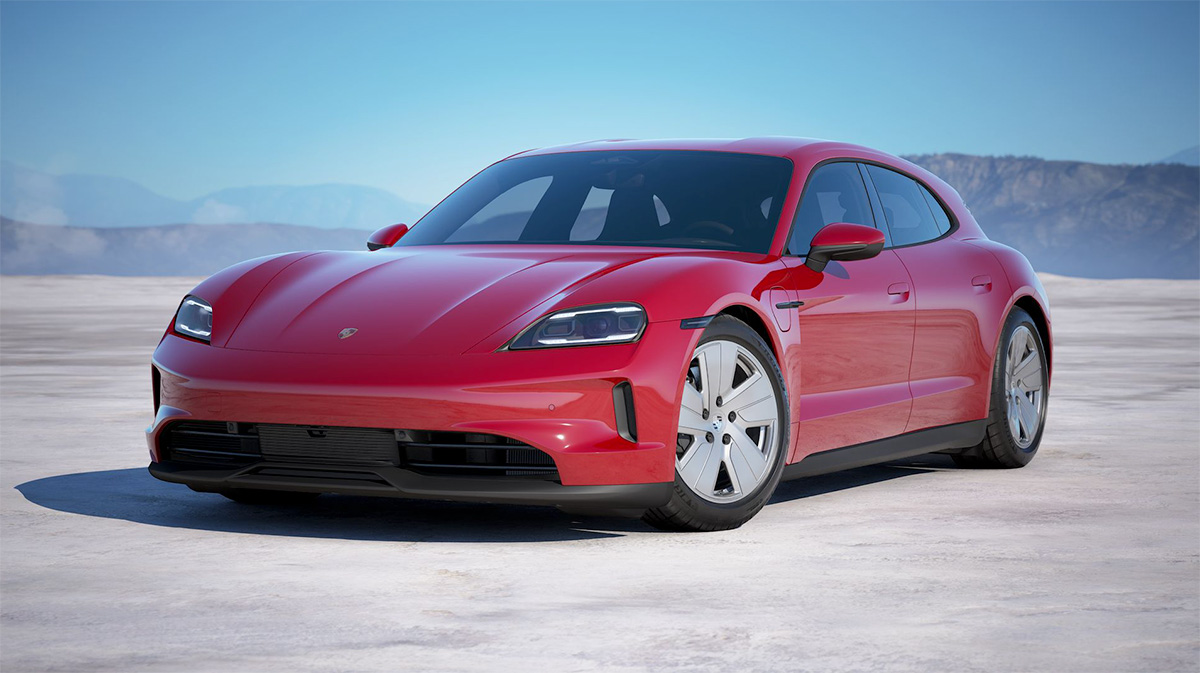
$121,000
Range: 265 miles
0 to 60 mph: 2.8 seconds
Cargo space: 41 cu. ft. (rear seats folded)
PROS: Lightning fast. Space-age design. EV smoothness.
CONS: Very pricey. Options add up quickly. Limited rear visibility.
The Porsche Taycan Cross Turismo completely rewrites the wagon formula. Fully electric. Shockingly fast. Designed like it belongs in the Louvre.
Performance is instant. Depending on trim level, you’re looking at 0-to-60 mph in less than 3 seconds. No exuberant engine noise — just that smooth, purring EV surge.
Handling? Pure Porsche. Low center of gravity thanks to the battery-pack placement. Precision that makes winding roads feel like choreography. And then — hello — there’s also a Gravel Mode for light off-road use.
Inside, the style is restrained but high-tech. Digital displays dominate, including a 10.3-inch passenger side touchscreen. Yet the layout feels intentional rather than overwhelming. Build quality is exceptional. Options, including leather-free materials and an active-leveling system for hard cornering, are endless — and expensive.
Range varies by model. But as with any EV, your lifestyle (and charging access) matters.
Overall, this is a wagon that looks and behaves like one helluva class act.
Advice
My family voted for Trump and I cut off contact
Now my father is ill and I don’t know what to do

Dear Michael,
I stopped talking to my family last year because they all voted for Trump. It’s not like they didn’t know whom they were voting for — they’d already had four years of seeing him in action.
I decided that I couldn’t remain in contact with people whom I felt wanted to take away my rights as a gay man. That is what they essentially did by voting for Trump.
They had come to my wedding in 2012, they had welcomed my husband and me into their homes for the holidays for our entire relationship, so I couldn’t believe how little they actually cared about me and my community. I was profoundly hurt.
They’ve reached out but I have been too angry at their hypocrisy to engage in more than a perfunctory way. I miss them, sure, but as I’ve watched our community be attacked, I just get so angry that I don’t want to talk. I certainly don’t want to hear them justify bigotry and hatred.
Now one of my siblings has reached out to let me know that my father’s health is rapidly declining. I’m wondering if I should rethink my decision and reach out to him, maybe even visit, before he dies.
But then I think of ICE’s attack on our country and the removal of the Pride flag from Stonewall and I don’t want to talk to people who support what is happening to vulnerable, marginalized people and the LGBTQ community.
My father was a good father to me. Even when I first came out to him, he was loving and supportive. I can’t square his behavior personally toward me with his support of this regime. The hypocrisy makes me so angry. How could he purport to love me and then vote against my freedoms?
I would love some suggestions about how to square my two opposing viewpoints.
Michael replies:
Many years ago, a great mentor taught me that the one thing you can count on in a relationship is learning to tolerate disappointment: Both being a disappointment, and being disappointed in the other person. This is true for love relationships and it’s also true for other significant relationships. All of us are different in some major ways and so we are bound at times to disappoint our loved ones in major ways, and to be disappointed by them in major ways.
That is why I’m not a fan of purity tests. To expect that someone must think like you (much less vote like you) in order for you to have a relationship with them is unrealistic, impractical, and sometimes damaging.
Of course, a person may hold some beliefs that give you reason not to want to have any connection to them. But is that the case here?
From your description, your family has always been loving and supportive of you as a gay man. That is no small thing. They seem to care about you enough to have continued to reach out, even though you have stopped talking to them.
Perhaps they had some other reasons for voting as they did, other than to roll back LGBTQ rights and to attack immigrants.
Instead of wondering how they could be so hypocritical, how about talking with them and striving to understand their choices? I don’t know what they will say, and you may hear different answers from your various family members. But at least you will get some clarity, rather than presuming that they made their voting choices from a place of malice. Then you will be in a better position to decide if you want a relationship going forward.
Another point to consider: Very few things are set in stone. Even if your family made their voting choices based on holding positions that you neither like nor respect, they may be open to shifting their views over time. One way to perhaps influence their thinking is by engaging with them, sharing your thoughts, and asking them to consider the possible consequences of their actions. If you choose to re-engage with them, two points to consider:
First, don’t expect that you will change their minds. You can advocate for what you want, but you have to let go of the results.
Second, they are more likely to consider your points if you do not approach them from a judgmental, self-righteous stance.
Many years ago, when I was newly a vegetarian, I was eager to challenge and “educate” friends who weren’t following my dietary ideas. Guess what? It didn’t work. Then I got some great advice: A great way to influence others to consider eating fewer animals was to serve them delicious vegetarian food.
The same point is true here. We can’t beat people over the head to agree with us. But if we approach them with some kindness, rather than with the certainty that we hold the moral high ground, we may help them see a bigger picture.
And sometimes, we too may see a bigger picture.
Michael Radkowsky, Psy.D. is a licensed psychologist who works with couples and individuals in D.C., Maryland, Virginia, and New York. He can be found online at michaelradkowsky.com. All identifying information has been changed for reasons of confidentiality. Have a question? Send it to [email protected].

Are you prepared to meet the changing expectations of tenants? Tenant priorities are continuously shifting. As professional property managers, my team has witnessed firsthand the evolving demands of tenants over the last few years.
Frankly, today’s D.C. residents have high standards. Many have shifted to remote work, and they are placing a growing emphasis on sustainability. And these expectations are poised to evolve even further, with factors like affordability, technology integration, and community-driven amenities taking center stage.
Understanding these changes and adapting your rental to meet the growing demands of tenants and their evolving preferences will not only help you attract high-quality residents but also settle into long-term success in a competitive market. Let’s look at key tenant trends for 2026 in Washington, D.C. by providing practical strategies that help owners and investors navigate this shifting landscape, ensuring your property remains desirable and profitable in an increasingly growing rental market.
According to Buildium’s 2025 Industry Report, tenant retention is rising, and that’s due to a number of factors. It’s expensive to move, so if residents are enjoying a peaceful and pleasant rental experience and they appreciate where they live, it’s unlikely they will spend more money to live somewhere else.
The “2026 State of the Property Management Industry Report” also noted the rise of “Resident Benefit Packages,” which has contributed to retaining good residents. When landlords and property managers offer benefits such as protection against late payment fees, online conveniences, credit monitoring, air filter drop shipments, preventative maintenance services, and even concierge amenities, they increase tenant satisfaction and retention.
By investing in resident benefits, you can increase the likelihood of keeping your tenants satisfied. They’re more likely to renew their lease agreements and contribute to the care and upkeep of their home.
Provide smart home tech
According to data gathered by Nasdaq, Washington, D.C., is one of the top 10 U.S. cities where remote work is most popular, with more than one-third of the population working from home at least part of the time. Even with the federal government calling many people back into the office over the last year, remote work continues to be normalized. Tenants are working and studying from home, and they need their home to support that lifestyle shift.
They’re looking for technology, and that factor provides you the opportunity for you to attract remote workers as residents. While smart home technology was once a fairly niche amenity, it’s now becoming the standard. It’s an expectation of most tenants in Washington, D.C., that at the very least they’ll be able to:
- Connect to fast Wi-Fi at their home
- Enjoy online rental payment platforms that are secure and convenient.
- Make routine maintenance requests through resident portals
It was also recommended considering installing keyless entry systems, offering upgraded security such as video doorbells, investing in smart thermostats, and making it as easy as possible for tenants to integrate their own digital platforms and apps into their home life, whether that’s Alexa or Siri or their own personal AI-driven digital assistant.
Community-Driven Amenities in Washington, D.C., Rentals
Are you renting out units in a multi-family building or an apartment? Washington, D.C., tenants are focused on community and social connection, and so the demand for community-driven amenities is on the rise.
In 2026, renters are looking beyond traditional features like gyms or pools, seeking spaces that allow for interaction, well-being, and a sense of belonging. Co-working spaces, communal kitchens, and rooftop gardens are now more popular in buildings that are working to attract tenants who prioritize shared experiences. A recent report from Ronco Construction reports that these are the emerging trends in multi-family housing amenities:
- Rooftop decks
- Outdoor lounges
- Community gardens
- Fitness studios
- Dog parks and pet spas
- Co-working space
Know your tenant pool
If you rent out single-family homes, you’re dealing with tenants who prefer privacy and space. In those multi-family buildings and condo communities, however, tenants are likely looking for opportunities to connect with their neighbors and make friends. We have seen tenants drawn to properties that offer event programming, such as fitness classes, happy hours, or cultural gatherings, helping create a sense of community in a neighborhood atmosphere.
As an owner, investing in these types of amenities can increase tenant satisfaction, encourage long-term leases, and set your property apart in a competitive market where residents crave more than just a place to live, but also a place to connect.
‘Green Renting’ in D.C.
Tenants want to save money on energy and utilities. Most of them would also rather do whatever they can to be more conscious of their effect on the planet. The city of Washington, D.C., actively encourages this. According to Building Innovation Hub, Washington, D.C., wants to cut greenhouse gas emissions in half by 2032. More efficient building standards and energy incentives are making that possible.
Rental property owners can meet tenant expectations around sustainable living and environmental-friendly features by providing LED lighting, energy-efficient appliances, low-flow plumbing fixtures, and modern programs for managing waste and recycling.
Every tenant in Washington, D.C., is different of course, but there are common expectations that come with residents when they’re looking for a new home. Those highlighted here are even more important to tenants in 2026.
Find out how to make your Washington, D.C., rental property more competitive on the market. Engage a professional property manager for the advice you need.
Scott Bloom is owner and senior property manager of Columbia Property Management.

Victory Fund brunch draws top LGBTQ officials, 2028 hopeful Andy Beshear

Inside the lonely world of MAGA gay men

PHOTOS: National Champagne Brunch

PHOTOS: Night of Champions

‘Big Mistakes’ an uneven – but worthy – comedic showcase

Science said stop; the Supreme Court said no

Response to a personal attack against me

Queery: Meet artist, performer John Levengood

Project GLOW celebrates LGBTQ acts