National
Gay mayoral candidates win in Houston, Seattle
Dozens of LGBT candidates win in state and local races throughout country
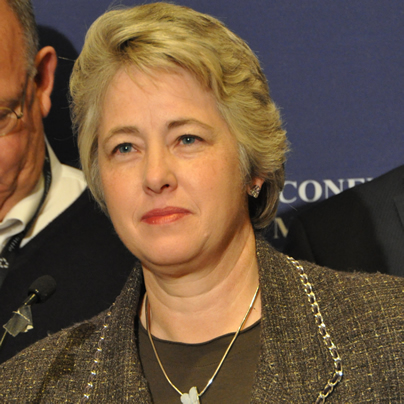
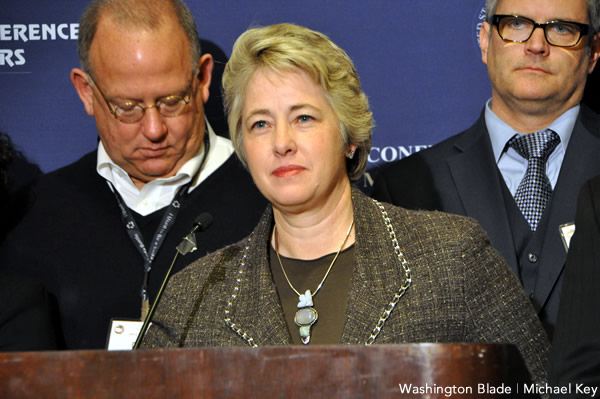
Annise Parker cruised to a re-election victory, winning more than 50 percent of the vote and thus avoiding a runoff. (Washington Blade file photo by Michael Key)
Lesbian Annise Parker won a decisive victory in her race for a third and final term as mayor of Houston, Tex., on Tuesday, receiving 57 percent of the vote in a nine-candidate race.
In Seattle, Washington State Sen. Ed Murray beat incumbent Mayor Mike McGinn by a margin of 56 percent to 43 percent to become that city’s first openly gay mayor.
Miami Beach City Commissioner and mayoral candidate Michael Gongora, who’s gay, was trailing businessman Philip Levine by a 50.48 percent to 36.43 percent margin in a four-candidate race. With votes counted in all 36 precincts, Gongora’s bid to become the city’s first openly gay mayor was hanging by a thread.
Under Miami-Dade County election rules, Gongora and Levine would compete in a runoff election next month if Levine fails to capture at least 50.5 percent of the vote. The Miami Herald reported that a recount was expected to be called to determine whether Levine, who contributed more than $1.5 million of his own money into his campaign, could squeak out a victory without a runoff.
Parker and Murray, meanwhile, were among 53 openly gay, lesbian, or bisexual candidates to win election in state, county, and municipal races on Nov. 5 and in several general election races held earlier in the year, according to the Gay and Lesbian Victory Fund, a national LGBT advocacy group that raises money for LGBT candidates.
All had been endorsed by the Victory Fund.
“We’re extremely proud of all of our candidates,” said Victory Fund President and CEO Chuck Wolfe. “Tonight’s victories across the country and at all levels of government underscore the power of people fighting for fairness, progress, and LGBT equality,” he said.
The 53 endorsed candidates to emerge as winners this year were among a record 85 openly LGBT candidates endorsed by the Victory Fund in the so-called off-year election in 2013, the Victory Fund said in a statement.
Twenty-five of the openly LGBT Victory Fund endorsed candidates lost their races. Three races on Tuesday involving openly gay candidates were too close to call as of early Wednesday, and three of Tuesday’s races involving gay or lesbian candidates were heading for runoff elections in December. Two Victory Fund endorsed candidates withdrew from their races during the campaign.
Victory Fund spokesperson Jeff Spitko said the group’s win rate as of early Wednesday was 61 percent.
Spitko said that of the 54 gay, lesbian, or bisexual candidates endorsed by the Victory Fund who appeared on the ballot on Tuesday, 35 won, 11 lost, three were in races too close to call as of Wednesday morning, and three advanced to run-off elections in December.
At least one openly gay mayoral candidate who was not endorsed by the Victory Fund – Republican Don Guardian of Atlantic City, N.J., — won his race on Tuesday, defeating incumbent Mayor Lorenzo Langford, a Democrat, by a vote of 3,066 to 2,904, according to the Atlantic City Press. Guardian becomes Atlantic City’s first openly gay mayor.*
In the D.C. area, gay attorney Patrick Wojahn won re-election to the College Park, Md., City Council on Tuesday. Wojahn finished second in a race where three candidates competed for two seats in the Council’s District 1.
In College Park’s District 2, gay federal government worker P.J. Brennan won his race unopposed for one of the two seats in that district.
Jim Ireton, the openly gay mayor of Salisbury, Md., the largest city in Maryland’s Eastern Shore region, was among the Victory Fund endorsed candidates to win election earlier in the year. Ireton won his race for a second term as Salisbury’s first out gay mayor by a two-two-one margin back in April.
In other contests that the Victory Fund placed on a list of ten important races to watch, lesbian Celia Israel of Austin, Tex., advanced to a December run-off in her bid for a seat in the Texas House of Representatives. If she wins the run-off she would become the second out member of the Texas House.
Also advancing to a run-off is Catherine LaFond, a candidate for the Charleston, S.C., Water System Commission. If she wins in the run-off, she would become South Carolina’s first and only out LGBT elected official.
In New York City, six of the seven openly gay or lesbian candidates for the City Council won their races on Tuesday. All were Democrats running in solid Democratic districts.
Although the mayoral contest in Houston centered mostly on non-LGBT issues, Parker’s main opponent, millionaire attorney Ben Hall, raised concern among LGBT activists when he expressed opposition to same-sex marriage and said he would not push for legislation to ban discrimination against LGBT people.
Some political observers thought Hall had a shot at forcing Parker into a run-off election in December if he and some of the other candidates in the race prevented Parker from receiving at least 50 percent of the vote needed to win the election outright.
But Hall received 28 percent of the vote and all of the remaining candidates received a combined vote of just 15 percent.
Parker’ supporters said city residents got to know and like Parker since she served on the City Council in an at-large seat from 1998 to 2003 and served as city controller from 2004 to 2010. She won election to her first two-year term as mayor in 2010.
“I love this city,” Parker said in her victory speech Tuesday night. “Tonight, I feel like it loves me back, so thank you for the very warm welcome…Thank you to the many people who made this victory possible.”
A list of the LGBT candidates that won and lost their races throughout the country can be seen here: http://www.gaypolitics.com/



National
Still marching: Rev. Troy Perry and the ongoing fight for liberation
MCC founder reflects on Pride’s beginning, ongoing power of radical representation

Long before tone-deaf Target swag and rainbow-scented hashtags lit up the very queer month of June, Rev. Troy Perry was helping the LGBTQ community create space where it did not yet exist, and he did so with little more than faith and perseverance. This Pride season, as communities around the world fight once again with rising attacks on LGBTQ rights and democratic freedoms, Perry returns to the movement he helped build for a conversation rooted not only in history but in survival. The unveiling of Steps to Liberation at Founders Metropolitan Community Church serves as an uplifting reminder that Pride is not just a parade but also serves as a commitment to continue to advocate for our community.
Joined by original rainbow flag co-creator Lynn Segerblom, Perry looks back on the legacy of the first Pride marches, the spiritual and political power of real representation, and why the rainbow flag still matters nearly fifty years after its creation. As Founders MCC transforms its front steps into a vibrant rainbow pathway, the symbolism feels especially timely — freedom is not a destination, it’s something communities continuously build together, step by step. In our interview, Perry speaks candidly on activism, faith, and his continued belief that even in difficult times, hope remains an unwavering act of resistance.
You’ve been at the forefront of LGBTQ history for decades. What does this moment, unveiling Steps to Liberation, mean for you? You’ve often spoken about visibility as an act of courage. Why is that still not only true but also essential today?
I will be 86 years old in another month. Not in the best of health and in a wheelchair, but still a LGBTQ activist at heart. I tell my husband, Phillip De Blieck, that I never thought I would live this long. He and I will be celebrating our 41st anniversary this year.
In the early days of our struggle for our liberation, I used to cut up and tell people there’s just nothing like a good demonstration to get my heart pumping. This is what I feel as we dedicate the Steps of Liberation! Another symbol of our freedom. We’re here, we’re queer, and we’re gonna fight to our last breath, to win all the rights that the colors on the steps represent.
When you think back to organizing the first Pride march in Los Angeles, what emotions or memories visit you?
Having the guts to follow through on our vow to hold a pride parade, no matter what! We did follow through and sued the city of Los Angeles for the right to hold that parade. We won! Thank God for the ACLU. The next thing I thought was, my God, look at all the people who have come out to be in the parade, and to watch it. I was also thankful that no one was hurt that day, and the pride I had of being a part of that demonstration.
How does this new installation reflect the spirit of those early days of activism?
The steps of liberation tell all who see it that we are still here and not afraid after 56 years have passed since our first Pride parade.
The theme of IDAHOBIT 2026 is “The Heart of Democracy.” In your view, how has the LGBTQ movement played its part in influencing our country’s democracy?
I think that most of us have played by the rules and use the cards dealt to us to make a difference in our democracy here in the USA. The LGBTQ community has changed so much in 56 years. Today, members of our community are serving in every political office in our country. We have gay and bisexual city council members, lesbian governors, and trans state legislators. We have a gay man who has run for president of the United States. The heart of democracy is a right given to all of us to work to change our country so that all of us are treated the same. Nothing more, nothing less!
You’ve often spoken about visibility as an act of courage. Why is that still not only true but also essential today?
I tell groups of young LGBTQ people to be yourself. Flaunt it! Coming out of the closet is the best thing you can do. Whether you come out fast or slow, just come out. If you are going to do it, now is the time. I am so proud of young people who are using the Internet, TikTok, and YouTube to make a difference for us. Your siblings are looking for you!
What do you hope someone feels the first time they walk up the Rainbow Steps?
God, does this feel good! Why didn’t I do this a long time ago?
How has faith intersected with activism in your life?
This is my testimony. Most of my relatives would tell you that I have been deeply spiritual all my life. I have had the opportunity to live a very interesting life. I started preaching when I was 13 years old. I was licensed to preach in the Southern Baptist church at age 15. I married heterosexually at age 18. I started pastoring my first church at age 19. I am the father of two children. I am a Vietnam-era veteran. I was divorced at age 26 and founded Metropolitan Community Church at age 28. I have been slapped in the face, spat on, had some people try to murder me, and cursed by some throughout my life, all because I dare call myself a clergyman as a gay man. Has it been worth it? Absolutely. I would not change my life for anything. I try to always keep my faith intact.
In moments when progress feels uncertain or under threat, what keeps your hopes up?
I have my husband, Phillip, and friends that I can talk to. I also have a favorite scripture that keeps me going: though God slay me, I will trust in God. Job 13:15
How do you see younger folks carrying forward the legacy you helped build?
Don’t give up the fight. Organize, organize, organize!
The launch of Flag50 looks ahead to the 50th anniversary of the rainbow flag. What do you think folks should be reflecting on as that milestone approaches?
I love the Pride flag! It gives us hope that there can be a tomorrow. I love the colors and what they represent. Hopefully, we will be able to teach this in our schools one day, along with the American flag and how each of those colors is meant to give us dignity, as well as hope.
How do art and public installations like this one shape cultural change in ways that perhaps policy can’t?
Laws are important because they protect us, but art touches the heart first. A public installation like the Steps of Liberation tells our story without anyone having to say a word. A young person can walk up those steps and realize they are not alone. Families can see our colors and remember that LGBTQ people are part of every community in America. Art creates visibility, and visibility changes hearts and minds. Sometimes culture changes before politics catches up. I believe symbols matter. The rainbow flag matters. These steps matter. They remind us that liberation is not just something you read about in history books. It is something we continue to live every day.
What threats facing our LGBTQ community today concern you more than others?
I worry when people try to erase us, especially our transgender brothers and sisters and LGBTQ young people. I have lived long enough to know that fear and hatred can grow when people stop seeing each other as human beings. We cannot go backward. I also worry when people become discouraged and think their voice no longer matters. That is exactly when we must organize, vote, speak out, and stand together. We have survived attacks before, and we will survive them again, but only if we refuse to be silent. Silence has never protected our community. Courage and love have.
What does it mean to you to take that next step, and how would you advise our readers to take it?
Every generation has its own next step to take. For some, it means coming out. For others, it means speaking up when someone is being mistreated. It may mean marching, voting, creating art, serving your community, or simply learning to love yourself exactly as God made you. The important thing is not to stand still. Keep moving forward. Keep believing that change is possible. I have spent my whole life taking one step after another with people who dreamed of a better world. My advice is simple: do not wait for someone else to do the work. Take the next step yourself, and bring somebody with you.
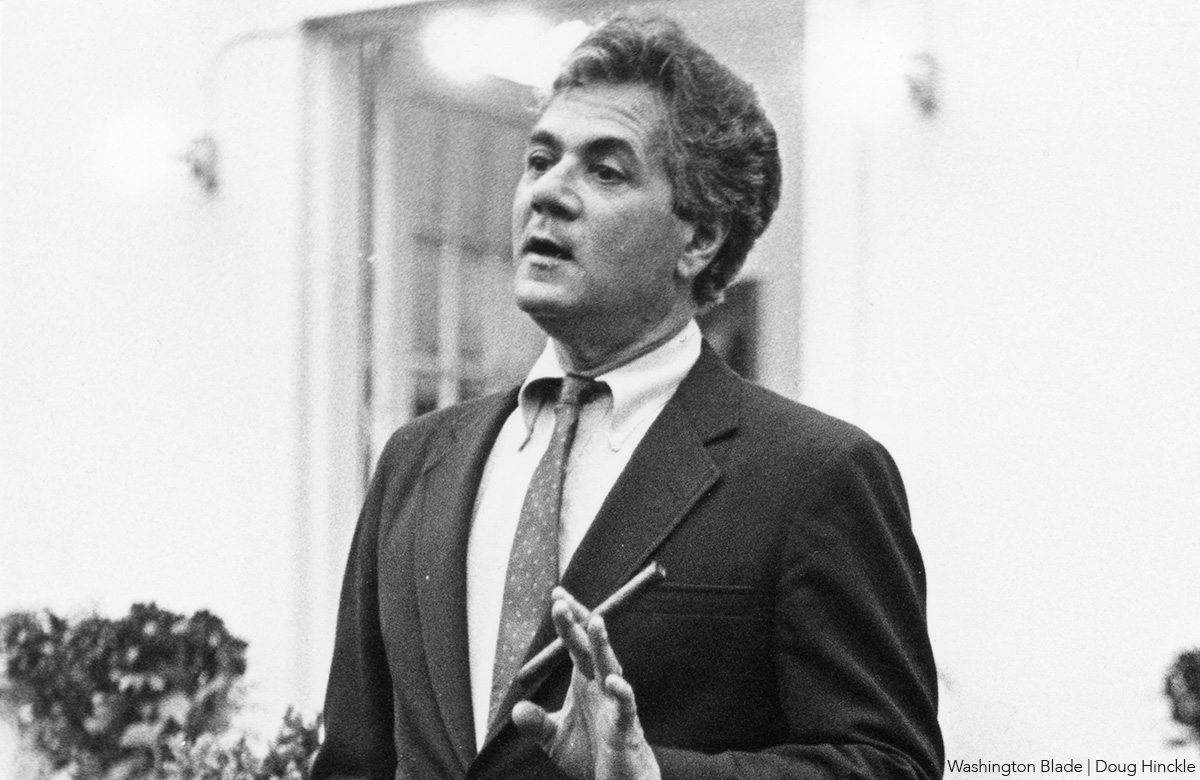
Former U.S. Rep. Barney Frank (D-Mass.), who served in the U.S. House of Representatives from 1981 until his retirement in 2013 and who became the first member of Congress to voluntarily come out as gay in 1987, died on May 19, at the age of 86, at his home in Ogunquit, Maine.
His passing came less than a month after he announced he had entered home hospice care due to terminal congestive heart failure under the care of his husband, Jim Ready, and shortly after finishing writing a new book entitled, “The Hard Path to Unity: Why We Must Reform the Left to Rescue Democracy.”
Despite his frail health, during the last few weeks of his life, Frank agreed to do interviews with multiple news media outlets, including the Washington Blade, where he reflected on his sometimes-controversial positions on issues such as transgender rights.
He told the Blade he had been living with his husband in their shared home in Maine since the time of his retirement in 2013 and called his husband a “saint” for caring for him during his illness. In 2012, at the age of 72, Frank married Ready, becoming the first sitting member of Congress to marry someone of the same sex.

News of his passing prompted an outpouring of praise and reflection on his life as a groundbreaking out gay lawmaker by current and former members of Congress and LGBTQ rights leaders.
Massachusetts Gov. Maura Healey announced on May 20 that she had ordered the U.S. flag and the state flag to be lowered to half-staff at all state buildings in honor of Frank’s life and legacy and the recognition of his passing.
“Barney Frank was nothing short of a trailblazer,” said Kelley Robinson, president of the Human Rights Campaign, the nation’s largest LGBTQ advocacy organization, in a statement. “At a time when being openly gay in public service could cost you everything, he chose visibility,” Robinson said.
Robinson and other LGBTQ advocates also pointed to Frank’s role in speaking out in Congress for stronger efforts to address the AIDS epidemic during the early years of HIV/AIDS, his push for the repeal of the “Don’t Ask, Don’t Tell” policy to initially allow gays to serve openly in the military, the enactment of marriage equality for same-sex couples, and broader anti-discrimination protections.
Frank has also been credited with helping to pass the federal Matthew Shepard and James Byrd Jr. Hate Crimes Protection Act of 2009.
In addition to his longstanding support for LGBTQ rights, political observers have said one of his most important achievements in Congress was his role, as chair of the House Financial Services Committee, in becoming co-author of what became known as the Dodd-Frank Wall Street Reform and Consumer Protection Act of 2010.
Coming at the time of a nationwide banking crisis, the New York Times has called the Frank bill that he and then-U.S. Sen. Christopher Dodd (D-Conn.) wrote “the most significant overhaul of the nation’s financial regulations since the Great Depression.”
Frank was born and raised in Bayonne, N.J., and graduated from Bayonne High School.
He graduated from Harvard College in Massachusetts in 1962 and worked in various places, including as an assistant to then-Boston Mayor Kevin White, before winning election to the Massachusetts House of Representatives in 1972, where he served for eight years representing a Boston area district. During that time he attended and graduated from Harvard Law School and became a member of the Massachusetts bar in 1979 after passing the bar exam.
In 1980, Frank became a candidate for the U.S. House in the Massachusetts 4th Congressional District, which he won with 52 percent of the vote in a four-candidate race, taking office in January 1981. He won re-election decisively over the next 30 years until announcing in 2012 his plans to retire and he would not run for re-election that year.
The New York Times is among the publications that have reported this week since Frank’s passing that his record as an esteemed and admired lawmaker helped him survive a sex scandal that surfaced in 1990 linking him to male prostitute Stephen Gobie.
Media reports at the time said Frank had patronized Gobie as one of his customers and for a time had Gobie as a roommate in Frank’s D.C. residence in the Capitol Hill neighborhood. In its article this week, the New York Times says Gobie “claimed that in the mid-1980s he had run a prostitution ring out of Mr. Frank’s home.”
Like other media accounts, the Times report adds that following an investigation, “The House Ethics Committee did not substantiate that claim, but it did find that Mr. Frank had fixed 33 parking tickets for Mr. Gobie and sought to shorten his probation on drug and sex-offense convictions by writing a misleading memorandum on congressional stationery to an official involved in supervising Mr. Gobie’s probation.”
The full House voted 408-18 to reprimand Frank for misuse of his office, but it rejected calls by some to censure or expel him.
“I should have known better,” Frank said in a speech on the House floor at that time, according to the New York Times. “There was in my life a central element of dishonesty,” the Times quoted him as saying. “Three years ago, I decided concealment wouldn’t work. I wish I decided that long ago,” he said referring to his 1987 decision to come out publicly as gay.
Despite all of this, Frank was re-elected that year with 66 percent of the vote, a development that his friends and supporters attribute to his reputation as a beloved and highly regarded public figure.
PFLAG, the national advocacy group for parents and friends of LGBTQ people, is among the groups that issued statements this week reflecting on Frank’s positive impact on the LGBTQ community.
“Frank was not only the first openly gay member of Congress, but he was also co-author of the Dodd-Frank Wall Street Reform and Consumer Protection Act of 2010 as chair of the House Financial Services Committee, which helped enshrine housing access for LGBTQ+ people,” PFLAG says in a statement.
“He was also a leading advocate on laws to combat HIV/AIDS,” the statement says, adding that PFLAG’s national office honored Frank with its Champion of Justice Award in 2018.
“Barney was candid, outspoken, quick-witted and downright funny, and he always had his eye on making progress,” said U.S. Sen. Tammy Baldwin (D-Wis.), the first openly lesbian woman elected to the U.S. Senate, in a statement. “He was willing to take on anyone who was in his way, regardless of who they were — I should know, I was one of the many who on occasion got an earful from him,” Baldwin said.
‘But I, and anyone else who spent time with him, were lucky to watch him in action and learn from him,” her statement continues. “Barney was a masterful legislator, savvy and strategic, and always thinking of the long game,” she said. “Our country is a better, more just, more equal place because of him, and he will be sorely missed.”
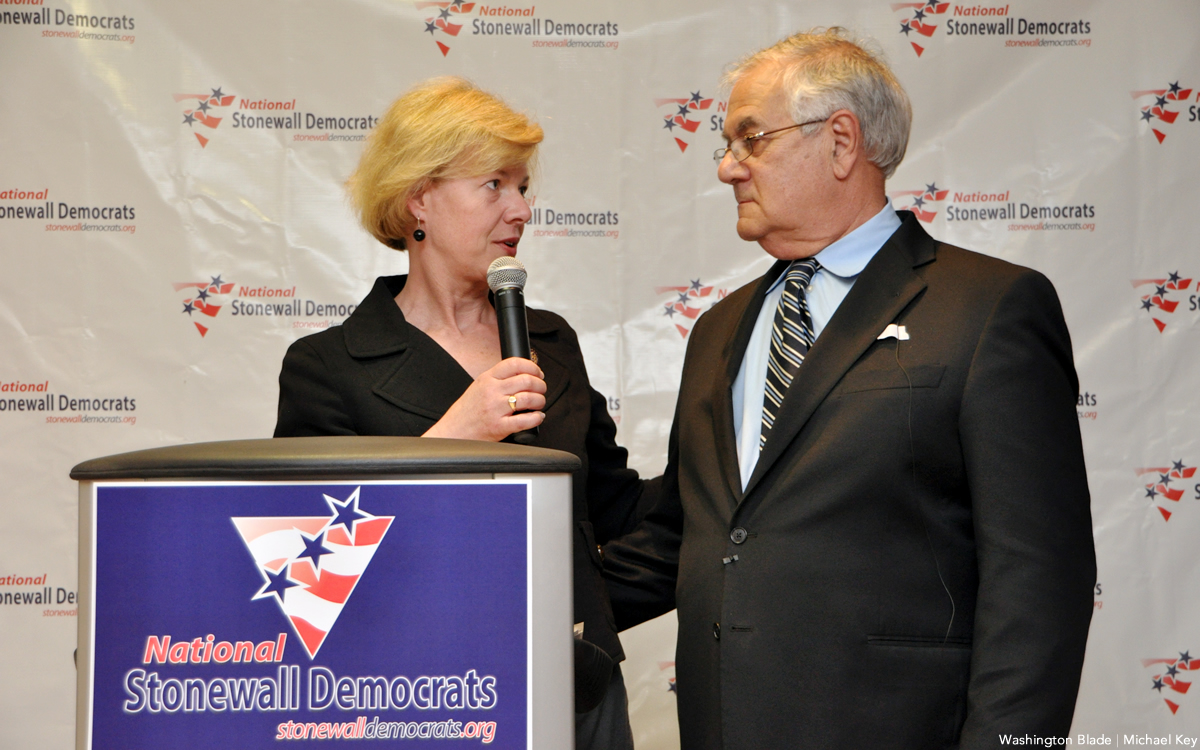
U.S. Rep. Mark Takano (D-Calif.), who serves as chair of the Congressional Equality Caucus, which represents LGBTQ members of Congress and their congressional allies, issued his own statement on behalf of the caucus pointing out that Frank was one of the two founding members of the caucus.
“I was honored that he came to campaign for me during my run for Congress just a few years after he co-founded the Congressional Equality Caucus, which I now have the distinct honor of leading,” Takano said.
He was referring to Frank and then-Congresswoman Tammy Baldwin’s action in 2008 to found the House LGBT Equality Caucus as the only two openly gay members of Congress, which evolved into the Congressional Equality Caucus.
“Barney proved that what mattered most was the work you did for others,” Takano says in his statement. “I truly believe that we are closer to a more equal world because of Barney Frank,” he said, adding, “Congressman Frank’s legacy touches every part of our fight for LGBTQI+ equality: from his work advocating for HIV and AIDS research to helping pass major pro-equality legislation like the Don’t Ask, Don’t Tell Repeal Act and the Hate Crimes Prevention Act into law.”
In his May 5 interview with the Blade, Frank responded to criticism he received during his tenure in Congress from some LGBTQ rights advocates, especially trans activists, who claimed he had not provided sufficient support for trans rights legislation.
He said he fully supported ongoing efforts to advance trans rights but said those efforts could be jeopardized by pushing issues for which many voters have yet to accept, such as “male to female transgender people playing in women’s sports.”
Among those praising Frank’s life and legacy at the time of his passing is longtime trans activist Diego Sanchez, who became the first openly trans congressional staffer when Frank hired Sanchez as his office’s Senior Policy Advisor. Sanchez remained on Frank’s staff until Frank’s retirement in 2013.
“Barney was a revered statesman for our country at the local, state, and federal levels and a treasured friend to me,” Sanchez told the Blade in a statement. “His belief that prejudice comes from ignorance and is only stricken by visibility explains how he came out openly and how he brought me to his staff, with intent and without apology,” Sanchez said.
He added, “I miss him terribly and am glad I got to spend a week with his husband Jim and him this month. Barney made sure that members of Congress could not say they had never met a trans person. I was honored to be a groomsman in their wedding and will miss Barney’s brilliance, counsel, friendship, and wit.”
Sanchez said celebration of life events are expected to take place in Boston and D.C. and details of those events will be announced soon.
Wyoming
U.S. attorney nominee confirmed despite anti-LGBTQ history, no trial experience
Nine felony grand jury indictments tied to Darin Smith dismissed last week
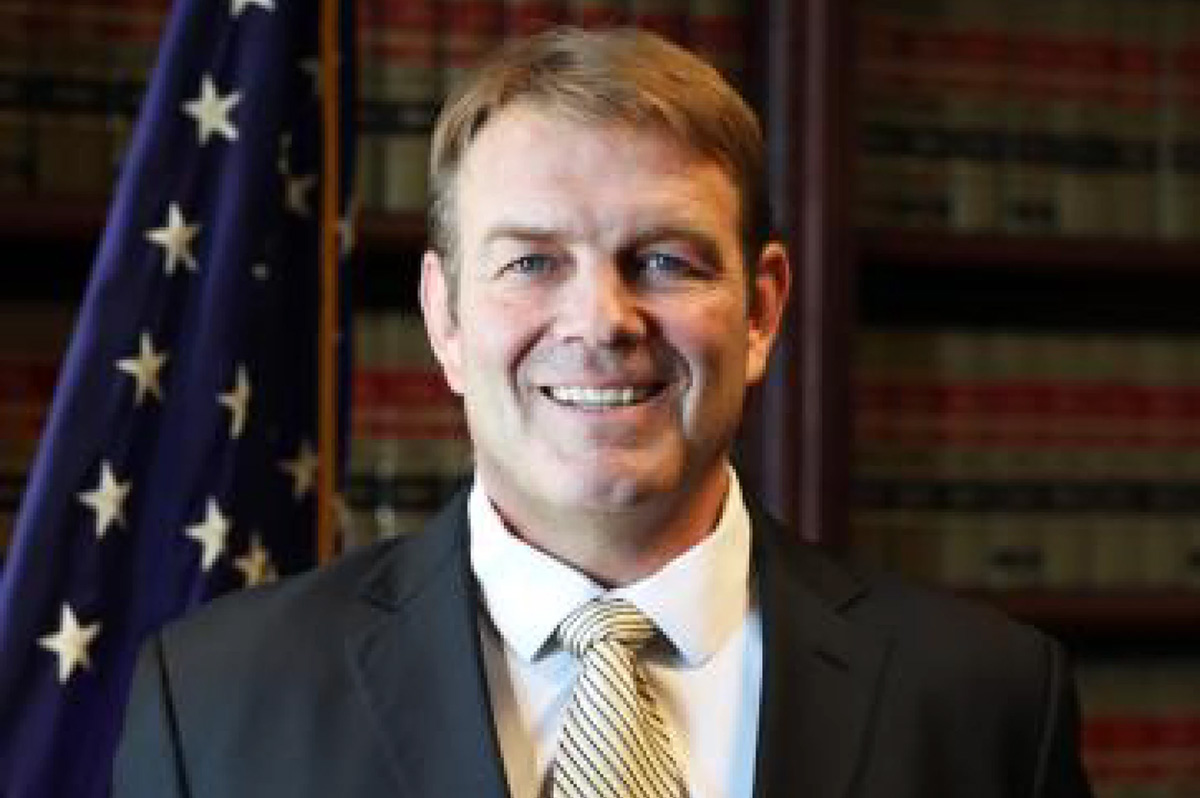
Republicans confirmed Darin Smith as U.S. Attorney for the District of Wyoming on Monday, regardless of his history as interim U.S. Attorney for Wyoming and a state senator.
While serving as interim U.S. Attorney for Wyoming — after being appointed by President Donald Trump last July despite never trying a case outside of his time as a law student intern — former state Sen. Darin Smith likely prejudiced jurors during grand jury proceedings.
Nine felony grand jury indictments tied to Smith’s tenure were dismissed last week.
Judges dismissed felony indictments against Cheyenne Swett, Richard Allen, Michael Scott Hopper, Brian Joseph Johnson, Dennison Jay Antelope, Matthew Christopher Jacoby, Matthew Miller Jr., Wolf Elkins Duran, and Jose Benito Ocon. The now-dismissed charges included felony firearm possession, drug distribution, and possession of child pornography, among other allegations.
Smith allegedly told the grand jury that the defendants were “bad guys,” described them as “murderers,” and said deliberations “won’t take long.”
Even the U.S. Attorney’s Office for the District of Wyoming acknowledged that Smith’s comments were “ill-advised.”
Smith has a history of aligning with Trump over the Constitution and supporting anti-LGBTQ legislation.
In 2025, Smith co-sponsored House Bill 0194, titled “Obscenity amendments,” which, among other provisions, would have criminalized drag shows. The bill also would have repealed exemptions for public and school librarians from the crime of “promoting obscenity” to minors. The wording of the bill was so vague that Republican state Rep. Lee Filer said, “We will end up having to arrest somebody for allowing a child to read the Holy Bible.”
Smith also co-sponsored SF0062, a bill requiring public school students to use restrooms, sex-designated changing facilities, and sleeping quarters that align with their sex assigned at birth. In March 2025, the Wyoming governor signed the bill into law, along with its House companion.
He also attended the Jan. 6 Capitol riot alongside thousands of other Trump supporters.
“Smith was on the Capitol grounds on Jan. 6 … and made the reprehensible claim … that the hundreds of Capitol Police officers who risked their lives that day were guilty of ‘massive incompetence.’ Smith blames the police for what happened on Jan. 6. Without evidence, he claimed that rioters who breached the Capitol were victims of entrapment,” U.S. Sen. Dick Durbin (D-Ill.) said. “Moreover, Smith is not remotely qualified to be a U.S. Attorney. He’s going to be in the package — take it or leave it. Prior to becoming the interim U.S. Attorney, he had no courtroom or litigation experience whatsoever. None. And Smith’s lack of experience has had real-world consequences.”
Prior to his work in the Wyoming state legislature, Smith worked as Director of Planned Giving for the Family Research Council, an organization that describes homosexuality as “harmful” to society with “negative physical and psychological health effects.”
The organization also believes that sexual orientation “should [not] be included as a protected category in nondiscrimination laws or policies, as it is not comparable to inborn, immutable characteristics such as race or sex.”
During questioning before the U.S. Senate, he denied that his work with the organization shows he has loss of impartiality when it comes to matters of LGBTQ rights.
Also questioning, Smith was asked about a now-deleted Facebook post in which he appeared to express support for Kim Davis, the Kentucky county clerk who was found to be unconstitutional in her refusal to issue same-sex marriage licenses, despite Obergefell v. Hodges.
“Perhaps Hillary and Obama can share the cell with Kim Davis for refusing to uphold the Defense of Marriage Act,” the post said.
When asked why he posted it, Smith told Durbin: “I do not recall.”
Josh Sorbe, spokesperson for the Senate Judiciary Committee Democrats and Durbin, said:
“Anti-LGBTQ+ extremist Darin Smith has no business serving as a top law enforcement officer in any state — let alone a state with as much history of queer importance as Wyoming. He’s an unqualified insurrectionist with no experience litigating criminal or federal matters, and his bigotry puts into serious question his commitment to upholding the law for all Americans.”
Human Rights Campaign Vice President of Government Affairs David Stacy also condemned Smith’s confirmation to the U.S. Attorney’s office.
“The justice system in America is supposed to be about ensuring the law is applied fairly and equally. But Darin Smith has spent his career obsessed with making life worse for LGBTQ+ people, opposing marriage equality, cosponsoring state legislation targeting transgender youth, and smearing LGBTQ+ people in public statements,” Stacy said. “Just over two decades after Matthew Shepard was brutally murdered in that same state, Wyoming deserves better than tired anti-LGBTQ+ hate at the helm of federal law enforcement. The Senate should reject Darin Smith and demand a nominee who will put the people — and justice — first.”

Still marching: Rev. Troy Perry and the ongoing fight for liberation

Introducing Next-Generation Assisted Living & Memory Support.

Cedric Neal on his juicy narrator role in ‘Pippin’

Dual endorsement for Independent Council-at-large: Patterson or Crawford