News
Obituary: Daniel Thomas Kobermann, 54
He and his partner of 32 years lived in Washington, D.C. for 28 years
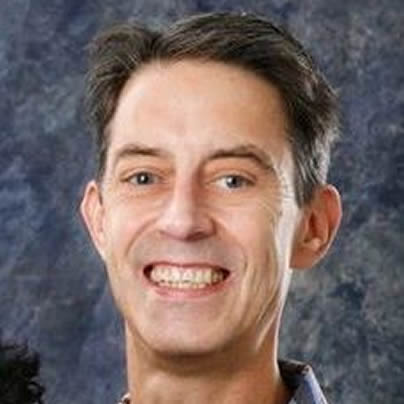
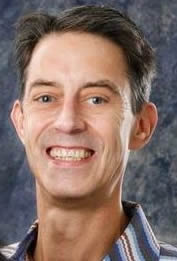
Daniel Thomas Kobermann
Daniel Thomas Kobermann, 54, died Dec. 19, 2013 at his home in Fort Lauderdale, Fla., of congestive heart failure, according to his partner.
Kobermann and his partner of 32 years, Steven Lee, lived in Washington, D.C., for 28 years before moving to Florida.
Born in St. Louis, Mo., Kobermann grew up in Columbus, Ohio, and was a 1982 graduate of the University of Dayton.
He joined his partner in Washington in 1987 and worked for numerous companies, specializing in marketing sales. Before moving to Florida, he had been employed by Agence France-Presse and United Press International.
Previously he worked at Congressional Quarterly, Cambridge Scientific Abstracts and Disclosure Inc. During his business career he was posted to and resided in Amsterdam, Holland and Singapore.
He was preceded in death by his mother and brother. He is survived by his father, three sisters, two brothers, several nieces and nephews and their pet, Tucker.
Messages of condolence may be shared with the family at newcomercolumbus.com.



Cuba
When impunity meets history
Raúl Castro indicted for alleged role in shooting down Brothers to the Rescue aircraft
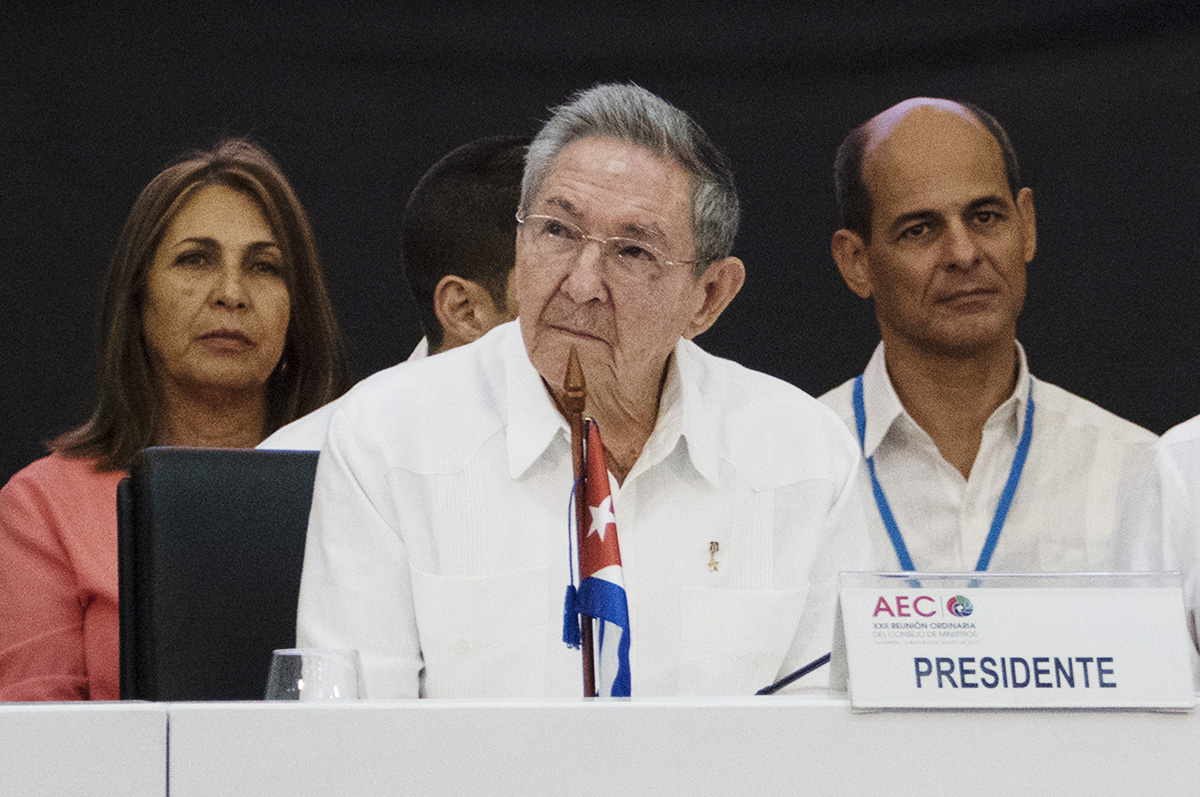
The scene would have seemed impossible only a few years ago.
The name of Raúl Castro Ruz appearing formally inside a United States federal criminal indictment. Cuba’s former general of the Army, for decades one of the most powerful figures inside the Havana regime, accused in connection with the shootdown of the Brothers to the Rescue aircraft and the deaths of American citizens in 1996. And all of it unfolding in Miami, inside the Freedom Tower, on May 20.
That detail matters.
Because this indictment arrives at one of the most fragile and politically tense moments in recent relations between Washington and Havana. It comes as Cuba faces deep economic collapse, growing political exhaustion, mass migration, blackouts, and increasing public frustration both inside and outside the island. It also arrives on a date carrying enormous symbolic weight for Cuban exiles — the anniversary of the founding of the Cuban Republic in 1902.
But the true significance of this moment goes far beyond symbolism.
What happened in Miami represents something much larger: the collapse of the idea that certain men would never face accountability.
For decades, Raúl Castro embodied the permanence of revolutionary power in Cuba. Defense minister. Military strategist. The man who oversaw the armed forces for generations. One of the central architects of the Cuban political and security apparatus built alongside Fidel Castro. A figure many believed would leave this world untouched by any court, shielded forever by power, time, and history itself.
Today the image is very different.
Today his name appears inside the language of American criminal prosecution.
And that changes the historical dimension of this case completely.
Because this is no longer simply a political accusation voiced by the Cuban exile community. It is now a formal federal criminal indictment publicly announced by the United States government against one of the highest-ranking figures in the history of the Cuban regime.
The setting itself carried enormous meaning.
The Freedom Tower is not just another building in Miami. For generations of Cuban exiles it represents memory, displacement, survival, and the beginning of a new life after fleeing Cuba. Thousands of Cubans passed through those doors after escaping the revolution. Families arrived carrying fear, uncertainty, grief, and hope all at once. Announcing these charges from that location transformed the moment into something far deeper than a legal proceeding.
And the people witnessing it were not only members of the exile community.
Among those present were relatives of the young men killed nearly 30 years ago. Families who spent decades waiting to hear words they feared might never come. Families who carried the weight of loss while believing the men responsible would never be formally accused by any court.
That emotional weight still surrounds this case.
On Feb. 24, 1996, two civilian aircraft operated by Brothers to the Rescue were shot down over the Florida Straits by Cuban military jets. Armando Alejandre Jr., Carlos Costa, Mario de la Peña, and Pablo Morales were killed. The flights were connected to humanitarian rescue efforts searching for Cubans attempting to flee the island during the migration crisis of the 1990s.
Those aircraft were not military bombers.
They were not attacking Cuba.
They were civilian planes associated with rescue operations involving Cubans risking their lives at sea.
That reality has always shaped how this tragedy lives inside the memory of the Cuban exile community.
For many, this was never viewed simply as a geopolitical conflict between hostile governments. It was seen as the use of military force against civilians connected to humanitarian missions during one of the darkest chapters in modern Cuban migration history.
But for many Cubans, the indictment reaches far beyond the Brothers to the Rescue case itself.
It touches decades of unresolved pain tied to one of the central figures behind Cuba’s military and political system.
It reaches mothers who buried sons lost in compulsory military service or in distant wars they never chose to fight. Families who spent years believing promises that were never fulfilled. Political prisoners who disappeared into silence. Relatives who watched loved ones die trying to flee the island.
And for many LGBTQ Cubans, the moment carries another layer of historical weight.
Long before official campaigns promoting tolerance and inclusion emerged from within the Cuban government, there were years of persecution, fear, forced silence, and humiliation carried out under the revolutionary system itself.
The UMAP labor camps remain one of the deepest scars in modern Cuban history. Gay men, pastors, religious believers, artists, and others considered incompatible with the revolutionary ideal were sent away under the language of “re-education” and forced labor.
In recent decades, public gestures toward LGBTQ inclusion promoted by figures close to the Cuban leadership attempted to project an image of progress and openness to the international community. But for many survivors, and for many Cuban LGBTQ people, those gestures never erased the trauma or the historical responsibility tied to the same structures of power that once persecuted them.
For many, acknowledgment without accountability still feels painfully incomplete.
That is why this indictment resonates so deeply today.
Because it arrives while Cuba once again faces profound national crisis. The island is losing entire generations through migration. Public frustration continues to grow. Economic collapse shapes daily life. And the revolutionary narrative that once projected permanence and control appears increasingly eroded by reality itself.
Against that backdrop, the image emerging from Miami becomes even more striking.
A man once viewed as untouchable by history now formally accused by the United States government and legally transformed into a fugitive wanted by American justice.
History moves slowly until suddenly it does not.
And for many Cubans, both on the island and throughout the diaspora, what happened today inside the Freedom Tower felt like witnessing something they once believed they would never live long enough to see.
As a Cuban, as an immigrant, and as someone who has lived close to that pain, one thought keeps returning tonight:
Justice takes time.
But when it finally arrives, it arrives with history behind it.
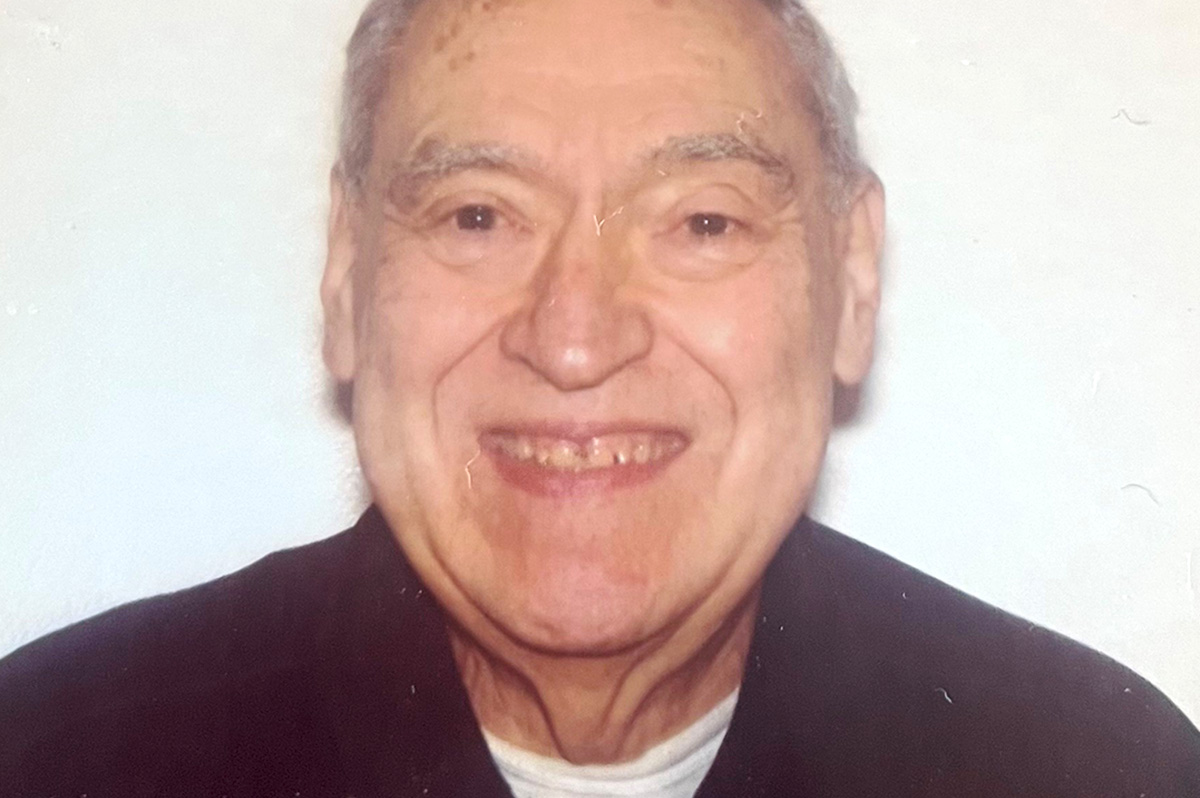
The Comings & Goings column is about sharing the professional successes of our community. We want to recognize those landing new jobs, new clients for their business, joining boards of organizations and other achievements. Please share your successes with us at [email protected].
Congratulations to Peter Schott on being honored by Delaware Gov. Matt Meyer on National Honor our LGBTQ Elders Day.
Schott is a prominent LGBTQ advocate and seasoned political strategist who has spent decades advancing civil rights at the national and state levels. Following a distinguished 25-year career as a staff assistant in the U.S. House of Representatives, Schott leveraged his extensive legislative expertise to help organize the National Stonewall Democrats, serving as an influential member of its national board.
After moving to Delaware in 2002, he became a foundational figure in the state’s LGBTQ political landscape, co-founding the Delaware Stonewall PAC, (now Stonewall Delaware) to champion the election of pro-equality candidates. His strategic lobbying and community organizing were instrumental in the successful passage of Delaware’s landmark non-discrimination, civil union, and marriage equality laws. A former member of the State Human Relations Commission, he remains a vital voice for the LGBTQ community in the Mid-Atlantic, continuing to document and drive social progress through his activism and writing. Schott currently serves as vice chair of the Delaware Democratic Pride Caucus, and a board member of Speak Out Against Hate (SOAH). He was a delegate to two Democratic National Conventions.
He earned a bachelor’s degree in Political Science, New York University; and a master’s of Public Administration degree from American University.
Congress
Eight Democrats break with party as House advances ‘Don’t Say Trans’ bill
Measure not expected to pass in Senate
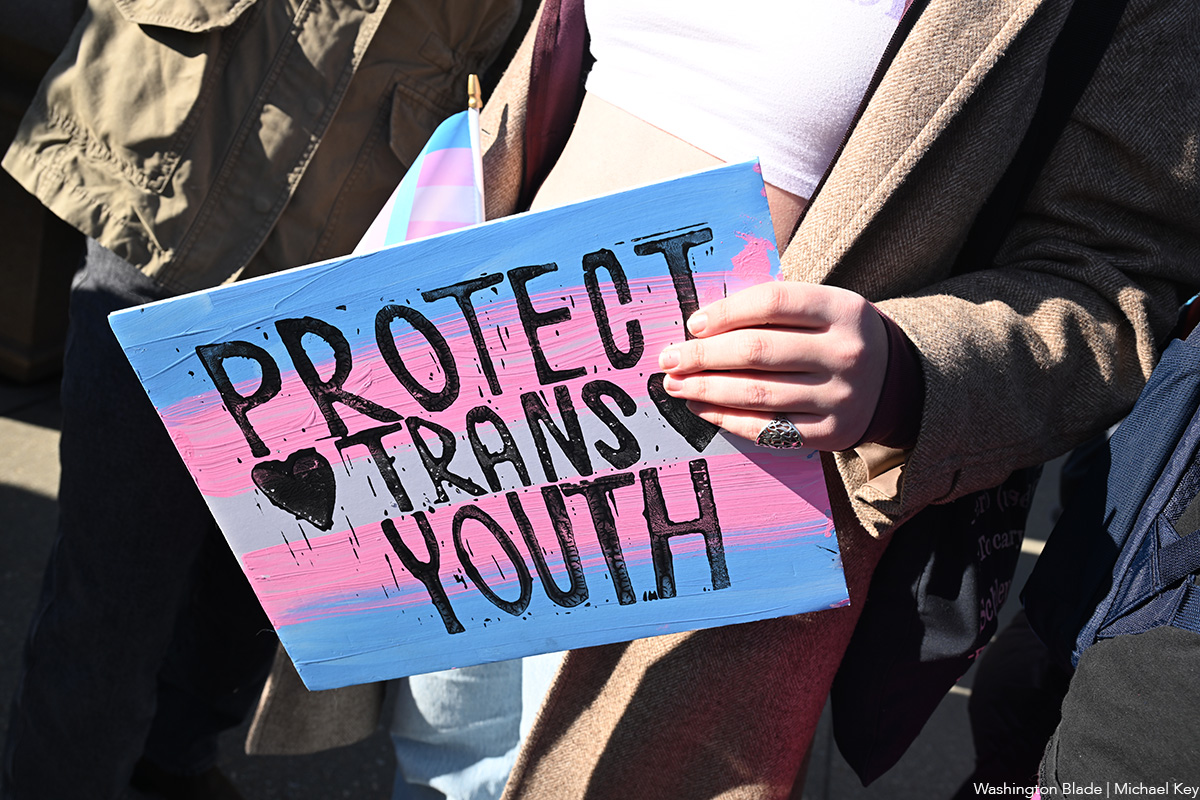
The U.S. House of Representatives passed a federal “Don’t Say Trans” bill on Wednesday, attempting to force teachers to out transgender students nationwide.
The bill, House Resolution 2616, also called the “Stopping Indoctrination and Protecting Kids Act,” would require schools to get parental consent before allowing students to use their preferred, rather than originally assigned, gender markers, pronouns, or preferred name on any school form, and to use any sex-based accommodations, including locker rooms or bathrooms.
The bill amends Section 8526 of the Elementary and Secondary Education Act of 1965, legislation that allows for federal aid to help elementary and secondary education programs — particularly those under its lowest-income Title I-A program — to stop allocating funds to any education that teaches concepts “related to gender ideology.”
This is directly related to Executive Order 14168, also known as the “Defending Women From Gender Ideology Extremism and Restoring Biological Truth to the Federal Government” order, one of President Donald Trump’s first executive orders of his second term. It requires the federal government to recognize only sex assigned at birth and dismiss gender identity rather than sex.
The bill was sponsored by U.S. Rep. Tim Walberg (R-Mich.) and passed by a 217-198 margin. The vote fell mostly along party lines; however, eight Democrats voted for its passage. They were U.S. Reps. Henry Cuellar (D-Texas), Donald Davis (D-N.C.), Cleo Fields (D-La.), Laura Gillen (D-N.Y.), Vicente Gonzalez (D-Texas), Marcy Kaptur (D-Ohio), Marie Gluesenkamp Perez (D-Wash.), and Eugene Vindman (D-Va.).
Proponents of the bill argue a child’s gender identity should be directed by parents at home rather than in public schools.
Critics say this is dangerous and will force students to be outed by their teachers to parents — some of whom may not be supportive of their gender identity — which could lead to violence or possibly conversion therapy.
California Congressman Mark Takano, chair of the Congressional Equality Caucus, spoke on the House floor while the bill was being debated.
“Republicans claim to be the party of small government, but they have no problem bringing the full force of the federal government down against children. The GOP thinks they can legislate transgender people out of existence with this inhumane Don’t Say Trans bill, but all they’re doing is making life worse for a small minority of already-vulnerable children,” Takano said. “I spent 24 years as an educator where I worked with hundreds of high school students and their parents. Most children go to their parents when they need help or are struggling — including transgender children — but not all parents are accepting. The forced outing provision of this bill puts teachers in an impossible situation by requiring them to out trans kids to their parents in certain situations — even if the teacher knows the student will likely face physical abuse. Students like these are who Republicans want to put in immediate physical danger with this bill.”
The Washington Blade talked to Tyler Heck, founder and executive director of the trans advocacy organization and Christopher Street Project PAC, following the bill’s passage.
“Most queer kids go to their families when they are figuring out who they are, and then not all queer kids have that option,” Heck told the Blade. “If this became law, it would harm those already vulnerable kids who rely on school as a safe place and might not have a safe place at home.”
They explained this is not about protecting parents’ rights to know what is going on with their children, but rather the weaponization of trans identity that has become a mainstream Republican ideal pushed by the Trump-Vance administration.
“Young people deserve the space to figure out who they are without the federal government interfering in their lives,” they said. “It is beyond the pale, or rather it should be beyond the pale, and has become a norm for Republicans in Congress to villainize kids, because I mean, this bill targets kids, it’s in the name of the bill, and it’s in the implications.”
Heck continued, saying that amid the rising cost of everyday necessities — from gas to groceries — and while the Trump-Vance administration continues to defund programs intended to help the most vulnerable Americans while creating slush funds for political allies, this is not what Congress should be focusing on.
“At a time when people are really struggling, and politicians need to be focused on lowering costs, they’re using queer and trans kids as political pawns,” Heck said. “They want to divide and conquer this country, and we need to stand up against them and unite behind values of inclusion and of trust in our teachers.”
David Stacy, the Human Rights Campaign’s vice president of government affairs, provided a statement to the Blade.
“Trans kids are not a political agenda — they are students who deserve safety and affirmation at school like anyone else,” Stacy said. “Despite the many pressing issues facing our nation, House Republicans continue their bizarre obsession with trans people. HR 2616 does not protect children. It targets them. This bill is cruel, and we’ll continue to fight to ensure it never becomes law.”
The bill will move to the U.S. Senate in the coming days and weeks, but it must first be reviewed by a Senate committee before leadership schedules it for a floor vote, where it will need 60 votes to pass.

PHOTOS: Black Pride Opening Reception

PHOTOS: Black Pride Pageant and Unity Ball

PHOTOS: Helen Hayes Awards

A magical Mercedes

When impunity meets history

Vt. lawmaker equates transgender identity with bestiality

BREAKING NEWS: Barney Frank dies at 86

U.S. attorney nominee confirmed despite anti-LGBTQ history, no trial experience

Gay Men’s Chorus celebrates 45 years at annual gala

Intersex lives, constitutional freedom, and the dangerous future of Ghana’s Human Sexual Rights and Family Values Bill
-

 Vermont4 days ago
Vt. lawmaker equates transgender identity with bestiality
-
National5 days ago
BREAKING NEWS: Barney Frank dies at 86
-
Wyoming4 days ago
U.S. attorney nominee confirmed despite anti-LGBTQ history, no trial experience
-
a&e features5 days ago
Gay Men’s Chorus celebrates 45 years at annual gala