Sports
Russian rendezvous
Athlete Ally founder sees opportunity for LGBT awareness at Olympics
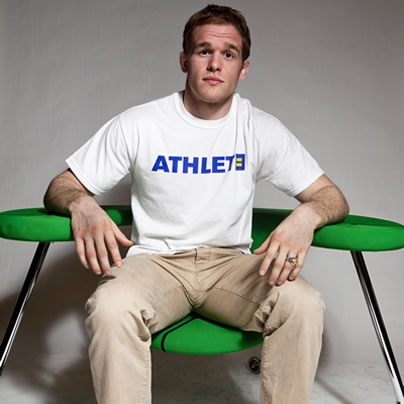
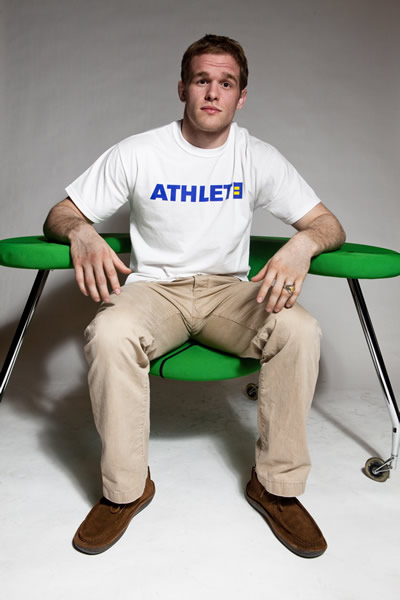
Hudson Taylor started his LGBT advocacy work during his college wrestling career. He eventually started blogging about homophobia in sports and became a vocal advocate for gay rights. (Photo courtesy Athlete Ally)
Hudson Taylor, founder of Athlete Ally, has been granted a visa for travel to Russia where he intends to raise awareness for LGBT rights during the Sochi 2014 Winter Olympics, which will be held from Feb. 7-23.
Athlete Ally has partnered with the Principle 6 campaign, which uses the language of the Olympic Charter to allow athletes and fans to speak out against discrimination during the Sochi Games without violating Russian anti-gay laws or the Olympic ban on political speech.
Principle Six is based on a convention of the IOC charter that states that any form of discrimination on the basis of race, religion, politics, gender or otherwise is incompatible with the Olympic movement.
On Jan. 21, the first Sochi-related anti-gay arrest occurred when a Russian gay rights advocate waved a rainbow flag during the Olympic Torch relay.
The Blade caught up with Hudson Taylor, a straight ally, wrestling champion and coach (at Columbia University), before he departs for Russia.
WASHINGTON BLADE: What was the thought process behind planning a trip to Sochi?
HUDSON TAYLOR: I think Sochi gives us an enormous opportunity to raise awareness about what’s going on in Russia. And, what better way to do that than to be actually on the ground and ensure that this is a conversation that is taking place. I talked to the Athlete Ally board and weighed the risk and reward of going and I think we all agreed that the importance of the moment made it such that I needed to go.
BLADE: With all the vague guidance and broad interpretations coming from Russia, where is the line between raising awareness and staging a protest?
TAYLOR: For the Principle Six campaign we thought long and hard about the appropriate line. We are trying to make sure that athletes know that they can show support for Principle Six or the Olympic Charter. This is a way to show the world that discrimination has no place in sports and that the Olympic charter is opposed to what is going on in Russia. As long as we stay true to what the Olympic movement and the Olympic values are all about, we shouldn’t violate Russian law and we shouldn’t put athletes in a position to violate the Olympic Charter.
BLADE: Rule 50 of the Olympic Charter is written for the specific purpose of eliminating advertising, demonstrations and propaganda from the stadiums, venues and other competition areas. Since the athletes won’t be able to wear Principle 6 clothing at their venues, what is the plan for exposure of the clothing line?
TAYLOR: Where we have an opening to raise awareness is on how athletes speak out across social media. My hope is to engage athletes to wear Principle 6 clothing or to tweet photos of the language of Principle 6 out to their fans. It’s a great opportunity because social media is technically not an Olympic venue and it can be used to reach every corner of the world.
BLADE: American Apparel and Idea Brand were behind the manufacturing and branding of the Principle 6 clothing line. Where are the profits being donated?
TAYLOR: All of the profits will be donated to All Out and Athlete Ally. We in turn will be donating the proceeds to Russian-based LGBT organizations.
BLADE: What about the new hand gesture that has been popping up on social media? It consists of the peace sign on one hand and laying the pointer finger of the opposite hand on top of it to form a triangle. Will that be considered propaganda?
TAYLOR: The more opportunities an athlete has to speak out, the better. I think the hand gesture would definitely be construed as propaganda if it is used in the venues or on the medal stands. However, it is another viable and alternative way to speak out by posting it on social media.
BLADE: What will your itinerary consist of during your trip to Sochi?
TAYLOR: I will be in Sochi from Feb. 3-9 and I imagine that most of it will consist of reporting and commentating within the Olympic venues. I will probably take a day to visit one of the protest zones just to see what is going on and to ensure that I can report on it.
BLADE: The visa process for the Sochi Olympics is incredibly stringent. Were you concerned about your visa being approved?
TAYLOR: At first, when the multiple layers of the visa process were announced by the Embassy of the Russian Federation, there was certainly a cause for concern. Now that some security risks have appeared I think people are OK with the hoops and hurdles you have to go through to be on the ground in Sochi.
BLADE: Have the recent terrorist video threats changed anything for you in terms of keeping yourself safe in Sochi?
TAYLOR: In everything I will be doing in Sochi, there will be a risk and reward calculation. We will figure out a way not to expose myself or the organization to any unnecessary risks while giving the appropriate attention to the human rights issues in Russia and how it is affecting the LGBT community there.
BLADE: What about the comments made by Putin linking the gay community to pedophilia? Do you think those comments will make the gay rights advocates more aggressive in their protests?
TAYLOR: For advocates who are passionate about these issues, it will certainly stoke a fire in them, especially in an Olympic situation where athletes under the age of 18 will be competing and who may in fact be LGBT. Putin’s comments only exacerbate or incentivize people to speak out against it. The stark contrast of how Putin sees the LGBT community versus how the rest of the world sees them will be very evident during the Sochi Games.
BLADE: How hard will you be trying to get into the NBC Studios to chat with Bob Costas?
TAYLOR: Very hard (laughing). When you look at what athletes have the ability to do in terms of raising awareness, one area is social media and the other is the responses they give to the journalists who ask the questions. We will make sure that we are aware of all the journalists on the ground and have their contact information so that we can make ourselves available should they have an interest in covering this topic.
BLADE: Will you be attending any of the competitions?
TAYLOR: I will be attending the opening ceremonies but do not plan on buying any tickets to the sporting venues. While I am on the ground in Sochi, it will be important to keep an eye out for the statements and actions that are happening in cities around the world. I think a lot of people will be demonstrating and coming together to support the LGBT community. It will be pretty amazing to watch.
BLADE: Good luck Hudson. Be safe.




Sports
New IOC policy bans trans women from Olympics
New regulation to be in effect at 2028 summer games in Los Angeles
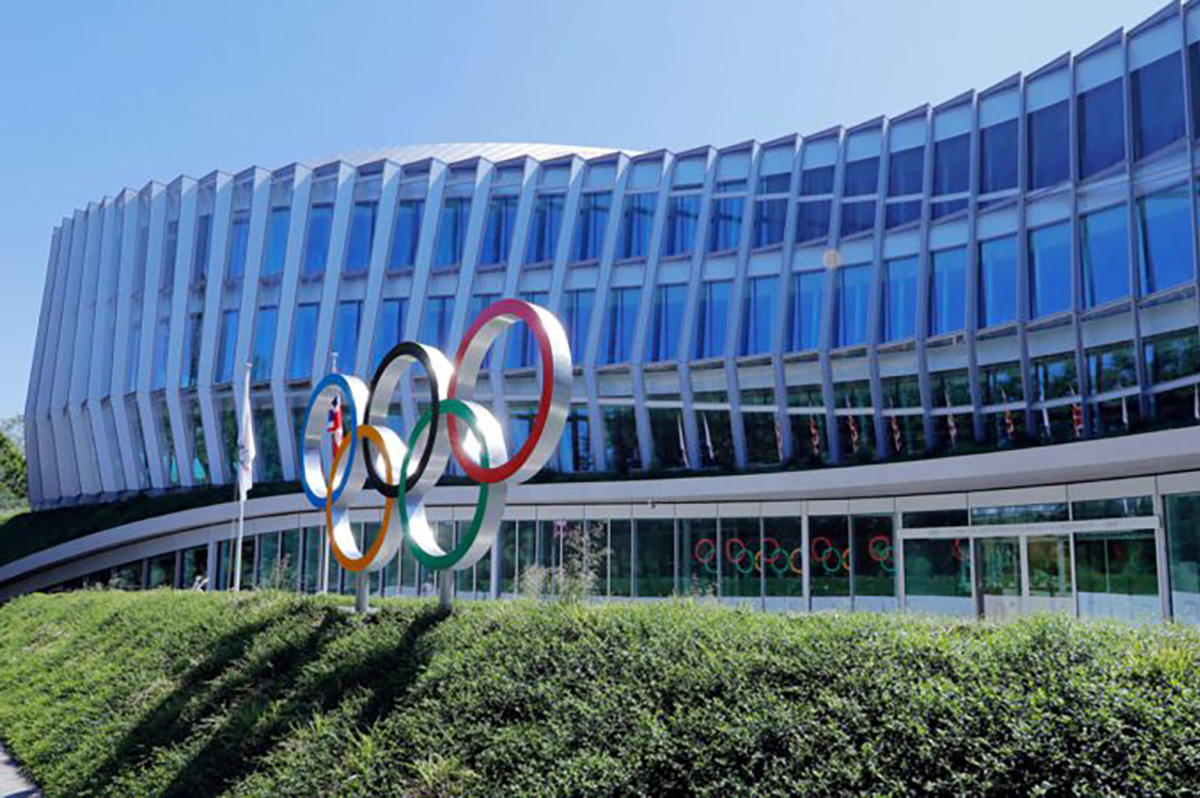
The International Olympic Committee on Thursday announced it will not allow transgender women from competing in female events at the Olympics.
“For all disciplines on the Sports Program of an IOC event, including individual and team sports, eligibility for any Female Category is limited to biological females,” reads the new policy.
The policy states “eligibility for the Female Category is to be determined in the first instance by SRY Gene screening to detect the absence or presence of the SRY Gene.”
“On the basis of the scientific evidence, the IOC considers that the SRY (sex-determining Region Y) Gene is fixed throughout life and represents highly accurate evidence that an athlete has experienced or will experience male sex development,” it reads. “Furthermore, the IOC considers that SRY Gene screening via saliva, cheek swab or blood sample is unintrusive compared to other possible methods. Athletes who screen negative for the SRY gene permanently satisfy this policy’s eligibility criteria for competition in the Female Category.”
The policy states the test “will be a once-in-a-lifetime test” unless “there is reason to believe a negative reading is in error.”
The new regulation will be in place for the 2028 Summer Olympics in Los Angeles.
“I understand that this a very sensitive topic,” said IOC President Kirsty Coventry on Thursday in a video. “As a former athlete, I passionately believe in the rights of all Olympians to take part in fair competition.”
“The policy that we have announced is based on science and it has been led by medical experts with the best interests of athletes at its heart. The scientific evidence is very clear: male chromosomes give performance advances in sport that rely on strength, power, or endurance,” she added. “At the Olympic Games, even the smallest margins can be the difference between victory and defeat. So, it is absolutely clear that it would not be fair for biological males to compete in the female category. In addition, in some sports it would simply not be safe.”
(Video courtesy of the IOC)
Laurel Hubbard, a weightlifter from New Zealand, in 2021 became the first trans woman to compete at the Olympics.
Imane Khelif, an Algerian boxer, won a gold medal at the 2024 Summer Olympics in Paris. Khelif later sued JK Rowling and Elon Musk for cyberstalking after they questioned her gender identity.
Ellis Lundholm, a mogul skier from Sweden, this year became the first openly trans athlete to compete in any Winter Olympics when he participated in Milan Cortina Winter Olympics in Italy.
President Donald Trump in February 2025 issued an executive order that bans trans women and girls from female sports teams in the U.S.
The U.S. Olympic and Paralympic Committee last July banned trans women from competing in female sporting events. Republican lawmakers have demanded the IOC ban trans athletes from women’s athletic competitions.
“I’m grateful the Olympics finally embraced the common sense policy that women’s sports are for women, not for men,” said U.S. Sen. Tom Cotton (R-Ark.) on X.
An IOC spokesperson on Thursday referred the Washington Blade to the press release that announced the new policy.
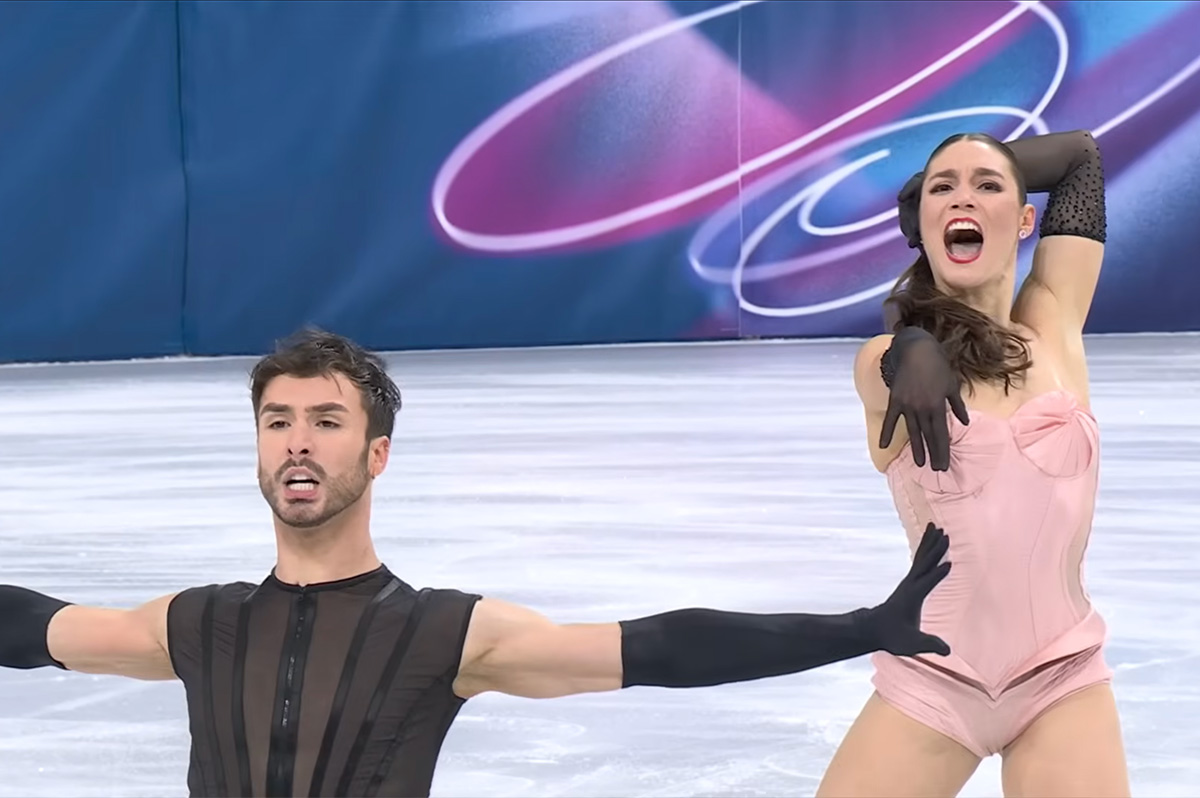
More than a dozen LGBTQ athletes won medals at the Milan Cortina Winter Olympics that ended on Sunday.
Cayla Barnes, Hilary Knight, and Alex Carpenter are LGBTQ members of the U.S. women’s hockey team that won a gold medal after they defeated Canada in overtime. Knight the day before the Feb. 19 match proposed to her girlfriend, Brittany Bowe, an Olympic speed skater.
French ice dancer Guillaume Cizeron, who is gay, and his partner Laurence Fournier Beaudry won gold. American alpine skier Breezy Johnson, who is bisexual, won gold in the women’s downhill. Amber Glenn, who identifies as bisexual and pansexual, was part of the American figure skating team that won gold in the team event.
Swiss freestyle skier Mathilde Gremaud, who is in a relationship with Vali Höll, an Austrian mountain biker, won gold in women’s freeski slopestyle.
Bruce Mouat, who is the captain of the British curling team that won a silver medal, is gay. Six members of the Canadian women’s hockey team — Emily Clark, Erin Ambrose, Emerance Maschmeyer, Brianne Jenner, Laura Stacey, and Marie-Philip Poulin — that won silver are LGBTQ.
Swedish freestyle skier Sandra Naeslund, who is a lesbian, won a bronze medal in ski cross.
Belgian speed skater Tineke den Dulk, who is bisexual, was part of her country’s mixed 2000-meter relay that won bronze. Canadian ice dancer Paul Poirier, who is gay, and his partner, Piper Gilles, won bronze.
Laura Zimmermann, who is queer, is a member of the Swiss women’s hockey team that won bronze when they defeated Sweden.
Outsports.com notes all of the LGBTQ Olympians who competed at the games and who medaled.
Sports
US wins Olympic gold medal in women’s hockey
Team captain Hilary Knight proposed to girlfriend on Wednesday
The U.S. women’s hockey team on Thursday won a gold medal at the Milan Cortina Winter Olympics.
Team USA defeated Canada 2-1 in overtime. The game took place a day after Team USA captain Hilary Knight proposed to her girlfriend, Brittany Bowe, an Olympic speed skater.
Cayla Barnes and Alex Carpenter — Knight’s teammates — are also LGBTQ. They are among the more than 40 openly LGBTQ athletes who are competing in the games.
The Olympics will end on Sunday.

Trans activists gather on National Mall for Transgender Day of Visibility

The cost of speaking one’s mind

Senegalese president signs bill that further criminalizes homosexuality

Md. lawmakers reaffirm legislative priorities

Supreme Court rules against Colo. law banning conversion therapy for minors

Lorato ke Lorato: marriage equality, democracy, and the unfinished work of justice in Botswana

Celebrate cherry blossoms the drag way

Japanese Supreme Court to consider marriage equality

The outrage economy is not the LGBTQ community

Anti-trans visa ruling echoes Nazi regime destroying trans documents
-

 Botswana4 days ago
Lorato ke Lorato: marriage equality, democracy, and the unfinished work of justice in Botswana
-
Out & About4 days ago
Celebrate cherry blossoms the drag way
-
Japan4 days ago
Japanese Supreme Court to consider marriage equality
-
Opinions4 days ago
The outrage economy is not the LGBTQ community