Arts & Entertainment
Let me pencil you in
Fall packed with tours, parties, fundraiser and more
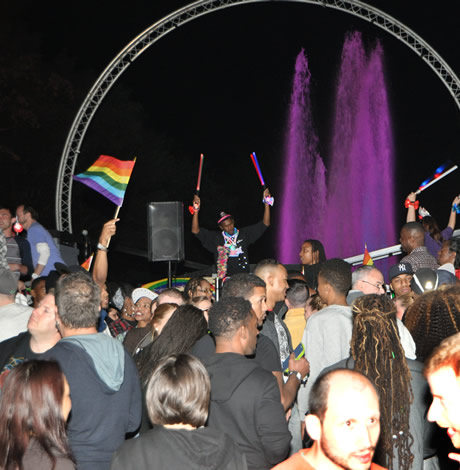
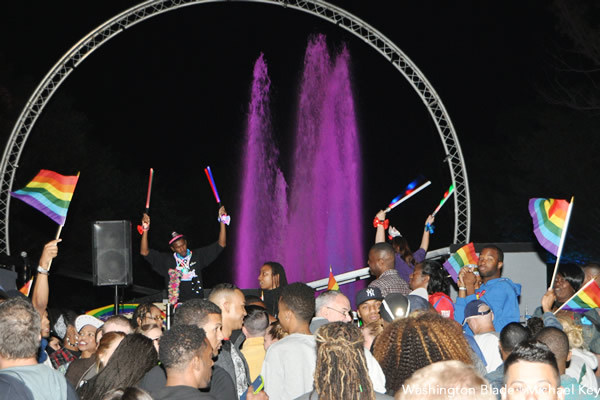
Brother Help Thyself has its Pride Day at Kings Dominion on Sept. 20. (Washington Blade file photo by Michael Key)
Some events don’t fit in our other fall arts categories. Here are a few to note.
Saturday is the fifth annual 17th Street Festival from noon-6 p.m. It runs on 17th N.W. from Riggs Place to P Street. Details at 17thstreetfestival.org or on Facebook.
Sunday is the 13th annual Gay Day at Hillwood Estate (4155 Linnean Ave., N.W.) from 1-5 p.m. Tickets are $5-15. Visit hillwoodmuseum.org for details.
Rainbow History Project has its “Queering Capitol Hill” tour on Sept. 16 at 6 p.m. and Sept. 21 at 2 p.m. Meet outside Mr. Henry’s at 601 Pennsylvania Ave., S.E. The tours are free but reservations are requested. Visit rainbowhistory.org for details.
On Sept. 18, the D.C. Center has its fall reception at 6 p.m. at City Market at O (880 P Street, N.W.). Tickets are $60 in advance or $75 at the door. Visit thedccenter.org for details.
On Sept. 20, Brother Help Thyself has its Pride Day at Kings Dominion. Advance tickets are $35; day of tickets are $37. The party is from 4-11 p.m. with a party following from 10 p.m.-1 a.m. Visit brotherhelpthyself.net for details.
On Sept. 23, the Gertrude Stein Democratic Club has its 38th anniversary Leadership Awards Reception at Dirty Martini (1223 Connecticut Ave., N.W.). Tickets are available atsteindemocrats.org or at the door.
Sept. 27 is National Gay Men’s HIV/AIDS Awareness Day. Details are at cdc.gov or aids.gov/awareness-days.
Sept. 27 is also United Night OUT at 3 p.m. at RFK Stadium with D.C. United vs. Philadelphia Union. Tickets are $25. Visit teamdc.org for details.
Oct. 11 is National Coming Out Day. There’s a Facebook page devoted to it.
Oct. 15 is National Latino HIV/AIDS Awareness Day. Details are at aids.gov/awareness-days.
Oct. 23 is the Blade’s Best of Gay D.C. party/awards reception. Details pending.
Oct. 25 is AIDS Walk Washington. Visit aidswalkwashington.org for details or to register.
Also Oct. 25, Human Rights Campaign has its national dinner at the Convention Center (801 Mt. Vernon P., N.W.). It’s sold out but a waiting list is available at hrcnationaldinner.org.
Oct. 28 is the High Heel Race on 17th Street, N.W. A Facebook page has details.
Nov. 20 is Transgender Day of Remembrance. Details pending on the Washington event.
On Dec. 6, Us Helping Us has its 26th anniversary awards event “A Passion for Living” at Long View Gallery (1234 Ninth Street, N.W.). Visit uhupil.org for details.



a&e features
Award-winning D.C. chef reaching new culinary heights
Anthony Jones of Marcus DC competing on ‘Top Chef’
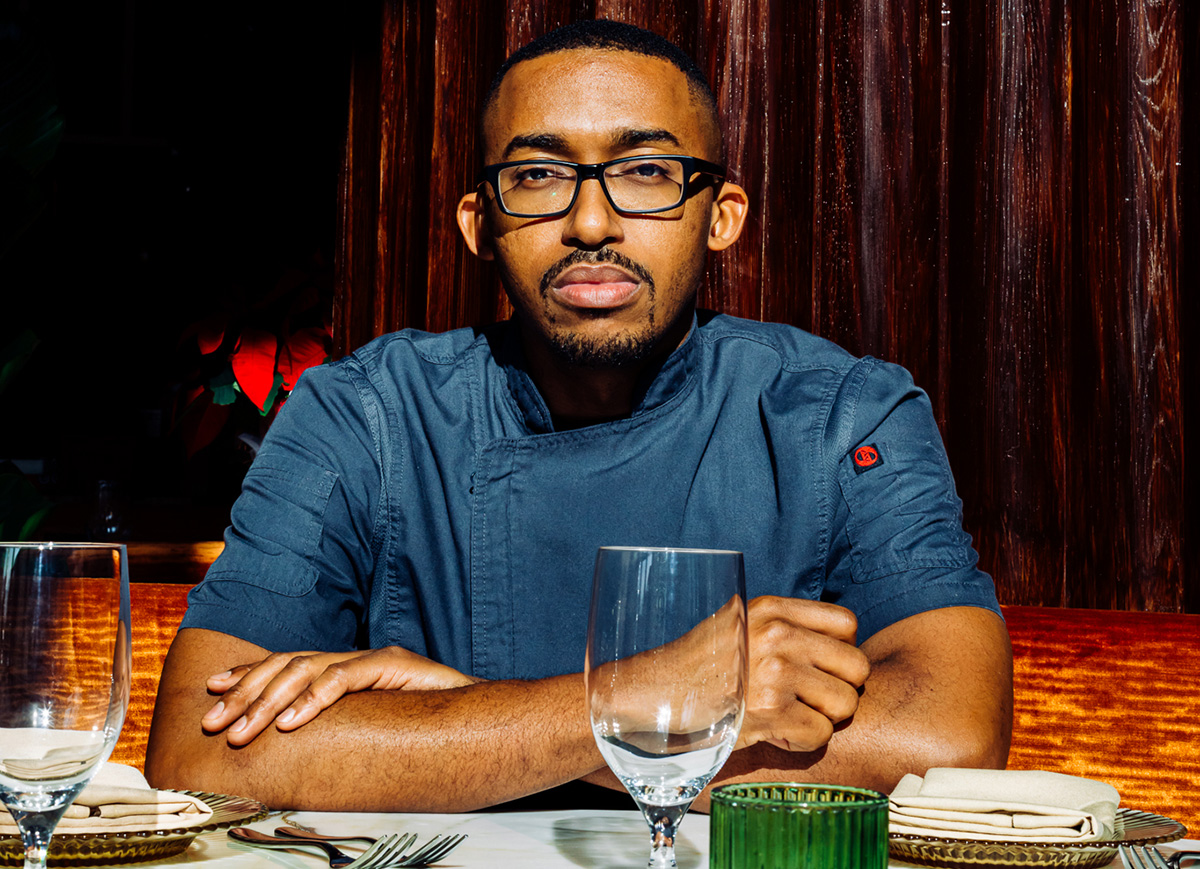
In Anthony Jones’s kitchen, all sorts of flags fly, including his own. Executive chef at award-winning restaurant Marcus DC, Jones has reached culinary heights (James Beard Award semifinalist for Emerging Chef, anyone?), yet he’s just getting started.
Briefly stepping away from his award-winning station, Jones took a moment under a different set of lights. Recently, he temporarily gave up his post at the restaurant for a starring small-screen slot on the latest season of “Top Chef,” which debuted in March. (The show airs weekly on Bravo and Peacock).
Before his strategic slice-and-dice competition, however, Jones, who identifies as gay, draws from his deep DMV roots. In the years before “Top Chef” and the top chef spot at Marcus, he was born and raised in Sunderland, Md., in southern Maryland, near the Chesapeake.
Early memories were steeped in afternoons on boats with his dad bonding over fishing, and wandering the garden of his great-grandparents spread with fresh vegetables and a few hogs. “It was Southern, old-school ethics and upbringing,” he said. “Family and food went hand in hand.” Weekends meant grabbing bushels of crabs, dad and grandma would cook and crack them. Family members would host fish fries for extra cash. In this seafood-heavy youth, Jones managed time to sneak in episodes of the “OG” Japanese “Iron Chef” show, which helped inspire him to pursue a career in the kitchen.
Jones moved to D.C. after graduating from college, ending up at lauded Restaurant Eve, and met famed chef Marcus Samuelson, who brought him to Miami to be part of the opening team for Red Rooster Overtown. After three years, Jones moved back to D.C., where he ran Dirty Habit, reinventing and reimagining the menu, integrating West African flavors and ingredients.
Samuelson, however, wouldn’t let a talent like Jones stay away for too long. Pulling Jones back into his orbit, Samuelson elevated Jones to help him open his namesake restaurant Marcus DC, which has been named a top-five restaurant by the Washington Post. Since then, Jones has been nominated as a semifinalist for the RAMMYs Rising Culinary Star in 2026 and won the Eater DC’s Rising Chef award in 2025.
Samuelson’s Marcus is a tour de force interpreting the Black Diaspora on the plate, from the American South to West Africa, along with his signature “Swedopian” touches. Yet it’s Jones who has deeply informed the plate, elevating his own story to date. Marcus DC is primarily a seafood restaurant, which serves Jones well.
“Where I’m from is seafood heavy, and as I’ve progressed in my career, I’ve moved away from meat.” Veggies and fish are hero dishes. His own dish, Mel’s Crab Rice, was not only lauded by the Washington Post, but is framed by his youth carrying home the crustaceans from Mel’s crab truck. It’s a bowl of Carolina rice, layered with pickled okra, uni béarnaise, and crab. Jones also points to a dish on the opening menu, rockfish and brassica, paying respect to a landmark D.C. institution, Ben’s Chili Bowl. Jones reverse engineered a favorite bowl of chili that’s seafood instead of meat forward, leveraging octopus and rockfish along with different riffs of cauliflower: showing his intellectual, creative, and cultural sides.
While “Top Chef” is showing Jones’s spotlight side, he also lets his identity show at work. “In the kitchen, I make sure we’re inclusive. We don’t tolerate discrimination. Everyone that’s here should feel confident to express themselves. There are so many different flags in the kitchen.”
Jones says that he didn’t fully express his gay identity until fairly recently. He felt reluctant coming out to certain family members, “you’re scared to tell them about being different,” he says, and while that anxiety ate at him, “I’m lucky and fortunate to have unconditional love and that weight off my shoulders.”
Today, “I’m me all the time, Monday to Sunday. I’m honest with people, and my staff is honest with me.”
“Being a chef is hard,” he says, “and being a chef of color is even more difficult.”
Yet his LGBTQ identity is a juggling act, he says. “I need to keep that balance, because once someone finds out something about you, their opinion can change, whether you want it or not.”
Being on a whole season of TV cooking competition, however, might mean millions more might have an opinion of him (Jones has appeared on TV already, on an episode of “Chopped”). To prepare, he says, “I’ve just kept a level head. It’s just an honor to be on top chef with amazing people happy to be there.”
Plus, this season is set in the Carolinas, and Jones attended Johnson & Wales University in Charlotte, N.C. “It’s a full story of my life, now a monumental moment for me.”
Jones also recently was nominated for a James Beard Foundation Award. “JBF has been a north star, a dream for so long. I always had this goal on my wall.”
Being at the top spot at Marcus DC, making waves through his accolades, and cooking on Bravo means that Jones is highly visible. “I think that if someone has a similar background to me, and can see our story, trajectory, and success, they can have more ability to be themselves. This is my goal.”
Back at Marcus, Jones has plenty up his chef’s white’s sleeves. A new spring menu is in the works. He’ll be launching a new tasting menu “dining experience,” he says, and has plans to work on more events and collaborations with chefs and friends to bring in new talent and share the culinary wealth.
Movies
Trans-driven ‘Serpent’s Skin’ delivers campy sapphic horror
Embracing classic tropes with a candid exploration of queer experience
It’s probably no surprise that the last decade or so has seen a “renaissance” in horror cinema. Long underestimated and dismissed by critics and ignored by all the awards bodies as genre films, horror movies were deemed for generations as unworthy of serious consideration; relegated into the realm of “fandom,” where generations of young movie fanatics were left to find deeper significance on their own, they have inspired countless future film artists whose creative vision would be shaped by their influence. Add to that the increasing state of existential anxiety that has us living like frogs in a slow-boiling pot, and it seems as if the evolution of horror into what might be our culture’s most resonant form of pop art expression was more or less inevitable all along.
Queer audiences, of course, have always understood that horror provides an ideal vehicle to express the “coded” themes that spring from existence as a stigmatized outsider, and while the rise of the genre as an art form has been fueled by filmmakers from every community, the transgressive influence of queerness – particularly when armed with “camp,” its most surefire means of subversion – has played an undeniable role in building a world where movies like “Sinners” and “Weapons” can finally be lauded at the Oscars for their artistic qualities as well as celebrated for their success at providing paying audiences with a healthy jolt of adrenaline.
Perhaps unsurprisingly, the boldest and most biting entries are coming from trans filmmakers like Jane Schoenbrun (“I Saw the TV Glow”) – and like Australian director Alice Maio Mackay, whose new film “The Serpent’s Skin” opened in New York last weekend and expands to Los Angeles this week.
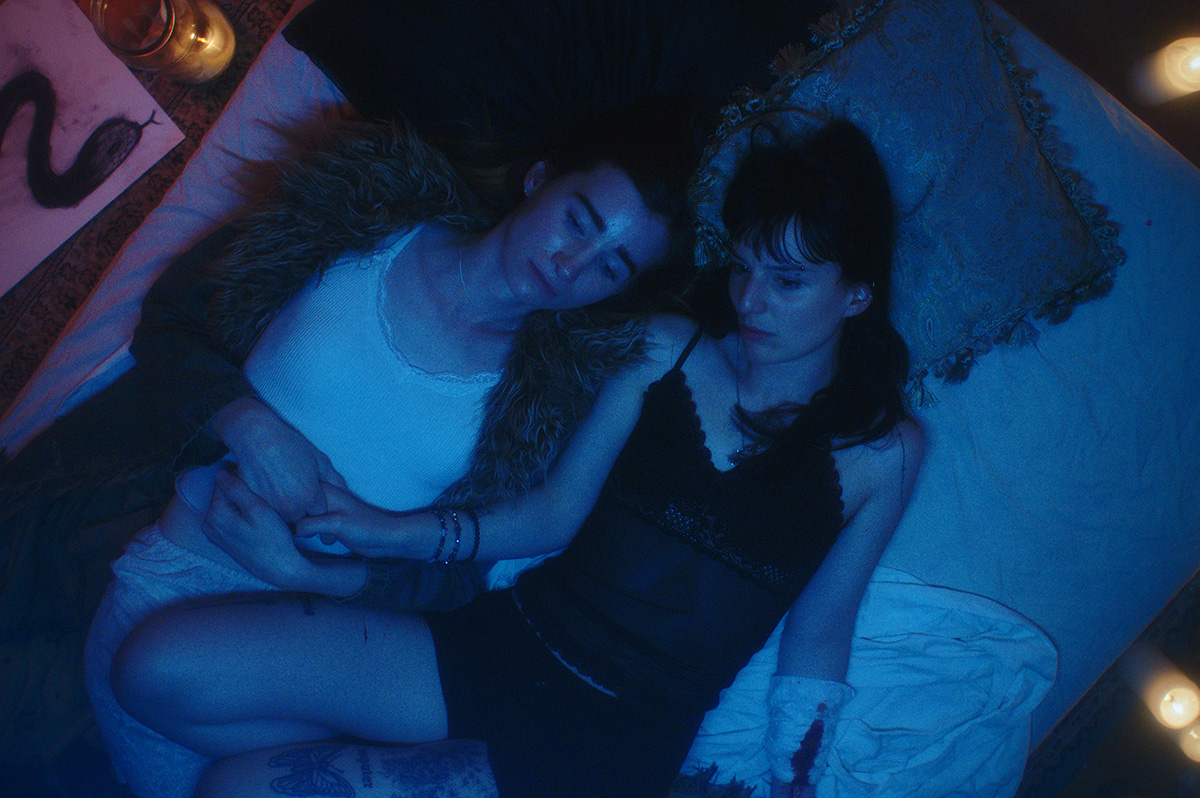
Described in a review from RogerEbert.com as “a kind of ‘Scanners’ for the dolls,” it’s a movie that embraces classic horror tropes within a sensibility that blends candid exploration of trans experience with an obvious love for camp. It centers on twenty-something trans girl Anna (Alexandra McVicker), who escapes the toxic environment of both her dysfunctional household and her conservative hometown by running away to the “Big City” and moving in with her big sister (Charlotte Chimes). On her first night in town, she connects with Danny (Jordan Dulieu), a neighbor (the only “hottie” in the building, according to her sister) who plays guitar in a band and ticks off all her “edgy” boxes, and has a one-night stand.
The very next day, she starts a new job at a record store, where she connects – through an intense and unexpected incident – with local tattoo artist Gen (Avalon Faust), a young woman she has seen in psychic visions, and who has been likewise drawn to her. The reason? They are both “witches,” born with abilities that give them a potentially deadly power over ordinary humans, and bound together in an ancient supernatural legacy.
It goes without saying that they fall in love; together, they teach and learn from each other as they try to master the mysterious magical gifts they both possess; but when Danny coincidentally books Gen for a tattoo inspired by his earlier “fling” with Anna, an ancient evil is unleashed, leading to a string of horrific incidents and forcing them to confront the dark influences within their own traumatic histories which may have conjured this malevolent spirit in the first place, before it wreaks its soul-stealing havoc upon the entire community.
Confronting the theme of imposed trans “guilt” head on, “Serpent’s Skin” emanates from a softer, gentler place than most horror films, focusing less on scares than on the sense of responsibility which seems naturally to arise just from being “different.”. Both McVicker and Faust bring a palpable feeling of weight to their roles, as if their characters are carrying not only their own fate upon their shoulders, but that of the world at large; blessed (or cursed) with a layer of awareness that both elevates and isolates them, their characters evoke a haunting sense of responsibility, which permeates their relationship and supersedes their personal desires. At the same time, they bring a mix of respect and eroticism to the sapphic romance at the center of the film, evoking a connection to the transgressive and iconic “lesbian noir” genre but replacing its sense of amoral cynicism with an imperative toward empathy and social responsibility.
All of this helps to make the film’s heroines relatable, and raises the stakes by investing us not just in the defeat of supernatural evil, but the triumph of love. Yet we can’t help but feel that there’s something lost – a certain edge, perhaps – that might have turned up the heat and given the horror a more palpable bite. Though there are moments of genuine fright, most of the “scary” stuff is campy enough to keep us from taking things too seriously – despite the best efforts of the charismatic Dulieu, who literally sinks his teeth into his portrayal of the possessed version of Danny.
More genuinely disturbing are the movie’s scenes of self-harm, which both underscore and indict the trope of trans “victimhood” while reminding us of the very real fear at the center of many trans lives, especially when lived under the oppression of a mindset that deplores their very existence.
Still, though Mackay’s film may touch on themes of queer and trans existence and build its premise on a kind of magical bond that makes us all “sisters under the skin,” it is mostly constructed as a stylish tribute to the classic thrillers of an earlier age, evoking the psychological edge of directors like Hitchcock and DePalma while embracing the lurid “shock value” of the B-movie horror that shaped the vision of a modern generation of filmmakers who grew up watching it – and even if it never quite delivers the kind of scares that linger in our minds as we try to go to sleep at night, it makes up for the shortfall with a smart, sensitive, and savvy script and a rare depiction of trans/lesbian love that wins us over with chemistry, emotional intelligence, and enviable solidarity.
What makes “The Serpent’s Skin” feel particularly remarkable is that it comes from a 21-year-old filmmaker. Mackey, who built the foundation of her career behind the camera with a series of low-budget horror shorts in her teens, has already made an impact with movies ranging from the vampire horror comedy “So Vam” (released when she was 16) to the horror musical “Satanic Panic” and the queer holiday shockfest “Carnage for Christmas”. With her latest effort, she deploys a confidence and a style that encompasses both the deep psychological nuance of the horror genre and its guilty-pleasure thrills, rendered in an aesthetic that is grounded in intimate queer and trans authenticity and yet remains daring enough to take detours into the surreal and psychedelic without apology.
It’s the kind of movie that feels like a breakthrough, especially in an era when it feels especially urgent for trans stories to be told.

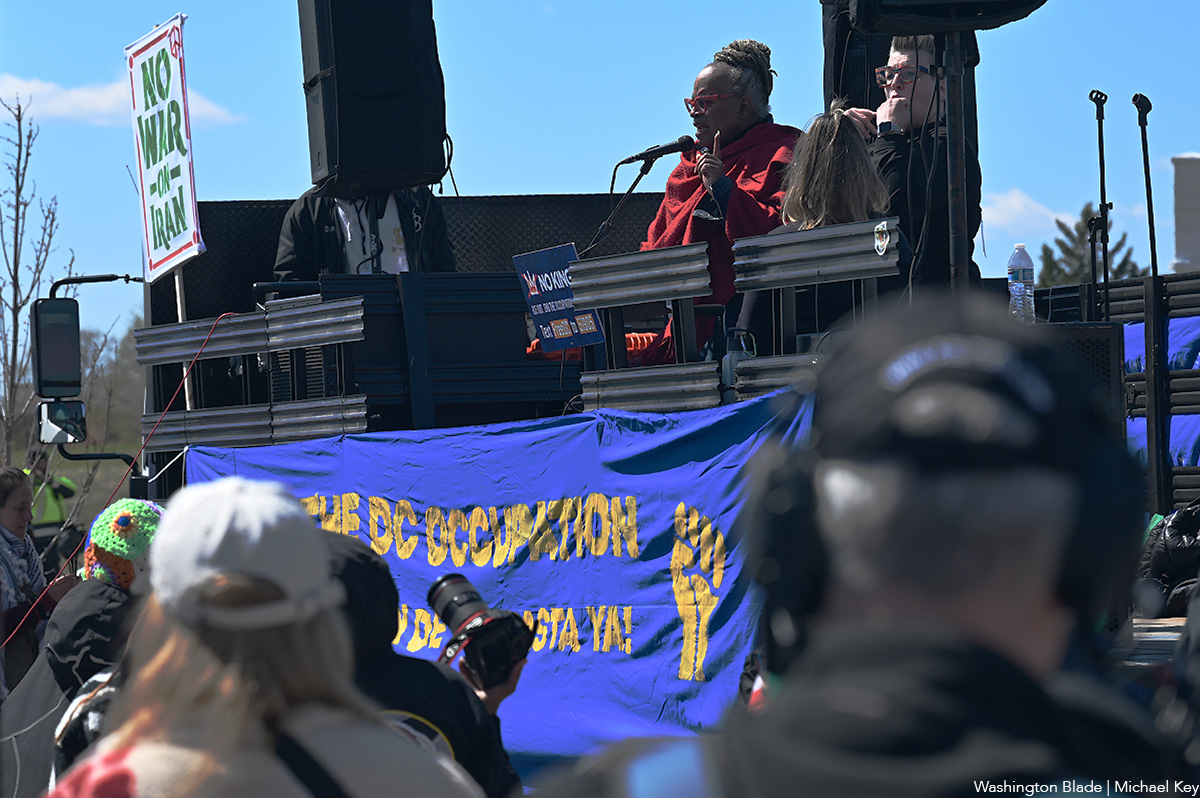
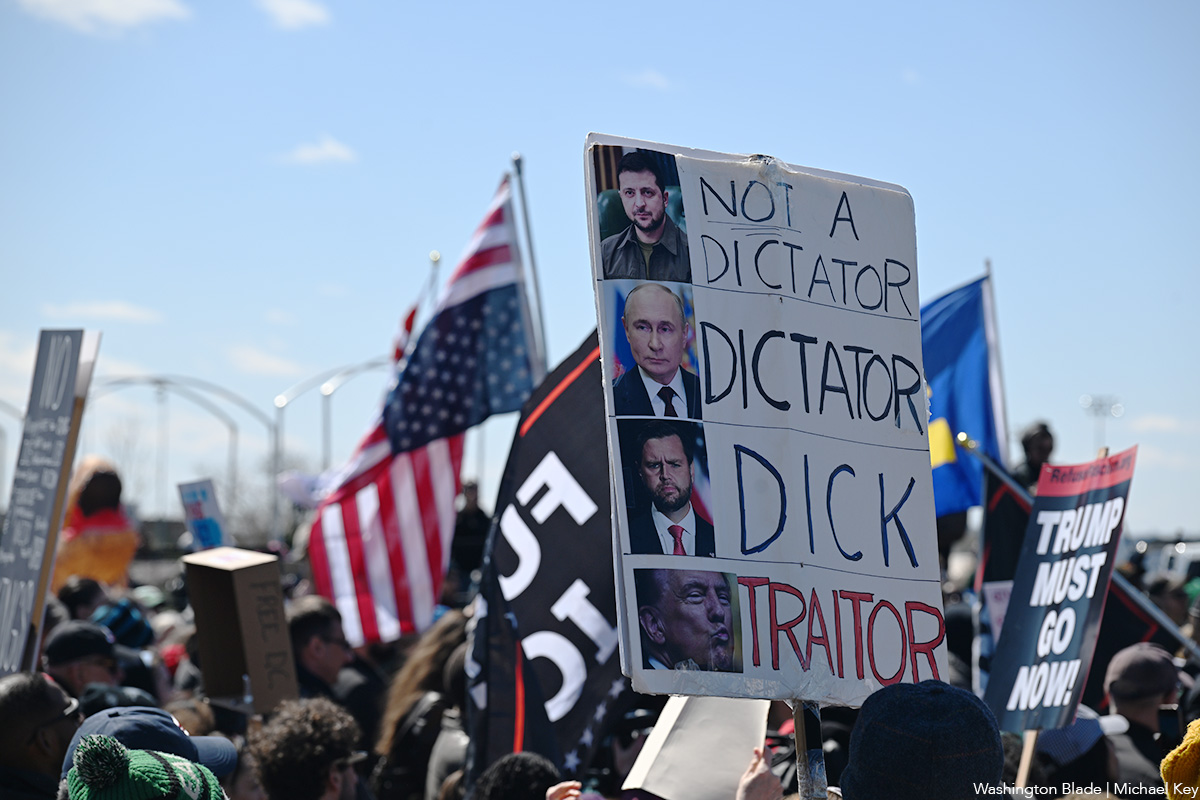
A “No Kings” demonstration was held in Anacostia on Saturday to protest the Trump administration. Speakers at the rally included LGBTQ activist, Rayceen Pendarvis. Following the rally, demonstrators marched across the Frederick Douglass Memorial Bridge.
(Washington Blade photos and videos by Michael Key)


Mayor Bowser signs bill requiring insurers to cover PrEP

JD Vance to travel to Hungary next week

Pam Bondi ousted as attorney general

VIDEO: Gay journalist detained for booing Trumps at ‘Chicago’ opening night

Idaho Gov. signs harshest anti-trans bathroom bill in the country

‘Out for McDuffie’ event held at D.C. gay bar

‘Jonah’ an undeniably compelling but unusual memory play

The Oscar-losing performance that’s too good to miss

Thousands attend ‘No Kings’ protests in D.C.