Books
Inner workings
Coming-of-age memoir explores gender, ethnicity


Author Daisy Hernández (Photo by Jorge Rivas)
‘A Cup of Water Under My Bed’
By Daisy Hernández
Beacon Press
$24.95
200 pages
What’s inside?
Good question — and once you learned that you can determine the answer by taking things apart, well, nothing was safe. The hidden parts, an object’s guts, were always more complicated and more interesting than what was on the outside.
Isn’t life like that: what you don’t see is sometimes better than what you do? Unraveling her story for examination in “A Cup of Water Under My Bed,” author Daisy Hernández, lets us find out.
Until she was in kindergarten, Daisy Hernández’s entire world sat in Union City, N.J. Her parents, her Cuban father and Colombian mother, spoke only Spanish at home, although Hernández learned a smattering of English here and there and more once she was sent to Catholic school.
English always held a certain fascination for her but Hernández’s three tías insisted she keep up with her Spanish, which she resented. There were words that didn’t translate easily from English to her parents’ language, so there were things she couldn’t share with her elders. To “make that leap … to leave for another language hurts.”
Perhaps not surprisingly, when she told her father that she wanted to be a writer, he told her she’d “gone crazy.” Still, Hernández pursued her dream, maybe because storytelling was in her blood. Her Mami loved sharing tales of her own immigration from Colombia, how she’d heard that money grew on trees but, instead of finding cash on the ground like leaves, she’d had to find a factory job.
Such stories of strength in her mostly female household gave Hernández a map of life and relationships. She learned about men and whom to marry, disappointing her Mami and tías with her first Colombian boyfriend. American boys, they told her, were better because “anything made in America works” but, at 17, Hernández was sure she was in love.
That Colombian boy taught her a lot about sex. So did a feminist body-awareness class she took early in her college career, which was where she suddenly understood a long-held feeling that, once articulated, would hurt her mother and cause a rift with her favorite auntie.
“I love kissing boys,” Hernández says, “but a girl — I could kiss a girl.”
My first impression of “A Cup of Water Under My Bed” led to heavy sighing. It starts with a dismaying tale of invisibility and poverty, which made me think I had another pity-party memoir in my hands.
I was wrong.
With wit and respectful grace, author Daisy Hernández shares stories of love for family, of strong (despite herself) roots, and of assimilation and claiming whom you are without losing whom you were. These tales are sprinkled, essay style, with powerful anecdotes of self-discovery that I couldn’t get enough of. I also enjoyed the unwavering tone that Hernández takes, speaking her truth, firmly, no arguments.
That no-nonsense attitude mixes nicely with quiet humor and familial devotion to make this a don’t-miss for memoir fans. And if that’s you, then have “A Cup of Water Under My Bed.” You’ll like what’s inside.


Books
Risking it all for love during World War II
New book follows story of Black, gay expat in Paris
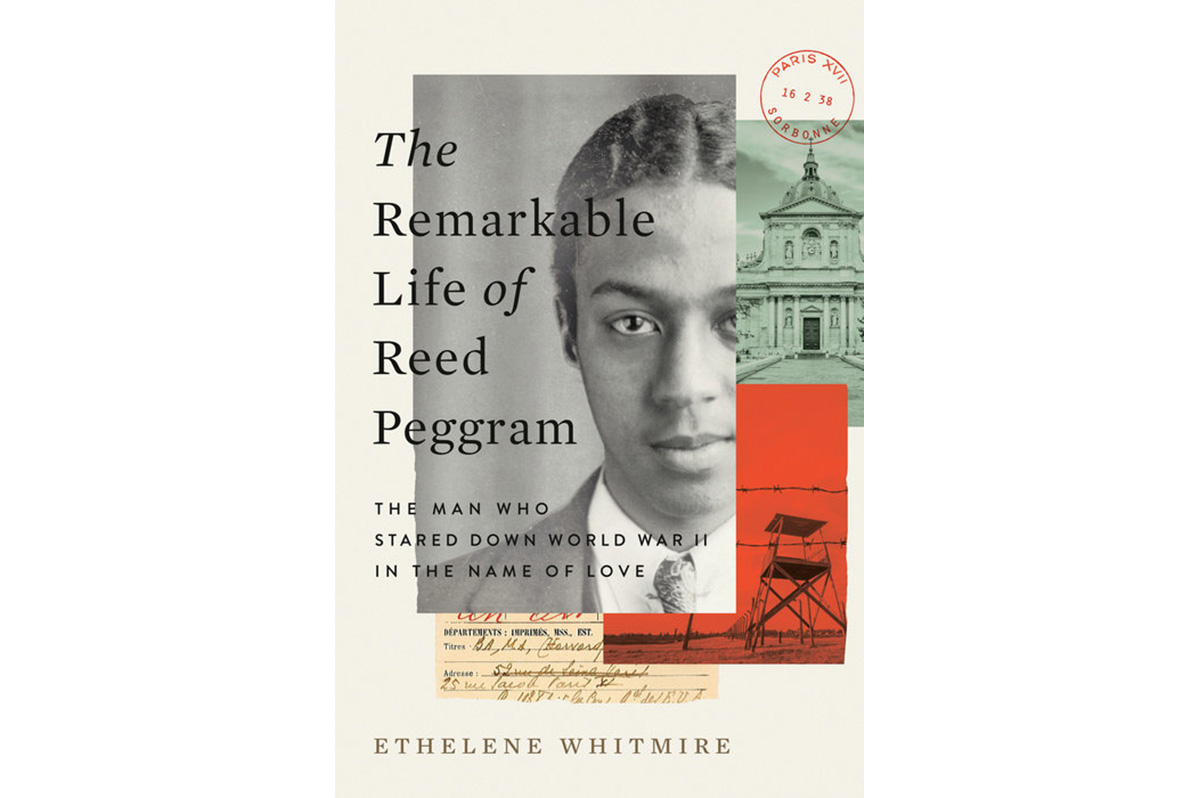
‘The Remarkable Life of Reed Peggram’
By Ethelene Whitmire
c.2026, Viking
$30/308 pages
You couldn’t escape it.
When you fell in love, that was it: you were there for good. Leaving your amour’s side was unthinkable, turning away was impossible. You’d do anything for that person you loved – even, as in the new biography, “The Remarkable Life of Reed Peggram” by Ethelene Whitmire, you’d escape toward danger.

On Aug. 28, 1938, Reed Peggram boarded a ship from Hoboken, N.J., hoping to “become a proper gentleman” and fulfill his dreams. A prolific writer and Harvard scholar of comparative literature, he’d recently been awarded the Rosenwald Fellowship, which put him in the company of literary stars like Du Bois, Hurston, and Hughes.
Both Peggram’s mother and grandmother were then domestic workers, and they had big expectations for him. Reed himself was eager to study abroad, for professional and personal reasons; he was “determined to become a French professor and an accomplished linguist” and “He also hoped to find love.”
What better place to do it than in Paris?
Outgoing and confident, Peggram made friends easily and had no trouble moving “through the world of his white male peers.” Where he faltered was in his lack of funds. He relied on the kindness of his many friends – one of whom introduced Peggram to a “man who would become so pivotal in his life,” a Danish man named Arne.
Peggram and Arne had a lot in common, and they began to enmesh their lives and dreams of living in the United States. But there were complications: homosexuality was largely forbidden, World War II was in its early stages, and it quickly became apparent that it was dangerous to stay in Europe.
And yet, Peggram loved Arne. He refused to leave without him and so, while most visiting Black Americans fled the war in Europe, “Reed was trying to stay.”
There’s so much more to the story inside “The Remarkable Life of Reed Peggram,” so much to know about Reed himself. Problem is, it’s a long haul to get to the good stuff.
In her introduction, author Ethelene Whitmire explains how she came to this tale and yes, it needs telling but probably not with the staggering number of inconsequential details here. Peggram moved homes a lot, and many people were involved in keeping him in Europe. That alone can be overwhelming; add the fact that costs and other monetary issues are mentioned in what seems like nearly every page, and you may wonder if you’ll ever find the reason for the book’s subtitle.
It’s there, nearly halfway through the book, which is when the tale takes a tender, urgent turn — albeit one with determination, rashness, and a dash of faux nonchalance. Also, if you’re expecting an unhappily-ever-after because, after all, it’s a World War II tale, don’t assume anything.
Reading this book will take a certain amount of patience, so skip it if you don’t have that fortitude. If you’re OK with minuscule details and want a heart-pounder, though, “The Remarkable Life of Reed Peggram” might be a good escape.
The Blade may receive commissions from qualifying purchases made via this post.
Books
Laverne Cox, Liza Minnelli among authors with new books
A tome for every taste this reading season
Spring is a great time to think about vacations, spring break, lunch on the patio, or an afternoon in the park. You’ll want to bring one (or all!) of these great new books.
So let’s start here: What are you up for? How about a great new novel?
If you’re a mystery fan, you’ll want to make reservations to visit “Disaster Gay Detective Agency” by Lev AC Rosen (Poisoned Pen Press, June 2). It’s a whodunit featuring a group of gay roommates, one of whom is a swoony romantic. Add a mysterious man who disappears and a murder, of course, and you’ve got the novel you need for the beach.
Don’t discount young adult books, if you want something light to read this spring. “What Happened to Those Girls” by Carlyn Greenwald (Sourcebooks Fire, June 30) is a thriller about mean girls and a camping trip that goes terribly, bloodily wrong. Meant for teens ages 14 and up, young adult books are breezier and lighter fare for the busy grown-up reader.
If you loved “Boyfriend Material” and “Husband Material,” you’ll be eager for the next installment from author Alexis Hall. “Father Material” (Sourcebooks Casablanca, June 2) takes Luc and Oliver to the next step. First was dating. Then was marriage. Is it time for the sound of pitter-patter on the kitchen floor?
Maybe something even lighter? Then how about a book of essays – like “The Terrible, Horrible, No Good, Very Bad Gay” bycomedian and writer Eliot Glazer (Gallery Books, Aug. 11). It’s a book of essays on being gay today, the irritations, the joys, and fitting in. Be aware that these essays may contain a bit of spice – but isn’t that what you want for your reading pleasure anyhow, hmmm?
But okay, let’s say you want something with a little more heft to it. How about a biography?
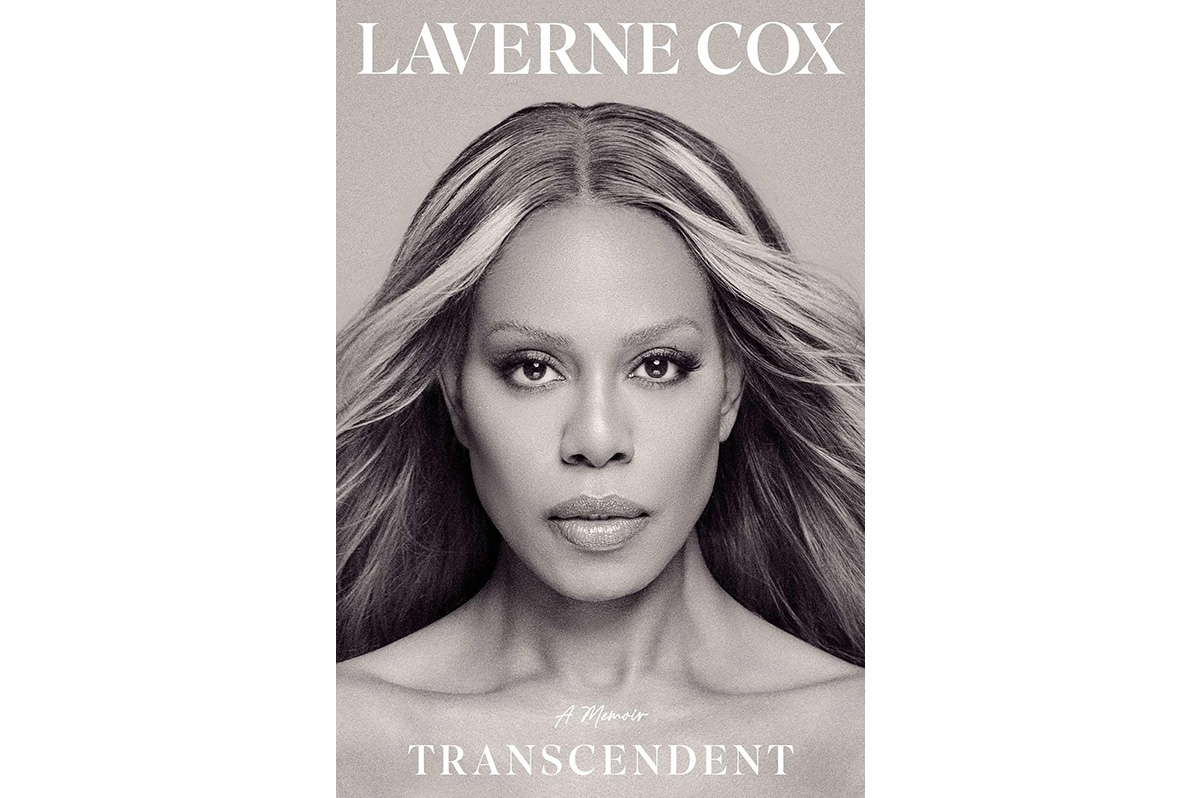
Look for “Transcendant” by Laverne Cox (Gallery Books, June 9), or “Kids, Wait Till You Hear This” by Liza Minnelli (Grand Central Publishing, March 10), and “Every Inch a Lady” by Audrey Smaltz with Alina Mitchell (Amistad, July 14). Keep your eyes open for “Without Prejudice: My Life as a Gay Judge” by Harvey Brownstone (ECW Press, May 26) or “The Double Dutch Fuss” by Phill Branch (Amistad, June 2).
Then again, maybe you want some history, or something different.
So here: look for “Queer Saints: A Radical Guide to Magic, Miracles, and Modern Intercession” by Antonio Pagliarulo (Weiser, June 1) for a little bit of faith-based gay. Music lovers will want “Mighty Real: A History of LGBTQ Music, 1969-2000” by Barry Walters (Viking, May 12). Activists will want “In the Arms of Mountains: A Memoir of Land, Love, and Queer Resistance in Red America” byformer Idaho state Sen. Cole Nicole LeFavour (Beacon Press, May 26).
And if these books aren’t enough, then be sure to check with your favorite bookseller or librarian. They’ll have exactly what you’re in the mood to read. They’ll find what you need for that patio, beach towel, or easy chair.
Books
Love or fear flying you’ll devour ‘Why Fly’
New book chronicles a lifetime obsession with aircraft
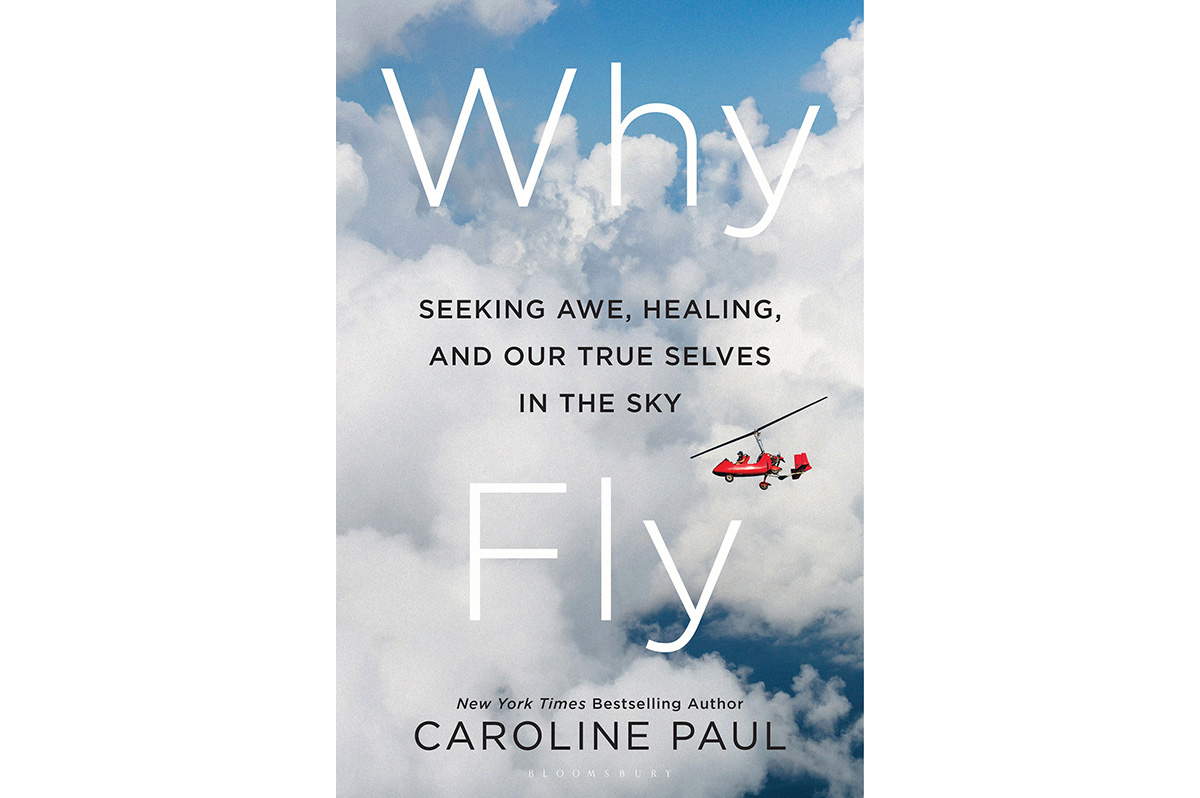
‘Why Fly’
By Caroline Paul
c. 2026, Bloomsbury
$27.99/256 pages
Tray table folded up.
Check. Your seat is in the upright position, the airflow above your head is just the way you like it, and you’re ready to go. The flight crew is making final preparations. The lights are off and the plane is backing up. All you need now is “Why Fly” by Caroline Paul, and buckle up.
When she was very young, Paul was “obsessed” with tales of adventure, devouring accounts written by men of their derring-do. The only female adventure-seeker she knew about then was Amelia Earhart; later, she learned of other adventuresome women, including aviatrix Bessie Coleman, and Paul was transfixed.
Time passed; Paul grew up to create a life of adventure all her own.
Then, the year her marriage started to fracture, she switched her obsession from general exploits to flight.
Specifically, Paul loves experimental aircraft, some of which, like her “trike,” can be made from a kit at home. Others, like Woodstock, her beloved yellow gyrocopter, are major purchases that operate under different FAA rules. All flying has rules, she says, even if it seems like it should be as freewheeling as the birds it mimics.
She loves the pre-flight checklist, which is pure anticipation as well as a series of safety measures; if only a relationship had the same ritual. Paul loves her hangar, as a place of comfort and for flight in all senses of the word. She enjoys thinking about historic tales of flying, going back before the Wright Brothers, and including a man who went aloft on a lawn chair via helium-filled weather balloons.
The mere idea that she can fly any time is like a gift to Paul.
She knows a lot of people are terrified of flying, but it’s near totally safe: generally, there’s a one in almost 14 million chance of perishing in a commercial airline disaster – although, to Paul’s embarrassment and her dismay, it’s possible that both the smallest planes and the grandest loves might crash.
If you’re a fan of flying, you know what to do here. If you fear it, pry your fingernails off the armrests, take a deep breath, and head to the shelves. “Why Fly” might help you change your mind.
It’s not just that author Caroline Paul enjoys being airborne, and she tells you. It’s not that she’s honest in her explanations of being in love and being aloft. It’s the meditative aura you’ll get as you’re reading this book that makes it so appealing, despite the sometimes technical information that may flummox you between the Zen-ness. It’s not overwhelming; it mixes well with the history Paul includes, biographies, the science, heartbreak, and exciting tales of adventure and risk, but it’s there. Readers and romantics who love the outdoors, can’t resist a good mountain, and crave activity won’t mind it, though, not at all.
If you own a plane – or want to – you’ll want this book, too. It’s a great waiting-at-the-airport tale, or a tuck-in-your-suitcase-for-later read. Find “Why Fly” and you’ll see that it’s an upright kind of book.
The Blade may receive commissions from qualifying purchases made via this post.

Risking it all for love during World War II

Surviving spring cleaning

Iconic Eddie Izzard takes on 23 characters in ‘Hamlet’

How Pepper the courthouse dog helps victims of abuse

Women’s FEST returns to Rehoboth Beach next week

Kristi Noem ‘devastated’ as husband’s alleged fetish spending surfaces

D.C.’s affirming congregations to mark Holy Week, Easter

Glisten report details hostile climate for LGBTQ students

Supreme Court ruling against conversion therapy bans could affect Md. law

VIDEO: Gay journalist detained for booing Trumps at ‘Chicago’ opening night
-

 The White House4 days ago
Kristi Noem ‘devastated’ as husband’s alleged fetish spending surfaces
-
Local5 days ago
D.C.’s affirming congregations to mark Holy Week, Easter
-
Research/Study4 days ago
Glisten report details hostile climate for LGBTQ students
-
Maryland4 days ago
Supreme Court ruling against conversion therapy bans could affect Md. law