Sports
Vets and rookies: D.C. Aquatics Club
Long-time members say newer swimmers inspire
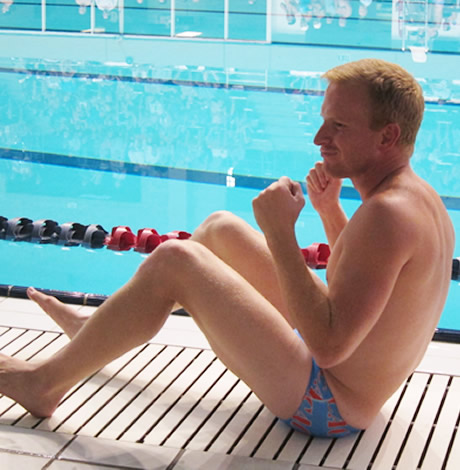
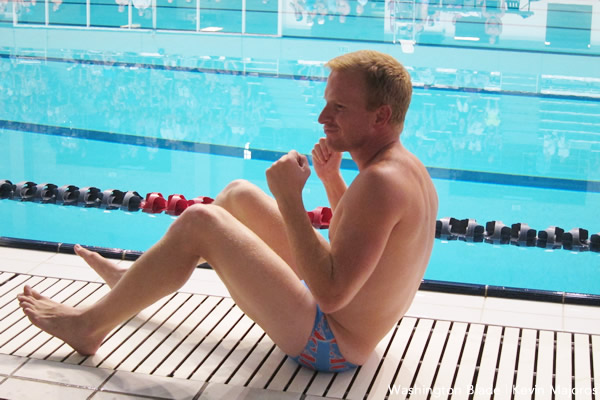
Michael Saxvik ready to compete. (Washington Blade photo by Kevin Majoros)
Now that many of the LGBT sports teams in Washington have established solid clubs with strong bases of athletes, an interesting dynamic has emerged between the rookies and veterans on the teams.
This year the Blade will spotlight a rookie and a veteran from the different local teams in a series that will delve into why it is important to have a mix of both types of athletes and how they define each other.
Michael Saxvik joined the District of Columbia Aquatics Club in 2012 after moving to D.C. from St. Louis. A former high school swimmer from Minnesota, he missed the team aspect and being part of a group.
“I wanted to meet people with similar interests, build a new network and have a more structured approach to my workouts,” Saxvik says.
He says he wasn’t expecting to find so many veterans on the team and that what is great about them is the wealth of experience they bring to the table.
“It is nice to have the context of the experienced swimmers and to hear about the origins of the team,” Saxvik says. “I like having that connection to the history.”
Saxvik often finds that he is in the same lane with some of the veterans at practices and admires their work ethic.
“When they kick my butt in practice, it is a great wake up call,” he says.
This year, Saxvik, who is 33 and works in technology and consulting for higher education, joined the board of D.C. Aquatics as membership chair. He felt that it was the right time to step into a leadership role as the veterans have already given so much of their time.
“Being a part of D.C. Aquatics is one of the best things that have happened to me,” Saxvik says. “The veterans prove that there is hope for me to compete in the future.”
Dawson Nash grew up in Baltimore and attended St Paul’s School where athletics are a key skill set for students. He gave lacrosse and wrestling a try but found that he was unsuccessful at being an athlete even though it was something he wanted to achieve.
After moving to D.C., he joined D.C. Aquatics in 1998 because he wanted to compete and has never looked back.
“I love the camaraderie on the team and the challenging workouts,” Nash says. “Being in shape and competing is good for your mind and spirit; it makes you a well-rounded person.”
Nash likes seeing younger people gravitating to the sport and making swimming part of their lives.
“Having the newbies there is a constant reminder that you can’t rest on your laurels,” Nash says. “You can still improve at any age and the rookies motivate you to continue to better yourself.”
Nash, who is 61 and works as a manager of software developers, attended a high school reunion and after sharing stories of traveling the world to compete in swimming, a classmate turned and said, “Wow, you really are an athlete now.”
Nash has no plans to wrap up his swimming career anytime soon and finds contentment in the spirit of the team and meeting other swimmers from all over the world.
In an interesting twist as to what actually defines a veteran, Nash points to a 91-year-old swimmer from California who recently starred in a Speedo ad, swims a mile a day and competes in a dozen swim meets a year.
“In 30 years, I want to be that guy,” Nash says. “Joining this team is one of the best things I have ever done.”
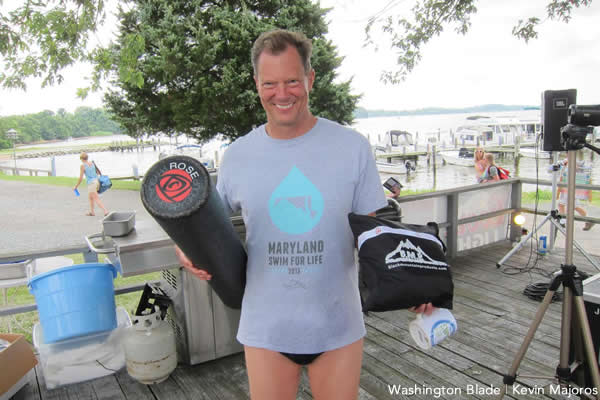
Dawson Nash at the Maryland Swim for Life open water race (Washington Blade photo by Kevin Majoros)





Sports
New IOC policy bans trans women from Olympics
New regulation to be in effect at 2028 summer games in Los Angeles
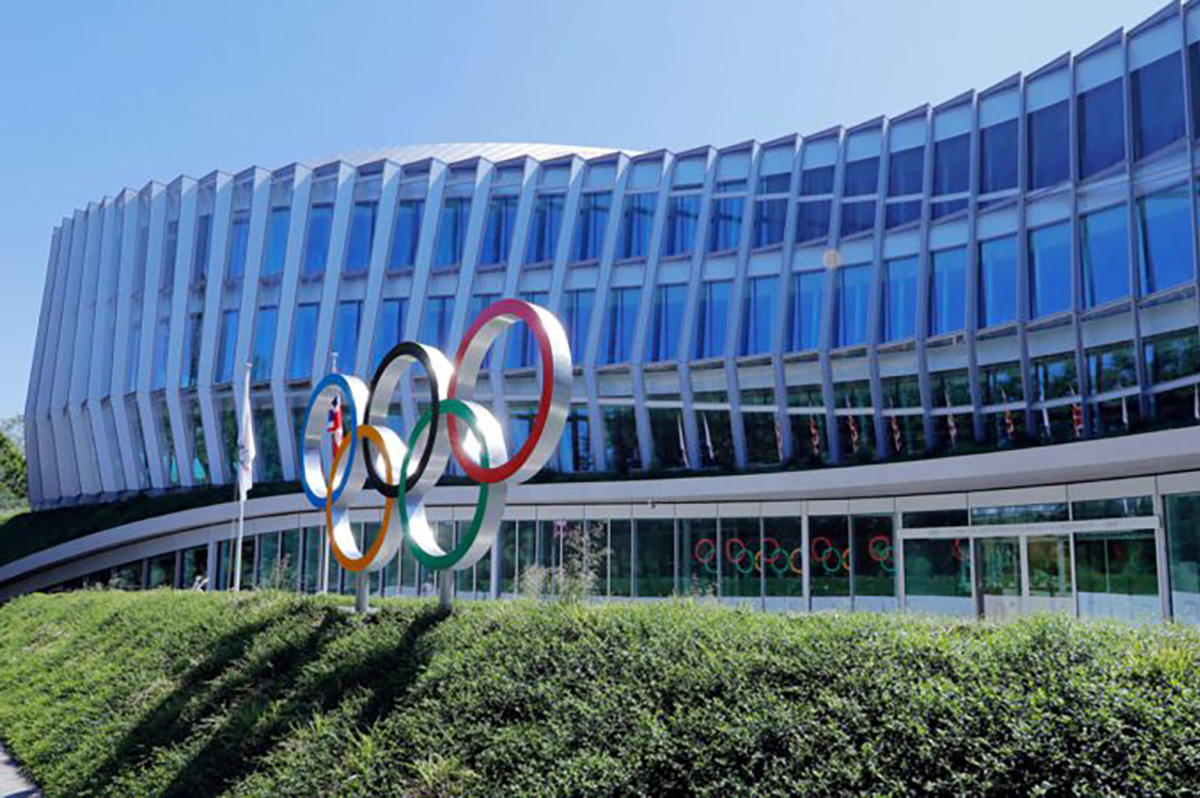
The International Olympic Committee on Thursday announced it will not allow transgender women from competing in female events at the Olympics.
“For all disciplines on the Sports Program of an IOC event, including individual and team sports, eligibility for any Female Category is limited to biological females,” reads the new policy.
The policy states “eligibility for the Female Category is to be determined in the first instance by SRY Gene screening to detect the absence or presence of the SRY Gene.”
“On the basis of the scientific evidence, the IOC considers that the SRY (sex-determining Region Y) Gene is fixed throughout life and represents highly accurate evidence that an athlete has experienced or will experience male sex development,” it reads. “Furthermore, the IOC considers that SRY Gene screening via saliva, cheek swab or blood sample is unintrusive compared to other possible methods. Athletes who screen negative for the SRY gene permanently satisfy this policy’s eligibility criteria for competition in the Female Category.”
The policy states the test “will be a once-in-a-lifetime test” unless “there is reason to believe a negative reading is in error.”
The new regulation will be in place for the 2028 Summer Olympics in Los Angeles.
“I understand that this a very sensitive topic,” said IOC President Kirsty Coventry on Thursday in a video. “As a former athlete, I passionately believe in the rights of all Olympians to take part in fair competition.”
“The policy that we have announced is based on science and it has been led by medical experts with the best interests of athletes at its heart. The scientific evidence is very clear: male chromosomes give performance advances in sport that rely on strength, power, or endurance,” she added. “At the Olympic Games, even the smallest margins can be the difference between victory and defeat. So, it is absolutely clear that it would not be fair for biological males to compete in the female category. In addition, in some sports it would simply not be safe.”
(Video courtesy of the IOC)
Laurel Hubbard, a weightlifter from New Zealand, in 2021 became the first trans woman to compete at the Olympics.
Imane Khelif, an Algerian boxer, won a gold medal at the 2024 Summer Olympics in Paris. Khelif later sued JK Rowling and Elon Musk for cyberstalking after they questioned her gender identity.
Ellis Lundholm, a mogul skier from Sweden, this year became the first openly trans athlete to compete in any Winter Olympics when he participated in Milan Cortina Winter Olympics in Italy.
President Donald Trump in February 2025 issued an executive order that bans trans women and girls from female sports teams in the U.S.
The U.S. Olympic and Paralympic Committee last July banned trans women from competing in female sporting events. Republican lawmakers have demanded the IOC ban trans athletes from women’s athletic competitions.
“I’m grateful the Olympics finally embraced the common sense policy that women’s sports are for women, not for men,” said U.S. Sen. Tom Cotton (R-Ark.) on X.
An IOC spokesperson on Thursday referred the Washington Blade to the press release that announced the new policy.

More than a dozen LGBTQ athletes won medals at the Milan Cortina Winter Olympics that ended on Sunday.
Cayla Barnes, Hilary Knight, and Alex Carpenter are LGBTQ members of the U.S. women’s hockey team that won a gold medal after they defeated Canada in overtime. Knight the day before the Feb. 19 match proposed to her girlfriend, Brittany Bowe, an Olympic speed skater.
French ice dancer Guillaume Cizeron, who is gay, and his partner Laurence Fournier Beaudry won gold. American alpine skier Breezy Johnson, who is bisexual, won gold in the women’s downhill. Amber Glenn, who identifies as bisexual and pansexual, was part of the American figure skating team that won gold in the team event.
Swiss freestyle skier Mathilde Gremaud, who is in a relationship with Vali Höll, an Austrian mountain biker, won gold in women’s freeski slopestyle.
Bruce Mouat, who is the captain of the British curling team that won a silver medal, is gay. Six members of the Canadian women’s hockey team — Emily Clark, Erin Ambrose, Emerance Maschmeyer, Brianne Jenner, Laura Stacey, and Marie-Philip Poulin — that won silver are LGBTQ.
Swedish freestyle skier Sandra Naeslund, who is a lesbian, won a bronze medal in ski cross.
Belgian speed skater Tineke den Dulk, who is bisexual, was part of her country’s mixed 2000-meter relay that won bronze. Canadian ice dancer Paul Poirier, who is gay, and his partner, Piper Gilles, won bronze.
Laura Zimmermann, who is queer, is a member of the Swiss women’s hockey team that won bronze when they defeated Sweden.
Outsports.com notes all of the LGBTQ Olympians who competed at the games and who medaled.
Sports
US wins Olympic gold medal in women’s hockey
Team captain Hilary Knight proposed to girlfriend on Wednesday

The U.S. women’s hockey team on Thursday won a gold medal at the Milan Cortina Winter Olympics.
Team USA defeated Canada 2-1 in overtime. The game took place a day after Team USA captain Hilary Knight proposed to her girlfriend, Brittany Bowe, an Olympic speed skater.
Cayla Barnes and Alex Carpenter — Knight’s teammates — are also LGBTQ. They are among the more than 40 openly LGBTQ athletes who are competing in the games.
The Olympics will end on Sunday.

Thousands attend ‘No Kings’ protests in D.C.

Blade contributor, husband exchange vows in D.C.

Ghanaian president welcomed to Philadelphia amid backlash over anti-LGBTQ bill

PHOTOS: ‘No Kings’ rally and march

‘Out for McDuffie’ event held at D.C. gay bar

Pa. House passes bill to codify marriage equality in state law

Introducing the Torchbearers Awards honoring queer, trans women and nonbinary people

New IOC policy bans trans women from Olympics

A surtax would end this war quickly

‘No Kings’ protests set for D.C.
-

 Pennsylvania5 days ago
Pa. House passes bill to codify marriage equality in state law
-
a&e features5 days ago
Introducing the Torchbearers Awards honoring queer, trans women and nonbinary people
-
Sports5 days ago
New IOC policy bans trans women from Olympics
-
Opinions5 days ago
A surtax would end this war quickly