Sports
Vets welcome rookies in flag football league
Long-time members say younger players have upped level
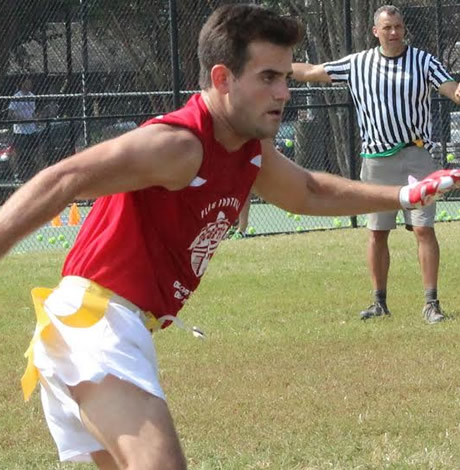
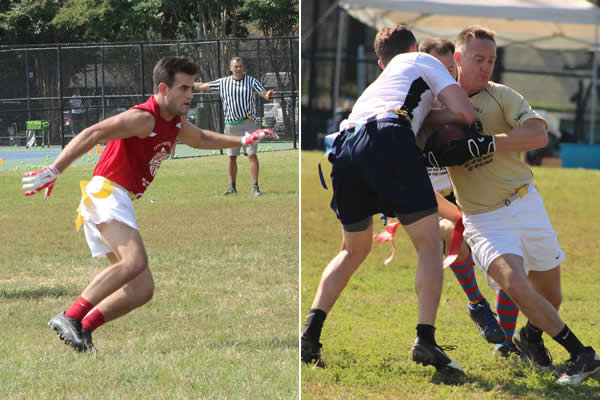
Matt Murtaugh, left, and Jay Maroney of the D.C. Gay Flag Football League. (Photos courtesy D.C. Gay Flag Football League)
In the continuing Blade series on the veterans and rookies of the LGBT sports teams in the metro Washington area, we shine the spotlight this week on the D.C. Gay Flag Football League.
The League is set to launch its 10th season with 270 players on 20 teams. Members also run a recreation league with four teams which is primarily for players who want to develop their skills, play new positions or try out for the competitive league for the first time.
Matt Murtaugh just came out of the closet last May and moved to D.C. two months later in July. He was looking to make new friends and heard about the D.C. Gay Flag Football League.
“I went through the draft last fall for season nine, the new player skill assessments and the scrimmages,” Murtaugh says. “It was a little intimidating at the beginning.”
Murtaugh, who is 23 and works in government contracting, had never played flag football before entering the League. He grew up in North Potomac, Md., playing basketball and also played intramural basketball while earning his degree at the University of South Carolina.
“I was the only rookie on my team and the veterans were very welcoming and walked me through all the rules,” Murtaugh says. “They are the ones who make the team run.”
Murtaugh found the League to be very competitive and is looking forward to season 10.
“I am so happy I joined,” he says. “I met a lot of great people that I would not have met otherwise.”
Jay Maroney is a veteran who has been involved in gay flag football since 1999 when it was just a bunch of friends playing pick-up games on the Mall. He has played in all nine seasons of the D.C. Gay Flag Football League and is also looking forward to season 10.
He comes back every season because it’s organized, competitive and the teams are different every year (the League redrafts the players every season to prevent team dynasties).
“The social structure of the League is very different than what you often find in D.C.,” Maroney says. “There are no cliques and social barriers seem to disappear. We have a nice mix of rookies, veterans, women and straight players.”
Maroney, 44, attended a small college in western Massachusetts and received his master’s from Georgetown and a doctoral law degree from George Washington University Law School. He played club level sports during those years and fell in love with kayaking after taking it as a class in his early college years in Massachusetts.
He moved out west and became a professional kayaker and eventually moved to the hotbed of kayaking in the southeast where he specialized in freestyle kayaking and down river sprints.
Maroney’s flag football experiences continue to play out in a positive way because of the friendly, outgoing players who join the League.
He says the quality of play gets better every season because of the rookies.
“The veteran players didn’t always bring a lot of prior athletic experience to the League because of the homophobia in sports when they were growing up,” Maroney says. “The rookies seem to be coming to us with more of a sports background which serves to raise the quality of play in all of us.”




Sports
New IOC policy bans trans women from Olympics
New regulation to be in effect at 2028 summer games in Los Angeles
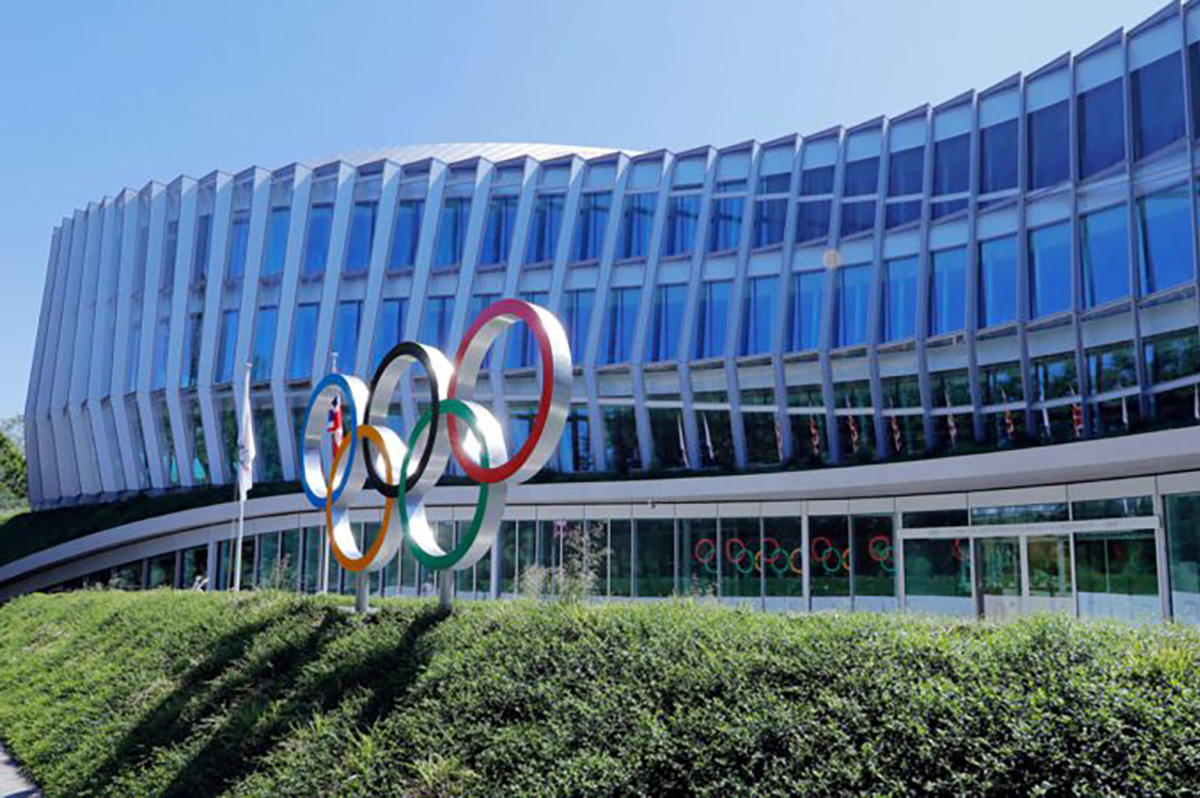
The International Olympic Committee on Thursday announced it will not allow transgender women from competing in female events at the Olympics.
“For all disciplines on the Sports Program of an IOC event, including individual and team sports, eligibility for any Female Category is limited to biological females,” reads the new policy.
The policy states “eligibility for the Female Category is to be determined in the first instance by SRY Gene screening to detect the absence or presence of the SRY Gene.”
“On the basis of the scientific evidence, the IOC considers that the SRY (sex-determining Region Y) Gene is fixed throughout life and represents highly accurate evidence that an athlete has experienced or will experience male sex development,” it reads. “Furthermore, the IOC considers that SRY Gene screening via saliva, cheek swab or blood sample is unintrusive compared to other possible methods. Athletes who screen negative for the SRY gene permanently satisfy this policy’s eligibility criteria for competition in the Female Category.”
The policy states the test “will be a once-in-a-lifetime test” unless “there is reason to believe a negative reading is in error.”
The new regulation will be in place for the 2028 Summer Olympics in Los Angeles.
“I understand that this a very sensitive topic,” said IOC President Kirsty Coventry on Thursday in a video. “As a former athlete, I passionately believe in the rights of all Olympians to take part in fair competition.”
“The policy that we have announced is based on science and it has been led by medical experts with the best interests of athletes at its heart. The scientific evidence is very clear: male chromosomes give performance advances in sport that rely on strength, power, or endurance,” she added. “At the Olympic Games, even the smallest margins can be the difference between victory and defeat. So, it is absolutely clear that it would not be fair for biological males to compete in the female category. In addition, in some sports it would simply not be safe.”
(Video courtesy of the IOC)
Laurel Hubbard, a weightlifter from New Zealand, in 2021 became the first trans woman to compete at the Olympics.
Imane Khelif, an Algerian boxer, won a gold medal at the 2024 Summer Olympics in Paris. Khelif later sued JK Rowling and Elon Musk for cyberstalking after they questioned her gender identity.
Ellis Lundholm, a mogul skier from Sweden, this year became the first openly trans athlete to compete in any Winter Olympics when he participated in Milan Cortina Winter Olympics in Italy.
President Donald Trump in February 2025 issued an executive order that bans trans women and girls from female sports teams in the U.S.
The U.S. Olympic and Paralympic Committee last July banned trans women from competing in female sporting events. Republican lawmakers have demanded the IOC ban trans athletes from women’s athletic competitions.
“I’m grateful the Olympics finally embraced the common sense policy that women’s sports are for women, not for men,” said U.S. Sen. Tom Cotton (R-Ark.) on X.
An IOC spokesperson on Thursday referred the Washington Blade to the press release that announced the new policy.
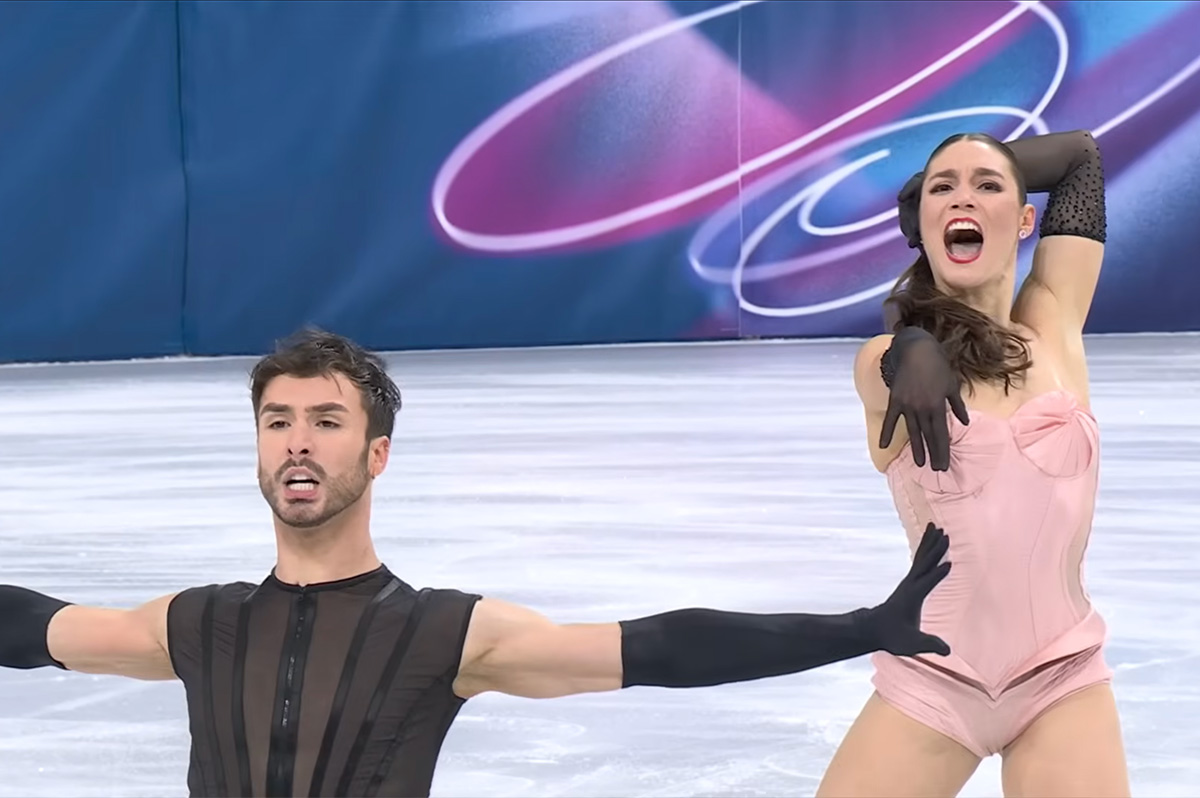
More than a dozen LGBTQ athletes won medals at the Milan Cortina Winter Olympics that ended on Sunday.
Cayla Barnes, Hilary Knight, and Alex Carpenter are LGBTQ members of the U.S. women’s hockey team that won a gold medal after they defeated Canada in overtime. Knight the day before the Feb. 19 match proposed to her girlfriend, Brittany Bowe, an Olympic speed skater.
French ice dancer Guillaume Cizeron, who is gay, and his partner Laurence Fournier Beaudry won gold. American alpine skier Breezy Johnson, who is bisexual, won gold in the women’s downhill. Amber Glenn, who identifies as bisexual and pansexual, was part of the American figure skating team that won gold in the team event.
Swiss freestyle skier Mathilde Gremaud, who is in a relationship with Vali Höll, an Austrian mountain biker, won gold in women’s freeski slopestyle.
Bruce Mouat, who is the captain of the British curling team that won a silver medal, is gay. Six members of the Canadian women’s hockey team — Emily Clark, Erin Ambrose, Emerance Maschmeyer, Brianne Jenner, Laura Stacey, and Marie-Philip Poulin — that won silver are LGBTQ.
Swedish freestyle skier Sandra Naeslund, who is a lesbian, won a bronze medal in ski cross.
Belgian speed skater Tineke den Dulk, who is bisexual, was part of her country’s mixed 2000-meter relay that won bronze. Canadian ice dancer Paul Poirier, who is gay, and his partner, Piper Gilles, won bronze.
Laura Zimmermann, who is queer, is a member of the Swiss women’s hockey team that won bronze when they defeated Sweden.
Outsports.com notes all of the LGBTQ Olympians who competed at the games and who medaled.
Sports
US wins Olympic gold medal in women’s hockey
Team captain Hilary Knight proposed to girlfriend on Wednesday
The U.S. women’s hockey team on Thursday won a gold medal at the Milan Cortina Winter Olympics.
Team USA defeated Canada 2-1 in overtime. The game took place a day after Team USA captain Hilary Knight proposed to her girlfriend, Brittany Bowe, an Olympic speed skater.
Cayla Barnes and Alex Carpenter — Knight’s teammates — are also LGBTQ. They are among the more than 40 openly LGBTQ athletes who are competing in the games.
The Olympics will end on Sunday.

Trans activists gather on National Mall for Transgender Day of Visibility

The cost of speaking one’s mind

Senegalese president signs bill that further criminalizes homosexuality

Md. lawmakers reaffirm legislative priorities

Supreme Court rules against Colo. law banning conversion therapy for minors

Lorato ke Lorato: marriage equality, democracy, and the unfinished work of justice in Botswana

Celebrate cherry blossoms the drag way

Japanese Supreme Court to consider marriage equality

The outrage economy is not the LGBTQ community

Trump tells Fox News he won the ‘gay vote’ — but polls tell a different story
-

 Botswana5 days ago
Lorato ke Lorato: marriage equality, democracy, and the unfinished work of justice in Botswana
-
Out & About5 days ago
Celebrate cherry blossoms the drag way
-
Japan5 days ago
Japanese Supreme Court to consider marriage equality
-
Opinions5 days ago
The outrage economy is not the LGBTQ community