Sports
Out and proud in Uganda
LGBT athletes find openness and obstacles in various sports
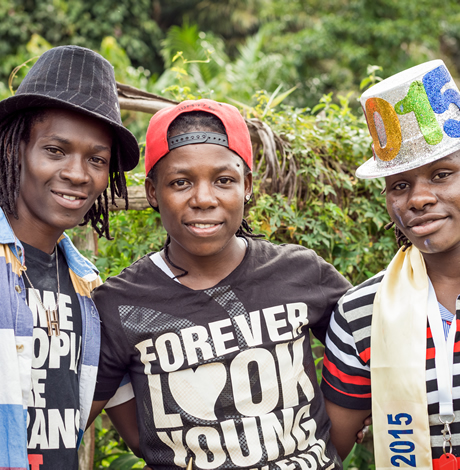
From left are Apako Williams, Jay Mulucha and Mr. Pride 2015 at Uganda Pride. (Photo by Katie G. Nelson, used with permission)
Last year, the Washington Blade spotlighted United States lawyer Nate Freeman on his journey across Africa to raise awareness for LGBT rights through his Out in Africa Ride foundation.
Freeman is back in Africa to continue the work that was started on that ride. The obstacles for social change in the LGBT community in Africa are great, but Freeman has encountered a number of organizations fostering change on a grass-roots level.
Last year, he rode his bike from Cairo to Cape Town to meet with LGBT activists in 10 different countries. He now works in Kampala, Uganda for Human Rights Awareness and Promotions Forum, an organization that provides free legal aid services for LGBT people.
Those services include assisting LGBT people who have been arrested and training paralegals to represent LGBT people in their communities. Money raised from the Out in Africa Ride (outinafricaride.org) has funded a project to help LGBT non-profits comply with all the necessary legalities, such as registering the organization and instituting a proper board of directors.
Uganda criminalizes same-sex relationships and the environment for LGBT people there is difficult. A number of committed Ugandan activists are involved in important work to create a better environment for the future.
After Freeman settled into his work in Kamapala and began networking, he was pleasantly surprised to find a fledgling LGBT sports community in the area.
Organizations such as the Uganda Network for Transgender and Gender Non-Conforming Persons, FEM Alliance, Freedom and Roam Uganda and Sexual Minorities Uganda all have members and staff who are LGBT athletes. So far, Freeman has encountered LGBT athletes in the sports of rugby, basketball, soccer and swimming.
Warry Ssenfuka, executive director of Freedom and Roam Uganda, is also captain of the national Uganda women’s rugby team. She is openly lesbian and says that while many remain in the closet for fear of discrimination, the rugby world has become a safer place for the LGBT community. Although Ssenfuka has been attacked verbally, she usually ends up as friends with those who have criticized her.
“Our efforts are all about benefitting the communities and sports offer a huge opportunity for camaraderie,” Freeman says. “Gaining acceptance for LGBT people requires a multi-pronged approach and it will focus on the arts, business and sports in addition to the legal and health issues that the communities face.”
Often times, it is just the “whisperings” of their sexual orientation or gender identities that set up the obstacles for the LGBT athletes and results in their teams being disbanded.
The soccer team has been shut down for a year though members are still playing pick-up and are looking to compete again. The Magic Stormers basketball team is now experiencing the same problems and the lack of sponsors has led to loss of court time, jerseys and good players.
Two members of the Magic Stormers, Apako Williams and Jay Mulucha, are trans men. Williams, executive director of the Uganda Network, and Mulucha, executive director of FEM Alliance, were victims of a hate crime several months ago perpetrated in a sports bar by fellow athletes.
Despite the attacks, Williams and Mulucha hope they can take a basketball team to compete in the 2018 Gay Games in Paris.
“If we come out and show that we are strong,” Mulucha says, “we can encourage even those people in the LGBT community who have lost it all to have hope.”
As a test case to pave the road to the Gay Games, Freeman is looking for an opportunity to send six swimmers to Edmonton, Canada for the International Gay & Lesbian Aquatics Championships in August.
He is being assisted by Williams and Mulucha, as well as by Diane Bakuraira, an administrator at Sexual Minorities Uganda who trained on the national Uganda swim team. Because she was gender non-conforming, she was never asked to compete in international competitions. For her, the world championships are an opportunity to increase visibility.
“The world has low perceptions of LGBT people and of Africans,” she says. “We want to show that we can compete.”
The idea for sending the swimmers is a long shot for two reasons: visas and funding.
LGBT Ugandans have had a difficult time getting visas to Canada in the past including a contingent of Ugandans who were invited to Toronto Pride in 2015. Freeman is hoping the Justin Trudeau government will be more open to granting visas and that the Ugandans can allay any fears about those who may seek asylum.
“’We have identified a team of swimmers who we believe pose an extremely low risk of seeking asylum,” Freeman says. “These swimmers are all employed and well-connected members of the community who want to remain in Uganda with their families to fight for greater equality.”
As for funding, Freeman has been in contact with a network of high-end donors in several U.S. cities who are interested in global LGBT issues. The problem facing the request for sports funding is that human rights organizations and health organizations are where donors usually offer their support.
“Obviously I am advocating for all LGBT issues, but the law isn’t going to change here in the near future,” Freeman says. “A big push for all of the issues would result from economic assistance and more visibility of the athletes.”
He says the desire for visibility and openness is the same thing driving LGBT athlete all over the world.
“In some ways, this is the reclamation of their own body by saying they can still use it to play athletics,” says Freeman. “The government and society can’t dictate what they do with their own bodies.”
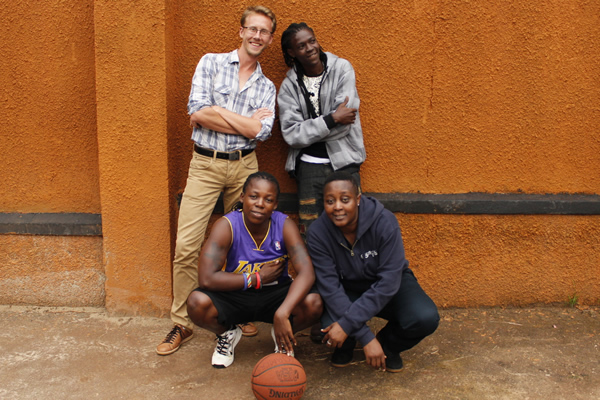
Top (l-r) Nate Freeman and Apako Williams; bottom (l-r) Jay Mulucha and Diane Bakuraira (Photo courtesy Freeman)



Sports
New IOC policy bans trans women from Olympics
New regulation to be in effect at 2028 summer games in Los Angeles
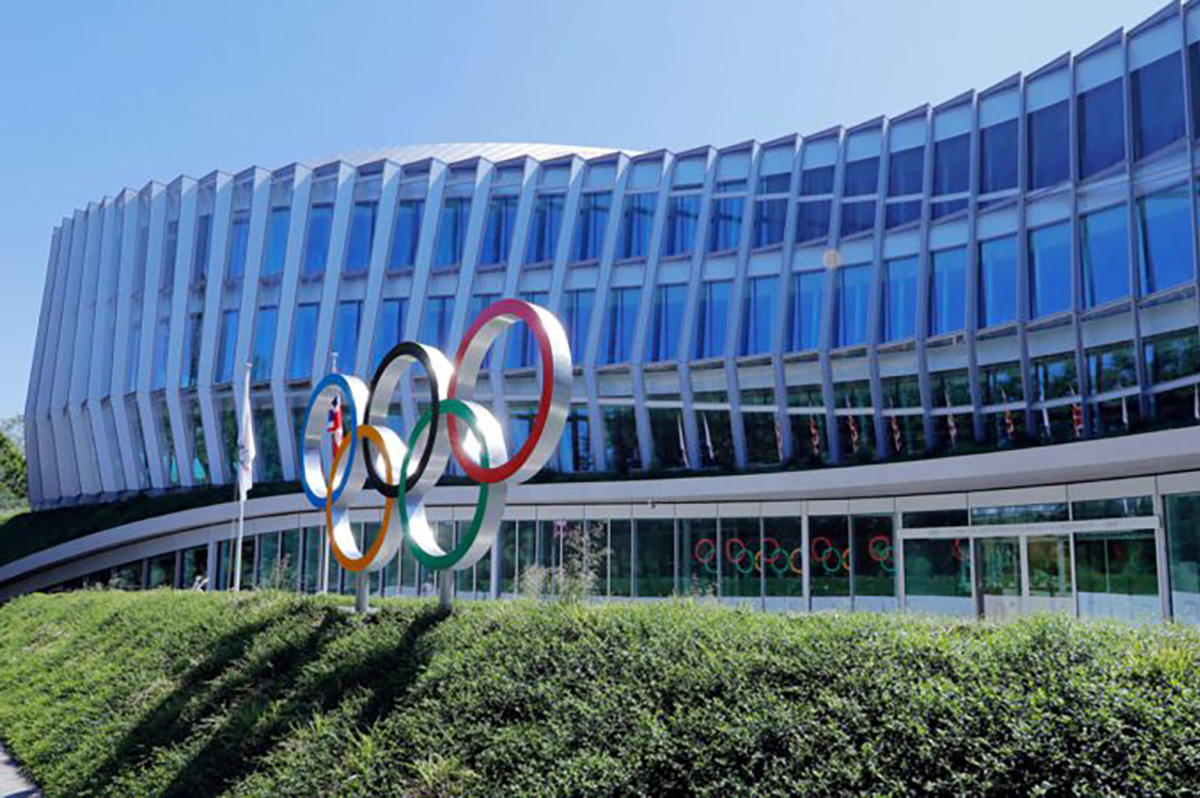
The International Olympic Committee on Thursday announced it will not allow transgender women from competing in female events at the Olympics.
“For all disciplines on the Sports Program of an IOC event, including individual and team sports, eligibility for any Female Category is limited to biological females,” reads the new policy.
The policy states “eligibility for the Female Category is to be determined in the first instance by SRY Gene screening to detect the absence or presence of the SRY Gene.”
“On the basis of the scientific evidence, the IOC considers that the SRY (sex-determining Region Y) Gene is fixed throughout life and represents highly accurate evidence that an athlete has experienced or will experience male sex development,” it reads. “Furthermore, the IOC considers that SRY Gene screening via saliva, cheek swab or blood sample is unintrusive compared to other possible methods. Athletes who screen negative for the SRY gene permanently satisfy this policy’s eligibility criteria for competition in the Female Category.”
The policy states the test “will be a once-in-a-lifetime test” unless “there is reason to believe a negative reading is in error.”
The new regulation will be in place for the 2028 Summer Olympics in Los Angeles.
“I understand that this a very sensitive topic,” said IOC President Kirsty Coventry on Thursday in a video. “As a former athlete, I passionately believe in the rights of all Olympians to take part in fair competition.”
“The policy that we have announced is based on science and it has been led by medical experts with the best interests of athletes at its heart. The scientific evidence is very clear: male chromosomes give performance advances in sport that rely on strength, power, or endurance,” she added. “At the Olympic Games, even the smallest margins can be the difference between victory and defeat. So, it is absolutely clear that it would not be fair for biological males to compete in the female category. In addition, in some sports it would simply not be safe.”
(Video courtesy of the IOC)
Laurel Hubbard, a weightlifter from New Zealand, in 2021 became the first trans woman to compete at the Olympics.
Imane Khelif, an Algerian boxer, won a gold medal at the 2024 Summer Olympics in Paris. Khelif later sued JK Rowling and Elon Musk for cyberstalking after they questioned her gender identity.
Ellis Lundholm, a mogul skier from Sweden, this year became the first openly trans athlete to compete in any Winter Olympics when he participated in Milan Cortina Winter Olympics in Italy.
President Donald Trump in February 2025 issued an executive order that bans trans women and girls from female sports teams in the U.S.
The U.S. Olympic and Paralympic Committee last July banned trans women from competing in female sporting events. Republican lawmakers have demanded the IOC ban trans athletes from women’s athletic competitions.
“I’m grateful the Olympics finally embraced the common sense policy that women’s sports are for women, not for men,” said U.S. Sen. Tom Cotton (R-Ark.) on X.
An IOC spokesperson on Thursday referred the Washington Blade to the press release that announced the new policy.
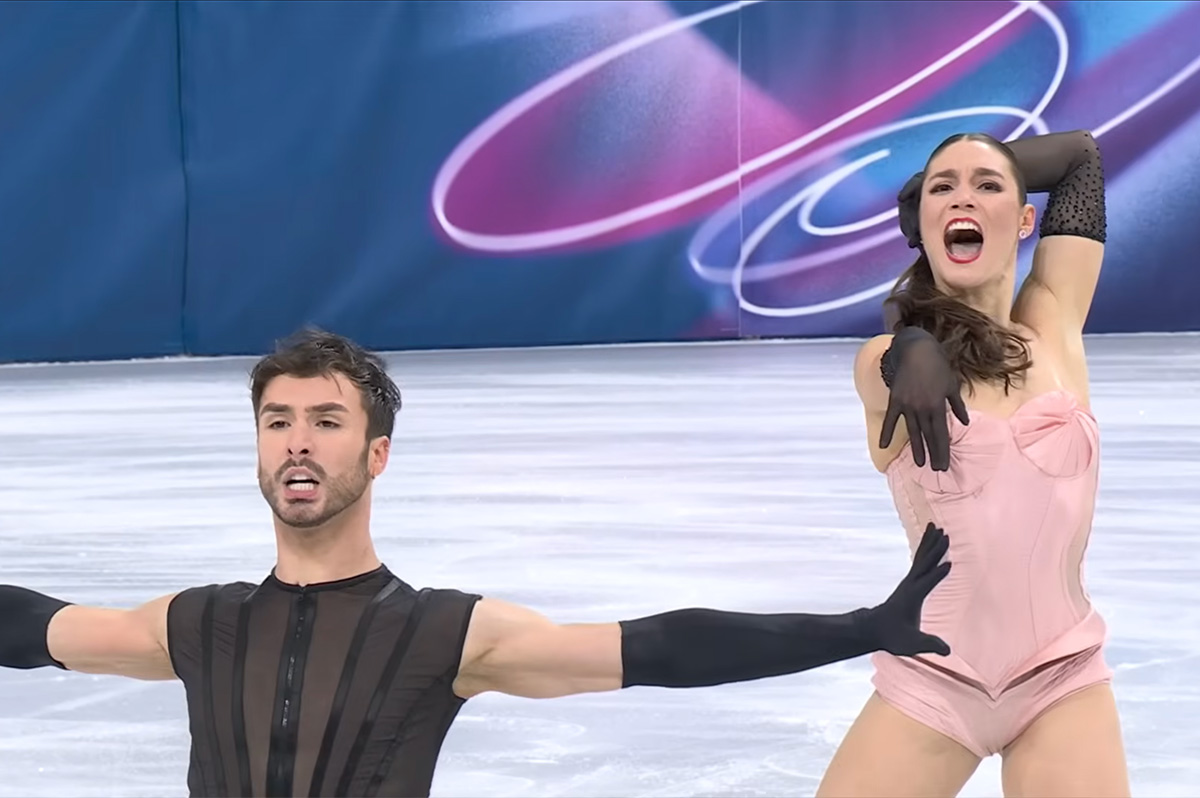
More than a dozen LGBTQ athletes won medals at the Milan Cortina Winter Olympics that ended on Sunday.
Cayla Barnes, Hilary Knight, and Alex Carpenter are LGBTQ members of the U.S. women’s hockey team that won a gold medal after they defeated Canada in overtime. Knight the day before the Feb. 19 match proposed to her girlfriend, Brittany Bowe, an Olympic speed skater.
French ice dancer Guillaume Cizeron, who is gay, and his partner Laurence Fournier Beaudry won gold. American alpine skier Breezy Johnson, who is bisexual, won gold in the women’s downhill. Amber Glenn, who identifies as bisexual and pansexual, was part of the American figure skating team that won gold in the team event.
Swiss freestyle skier Mathilde Gremaud, who is in a relationship with Vali Höll, an Austrian mountain biker, won gold in women’s freeski slopestyle.
Bruce Mouat, who is the captain of the British curling team that won a silver medal, is gay. Six members of the Canadian women’s hockey team — Emily Clark, Erin Ambrose, Emerance Maschmeyer, Brianne Jenner, Laura Stacey, and Marie-Philip Poulin — that won silver are LGBTQ.
Swedish freestyle skier Sandra Naeslund, who is a lesbian, won a bronze medal in ski cross.
Belgian speed skater Tineke den Dulk, who is bisexual, was part of her country’s mixed 2000-meter relay that won bronze. Canadian ice dancer Paul Poirier, who is gay, and his partner, Piper Gilles, won bronze.
Laura Zimmermann, who is queer, is a member of the Swiss women’s hockey team that won bronze when they defeated Sweden.
Outsports.com notes all of the LGBTQ Olympians who competed at the games and who medaled.
Sports
US wins Olympic gold medal in women’s hockey
Team captain Hilary Knight proposed to girlfriend on Wednesday
The U.S. women’s hockey team on Thursday won a gold medal at the Milan Cortina Winter Olympics.
Team USA defeated Canada 2-1 in overtime. The game took place a day after Team USA captain Hilary Knight proposed to her girlfriend, Brittany Bowe, an Olympic speed skater.
Cayla Barnes and Alex Carpenter — Knight’s teammates — are also LGBTQ. They are among the more than 40 openly LGBTQ athletes who are competing in the games.
The Olympics will end on Sunday.

Women’s FEST returns to Rehoboth Beach next week

Belarusian lawmakers approve bill to crackdown on LGBTQ rights

Calendar: April 3-9

How new barriers to health care coverage are hitting D.C.

Kenyan advocacy groups launch LGBTQ voter mobilization campaign

‘Out for McDuffie’ event held at D.C. gay bar

‘Jonah’ an undeniably compelling but unusual memory play

The Oscar-losing performance that’s too good to miss

Thousands attend ‘No Kings’ protests in D.C.