Local
D.C. to bid on 2022 Gay Games
16 other cities vie to host sporting event

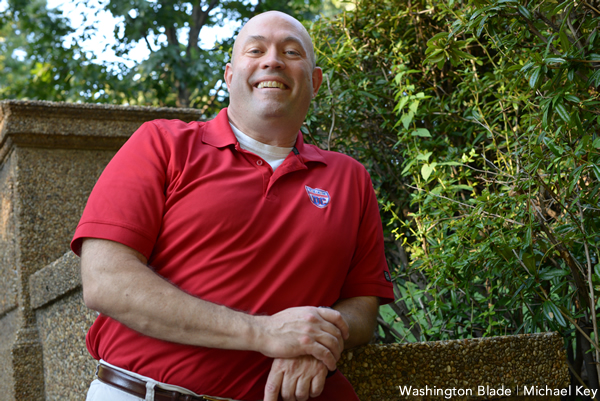
Team D.C.’s Brent Minor (Washington Blade photo by Michael Key)
D.C. is among 17 cities on three continents that have expressed an interest in bidding to become the host city for the 2022 Gay Games, the quadrennial international LGBT sports competition.
According to a statement released on April 19 by the Federation of Gay Games, organizations in D.C. and the other cities must embark on a rigorous and costly process of putting together and submitting a formal bid by Nov. 30, 2016.
Brent Minor, executive director of Team D.C., an association of 31 LGBT sports groups in the D.C. metropolitan area, said the association will be the bidding organization for hosting the 2022 Gay Games.
He said Team D.C. officials are confident that the knowledge and experience they gained in bidding on the 2014 Gay Games will enable them to put together a top-notch bid for the 2022 games.
D.C. lost the bidding competition to Cleveland for the 2014 Gay Games. But according to Minor, D.C. came in second place and its 300-plus page bid was considered by FGA officials to be highly professional and sufficient to make D.C. a successful host for the games.
At the time they selected Cleveland, FGA officials said D.C. and Boston, which along with Cleveland were finalists in the competition, could have successfully hosted the games. The officials said Cleveland was selected because the FGA believed holding the games there would better advance LGBT equality in a region of the U.S. that was less advanced in LGBT rights than the Boston and D.C. regions.
The other cities that expressed interest along with D.C. in bidding to host the 2022 games are Anaheim, Calif.; Atlanta, Ga.; Austin, Texas; Cape Town, South Africa; Denver, Colo.; Des Moines, Iowa; Guadalajara, Mexico; Hong Kong; Los Angeles; Madison, Wis.; Minneapolis; Salt Lake City, Utah; San Antonio, Texas; San Francisco; and Tel Aviv.
The next Gay Games is scheduled to take place in Paris in 2018.
The FGG’s announcement of the start of the bidding process for the 2022 games came just over a month after it announced it had withdrawn from longstanding negotiations with the Gay & Lesbian International Sports Association (GLISA) about a possible merger of the Gay Games and the GLISA sponsored Out Games.
FGG said in its announcement that it concluded a merged venture would be “high risk” and the “valuable financial and human resources” needed for such a venture couldn’t be justified at this time.



Rehoboth Beach
Women’s FEST returns to Rehoboth Beach next week
Golf tournament, mini-concerts, meetups planned for silver anniversary festival
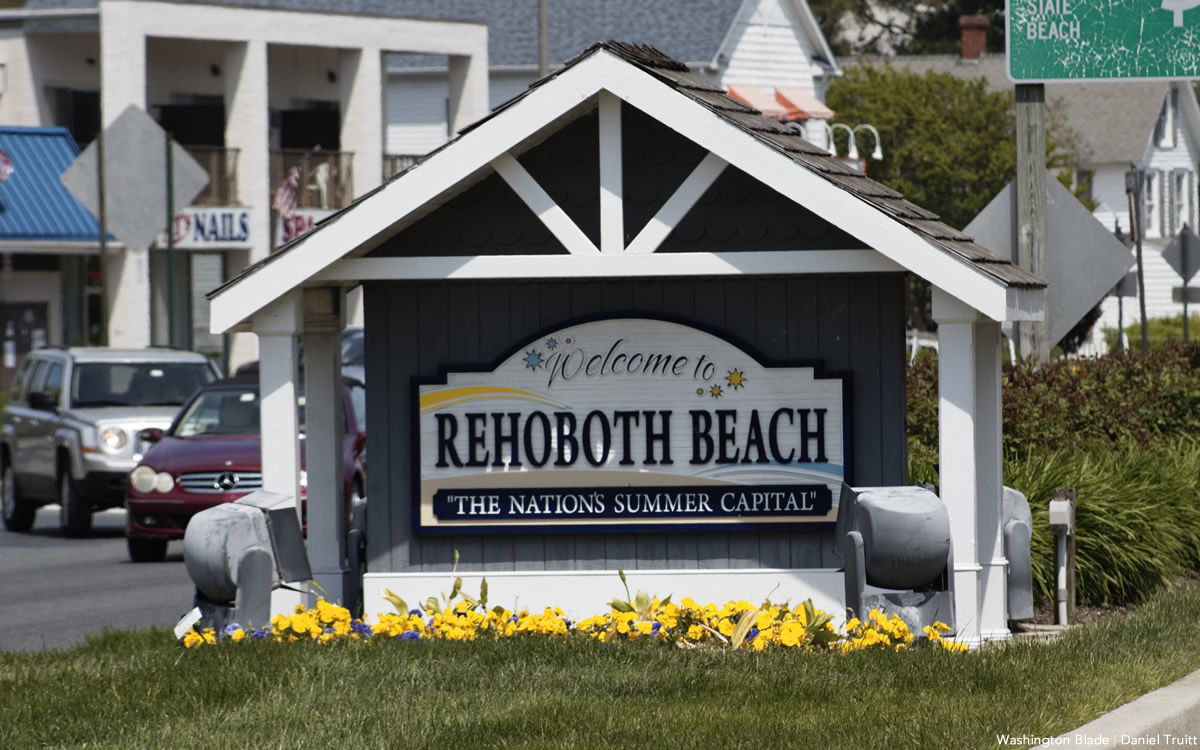
Women’s+ FEST 2026 will begin on Thursday, April 9 at CAMP Rehoboth Community Center.
The festival will celebrate a remarkable milestone in 2026: its silver anniversary. For 25 years, Women’s+ FEST has brought fun and entertainment for all those on the spectrum of the feminine spirit. There will be a variety of events including a golf tournament, mini-concerts and happy hour meetups.
For more information, visit Camp Rehoboth’s website.
District of Columbia
How new barriers to health care coverage are hitting D.C.
Federally qualified health centers bracing for influx of newly uninsured patients

Washington, D.C. has the second-lowest rate of people who lack health insurance in the country, but many residents are facing new barriers to health care due to provisions of the sweeping federal law passed in July, which threatens access for thousands.
Changes to insurance eligibility and the rising cost of premiums, which kicked in for some in October and others more recently, are expected to leave many more patients uninsured or unable to afford medical care. Federally qualified health centers, including D.C.’s Whitman-Walker Health, where 10 to 12 percent of patients are uninsured, are bracing for an influx of newly uninsured patients while facing their own financial challenges.
Even in D.C., where uninsured rates have been among the lowest in the country, changes brought on by the passage of the Republican mega bill (known as the “Big Beautiful Bill”) will have major effects.
The changes from the bill affect Medicaid, which is free to low-income patients, and subsidies for insurance that people buy on the health insurance exchanges that were started under the Affordable Care Act, which were allowed to expire on Dec. 31.
Erin Loubier, vice president for access and strategic initiatives at Whitman-Walker Health, says some Whitman-Walker Health patients have received notices about premium increases, including several who say the increases are up to 1,000 percent more than they were paying.
“That is like paying rent,” she says. “We live in an expensive city, so any increases are going to be really, really hard on people.”
Whitman-Walker Health and other healthcare providers are expecting the changes to have multiple effects — some patients may not be able to afford coverage or may avoid going to the doctor and allow health conditions to worsen because they can’t afford care, and many more will be seeking care who don’t have insurance.
“I’m worried that we’re going to not just have people who can’t get care, but that they delay care until they’re really sick, and then the care is not as effective because they might have waited too long, and then we may have a less healthy population,” Loubier says.
Loubier says delaying care, and serving more people without insurance has major implications for Whitman-Walker Health and other health centers serving the community.
“There’s going to be a lot of pressure on us to try to find and raise more money, and that’s going to be harder, because I think all organizations who provide health care are going to be facing this,” she says.
The U.S. health care system is the most expensive in the world, and has much higher out-of-pocket costs for individuals. But in other countries like the United Kingdom, Australia, Canada, and many others, health care is much less expensive — or even free.
Even though the U.S. has a high-priced healthcare system, critics say there are still ways to bring down costs by forcing insurance and pharmaceutical companies to absorb more of the costs, rather than transferring the costs to patients.
“In the U.S., they end up trying to cut costs at the person’s level, not at the level of the different corporations or structures that are making a lot of money in healthcare,” said Loubier. “Our system is so complicated and there is probably waste in it, but I don’t think that that cost and waste is at the ‘people’ level. I think it’s higher up at the system level, but that is much, much harder to get people to try to make cuts at that end.”
Ultimately at Whitman-Walker Health, healthcare providers and insurance navigators are planning to help with everyday necessities when it comes to healthcare coverage and striving to provide healthcare in partnership with patients, said Loubier.
“The key here is we’re going to have a lot of people who may lose insurance, and they’re going to rely on places like Whitman-Walker Health and other community health centers, so we have to figure out how we keep providing that care,” she said.
(This article was written by a student in the journalism program at Bard High School Early College DC. This work is part of a partnership between the Washington Blade Foundation and Youthcast Media Group, funded through the FY26 Community Development Grant from the Office of D.C. Mayor Muriel Bowser.)
District of Columbia
Mayor Bowser signs bill requiring insurers to cover PrEP
‘This is a win in the fight against HIV/AIDS’

D.C. Mayor Muriel Bowser on March 20 signed a bill approved by the D.C. Council that requires health insurance companies to cover the costs of HIV prevention or PrEP drugs for D.C. residents at risk for HIV infection.
Like all legislation approved by the Council and signed by the mayor, the bill, called the PrEP D.C. Amendment Act, was sent to Capitol Hill for a required 30-day congressional review period before it takes effect as D.C. law.
Gay D.C. Council member Zachary Parker (D-Ward 5) last year introduced the bill.
Insurance coverage for PrEP drugs has been provided through coverage standards included in the Affordable Care Act, known as Obamacare. But AIDS advocacy organizations have called on states and D.C. to pass their own legislation requiring insurance coverage of PrEP as a safeguard in case federal policies are weakened or removed by the Trump administration, which has already reduced federal funding for HIV/AIDS-related programs.
Like legislation passed by other states, the PrEP D.C. Amendment Act requires insurers to cover all PrEP drugs approved by the U.S. Food and Drug Administration.
Studies have shown that PrEP drugs, which can be taken as pills or by injection just twice a year, are highly effective in preventing HIV infection.
“I think this is a win for our community,” Parker said after the D.C. Council voted unanimously to approve the bill on its first vote on the measure in February. “And this is a win in the fight against HIV/AIDS.”

Women’s FEST returns to Rehoboth Beach next week

Belarusian lawmakers approve bill to crackdown on LGBTQ rights

Calendar: April 3-9

How new barriers to health care coverage are hitting D.C.

Kenyan advocacy groups launch LGBTQ voter mobilization campaign

‘Out for McDuffie’ event held at D.C. gay bar

‘Jonah’ an undeniably compelling but unusual memory play

The Oscar-losing performance that’s too good to miss

Thousands attend ‘No Kings’ protests in D.C.