Opinions
The year of voting despondently
Both political parties look likely to offer unpalatable presidential nominees
Irrespective of the outcome, there is not likely to be much joy in the air come Nov. 8.
Never in the history of polling has a political party nominated a candidate for president so disliked and distrusted as to be viewed negatively by a strong majority of the country.
This year we’re likely to get two.
Americans haven’t taken to torching voter registration cards in a throwback to the draft-card-burning Vietnam era but would we really be all that surprised if it occurred? Given the overwhelming disdain presumptive nominees Hillary Clinton and Donald Trump evoke, lining up at the polls to vote may be remembered more as a scene from a zombie apocalypse film than doing our civic duty.
Irrespective of the outcome, there is not likely to be much joy in the air come Nov. 8 at the conclusion of the 58th quadrennial U.S. presidential election. Nor can we reasonably expect much improvement in the performance or productivity of the national government.
Outside relatively rarified environs like the politics-company town of Washington, overflowing with party hacks and political partisans, voters elsewhere can’t wait for this electoral episode to come to its inevitably ignoble end. Even the aligned mostly posit the argument in terms of the other candidate being worse.
For the somber-minded among us, it’s often difficult to discern where these candidates actually stand on many issues. Trump wins for being the most egregious on that score, a totally freewheeling candidate when contrasted with his acutely disciplined and overly dreary opponent.
Clinton, however, is being dragged to the extreme, and kooky, far left where the Democratic Party now exists and she has been forced to adopt untenable general election positions by socialist challenger Bernie Sanders. Clinton has always been plagued by the notion that she shifts positions easily.
Voters get the sense that the poll-driven, message-tested, focus-grouped, micro-targeted and slice-of-the-electorate litany-listing Clinton might not actually mean what she says. Trump is likewise viewed as a political chameleon, rooted more in a keen ability to decipher the national zeitgeist than possessing concrete pillars for crafting what are all-over-the-place and constantly changing views.
What may be the most significant aspect about Trump is the possibility he may wean the GOP away from a longstanding anxiety and debilitating angst over social and lifestyle issues. He may or may not win the general election, but he might generally free Republicans from their losing agenda worrying how Americans conduct and construct their personal lives. And that, as they say, would be “good for the gays.”
Both parties should have seen this situation coming.
Democrats, with few rising political personalities and an aging stable of office-holding stalwarts due devastating election losses at the federal, state and local levels over the past couple of decades, had few real options.
Republicans, with a plethora of objectively credible candidates, discovered that all except Trump were unable to excite the party cadre or capture the decidedly sour mood of voters.
There are, of course, abundant ironies in this now-anticipated contest. Both Clinton and Trump are first and foremost crony capitalists, comfortable with picking winners and losers among large corporate business and with scant concern for smaller enterprise except to intone the usual pithy platitudes that localized smaller-scale entrepreneurs have learned mean nothing. Both are believers in an even bigger government exercising even more control over the economy while deploying even greater hyper-overregulation – as long as they’re in charge.
The pundits might well be correct, and Trump may lead the Republicans to a blowout loss this fall. Or it might be much closer than predicted. He might even win.
Maybe Clinton is simply unelectable and the oddest and wildest candidate in, well, maybe ever, is uniquely poised to overcome the nearly insurmountable advantage Democrats enjoy by Electoral College measure.
Regardless of how we cast our votes, we could feel the need to take a long hot shower after exiting the polling place.
If very many actually do vote.
Mark Lee is a long-time entrepreneur and community business advocate. Follow on Twitter: @MarkLeeDC. Reach him at [email protected].

Commentary
Is Ghana’s selective justice a human rights contradiction?
Country’s commitment to human rights appears inconsistent
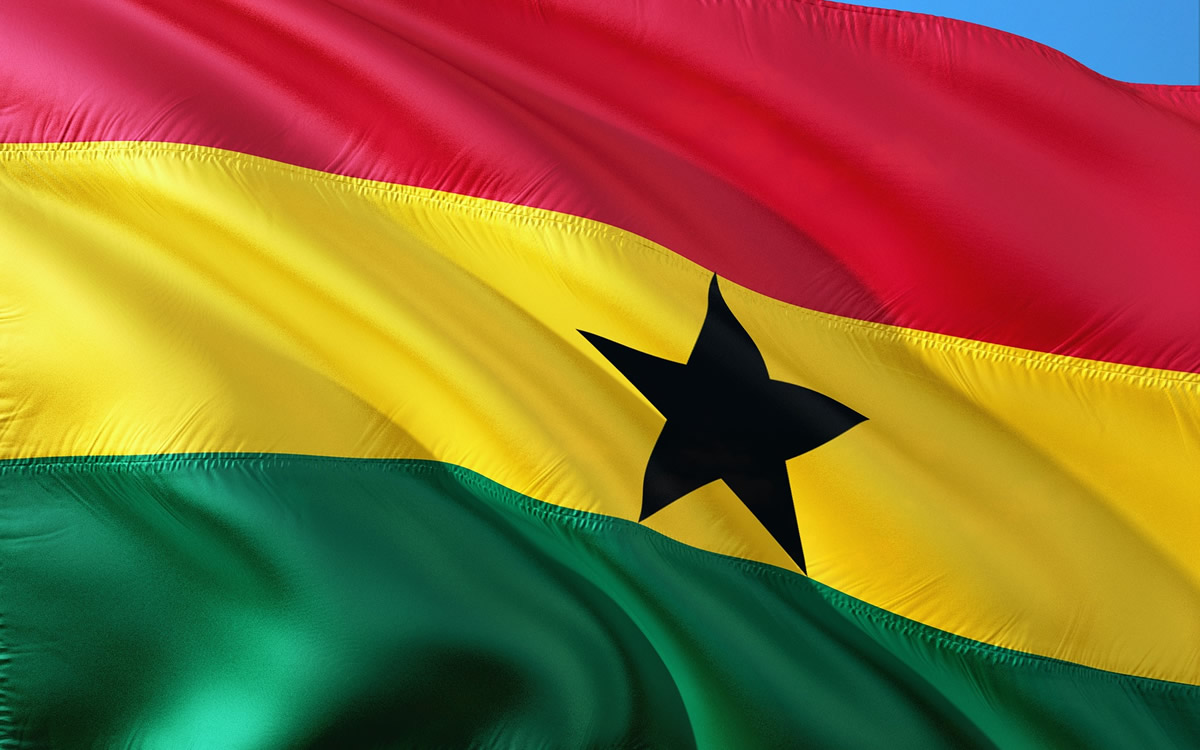
Ghana’s mission to have the United Nations recognize the trafficking of enslaved Africans and racialized chattel enslavement as the gravest crime against humanity is a historic milestone. The resolution adopted on March 25, 2026, with 123 out of about 180 countries in support, marks a major step toward global acknowledgement of the brutality and inhumanity of slavery. A 2022 report by the Equal Justice Initiative, “The Transatlantic Slave Trade,” highlights how during the slave trade, Africans who were enslaved had no rights, freedom, recognition or protection under the law. They had no voice, no bodily autonomy, no respected identity and could be brutally violated with no legal protection. This history represents a grave crime against humanity.
In my opinion, Ghana and the other countries that voted in favor are entirely right to say that such historic events cannot be sanitized or reduced to diplomatic language. Recognition is the first step towards accountability. This matter is important because it is arguably the foundation of the modern-day injustice and inequality people experience, including wealth inequality, racism, sexism, xenophobia, and queerphobia.
The double standard
Yet, despite this important step on the world stage, Ghana’s commitment to human rights appears inconsistent. The same government advocating for justice for enslaved Africans is enacting laws that jeopardies the rights of Africans today. This contradiction between Ghana’s international stance and its domestic policies is at the heart of the discussion.
In February 2026, the Ghanaian parliament formally received the Human Sexual Rights and Family Values Bill. The bill is a grave threat to the rights to nondiscrimination, protection under the law, privacy and freedom of association, assembly, and expression. It expands criminalization of LGBTQ+ people, and anyone associated with them. This Human Sexual Rights and Family Values Bill calls for a three-year imprisonment for anyone who identifies as LGBTQ+, anyone who has gender affirming treatment, anyone who enters into a same-sex marriage or attends a same-sex wedding and anyone who promotes equal rights for LGBTQ+ people. It turns enforcement into a societal obligation rather than just a state function, encouraging people to report anyone who looks suspicious or different. This further legitimizes the brutal attacks on LGBTQ+ people socially, which leaves the people of Ghana with blood on their hands.
Ghana’s proposed and reintroduced anti-LGBTQ+ legislation is said to be among the most restrictive in the world and will result in the inhumane treatment of LGBTQ+ people. It not only further criminalizes consensual same-sex relations but also targets civil society organizations that are perceived to be supporting equal rights for LGBTQ+ people. So, if this law passes, it will be illegal to support equal rights and challenge the inhuman treatment of queer Ghanaians and allies. Is this not a double standard? Ghana seeks justice for the ill-treatment of Africans during the transatlantic slave trade but is actively in the process of seeking to harm its own people.
This is not theoretical harm; it is practical harm. According to the Human Rights Watch, LGBTQ+ people in Ghana already face systemic stigma, discrimination, harassment and violence, often enabled by both legal frameworks and social stigma, resulting in a hostile climate.
Ghana falls short of upholding human rights at home
On the global stage, Ghana is arguing that the dehumanization of Africans through slavery was so severe that it constitutes the gravest possible violation of human dignity. This argument rests on a core principle that reducing people to less than fully human is unacceptable under any circumstances.
Back at home, the state is endorsing laws that do exactly that to LGBTQ+ people. Criminalizing identity, suppressing expression, clamping down on civic space, monitoring and surveilling citizens and advocating for social exclusion. These are elements of dehumanization signaling that some are less deserving of protection, dignity, respect, and justice. That is the definition of a double standard.
Supporters of these laws often frame homosexuality as un-African, but this claim does not hold up under scrutiny. In his article, “The ‘Deviant’ African Genders That Colonialism Condemned”, Mohammed Elnaiem emphasizes that historical and anthropological evidence shows that diverse sexualities and gender expressions existed across African societies long before colonial rule. Ironically, many of the laws used to criminalize LGBTQ+ people today trace directly back to the colonial-era. This is even supported by the African Court, which, in December 2020, through its Advisory opinion, made it clear that these colonial-era laws are discriminatory and perpetuated marginalization. The African Court also called on African states to take action in this regard.
It is no secret that anti-rights actors are actively operating in Ghana and supporting leaders to advance their anti-rights agenda. They are increasingly organized, visible, well-funded, and influential in shaping state policy. The upcoming 4th African Inter-Parliamentary Conference on Family and Sovereignty, scheduled to take place in Accra from May 27-30, 2026, is a clear example of this coordination. The conference endorses the so-called African Charter on Family Values, a deeply contested initiative that frames LGBTQ+ people as a threat to children and positions queer identities as foreign ideologies. This platform is being used to legitimize and advance anti-LGBTIQ+ legislation, restrict comprehensive sexuality education and roll back sexual and reproductive health rights. In this context, the treatment of LGBTQ+ people in Ghana cannot be viewed as isolated policy choices, but rather as part of a broader coordinated anti-rights agenda that normalizes and legalizes discrimination. It fuels increasingly inhumane conditions for queer communities and civil society. Ghana is simultaneously rejecting colonial injustice in one breath while enforcing colonial-era morality laws in another.
There is also a legal inconsistency worth noting. Ghana’s own Constitution guarantees the right to life, protection from violence, the right to personal liberty, the right to human dignity, equality and freedom from discrimination and the right to a fair trial. Yet, in practice these rights are not equally applied to LGBTQ+ individuals. Depriving equal rights to LGBTQ+ persons is the same as what the slave owners did to slaves.
You cannot build a credible human rights position on selective application
To be clear, recognizing slavery as a crime against humanity is not diminished by pointing out this contradiction. Both truths can coexist: the UN resolution is a victory and Ghana’s domestic policies remain deeply troubling. In fact, holding both realities together is necessary if the language of human rights is to mean anything at all. Ghana has taken a powerful stand on the global stage. The question now is whether it is willing to apply that same moral clarity at home.
Bradley Fortuin is a consultant at the Southern Africa Litigation Center and a human rights activist.
Commentary
The cost of speaking one’s mind
Colombian artist José Miel’s recent comments on Pride, LGBTQ community sparked controversy
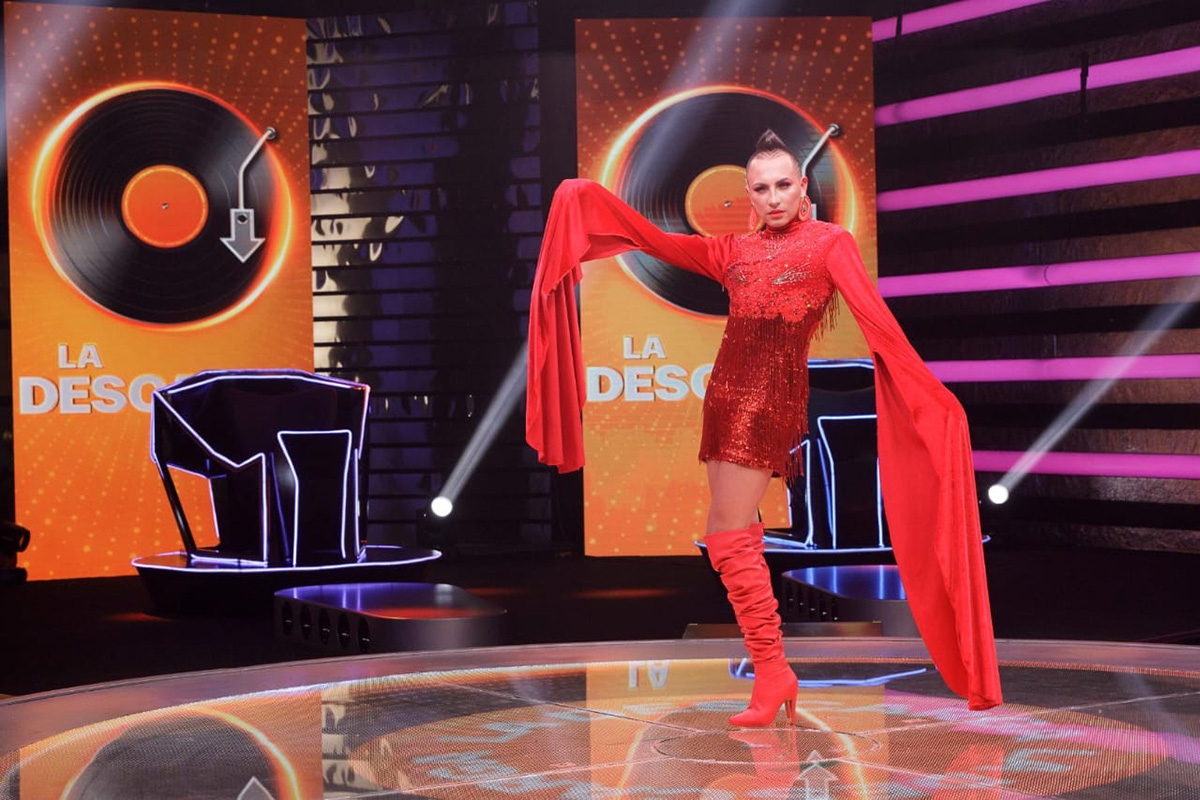
Colombian artist José Medina, known professionally as José Miel, 34, originally from Bogotá, is going through one of the most complex moments of his public career. Following his exit from “La casa de los famosos Colombia,” his name has been placed at the center of a controversy that has gone beyond the realm of entertainment and into a broader terrain: the debate over freedom of expression, diversity, and the limits of dissent within a society that defines itself as inclusive.
Miel is not an improvised figure. His trajectory in music, acting, and television reflects a sustained process of training, work, and exposure across different platforms. He participated in “Yo me llamo” (2019) and “La Descarga” (2022), establishing himself as a versatile artist within the Colombian entertainment industry. His career has been built through effort, in an industry that does not guarantee permanence without discipline.
However, the recent focus is not on his artistic work, but on his statements.
On March 15, the program “La Red” on Caracol Televisión released an interview on its digital platforms in which the singer spoke openly about the difficult moment he is facing, stating that his words — referring to comments he made after leaving “La casa de los famosos” — “cost him dearly.” His opinions on Pride, inclusive language, and the LGBTQ acronym triggered an immediate and polarized reaction.
From that moment on, the debate moved beyond the content of his words and opened another angle that cannot be overlooked.
Miel is known for the precision, firmness, and clarity with which he expresses his ideas. He is not an improvised artist, neither in discourse nor on stage. However, amid this controversy, a question also arises — one that deserves consideration from a journalistic standpoint:
What was the intention of the journalist, commentator, or media outlet that posed the questions leading to these statements?
This is not about shifting responsibility for what was said, but about understanding the context in which it occurred. At a moment in his career marked by multiple opportunities and projects, Miel’s responses placed him at the center of a controversy with real consequences.
In that sense, it is worth asking whether these were genuine questions within an open dialogue, or whether they followed a more provocative line, aimed at generating headlines or exposing the interviewee in a sensitive terrain.
This is not a minor question.
In media environments where every word can be amplified, the role of the one asking the questions is also part of how the story is constructed.
Within this context, this outlet held a phone conversation with the artist this Wednesday in order to gather his position directly. What follows are his responses to three central themes: the consequences of his words, his identity, and his call for respect.
Regarding the personal cost of expressing his opinion, Miel was clear:
You are now paying a high price for speaking your mind.
Do you regret having spoken out, or do you still believe your voice is non-negotiable?
Response:
“I believe that as human beings we all know that giving an opinion on any topic will bring problems. That’s the problem with society: it doesn’t respect other people’s opinions, because many think they are always right, and that’s not the case. Everyone has their reasons, everyone has their opinions, and those must be respected — even if you disagree.
What I expressed was an opinion without discrimination, without harming anyone, without stepping on anyone. And yet the opposite has been done to me: I’ve been trampled on, harmed, threatened, sent very ugly messages, harassed, hate coming from everywhere.
I knew what I was getting into. I knew what could happen. But I am proud of myself. I am proud of my conviction, and I will defend it until the end, because I truly believe in what I said. I do not regret it.”
When addressing his stance on labels, Pride, and how he defines himself, the artist stated:
You say you don’t identify with certain expressions of Pride or with the acronym.
So how do you define who you are, without labels or molds?
Response:
“Well, I don’t identify with Pride marches because they don’t represent me at all. They would represent me if they were respectful and appropriate, because many families attend — children, grandparents, parents … everyone is there.
And it’s quite disrespectful to see many people — not all, I emphasize — exposing their bodies, wearing very little clothing, drinking alcohol, intoxicated, using drugs. I don’t think that’s the way I would seek respect and equality.
I don’t like the term LGBTIQ+ community or all the letters that keep being added, because I feel that these acronyms make people discriminate more. I understand why they exist, because I know that what is not named does not exist, but I feel it is not the right way.
To me, everyone is part of society. We are human beings.
I don’t have labels or molds. I am a man, I am homosexual, and that’s it. The fact that I wear makeup or more feminine clothing is part of my artistic work, part of the stage. My everyday life is completely different.”
Finally, when referring to the reactions he has received, Miel insisted on a point that runs throughout his position:
You speak about respect, yet you’ve received attacks even from within the same community. What do you say today to those who call for inclusion but do not respect when someone thinks differently?
Response:
“I realized that the same community discriminates against itself. Many gay people have written to support me, telling me how brave I am, that they think the same way but don’t dare to speak.
To those who disagree with my opinion, I say: respect it, even if you don’t like it. You can express your opinion because we live in a free country, but do it with arguments, from your perspective, without stepping on others.
Because that is not the way.
I understand the struggles, I understand what is being sought, but I feel that if other ways of fighting were heard, many things could be achieved through respect and equality.
Everyone is free to think and say what they want — but always with respect. It’s that simple.”
Beyond his statements, what the artist is currently facing was also exposed in the March 15 interview on “La Red.” In that space, Miel described in his own words what he called a “string of problems”: constant harassment on social media, direct threats, hate messages, canceled performances, loss of contracts, and stalled projects due to external pressure and boycott warnings.
This situation not only highlights the media impact of his words, but also the material consequences that expressing an opinion can have in today’s digital environment.
His statements also drew reactions from the political sphere. Colombian Congressman Mauricio Toro wrote on social media:
“Hate and discrimination are learned. Sometimes they are so deeply rooted that they turn against oneself. José Miel, neither you nor I have anything to hide or to be ashamed of. Being free and loving without fear is the greatest thing you can experience as a human being.”
However, this position was also criticized. A significant number of users — even those who do not agree with the artist’s statements — have insisted that his right to express his views must be respected, pointing to a growing tension between inclusive discourse and tolerance for dissent.
The case of José Miel goes beyond a media controversy. It reflects a broader reality: the difficulty of sustaining respect when opinions do not align, even within spaces that promote diversity.
In a context where social media amplifies every stance, reactions to difference become immediate and, in many cases, disproportionate.
Beyond individual positions, what happened raises a deeper question:
Is it possible to speak of inclusion if we are not capable of respecting difference?
The philosopher Voltaire left behind an idea that remains relevant:
“I disagree with what you say, but I will defend to the death your right to say it.”
That is the point.
Because if a society is not capable of upholding the right of others to express themselves — even when it is uncomfortable — then it is not building inclusion; it is merely managing agreement.
And in that scenario, the case of José Miel stops being an isolated episode.
It becomes a test.
A test of how far we are willing to go in respecting others when they do not think like us.
Support does not mean agreement.
In this case, support means something more basic and more necessary: defending the right to exist, to think, and to express oneself without being destroyed for it.
Opinions
The outrage economy is not the LGBTQ community
We can respect every person’s humanity without feeding algorithms

There is a simple truth I want to start with, because it matters and because it is too often lost in the noise.
I believe every human being deserves dignity.
I believe in individual freedom. I believe in treating people with respect. I believe adults should be able to live their lives openly, safely, and without harassment or fear.
That includes LGBTQ people. Always. But there is something else we need to say with the same moral clarity.
The outrage economy is not the LGBTQ community.
In recent months, as debates about schools, speech, and identity continue to dominate headlines, it has become increasingly clear how easily genuine conversations about dignity and freedom are drowned out by a profitable outrage cycle.
Right now, too much of what passes for “LGBTQ news” is not about people’s lives, safety, or equality. It is about engagement. It is about clicks. It is about fundraising. It is about manufacturing the next emotional flashpoint. And people are exhausted.
Most Americans are not waking up in the morning looking for a fight about language or labels. They are worried about rent. They are worried about insurance. They are worried about traffic. They are worried about whether their kids are safe and learning. They are worried about whether their paychecks still stretch to the end of the month.
The culture war is not most people’s daily life. It has become an industry.
And like any industry, it needs fuel. It needs conflict. It needs constant escalation. It needs the next headline that triggers the strongest reaction.
Social media algorithms reward exactly that. The loudest and most extreme reactions are amplified, pushing the most sensational interpretation of any story to the top of everyone’s screen. That is why we keep seeing the same pattern: ordinary human experiences are repackaged as identity controversy.
A celebrity reflects on not feeling traditionally feminine, and within hours it becomes a viral referendum on gender identity. A personal observation becomes a cultural battleground. The internet is told it must choose a side. This is not liberation. It is marketing. And it is not harmless.
Because while adults argue about language and labels online, real kids are struggling offline.
Children today are growing up in a world that is louder, faster, and more psychologically intense than any generation before them. Anxiety is rising. Depression is rising. Social isolation is rising. Bullying has migrated from the hallway to the phone, and it never stops.
Kids are being exposed to adult conversations at younger and younger ages, often without the maturity or support systems to process them. Here is the part that should concern everyone, regardless of politics. Our schools are not resourced for this reality.
We do not have enough counselors. We do not have enough psychologists. We do not have enough early childhood behavioral specialists. We do not have enough social workers. We do not have enough trained staff able to identify distress early and intervene appropriately.
Florida, like the rest of the country, faces a serious shortage of youth mental health professionals. When children struggle, too often there is simply no one available to help early.
In many communities the need is obvious and urgent. Yet the conversation we keep getting is not about expanding mental health support, strengthening early intervention, or helping families navigate difficult moments.
Instead we get a never-ending cycle of political conflict that makes everyone more anxious and less able to hear one another. Let me be clear about something. Individuality is not the problem. People are complex. People do not fit neatly into stereotypes. Many never have.
A woman who does not feel like a “girly girl” is not a threat. A man who does not relate to traditional masculinity is not a threat. People exploring their identity is not a threat.
The real problem is the commercialization of identity.
When media outlets treat every celebrity quote as a cultural emergency, they are not helping LGBTQ people. They are feeding a machine that thrives on division. And that machine does not care who gets hurt.
It hurts trans people, because it turns their lives into content and controversy instead of treating them as human beings navigating deeply personal realities.
It hurts gay people, because it reduces an entire community to a political symbol rather than recognizing the diversity of real lives and experiences.
It hurts women, because it suggests that not fitting stereotypes requires a new label, when the entire history of women’s equality has been about expanding freedom beyond those stereotypes.
It hurts families, because it creates confusion without support and noise without guidance. And it hurts the arts as well.
Drag, theater, and performance have long been places where society explores humor, character, and freedom. But when everything becomes political warfare, the public begins to associate even artistic expression with endless conflict.
People withdraw. Not because they hate anyone, but because they are exhausted by the noise. This is the great irony of our moment. A culture that claims to be expanding freedom is, in practice, shrinking it. Not through laws alone, but through fear.
Fear of saying the wrong thing. Fear of being attacked online. Fear of asking a sincere question. Fear of being dragged into a fight that never ends. We cannot build a healthy society that way. And we cannot build a healthy LGBTQ movement that way either.
The LGBTQ community did not fight for decades to replace one set of rigid boxes with another. The goal was always freedom. The goal was dignity. The goal was the right to live honestly without harassment and without the state policing private life.
If we want to protect that legacy, we need to be honest about what is happening now.
There are advocacy organizations doing important work. There are journalists covering real issues responsibly. There are educators and mental health professionals trying to help kids navigate a complicated world.
But there is also a profitable ecosystem of consultants, influencers, and outrage merchants who benefit from keeping the temperature high. They do not want resolution. They want engagement. And engagement requires conflict.
So what do we do? We return to what actually helps. We invest in mental health resources in schools. We expand early childhood support. We make sure kids who are struggling can access qualified professionals. We strengthen families and communities instead of turning them into ideological battlegrounds.
We treat adults like adults. We respect personal freedom. We stop demanding that every workplace become a permanent cultural battlefield. Professionalism is not oppression. Respect is not hate. Equal treatment is not cruelty. We also stop confusing stereotypes with identity.
Not feeling “massively feminine” is not a crisis. It is a normal human experience. It does not need to become a viral controversy. We can respect every person’s humanity without feeding the outrage economy. We can support individuality without turning every personality trait into a cultural emergency. We can defend LGBTQ dignity without empowering a machine that profits from division.
Most of all, we can choose leadership that lowers the temperature instead of exploiting the fire. Because the truth is this: the public is not as hateful as the internet suggests.
The public is tired. The public is overwhelmed. The public is struggling.
And what most people want now is a culture that feels calmer, fairer, and grounded in reality again.
That is not a threat to LGBTQ equality. It may be the only way it survives.
Fabián Basabe is a Florida State Representative.

Kristi Noem ‘devastated’ as husband’s alleged fetish spending surfaces

Colo. activists condemn SCOTUS conversion therapy ruling

Is Ghana’s selective justice a human rights contradiction?

Supreme Court ruling against conversion therapy bans could affect Md. law

Glisten report details hostile climate for LGBTQ students

‘Out for McDuffie’ event held at D.C. gay bar

The Oscar-losing performance that’s too good to miss

‘Jonah’ an undeniably compelling but unusual memory play

Ghanaian president welcomed to Philadelphia amid backlash over anti-LGBTQ bill

PHOTOS: ‘No Kings’ rally and march
-

 District of Columbia3 days ago
‘Out for McDuffie’ event held at D.C. gay bar
-
Movies3 days ago
The Oscar-losing performance that’s too good to miss
-
Theater3 days ago
‘Jonah’ an undeniably compelling but unusual memory play
-
Ghana2 days ago
Ghanaian president welcomed to Philadelphia amid backlash over anti-LGBTQ bill