Local
Drinkery re-opens after liquor board reversal
‘A great day for Mount Vernon’
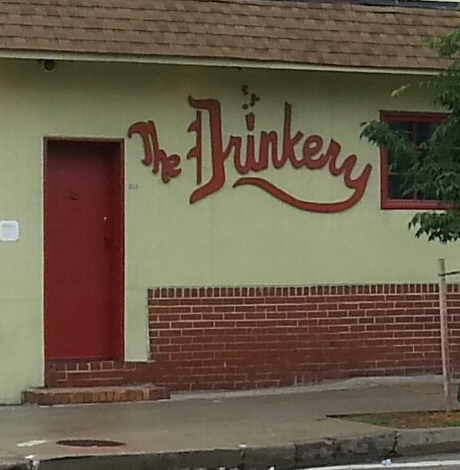
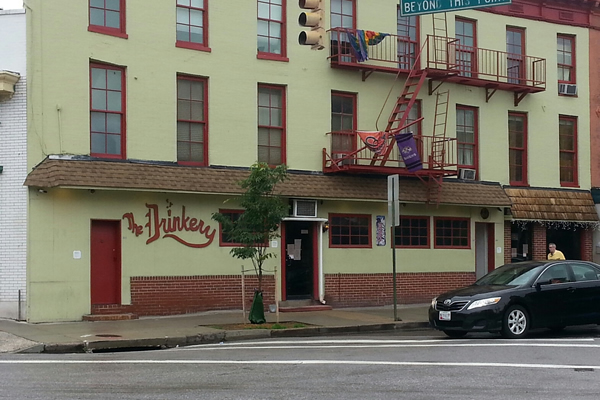
Baltimore’s Drinkery has re-opened. (Photo by Steve Charing)
Just two weeks after the Baltimore City Board of Liquor License Commissioners voted 2-1 to close The Drinkery, a gay bar in the Mount Vernon neighborhood, the decision was reversed on June 2.
Those protesting the license renewal at the hearing on May 19 complained about alleged rowdiness, excessive noise, drug activity and violence in and around the establishment, which has operated for 44 years. This was presented through a signed petition; letters sent to the board by residents, nearby businesses and local politicians; and testimony at the hearing.
Commissioners Dana Peterson Moore and Albert J. Matricciani had voted not to renew The Drinkery’s liquor license; Aaron Greenfield voted for renewal.
In declaring her vote then, Moore stated, “What matters are the facts” and cited “contempt by the owner toward the community.”
However, it was Moore who reversed her decision on June 2 following a motion for reconsideration by The Drinkery’s 87-year-old owner Frederick Allen.
According to the Baltimore Sun, “Allen’s motion noted that Jason Curtis, who signed a petition and testified against the Drinkery in the May 19 hearing, is listed on the liquor license of another Mount Vernon establishment, Hotel Indigo. The board’s rules specify that a protest against a license renewal can be signed by “residents, commercial tenants (who are not holders or applicants for a liquor license), or real estate owners in the immediate vicinity of the licensed place of business.”
The Sun stated that Curtis’ failure to disclose his liquor license was sufficient to change the board’s mind. Curtis, who was the former president of the Mount Vernon-Belvedere Association that led the effort to prevent The Drinkery’s license renewal and in 2012 ran unsuccessfully to be the first openly gay man to be elected to the City Council, did not respond to a request from the Blade for comment.
The Community Law Center, which represented the MVBA in its efforts against The Drinkery, could appeal the decision, according to the Sun.
News of the reversal was welcomed by many in Baltimore’s LGBT community. “This is a great day for an inclusive Mount Vernon, Mark McLaurin, a Baltimore resident and a frequent patron of The Drinkery, told the Blade. “Special thanks to Commissioners Moore and Greenfield for being willing to reconsider a hastily reached decision.”
Another customer, RJ Ladd, lamented the loss of gay bars in Baltimore. “I’m glad that the liquor board reconsidered the matter. Our gay bars are a dying breed. Let’s keep the remaining few around,” he said.
The Drinkery re-opened on Saturday at 11 a.m. to much relief and jubilance by its patrons.
However, there had been considerable disquiet and finger pointing following the initial vote to close the bar. Community members were angry that three gay men testified to close the longtime gay establishment.
“The gay men who organized the efforts to close The Drinkery created a lot discord and distrust in the community,” activist Brian Gaither told the Blade. “To get their way they exploited anti-gay prejudice in a way that undermines decades of work by activists in the city. The whole thing is shameful and appalling.”
In a statement dated June 6, the Mount Vernon Belvedere Association explained the rationale for their protest of the license renewal.



District of Columbia
Nearly 6,000 turn out for Pride Night Out at the Nationals
Gay Men’s Chorus sings National Anthem

“Just shy of” 6,000 people purchased tickets for the Wednesday, June 24, 21st annual Pride Night Out at the Washington Nationals baseball stadium, which the Nationals said is the longest running LGBTQ Pride event in Major League Baseball, according to a Nationals spokesperson.
The event was organized with the Nationals by Team D.C., the local LGBTQ sports group that organizes similar Pride Nights for other professional D.C. area sports teams.
“It was a good time had by all as the Nationals celebrated the LGBTQ+ community during the Nationals 21st Pride Night Out, presented by Team D.C.” the Nationals said in a statement.
Nationals spokesperson Erica George said the overall game attendance was 27,200.
Similar to recent past years, the Gay Men’s Chorus of Washington sung the National Anthem at the start of the game, drawing loud cheers from people throughout the stadium.
The Nationals lost the game to the Philadelphia Phillies by a score of 5-4. Although most of the LGBTQ attendees of the event, held in the right-field mezzanine section of the stadium, were cheering for the Nationals, a sizeable number also cheered for the Phillies.
Miguel Ayala, one of Team D.C.’s lead organizers, said he noticed fans displaying Pride flags and recognized LGBTQ people in all parts of the stadium, indicating significantly more LGBTQ people and their supporters attended the game beyond the close to 6,000 or more who purchased the specific Pride Night Out tickets.
“It was a great excitement last night,” he told the Washington Blade on the day following the event. “I saw a lot of big crowds of our people, I saw everybody I can think of in the community. And it was really great to see the turnout.”
Also, like in previous years, Team D.C. along with the Nationals helped to organize a pre-game show on the large concourse platform area next to the stadium seating area involving a drag show led by local drag performer Shi-Queeta Lee.
“During pregame ceremonies, the Nationals Pride employee resource group was recognized on the field,” the statement released by the Nationals says. “Dr. Demetre Daskalakis, a physician and public health leader who has had a profound impact on the LGBTQ+ community and those living with or vulnerable to HIV, threw out the ceremonial first pitch as the guest of Team D.C.,” the statement says.
It adds that Team D.C.’s scholarship recipient Spencer Doll made the ceremonial call to “Play Ball.”
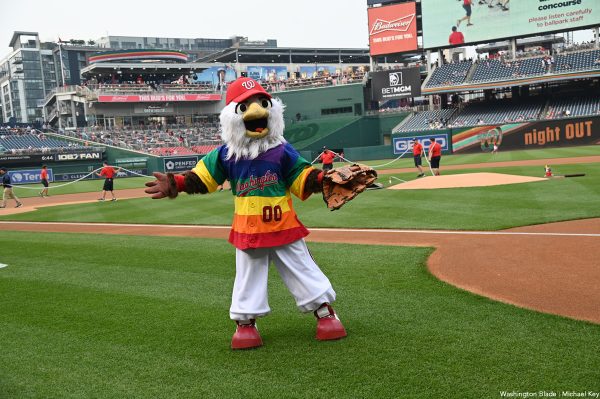
As if all that were not enough, a Nationals employee who entertains during the Nationals pre-game shows on the field dressed as a giant eagle named “Screech” wearing an eagle’s head mask appeared in the seating area where the Pride Night Out crowd was seated and mingled with the LGBTQ fans, many of whom posed for photos with Screech.
District of Columbia
Washington Blade names new publisher
Longtime ad exec Brian Pitts to assume role from Lynne Brown

The Washington Blade announced this week that its longtime publisher, Lynne Brown, who has worked at the publication for nearly 40 years, is retiring from her day-to-day duties.
Blade co-owner and longtime advertising executive Brian Pitts will assume the role of publisher effective June 26.
Pitts, 46, is a native of Fredericksburg, Va. In 2004, he moved to Washington, D.C., from Rehoboth Beach, Del., to work at the Blade as a 24-year-old sales executive. Pitts, along with Brown and Blade Editor Kevin Naff have owned the Blade since 2009. Pitts has served as the Blade’s lead sales executive since then.
“We’ve been through a lot over the last 17 years, including a recession and a pandemic,” said Pitts. “Lynne has been a steady hand throughout and I’m excited to take the reins and help steer the Blade into its next chapter.”
Brown will assume the title of publisher emerita and remain a part owner of the Washington Blade and Los Angeles Blade and contribute to the business via special projects.
As for what’s next, she said, “I will take the summer to regroup. I have one more LGBTQ community project in mind, and a few personal goals to check off the list. I am a Washingtonian. I will continue to live, work, and love here in D.C. Of course every Friday morning, I will grab a cup of coffee and read the Blade.”
Asked what advice she has for Pitts as he takes over the publisher’s job, Brown replied, “Brian is going to be great. He has all the skills needed to run this business. He also has a deep, silent passion for the Blade. My only advice: Slow and steady wins the race.”
Pitts said his primary goal as publisher is to ensure the Blade continues its mission as America’s LGBTQ news source.
“Another goal is to reach a younger audience and to include an educational component,” he added. “Some younger community members may be newer to the Blade and less familiar with LGBTQ history. Recently, we published a special commemorative magazine to coincide with America 250, chronicling LGBTQ history and contributions to U.S. culture. It’s so important not to let our history get erased and to remember where we came from and to work toward where we want to go.”
He described the biggest challenge to queer media as the Trump administration’s attacks on DEI.
“We have companies that have advertised with us for years who are now afraid of the potential consequences,” he said.
Brown joined the Blade in 1987. She was named publisher in 2007 by previous owner Window Media. In 2009, Window Media filed for bankruptcy; shortly after, Brown, Naff, and Pitts acquired the Blade’s assets from the bankruptcy court and relaunched the brand with Brown as publisher.
She said the period after the bankruptcy became her biggest challenge as publisher.
“The crisis that birthed Brown Naff Pitts Omnimedia kept me overly focused on millions of details,” she recalls. “My greatest personal challenge was delegating and letting go of details. Trusting staff with their strengths and skills to do their jobs was slow to come. It has proved to be most rewarding. Building the right team — knowing the people you work with are committed, professional, and honest — is a great thing.”
Pitts described the bankruptcy and rebirth of the Blade in 2009 as his proudest moment with the company.
“Working at the paper has been great, but becoming a co-owner was a dream come true,” he said.
Naff praised both of his colleagues.
“Lynne has been a rock, helping us navigate financial crises and a pandemic. The Blade wouldn’t have survived without her dedication,” he said. “She is the publisher every editor would want. Brian has terrific instincts, a passion for the Blade’s important mission, and an eye on growth. I am proud to call both of them friends and mentors and look forward to the next chapter.”
Asked why LGBTQ media are still relevant, Brown cited the recent erosion of queer rights as evidence that the Blade’s work remains important.
“The Blade helps fight invisibility and isolation,” she said. “We may have rights today, but we have seen rights eroded or erased. The Blade reports on those rights authentically and accurately and serves as a communication tool and a historian for the community.”
Pitts added, “While mainstream media may cover LGBTQ+ issues, no one covers them quite like us. These are our community’s stories and voices and this is your news source.”
The Blade will host a happy hour event later this summer where the community can meet Pitts and thank Brown for her decades of service.
Delaware
Vote to enshrine same-sex marriage in state constitution fails in Delaware
‘General Assembly turned its back on the people of this state’
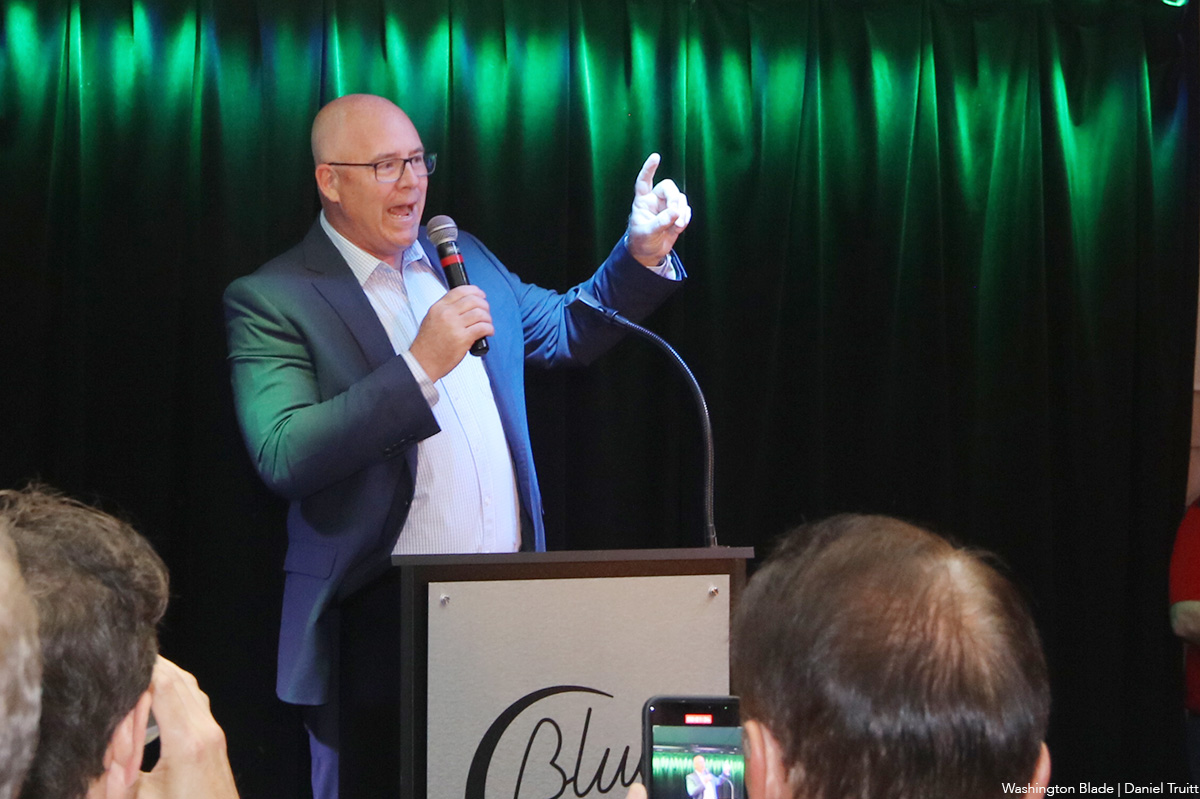
The Delaware General Assembly on Tuesday failed to pass Senate Bill 100 (SB-100), an amendment that would add protections for same-sex and interracial marriage to the Delaware Constitution.
In order for the bill to pass, 28 out of 41 members needed to vote ‘yes,’ meaning all 27 Democrats and one Republican needed to vote in favor of the bill.
Rep. Eric Morrison (D-27) told the Blade that an anonymous Republican member agreed to vote in favor prior to the vote but ultimately did not follow through on that promise.
“It’s a shame,” said Rep. Morrison, who’s gay. He explained the difficult nature of passing this amendment with only three legislative days remaining in this session.
The bill needs to receive a two-thirds majority vote in two different sessions and the current two-year long session ends on July 1. Thus, if the bill does not pass before July 1, it will take a minimum of three years to pass the amendment.
The bill was introduced by State Sen. Russ Huxtable (D-07) on June 5, 2025.
Rep. Josue Ortega (D-03) was one of two Democrats to not vote in favor of the bill, voting ‘no.’ Rep. Ortega has not responded to the Blade’s request for comment.
Rep. Madinah Wilson-Anton (D-27) was the other Democrat missing from the ‘yes’ votes. She did not vote on the bill.
Sponsor of the measure, Rep. Claire Snyder-Hall (D-14), made a technical decision to reverse her vote from a ‘yes’ to a ‘no’ last-minute in order to keep the bill alive.
In a Facebook post, Rep. Snyder-Hall said that, “The General Assembly turned its back on the people of this state.”
“When we had the chance to add an extra layer of protection from attempts to turn back the clock and strip our constituents of the rights that Democrats fought for decades to secure, we failed,” said Snyder-Hall.
However, Snyder-Hall said that the failure to pass this bill is not the end. “There are still three legislative days left in the 153rd General Assembly and I am hopeful that we will be able to get the votes required to pass this incredibly basic — but important — bill.”

The boy they refused to forget

Reflect on Pride season with these engaging books

Eswatini’s government ordered to allow LGBTQ group to legally register

Does Pride decor resemble Trump’s design aesthetic?

Nearly 6,000 turn out for Pride Night Out at the Nationals

US no longer refuge for LGBTQ refugees

Cool convertibles

Abelardo de la Espriella elected Colombia’s next president

Capital Pride draws tens of thousands to D.C.