Sports
New rules allow trans athletes to compete
IOC, Out Games changes could prompt wider policy updates
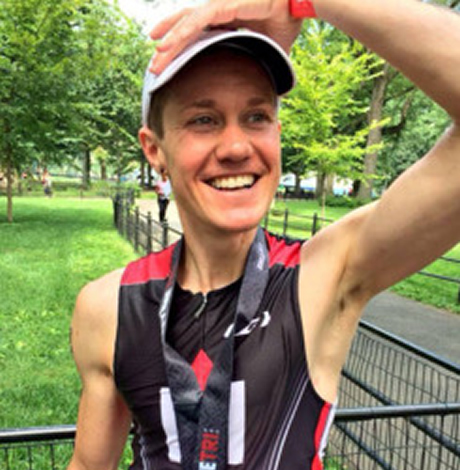
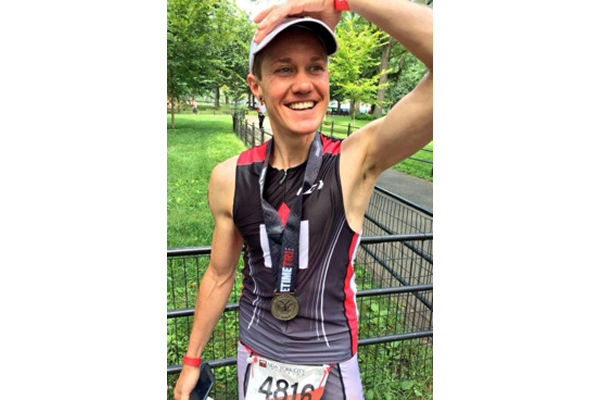
Chris Mosier starred in a Nike ad highlighting his status as a trans athlete. (Photo via Twitter)
New rule changes at the International Olympic Committee and the World Out Games are affording new opportunities to transgender athletes in time for major events amid the ongoing Olympic Games in Rio de Janeiro, Brazil.
Both organizations have loosened the qualifications for transgender athletes to compete, which is what allowed Chris Mosier, a transgender athlete, to compete as part of the men’s U.S. national team in the Sprint Duathlon World Championship in Spain.
Earlier this month in an interview with Rolling Stone, Mosier said changing gender identity wasn’t going to stop him from achieving his goals as an athlete.
“When I think back to growing up as an athlete, every positive thing that I learned about goals, dedication, leadership, and values I learned from playing sports — this was an area of my life where I felt the best about myself,” Mosier is quoted as saying. “That shouldn’t change because a pronoun has changed. I took this on because I think all athletes and all people should have the opportunity to play sports and have a place where they can feel their best about themselves.”
Although neither Mosier nor any openly transgender athlete is participating in the Olympic Games, Mosier gained notoriety by starring in a Nike ad that aired on NBC highlighting his status as a transgender athlete during the event in Brazil.
Prior to Mosier’s challenge of the IOC policy, the organization required gender reassignment surgery and at least two years of hormone therapy for both transgender men and women to compete.
But under the new policy announced in January 2016, female-to-male athletes can take part in the Olympics and other international events “without restriction” or a surgery requirement. Surgery is also no longer required for male-to-female athletes, but they must demonstrate their testosterone level is consistently below a certain cutoff point for at least a year before their first competition.
Ashley Grove, an ambassador for the pro-LGBT group Athlete Ally, said Mosier is the most prominent example being able to compete as a result of the new policy, but maintained he’s likely only the first.
“What we’re going to see is just probably more transgender athletes being able to compete in general,” Grove said. “The surgery requirement for trans people who are not athletes is very difficult and sometimes not wanted. We’re still going to see more trans athletes compete at the Olympic level.”
The Out Games, an international sports event that started after a split from the Gay Games in 2006, adopted a new policy for transgender athletes in August 2015 allowing athletes to register on a self-declaration basis with the gender team consistent with their gender identity.
Although the Out Games seeks identification affirming the gender identity of athletes looking to compete, the organization will accept a letter from a healthcare provider, mental health counselor, an educational institution or a community-based or religious organization in case of transgender athletes who are unable to change the gender markers on their IDs. In the event such documentation isn’t available, the Out Games will accept transgender athletes without ID matching their gender identity on a case-by-case basis.
Grove said the policy established by the Out Games makes the organization “more lenient” for transgender athletes than the International Olympic Committee.
“There’s nothing about hormone testing,” Grove said. “There’s nothing about surgery. It’s pretty much the policy sports groups advocate for, but it’s not as rigid as the IOC’s policy or the NCAA’s policy.”
While no Out Games competition has taken place since the federation adopted the rules in 2015, Grove said she “imagine[s] we’ll see a difference” in the number of transgender athletes at the event in Miami 2017.
Grove said the change at the International Olympic Committee and the Out Games should enable other sports organizations and schools to update their policies to allow transgender athletes to compete.
“We’re pushing for rec leagues to have a change, we’re pushing for international sports leagues to have a change,” Grove said. “I guess for high schools that’s the next biggest institution. We’re going to need to be like real change across the board because we have it now at the Olympic level, we have it now at the collegiate level, we do not see it at the high school level.”





More than a dozen LGBTQ athletes won medals at the Milan Cortina Winter Olympics that ended on Sunday.
Cayla Barnes, Hilary Knight, and Alex Carpenter are LGBTQ members of the U.S. women’s hockey team that won a gold medal after they defeated Canada in overtime. Knight the day before the Feb. 19 match proposed to her girlfriend, Brittany Bowe, an Olympic speed skater.
French ice dancer Guillaume Cizeron, who is gay, and his partner Laurence Fournier Beaudry won gold. American alpine skier Breezy Johnson, who is bisexual, won gold in the women’s downhill. Amber Glenn, who identifies as bisexual and pansexual, was part of the American figure skating team that won gold in the team event.
Swiss freestyle skier Mathilde Gremaud, who is in a relationship with Vali Höll, an Austrian mountain biker, won gold in women’s freeski slopestyle.
Bruce Mouat, who is the captain of the British curling team that won a silver medal, is gay. Six members of the Canadian women’s hockey team — Emily Clark, Erin Ambrose, Emerance Maschmeyer, Brianne Jenner, Laura Stacey, and Marie-Philip Poulin — that won silver are LGBTQ.
Swedish freestyle skier Sandra Naeslund, who is a lesbian, won a bronze medal in ski cross.
Belgian speed skater Tineke den Dulk, who is bisexual, was part of her country’s mixed 2000-meter relay that won bronze. Canadian ice dancer Paul Poirier, who is gay, and his partner, Piper Gilles, won bronze.
Laura Zimmermann, who is queer, is a member of the Swiss women’s hockey team that won bronze when they defeated Sweden.
Outsports.com notes all of the LGBTQ Olympians who competed at the games and who medaled.
Sports
US wins Olympic gold medal in women’s hockey
Team captain Hilary Knight proposed to girlfriend on Wednesday

The U.S. women’s hockey team on Thursday won a gold medal at the Milan Cortina Winter Olympics.
Team USA defeated Canada 2-1 in overtime. The game took place a day after Team USA captain Hilary Knight proposed to her girlfriend, Brittany Bowe, an Olympic speed skater.
Cayla Barnes and Alex Carpenter — Knight’s teammates — are also LGBTQ. They are among the more than 40 openly LGBTQ athletes who are competing in the games.
The Olympics will end on Sunday.
Sports
Attitude! French ice dancers nail ‘Vogue’ routine
Cizeron and Fournier Beaudry strike a pose in memorable Olympics performance
Madonna’s presence is being felt at the Olympic Games in Italy.
Guillaume Cizeron and his rhythm ice dancing partner Laurence Fournier Beaudry of France performed a flawless skate to Madonna’s “Vogue” and “Rescue Me” on Monday.
The duo scored an impressive 90.18 for their effort, the best score of the night.
“We’ve been working hard the whole season to get over 90, so it was nice to see the score on the screen,” Fournier Beaudry told Olympics.com. “But first of all, just coming out off the ice, we were very happy about what we delivered and the pleasure we had out there. With the energy of the crowd, it was really amazing.”
Watch the routine on YouTube here.

Markwayne Mullin confirmed as next DHS secretary

Gay man murdered in Va.

Trans Day of Visibility events planned

Virginia General Assembly’s 2026 legislative session ends

Polish court rules country must recognize same-sex marriages from EU states

Queer American in Israel discusses Iran war’s impact

Calendar: March 21-26

‘How We Survived’ panel set for March 25

Small is beautiful: subcompact SUVs