Sports
Rookies & vets: Stonewall Dodgeball
Players value fun, camaraderie over winning


John Elias, left, and Sean Holihan, a rookie and vet respectively of Stonewall Dodgeball. (Holihan photo courtesy the subject; Elias photo by Denis Largeron)
In this week’s installment of the Washington Blade series spotlighting the rookies and veterans who make up the LGBT sports teams in D.C., we check in with two LGBT players from Stonewall Dodgeball.
Stonewall Dodgeball burst onto the LGBT sports scene in 2014 and quickly outgrew its venue. Now operating out of the Washington D.C. Jewish Community Center, players are wrapping up their fall season with playoffs to begin next week.
The league rotates seasons between a draft system where the players may not know each other, and a season where the teams are formed by the players.
John Elias signed up for his first season in April of 2016, a draft season. He only knew one person on his team and half of his teammates were also new to the league.
“The draft makes the league more accessible to new people,” Elias says. “This was completely outside my zone and I have been surprised by how much I am enjoying it.”
Elias was born in California and grew up in Plainville, Conn., and other than running junior varsity cross country, did not play sports. While earning his degrees at Yale and Stanford Law School, he played ultimate Frisbee recreationally.
He moved to D.C. in 2006 and is working as a lawyer for the federal government. After giving Stonewall Bocce a try, he decided he wanted to play a new sport.
“I thought dodgeball would be fun, energetic and athletic,” Elias says. “I only consider myself to have moderate athletic ability, so I wanted something that would be a good time without having to take it too seriously.”
Elias says he was a little lost at first in terms of the team dynamics, but Stonewall Dodgeball offers open gyms on the weekends to work on skills and he has found a lot of direction from the veterans, especially his team captains.
“The veterans have been great for giving tips on timing and positioning,” Elias says. “My captains have been good about directing traffic, pacing and instructions on playing our own game. They even send out strategy emails.”
The social aspect has also been a plus for Elias and he has met an entirely new group of people.
“We recently had a social outing to laser tag in Virginia,” Elias says. “I am having a blast, all while getting a real workout.”
Sean Holihan is in his sixth season with Stonewall Dodgeball with three seasons as a team captain. He has also played multiple seasons with Chesapeake and Potomac Softball, the D.C. Gay Flag Football League and Stonewall Kickball.
Originally from New York, Holihan grew up in Virginia Beach and played football for one season, but ultimately turned his attentions to theater and debate after wrecking his ankle. He moved to D.C. in 2009 to follow his partner and be closer to the political scene. He is working in political consulting and is now married to his partner. He found his way back to sports shortly before moving here when he joined a gay softball league in Hampton Roads, Va.
“I get a great deal of enjoyment from playing sports and meeting new people. It is a great use of a day,” Holihan says. “I am a simple guy and I love any sport with a ball.”
Becoming a captain in the league was a natural progression for Holihan because he enjoys teaching people how to play the game and better themselves.
“I also like board games and the parallels are there with sports,” Holihan says. “There are different pieces on the dodgeball court; scramblers, throwers, blockers, catchers and snipers. I like putting the pieces together.”
Holihan says having rookie players helps keep the league in check because they come in looking to have fun with less focus on winning.
“The league doesn’t want anyone to be overly aggressive,” he says. “The overall tone is inclusiveness and that everyone is involved in every aspect of the game.”
He shares a story about one game where he lost his head because he thought the opposing team was playing unfairly. It was the thought of the example he was setting in front of the rookies that helped him pull it back in.
“I wouldn’t want any rookie player to think that winning is the only thing this league is about,” Holihan says. “Winning is great, but having fun and meeting new friends is much better.”




Sports
New IOC policy bans trans women from Olympics
New regulation to be in effect at 2028 summer games in Los Angeles
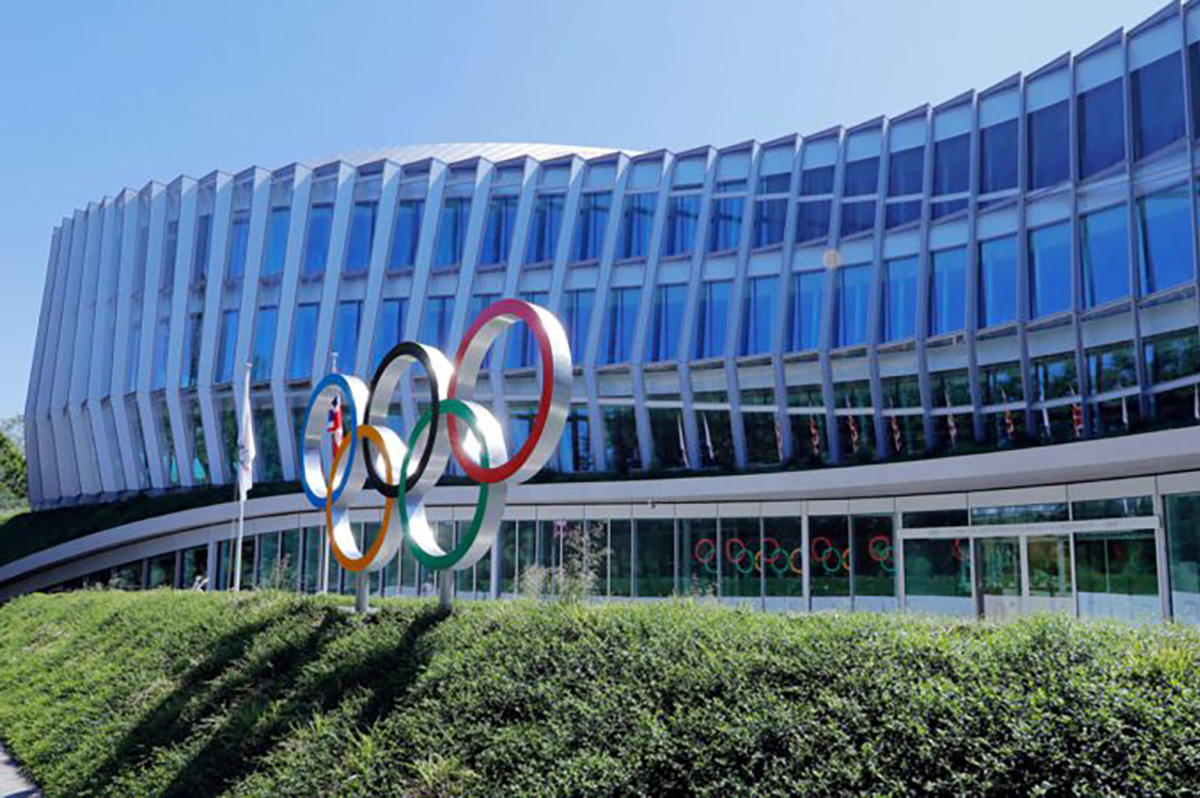
The International Olympic Committee on Thursday announced it will not allow transgender women from competing in female events at the Olympics.
“For all disciplines on the Sports Program of an IOC event, including individual and team sports, eligibility for any Female Category is limited to biological females,” reads the new policy.
The policy states “eligibility for the Female Category is to be determined in the first instance by SRY Gene screening to detect the absence or presence of the SRY Gene.”
“On the basis of the scientific evidence, the IOC considers that the SRY (sex-determining Region Y) Gene is fixed throughout life and represents highly accurate evidence that an athlete has experienced or will experience male sex development,” it reads. “Furthermore, the IOC considers that SRY Gene screening via saliva, cheek swab or blood sample is unintrusive compared to other possible methods. Athletes who screen negative for the SRY gene permanently satisfy this policy’s eligibility criteria for competition in the Female Category.”
The policy states the test “will be a once-in-a-lifetime test” unless “there is reason to believe a negative reading is in error.”
The new regulation will be in place for the 2028 Summer Olympics in Los Angeles.
“I understand that this a very sensitive topic,” said IOC President Kirsty Coventry on Thursday in a video. “As a former athlete, I passionately believe in the rights of all Olympians to take part in fair competition.”
“The policy that we have announced is based on science and it has been led by medical experts with the best interests of athletes at its heart. The scientific evidence is very clear: male chromosomes give performance advances in sport that rely on strength, power, or endurance,” she added. “At the Olympic Games, even the smallest margins can be the difference between victory and defeat. So, it is absolutely clear that it would not be fair for biological males to compete in the female category. In addition, in some sports it would simply not be safe.”
(Video courtesy of the IOC)
Laurel Hubbard, a weightlifter from New Zealand, in 2021 became the first trans woman to compete at the Olympics.
Imane Khelif, an Algerian boxer, won a gold medal at the 2024 Summer Olympics in Paris. Khelif later sued JK Rowling and Elon Musk for cyberstalking after they questioned her gender identity.
Ellis Lundholm, a mogul skier from Sweden, this year became the first openly trans athlete to compete in any Winter Olympics when he participated in Milan Cortina Winter Olympics in Italy.
President Donald Trump in February 2025 issued an executive order that bans trans women and girls from female sports teams in the U.S.
The U.S. Olympic and Paralympic Committee last July banned trans women from competing in female sporting events. Republican lawmakers have demanded the IOC ban trans athletes from women’s athletic competitions.
“I’m grateful the Olympics finally embraced the common sense policy that women’s sports are for women, not for men,” said U.S. Sen. Tom Cotton (R-Ark.) on X.
An IOC spokesperson on Thursday referred the Washington Blade to the press release that announced the new policy.
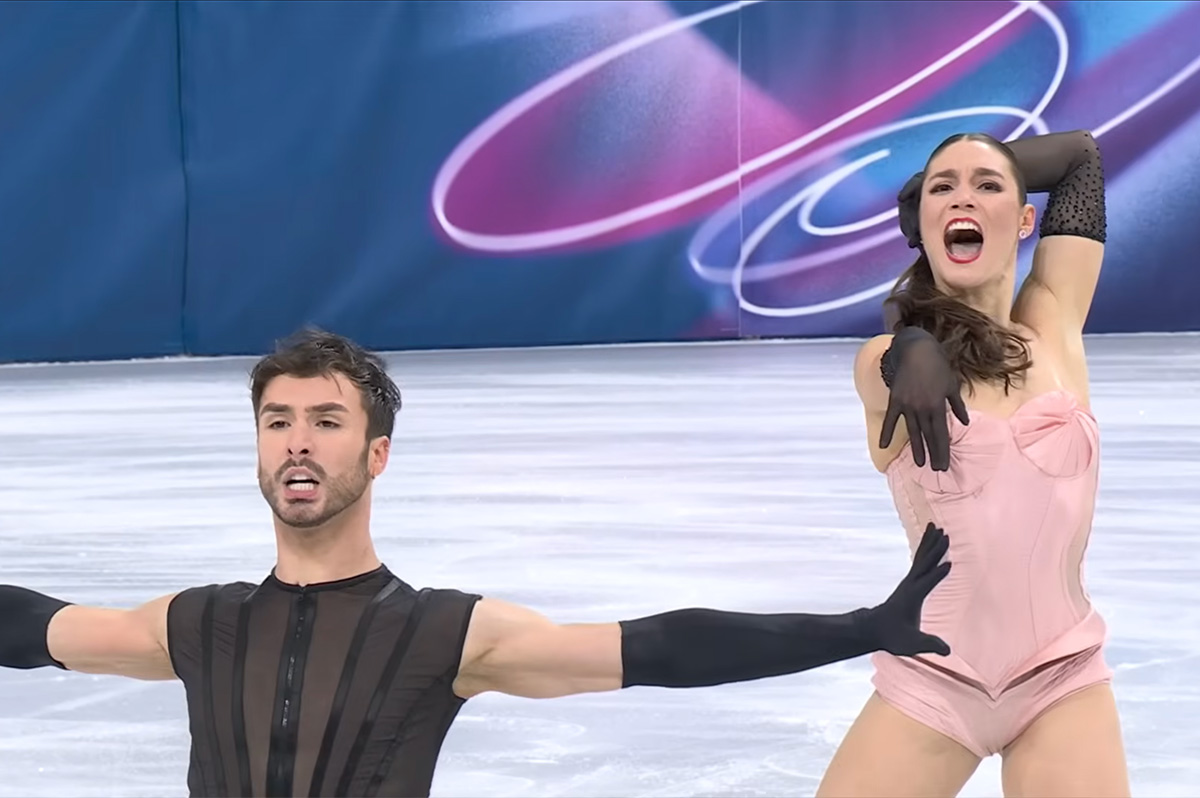
More than a dozen LGBTQ athletes won medals at the Milan Cortina Winter Olympics that ended on Sunday.
Cayla Barnes, Hilary Knight, and Alex Carpenter are LGBTQ members of the U.S. women’s hockey team that won a gold medal after they defeated Canada in overtime. Knight the day before the Feb. 19 match proposed to her girlfriend, Brittany Bowe, an Olympic speed skater.
French ice dancer Guillaume Cizeron, who is gay, and his partner Laurence Fournier Beaudry won gold. American alpine skier Breezy Johnson, who is bisexual, won gold in the women’s downhill. Amber Glenn, who identifies as bisexual and pansexual, was part of the American figure skating team that won gold in the team event.
Swiss freestyle skier Mathilde Gremaud, who is in a relationship with Vali Höll, an Austrian mountain biker, won gold in women’s freeski slopestyle.
Bruce Mouat, who is the captain of the British curling team that won a silver medal, is gay. Six members of the Canadian women’s hockey team — Emily Clark, Erin Ambrose, Emerance Maschmeyer, Brianne Jenner, Laura Stacey, and Marie-Philip Poulin — that won silver are LGBTQ.
Swedish freestyle skier Sandra Naeslund, who is a lesbian, won a bronze medal in ski cross.
Belgian speed skater Tineke den Dulk, who is bisexual, was part of her country’s mixed 2000-meter relay that won bronze. Canadian ice dancer Paul Poirier, who is gay, and his partner, Piper Gilles, won bronze.
Laura Zimmermann, who is queer, is a member of the Swiss women’s hockey team that won bronze when they defeated Sweden.
Outsports.com notes all of the LGBTQ Olympians who competed at the games and who medaled.
Sports
US wins Olympic gold medal in women’s hockey
Team captain Hilary Knight proposed to girlfriend on Wednesday

The U.S. women’s hockey team on Thursday won a gold medal at the Milan Cortina Winter Olympics.
Team USA defeated Canada 2-1 in overtime. The game took place a day after Team USA captain Hilary Knight proposed to her girlfriend, Brittany Bowe, an Olympic speed skater.
Cayla Barnes and Alex Carpenter — Knight’s teammates — are also LGBTQ. They are among the more than 40 openly LGBTQ athletes who are competing in the games.
The Olympics will end on Sunday.

Police mental health struggles gain growing attention

Man faces first S.C. ‘hate intimidation’ charge

Trump budget would codify expanded global gag rule

D.C. is the place for the Democratic Socialists of America

Key lifestyle changes can help patients cope with diabetes

VIDEO: Gay journalist detained for booing Trumps at ‘Chicago’ opening night

Trans-driven ‘Serpent’s Skin’ delivers campy sapphic horror

Pam Bondi ousted as attorney general

D.C. not the place for antisemitic Democratic Socialists of America

Idaho Gov. signs harshest anti-trans bathroom bill in the country
-

 The White House5 days ago
VIDEO: Gay journalist detained for booing Trumps at ‘Chicago’ opening night
-
Movies5 days ago
Trans-driven ‘Serpent’s Skin’ delivers campy sapphic horror
-
The White House5 days ago
Pam Bondi ousted as attorney general
-
Opinions5 days ago
D.C. not the place for antisemitic Democratic Socialists of America