Local
House panel kills LGBT protections in D.C. schools bill
GOP committee defeats amendment to ban bias
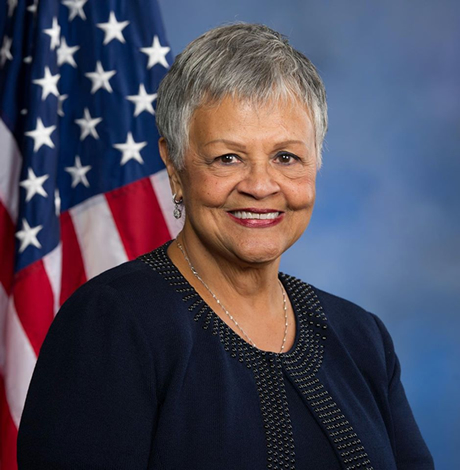
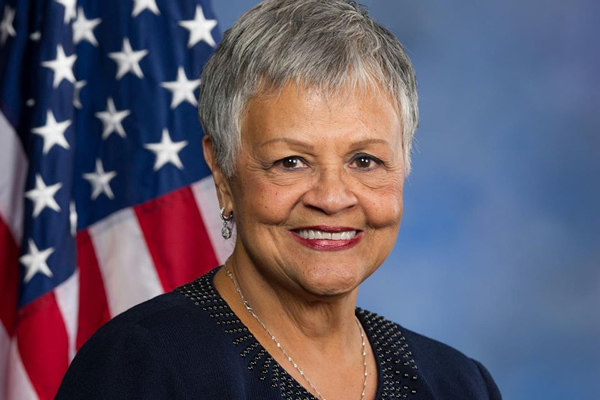
Rep. Bonnie Watson Coleman (D-N.J.) (Photo public domain)
The Republican-controlled U.S. House Committee on Oversight and Government Reform last week voted to kill an amendment to a D.C. school voucher bill calling for protecting LGBT students from discrimination in private and religious schools that receive government funding.
Rep. Bonnie Watson Coleman (D-N.J.) introduced the amendment at a March 10 committee markup hearing on a bill reauthorizing the Scholarships for Opportunity Results Act, known as SOAR.
Congress first passed the controversial SOAR Act in 2003 to provide federal funds for school vouchers to pay the tuition for low-income D.C. students to enroll in private and religious schools. The law only applies to D.C.
Some LGBT activists have opposed the voucher program because it provides government funds for religious schools that are exempt from the city’s Human Rights Act, which bans discrimination based on sexual orientation and gender identity among other categories of protections.
Watson Coleman’s amendment called for inserting the terms sexual orientation and gender identity into the list of protected classes under the SOAR Act.
The committee, which is chaired by Rep. Jason Chaffetz (R-Utah), defeated the amendment by a vote of 22 to 17. Those voting no included 22 of the 24 Republicans who sit on the committee. Two of the GOP members, Rep. William Hurd (R-Texas) and Thomas Massie (R-Ky.) did not vote.
On the Democratic side, 17 of the 18 Democrats on the committee vote for the amendment. Rep. Gerald Connelly (D-Va.) did not vote.
Among those voting for the amendment was Del. Eleanor Holmes Norton (D-D.C.) who is allowed to vote in committee but not on the House floor. Norton has been a longtime supporter of LGBT rights.
Stephanie Franklin, a spokesperson for the D.C. Office of Human Rights, which enforces the city’s Human Rights Act, said the act would apply to non-religious private schools receiving SOAR Act funds through student tuition.
Franklin said the OHR has interpreted the Human Rights Act to also apply to religious schools under certain circumstances. She said the act would allow religious schools to limit hiring of employees and the acceptance of students to those who are members of their schools’ religious denomination.
But she said once an employee is hired or a student is accepted the Human Rights Act could in some circumstances prevent the schools from discriminating against such employees or students.
“However, we must decide on a case-by-case basis,” Franklin said.





District of Columbia
Mayor Bowser signs bill requiring insurers to cover PrEP
‘This is a win in the fight against HIV/AIDS’

D.C. Mayor Muriel Bowser on March 20 signed a bill approved by the D.C. Council that requires health insurance companies to cover the costs of HIV prevention or PrEP drugs for D.C. residents at risk for HIV infection.
Like all legislation approved by the Council and signed by the mayor, the bill, called the PrEP D.C. Amendment Act, was sent to Capitol Hill for a required 30-day congressional review period before it takes effect as D.C. law.
Gay D.C. Council member Zachary Parker (D-Ward 5) last year introduced the bill.
Insurance coverage for PrEP drugs has been provided through coverage standards included in the Affordable Care Act, known as Obamacare. But AIDS advocacy organizations have called on states and D.C. to pass their own legislation requiring insurance coverage of PrEP as a safeguard in case federal policies are weakened or removed by the Trump administration, which has already reduced federal funding for HIV/AIDS-related programs.
Like legislation passed by other states, the PrEP D.C. Amendment Act requires insurers to cover all PrEP drugs approved by the U.S. Food and Drug Administration.
Studies have shown that PrEP drugs, which can be taken as pills or by injection just twice a year, are highly effective in preventing HIV infection.
“I think this is a win for our community,” Parker said after the D.C. Council voted unanimously to approve the bill on its first vote on the measure in February. “And this is a win in the fight against HIV/AIDS.”
District of Columbia
Blade editor to be inducted into D.C. Society of Professional Journalists Hall of Fame
Kevin Naff marks 24 years with publication this year

Longtime Washington Blade Editor Kevin Naff will be inducted into D.C.’s Society of Professional Journalists Hall of Fame in June, the group announced this week.
Hall of Fame honorees are chosen by the Society of Professional Journalists’ Washington, D.C., Pro Chapter. Naff and two other inductees — Seth Borenstein, a Washington-based national science writer for the AP and Cheryl W. Thompson, an award-winning correspondent for National Public Radio — will be celebrated at the chapter’s Dateline Awards dinner on Tuesday, June 9, at the National Press Club. The dinner’s emcee will be Kojo Nnamdi, host of WAMU radio’s weekly “Politics Hour.”
“I am tremendously honored by this recognition,” Naff said. “I have spent a lifetime in the D.C. area learning from so many talented journalists and am humbled to be considered in their company. Thank you to SPJ and to all the LGBTQ pioneers who came before me who made this possible.”
Naff joined the Blade in 2002 after years in print and digital journalism. He worked as a financial reporter for Reuters in New York before moving to Baltimore in 1996 to launch the Baltimore Sun’s website. He spent four years at the Sun before leaving for an internet startup and later joining the mobile data group at Verizon Wireless working on the first generation of mobile apps.
He then moved to the Blade and has served as the publication’s longest-tenured editor. In 2023, Naff published his first book, “How We Won the War for LGBTQ Equality — And How Our Enemies Could Take It All Away.”
Previous Hall of Fame inductees include luminaries in journalism like Wolf Blitzer, Benjamin Bradlee, Bob Woodward, Andrea Mitchell, and Edgar Allen Poe. The Blade’s senior news reporter Lou Chibbaro Jr. was inducted in 2015.
Maryland
Supreme Court ruling against conversion therapy bans could affect Md. law
Then-Gov. Larry Hogan signed statute in 2018
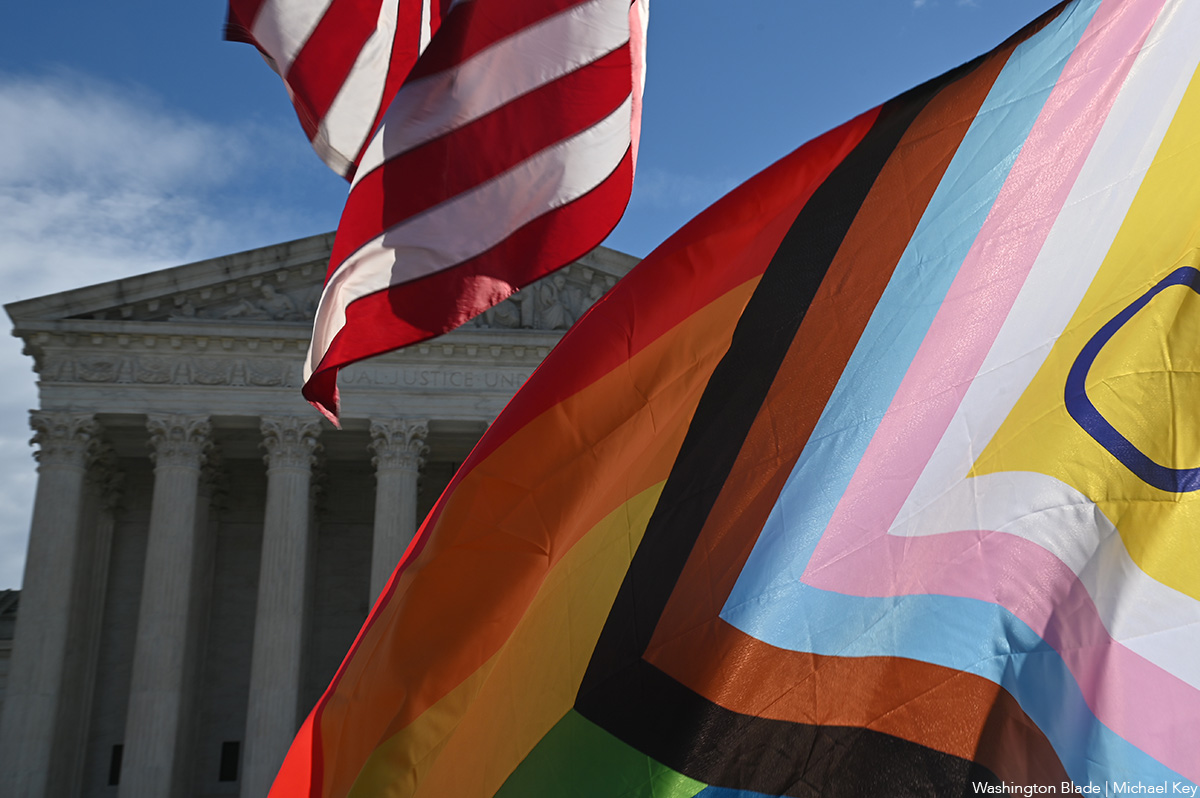
By PAMELA WOOD, JOHN-JOHN WILLIAMS IV, and MADELEINE O’NEILL | The U.S. Supreme Court on Tuesday ruled against a law banning “conversion therapy” for LGBTQ kids in Colorado, a ruling that also could apply to Maryland’s ban on the discredited practice.
An 8-1 high court majority sided with a Christian counselor who argues the law banning talk therapy violates the First Amendment. The justices agreed that the law raises free speech concerns and sent it back to a lower court to decide whether it meets a legal standard that few laws pass.
Justice Neil Gorsuch, writing for the court’s majority, said the law “censors speech based on viewpoint.” The First Amendment, he wrote, “stands as a shield against any effort to enforce orthodoxy in thought or speech in this country.”
The rest of this article can be read on the Baltimore Banner’s website.

Mayor Bowser signs bill requiring insurers to cover PrEP

JD Vance to travel to Hungary next week

Pam Bondi ousted as attorney general

VIDEO: Gay journalist detained for booing Trumps at ‘Chicago’ opening night

Idaho Gov. signs harshest anti-trans bathroom bill in the country

‘Out for McDuffie’ event held at D.C. gay bar

‘Jonah’ an undeniably compelling but unusual memory play

The Oscar-losing performance that’s too good to miss

Thousands attend ‘No Kings’ protests in D.C.