Local
Comings & Goings
Chavez wins Latino GLBT History Project award

The ‘Comings & Goings’ column chronicles important life changes of Blade readers.
The Comings & Goings column is about sharing the professional successes of our community. We want to recognize those landing new jobs, new clients for their business, joining boards of organizations and other achievements. Please share your successes with us at [email protected].
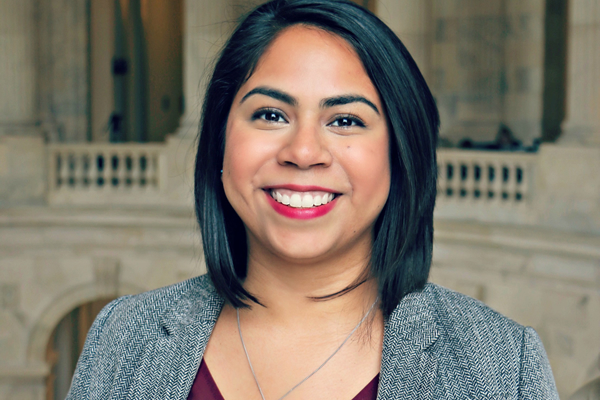
Yesenia Chavez
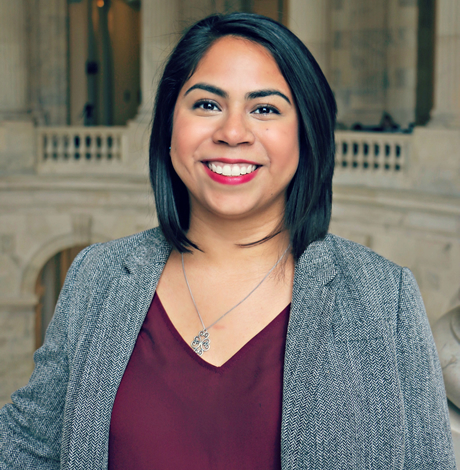
Congratulations to LGBT Congressional Staff Association’s Yesenia Chavez who received the Latino GLBT History Project’s Mujeres en el Movimiento Award.
The Latino GLBT History Project is a non-profit, volunteer-led organization whose mission is to investigate, collect, preserve and educate the public about the history, culture, heritage, arts, social and rich contributions of the Latino GLBT community in metropolitan Washington, D.C. Mujeres en el Movimiento is an annual event coordinated by LHP’s Women’s committee to recognize and celebrate Lesbian, Bisexual and Transgender Latina activists who have made significant contributions to empower and increase the visibility of LGBT Latinas and Latinos.
Todd Sloves, president of the LGBT Congressional Staff Association said, “We’re so proud of Yesenia for this well-deserved recognition. In her time serving on our board she has worked hard to expand our organization’s diversity and served as a mentor to numerous junior LGBT staff of color.”
On receiving the award, Chavez said, “I’m grateful to the Latino GLBT History Project for selecting me as a recipient of this distinguished honor. As vice president of the LGBT Congressional Staff Association and organizer of Latinas in the House, I have strived to build a pipeline for queer and women staffers on the Hill. I am honored to work on behalf of my community and to push for space for LGBT people and Latinas on the Hill.
Chavez has taken a leading role in organizing events focused on creating a safe space for women and queer people of color, including an annual “Galentine’s Day” breakfast, regular Queer People of Color (QPOC) and women’s events, and various guest speaker events.
Chavez currently works in the Office of Congressman Raul Grijalva (D-Ariz.) as a legislative assistant. She has worked for the Harris County Democratic Party Houston, and for Amigos de las Américas Perez Zeledón, Costa Rica as Associate Project Director and Project Supervisor. She holds a bachelor’s in Political Science and Liberal Studies from the University of Houston.
Congratulations also to Randy Downs, on his appointment to the Advisory Committee for the Mayor’s Office of LGBTQ Affairs. Randy is also an Advisory Neighborhood Commissioner on ANC 2B05.
Downs, a native of rural Missouri, started advocating for social and environmental causes at a young age. Through his early work as a community organizer he successfully helped elect progressive candidates across the state and advanced initiatives to strengthen labor standards and campaign finance rules, improve safety and healthcare, and lift up young and working families.
He moved to D.C. in 2011 to join the Sierra Club where he is currently a campaign representative. In his role, Downs has trained thousands of community organizers across the country, raised hundreds of thousands of dollars successfully fighting to build grassroots support for policies to combat climate change and protect the health of our communities. Three years ago Randy was diagnosed with cancer and as he tells it, “I fought my way to remission using the same motivation and focus I use in my advocacy.”
Downs lives in Dupont Circle with his longtime partner Dylan and volunteers at many organizations including Whitman-Walker Health, the Smith Cancer Center for Healing and the Arts, and the DC Center for the LGBT Community. He earned his bachelor’s from Southeast MO State University where he graduated cum laude.
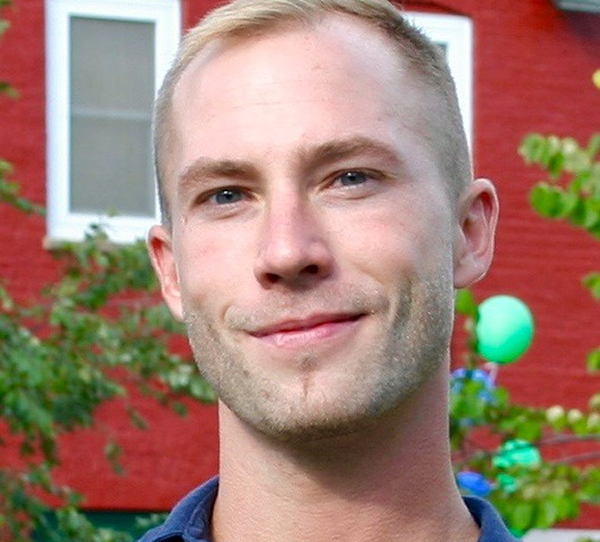
Randy Downs

Baltimore
This John Waters interview has been edited for readability — but perhaps not human decency
Pope of Trash dishes on Trump, plane etiquette, last meal, and more
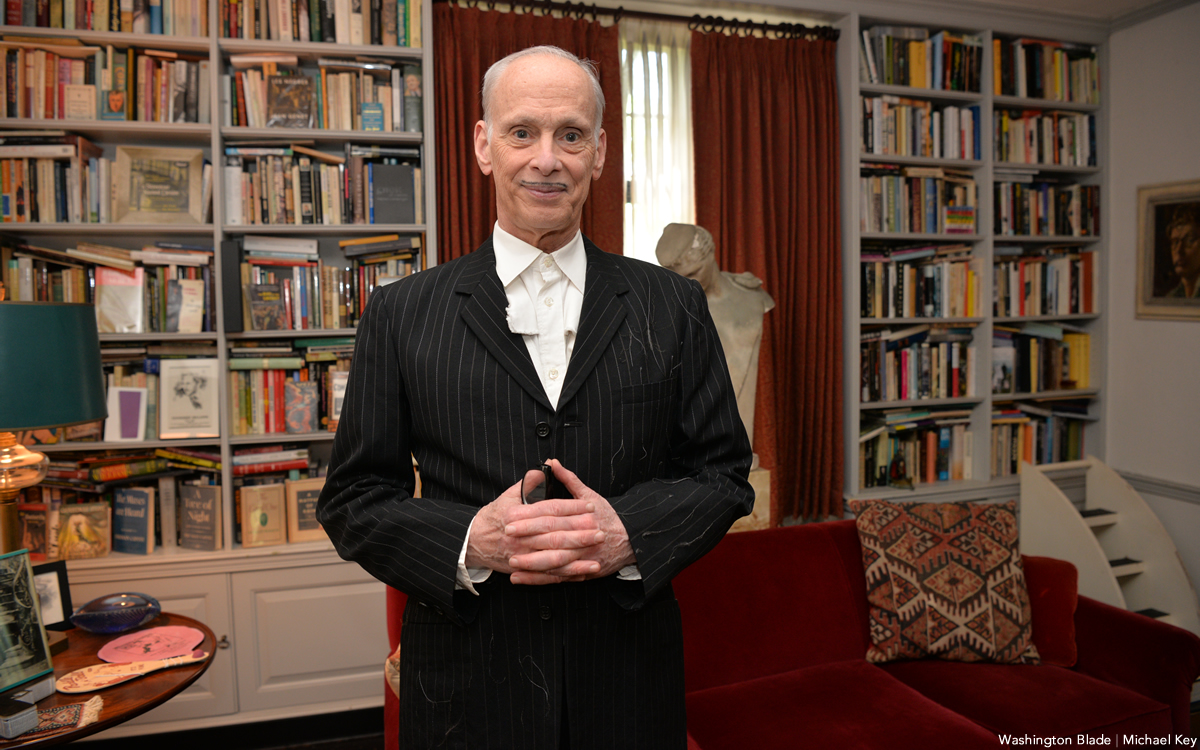
By WESLEY CASE | At 80 years old, John Waters is still the ideal dinner guest — incisively sharp, quick-witted and funny as hell.
The chic Baltimore native proved it again and again in a recent Zoom interview, calling from his summer home in Provincetown, Mass.
The occasion was the Blu-ray releases of two of his movies — the 1977 dark comedy “Desperate Living” and his enduring 1988 musical “Hairspray” — on June 23 by the Criterion Collection, which publishes restorations of films it deems culturally important. The Criterion stamp of approval has become the gold standard among cinephiles.
“It’s like getting an award,” said Waters, who wrote and directed both films.
The rest of this article can be read on the Baltimore Banner’s website.
District of Columbia
D.C. Council approves expanded grant funding for Mayor’s Office of LGBTQ Affairs
Measure introduced by Zachary Parker faces second vote
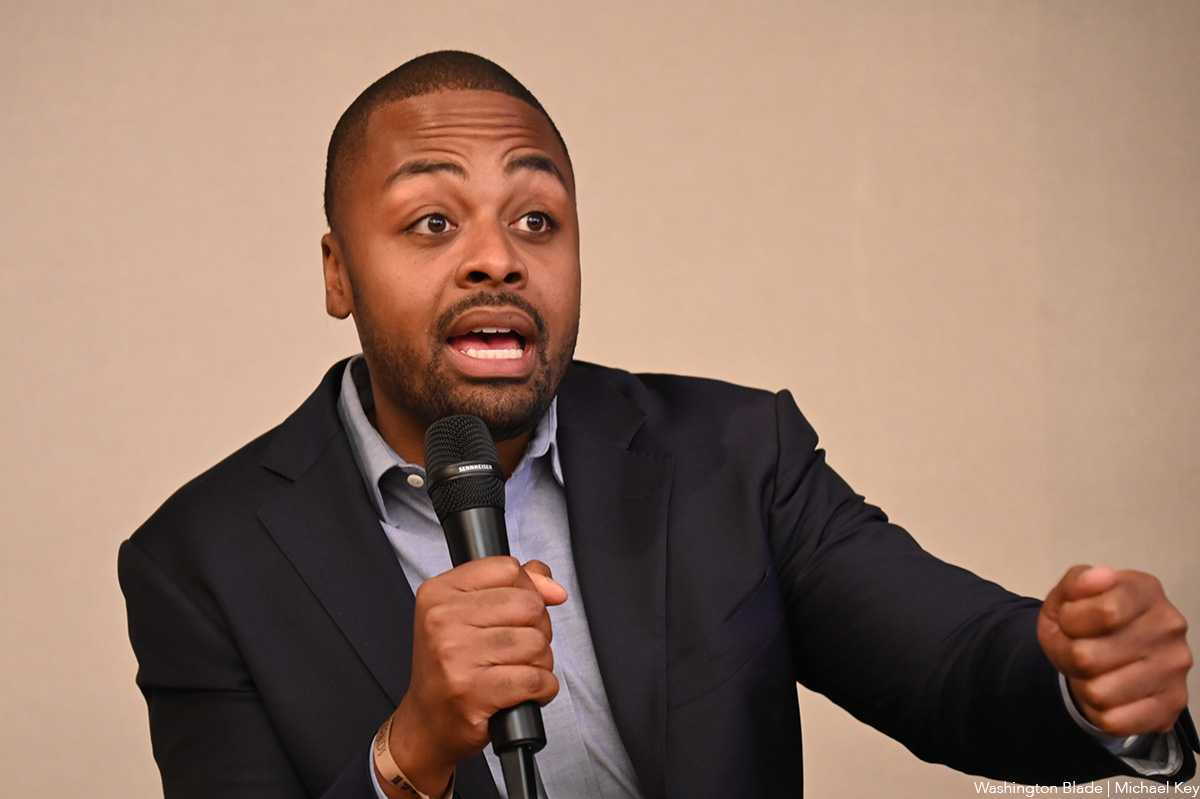
The D.C. Council on June 9 gave its first round of approval to an amendment to the city’s fiscal year 2027 budget that calls for increasing the number and size of funding grants that the Mayor’s Office of LGBTQ Affairs provides for local organizations providing services for the LGBTQ community.
The amendment, titled the “LGBTQ Community Grant Amendment Act of 2026,” was introduced by D.C. Council member Zachary Parker (D-Ward 5), the Council’s only gay member.
The amendment calls for the LGBTQ Affairs office to issue a $980,000 grant in fiscal year 2027 to a private, nonprofit organization in partnership with the office “for the purpose of supporting programs that promote the welfare of the lesbian, gay, bisexual, transgender, and questioning community.”
The organization would also initiate its own fundraising effort to expand the amount of funds beyond the amount the office would provide, enabling it to provide larger grants to a greater number of local LGBTQ organizations.
Among other things, the amendment says the organization chosen for this new role should have a “proven track record of success in grant making and fundraising” and agree to undergo an annual audit and submit quarterly reports to the office on its use of the funds it receives.
Under its rules for approving legislation, the Council must hold the second vote on the budget bill with the Parker amendment before it is sent to Mayor Muriel Bowser for her signature. It must then go to Congress for a congressional review that does not require approval, but could result in a vote to disapprove the measure, an action Congress usually does not take.
In a June 12 statement, the D.C. LGBTQ Budget Coalition called the D.C. Council’s initial approval of the Parker amendment, “a historic measure that establishes the District’s most sustainable model for a vehicle for investing in LGBTQ communities.”
The statement adds, “The legislation arrives at a critical moment, as LGBTQ-serving organizations face unprecedented uncertainty. Growing demand for services is colliding with shrinking resources, federal attacks on LGBTQ programs, and ongoing threats to local funding streams.”
It says the new program that the Parker amendment would create, if it reaches final approval, “creates a durable mechanism to protect and expand investments in the organizations that thousands of District residents rely upon every day.”
A spokesperson for the mayor’s office said he was looking into the mayor’s position on the Parker amendment but didn’t immediately get back with a response.
Virginia
Gay 1920s-era Hollywood star to be honored in Staunton, Va.
Billy Haines became acclaimed designer after anti-gay policies ended his acting career
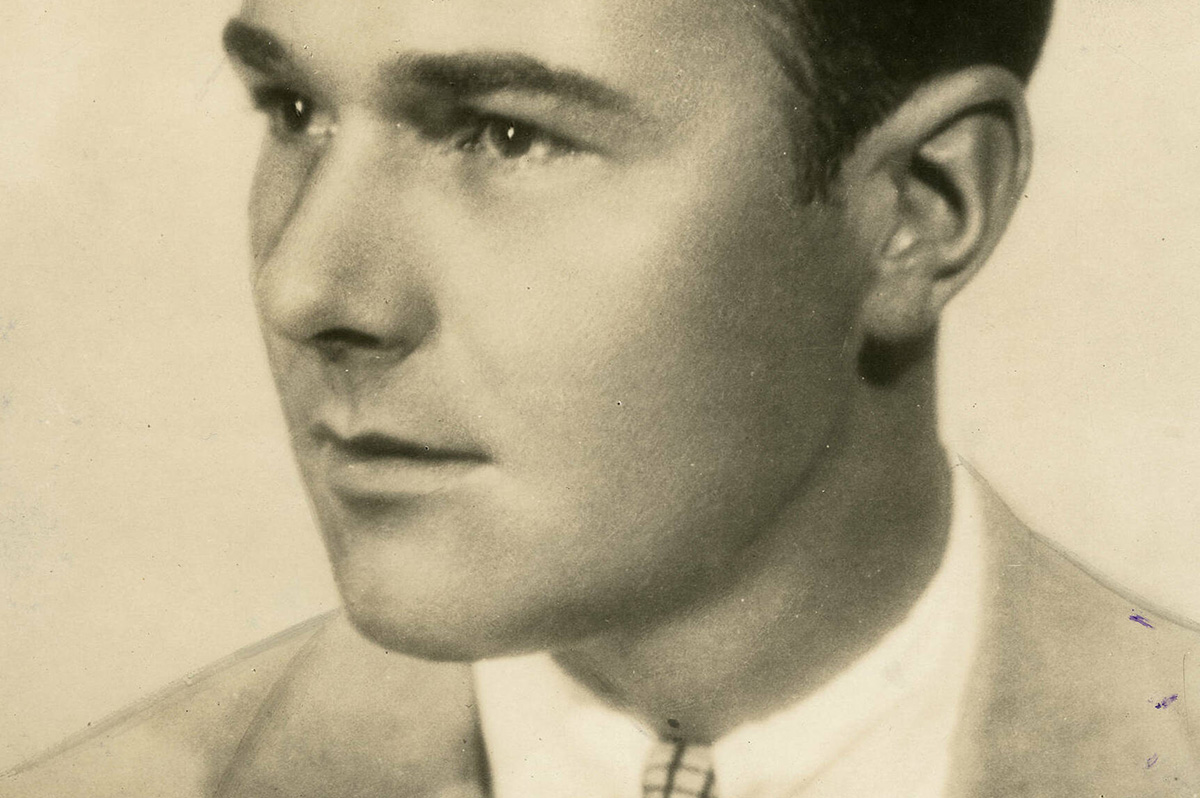
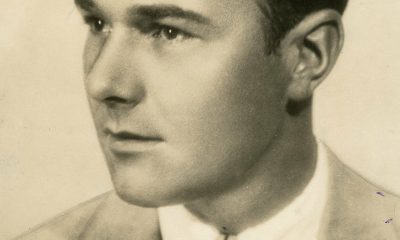
A project is underway in Staunton, Va., to honor William ‘Billy’ Haines, who was born and raised in Staunton before becoming an out gay 1920s and early 1930s-era Hollywood movie star whose acting career ended around 1934 when he refused demands that he conceal his sexual orientation and end his relationship with his male partner.
Haines left the movie business around that time to start what became a highly successful interior design and furniture business in Los Angeles that he led until his death in 1972 at age 72, and which remains in business today, according to the Arcadia Project, a Staunton-based nonprofit initiative.
In a statement released last month, Arcadia Project announced it is working to revitalize a long-vacant movie theater in downtown Staunton that it plans to rename after Haines. It says a fundraising campaign is under way to support efforts to reopen the theater and the larger building in which it is housed as a “dynamic mixed-use cultural center.”
The statement notes that Haines left Staunton at age 14 and resided in Hopewell, Va., and Greenwich Village in New York City until 1922, when he was “discovered” by a talent scout and sent to Hollywood.
“Between 1922 and 1934, Haines appeared in 54 movies during his meteoric and highly successful career,” the Arcadia Project statement continues, noting he transitioned from silent movies to talkies and was fully open about being gay. “But when Hollywood’s moral crackdown of the 1930s demanded that he end his relationship with his longtime partner Jimmie Shields, Haines refused,” it says.
“For LGBTQ people – then and now – Haines’s choice resonates deeply. Rather than deny who he was, he reinvented himself as an interior designer to the stars,” according to the statement.
It says he helped invent the so-called Hollywood Regency style home and designed homes for Hollywood legends such as Joan Crawford, Gloria Swanson, Carole Lombard, George Cukor, and Jack Warner as well as for political figures like Ronald Reagan when he was governor of California.
“As there is no monument, marker or public recognition for Haines in his hometown of Staunton, Va., Arcadia Project, in collaboration with the LGBTQ+ community in Staunton seeks to commemorate him inside a new cultural center,” the statement says.
It quotes Arcadia Project Executive Director Pamela Mason Wagner as saying, “Naming the movie theater in Haines’ honor is more than an act of historical recognition – it is a powerful statement about visibility, belonging, and whose stories are valued in our community.”
The statement says project leaders hope to open the cultural center in early 2027, with a fundraising campaign seeking to raise $250,000 to renovate the theater.
“If the full goal is not reached, a smaller space within the building will be named for Haines, scaled to the amount of funds raised,” it says. “We truly hope friends and admirers of Billy Haines everywhere will want to participate.”
Donations for the project can be made through this site: www.thearcadiaproject.org

Calif. governor’s race spotlights Becerra’s LGBTQ advocacy

UFC fighter says ‘Michelle Obama is a man’ at White House event

This John Waters interview has been edited for readability — but perhaps not human decency

There is no Pride in detention

PHOTOS: Pride on the Pier

Gay 1920s-era Hollywood star to be honored in Staunton, Va.

Blade reporters reflect on covering Pulse massacre 10 years ago

Vote Kenyan McDuffie for D.C. mayor

Your queer D.C. voting guide