Local
‘Eyes on Chechnya’ protest targets Russian ambassador
Demonstration comes day before Tillerson meets with Russian official
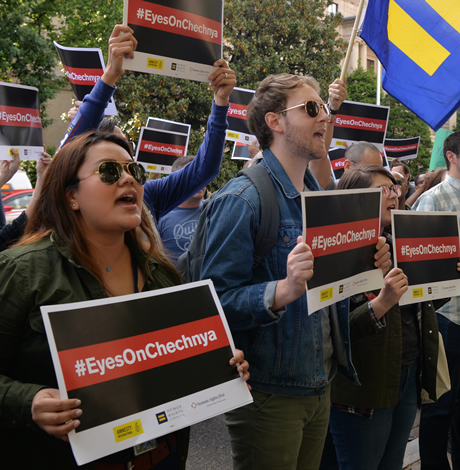
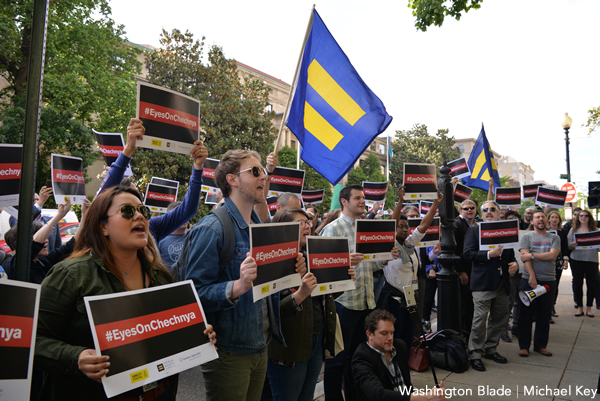
Protesters demonstrate in “Eyes on Chechnya” protest. (Blade photo by Michael Key)
Protesters gathered before the D.C. residence of the Russian ambassador to the United States on Tuesday to call on Russia to investigate reports of anti-gay abuses and concentration camps in Chechnya and bring them to an end.
An estimated 75 people gathered before the residence of Russian ambassador Sergey Kislyak in a demonstration organized by the Human Rights Campaign intended to highlight the arrests and detentions of gay and bisexual men in the semi-autonomous Republic.
Chad Griffin, president of the Human Rights Campaign, spoke at the “Eyes on Chechnya” demonstration and called on the Russian government to take the lead to end the reported abuses.
“Instead of rounding up gay men, Russia must pressure Chechnya to arrest the real criminals, the torturers, the jailers and the executioners,” Griffin said.
Griffin said he also carried a message for the U.S. government: Let the victims of the reported abuses seek asylum in the United States. On the day before Secretary of State Rex Tillerson was set to meet with Russian Foreign Minister Sergei Lavrov, Griffin said the Trump official must raise the issue with his Russian counterpart.
“He must show the same leadership that German Chancellor Merkel did when she met with Putin just last week,” Griffin said, referencing a meeting in which Merkel publicly raised the issue of anti-gay abuses with the Russian leader.
The demonstration was the result of ongoing concern over reports from Chechnya that local authorities have arrested more than 100 gay men and sent them to secret prisons for torture. At least four men have reportedly died as a result.
Chechnya is led by Ramzan Kadyrov, who has denied the atrocities are happnening by asserting gay people don’t exist there. British Minister of state for the Foreign Office Sir Alan Duncan said on the floor of parliament he was told of alleged plans in Chechnya to “eliminate” the country’s gay community by the start of Ramadan, which begins May 26.
Rob Berschinski, senior vice president for policy at Human Rights First, said the reported attacks on gay men are “part and parcel of the Russian government’s program of repression.”
“From a propaganda law that targets members of the LGBT community and their allies, to an NGO law that says anyone critical of the Putin regime is an enemy of the state to invasions of Russian neighbors to support for the brutal Assad regime in Syria, to action at the United Nations hoping to tear down an international system based around human rights and international law, our eyes are on Russia,” Berschinski said.
At the protest, participants chanted, “Stop the Violence…Stop the Hate…Russia Must Investigate.” One sign read, “Say Something Don! Pooty Got Your Tongue!” a reference to Trump’s suspected ties to Russian President Vladimir Putin, whom intelligence agencies said assisted the president’s election efforts with illegal hacking.
U.S. Ambassador to the U.N. Nikki Haley has spoken out against the atrocities, but President Trump himself and Tillerson have said nothing. (For that matter, mainstream media reporters haven’t asked Trump about the matter even though he has participated in several interviews with the press.) The Washington Blade has repeatedly sought comment from the White House on the atrocities.
The protest concluded just minutes before news broke that President Trump had terminated FBI Director James Comey, who was investigating potential Trump collusion with Russia during the 2016 presidential election.
Jeremy Kadden, HRC’s senior international policy advocate, said the process by which gay people in Chechnya could seek asylum in the United States starts with the U.S. government signaling they’re welcome to come here, but that hasn’t happened yet.
“What we understand is happening now is that folks who are trying to get out need the U.S. government to say they are welcome to come here,” Kadden said. “That’s a step that speeds things along a lot faster.”
Kadden said Russian authorities may seek to reclaim the persecuted gay men if they escape to nearby countries, which is why U.S. asylum for them is important.
“The Chechnen families that are trying to track them down won’t go that far,” Kadden said. “But the farther the refugees can get from Russia, the safer they are, and so I think they definitely want to get to the United States.”
The Blade has placed a request with the State Department seeking comment on the status of allowing persecuted gay men in Chechnya to come to the United States.
Ellen Kahn, a 54-year-old lesbian resident of Silver Silver, Md., was at the demonstration and said she came to encourage greater action from the Trump administration on the reported hostilities.
“Given the atrocities in Chechnya, and the silence of our administration — with the very small exception of Nikki Haley mentioning it — we have to push our government to speak up,” she said. “This is like when I think about our friends dying of AIDS very early in the epidemic 30 years ago and Ronald Reagan not saying a word, and we had to take to the streets. To me, this is the same urgency.”
The Blade has placed a request with the Russian embassy seeking comment on the protest.


District of Columbia
Doc on Blade reporter Chibbaro scores Emmy nomination
‘Lou’s Legacy’ chronicles 50-year career

“Lou’s Legacy: A Reporter’s Life at the Washington Blade” has been nominated for a Capital Emmy in the “Documentary – Historical” category by the National Capital Chesapeake Bay Chapter of the National Academy of Television Arts & Sciences.
“Our members include all of the video content producers who serve our local audiences in Washington, DC, Maryland and Virginia—from the Atlantic to the Appalachians, from Bristol to Baltimore,” said Capitol Emmys President Adam Longo in a press release.
Broadcast last June by WETA PBS in Washington, D.C. and MPT in Maryland, the documentary was directed and produced by Emmy-nominated filmmaker Patrick Sammon in association with the Mattachine Society of Washington, D.C. Additional nominees who worked on the film include producer Julianne Donofrio and editor Amir Jaffer.
“Lou’s Legacy” tells the story of two D.C. icons — legendary Washington Blade reporter Lou Chibbaro Jr. and beloved drag performer Donnell Robinson, known to generations of Washington audiences as “Ella Fitzgerald.” Through Chibbaro’s nearly five-decade career at the Blade and Ella’s return to the stage after a three-year hiatus following COVID, the 29-minute documentary explores the history of Washington’s LGBTQ community and today’s rising backlash against LGBTQ rights, including laws targeting drag performers.
“We’re honored that Lou’s Legacy has been recognized alongside such an impressive group of historical documentaries,” said Sammon. “This nomination is especially meaningful because the film preserves and celebrates the stories of people who helped shape queer history in Washington, DC — often without recognition from mainstream institutions. We’re deeply grateful to the Mattachine Society, Lou Chibbaro Jr., Donnell Robinson, WETA PBS, and everyone who helped bring this project to life.”
“Lou’s Legacy” premiered on WETA PBS in June 2025 during Pride month. The documentary also broadcast on Maryland Public Television and is streaming nationally on PBS.org. WETA will rebroadcast “Lou’s Legacy” several times during Pride month, including June 15 th at 9 p.m. Winners of the Capital Emmy Awards will be announced at the Capital Emmy Gala on June 20 at the Bethesda Marriott Hotel.
Rehoboth Beach
Don’t let Rehoboth rain deter you, there’s lots to do for Memorial Day
Local businesses ready to host thousands this weekend

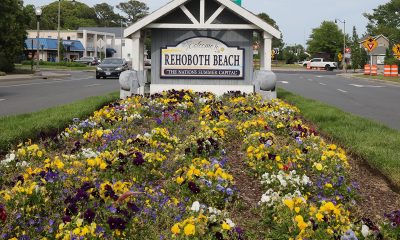
Although the weather is not expected to produce a picturesque Memorial Day Weekend at the Nation’s Summer Capital, plenty of exciting LGBTQ-friendly events, gatherings, and celebrations remain planned in Rehoboth Beach, Del., come rain or shine.
Thursday (5/21)
Begin this Memorial Day Weekend early on Thursday at The Pines Coastal Tavern, an LGBTQ+ friendly bar and grill that offers a happy hour from 4-6 p.m and a comfort food weekly special on Thursdays.
Next, you have a few options to spend your night enjoying live music, drag performances, and karaoke across Rehoboth.
The Purple Parrot Grill, Rehoboth’s only biergarten, will host its weekly Thursday Karaoke night starting at 9 p.m. With no cover fee, the Purple Parrot offers a queer-friendly space to have a drink or two and sing your heart out with friends.
Aqua, an LGBTQ bar in Rehoboth, is featuring six different DJs from Thursday to Monday. This Thursday will feature DJ KG, who will be spinning from 8 p.m. to midnight. Additionally, Thursdays are Burger Nights with $12 burgers and $3 domestic beers.
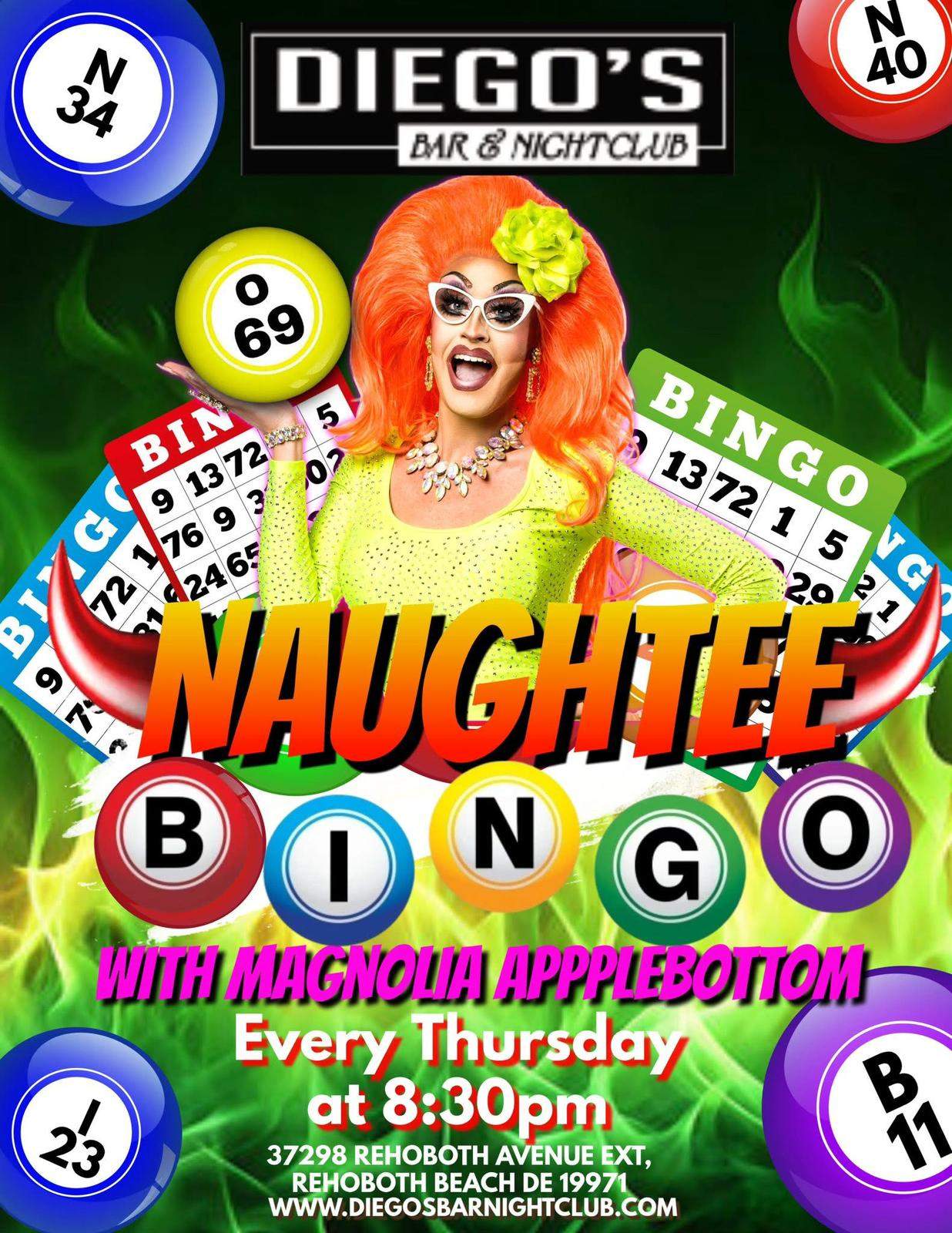
Naughtee Bingo will be hosted by Magnolia Applebottom at Diego’s Bar & Nightclub starting at 8:30 pm on Thursday.
Friday (5/22)
Get your Friday night started with a live piano show with Grant Uhle from 7-10 p.m. at The Pines.
Freddie’s Beach Bar, another LGBTQ-friendly bar in Rehoboth, will feature “Freddie’s Follie’s Drag Show” at 9 p.m. with DJ Nan keeping the party going at 11 p.m.
Aqua’s “Beats Party Night” with DJ Matt Bailer will also be going on from 9 p.m.-1 a.m.
Saturday (5/23)
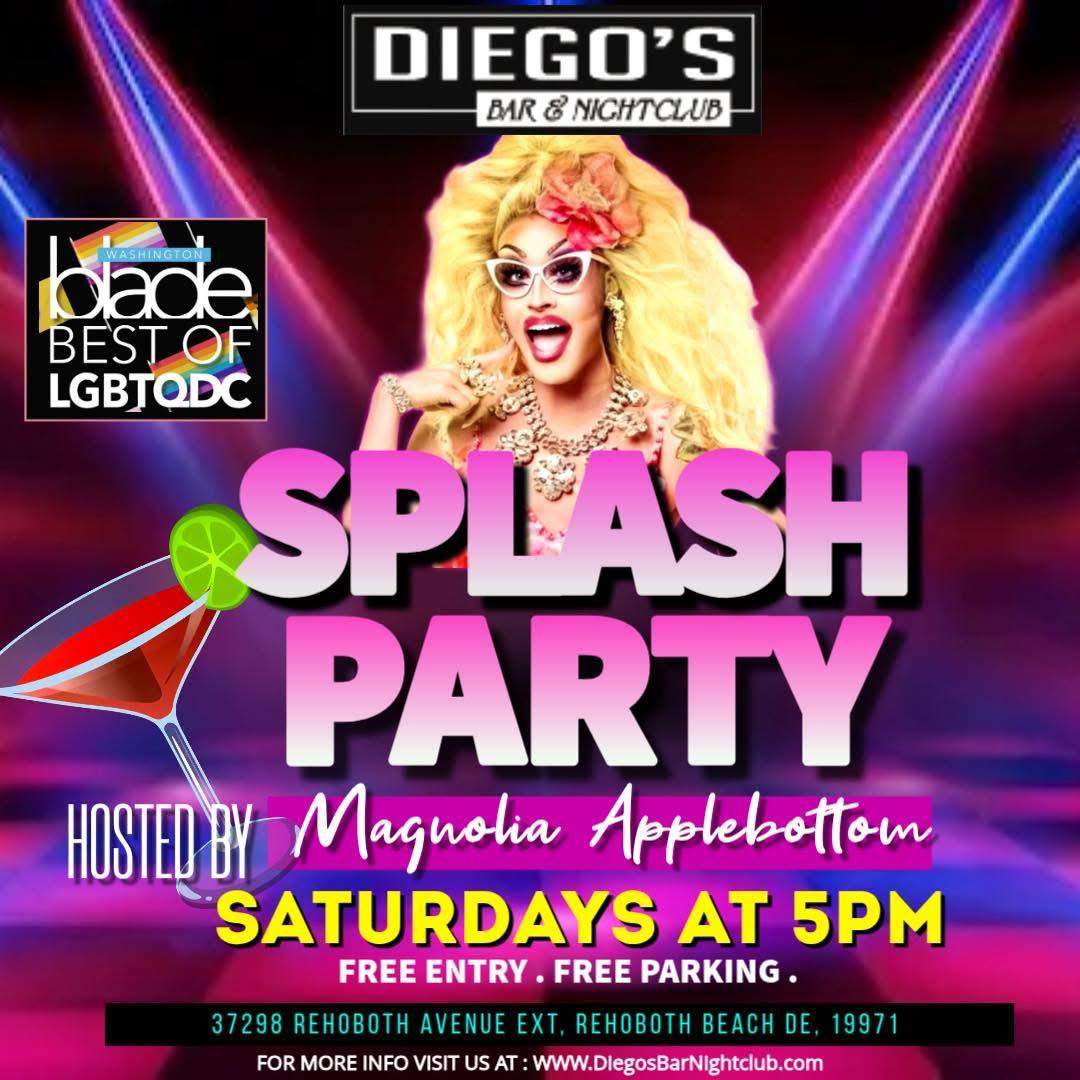
The party is starting early at Diego’s on Saturday with a Splash Party hosted by Magnolia Applebottom at 5 p.m.
The Pines is also offering a live Piano show & sing-a-long with Etienne Pilon from 6-8 p.m. and DJ Fixed Rate spinning from 8-11 p.m.
DJ Chord will play from 9 p.m.-1 a.m. at Aqua on Saturday night.
Sunday (5/24)
On Sunday, Aqua is hosting an “Aquaman” swimsuit modeling contest at 3 p.m. with the “king” chosen by the crowd. The event is sponsored by JimmyTrendy and prizes include a JimmyTrendy swimsuit set and an Aqua Grill gift card. JimmyTrendy will also offer a pop-up shop to purchase swimwear.
DJ Biff will play beats at the “Aquaman” contest until 6 p.m. and DJ Malachi Gomez will spin from 9 p.m.-1 a.m.
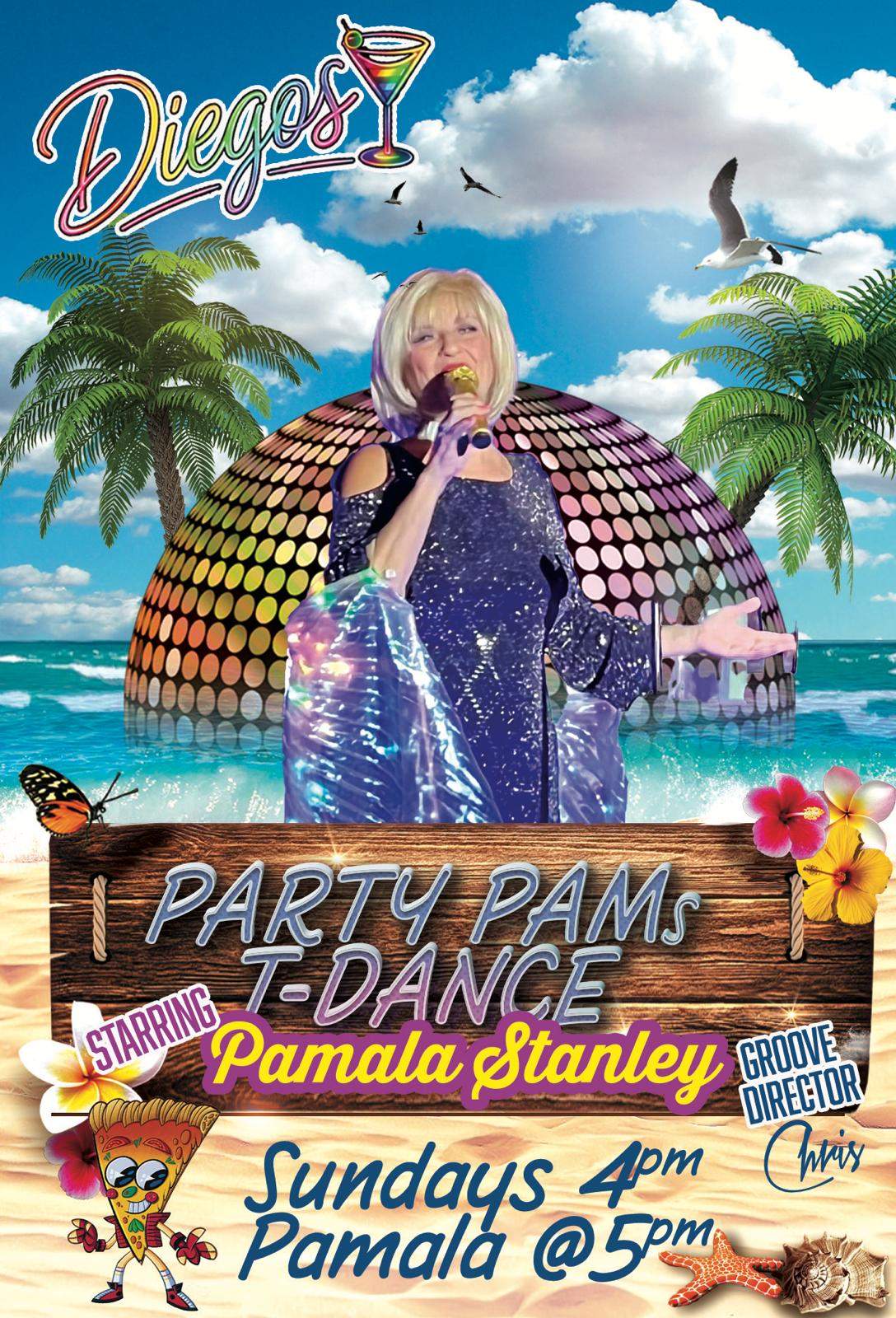
Diego’s is putting on its weekly Party Pams T-Dance starring singer Pamala Stanley at 5 p.m. It’s Pamala’s 21st season in Rehoboth Beach and her show is a must-see event.
At Freddie’s Beach Bar, DJ Shady Lady will play from 5-6 p.m. with a Memorial Day Sunday Drag Show taking place from 9-11 p.m. and karaoke directly after.
Monday (5/25)
Come together on Memorial Day to remember and honor the fallen women service members, first responders, and canine war heroes with the Laying of the Wreath. This ceremony will take place at 8:45 a.m. at the Veterans Memorial at the end of Rehoboth Avenue at the Band Stand Area. This event is put together by the Gay Women of Rehoboth.
Sussex Pride invites you to a Memorial Day Cookout Honoring LGBTQ+ Veterans and Servicemembers from 11 a.m.-3 p.m. at Gordons Pond Pavilion in Cape Henlopen.
End your MDW with Monday night singing your heart out with late night karaoke at Freddie’s Beach Bar at 8 p.m. and Piano Pam at Diego’s at 5 p.m. with Pamala Stanley playing everything from Broadway hits to current dance music.
District of Columbia
D.C. Black Pride set for Memorial Day Weekend
Dozens of events to reflect theme of ‘New Black Renaissance’
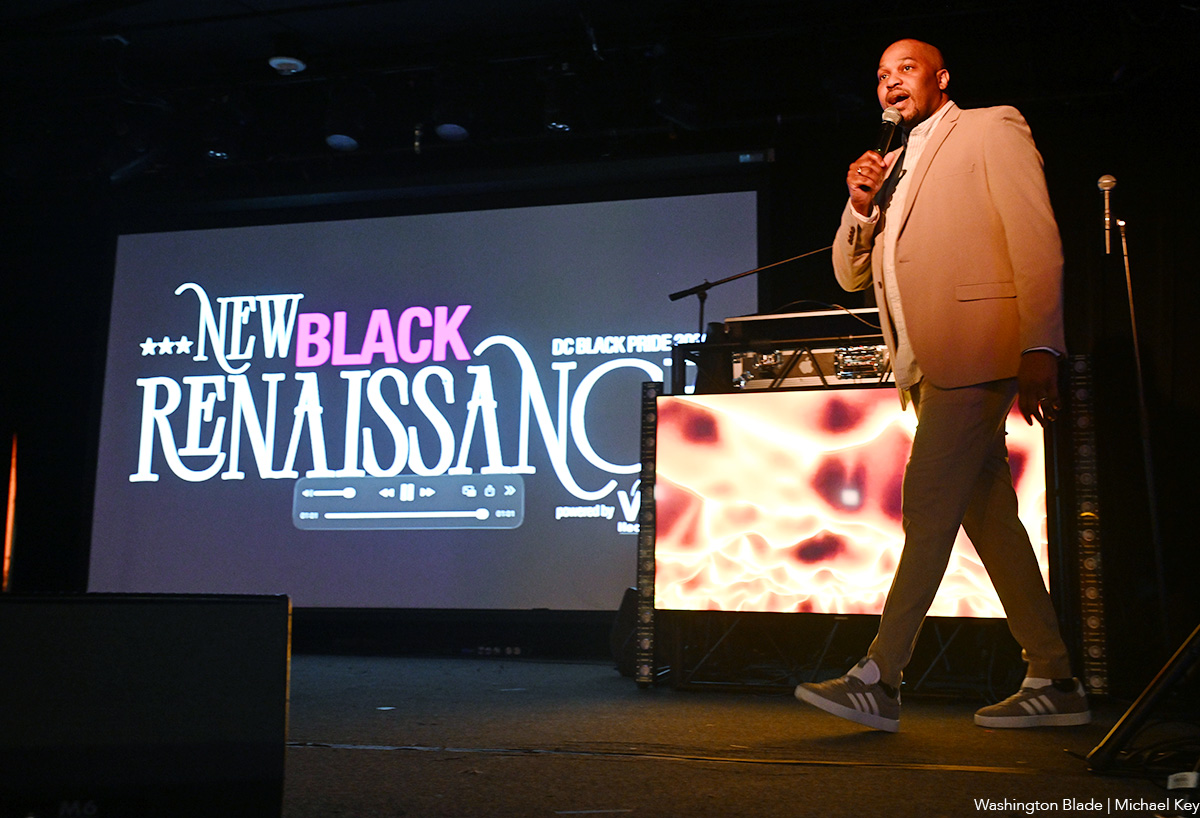
D.C.’s annual LGBTQ Black Pride celebration is scheduled to take place May 22-25 as it has since its founding 35 years ago on Memorial Day Weekend with several dozen events in locations across the city.
Like recent years, most of the official events are scheduled to take place at the Westin D.C. Downtown Hotel, including the Opening Reception on Friday, May 22, when Grammy Award-winning singer-songwriter Durand Bernarr was scheduled to be among the performers.
“This high-energy reception brings together community leaders, creatives, tastemakers, and visitors from across the globe for a night rooted in connection, joy, and celebration,” according to a statement on the Black Pride website.
Also, like past years, the second day of official Black Pride events set for Saturday, May 23, will include a dozen workshop sessions on a wide range of issues and topics. The workshop sessions will take place at the Westin Hotel.
On that same day, Black Trans Pride is scheduled to take place at the hotel from 1- 6 p.m., according to the official schedule of events.
“The goal is and always has been to make sure we have events for everybody, regardless of their financial situation, regardless of their agenda,” said Kenya Hutton, president and CEO of the Center For Black Equity, the D.C. LGBTQ group that organizes D.C. Black Pride.
Hutton said this year for the first time there will be a D.C. Black Pride Fun Run. The Black Pride website says the 5k run will take place Saturday, May 23, from 8 a.m.-12 p.m. starting at the Frederick Douglass Bride near the D.C. Navy Yard.
He said another first will be a film screening of the documentary film “Not Your Average Girl,” about the life of trans woman, author, and advocate Hope Giselle, scheduled for May 22 at the nearby Eaton Hotel.
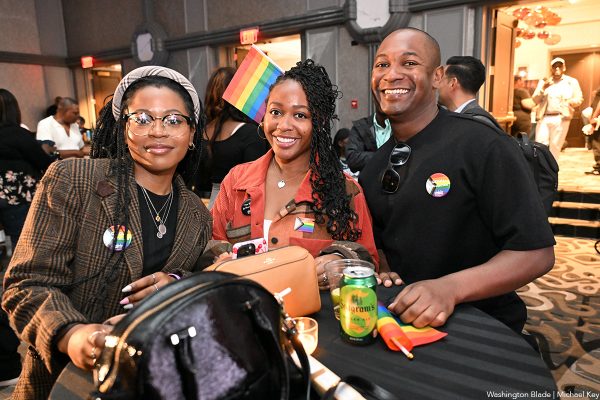
Also, like in past years, this year’s Black Pride will feature a Rainbow Row organization and vendor expo at the Westin from 5-9 p.m. Friday and 10 a.m. to 8 p.m. on Saturday that includes information tables set up by organizations and vendors.
The annual Pride In The Park event will take place Monday, May 25, from 12-7 p.m. at Fort Dupont Park located at 3600 F St., S.E. And the seventh annual “Brunch & Babes” drag event was scheduled for Sunday, May 24, at Hook Hall nightclub at 3400 Georgia Ave., N.W.
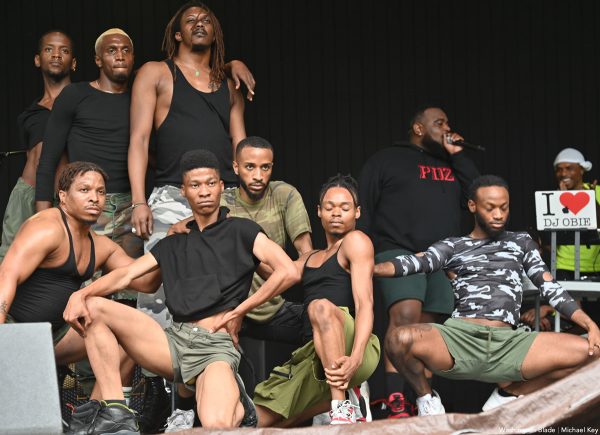
Among the other events taking place at other locations is a Sunday, May 24 “G-Spot Day Party” organized by local gay activist Geno Dunnington to be held at Bravo Bravo nightclub at 1001 Connecticut Ave., N.W. from 3-9 p.m. Dunnington told the Washington Blade the event will include the playing of house music, which he says played a role in local D.C. Black LGBTQ culture and in the first Black Pride celebration in 1991. The Black Pride website includes a write up of how that came about.
“From 1976 until1990, the ClubHouse in Washington, D.C. was a remarkable nightclub founded by Black members of D.C.’s LGBTQ community, widely known for its signature event – the Children’s Hour,” the write-up says. “This event was a true celebration and took place annually during Memorial Day weekend,” it says.
“When the ClubHouse closed in 1990, many feared the Memorial Day tradition would be lost,” the write-up continues. “However, three men – Welmore Cook, Theodore Kirkland, and Ernest Hopkins – envisioned creating an event that would continue the tradition of the Children’s Hour while also bringing awareness to the growing HIV/AIDS epidemic in their community.”
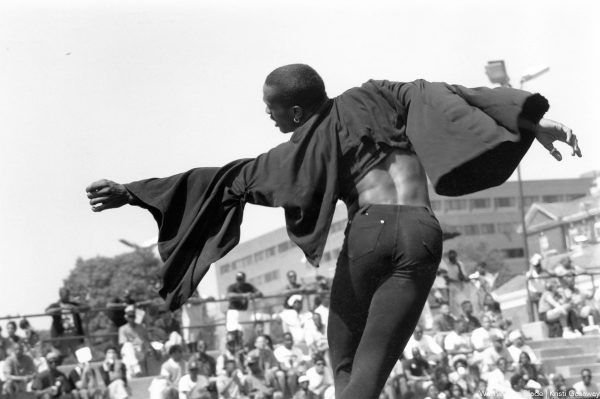
The write-up adds, “Their vision and hard work gave life to the first Black Gay and Lesbian Pride event on May 25, 1991, on the grounds of Banneker Field,” which is located near Howard University. “This first event drew 800 people, who were centered around the theme of ‘Let’s All Come Together.’”
It says organizers expanded the scope of the Black Pride events over the next several years as it evolved and prompted Black Pride events in other cities and the formation of the International Federation of Black Prides, which later became the Center for Black Equity.
“D.C. Black Pride was the catalyst for what is now regarded as the Black Pride Movement,” the writeup says. “Since its birth, more than 50 other Black Pride celebrations now take place throughout the world, many using D.C. Black Pride as its model.”
It adds, “Today, more than 500,000 members of the lesbian, gay, bisexual and transgender community of African descent and their allies come to Washington, D.C. on Memorial Day weekend to celebrate the beauty of a shared community and raise awareness and funding for HIV/AIDS in the name and spirit of Black Pride.”
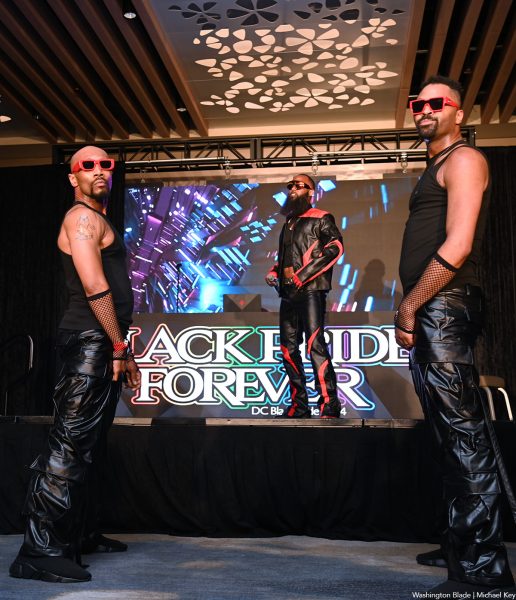
Hutton said D.C. Black Pride has grown to a point where organizers cannot keep track of all the unofficial events taking place.
“There are a number of events that are not even on our website,” he said. “They’re parties. People are having cookouts. There are all kinds of things that are happening over the weekend, that are official listed events, partner events, and non-partner events.”
Hutton said that while D.C. Black Pride’s support from corporate and business sponsors has remained stable, Black Pride organizations in other cities have been hit hard by the growing reluctance by businesses to sponsor LGBTQ related events and LGBTQ organizations brought about by the Trump administration’s opposition to so-called diversity, equity and inclusion or “DEI” programs.
He said several Black Pride groups have had to curtail their annual celebrations’ scope, with some facing the prospect of cancelling their celebrations due to a sharp decrease in funds from business donors. D.C. Black Pride has also faced the impact of anti-DEI pressure from the Trump administration, according to Hutton, from businesses that have asked not to be publicly identified as sponsors.
“The administration has put pressure on some of our traditional sponsors, and we have some sponsors this year who have told us don’t put our ad, don’t put our logo, don’t put anything out” to publicly identify them as sponsors, Hutton said. “They still want to support us but can’t announce they are financially supporting us in any kind of way,” he said.
As she has in recent past years, D.C. Mayor Muriel Bowser this year issued an official mayoral proclamation declaring May 22-25, 2026 as “DC BLACK PRIDE WEEKEND.”
A list of the official 2026 D.C. Black Pride and partner events and their locations can be accessed at dcblackpride.org.


Elevated Living. Personalized Care.

Politicians, activists pay tribute to Barney Frank

Skipping Memorial Day crowds in Rehoboth Beach

What is queer food?

GLAA’s 2026 primary election ratings show candidates agree on basics

Disillusioned about democracy? Think of it as a community garden

Honey, have we been priced out of gay paradise?

IDAHOBiT a reminder we all must stand up against transphobia

PHOTOS: Blade Summer Kickoff Party