Arts & Entertainment
GLAAD Media Awards announces 2019 nominees
‘Pose,’ The Favorite,’ ‘Love, Simon’ and more honored for LGBT-inclusivity
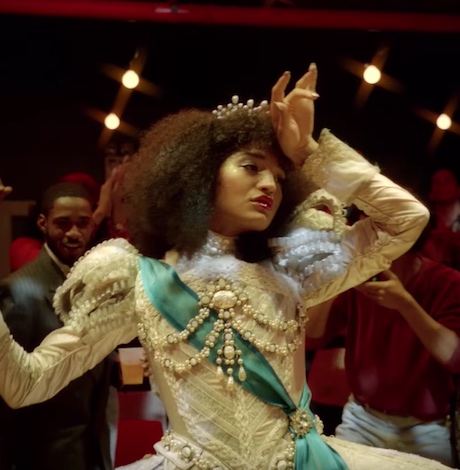
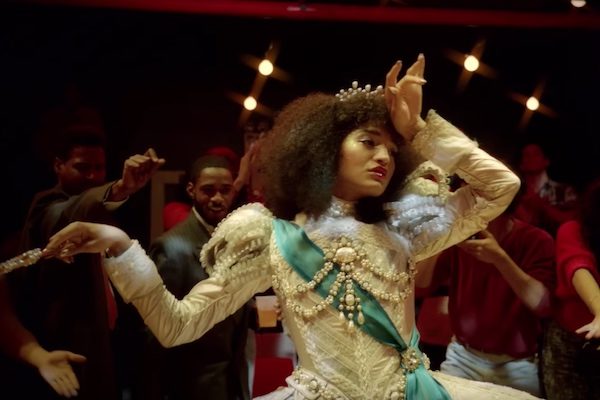
The 30th annual GLAAD Media Awards were announced on Friday at the Sundance Film Festival in Park City, Utah by “Pose” star
This year GLAAD expanded its nominations in the Outstanding Film – Limited Release category from five nominees to 10. The nominees include “The Favourite,” “Can You Ever Forgive Me?” “Boy Erased and “The Miseducation of Cameron Post,” among others. As for the Outstanding Film – Wide Release category, the teen rom-com “Love, Simon” and Marvel superhero sequel “Deadpool 2” were among the nominees.
For television, Netflix, Hulu and Amazon collectively received the most nominations with 11.
FX’s “Pose,” which made history as the first scripted television series to include a majority transgender cast, was nominated for Outstanding Drama Series along with “Supergirl” (CW), “Billions” (Showtime) and more.
This year GLAAD also opened up the awards to recognize LGBT-inclusive content in video games as well.
“GLAAD has always leveraged diverse forms of media to share LGBTQ stories which change hearts and minds, and as the video game industry reaches new heights of popularity and influence, it is imperative that LGBTQ people and issues are included in fair and accurate ways,” Sarah Kate Ellis, GLAAD President and CEO, said in a statement.
In GLAAD’s music categories, J
“The images and stories recognized by the GLAAD Media Awards over the past 30 years raised the bar for LGBTQ inclusion in the media industry and changed the hearts and minds of countless audience members around the world,” Ellis said. “This year’s nominees are changing the game by showcasing diverse races, genders, religions, ages, geographies, and genres in ways that challenge misconceptions and inspire LGBTQ acceptance. The 30th anniversary of the GLAAD Media Awards will honor these groundbreaking new LGBTQ stories while remembering the astounding positive cultural change that LGBTQ media representations have achieved.”
The GLAAD Media Awards will be held in a bi-coastal celebration on Thursday, March 28 in Los Angeles at The Beverly Hilton and Saturday, May 4 in New York City at the Hilton Midtown.
Check out the list of nominees below.
Outstanding Film – Wide Release
“Blockers” (Universal)
“Crazy Rich Asians” (Warner Bros.)
“Deadpool 2” (20th Century Fox)
“The Girl in the Spider’s Web” (Sony Pictures)
“Love, Simon” (20th Century Fox)
Outstanding
“1985” (Wolfe Releasing)
“Boy Erased” (Focus Features)
“Can You Ever Forgive Me?” (Fox Searchlight)
“Disobedience” (Bleecker Street)
“The Favourite” (Fox Searchlight)
“Hearts Beat Loud” (Gunpowder & Sky)
“A Kid Like Jake” (IFC Films)
“The Miseducation of Cameron Post” (FilmRise)
“Saturday Church” (Samuel Goldwyn Films)
“We the Animals” (The Orchard)
Outstanding Drama Series
“Billions” (Showtime)
“Black Lightning” (The CW)
“Grey’s Anatomy” (ABC)
“The Handmaid’s Tale” (Hulu)
“Instinct” (CBS)
“Pose” (FX)
“Shadowhunters” (Freeform)
“Star” (Fox)
“Supergirl” (The CW)
“Wynonna Earp” (Syfy)
Outstanding Comedy Series
“Brooklyn Nine-Nine” (FOX)*
“Crazy Ex-Girlfriend” (The CW)
“Dear White People” (Netflix)
“Modern Family” (ABC)
“One Day at a Time” (Netflix)
“Schitt’s Creek” (Pop)
“Superstore” (NBC)
“This Close” (Sundance Now)
“Vida” (Starz)
“Will & Grace” (NBC)
*Note: Brooklyn Nine-Nine now airs on NBC
Outstanding Individual Episode (in a series w/o a regular LGBTQ character)
“King in the North”-“Fresh Off the Boat” (ABC)
“Prom” -“Fuller House” (Netflix)
“Service” – “Law & Order: Special Victims Unit” (NBC)
“She”- “The Good Doctor” (ABC)
“Someplace Other Than Here”-“The Guest Book” (TBS)
Outstanding TV Movie or Limited Series
“American Horror Story: Apocalypse” (FX)
“The Assassination of Gianni Versace: American Crime Story” (FX)
“Life-Size 2” (Freeform)
“Sense8” (Netflix)
“A Very English Scandal” (Amazon Prime)
Outstanding Documentary
“Believer” (HBO)
“Call Her Ganda” (Breaking Glass Pictures)
“My House” (
“Quiet Heroes” (Logo)
“When the Beat Drops” (Logo)
Outstanding Kids & Family Programming
“Adventure Time” (Cartoon Network)
“Andi Mack” (The Disney Channel)
“Anne with an E” (Netflix)
“She-Ra” (Netflix)
“Steven Universe” (Cartoon Network)
Outstanding Reality Program
“American Idol” (ABC)
“I Am Jazz” (TLC)
“Love & Hip Hop” (VH1)
“Queer Eye” (Netflix)
“RuPaul’s Drag Race” (VH1)
Outstanding Music Artist
Brandi Carlile, “By the Way, I Forgive You” (Low Country Sound/Elektra)
Brockhampton, “Iridescence” (RCA)
Christine and the Queens, “Chris” (
Hayley Kiyoko, “Expectations” (Atlantic)
Janelle Monáe, “Dirty Computer” (Bad Boy Records)
Kim Petras, “Turn Off the Light, Vol. 1” (BunHead)
Shea Diamond, “Seen It All” (Asylum Worldwide)
Sophie, “Oil of Every Pearl’s Un-Insides” (Future Classics)
Troye Sivan, “Bloom” (Capitol Records)
Years & Years, “Palo Santo” (Polydor)
Outstanding Comic Book
“Batwoman,” written by Marguerite Bennett, K. Perkins (DC Comics)
“Bingo Love,” written by Tee Franklin (Image Comics)
“Exit Stage Left: The Snagglepuss Chronicles,” written by Mark Russell (DC Comics)
“Fence,” written by C.S. Pacat (BOOM! Studios)
“Iceman,” written by Sina Grace (Marvel Comics)
“Lumberjanes: The Infernal Compass,” written by Lilah Sturges (BOOM! Studios)
“Oh S#!t It’s Kim & Kim,” written by Magdalene Visaggio (Black Mask Comics)
“Runaways,” written by Rainbow Rowell (Marvel Comics)
“Star Wars: Doctor Aphra,” written by Kieron Gillen, Simon Spurrier (Marvel Comics)
“Strangers in Paradise XXV,” written by Terry Moore (Abstract Studio)
Outstanding Video Game
“Assassin’s Creed: Odyssey” (Ubisoft)
“The Elder Scrolls Online: Summerset” (Bethesda Softworks)
“Guild Wars 2: Path of Fire” (ArenaNet)
“Pillars of Eternity II: Deadfire” (Versus Evil)
“The Sims Mobile” (Electronic Arts)
Outstanding Variety or Talk Show Episode
“Mike Pence and ‘A Day in the Life of Marlon
“NRA Problems, Chicken Bone Problems, Birmingham Problems” -“Wyatt Cenac’s Problem Areas “(HBO)
“Trans Rights Under Attack” -“Full Frontal with Samantha Bee” (TBS)
“Troye Sivan Hopes ‘Boy Erased’ Reaches All Parents”- “The Late Show with Stephen Colbert” (CBS)
“Valedictorian Seth Owen”-“The Ellen DeGeneres Show” (syndicated)
Outstanding TV
“Conversion Therapy: God Only Knows” -“CBS Sunday Morning” (CBS)
“Gender: The Space Between”- “CBS News” (CBS)
“Legacy of Hope” -“Nightline” (ABC)
“Respect” -“SC Featured” (ESPN)
“South Texas Pride” [series]- “KSAT News” (KSAT-TV [San Antonio, Texas])
Outstanding TV Journalism Segment
“Historic Number of LGBTQ Candidates on Ballots This Year”- “NBC Nightly News” (NBC)
“Mississippi Town Denies Pride Parade”- “Vice News Tonight” (HBO)
“Olympian Adam Rippon”- “New Day” (CNN)
“Same-sex Couple Reacts to Supreme Court Ruling” -“CNN Tonight with Don Lemon” (CNN)
“Trump: ‘Looking Very Seriously’ at Changing Transgender Definition” -“Velshi & Ruhle” (MSNBC)
Outstanding Newspaper Article
“He Took a Drug to Prevent AIDS. Then He Couldn’t Get Disability Insurance.” by Donald G. McNeil Jr. (The New York Times)
“LGBTQ Parents Challenge Stereotypes in China” by Sue-Lin Wong, Jason Lee (Reuters)
“‘More Than Fear’: Brazil’s LGBT Community Dreads Looming Bolsonaro Presidency” by Marina Lopes (The Washington Post)
“Pistons’ Reggie Bullock to Transgender Community: ‘I see y’all as people that I love'” by Malika Andrews (Chicago Tribune)
“Transgender Students Asked Betsy DeVos for Help. Here’s What Happened.” by Caitlin Emma (Politico)
Outstanding Magazine Article
“21 Transgender Stars, Creators Sound Off on Hollywood: ‘I Want to Portray These Characters, and I’m Ready'” by Chris Gardner, Rebecca Sun, Lindsay Weinberg, Joelle Goldstein, Bryan White (The Hollywood Reporter)
“Can a Transgender Woman Get Justice in Texas?” by Nate Blakeslee (Texas Monthly)
“Ex-Scientologist Michelle LeClair Says Church Officials Humiliated Her After She Came Out as Gay” by Johnny Dodd, Tierney McAfee (People)
“Lena Waithe is Changing the Game” by Jacqueline Woodson (Vanity Fair)
“They are the Champions” by Katie Barnes (ESPN The Magazine)
Outstanding Magazine Overall Coverage
Billboard
Ebony
Entertainment Weekly
GQ
Variety
Outstanding Digital Journalism Article
“Across U.S., LGBTQ Christians Try to Change Hearts and Minds From the Pews” by Julie Compton (NBCNews.com)
“Bermuda Same-sex Marriage Ban Means Trouble for Tourism and Cruise Ships” by Ryan Ruggiero (CNBC.com)
“Deadnamed” by Lucas Waldron, Ken Schwencke (ProPublica.org)
“LGBTQ Caravan Migrants Marry While Waiting for Asylum in Tijuana” by Sarah Kinosian (INTOmore.com)
“Workplaces Need to Prepare for the Non-Binary Future” by Samantha Allen (TheDailyBeast.com)
Outstanding Digital Journalism – Video or Multimedia
“I Was Jailed for Raising the Pride Flag in Egypt” by Amro Helmy (Buzzfeed Video)
“The Latinx Drag Queens Spearheading HIV Activism on the Border” by Paola Ramos (Vice.com)
“March for Our Lives and LGBT activism: ‘They’re definitely linked for me,’ says Emma González” by Beth Greenfield (Yahoo! Lifestyle)
“Marielle and Monica: The LGBT Activists Resisting Bolsonaro’s Brazil” by Fabio Erdos, Marina Costa, Charlie Phillips, Jacqueline Edenbrow (TheGuardian.com)
“Trans Model Aaron Philip is Making a Space for Disabilities on the Runway” (NowThis)
Outstanding Blog
Gays With Kids
Holy Bullies and Headless Monsters
My Fabulous Disease
Pittsburgh Lesbian Correspondents
TransGriot
Special Recognition
“Nanette” (Netflix)
“TransMilitary” (Logo)
SPANISH-LANGUAGE NOMINEES
Outstanding Scripted Television Series (Spanish-Language)
“Élite” (Netflix)
“Mi familia perfecta” (Telemundo)
“Mi marido tiene más familia” (Univision)
“Papá a toda madre” (Univision)
Outstanding TV
“Denuncian trabas migratorias contra la comunidad transgénero”- “Un Nuevo Dia” (Telemundo)
“Entrevista con Luis Sandoval para National Coming Out Day” -“Despierta América” (Univision)
“No es fácil en EEUU ser un gay latino” -“Noticias Telemundo Mediodía” (Telemundo)
“La primera escuela para niños transgénero de Chile” -“Nuestro Mundo” (CNN en Español)
Outstanding TV Journalism Segment (Spanish-Language)
“Entrevista con Pat ‘Cacahuate’ Manuel”- “NoticiasYa Tampa Bay” (Univision)
“LAFC Pride Republic” -“Noticiero Univision Los Ángeles” (Univision)
“Madre hispana lucha contra un agresivo cáncer seno” -“Noticias Univision Arizona” (Univision)
“Primera Pareja Gay en Casarse en un Consulado Mexicano”- “Noticias Telemundo Mediodía” (Telemundo)
“Transpesina”- “Univision 21 Fresno” (Univision)
Outstanding Digital Journalism (Spanish-Language)
“Apoyo y recursos para jóvenes LGBTQ y sus familias” por Virginia Gaglianone (LaOpinion.com)
“Así pinta la televisión hispana a los personajes LGBTQ, una representación preocupante” por Daniel Shoer Roth (ElNuevoHerald.com)
“Dallas: Para jóvenes LGBT con DACA, la lucha ha sido salir de dos clósets” por Jenny Manrique (AlDiaDallas.com)
“De la censura a la celebración: la historia de una exposición queer en Brasil” por Ernesto Londoño (NewYorkTimes.com/es)
“Desaliento y miedo en medio de celebración del Orgullo LGBT en NYC” por José Martínez (ElDiarioNY.com)
Special Recognition (Spanish-Language)
“House of Mamis” (INTOmore.com)




Fairfax City Pride was held at the Sherwood Center (3740 Blenheim Blvd., Fairfax, Va.) on Saturday, June 6.
(Washington Blade photos by Michael Key)


a&e features
D.C. prepares to party as Pride celebrations kick off Saturday
Bars, clubs have busy lineups; Pride on the Pier returns

Capital Pride’s date change isn’t slowing down the festivities. Back in December, the Capital Pride Alliance shifted the calendar for Pride celebrations in the nation’s capital from the second weekend of June to two weeks later to the weekend of June 20-21 to not conflict with President Trump’s birthday and 250th anniversary of America celebrations, with the aim that “our community can gather safely and without unnecessary barriers… We are protecting our space and preserving Pride as a powerful act of visibility, solidarity, and resistance.”
On the heels of WorldPride last year, the city shows no sign of slowing down. Instead, restaurants, bars, clubs, and neighborhoods are taking the opportunity to be even more visible. The Blade has put together a (non-comprehensive) list of parties, activations, and activities across town:
Pride on the Pier returns on Saturday, June 13 to the Wharf on the Southwest waterfront. The event, sponsored and hosted by the Washington Blade, is free and runs from 4-9 p.m. There will be vendors, DJs, and drag performances all day. VIP tickets are $25 and come with air conditioned party room, private bathrooms, and free cocktail. More details at prideonthepierdc.com.
Capital Pride Official Opening Party: RIOT! is the official opening dance party of Capital Pride, taking place Friday June 19, 9 PM-3AM. The 2026 edition headlining performer is Myki Meeks, a finalist of “RuPaul’s Drag Race” season 18; Bob The Drag Queen will perform a special set. DMV-area DJs and performers include: Bambi, Baphomette, Bumper, Cake Pop!, Connor, DJ Ed Bailey, DJ Diyanna Monet, Evry Pleasure, Jakknife Complex, Mari Con Carne, Pussy Noir, WessTheDJ. Trade owner Ed Bailey is producing the event.
Kinetic Presents brings the heat across the entirety of Pride weekend as well. It again is partnering with Capital Pride Alliance to produce four events over four days this Pride, including the Official Main Event on Saturday (the Friday official event is at Echostage). Kinetic’s parties are splayed across various D.C. venues, with special performances, massive productions, shirtless dancers, play zones, dance-forward audio and visuals, and international DJ talent. Thursday, June 18 at 10 PM at District Eagle is Lust, with music by Dan Slater and TOMI. Friday, June 19 at 10 PM is UNCUT XXL Heavy Load, at A.i. Warehouse in Union Market District, with music by Alex Acosta, Felipe Lira & Mitch Ferrino; the party is a “high-octane night of muscular house and tribal rhythms.” Saturday, June 20 at 10 PM brings that official main event, Kinetic Toy Land, at Echostage, with music by GSP & Matt Suave. Alaska Thunderfuck headlines. Sunday evening June 21 at 10 PM closes with discoVERS at SAX. A portion of tickets supports the DC LGBTQ+ community through Capital Pride Alliance.
9:30 Club always comes in clutch for the LGBTQ community. Already in June, it produced Kitty Kat Ball on June 7, and Kiesza performed on June 8. On June 20 at 10 PM, the famed Mixtape party hits the stage, care of gay DJs Shea van Horn and Matt Bailer, who have spun together for coming up on two decades. Mixtape has been held at several venues across the city over those years, and now settled on 9:30 Club for Pride. On June 25 at 7 PM, Big Freedia – the bounce artist from New Orleans – hits the 9:30 Club scene for the eighth time, as part of the Big Freedom Tour.
Crush: New this year from the 14th Street bar is the Pride Pop-Up, sitting pretty in the parking lot at 1820 14th St., N.W., at the corner of Swann Street by the start of the Pride Parade route. Hours are Friday from 2-10 PM and Saturday from 12-10 PM. Friday evening features Grizzly Bear Happy Hour, a DJ will set up shop on Saturday, and for those needing another layer, there’s a Crush merch store. Co-owner Mark Rutstein “has always wanted to throw a party in that parking lot, so he did,” said co-owner Stephen Rutgers. Note that Crush (the bar) will have a cover on Friday and Saturday.
Kiki: Over at Kiki, there’s a full slate of Pride-themed programming all week. Tuesday, June 16 at 9 PM brings karaoke; Wednesday, June 17 at 7:30 PM is trivia; Thursday June 18 at 9PM is “Night of 1000 Tatianna’s Drag Show”, and Friday June 19 at 9 PM brings the Juneteenth Serve Drag Show. Saturday, June 20 at 10 PM, post-parade, is a Pride Dance Party with DJ Lemz. Sunday daytime at 5 PM is the Father Figures Daddy Issues Special Drag Show; and after the festival at 8 PM, DJ Tezrah hits the tapes.
Jane Jane: Right along the parade route, gay-owned Jane Jane has transformed its space into a “No Kings, Yas Queens” activation in a direct response to the America 250th commemorations happening downtown, from the colorful window installation, to merch (including a custom bandana and tank) to disco wig installations. Events include industry night on Mondays, donations to LGBTQ charities, and to-go cocktails during the Pride Parade.
Shaw’s Tavern: Gay-owned Shaw’s Tavern on Florida Avenue celebrates Pride week with a full lineup of themed events, entertainment, and specials, including Pride trivia on Monday, June 15 at 7:30 PM, bingo on Tuesday, June 16 at 8 PM, a cabaret on Thursday, June 18 at 9 PM, Juneteenth Drag Brunch on Friday, June 19 at 12:30 PM, and both a pre-parade brunch (10 AM-4 PM) and post-parade party (5-9 PM) on Saturday, June 20. Sunday, June 21 at 7 PM brings Mama’s Sunday Supper & Drag Pride Show in the evening for anyone who is still awake.
Trade: This classic has a weekend of events, starting on Thursday, with Tiburon Pride Edition, a Latin Dance party in the Shark Tank. On Friday, the bar opens early (at 2 PM), with all-day happy hour and the Jx&Evry Show. On Saturday, the bar opens at noon, offering a prime parade viewing spot from its windows. There will be the CLASH drag show hosted by Tatianna and Crimsyn, and Sweet Spot party that night. On Sunday, the bar opens for normal hours at 2 PM, with DJs Adam K, Alex Love, and WESSTHEDJ.
Pitchers: The multi-level bar in Adams Morgan is hosting a Pride-themed show on Thursday, June 18 at 10 PM, with drawstring bag giveaways – the only kind of bag that will be allowed into the bar during Pride weekend. The show features drag queen Kyle Sonique Love.
Barrel House Cafe and Bar: Also by the parade route on 14th Street, Barrel House Cafe takes advantage of its large patio to have a slate of events during Pride week, including Schism, a drag and burlesque show on June 18 at 10 PM, as well as an all-day Pride party coinciding on parade day.
Bunker: Bunker again plays host to a series of afters. Friday night (Saturday 3:30 AM) is Unhinged, and Saturday night (Sunday 3:30AM) is Unholy. The regular Saturday night party (10 PM) brings in Venetian and Tiara Missou. All parties have cover charges.
District Eagle: Beyond the Kinetic party on Friday, June 19 brings Gear Night at 10 PM; Saturday, June 20 at 10 PM is LOBO presents PRISM, and Sunday, June 21 is Sundaze wit Papi at 6 PM.
African Art Museum: On Thursday, June 18 at 5 PM, this Smithsonian museum is hosting a free event with artists and curators celebrating its exhibit, “Here: Pride and Belonging in African Art,” “based on years of close collaboration and dialogue with African visual art practitioners who claim belonging in the LGBTQ+ community, however they define those terms,” according to the museum.
KNEAD Hospitality & Design: The gay-owned KNEAD restaurant group (including spots like Gatsby, Mi Vida, Succotash The Grill) is featuring the GLITTERATI cocktail, made with Tito’s, St-Germain Elderflower, Butterfly Flower, ginger, and yes, glitter. A portion of proceeds from every Glitterati cocktail sold will benefit The Trevor Project. The cocktail will be sold throughout June.
The Fountain Inn is partnering with Rhodium spirits (Rhode Island’s first LGBTQ+ owned distillery) all month, making cocktails like gimlets and espresso martinis featuring Rhodium’s liquors. Proceeds benefit SMYAL, an organization dedicated to empowering LGBTQ+ youth.
Hard Rock Cafe: Hard Rock DC is taking part in the chain’s annual “LOVE OUT LOUD” campaign, with Pride merch, specials on June 20, and a donation to The Trevor Project.
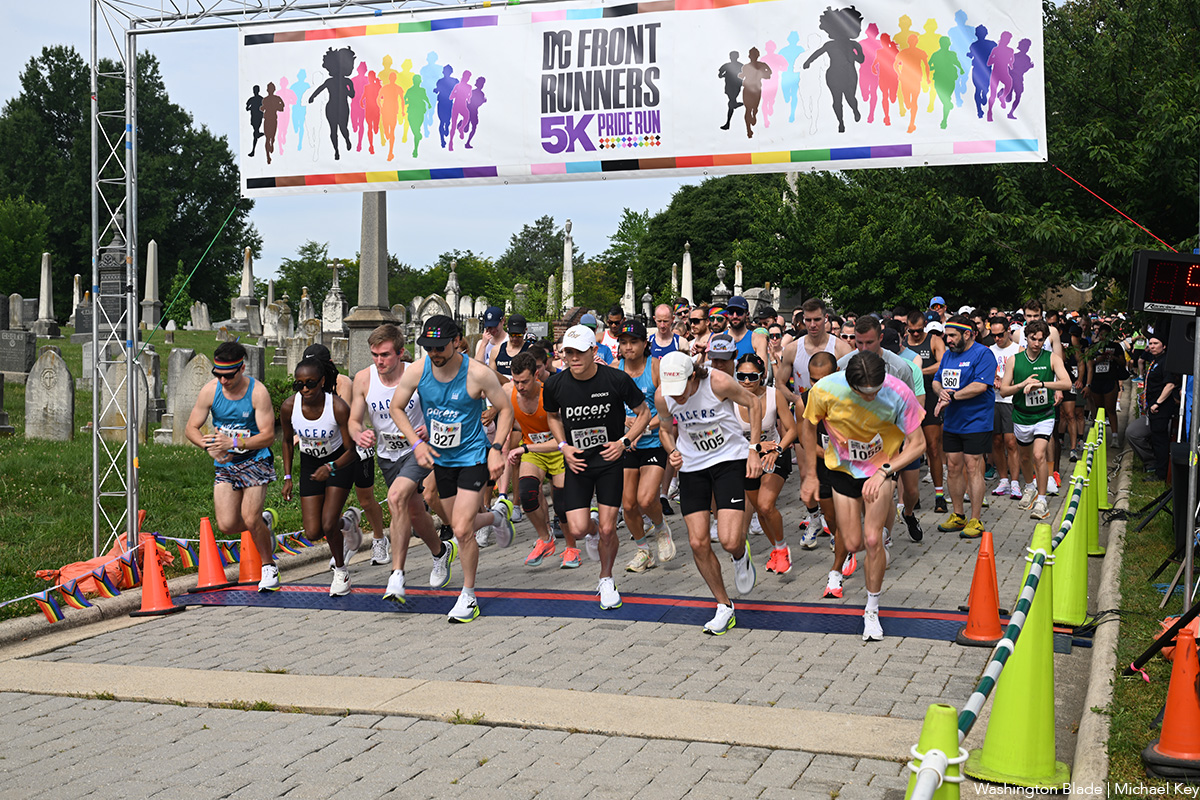
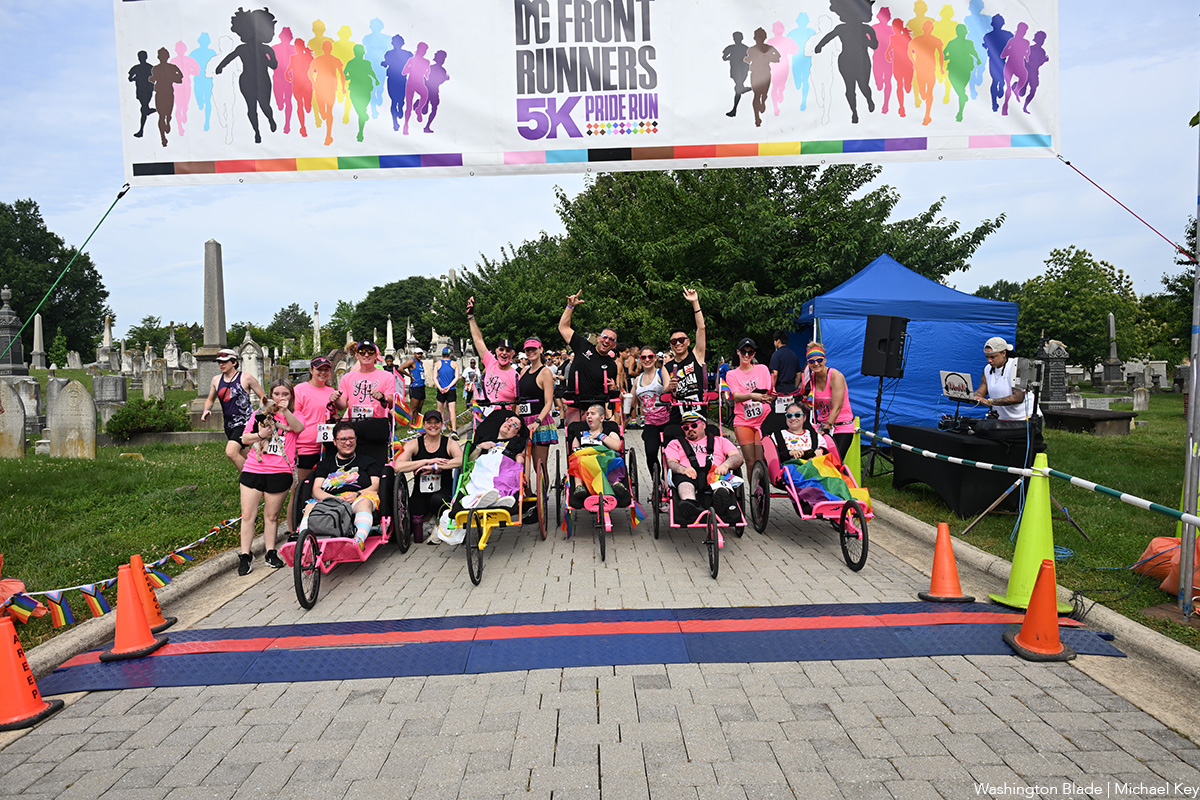
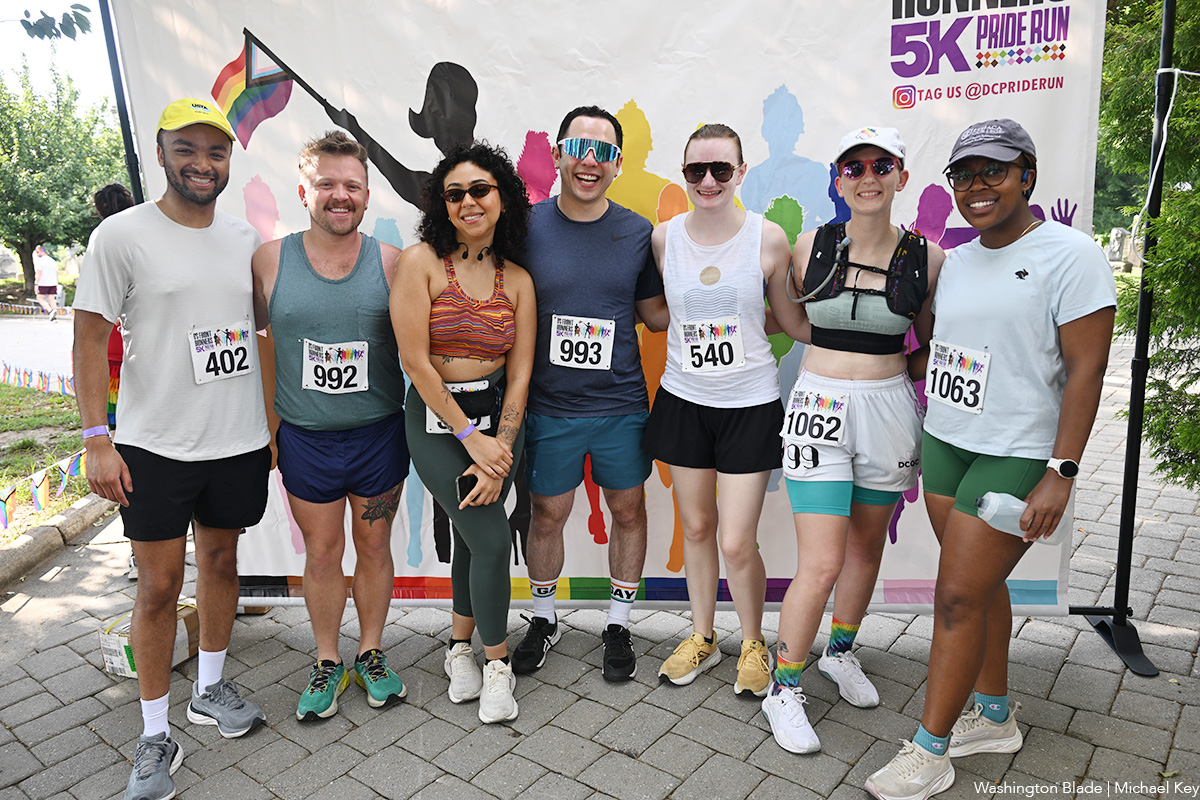
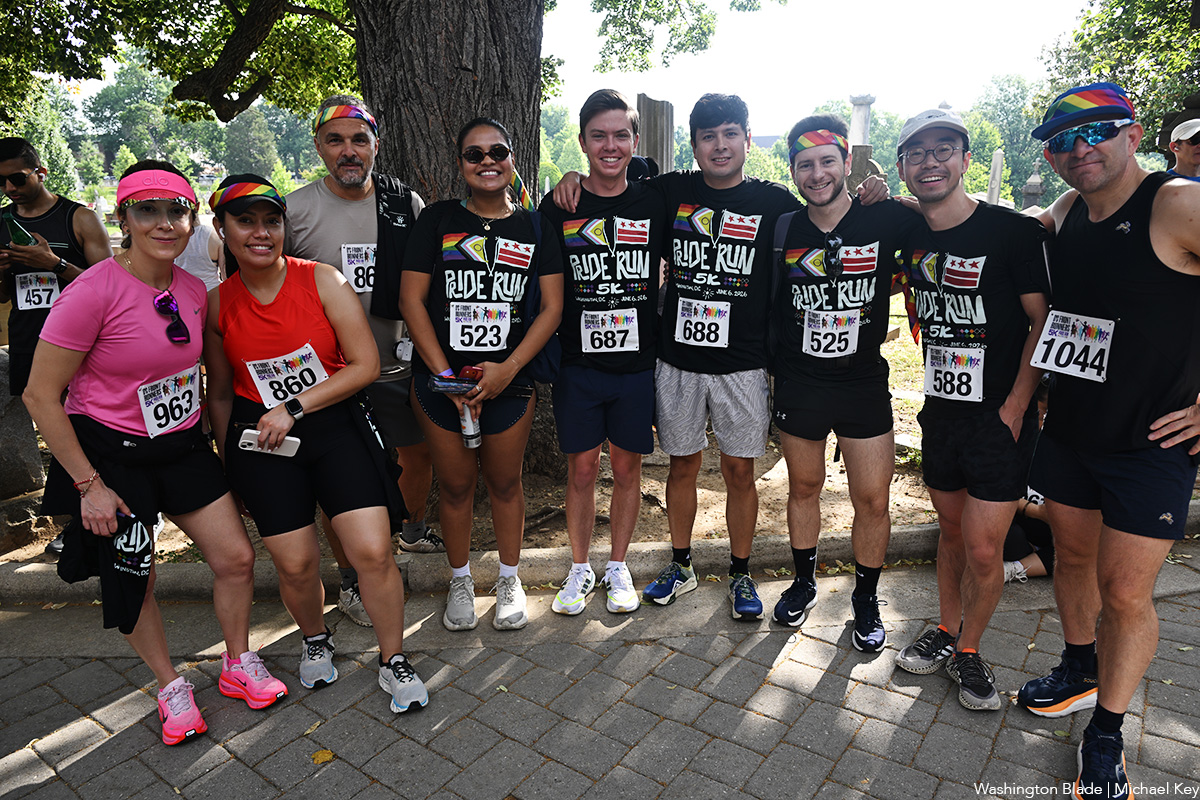
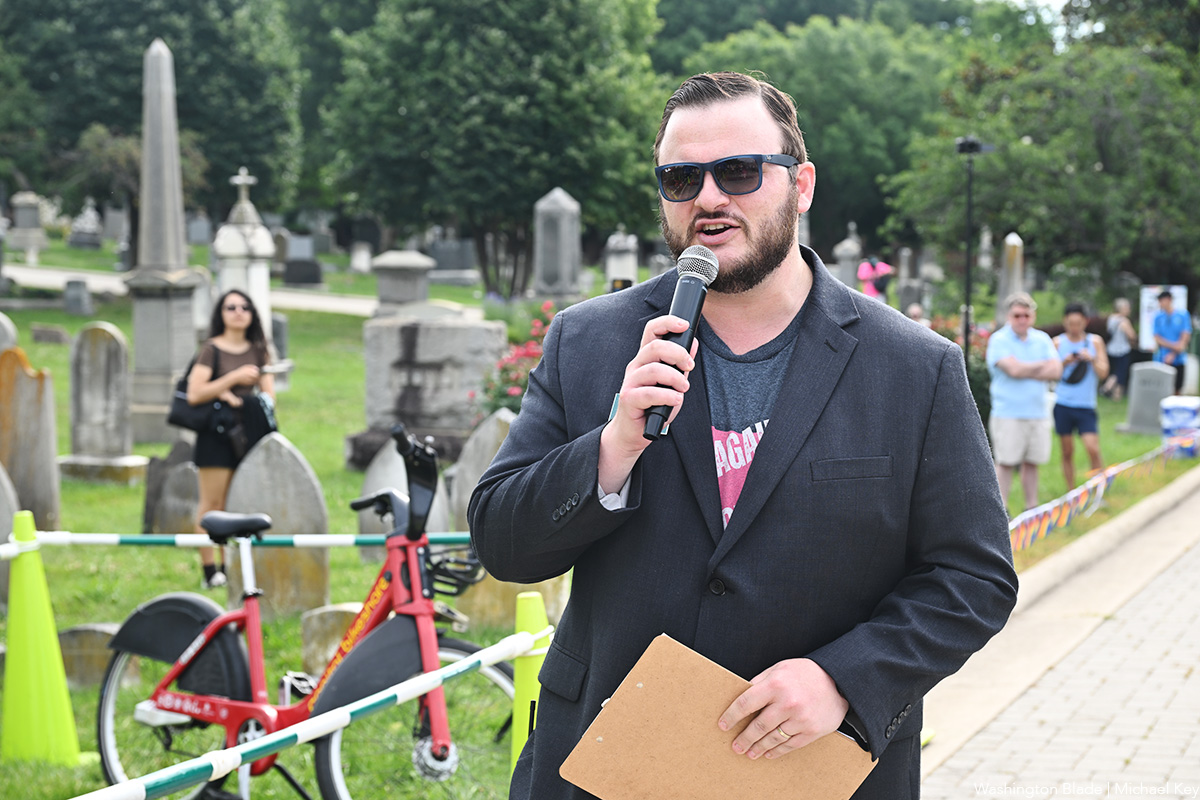
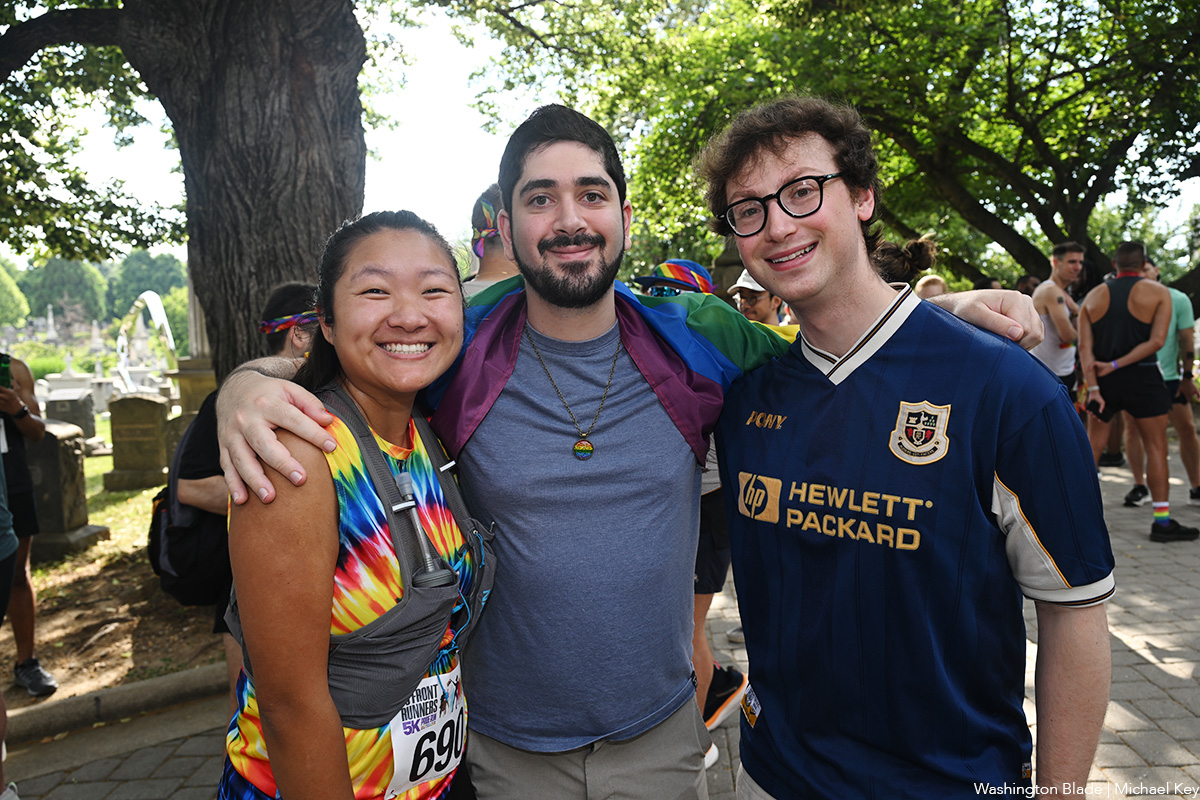
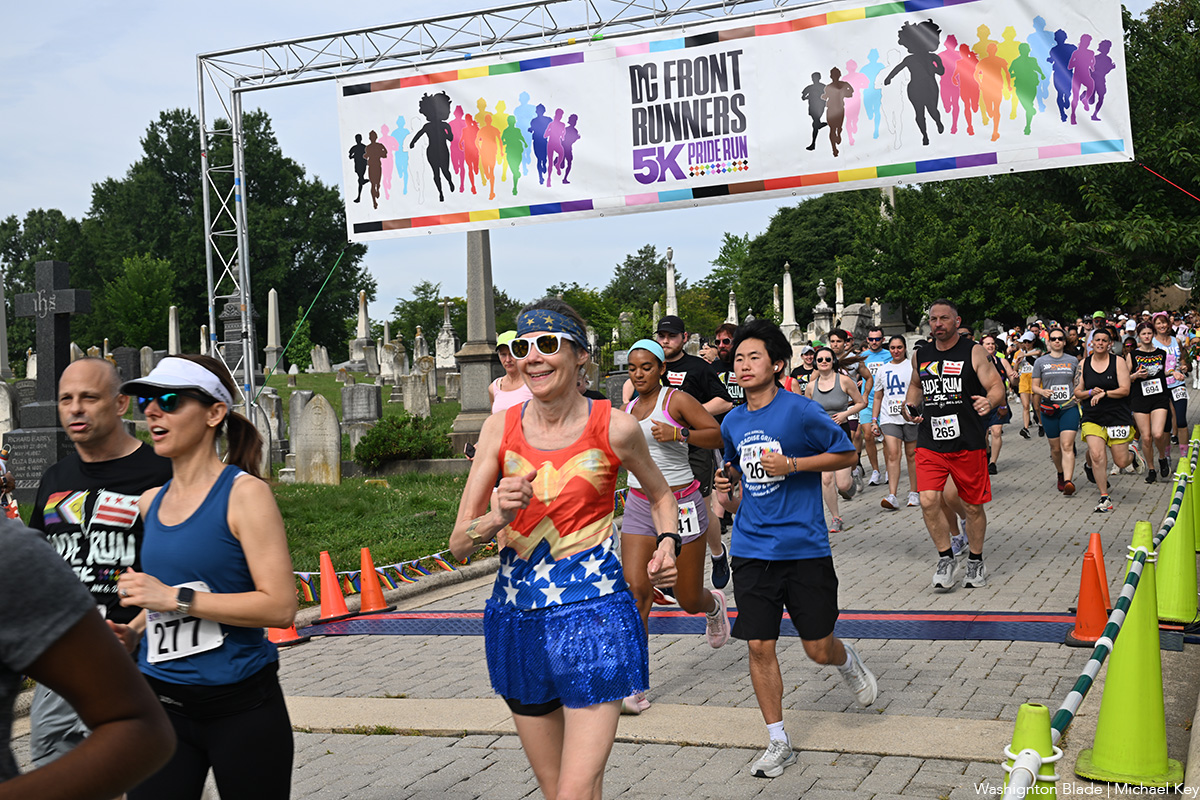
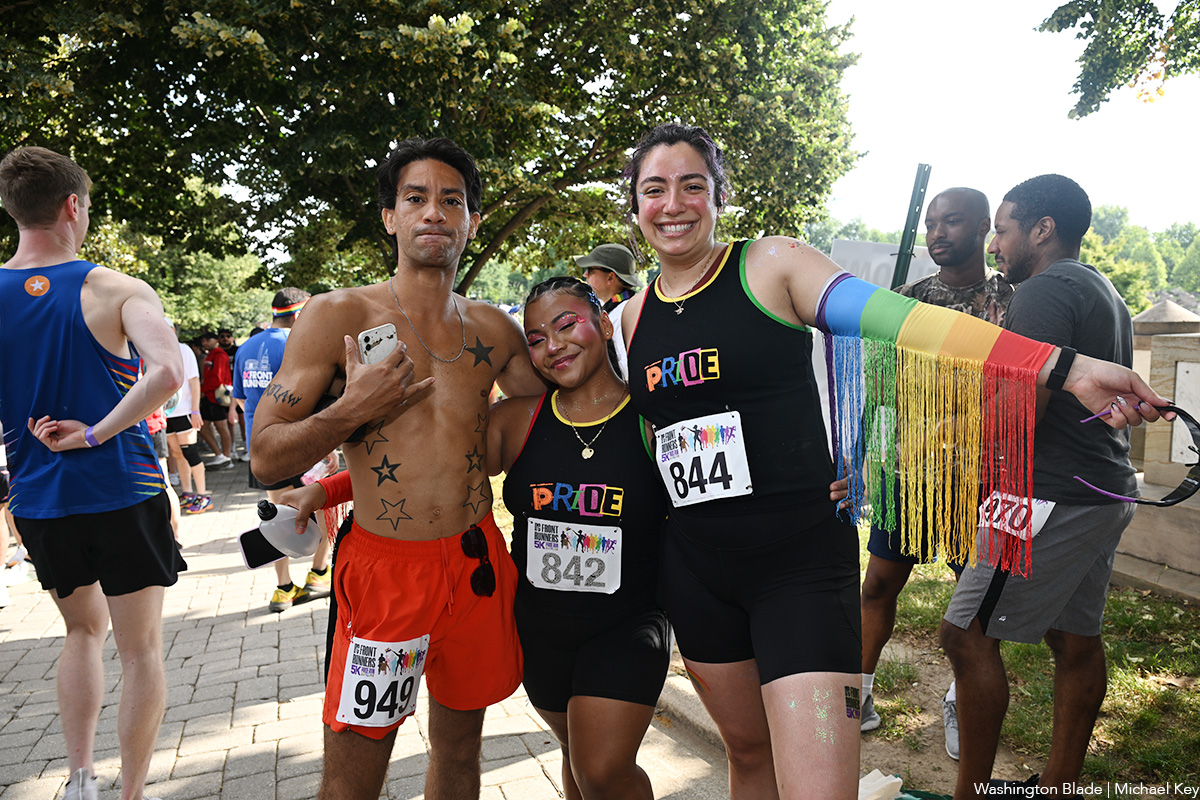
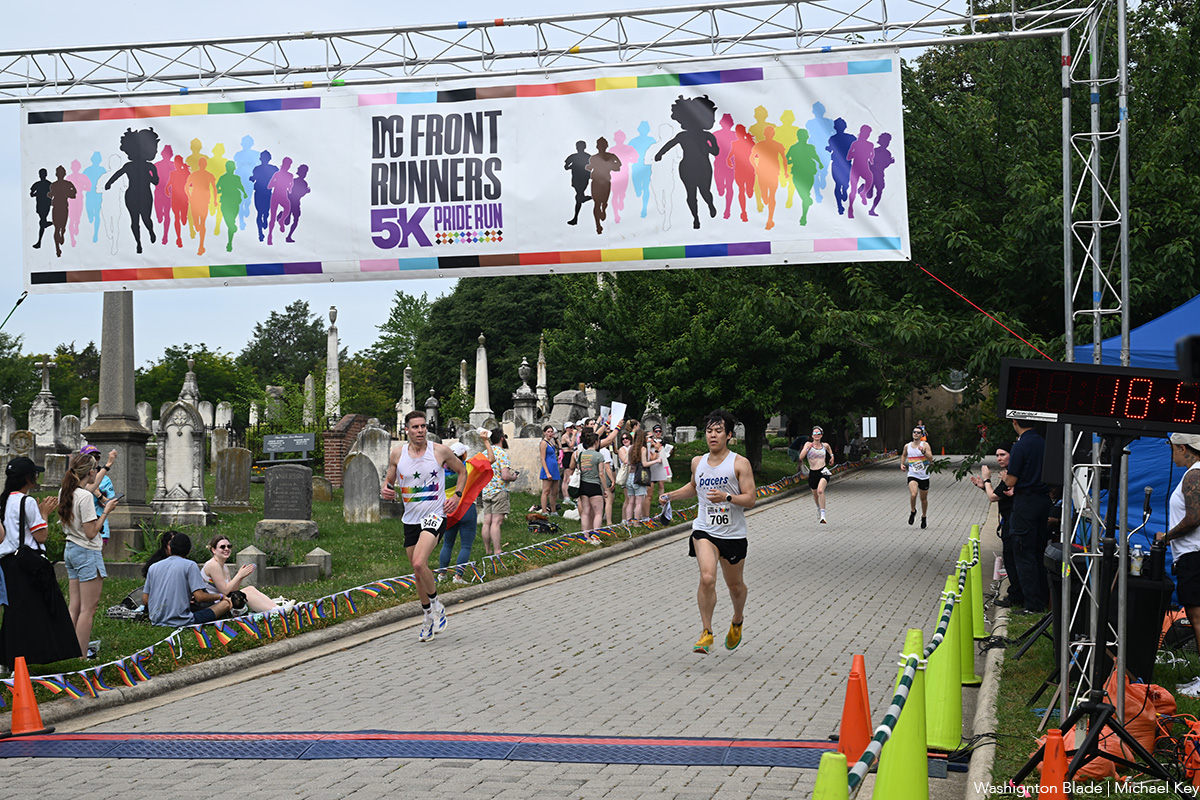
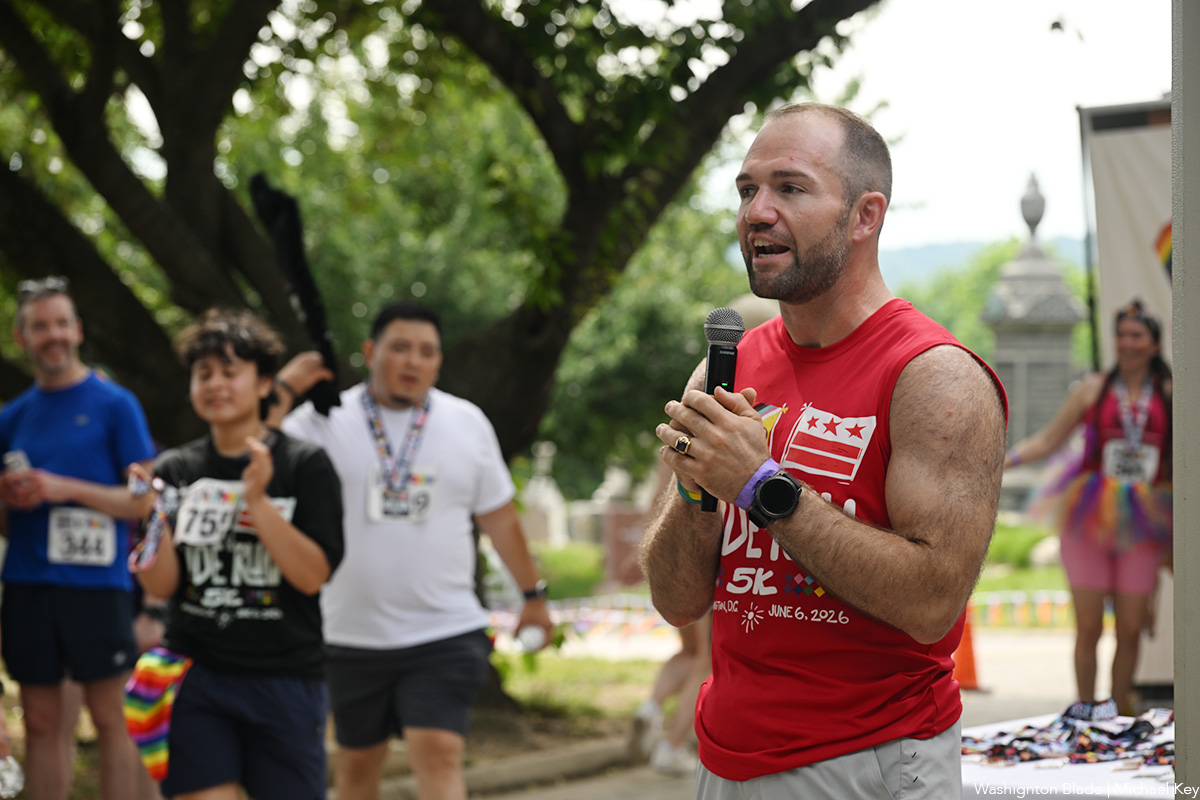
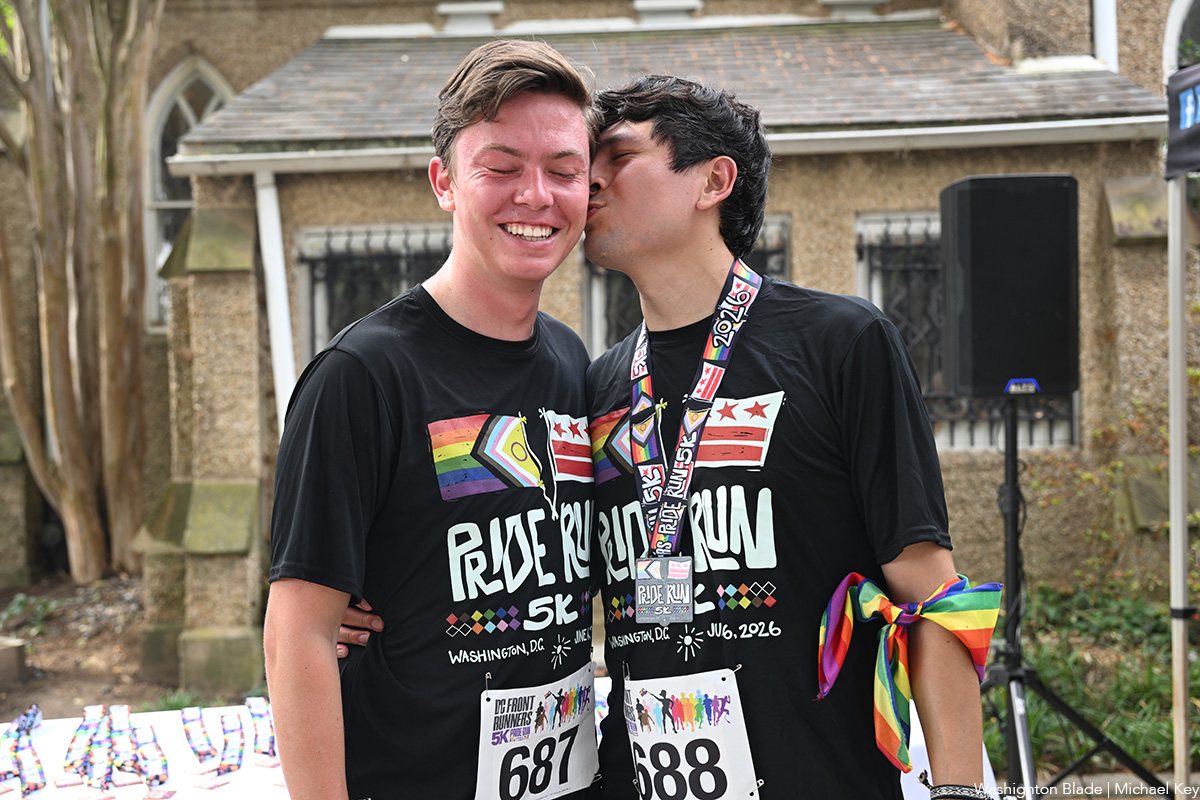
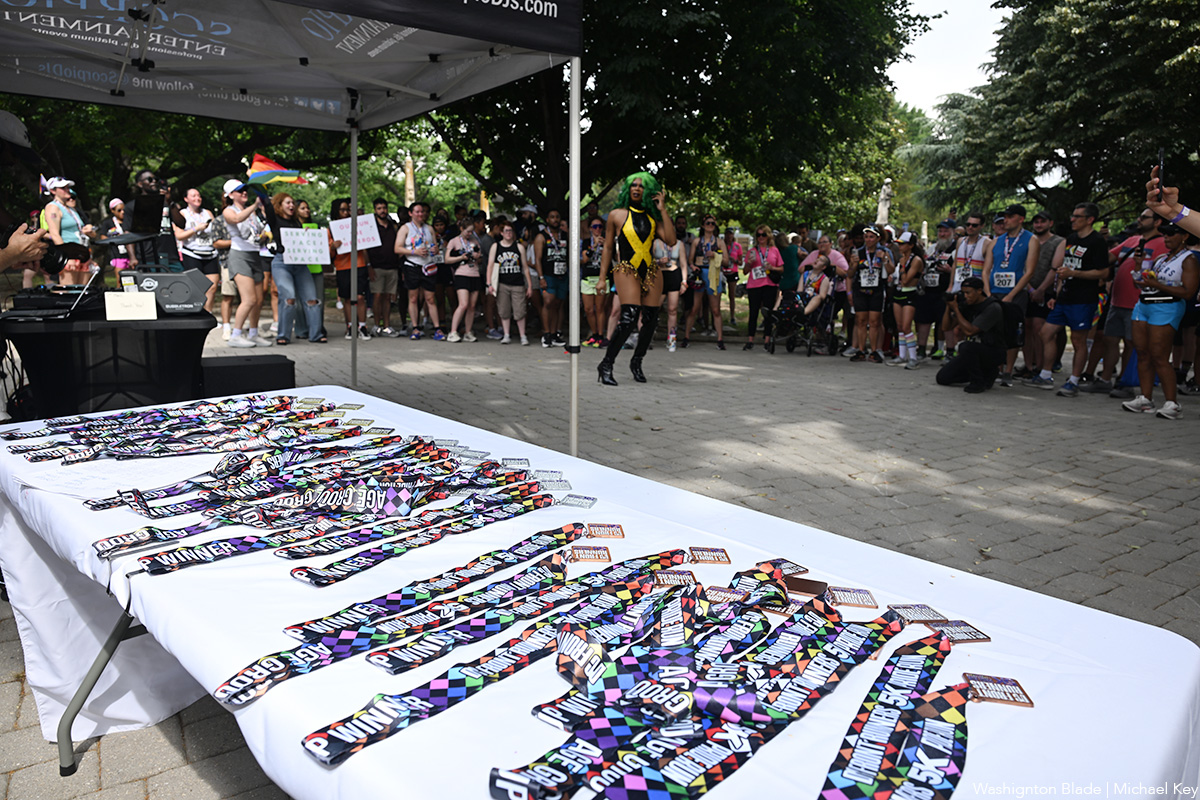
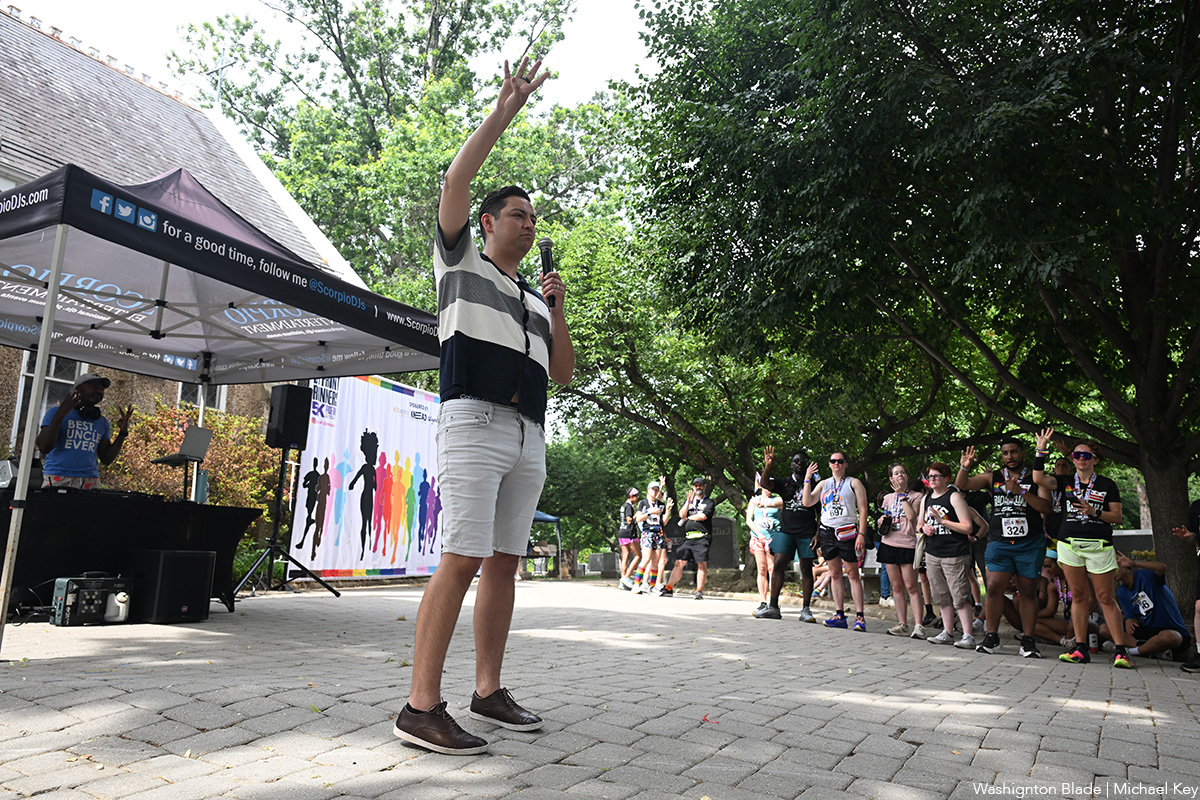
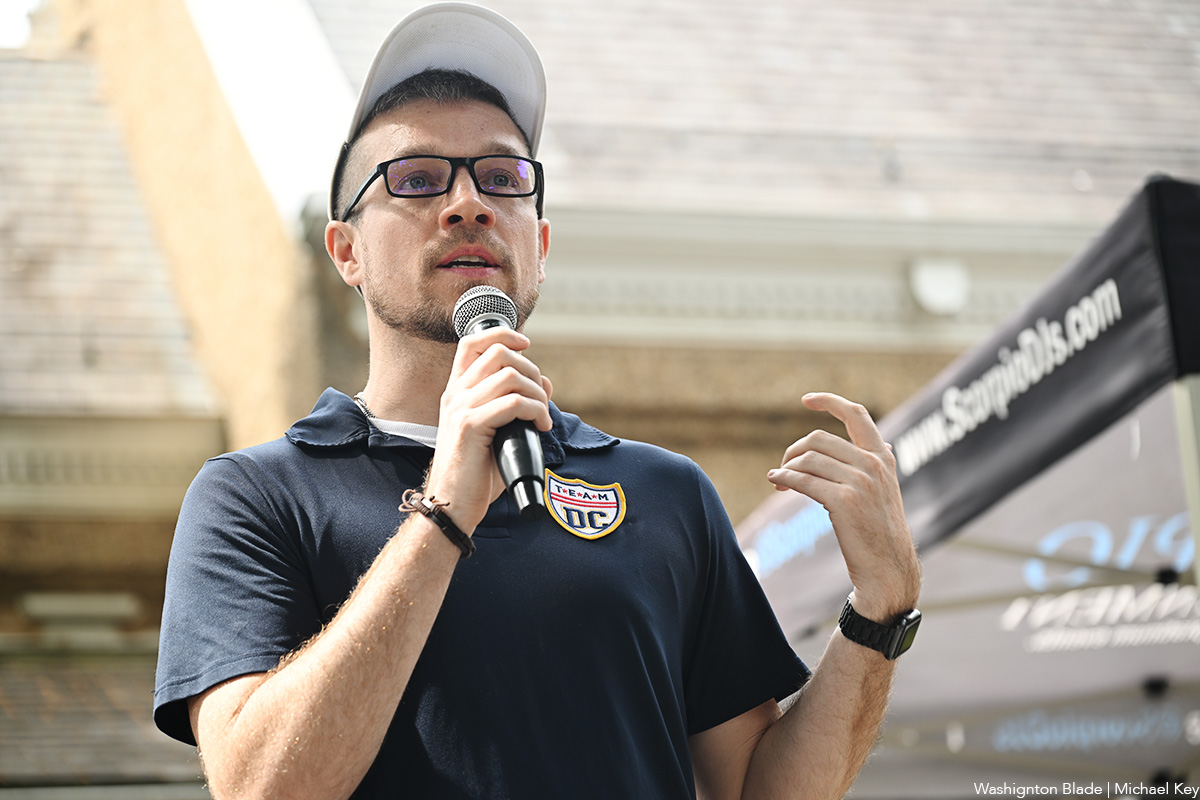
The D.C. Front Runners held the 14th annual 5K Pride Run at Congressional Cemetery on Saturday, June 6.
(Washington Blade photos by Michael Key)








View on Threads

Gay 1920s-era Hollywood star to be honored in Staunton, Va.

Why I’m supporting Gary Goodweather for D.C. mayor

Don’t just vote for change — vote for Hope Solomon for mayor

Vote Kenyan McDuffie for D.C. mayor

Your queer D.C. voting guide

Timothy Nelson on the premiere of his opera ‘Song of Sakuntala’

Controversial ‘Blue Film’ pushes past taboos for gripping drama

PHOTOS: ‘Soul Divas’

‘Mighty Real’ explores history of LGBTQ music