Arts & Entertainment
SPRING HOME & GARDEN 2020: Navigating D.C.’s housing market in COVID era
Coronavirus impacting cities in different ways
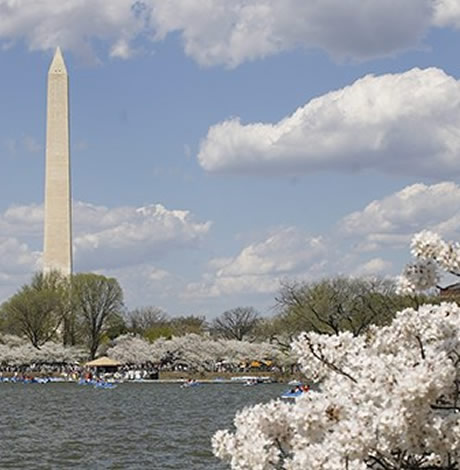

The cherry blossom trees are beginning to bloom and the weather is warming up in the Washington, D.C. metropolitan area. Springtime is generally the time D.C.’s housing market hits a high. How will COVID-19, more commonly known as coronavirus, affect the market?
The two main concerns Americans have right now are health and the economy. Schools are closed and places of business have shut their doors and many may never reopen. But what does that really mean for the housing market? And although a recession would have catastrophic consequences for our economy, historically speaking the housing market isn’t closely aligned with the ebbs and flows of the stock market, not including the housing market crash of 2008, which was unlike our current predicament. The 2008 recession was led by real estate that lasted 18 months. Although we are likely in a recession right now, it is too early to see what kind of effect it will have on home prices.
D.C. market stronger than other cities
It is looking like the greater metropolitan D.C. area may get through this pandemic in better shape than many other areas of the country due to our unique local economy. Local Realtors are reporting requests for showings and listings. This is most likely due to the housing shortage D.C. is facing. D.C. has faced a shortage of housing for years. The people in this area are in need of housing and the coronavirus is not eliminating that demand. The lack of inventory is the reason D.C.-area homes are expensive and coming into spring 2020, many expected record sales prices throughout the region.
This housing shortage isn’t expected to go away anytime soon, even with our current pandemic. The nation’s capital and its contracted companies alone employ thousands of people, many essential with work-from-home capacity. Because of the federal government and internet-based companies in the D.C. area, when the stock market falls it doesn’t hit quite as hard in D.C. According to Clint Mann, Urban Pace’s president of sales and marketing, new home sales are trending to beat projections. Just last weekend, eNvy, a new condo development in the city’s Ballpark District, received more interested buyers than it has in all of 2020. This may be due to a younger population interested in purchasing a condominium and their belief they will not get sick from the virus. Regardless of our current situation, this is not a city where people are rushing to get out. In fact, it is quite the opposite. People are trying to get into the D.C. greater metropolitan area.
Should I enter the market?
We have known D.C. to be a seller’s market for quite some time. Will it continue to be? That is impossible to predict at this uncertain time, but there is a chance that it will continue. Much of this is dependent upon mortgage rates. Right now they are up, down, and then up again due to our uncertain situation. People are asking, “should I buy a house?” “Should I sell my house?” COVID-19 is terrifying, there is no question about that. However, anyone entering the housing market may find themselves with the benefit of low rates and less competition. If you have to have to sell a home, you will very likely find a willing buyer.
If you spend any time at all online or watching the news you will see news reports that will tell you America is on its way to another recession and other reports predicting everything will level off and we will survive this pandemic and economic crisis just fine.
You need to determine why you are selling or buying a home. Pay attention to national and local trends. We at Glass House have helped several buyers and sellers during this time and each situation is unique. We have our finger on the pulse of the local market and are well equipped to help you determine whether buying or selling is right for you.
Khalil Alexander El-Ghoul is principal broker with Glass House Real Estate. Reach him at [email protected] or 571-235-4821.
Movies
‘Pillion’ director on bikers, BDSM, and importance of being seen
‘We put a lot of thought and effort into how we depicted the community’
One of the highlights of last week’s Mid-Atlantic Leather Weekend came not on the dance floor, but in a movie theater. In a new partnership, the independent film studio A24 brought its leather-clad new film “Pillion” — not yet in wide release — to D.C. for special showings for the MAL crowd.
“Pillion,” a term for the motorcycle passenger seated behind the driver, delves into the complicated relationship between an introverted, quiet Londoner Colin (Harry Melling) who embarks on a journey finding himself while entering into a sub relationship with a new Dom named Ray (Alexander Skarsgård) he meets during Christmas.
It’s writer-director Harry Lighton’s feature-length debut, sharing Skarsgård’s impossibly toned physique with both Colin and audiences, and offering an eye into the BDSM community by an LGBTQ director for the general public. This from a studio that also just released a movie about ping-pong starring Timothée Chalamet.
The Washington Blade was able to catch a screening at Regal Gallery Place on Jan. 18, hosted by MAL and Gary Wasdin, executive director, Leather Archives & Museum. The Blade also had a chance to interview Lighton about the experience.
Blade: How did you get involved in this film, especially as this is your directorial debut?
Lighton: I was sent “Box Hill,” the novel on which “Pillion” is based, by Eva Yates (the head of film at the BBC). I’d spent years working on a sumo film set in Japan, and then suddenly that became impossible due to the pandemic so I was miserable. And then I read this book that I found bracing, funny, moving. All the good things.
Blade: Are you involved with the leather community? Did you draw on any personal experiences or make connections with the community?
Lighton: I’m involved in the wrestling scene but not the leather community. So I spent lots of time with people who are [in the community] during the writing process, and then ended up casting a bunch of them as bikers and pillions in the film. They were incredibly generous to myself, Harry, and Alex with their knowledge and experiences. We have them to thank for lending credibility to the world on screen.
Blade: What kind of reception have you received at film festivals and with the LGBTQ community? Was it what you imagined?
Lighton: Obviously not everyone’s going to like the film — for some people it’ll be too explicit, for some not explicit enough; some people will feel seen, some won’t. But the general reaction’s been extremely positive so far. If I’m honest I thought it would divide opinion more.
Blade: How was it working with the actors?
Lighton: I had a lot of respect for both of them going in, and wondered if that might make me a bit too deferential, a bit too Colin-coded. But besides being extremely talented, they’re both lovely. And committed. And fun! With my shorts I always felt a bit out of my depth working with actors, but here I discovered a real love for it.
Blade: Turning to the plot, the parents are pretty supportive, especially Colin’s dad. How did you decide to draw his parents? What does it mean to show parents with nuanced viewpoints?
Lighton: I wanted to reverse the typical parent-child dynamic in queer film, where parents go from rejecting to accepting their queer kid. We meet Colin’s parents actively pushing him toward a gay relationship. But when the relationship he lands on doesn’t meet her definition of healthy, his mum withdraws her acceptance. I wanted to ask: Are they projecting their romantic model onto their son, or do they have a legitimate concern for his wellbeing with Ray?
Blade: How did you decide to place the setting?
Lighton: Practically, we needed somewhere within reach of London. But I liked the idea that Colin, who lives life on the periphery, grew up on the edge of the capital. One of our producers, Lee Groombridge, grew up in and around Bromley and showed me all the spots. I loved the atmosphere on the high street, the markets, and the contrast between the high street and the idyllic park. And I thought it would be a funny place for Alexander Skarsgård to have settled.
Blade: What do you hope audiences take away from the film?
Lighton: There’s no one message. Different people will take different things from it. Personally, Colin inspires me to jump off cliffs, to push beyond my comfort zone because that’s where life begins. From Ray I get the courage to be ugly, to fly in the face of social convention if it doesn’t make you happy or it’s not built for you.
Blade: Talk about the soundtrack — especially the Tiffany “I Think We’re Alone Now” song.
Lighton: Skarsgård’s Ray has the surface masc-ness that comes with looking like a Viking. I wanted to combine that with details that indicate he’s been a part of gay culture and “I Think We’re Alone Now” is nothing if not a camp classic.
Blade: What does it mean to you to show the film at MAL?
Lighton: When I told the bikers from the film I was coming to MAL they practically wet themselves with excitement. We put a lot of thought and effort into how we depicted the community in the film and there’s so much variety, no two Masters or subs are the same, but seeing a theater full of men in leather laugh, cry, and clap for the film meant the world.
a&e features
Alexander Skarsgård describes ‘Pillion’ in 3 words: lube, sweat, leather
Highly anticipated film a refreshingly loving look at Dom-sub life
Whether you’ve seen him in popular HBO series like “True Blood,” “Succession,” and “Big Little Lies,” the dynamic Swedish actor Alexander Skarsgård has that smoldering gaze that immediately draws viewers in.
Following in the footsteps of his father Stellan, (who just won the Golden Globe for “Sentimental Value”) the Golden Globe, Emmy, and SAG winner Skarsgård continues to be an actor who is fearless in the roles he takes on.
That courageousness is evident in Skarsgård’s latest film, the BDSM black comedy “Pillion,”which he also executive produces. He plays Ray, the handsome, hyper-dominant leader of a gay bike gang. The film was written and directed by Harry Lighton, and is based on the 2020 novel “Box Hill,” by Adam Mars-Jones.
“This was a small film by a first time filmmaker and it wasn’t financed when I read it,” Skarsgård told journalists at a recent awards news conference. “And I felt that, if I could help in any small way of getting it financed, I wanted to, because I thought it was such an incredible screenplay and I believe in Harry Lighton so much as a filmmaker. And it felt tonally unlike anything I’d ever read. It was such an exciting, surprising read.”
Skarsgård was blown away by the quality of the unconventional script. “When I heard BDSM relationship, biker culture, I expected something very different. I didn’t expect it to have so much sweetness and tenderness and awkwardness.”
For the sex scenes and nudity with co-star, Harry Melling — who excels in his portrayal as Ray’s submissive Colin — Skarsgård talked very early on with Lighton about how he wanted to shoot those scenes, and why they were in the film.
“I often find sex scenes quite boring in movies because a lot of the tension is in the drama leading up to two people hooking up, or several people hooking up, as in our movie. But what I really enjoyed about these scenes — they are all pivotal moments in Colin’s journey and his development. It’s the first time he gets a blowjob. It’s the first time he has sex. It’s the first time he has an orgasm. And these are pivotal moments for him, so they mean a lot. And that made those scenes impactful and important.”
Skarsgård was happy that Lighton’s script didn’t have gratuitous scenes that shock for the sake of just shocking. “I really appreciated that because I find that when this subculture is portrayed, it’s often dangerous and crazy and wild and something like transgressive.”
He continued: “I really love that Harry wanted it to feel real. It can be sexy and intense, but also quite loving and sweet. And you can have an orgy in the woods, rub up against a Sunday roast with the family. And that kind of feels real.”
One of the obstacles Skarsgård had to work with was Ray’s emotionally distant personality.
“Ray is so enigmatic throughout the film and you obviously never find out anything about him, his past. He doesn’t reveal much. He doesn’t expose himself. And that was a challenge to try to make the character interesting, because that could easily feel quite flat…That was something that I thought quite a lot about in pre production…there are no big dramatic shifts in his arc.”
For the film, Lighton consulted the GMBCC, the UK’s largest LGBT+ biker club, attending their annual meetup at which 80 riders were present.
“Working with these guys was extraordinary and it brought so much texture and richness to the film to have them present,” said Skarsgård. “They were incredibly sweet and guiding with us — I can’t imagine making this movie without them. I’d go on a road trip with them anytime.”
Added Skarsgård: “To sum up ‘Pillion’ in three words: lube, sweat, and leather. I hope people will connect with Colin and his journey, and come to understand the nuance and complexity of his bond with Ray.”
This year is shaping up to be a busy one for Skarsgård. “Pillion” premieres in select cities on Feb. 6 and then moves into wide release on Feb. 20. After that for Skarsgård is a role in queer ally Charli XCX’s mockumentary, “The Moment,” which premieres at the Sundance Film Festival. HIs sci-fi comedy series, Apple TV’s “Murderbot,” which he also executive produces, will begin filming its second season. And this weekend, he hosts “Saturday Night Live.”
The LGBTQ youth services organization SMYAL held its annual fundraiser, ‘SMYAL for the New Year,’ at Shakiki (2012 9th Street, N.W.) on Thursday, Jan. 22.
(Washington Blade photos by Michael Key)


-
Real Estate4 days agoConvert rent check into an automatic investment, Marjorie!
-
Theater4 days agoSwing actor Thomas Netter covers five principal parts in ‘Clue’
-
District of Columbia3 days agoEleanor Holmes Norton ends 2026 reelection campaign
-
Honduras3 days agoCorte IDH reconoce a Thalía Rodríguez como familia social de Leonela Zelaya