a&e features
COVID redraws 2020 LGBTQ travel roadmap
Finding safe ways to get away this summer
When Dorothy returned from Oz and declared, “There’s no place like home,” that tribute to domesticity made sense, coming from a Kansas farm girl recently abducted by flying monkeys and repeatedly threatened by a wicked witch.
But what if Auntie Em, instead of oozing empathy, informed her that she awoke to a changed world, told her to put on a mask, and delivered the devastating news that the big square dance was cancelled because of social distancing concerns? Fast forward three months, and the poor girl is staring out the window, hoping to hitch a ride on the next twister out of town.
Friends of Dorothy feel her pain, and they’re aware the prospect of summer travel requires a new type of yellow brick road—one that will take them over the rainbow and back, free to venture out into the world without putting their lives, or anyone else’s, at risk.
Mindful of this new mindset, a mid-May survey by veteran LGBTQ research firm Community Marketing & Insights (CMI) yielded the recently released report, “COVID-19 and LGBTQ Travel in 2020” (available free, at cmi.info).
Comprised of data from an online survey of 1,864 self-identified members of America’s LGBTQ community, ages 20-70, the report found 69% of participants “indicated extreme or moderate pent-up desire to travel again for vacation,” although, at the time, 72% of the travelers in the study “have already canceled a vacation in 2020 because of COVID-19,” with cancellations being strongest for the March-July period. Of those who took a vacation in 2019, 68% plan to take at least one overnight vacation trip during the remainder of 2020, including 42% planning two or more vacations.
David Paisley, CMI Senior Research Director, noted they’ve been doing an annual fall travel survey for 20 years, but adapted its timing and content to acknowledge COVID-19’s radical effect on the travel (and pretty much every other) landscape.
“The LGBTQ community very much does want to travel this summer,” noted Paisley, “but they’re in a little bit of a waiting mode.”
What we do know, as the report noted, is “the drop-off will be higher for more populated locations like big cities, with smaller reductions for outdoor and less-populated destinations.”
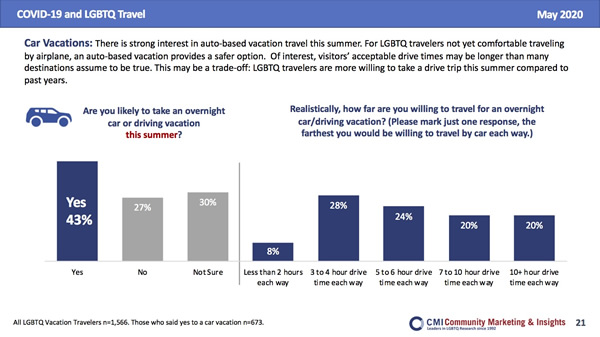
That translates into, said Paisley, “places where you can walk through neighborhoods and parks, and visit museums, which tend to be less crowded than a nightclub… People are also much more open to short-term, car-based vacations, where they can make that decision a day in advance… It’s all about flexibility and keeping options open.”
Road trips are the getaways of choice for two NYC residents who are trading time quarantined on the island of Manhattan for time spent on… another island.
“I’m supposed to go camping [with friends] in the Adirondack Mountains, as I do the last week of June,” said producer/performer Peter Michael Marino, who noted, “We won’t find out if the campsite is open until a week before. Sort of strange, since it’s outdoors in the middle of 9,000 square miles of forest.”
Marino says his group, which “normally crams into one car for the six-hour drive,” will be splitting up this year. “A couple in our group already had the virus, and they’ll drive together,” he explained. “The other two each live alone and have taken safety precautions all along, so we don’t feel terribly unsafe traveling together.”
Upon arrival at the lake campground, “We canoe to a small, isolated island the size of a suburban backyard, with just an outhouse and fire pit. We have plenty of space there and each have our own tents. And while we won’t be wearing masks on the island or coughing on each other, I think we’ll take great care not to directly share food and drink.”
For drag performer Porsche, aka Brant Kaiwi, the ferry to Fire Island found folks “with masks on and, from what I saw, keeping with their groups and distant from others.” The trip, taken the second weekend of June, was this season’s first for her, serving as fact-finding mission to the Island’s Cherry Grove hamlet—where Porsche will soon be resuming live performances, delving further into her second decade at the Grove Hotel’s Ice Palace nightclub.
“The Ice Palace is getting pretty creative with how to handle a fun crowd safely,” said Kaiwi/Porsche. “We are very lucky to have the outdoor and indoor space that we do, and it’s going to be fun! I don’t want to give it away just yet, but the way they are doing it, all guidelines are being followed, and followed creatively.”
Don’t be afraid of traveling to LGBTQ-friendly places, she urged, but do “travel smartly to those destinations. Those vibrant, wonderful communities have already been hit hard by the pandemic, so by all means safely support!”
That yearning to be surrounded by the similarly inclined is especially strong right now.
“One of the great losses for the LGBTQ community this summer,” noted Paisley, “is the cancellation of [public] Pride events across the United States, which carries bigger emotional weight than the cancelation of other types of events.”
A normal summer, observed Rivendell Media President and CEO Todd Evans, “would mean lots of companies and events advertising for Pride, wanting to promote their event and trying to show the LGBTQ consumer is important to them.” But this year, says Evans, who places advertisements for the National LGBT Media Association, the usually robust presence of stalwart supporters is, thus far, nowhere to be found.
“Advertisers hate uncertainty,” noted Evans. “Nobody wants, ‘We might have a program, we might do that.’ The travel industry knows the LGBTQ market better than most. I’ve done a lot of inquiries, and my feeling is, they’re all getting ready, waiting until they have something solid to promote.”
Evans counts himself among those referenced in an early May 2020 Harris Poll travel survey that compared LGBTQ and non-LGBTQ travelers. The Harris research, CMI’s report noted, “seemed to support the resilience of the LGBTQ travel community.”
Said Evans, from anecdotal and personal perspectives, LGBTQ people “are more mobile, more ready, and willing to be the first, the same as it was after 9/11 and the [2008] recession.
“I’ve been home for three months,” he said, “and I have digital fatigue, as I am sure most people do. So I understand the itch to get out, to get away.”



a&e features
Summer in D.C. brings sports, Restaurant Week, festivals, and more
Summer in D.C. just hits different. Congress is out, school is out, the sun is out, thighs are out. With the skies clearing from Canadian smoke, here are a few ways to stay entertained.
Dining
Summer restaurant week: The Restaurant Association of Metropolitan Washington (RAMW) is once again hosting Summer Restaurant Week, Aug. 18-24. This weeklong dining experience showcases the dynamic dining scene of the DMV, including 2026 RAMMY Award-winning favorites (the annual D.C. food awards show that took place June 29). Participating restaurants will offer three-course brunch and lunch selections for $25 or $35 per person, and three-course dinners for $40, $55 and $65 per person.
New Restaurants: A handful of new spots have opened, so the summer is a great time to check them out:
- Oribu: A new Mediterranean-Japanese restaurant in the Grand Hyatt hotel, which just underwent a remodeling effort. The sleek restaurant brings upscale charm, with dishes like Wagyu beef tartare with potato pavé and caviar.
- The Oak Room: A snazzy old-school American grill has just opened in Georgetown, alongside its sister upstairs supper club (Bernadette’s) restaurant, in the old El Centro space.
- Uchi: This showy Japanese sushi-forward chain has landed in Dupont with a chef’s tasting menu of favorites like fatty tuna.
- Kathmandu: Recalling the capital of Nepal, this warm, buzzy subterranean restaurant right in the heart of U Street brings spice, flair, and rare ingredients to its dishes (see: buffalo burgers) and drinks.
Sports
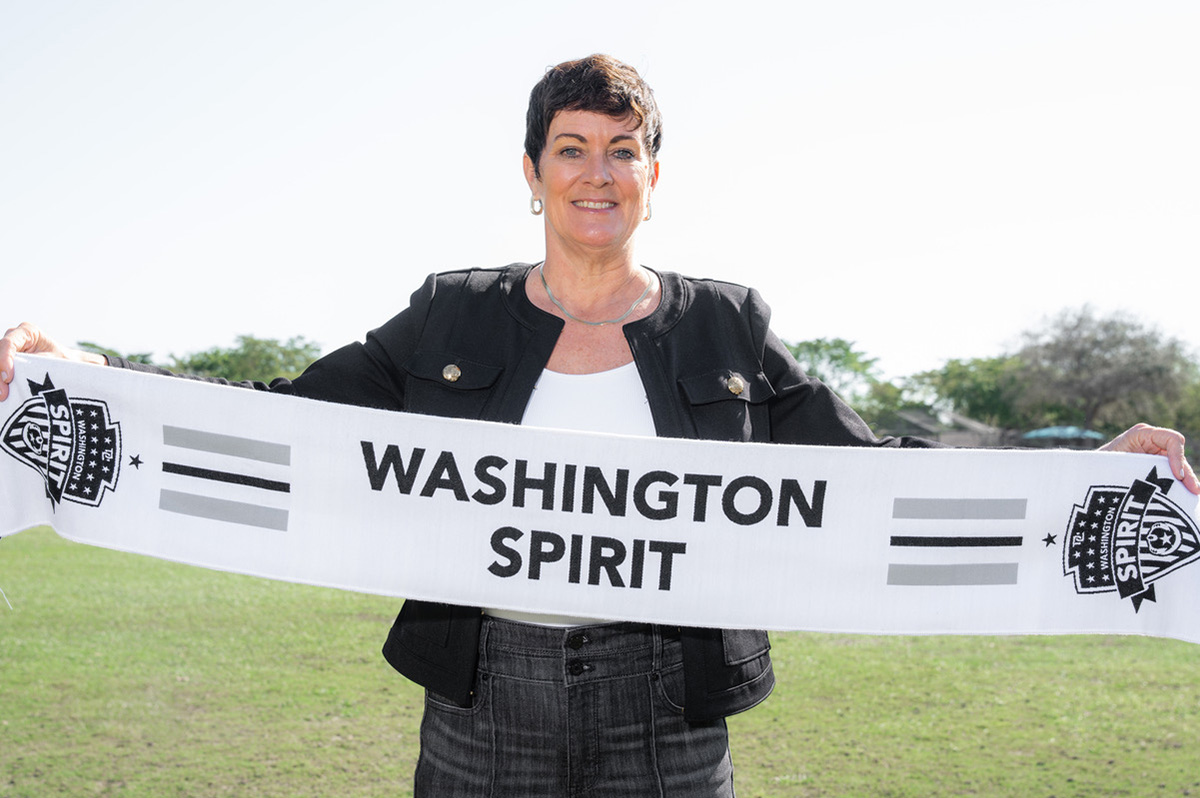
- Washington Spirit Pride Night OUT: On Sunday, Aug. 23, head to Audi Field for a massive, high-energy game following the exciting month of World Cup. The designated Pride Night OUT game promises boisterous crowds plus pre- and post-game community engagements.
- Washington Tennis Open – Now called the Mubadala DC Open, this annual tournament is only combined mens’ and womens’ 500-level tennis tournament in the world. The open is one of D.C.’s longest-standing sports traditions, and will take place at the Rock Creek Park Tennis Center July 25-Aug. 2. Naomi Osaka, Venus Williams, Ben Shelton, Frances Tiafoe, and others are expected to play.
Festivals
- Afro Plus Fest: This huge, three-day Afro-Caribbean Hip-Hop Festival brings together headliners Davido, Alkaline, and Wizkid, plus Tems and Ayra Starr. The event moves from RFK to the Northwest Stadium Complex for three days, Sept. 4-6.
- Capital Fringe Festival: Running from July 11-21, this massive celebration features dozens of live theater, comedy, dance, and boundary-pushing nighttime performances across multiple DC neighborhoods.
- The National Book Festival returns, with headliners like Cynthia Erivo, and Martin Scorsese. The one-day festival, Saturday, Aug. 22, brings together bookworms and word nerds under the theme “America 250: It’s Your Story.” There are talks, workshops, musical sessions and more.
- All Things Go: A three-day festival Sept. 25-27 at Merriweather Post Pavilion featuring Mitski, Hayley Williams, Brandi Carlile, MUNA, Zara Larsson, Ethel Cain, and many, many more artists. There are single-day and three-day tickets. Featuring and highlighting female artists, the festival has turned into a must-see for many LGBTQ audience members.
- Fuchsia Fest: The inaugural Fuchsia Fest is a new multi-day celebration created to celebrate LGBTQ community and expression, bringing together a mix of community gatherings, entertainment, and nightlife. The event takes place Sept. 18-20 and is hosted by Capital Pride.
Art and Music
- United We Dance: A high-energy rave with house, techno, bass, and festival music, on Aug. 1 at the 9:30 Club.
- The Fray. On Aug. 14, this American rock band famous for How To Save A Life is at Merriweather Post Pavilion.
- Kesha: Kesha’s high-energy The Freedom Tour comes to the D.C. area on Aug. 14 at Jiffy Lube Live.
- ALOK: On Sept. 3 at Lincoln Theater, ALOK (they/them) performs. The poet, comedian, and actor is putting on a new comedy show.
- 2charm, the emerging Australian electronic club-pop duo popular with the queer community, which blends hyperpop and dance music, comes to the Atlantis.
- Sapphic Dance Party: a vibrant, inclusive nightlife and social event designed specifically for queer women, lesbians, bisexuals, trans individuals, and nonbinary folks, at Atlantis on Aug. 21.
- Jazz in the Garden: The most quintessential of D.C. activities returns Friday evenings through Aug. 14. This season’s theme, “American Sounds,” is a nod to the nation’s 250th anniversary. Tunes themes range from Appalachian and Americana to Creole jazz, Hill Country blues, contemporary jazz, and more. Tickets are available through a lottery system a week before each event.
a&e features
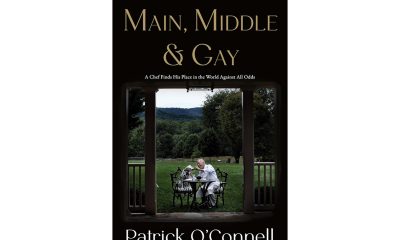
Tickets on sale for chef Patrick O’Connell’s book launch event
Sept. 18 kickoff to feature José Andrés, Tom Sietsema

Acclaimed chef Patrick O’Connell is preparing to publish his new memoir, “Main, Middle & Gay” in September and he’s launching the book with an event on Sept. 18 at 6 p.m. at Lisner Auditorium featuring Chef José Andrés and former Washington Post food critic Tom Sietsema.
Tickets for the event go on sale Tuesday, July 21 at Ticketmaster; prices start at $55.
O’Connell, who’s gay, is the pioneering Michelin-starred chef and longtime proprietor of the Inn at Little Washington. He spoke with the Blade about the September event and the launch of his first memoir.
“I’ve known [Andrés and Sietsema] for more than 25 years and I have great respect for them,” O’Connell said. “I felt that it would allow us to add a different dimension rather than just have an interviewer. The chemistry will be fun and lively and unpredictable and exciting. I think we’re all different personalities and we’ll compliment each other.”
O’Connell has published cookbooks but this is his first memoir. The event will feature a short film that will highlight his work and the Inn.
“What I hope to do with the event is bring the book to life visually,” he said. “So we’re producing a short film that will be part of it. Most of the audience will not have read the book so it’ll give them a visual flavor of the book. It parallels the evolution of American cuisine over 50 years. It’s a rare perspective to be in the trenches for that long.”
The book’s title refers to the location of the garage on the corner of Main, Middle, and Gay streets in Washington, Va., where he launched his restaurant that became an international culinary destination.
The Blade will publish the rest of its wide-ranging interview with O’Connell in September in conjunction with the book’s release.
a&e features
The queer Asian comics building collective joy in D.C.
Spotlighting chaotic ways family, romance, identity take shape in their lives
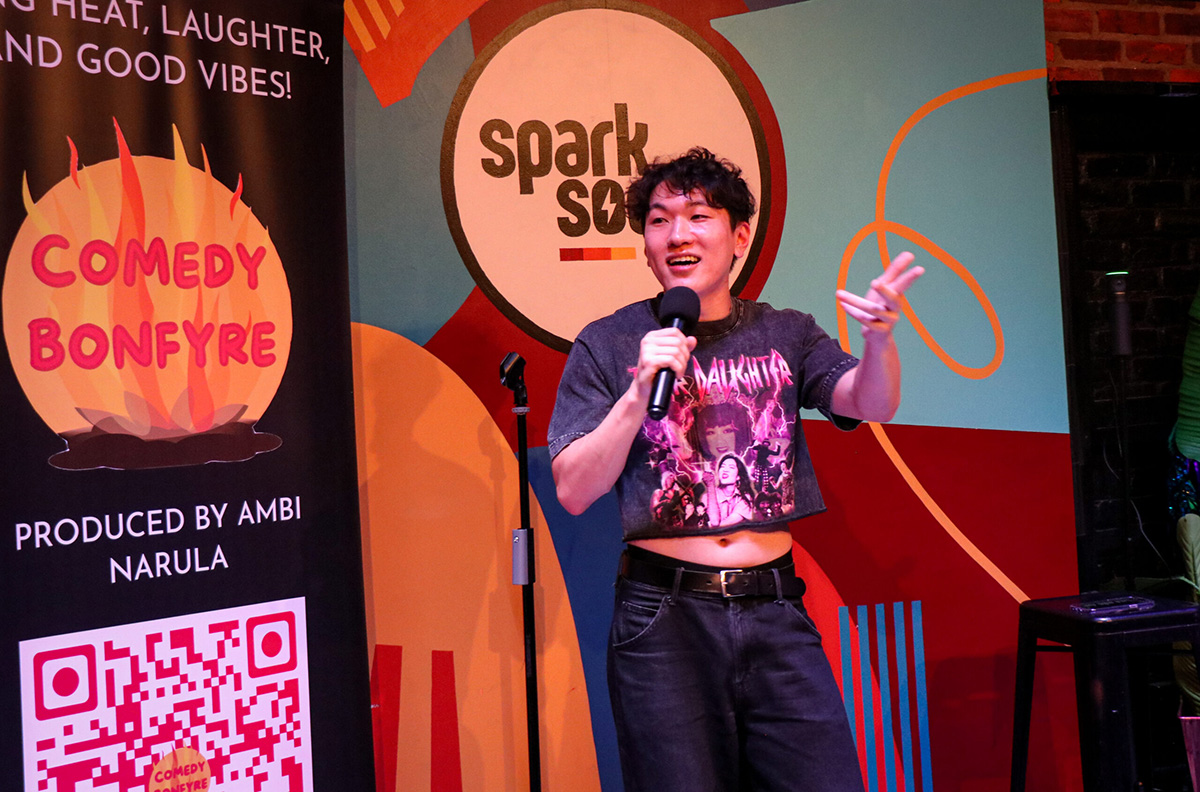
Kevin Chen’s family tombstone has room for four: him, his parents and his boyfriend. The arrangement might prove to be a little awkward.
“My boyfriend is 100% white, and my parents are 100% disappointed,” Chen confessed.
Jokes about family traditions and the untraditional ways they’re practiced earned a burst of laughs at the bar where Chen was opening for the Pride Comedy Special. The D.C. stand-up event, produced by Comedy Bonfyre last month, spotlighted queer Asian comics who shared the chaotic ways family, romance and identity take shape in their lives.
From candid oral sex takes to top surgery hypotheticals like “Where do the boobs go?”, the night highlighted the loud camaraderie of the queer Asian experience — one that sounds like a cacophony of snorts, cackles and belly laughs. While the comics say they are not quite a community, there’s more than enough shared material to bring them together.
“It was such a magical experience. I loved performing in a queer API lineup. It feels so validating,” Chen said after the show. “I’m wondering, ‘Is this how white men feel all the time?’”
Each performance evoked queer Asian joy through a medium that could use more of its presence.
According to Chen, who is based in D.C., it’s hard to say whether there is a true queer Asian comedy presence in his city. There are only a scattered “handful” of Asian comics, and people of color are underrepresented in queer comic circles, he said.
When Tarunika Anand, a nonbinary lesbian comic, first entered the mainstream D.C. comedy scene, they mostly encountered straight white men, describing the experience as “a culture shock.”
“I feel like sometimes a lot of queer spaces are really white, and then a lot of Asian spaces are really straight,” Anand said. “I don’t feel like I fit into either.”
But feeling marginalized didn’t stop these comics from honing their craft and creating spaces for others like them. Alex Kim, who headlined the special and is based in Brooklyn, runs the queer Asian comedy group Boba Gays, which began on WhatsApp and has since made its way to Lincoln Center.
Every Wednesday, Anand co-produces a free comedy show called Funny Side Up. The queer-led group focuses on inclusivity and showcasing new talent.
“It’s really beautiful to speak about your experience and your existence in a way that’s uplifting,” Anand said.
Family is a major throughline of their comedic repertoires.
Chen, for instance, shared that he identifies with jokes about having Asian immigrant parents and the expectations they pass down.
“You see me, you know this part about me, you know this experience intimately, and I can see the truth that you’re trying to wrap a joke around,” he said. “That hits even harder because that’s my truth too. I think that’s what makes good comedy.”
Anand had the audience at the special howling when they explained that their parents’ be-more-like-them comparisons didn’t end when they came out. Instead, the expectations took on a new form.
“Now, my parents want me to be the best gay,” Anand said. “They’re like, ‘Do you know Ellen DeGeneres?’”
Kim said he’s been trying to unlearn things from his Christian Korean mom. Yet he described a moment when he was getting ready for the club and realized he looked just like his mother getting ready for church.
“I’ve been finding it hard to escape her,” Kim said.
Mutual recognition also radiates through the different ways queer love can take shape. From singlehood to death-do-us-part commitments, the comics cover just about every corner.
Anand is holding out hope for settling down with “a nice, pretty, Indian girl.” They recently went through a breakup and said they felt they dodged a bullet.
“As a person of color, I just don’t think I should be with a Swiftie,” they said.
Chen, touching on what it’s like to be in a queer interracial relationship, said that meeting his white boyfriend’s baby nephew for the first time felt like he was forced to participate in a diversity, equity and inclusion training.
“The dad was like, ‘Please welcome Kevin. Be curious about his culture, his history, his foods,’” Chen joked.
Laughter is not the only reward for the comics.
To Anand, comedy is a space where they can say whatever they want. “It gives me a voice,” they said.
Nik Narain, a North Carolina-based trans and nonbinary South Asian comic who performed at the special, said meeting older trans comedians and taking the stage helped him feel reassured in his identity during his transition.
“Stand-up was a really cool way to process that onstage,” he said. “[It] became a way for me to repackage my thoughts.”
Queer Asians are still figuring out their place in the greater D.C. comedy scene. The group is small in numbers and many are still working toward a full-time comedy career. But Narain feels he’s already made it.
Narain is reluctant to pin it all on one moment. He feels that success is already peeking through in milestones — opening for celebrities, traveling to performances and self-producing shows.
“As long as I can keep doing this, I’m super happy,” he said.
This story was produced as part of the AAJA VOICES fellowship program, a student journalism project of the Asian American Journalists Association (AAJA).

1 dead, 15 injured when van drives into crowd at Berlin Pride

‘Into the Grey’ unites Cavill, Gyllenhaal for thrills and gay love

Winsome Earle-Sears launches campaign against Va. marriage equality amendment

Calendar: July 24-30

Pentagon says hormones make trans troops unfit but gives them to men

Tickets on sale for chef Patrick O’Connell’s book launch event

Remembering Victoria Cruz, Stonewall veteran and beloved trans activist

In the middle of the Bible Belt, a summer camp lets trans kids exhale

Polish president vetoes same-sex relationship recognition bills

LGBTQ ‘human rights crisis is unfolding in Puerto Rico’
-

 a&e features5 days ago
Tickets on sale for chef Patrick O’Connell’s book launch event
-
National5 days ago
Remembering Victoria Cruz, Stonewall veteran and beloved trans activist
-
North Carolina5 days ago
In the middle of the Bible Belt, a summer camp lets trans kids exhale
-
Poland5 days ago
Polish president vetoes same-sex relationship recognition bills