World
Harris meets with LGBTQ activists in Vietnam
Roundtable with advocacy groups took place in Hanoi
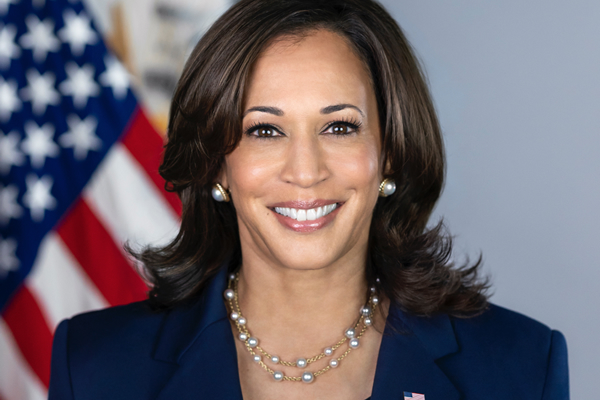
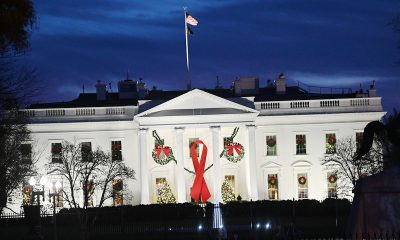
Vice President Kamala Harris on Thursday met with two LGBTQ rights activists in Vietnam.
Harris’ office said Chu Thanh Hà Ngoc, a transgender activist, and Đoàn Thanh Tùng, an LGBTQ advocate, participated in a “roundtable discussion with the vice president and Vietnamese social advocacy organizations” that took place at the U.S. Chief of Mission’s home in Hanoi, the Vietnamese capital.
“It is critical that if we are to take on the challenges we face that we do it in a way that is collaborative, that we must empower leaders in every sector, including of course government but community leaders, business leaders, civic society if we are to maximize the resources we collectively have,” said Harris.
Harris specifically noted the Vietnamese Health Ministry “helped craft the draft — and draft — the (country’s) transgender rights law” that took effect in 2017.
“Transgender people deserve and need equal access to healthcare services,” she said. “This is an issue that we still face in the United States, and it is an issue here in Vietnam, I know. And we will work together and support you and the work you are doing in that regard.”
Ann Marie Yastishock, the U.S. Agency for International Development’s mission director in Vietnam, moderated the roundtable.
It took place on the last day of Harris’ trip to Southeast Asia that began on Sunday in Singapore, one of the dozens of countries in which consensual same-sex sexual relations remain criminalized. The trip also coincided with growing calls for the U.S. to evacuate LGBTQ Afghans from Afghanistan after the Taliban regained control of the country.
Ted Osius, who co-founded GLIFAA, an association of LGBTQ employees of Foreign Service agencies, was the U.S. ambassador to Vietnam from 2014-2017. The late-U.S. Supreme Court Justice Ruth Bader Ginsburg in 2015 presided over the Hanoi ceremony during which Osius and his husband, Clayton Bond, renewed their wedding vows.
President Biden in February signed a memorandum that committed the U.S. to promoting LGBTQ rights abroad.
Visibles Executive Director Daniel Villatoro and Ingrid Gamboa of the Association of Garifuna Women Living with HIV/AIDS were among the members of Guatemalan civil society who participated in a roundtable with Harris in June when she was in Guatemala City. USAID Administrator Samantha Power also met with LGBTQ activists in Guatemala and El Salvador when she was in the countries at around the same time.




India
Menaka Guruswamy celebrated as India’s first openly LGBTQ MP
Constitutional lawyer elected to Rajya Sabha on March 9
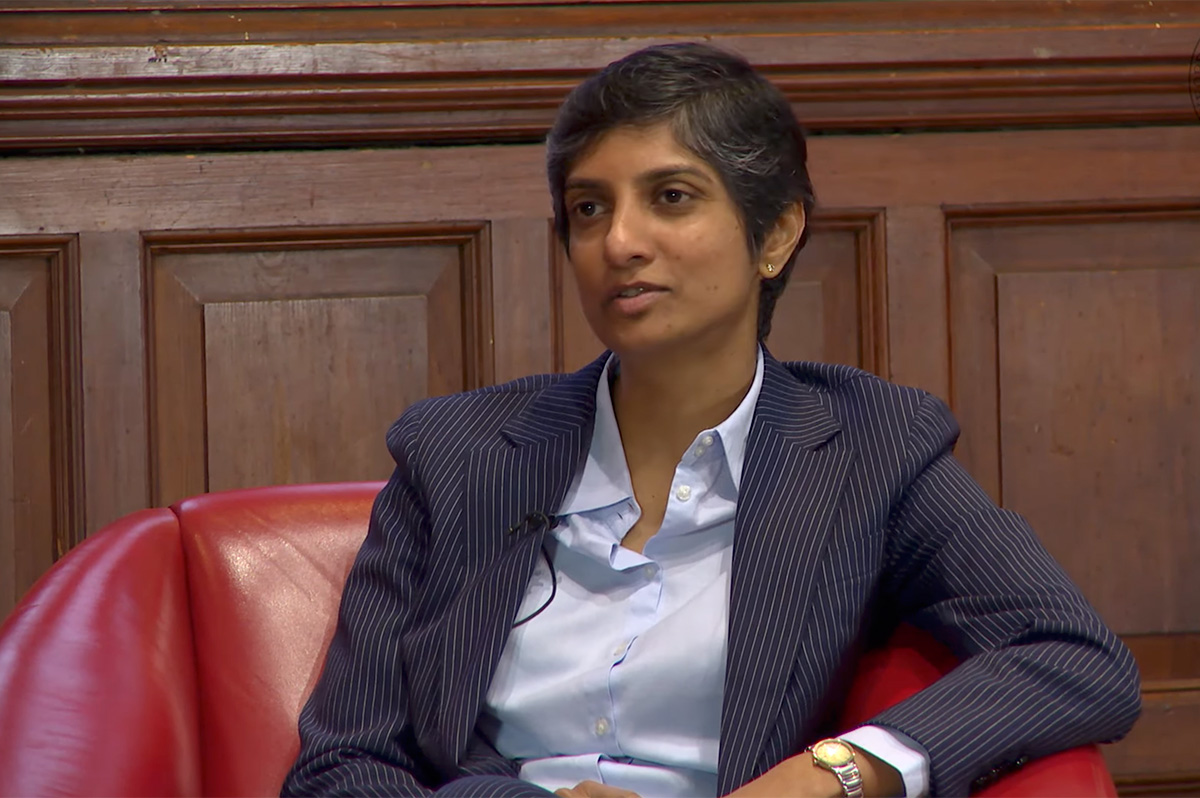
India’s LGBTQ community has found renewed hope in the election of Menaka Guruswamy, a lawyer who has argued before the Supreme Court, as the country’s first openly LGBTQ MP.
Guruswamy was declared elected unopposed to the Rajya Sabha, the upper house of Parliament, on March 9, representing West Bengal. The All India Trinamool Congress, the regional party that governs the state, nominated her.
Guruswamy is a constitutional lawyer who studied at Oxford University, Harvard Law School, and the National Law School of India University. She has argued several significant cases before the Supreme Court and is widely known for her work on constitutional law, civil liberties, and LGBTQ rights.
Guruswamy was part of the legal team that successfully challenged Section 377 of the Indian Penal Code, a colonial-era law that criminalized consensual same-sex sexual relations, which the Supreme Court struck down in 2018. She has also written and spoken extensively on issues of democracy, rights and institutional accountability.
Ankit Bhupatani, a global diversity, equity and inclusion leader and LGBTQ activist, welcomed Guruswamy’s election.
“This is significant not because Parliament needed a queer person, but because a queer person needed Parliament,” Bhupatani told the Washington Blade.
India has seen LGBTQ representation in elected office at the state and local levels, though it has remained limited.
In 1998, Shabnam Mausi was elected to the Madhya Pradesh Legislative Assembly from the Sohagpur constituency, becoming one of the first openly transgender people to hold public office in India. Mausi’s election marked a rare moment of visibility for trans people in the country’s political system, where representation has historically been sparse. Since then, a small number of openly trans candidates have contested and, in some cases, won local and state elections, but no openly LGBTQ person had been elected to Parliament before Guruswamy.
Guruswamy and her partner, Arundhati Katju, who is also a lawyer, were part of the legal team that played a central role in the Section 377 decision.
Representing one of the plaintiffs, the two lawyers helped frame the case around constitutional guarantees of equality, dignity, and privacy. The Navtej Singh Johar v. Union of India ruling marked a watershed moment for LGBTQ rights in India.
“For too long, we have fought our battles only in courtrooms and on streets. Now, there is a seat at the table where laws are written,” said Bhupatani. “Whether that seat produces change depends entirely on how it is used. Representation without substance is decoration. But as a beginning, yes. This matters.”
Guruswamy later represented the plaintiffs in the Supreme Court’s 2023 marriage equality case, Supriyo v. Union of India, which a 5-judge panel heard in the spring of 2023.
Along with other lawyers representing same-sex couples, she advanced arguments rooted in constitutional guarantees of equality, dignity, and personal liberty. The Supreme Court in a 3-2 decision on Oct. 17, 2023, declined to recognize same-sex marriage — holding that such a change falls within Parliament’s domain — but did acknowledge LGBTQ people face discrimination. The Blade previously reported the ruling underscored the court’s view that it could interpret the law, but could not create a new legal framework for marriage rights.
Bhupatani said Guruswamy’s election should not be seen as an immediate shift toward legislative action on LGBTQ rights, cautioning that such expectations may not align with political realities. He said her presence in Parliament could help sustain the issue in a way it has not been before, even as broader legal change is likely to take time.
“What she can do is keep the question alive inside Parliament in a way that it hasn’t been before,” Bhupatani said. “Legislative change in India on social questions usually takes longer than advocates want and shorter than skeptics predict. The 377 decriminalization seemed impossible until it wasn’t. Partnership rights will follow the same pattern eventually.”
Bhupatani added that while Guruswamy’s election may influence the pace of change, it does not, on its own, constitute a broader political movement.
“One person in Parliament, however extraordinary, is not a movement. She is an opening,” he said. “The 2023 ruling created a responsibility. Guruswamy’s election creates an opportunity to fulfill it from inside. Whether opportunity becomes outcome is entirely a question of human will.”
Guruswamy has served as a visiting faculty member at leading American institutions that include Yale Law School, Columbia Law School, and New York University School of Law. She has also worked with international organizations, advising the U.N. Development Fund for Women in New York and the U.N. Children’s Fund in both New York and South Sudan.
According to her professional profile, Guruswamy has been involved in a range of significant cases before the Indian Supreme Court that include matters related to bureaucratic reform and accountability.
One case is connected to the AgustaWestland helicopter deal, an investigation into alleged bribery in a multimillion-dollar defense procurement contract; litigation arising from the Salwa Judum case, in which the court examined the state-backed use of civilian militias in counterinsurgency operations in central India; and cases involving the implementation of the Right to Education Act, a law guaranteeing free and compulsory education for children between the ages of six and 14.
More recently, Guruswamy represented the All India Trinamool Congress in legal proceedings challenging searches conducted by India’s Enforcement Directorate, a federal agency responsible for investigating financial crimes, including money laundering and violations of foreign exchange laws. The searches were carried out at the offices of the Indian Political Action Committee, or I-PAC, a political consulting firm that provides data-driven campaign strategy and election management services to political parties. The case raised questions about the scope of investigative powers and the use of federal agencies in politically sensitive matters.
Guruswamy’s engagement with LGBTQ rights has extended beyond courtroom advocacy into public constitutional discourse.
On July 11, 2018, during hearings in the Section 377 case, she argued the criminalization law could not be justified on the basis of “social morality,” describing it as subjective and incompatible with constitutional guarantees, and framing the case as one fundamentally about “our humanity.” The Thomas Jefferson Foundation Medal in Law at the University of Virginia in February 2023 recognized Guruswamy and Katju for their work on LGBTQ rights.
Guruswamy has not responded to the Blade’s multiple requests for comment about her election.
Poland
Polish court rules country must recognize same-sex marriages from EU states
Poland ‘must comply with European Union law’
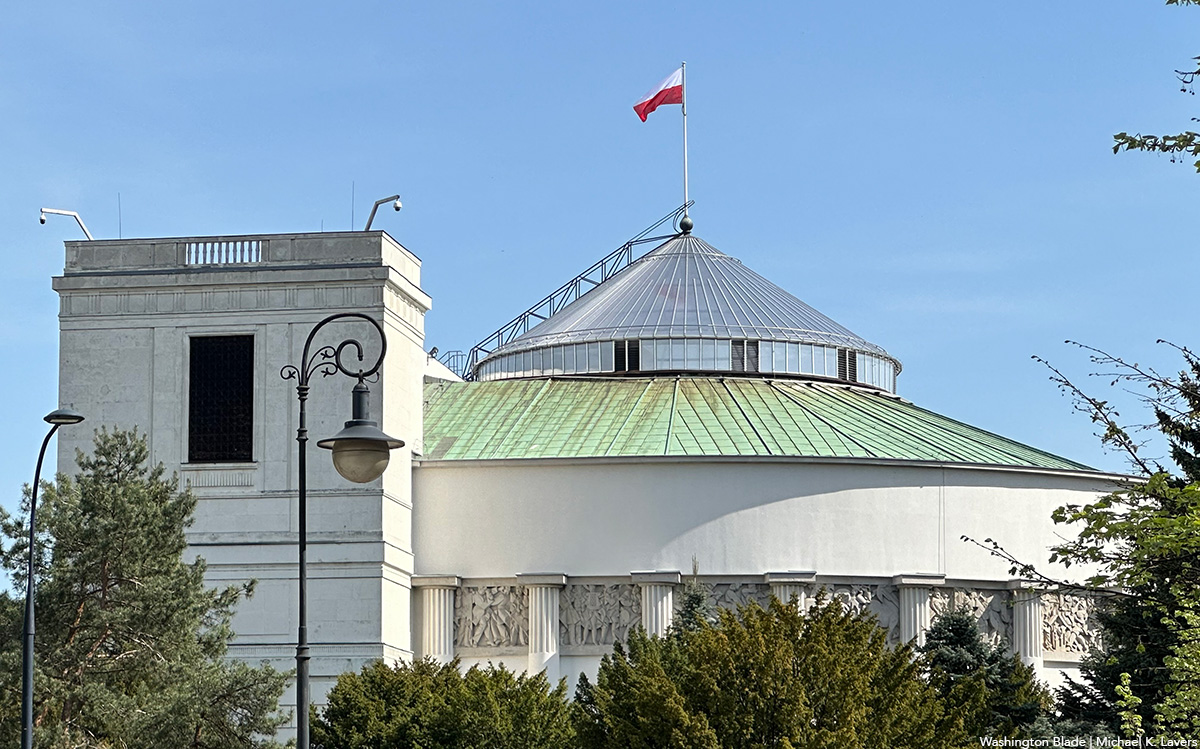
Poland’s Supreme Administrative Court on March 20 ruled the country must recognize same-sex marriages legally performed in other European Union states.
The EU Court of Justice in Luxembourg last November ruled in favor of a same-sex couple who challenged Poland’s refusal to recognize their German marriage.
The couple, who lives in Poland, brought their case to Polish courts in 2019. The Supreme Administrative Court referred it to the EU Court of Justice.
“Today’s ruling by the Supreme Administrative Court clearly demonstrates that Poland, as a member state of the European Union, must comply with European Union law,” said Przemek Walas, advocacy manager for the Campaign Against Homophobia, a Polish LGBTQ advocacy group, in a statement. “The Supreme Administrative Court rightly upheld the interpretation of the Court in Luxembourg and indicated that the only way to implement this ruling is to allow the transcription of a foreign marriage certificate.”
“This ruling is a significant step towards marital equality, but certainly not sufficient,” added Walas.
Ireland, Portugal, Spain, France, Luxembourg, Belgium, the Netherlands, Germany, Denmark, Austria, Slovenia, Malta, Greece, Sweden, Finland, and Estonia are the EU countries that have extended full marriage rights to same-sex couples. Poland — along with Romania, Bulgaria, and Slovakia — are the four EU countries with no legal recognition of same-sex couples.
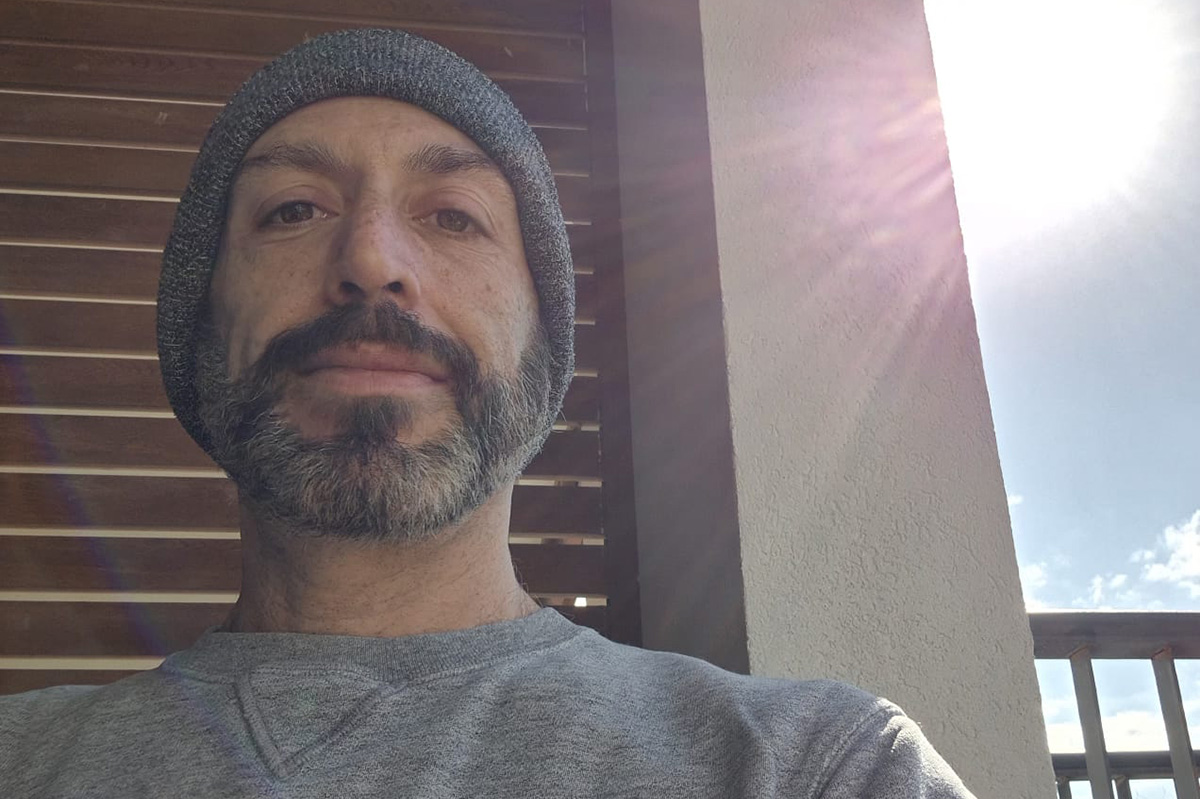
The Washington Blade on Wednesday spoke with Max Polonsky, a queer American who lives in Israel, about the Iran war and its impact on the country.
“It’s been tiring,” Polonsky told the Blade during a telephone interview from his home in Jaffa, an ancient port city with a large Arab population that is now part of Tel Aviv.
Polonsky grew up in Cherry Hill, N.J. He lived in D.C. for eight years before he moved to Israel in March 2022.
Israel and the U.S. on Feb. 28 launched airstrikes against Iran.
One of them killed Supreme Leader Ayatollah Ali Khamenei. Iran in response launched missiles and drones against Israel and other countries that include Kuwait, Bahrain, Qatar, the United Arab Emirates, Jordan, Saudi Arabia, Azerbaijan, and Cyprus.
An Iranian missile on March 1 killed nine people and injured 27 others in Beit Shemesh, an Israeli town that is roughly 20 miles west of Jerusalem. Shrapnel from an Iranian missile that struck a hair salon in Beit Awa, a Palestinian town in the West Bank, on Wednesday killed four women and injured more than a dozen others.
An Iranian drone that hit a command center in Kuwait on March 1 killed six U.S. soldiers: Sgt. Declan Coady, Sgt. 1st Class Nicole Amor, Capt. Cody Khork, Sgt. 1st Class Noah Tietjens, Chief Warrant Officer 3 Robert Marzan, and Maj. Jeffrey O’Brien. Another American servicemember, Sgt. Benjamin Pennington, died on March 8, a week after Iranian drones and missiles targeted the Prince Sultan Air Base in Saudi Arabia.
Iranian drones and missiles have damaged hotels, airports, oil refineries, and other civilian and energy infrastructure in the United Arab Emirates, Kuwait, Qatar, and elsewhere. Israel on Wednesday attacked Iran’s South Pars natural gas field in the Persian Gulf.
The Associated Press notes roughly 20 percent of the world’s crude oil passes through the Strait of Hormuz that connects the Persian Gulf and the Gulf of Oman. Gas prices in the U.S. and around the world continue to increase because the war has essentially closed the strategic waterway to ship traffic.
The war also left hundreds of thousands of people who were traveling in the Middle East stranded.
The Blade on March 6 spoke with Mario, who had stopped in his native Lebanon while traveling from the U.S. to India for work.
Mario was about to board a flight at Rafic Hariri International Airport in Beirut, the Lebanese capital, on Feb. 28 when the war began and authorities closed the country’s airspace. Mario is now back in the U.S.
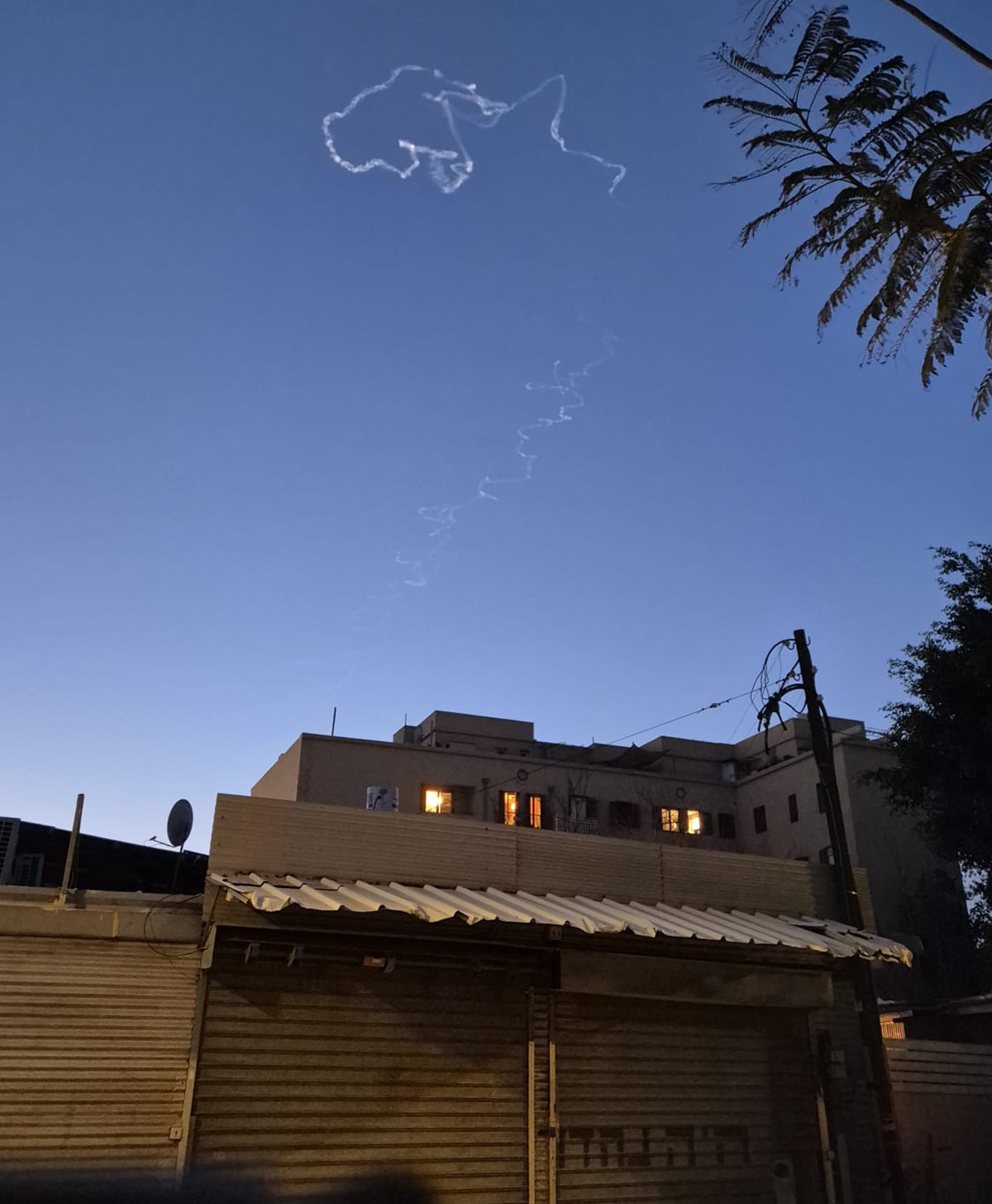
Polonsky told the Blade there were “alarms all day … sometimes multiple alarms an hour, sometimes every hour, every two hours” on Feb. 28.
Israel’s Home Front Command typically issues warnings about 10 minutes ahead of an anticipated Iranian missile attack. Sirens then sound 90 seconds before an expected strike.
People in Tel Aviv, Jerusalem, and in other cities in central Israel have 90 seconds to seek shelter if a rocket or missile is fired from Lebanon or the Gaza Strip. (Hezbollah, an Iran-backed Shia militant group in Lebanon that Israel and the U.S. have designated a terrorist organization, launched rockets at the Jewish State after Khamenei’s death. Israel, in turn, continues to carry out airstrikes against Hezbollah targets in Lebanon. Hamas militants on Oct. 7, 2023, killed upwards of 1,200 people when they launched a surprise attack against Israel from the Gaza Strip.) People who live close to Lebanon and Gaza have 15 seconds to seek shelter.
Polonsky has a safe room — known as a “mamad” — in his apartment. Polonsky also uses it as his home office and a second bedroom.
He told the Blade the alerts in recent days have become less frequent.
“We’ll get maybe a handful of alarms during the day, maybe some at night,” said Polonsky.
Israel on June 12, 2025, launched airstrikes against Iran that targeted the country’s nuclear and military facilities. The subsequent war, which lasted 12 days, prompted the cancellation of Tel Aviv’s annual Pride parade. An Iranian missile destroyed Mash Central, the city’s last gay bar.
Iran on Oct. 1, 2024, launched upwards of 200 ballistic missiles at Israel. This reporter arrived in Israel three days later to cover the first anniversary of Oct. 7 and the impact the subsequent war in the Gaza Strip had on LGBTQ Israelis and Palestinians.
‘Iranian regime was bad’
Polonsky admitted he doesn’t “know what to think” about the latest war against Iran.
“I don’t know what I think about the war,” he said. “Ultimately what happens is just not in my personal control: whatever Donald Trump, [Israeli Prime Minister Benjamin] Netanyahu, the ayatollah, whoever is running Iran are going to organize and launch attacks and reach any deals is not anything I personally have any control over, so I try to just kind of let that aspect of it go as I’m living my life.”
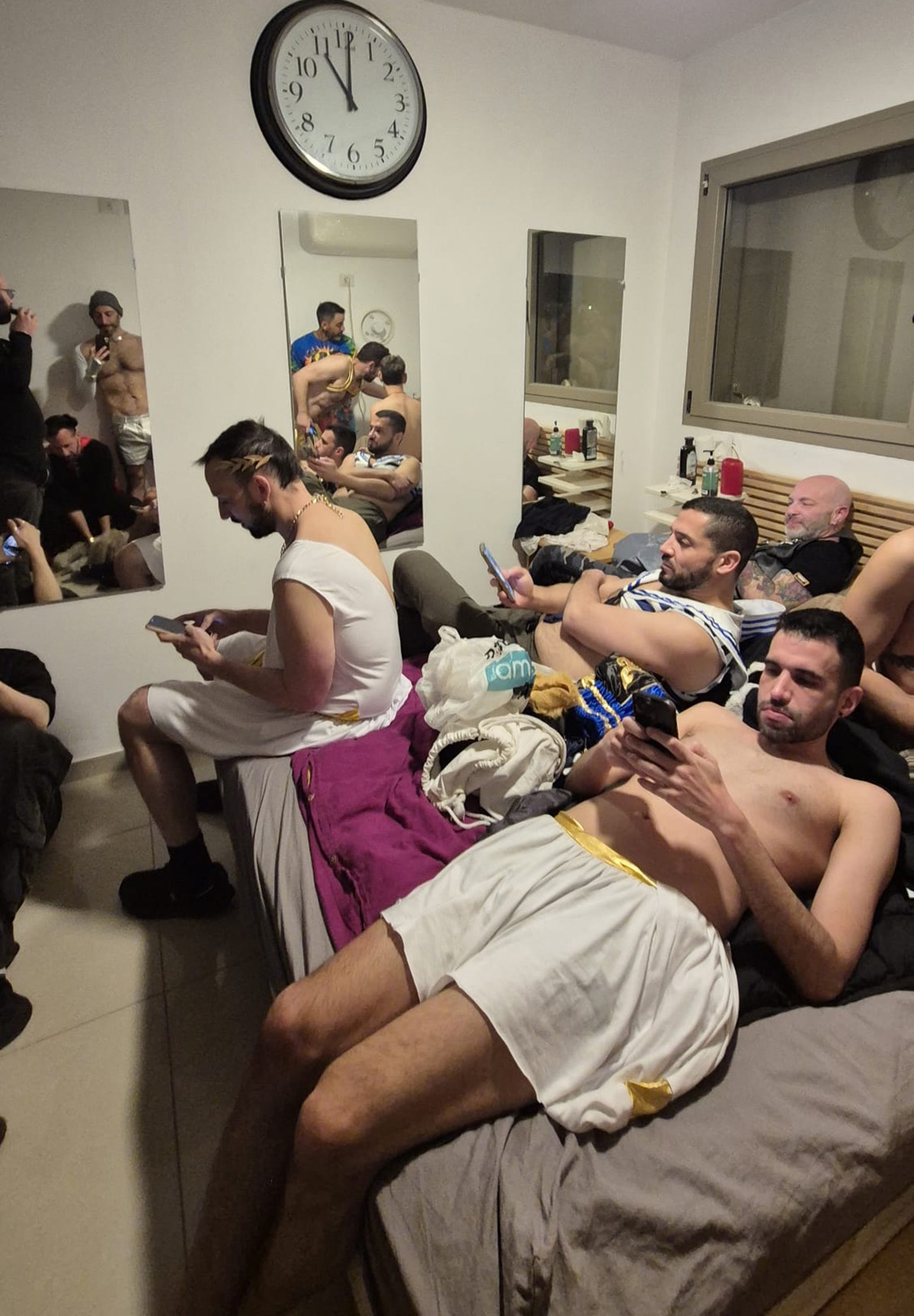
Polonsky told the Blade he understands “there are very serious questions about how” the war started, and Congress’s role in it.
“Those are serious and valid, important questions,” he said. “And at the same time, the Iranian regime was bad.”
Polonsky noted Iran has supported and funded Hezbollah, Hamas, Houthi rebels in Yemen, and other groups “who were attacking Israel.” Polonsky added the Iranian government has “terribly oppressed their people.”
Iran is among the handful of countries in which consensual same-sex sexual relations remain punishable by death.
Reports indicate Iranian authorities killed upwards of 30,000 people during anti-government protests that began late last year. Sources with whom the Blade spoke said LGBTQ Iranians are among those who participated in the demonstrations.
“I’m not sad to see them pressured,” said Polonsky, referring to the Iranian regime.
He also described Khamenei as “a bad guy.”
“Him not being there is better,” said Polonsky.

Menaka Guruswamy celebrated as India’s first openly LGBTQ MP

Trans-led HIV clinic in Portsmouth struggles amid funding cuts

D.C. goes gaga for Gaga

Gay priest credited with boosting church support for LGBTQ Catholics

HRC to host National Rainbow Seder

‘How We Survived’ panel set for March 25

Calendar: March 21-26

‘Inherit the Wind’ isn’t about science vs. religion, but the right to think

Small is beautiful: subcompact SUVs