Sports
International Olympic Committee issues new “Framework On Fairness” for inclusion of Trans Athletes
The International Olympic Committee announced new guidance allowing “every person” to participate & abandons testosterone levels as criteria
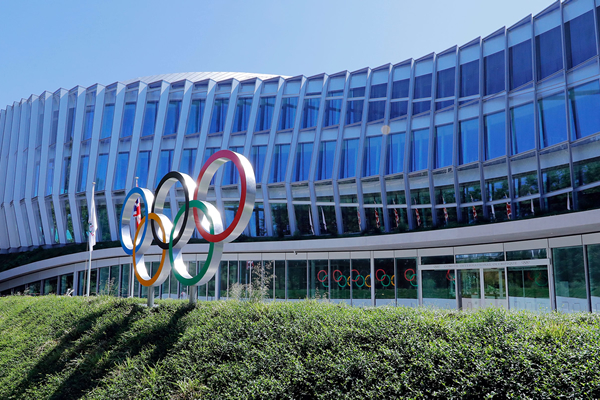
LAUSANNE, Switzerland – Following the first Olympic Games in which transgender athletes not only competed but made history by winning a gold medal, the International Olympic Committee stunned the world of sport Tuesday by not revising the criteria focused on testosterone, as expected, but moving away from it altogether.
The IOC announced its new Framework on Fairness, Inclusion and Non-Discrimination on the Basis of Gender Identity and Sex Variations in a Zoom meeting hosted in Lausanne, Switzerland.
The leaders said they consulted with 250 athletes and “concerned stakeholders” including medical and legal experts over two years, and determined “every person has the right to practice sport without discrimination and in a way that respects their health, safety and dignity.” While stressing that competitive sports “relies on a level playing field,” the IOC tacitly acknowledged the complaints of trans-exclusionary cisgender women athletes by stating support for “the central role that eligibility criteria play in ensuring fairness, particularly in high-level organized sport in the women’s category.”
GLAAD heralded the announcement as making it clear that “no athlete has an inherent advantage over another due to their gender identity, sex variations, or appearance.”
“This is a victory for all athletes and fans, who know the power and potential of sports to bring people together and make us all stronger,” said Alex Schmider of GLAAD. “Sports are for everyone, and fairness in sports means inclusion, belonging and safety for all who want to participate, including transgender, intersex, and nonbinary athletes.”
What the IOC didn’t do was issue new criteria for testosterone levels and did not define who is or isn’t a woman, and for the first time in modern Olympic history, is walking away from its “one size fits all” guidance. It’ll be left up to each sport and governing body to determine who is eligible to compete. The IOC guidance is that the criteria should respect internationally recognized human rights, rely on robust scientific evidence as well as athlete consultation, and that “precautions be taken to avoid causing harm to the health and well-being of athletes.”
Although intended to guide elite athletes, the committee suggested all levels of sport, even recreational and grassroots sport, respect inclusion and non-discrimination policies.
Here are the 10 principles outlined by the IOC to to welcome all athletes at every level of participation, centered on the values of inclusion, prevention of harm and non-discrimination.
1. Inclusion
2. Prevention of Harm
3. Non-discrimination
4. Fairness
5. No presumption of Advantage
6. Evidence-based Approach
7. Primacy of Health and Bodily Autonomy
8. Stakeholder-Centered Approach
9. Right to Privacy
10. Periodic Reviews
Athlete Ally was one of the agencies consulted by the IOC in determining this framework. “We hope to continue working closely with the IOC to ensure that the policies and practices governing sport actually include and represent the diversity of people playing sport,” said Anne Lieberman, Director of Policy and Programs at Athlete Ally.
“Far too often, sport policy does not reflect the lived experience of marginalized athletes, and that’s especially true when it comes to transgender athletes and athletes with sex variations,” said Quinn of Canada’s Olympic Soccer team and the world’s first trans nonbinary gold medalist. “This new IOC framework is groundbreaking in the way that it reflects what we know to be true — that athletes like me and my peers participate in sports without any inherent advantage, and that our humanity deserves to be respected.”
“I think that the IOC has made a powerful statement in favor of transgender inclusion, but I think that items 5 and 6 in their framework are problematic,” said Joanna Harper, the visiting fellow for transgender athletic performance at Loughborough University in the U.K. and a former IOC consultant.
“On average, transgender women are taller, bigger and stronger than cisgender women and these are advantages in many sports,” Harper told the Los Angeles Blade. “It is also unreasonable to ask sporting federations to have robust, peer-reviewed research prior to placing any restrictions on transgender athletes in elite sports. Such research is years or maybe decades away from completion. I do think that recreational sports should allow unrestricted inclusion of trans athletes.”
As San Francisco-based trans journalist Ina Fried noted in Axios, the IOC said that sex testing, genital inspections and other medical procedures to determine gender put all athletes at risk of harm and abuse, not just trans, intersex and nonbinary athletes. But the bottom line, Fried wrote, is that this new framework isn’t legally binding on any sports governing bodies, which now have carte blanche to write their own rules for eligibility.





Sports
New IOC policy bans trans women from Olympics
New regulation to be in effect at 2028 summer games in Los Angeles
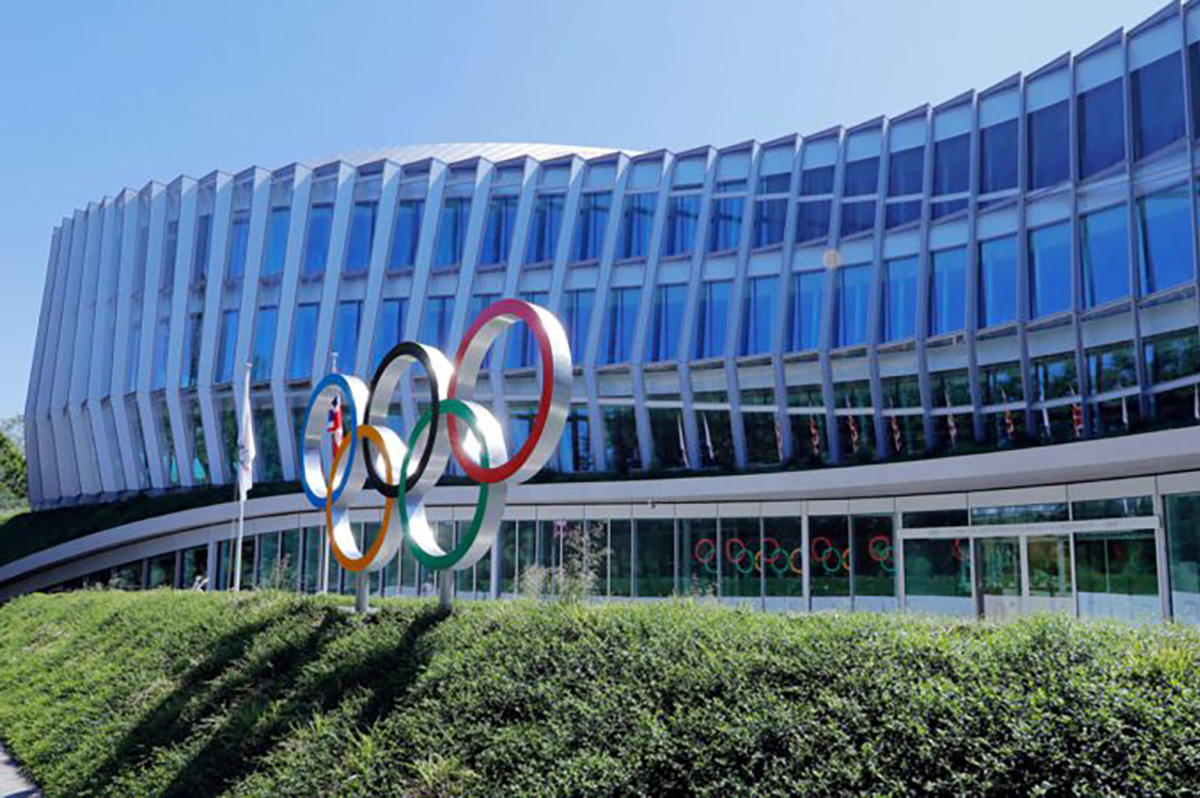
The International Olympic Committee on Thursday announced it will not allow transgender women from competing in female events at the Olympics.
“For all disciplines on the Sports Program of an IOC event, including individual and team sports, eligibility for any Female Category is limited to biological females,” reads the new policy.
The policy states “eligibility for the Female Category is to be determined in the first instance by SRY Gene screening to detect the absence or presence of the SRY Gene.”
“On the basis of the scientific evidence, the IOC considers that the SRY (sex-determining Region Y) Gene is fixed throughout life and represents highly accurate evidence that an athlete has experienced or will experience male sex development,” it reads. “Furthermore, the IOC considers that SRY Gene screening via saliva, cheek swab or blood sample is unintrusive compared to other possible methods. Athletes who screen negative for the SRY gene permanently satisfy this policy’s eligibility criteria for competition in the Female Category.”
The policy states the test “will be a once-in-a-lifetime test” unless “there is reason to believe a negative reading is in error.”
The new regulation will be in place for the 2028 Summer Olympics in Los Angeles.
“I understand that this a very sensitive topic,” said IOC President Kirsty Coventry on Thursday in a video. “As a former athlete, I passionately believe in the rights of all Olympians to take part in fair competition.”
“The policy that we have announced is based on science and it has been led by medical experts with the best interests of athletes at its heart. The scientific evidence is very clear: male chromosomes give performance advances in sport that rely on strength, power, or endurance,” she added. “At the Olympic Games, even the smallest margins can be the difference between victory and defeat. So, it is absolutely clear that it would not be fair for biological males to compete in the female category. In addition, in some sports it would simply not be safe.”
(Video courtesy of the IOC)
Laurel Hubbard, a weightlifter from New Zealand, in 2021 became the first trans woman to compete at the Olympics.
Imane Khelif, an Algerian boxer, won a gold medal at the 2024 Summer Olympics in Paris. Khelif later sued JK Rowling and Elon Musk for cyberstalking after they questioned her gender identity.
Ellis Lundholm, a mogul skier from Sweden, this year became the first openly trans athlete to compete in any Winter Olympics when he participated in Milan Cortina Winter Olympics in Italy.
President Donald Trump in February 2025 issued an executive order that bans trans women and girls from female sports teams in the U.S.
The U.S. Olympic and Paralympic Committee last July banned trans women from competing in female sporting events. Republican lawmakers have demanded the IOC ban trans athletes from women’s athletic competitions.
“I’m grateful the Olympics finally embraced the common sense policy that women’s sports are for women, not for men,” said U.S. Sen. Tom Cotton (R-Ark.) on X.
An IOC spokesperson on Thursday referred the Washington Blade to the press release that announced the new policy.

More than a dozen LGBTQ athletes won medals at the Milan Cortina Winter Olympics that ended on Sunday.
Cayla Barnes, Hilary Knight, and Alex Carpenter are LGBTQ members of the U.S. women’s hockey team that won a gold medal after they defeated Canada in overtime. Knight the day before the Feb. 19 match proposed to her girlfriend, Brittany Bowe, an Olympic speed skater.
French ice dancer Guillaume Cizeron, who is gay, and his partner Laurence Fournier Beaudry won gold. American alpine skier Breezy Johnson, who is bisexual, won gold in the women’s downhill. Amber Glenn, who identifies as bisexual and pansexual, was part of the American figure skating team that won gold in the team event.
Swiss freestyle skier Mathilde Gremaud, who is in a relationship with Vali Höll, an Austrian mountain biker, won gold in women’s freeski slopestyle.
Bruce Mouat, who is the captain of the British curling team that won a silver medal, is gay. Six members of the Canadian women’s hockey team — Emily Clark, Erin Ambrose, Emerance Maschmeyer, Brianne Jenner, Laura Stacey, and Marie-Philip Poulin — that won silver are LGBTQ.
Swedish freestyle skier Sandra Naeslund, who is a lesbian, won a bronze medal in ski cross.
Belgian speed skater Tineke den Dulk, who is bisexual, was part of her country’s mixed 2000-meter relay that won bronze. Canadian ice dancer Paul Poirier, who is gay, and his partner, Piper Gilles, won bronze.
Laura Zimmermann, who is queer, is a member of the Swiss women’s hockey team that won bronze when they defeated Sweden.
Outsports.com notes all of the LGBTQ Olympians who competed at the games and who medaled.
Sports
US wins Olympic gold medal in women’s hockey
Team captain Hilary Knight proposed to girlfriend on Wednesday
The U.S. women’s hockey team on Thursday won a gold medal at the Milan Cortina Winter Olympics.
Team USA defeated Canada 2-1 in overtime. The game took place a day after Team USA captain Hilary Knight proposed to her girlfriend, Brittany Bowe, an Olympic speed skater.
Cayla Barnes and Alex Carpenter — Knight’s teammates — are also LGBTQ. They are among the more than 40 openly LGBTQ athletes who are competing in the games.
The Olympics will end on Sunday.

Surviving spring cleaning

Iconic Eddie Izzard takes on 23 characters in ‘Hamlet’

How Pepper the courthouse dog helps victims of abuse

Women’s FEST returns to Rehoboth Beach next week

Belarusian lawmakers approve bill to crackdown on LGBTQ rights

Supreme Court rules against Colo. law banning conversion therapy for minors

Senegalese president signs bill that further criminalizes homosexuality

Trans activists gather on National Mall for Transgender Day of Visibility

Md. lawmakers reaffirm legislative priorities

The cost of speaking one’s mind
-

 U.S. Supreme Court4 days ago
Supreme Court rules against Colo. law banning conversion therapy for minors
-
Senegal4 days ago
Senegalese president signs bill that further criminalizes homosexuality
-
District of Columbia4 days ago
Trans activists gather on National Mall for Transgender Day of Visibility
-
Maryland4 days ago
Md. lawmakers reaffirm legislative priorities