Local
Rainbow History Project to honor LGBTQ ‘Pioneers’
Virtual celebration to take place on Dec. 9
D.C.’s Rainbow History Project says it will honor and recognize 12 individuals and one organization by designating them as Community Pioneers “for their diverse contributions to the Washington-area LGBTQ community” at a Dec. 9 virtual celebration.
“Rainbow History Project is an all-volunteer organization dedicated to collecting, preserving and sharing the LGBT history of metropolitan Washington, D.C.,” the group says in a statement announcing the event. “The Pioneers awards recognize diverse community leaders for their roles as organizational founders, innovators, advocates and volunteers,” the statement says.
“The Pioneers celebration will be held virtually and is designed with special features that reproduce the feeling of attending in-person, such as live streaming and video chatting with other attendees and Pioneers before and after the core awards programing,” according to the statement.
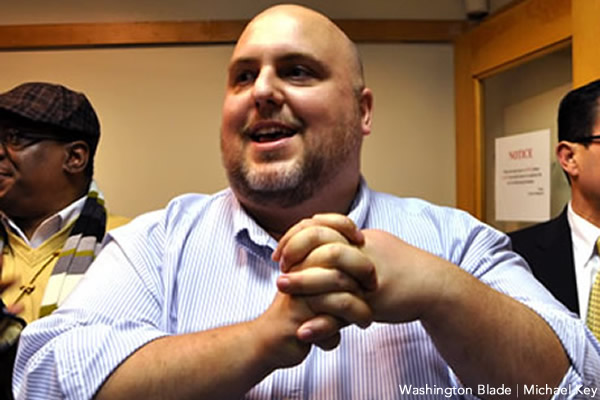
“Celebrating our Community Pioneers has been a cherished tradition since Rainbow History Project’s founding 21 years ago,” said Rob Berger, the organization’s chairperson. “It’s always an inspiring event, and we are happy that our virtual platform will still allow participants to meet and talk with the Pioneers,” Berger said in the statement.
The virtual event is free and open to the public, the statement says. Organizers released this link for those interested in attending, saying a short registration process may require registering in advance.
Following is the list of Community Pioneers scheduled to be honored at the Dec. 9 event as released by Rainbow History Project along with the project’s description of their backgrounds.
– Arlington Gay and Lesbian Alliance, a local group that since its founding has addressed equal rights issues for LGBTQ Virginians from a state and local perspective.
– Eboné F. Bell, founder and editor-in-chief of Tagg Magazine and Tagg Communication LLC.
– Bart Forbes, founding member of “Gay Fairfax,” a pioneering television newsmagazine program in Northern Virginia.
– Ellen Kahn, youth and family advocate, former president of Rainbow Families, former director of the Lesbian Services Program at Whitman-Walker Health, and currently senior director of programs and partnerships at the Human Rights Campaign Foundation.
– Theodore Kirkland (deceased), a co-founder of D.C. Black Pride in 1991, member of the Gay Liberation Front and Skyline Faggots, active community health volunteer and advocate.
– Paul Marengo, community leader through LGBTQ organizations including Reel Affirmations, Cherry Fund, and Pride celebrations for youth, Latino, Black and Transgender communities.
– David Mariner, executive director of CAMP Rehoboth, and former executive director of the D.C. Center for the LGBT Community.
– Mark Meinke founder longtime chair, Rainbow History Project, and co-founder of Rainbow Heritage Network, a national organization for the recognition and preservation of sites, history and heritage associated with sexual and gender minorities.
– David Perez, community leader, including former service as chair, Advisory Committee to the D.C. Mayor’s Office of LGBTQ Affairs; president, Latino LGBT History Project; and co-chair, LGBTQ Rights Task Force, National Hispanic Leadership Agenda.
– Michael “Micci” Sainte Andress, artist, health educator and advocate and an early leader in bringing African Americans into HIV/AIDS clinical trials.
– Boden Sandstrom, founder and owner of Woman Sound (later City Sound), the first all-woman sound company, which makes LGBTQ rights rallies and the women’s music scene possible.
– Casse Culver (deceased), nationally acclaimed D.C. lesbian feminist singer-songwriter, and partner of Boden Sandstrom, whose followers said her love songs and feminist lyrics moved audiences from foot stomping to silent reflection.
– Alan Sharpe, playwright, director and co-founder of the African American Collective Theater in Washington, D.C., in 1976, which now focuses on LGBTQ life and culture in the Black community.



Maryland
Supreme Court ruling against conversion therapy bans could affect Md. law
Then-Gov. Larry Hogan signed statute in 2018
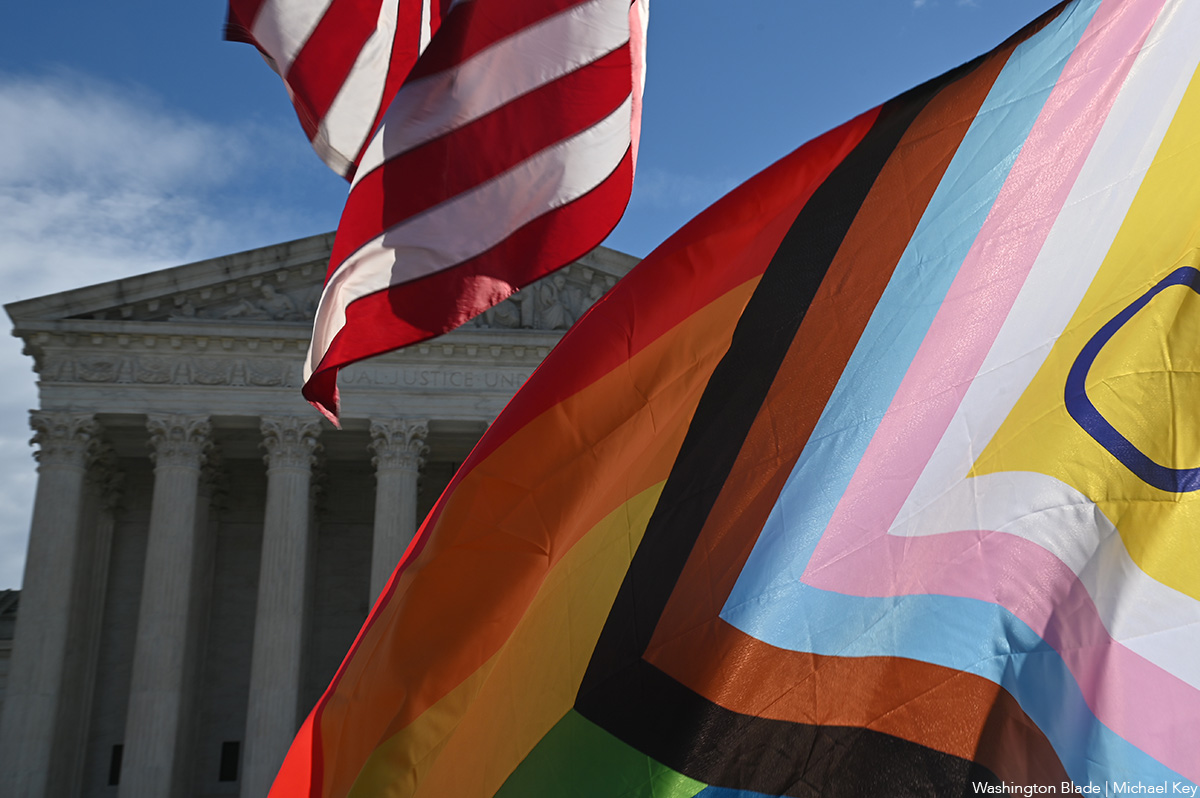
By PAMELA WOOD, JOHN-JOHN WILLIAMS IV, and MADELEINE O’NEILL | The U.S. Supreme Court on Tuesday ruled against a law banning “conversion therapy” for LGBTQ kids in Colorado, a ruling that also could apply to Maryland’s ban on the discredited practice.
An 8-1 high court majority sided with a Christian counselor who argues the law banning talk therapy violates the First Amendment. The justices agreed that the law raises free speech concerns and sent it back to a lower court to decide whether it meets a legal standard that few laws pass.
Justice Neil Gorsuch, writing for the court’s majority, said the law “censors speech based on viewpoint.” The First Amendment, he wrote, “stands as a shield against any effort to enforce orthodoxy in thought or speech in this country.”
The rest of this article can be read on the Baltimore Banner’s website.
District of Columbia
As mayor’s race takes shape, candidates endorse LGBTQ equality
Like nearly all recent D.C. elections, LGBTQ voters will be choosing a candidate for mayor in 2026 from a list of mostly strong LGBTQ rights supporters in the city’s June 16 primary.
As of March 30, the D.C. Board of Elections’ list of candidates who submitted the required number of petition signatures for the June 16 primary ballot included 10 mayoral candidates: nine Democrats and one Statehood Green Party candidate.
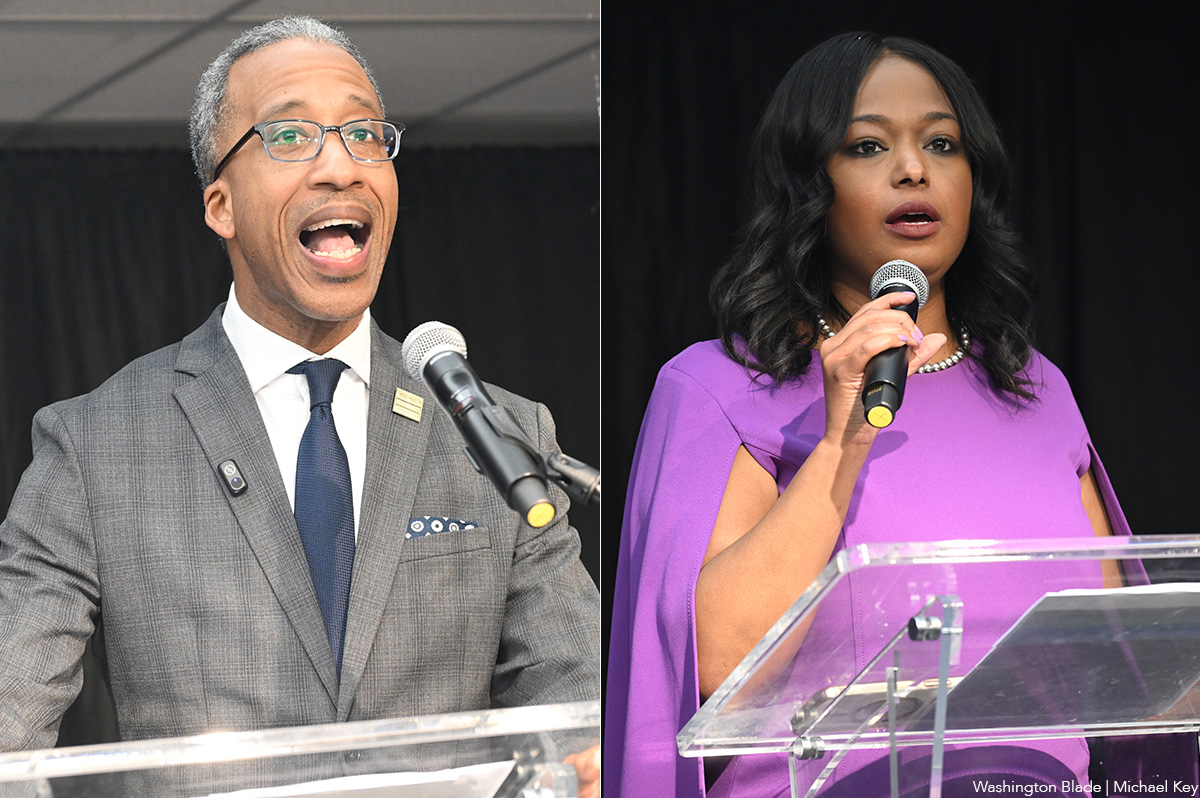
Among those candidates, six, all Democrats, have issued statements expressing strong support for LGBTQ rights, including the two leading Democratic contenders, former D.C. Council member Kenyan McDuffie and current Council member Janeese Lewis George, who represents Ward 4.
One of the lesser-known Democratic candidates who released an LGBTQ supportive statement, Rini Sampath, a cyber security consultant, told the Washington Blade she identifies as queer, becoming one of the first known LGBTQ D.C. mayoral candidates to gain access to a major party primary ballot.
“We’re living in an extremely diverse community, an extremely unique community,” she told the Blade. “And being able to self-label, self-identify as queer is something that I just want to take pride in.”
Similar to McDuffie and Lewis George, Sampath released statements to the Blade and the Capital Stonewall Democrats, the city’s largest LGBTQ local political group, expressing support for LGBTQ rights and outlining plans for LGBTQ supportive policies if elected mayor.
Although many D.C. LGBTQ activists have said they have yet to decide whom to support for mayor, those who have decided appear to be divided between McDuffie and Lewis George. Most D.C. political observers consider McDuffie and Lewis George to be the two leading candidates in the mayoral race.
The other Democratic mayoral contenders who have released statements expressing support on LGBTQ issues include Gary Goodweather, a local real estate manager and developer who has been actively campaigning at LGBTQ events; Vincent Orange, a former At-Large and Ward 5 D.C. Council member; and Kathy Henderson, a longtime Ward 5 community activist and elected Advisory Neighborhood Commissioner.
The remaining two Democratic mayoral candidates, Hope Solomon, a former U.S. Department of Homeland Security contractor and Dupont Circle civic activist; and Ernest Johnson, a real estate broker and Ward 1 community activist, did not respond to inquiries from the Blade and Capital Stonewall Democrats seeking information about their position on LGBTQ related issues.
Robert Gross, the Statehood Green Party candidate who is running unopposed in the June 16 primary, also didn’t respond to inquires from the Blade about his position on LGBTQ issues.
D.C. Board of Elections records show that at least five Republican candidates filed papers to run for mayor in the June 16 GOP primary, but none of them remained as candidates as of March 30, when the election board issued its updated candidate list.
Just one of the five Republican candidates replied to an email message from the Washington Blade sent to all mayoral candidates in early March seeking their position on LGBTQ issues. That candidate, Esa Muhammad, whose website identifies him as an engineer, consultant, and local business owner, sent a reply expressing opposition to LGBTQ rights.
“Unfortunately, I do not support LGBTQ because The God only created 2 genders (Adam/Eve),” he wrote. “Anyway, I will be fair to you all despite your sick way of looking at life,” he stated.
Capital Stonewall Democrats President Stevie McCarty said his group sent questionnaires to all the Democratic mayoral candidates as well as to Democrats running for other offices such as D.C. Council. Information posted on the group’s website shows only four of the mayoral candidates returned a complete questionnaire: McDuffie, Lewis George, Goodweather, and Sampath.
Each of them provides detailed information of their plans for supporting LGBTQ policies if elected and their record of support on LGBTQ issues. McCarty said the questionnaire responses for all candidates that submitted them can be accessed at outvotedc.org.
He said Capital Stonewall Democrats will hold virtual LGBTQ forums in April, including a mayoral forum on April 8. He said the group’s members will vote on the candidate endorsements online from April 20 through May 11, and the group expects to announce its endorsements May 14.
GLAA DC, formerly known as the Gay and Lesbian Activists Alliance of Washington, has issued candidate ratings for most D.C. elections since the 1970s, and the nonpartisan LGBTQ group was expected to issue ratings for mayoral candidates this year. But like in recent years, the group is expected to base its ratings on mostly non-LGBTQ issues, with a progressive, left-leaning perspective, according to a nine-page “Back to Basics GLAA Policy Brief 2026” that the group released in March.
The LGBTQ activists who are backing McDuffie or Lewis George appear to be gravitating to the two based on their political leanings separate from LGBTQ issues, just like voters in general. Lewis George, who identifies as a democratic socialist, is popular among LGBTQ and non-LGBTQ “progressives.”
McDuffie, who is seen as a more moderate candidate along the lines of current D.C. Mayor Muriel Bowser, is being supported by LGBTQ activists who hold those views, some of whom currently work in the Bowser administration.
Among Lewis George’s LGBTQ supporters are longtime Ward 8 community leader Philip Pannell and former Capital Stonewall Democrats president Howard Garrett. Among the LGBTQ McDuffie backers are longtime D.C. Democratic activists John Fanning and David Meadows.
Longtime D.C. LGBTQ Democratic Party activist Peter Rosenstein, who is supporting McDuffie, has raised concerns about Lewis George’s backing by the national group Democratic Socialists of America. In Facebook postings, Rosenstein points to the Democratic Socialists of America’s opposition to Israel as a country and said it is viewed by many in the Jewish community as promoting antisemitism. He has criticized Lewis George for not speaking out against that and for accepting the DSA’s endorsement.
In an interview with the Blade, Lewis George strongly disputed that assessment, saying she has been a strong ally and supporter of the Jewish community.
“I’m a member of the Metro DSA here in D.C. that I work with to fight for labor and for tenant rights,” she said. “I’m also a member of the Democratic Party,” she added, saying, “There are things that the Democratic Party does that I don’t agree with. There are things that the national DSA does that I don’t agree with. That’s a group that I work with.”
“But I want to be clear that I am running for mayor to represent all of our community, and that includes our amazing and historical Jewish community here in D.C.,” she said. “I have had the amazing opportunity to spend time at synagogues and talking to Jewish leaders and groups and institutions. And so, there should be no worry here.”
Following are short excerpts from the detailed statements five of the nine Democratic mayoral candidates submitted to the Capital Stonewall Democrats or the Washington Blade.
Kenyan McDuffie: “As mayor, every piece of legislation I sign, craft, or endorse should also encompass the interest and input of the LGBTQ community members and advocates…From housing to health care and everything in between… We have a dire crisis regarding the rise in homelessness especially among the youth in our LGBTQ communities. In my administration that simply cannot be the status quo and will not be…I have been a consistent champion for our LGBTQ community and will remain so as Mayor of D.C.’
Janeese Lewis George: “As mayor, I will protect our LGBTQ+ neighbors against federal attacks on their identity, including their health care…On the Council I have been a strong supporter of pro-LGBTQ+ bills, including making D.C. a sanctuary for people seeking gender-affirming health care as well as addressing discrimination and harassment in nightlife and hospitality…And as mayor, I am prepared to move up and win those fights – a fight for D.C. statehood, a fight for our true economy, and a real opportunity to uplift our Black queer and trans youth.”
Gary Goodweather: “A Goodweather administration will defend every D.C. law protecting LGBTQ residents. I will establish a Defend DC office to coordinate the District’s legal and public response to federal overreach, with LGBTQ+ protections explicitly within its mandate…My affordable D.C. plan will produce 50,000 new homes with 36,000 affordable units, and I will ensure LGBTQ+ youth housing programs are funded as a budget priority.”
Rini Sampath: “I am an immigrant, proud queer woman, and a 10-year resident of Washington, D.C…For me, LGBTQ+ voters including transgender and nonbinary residents, are not a separate or symbolic constituency; they are a core part of a broader, multiracial, cross-ward coalition rooted in in equity and opportunity.”
Vincent Orange: “I have a long and consistent record of supporting LGBTQ+ equality and inclusion in the District of Columbia, grounded in both policy and personal commitment. As the District’s Democratic Committeeman from 2006 to 2015, I publicly supported marriage equality and voted accordingly … During my time on the D.C. Council, I worked to advance protections for LGBTQ+ residents, including authoring and passing legislation to prohibit discrimination against transgender individuals in the workplace.”
Kathy Henderson: Kathy Henderson has maintained a consistent record of treating all members of the community with dignity, compassion, and respect, regardless of gender, race, ethnicity, sexual orientation, identity, political party, national origin, or ideology. Kathy Henderson embraced the late Wanda Alston as a colleague and good friend…Alston was the first director of the Mayor’s Office of LGBTQ Affairs and Henderson helped to organize and facilitate the first LGBTQ citizens summit.”
Local
D.C.’s affirming congregations to mark Holy Week, Easter
Dignity Washington among groups holding events
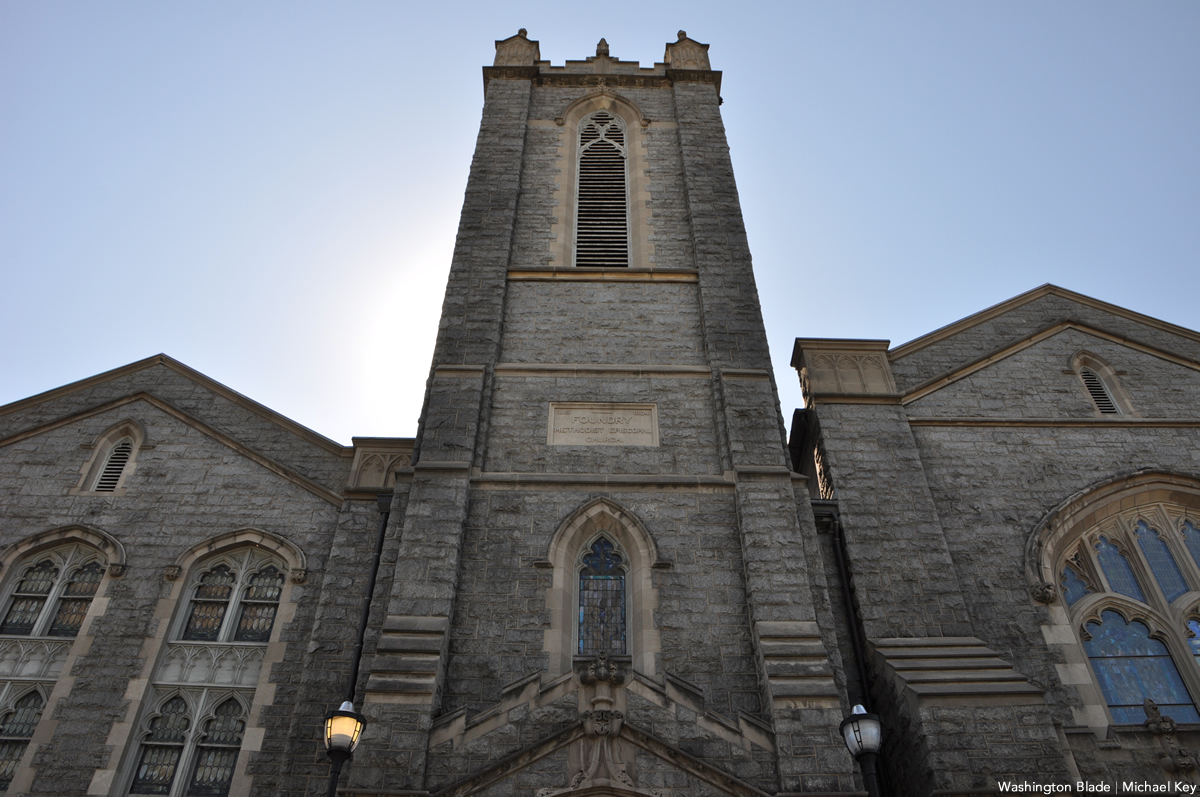
LGBTQ-friendly congregations in the D.C. area this week are marking Easter and Holy Week.
The Metropolitan Community Church of Washington, D.C., located in Mount Vernon Square, holds both online and in-person services.
An online-only Good Friday service will take place on April 3 at 7 p.m. In person or online Resurrection Sunday services will take place on April 5 at 10:30 a.m.
Dignity Washington, an LGBTQ Catholic group, is also holding Holy Week and Easter events.
The group on March 29 held a Palm Sunday prayer event. Dignity Washington on April 5 will hold a Mass at St. Margaret’s Episcopal Church at 6 p.m. It will be livestreamed on Facebook.
Foundry United Methodist Church holds two Easter Sunday services at 9 and 11:15 a.m.
Riverside Baptist Church, located in Southwest Washington, is an “Inclusive, Multicultural, Christ-Centered” congregation that also offers Holy Week and Easter activities.
The church on Good Friday at 3 p.m. is holding an outreach period in which they will clean up the neighborhood. Easter Sunday services will be held at 9:45 a.m., starting with a musical prelude, followed by services.
The church offers weekly “Wednesday Witness,” a youth and safety zone drop-in, serving as a safe space for the students of Jefferson Middle School and the community. It takes place from 3-5 p.m.
The DC LGBTQ+ Community Center offers a comprehensive list of inclusive faith communities on its website. The Association of Welcoming and Affirming Baptists offers a list of churches partnered with their organization that are inclusive and mainly Baptist, but the group does feature churches of other denominations.
The 18th National Rainbow Seder took place at the Human Rights Campaign on March 29. The sold out event is the country’s largest Passover Seder for the Jewish LGBTQ community.
Organizations behind the event included Bet Mishpachah, a local D.C. LGBTQ synagogue that Rabbi Jake Singer-Beilin leads, and GLOE, an Edlavitch DC Jewish Community Center program that sponsors events for the queer Jewish community. The theme for this year’s Seder was “Liberation for All Who Journey: Remembering, Resisting, Rebuilding.” Rabbis Atara Cohen, Koach Frazier, and Avigayil Halpern led it.
The Seder honored the late GLOE co-chair Michael Singer. Singer also served on the Edlavitch DC Jewish Community Center’s board.
“This Seder is both a celebration of how far we have come and a call to continue building a more just and inclusive world.” Bet Mishpachah Executive Director Joshua Maxey told the Washington Blade.

Kristi Noem ‘devastated’ as husband’s alleged fetish spending surfaces

Colo. activists condemn SCOTUS conversion therapy ruling

Is Ghana’s selective justice a human rights contradiction?

Supreme Court ruling against conversion therapy bans could affect Md. law

Glisten report details hostile climate for LGBTQ students

‘Out for McDuffie’ event held at D.C. gay bar

The Oscar-losing performance that’s too good to miss

‘Jonah’ an undeniably compelling but unusual memory play

PHOTOS: ‘No Kings’ rally and march