Movies
With masterful remake, Spielberg tells a whole new ‘Story’
A skillfully constructed work of art that engages emotions at every level
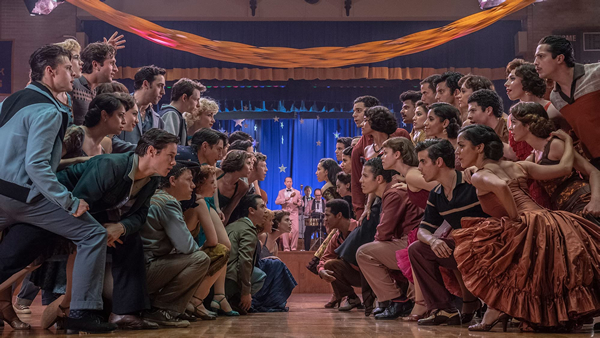
If you had reservations about the news that Steven Spielberg was remaking “West Side Story,” you aren’t alone. After all, with Hollywood’s track record for producing abysmal remakes of classic movies, it’s probably wise to be skeptical when a new one comes along.
That said, you can now rest assured that your skepticism is unfounded.
From its very first shot, in which Spielberg pays unabashed homage to the opening moments of “Citizen Kane” while establishing almost everything we need to know about the setting of the story we are about to see, “West Side Story” immediately dissipates any concern about the master director’s ability to deliver the blend of theatrical and cinematic artistry it deserves. With unparalleled fluency in the visual language of storytelling, he pulls us briskly into the conflict between the Jets and the Sharks – two teen street gangs, white and Puerto Rican, respectively, at war over territory in a Manhattan slum – and sets the stage for a retelling of Shakespeare’s “Romeo and Juliet” in which a family feud is exchanged for racism as the basis for a tale of young love thwarted by ancient hate.
For those unfamiliar, the plot centers on the romance of Tony (Ansel Elgort) and Maria (Rachel Zegler) – which is a problem because Tony is best friend to Riff (Mike Faist), leader of the Jets, and Maria is the sister of Bernardo (David Alvarez), leader of the Sharks. Despite the concerns of those around them – including Bernardo’s shrewd and strong-willed girlfriend, Anita (Ariana DeBose) – the couple’s forbidden love endures even as the rival gangs plan to wipe each other out once and for all, setting into motion a tragic chain of events that will shatter the entire community.
Spielberg’s reverent remounting of the classic musical drama – conceived for Broadway in 1957 and first translated to film in an Oscar-winning classic directed by Jerome Robbins and Robert Wise – achieves what doubters assumed would be impossible: a new rendering that succeeds in bringing a deeper, more contemporary sensibility to the material while leaving it essentially unchanged. A substantial amount of the credit for this goes to Pulitzer-winner Tony Kushner, whose literate and pitch-perfect adaptation of Arthur Laurents’ stage script fills in some of the story’s blank spots and expands its scope to illuminate the complicated economic and social issues that lie at its core.
Characters are fleshed out with more detailed back stories that bestow them with greater dimension and humanity; Tony, for instance, is on parole after a stint in prison for nearly killing a rival gang member in a fight, and we find out that Riff’s dad was as much of a hoodlum as he is. Additionally, the minor role of “Anybodys,” a female Jet originally depicted as a “tomboy” who is ridiculed and excluded by her gang mates for being a girl, is here given an embellished presence, which, aided by a powerful performance from Iris Menas, leaves little doubt she is struggling with gender identity at a time when there were no words for such things.
In a similar expansion, we find out that the neighborhood is set to be demolished ahead of the construction of Lincoln Center and the high-dollar housing that surrounds it, definitively planting the film in the same period as the original work while bringing forward the impact of urban upheaval and gentrification on the low-income and marginalized communities they continually displace.
With flourishes like these, Kushner’s screenplay brings “West Side Story” into the present day without removing it from the world that gave birth to it, emphasizing the connections and parallels between the two eras and reminding us just how relevant this American classic continues to be.
Similarly, the supremely talented cast is instrumental in reframing the story for a more evolved age – and not just because all the Latino roles are played by Latino performers this time around. Each of the young stars gives a heartbreakingly authentic performance, with DeBose’s Anita a particular standout who commands the screen in every scene she’s in (as she should!), and Zegler, a screen newcomer, providing a Maria who is as bold and self-possessed as she is luminous and delicate. But perhaps the film’s most magnificent performance comes from Rita Moreno, the original movie’s Anita, who here takes on the rewritten (and re-gendered) role of a neighborhood shopkeeper who serves as Tony’s surrogate parent; she imbues the character with a combination of warmth and hard-won wisdom, and her presence brings an element of having come full circle, a touch of nostalgia that links the film to its heritage and lingers with us long after the credits roll.
The same can be said of the much-revered score by Leonard Bernstein and Stephen Sondheim (RIP, genius), which is here preserved and performed almost completely intact. Some of the songs are reordered within the story, and some of the singing is done by different characters than the ones we’re used to, but arranger David Newman and conductor Gustavo Dudamel succeed in delivering a rousing and passionate rendering of the show’s classic music – bolstered by the outstanding vocals of its cast, none of whom required the kind of dubbing that was standard practice when “West Side Story” graced the screen the first time around.
As for Spielberg, it’s hard to imagine another director who could pull this off. He pulls from his vast sea of cinematic influences to create a larger-than-life, skillfully constructed work of visual art that handles the spectacular and the intimate with equal deftness and engages our emotions at every level. He frequently references the classic films he loves, weaving nods to them into a tapestry that acknowledges his debt to the great filmmakers who came before him yet firmly asserts his own mastery of the medium. He even asserts his self-assuredness by invoking fond memories of the classic 1961 version, from the subtle but unmistakable emulation of its color palette and lighting choices in key scenes to the more obvious echoes of Jerome Robbins’ original choreography in the dancing – brilliantly restaged by Spielberg and choreographer Justin Peck in a style that emulates the athletic movement of the original’s dance sequences while leaping to heights of its own.
Yet despite all this deference to the past, Spielberg’s rendition of “West Side Story” excels and excites because it feels so firmly rooted in the here and now. His intention is to learn from the past, not dwell in it, and he challenges us at every turn to see the story with a contemporary – and sometimes uncomfortable – perspective. Most provocative, perhaps, is his choice not to use subtitles when characters are speaking Spanish; with that one, simple touch, he aims straight at the heart of the divisive turmoil in our culture today, thereby using a 64-year-old musical written by three gay men as it was always meant to be used – as a powerful condemnation of bigotry and hatred in a world that has seen enough killing.
Spielberg’s vision honors, even celebrates the beloved original film, yet simultaneously reiterates it into something thrillingly new. Even the most rigid purist can’t ask for a more faithful adaptation than that.




Movies
Quest for fame becomes an obsession in entertaining ‘Lurker’
Psychological thriller explores the dynamics of power and control

It was nearly 60 years ago when über-queer icon Andy Warhol pronounced to the world his prediction that “in the future, everyone will be famous for 15 minutes.” While it may have been an overstatement, we’re now experiencing the future he was talking about; and though it remains statistically impossible for “everybody” to achieve fame, that doesn’t mean that we can’t all “feel” like we’re famous. If social media has delivered any gift to the human race, that might just be it.
In the real-life dystopia that is 2026, Warhol’s 1967 quip has become a kind of cultural mantra: influencers are more famous than movie stars, podcasters can shape political policy, and anybody with a “hot take” can change the way we perceive even the most fundamentally held opinions. Whether or not this is progress is probably a moot point; it’s the reality we live in, and we have a government full of “cosplaying” charlatans to prove it.
That’s why Alex Russell’s “Lurker” – a 2025 Sundance favorite that’s now streaming on HBO Max after a limited theatrical run last summer – cuts so close to the quick. A psychological thriller exploring the dynamics of power and control within the entourage of a rock star, it strikes some uncomfortably familiar chords for an era when “bootlicking” seems to have become a national pastime.
It centers on Matthew (Théodore Pellerin), a young Angeleno who lives in his grandmother’s apartment and works in a trendy designer boutique on Melrose Avenue. When rising pop musician Oliver (Archie Madekwe) brings his entourage to the store one afternoon, Matthew sees a chance to make an impression; plugging his phone into the shop’s sound system, he plays a song that he knows the pop star admires – and minutes later, he’s been given a backstage pass to Oliver’s next concert and invited to hang out with the star himself.
Their relationship continues to develop quickly at the show. Though he’s met at first with some discomfortable hazing from members of the entourage, by the end of the evening he’s on his way to becoming part of the inner circle. Chosen by Oliver to become his “official documentarian,” he’s soon a fixture in the entourage himself, sparking jealousy from members higher in the “pecking order” than he is; but Matthew is better at the game than they suspect, and despite their attempts to keep him in his place, he uses his proximity to Oliver – and a few surgically precise acts of sabotage – to rise quickly to the top.
Staying there, however, is not so easy. Within the volatile social politics of the entourage, he must always be on guard, and his efforts to thwart others from displacing him become increasingly ruthless. Eventually, he crosses a line, resulting in a fall from Oliver’s grace and his ejection from the group; but being close to fame leads to its own kind of fame, and Matthew has worked too hard to give it up so easily – even if it means using his Machiavellian powers to go after Oliver himself.
Slick, stylish, and as hypervisual as any viral pop music video you can imagine, Russell’s sardonically amoral exploration of fame – or rather, the desire for it – is as much a satire as it is a psychological drama, but it plays like a horror movie. Matthew is a protagonist cut from the same cloth as the title character of “The Talented Mr. Ripley,” a schemer whose endearingly awkward appearance masks a devious purpose and a diabolical mind. Oliver, whose creativity seems more about his “vibe” than his actual music, is charismatic but aloof, beneficent but mercurial, and seemingly blind to the massive ego that hides beneath his “chill” persona. There’s a kind of tension between these two characters that feels distinctly romantic, even homoerotic, and though it’s expressed only through subtext, it provides a palpable edge that makes their relationship feel dangerous – as if this were a love story in which anyone who tries to come between them is likely to get hurt.
As to what they actually feel about each other, “Lurker” keeps quiet about it. Matthew “reads” like a queer character, but his inner life is never revealed to us save through the conclusions we can draw from his behavior, and Oliver seems so much in love with himself that nobody else can compare; even so, there’s something between them that plays as much more intimate than the enthusiastic “bro”-ish affection that they exhibit together.
In the end, however, the “love story” here is not about romance, nor even sex; it’s about fame. Matthew, even if his own creative talents may be more solid than Oliver’s, is enamored primarily with fame; perhaps he longs for importance, for a life of more excitement and opportunity than his thankless existence as a low-level retail employee, and as the movie proceeds it becomes clear that he is willing to go as far as he has to go in order to achieve it. For Oliver, maybe it’s about the longing of the famous for something more than sycophantic lip-service, for finding the adulation of his fans personified in an authentic, tangible, and individual form. Whatever it is, there’s very little love involved.
Of course, there’s an unavoidable comparison to be made between the mentality on display in “Lurker” with the prevailing trend in our American consciousness, in which performative loyalty and opportunistic friendship feel like the order of the day; from the fickleness of “fan culture” to the escalation of outrage-baiting on social media to the barely-concealed cutthroat narcissism on daily display in our very government, the message that comes through loud and clear is a chilling throwback to the Reagan-era “greed is good” philosophy: loyalty, feelings, and friendship are for suckers, and the most vicious player is the winner who takes it all.
As usual in a character-driven piece like this one, it’s ultimately the actors who make it work; Pellerin (a Canadian actor who won his country’s equivalent of an Oscar for “Family First” in 2018) is the lynch pin, and he delivers such an endlessly fascinating portrait of obsessively determined duplicity that we find ourselves rooting for him even as we recoil from the coldness of his tactics; Madekwe (“Saltburn”) captures the vapid pretension of a pop artist who has faked his way to success, but infuses Oliver with enough well-meaning sincerity that we can still feel a little bit sorry for him. In a smaller role, Hannah Rose Liu (“Bottoms”) makes an impression as the manager who keeps Oliver’s life running, offering an anchor of relative sanity in a sea of madness.
Russell’s taut and tantalizingly opaque screenplay manages to capture all these things and more into a compact narrative that keeps us engaged while weaving its observations seamlessly into the plot, and his direction – which somehow yields an expansive scope through an intimate and sometimes frenetic focus – reinforces the unpredictable instability of fame, status, power, and the social hierarchy that governs them all. There are occasionally twists that feel a bit too convenient to be believable, but all in all, it’s a solid piece of cinematic workmanship.
Movies
‘Spaced out on sensation’: a 50-year journey through a queer cult classic
Excellence of ‘Rocky Horror’ reveals itself in new layers with each viewing

Last week’s grab of nine Tony nominations for the new Broadway revival of “The Rocky Horror Show” – coming in the midst of the ongoing 50th anniversary of the cult-classic movie version – seems like a great excuse to look back at a phenomenon that’s kept us “doing the Time Warp” for decades.
It’s a big history, so instead of attempting a definitive conclusion about why it matters, I’ll just offer my personal memories and thoughts; maybe you’ll be inspired to revisit your own.
First, the facts: Richard O’Brien’s campy glam-rock musical became a London stage hit in 1973; that success continued with a run at Los Angeles’s Roxy Theatre in 1974, and a Broadway opening was slated for early 1975. In the break between, the movie was filmed, timed to ride the presumed success of the New York premiere and become a mega-hit – but it didn’t happen that way. The Broadway show closed after a mere handful of performances, and the movie disappeared from theaters almost as soon as it was released.
This, however, was in the mid-1970s, when “cult movies” had become a whole countercultural “scene,” and the film’s distributor (20th Century Fox) found a way to give “The Rocky Horror Picture Show” another chance at life. It hit the midnight circuit in 1976, and everybody knows what happened after that.
When all of this was happening, I was still a pre-teen in Phoenix, and a sheltered one at that. It wasn’t until 1978 – the summer before I started high school – that it entered my world. Already a movie fanatic (yes, even then), I had discovered a local treasure called the Sombrero Playhouse, a former live theater converted into an “art house” cinema; my parents would take me there and drop me off alone (hey, it was 1978) for a double feature. I remember that place and time as pure heaven.
It was there that “Rocky Horror” found me. The Sombrero, like so many similar venues across the country, made most of its profits from the midnight shows, and “The Rocky Horror Picture Show” was the star attraction. I saw the posters, watched the previews, got my first peeks at Tim Curry’s Frank, Peter Hinwood’s Rocky, and all the rest of the movie’s alluringly “freaky” cast; when I came out of the theater after whatever I had watched, I would see the fans lining up outside for the midnight show. I could see their weird costumes, and smell the aroma I already knew was weed, and I knew this was something I should not want to have any part of – and yet, I absolutely did.
After I started high school and found my “tribe” with the theater kids, I was invited by a group of them – all older teenagers – to go and see it. I had to ask my parents’ permission, which (amazingly) they granted; they even let me ride with the rest of the “gang” in our friend’s van – with carpeted interior, of course – despite what I could see were their obvious misgivings about the whole situation.
It would be over-dramatic to say that night changed my life, but it would not be wrong, either. I was amazed by the atmosphere: the pre-movie floor show, the freewheeling party vibe, the comments shouted at the screen on cue, the occasional clatter of empty liquor bottles falling under a seat somewhere, and that same familiar smell, which delivered what, in retrospect, I now know was a serious contact high.
As for the movie, I had already been exposed to enough “R” rated fare (the Sombrero never asked for ID) to keep me from being shocked, and the gender-bent aesthetic seemed merely a burlesque to me. I was savvy enough to see the spoof, to laugh at the lampooning of stodgy 1950s values under the guise of a retro-schlock parody of old-school movie tropes; I “got it” in that sense – but there was so much about it that I wasn’t ready to fully understand. Because of that, I enjoyed the experience more than I enjoyed the film itself.
I’m not sure how many times I saw “Rocky Horror” over the next few years, but my tally wasn’t high; I drifted to a different friend group, became more active in theater, and had little time for midnight movies in my busy life. I was never in a floor show and rarely yelled back at the screen (though I did throw a roll of toilet paper once), and I didn’t dress in costume. Even so, I went back to it periodically before the Sombrero closed permanently in 1982, and as I gradually learned to embrace my own “weirdness,” I came to connect with the weirdness that had always been calling me from within the movie. Each time I watched it, I did so through different eyes, and they saw things I had never seen before.
That process has continued throughout my life. I’ve frequently revisited “Rocky” via home media (in all its iterations) and special screenings over the years, and the revelations keep coming: the visual artistry of director Jim Sharman’s treatment; the dazzling production design incorporating nods to iconic art and fashion that I could only recognize as my own knowledge of queer culture expanded; the incomparable slyness of Tim Curry’s unsubtle yet joyously authentic performance; the fine-tuned perfection of Richard O’Brien’s ear-worm of a song score. The excellence of “The Rocky Horror Picture Show” revealed itself in new layers with every viewing.
There were also more intimate realizations: how Janet was always a slut and Brad was always closeted (I related to both), and how Frank’s seduction becomes the path to sexual liberation for them both; how Rocky was the “Über-Hustler,” following his uncontrolled libido into exploitation as a sex object while only desiring safety and comfort (I related to him, too), and how the “domestics” were driven to betray their master by his own diva complex (I could definitely relate to both sides of that equation). How Frank-N-Furter, like the tragic Greek heroes that still echo in the stories we tell about ourselves, is undone by hubris – and anybody who can’t relate to that has probably not lived long enough, yet.
The last time I watched (in preparation for writing this), I made another realization: like all great works of art, “The Rocky Horror Picture Show” is a mirror, and what we see there reflects who we are when we gaze into it. It’s a purely individual interaction, but when Frank finally delivers his ultimate message – “Don’t dream it, be it” – it becomes universal. Whoever you are, whoever you want to be, and whatever you must let go of to get there, you deserve to make it happen – no matter how hard the no-neck criminologists and Nazi-esque Dr. Scotts of the world try to discourage you.
It’s a simple message – obvious, even – but it’s one for which the timing is never wrong; and for the generations of queer fans that have been empowered by “The Rocky Horror Picture Show,” it probably feels more right than ever.
Movies
The queer appeal of ‘The Devil Wears Prada’
Tying the feminist and LGBTQ rights movements together on screen

“Would we have fashion without gay people? Forgive me, would we have anything?”
Those words, spoken by Miranda Priestley herself (actually by Meryl Streep, the 76-year-old acting icon who played her), may well sum up why “The Devil Wears Prada” has been a touchstone for queer audiences for two decades now.
Streep, who returns to big screens this weekend in the sequel to director David Frankel’s beloved 2006 classic (succinctly titled “The Devil Wears Prada 2”), expressed this nugget of allyship in a recent interview with Out magazine, promoting the new film’s upcoming release. It would be hard, as a member of the queer community, to disagree with her assessment. The world of fashion has always been inextricably linked with queer culture, and the whims of taste that drive it are so frequently shaped by queer men – and women, too – who have adopted it as a means of expressing their sense of identity from the very first time they thumbed through a copy of Vogue.
At the same time, the notion that “Prada” has been claimed by the community as “canon” simply because of the stereotypical idea that “gay people love fashion” feels like a lazy generalization. After all, fashion is about discernment – about knowing, if you will, whether a sweater is simply blue or if it is cerulean, and, importantly, understanding why it matters – and just because something ticks off a few basic boxes, that doesn’t mean it qualifies as “haute couture.”
So yes, the setting of the “Devil Wears Prada” universe in what might be called “ground zero” of the fashion industry plays a part in piquing queer interest, but to assume our obsession with it is explained as simply as that is, frankly, insulting. The fashion angle catches our interest, but it’s the story – and, more to the point, the central characters (all of which return in the sequel) – that reels us in.
First, there’s the ostensible heroine, Anne Hathaway’s Andrea (or rather, Andy) Sachs, who falls into the world of fashion almost by accident. She’s a recent college grad who wants to be a journalist, to write for a publication that operates on a less-superficial level than Runway magazine, but fate (for lack of a better word) places her in the job that “a million girls” would kill to have – assistant to Streep’s Miranda Priestly (based on Vogue editor Anna Wintour), who can determine an entire season’s fashion trends merely by pursing her lips. She’s idealistic, and dismissive of fashion in the overall scheme of human existence; she’s also stuck with a truly terrible boyfriend (Nate, played by Adrian Grenier) and trying to live up to the self-imposed expectations and ideals that have been foisted upon her since birth.
It’s clear from the start that none of this “fits” her particularly well. More significantly, the natural grace with which she blossoms, from “sad girl” fashion-victim to the epitome of effortless style, tells us that she was meant to be exactly where she is, all along.
Then, of course, there is Nigel (Stanley Tucci), the ever-loyal art director and “Gay Best Friend” that’s always there to provide just the right saving touch for both Miranda and Andy, helping to boost the former while gifting the latter with his own insight, “tough love,” and impeccable taste. Never mind that he’s a queer character played by a straight actor – Tucci avoids stereotype and performative flamboyance by simply playing it with pure, universally relatable authenticity – or that he ends up, at the end of the original film, betrayed by his goddess yet deferring his own dream to double down on his commitment to hers. Anyone who has ever been a gay man in the orbit of a remarkable woman knows exactly how he feels. Of course, they also probably know the precarious life of being a queer person in the workplace – something that carries its own set of compromises, disappointments, and determinations to go above-and-beyond just to make oneself invaluable to the powers that be.
Which brings us to Emily (Emily Blunt), the cutthroat “first assistant” who does her level best to keep Andy in her place, who goes to extremes (“I’m just one stomach flu away from my goal weight”) to be the “favorite” no matter how much cruelty she has to unleash on those who threaten her status. Some see her as merely an obstacle in the way of Andy’s rise to success, an antagonist whose efforts to embody the “no mercy” persona of an ascendent girl boss only expose her own mediocrity. But for many, she’s just another victim doomed to fail and fall while watching others rise to the top. Queer, straight, or in-between, who among us hasn’t been there?
Finally, of course, there is Streep’s Miranda Priestley, the presumed “devil” of the title and the epitome of mercilessly autocratic authority, who has earned her status and her power by embracing the toxic modus operandiof a misogynistic hierarchy in order to conquer it. Yes, she’s more than just a little horrible, a strict gatekeeper who hones in on perceived weaknesses with all the vicious premeditation of a hawk with its eyes on a luckless rabbit, and it would be easy to despise her if she weren’t so damn fabulous. But thanks to the incomparable Oscar-nominated performance from Streep – along with the glimpses we are afforded into her “real” life along the way – she is not just aspirational, but iconic. Stoic, imperturbable, always three steps ahead and never affording an inch of slack for any perceived shortcoming, there’s an undeniable excellence about her that inspires us to see beyond the obvious dysfunction of the “work ethic” she represents; and sure, there’s enough emotionally detached enthusiasm in her torment/training of Andy to fuel countless volumes of erotic lesbian fan-fiction (Google “MirAndy,” if you dare), but when we eventually recognize that she might just be the ultimate “fashion victim” of them all, it doesn’t just cut us to the core – it strikes a chord that should be universally recognizable to anyone who has had to make their own “deal with the devil” in order to claim agency in their own lives. In this way, “The Devil Wears Prada” comes closer than probably any mainstream film to tying the feminist and queer rights movements together in common cause.
In any case, each character, in their way, can easily be tied to a facet of queer identity – and indeed, to the identity of anyone who must work twice (or more) as hard as a straight white Christian male to succeed. We can see ourselves reflected in all of them – and whether we aspire to be Miranda (I mean, who wouldn’t?), identify with Andy, recognize our worst traits in Emily, or empathize with Nigel and his deferential suffering, there’s something in “The Devil Wears Prada” that resonates with everyone.
Now let’s see if the sequel can say the same.

‘How to Survive a Plague’ screens June 5

‘Queer Love’ campaign launched to address domestic violence

Ken Paxton wins Texas Republican primary runoff

China’s top court acknowledges anti-LGBTQ discrimination