Virginia
Mother says teen boy charged with assault in girl’s bathroom at Va. school is straight
Earlier reports that Loudoun County student was gender fluid triggered backlash
In a little-noticed interview last November with the British online newspaper, DailyMail.com, the mother of a 15-year-old boy charged with sexually assaulting a girl last May in the girl’s bathroom at a Loudoun County, Va., high school that the two students attended said her son identifies as heterosexual.
The May 28, 2021, sexual assault first surfaced in the news media in October at the same time law enforcement authorities disclosed that the boy allegedly sexually assaulted a girl on Oct. 6 in a vacant classroom at another high school to which he was transferred.
The disclosure of the two assaults triggered a furious backlash by some parents and conservative political activists against a Virginia school policy allowing transgender and gender fluid students to use the bathroom that conforms to their gender identity.
“First of all, he is not transgender,” the boy’s mother told DailyMail.com in a Nov. 2 interview. “And I think this is all doing an extreme disservice to those students who actually identify as transgender,” the newspaper quoted her as saying.
The mother, who agreed to the interview on grounds that she was not identified to protect the identity of her son, said her son identifies as heterosexual and absolutely does not identify as female.
LGBTQ activists have said the backlash against both the Virginia state and Loudoun County transgender non-discrimination policies — which spread to school districts across the country that have similar policies — was fueled by what they have said all along was unsubstantiated claims that the boy was transgender or gender fluid.
Conservative activists who strongly oppose the school systems’ trans supportive bathroom policies have said it was those policies that enabled the 15-year-old boy, who police say was wearing a skirt at the time of the May 28 sexual assault incident, to enter the girl’s bathroom to target the girl.
Since that time, testimony in a Loudoun County Juvenile Court where the boy was being prosecuted revealed that the 14-year-old girl who brought the charges against him said she and the boy had two consenting sexual encounters in a girl’s bathroom at Stone Bridge High School in Ashburn, Va., prior to the incident in which the boy allegedly assaulted her.
According to the Washington Post, whose reporter attended one of the juvenile court hearings, the girl testified that she agreed to meet the boy in the girl’s bathroom after he requested a third sexual encounter there, but she told him she did not want to have sex at that time.
“The girl previously testified in court that the defendant threw her to the ground in the bathroom and forced her to perform two sexual acts on him after she told him that she was not interested in sex on that occasion,” the Post reported in a story last week about the final outcome of the case.
At a Jan. 12 sentencing hearing, Loudoun County Juvenile Court Chief Judge Pamela Brooks placed the boy on the Virginia sex offender registry for life, the Post reported. After ruling in an earlier hearing in November that the evidence confirmed that the boy was responsible for sexually assaulting the two girls, Brooks sentenced the boy to a residential treatment facility rather than a juvenile detention facility and required that he remain on probation until he turns 18, the Post reported.
“He’s a 15-year-old boy that wanted to have sex in the bathroom, with somebody that was willing,” the boy’s mother told DailyMaiI.com. “And they’re twisting this just enough to make it a political hot button issue,” she said.
In her interview with the newspaper, the mother said her son wasn’t gender fluid despite the reports, which she confirms, that he wore a skirt at the time of the first of the two sexual assaults.
“He would wear a skirt one day and then the next day, he would wear jeans and a T-shirt, a Polo or hoodie,” she told the newspaper. “He was trying to find himself and that involved all kinds of styles. I believe he was doing it because it gave him attention he desperately needed and sought,” she said.
The mother acknowledged in the interview that her son was deeply troubled, saying he had a long history of misbehavior, including sending nude photos of himself to a girl when he was in the fifth grade.
On Jan. 12, the same day as the boy’s sentencing hearing, Virginia House of Delegates member John Avoli (R-Stanton) introduced a bill calling for restricting the ability of transgender students from using bathrooms and other facilities in public schools that are consistent with their gender identity.
A separate bill introduced last month by Virginia State Sen. Travis Hackworth (R-Tazewell County) calls for eliminating the requirement that Virginia school districts adopt the state Department of Education’s nondiscrimination policies for trans and non-binary students.
Although Virginia’s newly inaugurated Republican Gov. Glenn Youngkin and the GOP-controlled House of Delegates could move to advance the two bills, LGBTQ activists note that the state Senate remains in Democratic control and would block the two bills from being approved by the General Assembly.
Cris Candice Tuck, president of the LGBTQ group Equality Loudoun, told the Blade she expects opponents of LGBTQ nondiscrimination policies in the Loudoun County Public Schools and other school systems in Virginia to continue to use the sexual assault case of the Loudoun boy as a pretext to repeal LGBTQ and trans supportive policies.
“We firmly believe it should have absolutely no bearing as the perpetrator was not transgender, non-binary, or gender fluid, and so that doesn’t apply to this policy at all,” Tuck said. “A single conviction of an individual who is not even part of the group in question is no reason to invalidate the rights and expose to potential violence the hundreds of students who identify as transgender or non-binary,” Tuck said in an email message.
“Currently, the Catholic Church, the Boy Scouts of America, and hundreds of cisgender teachers, clergy, and coaches are embroiled in legal battles nationwide involving sexual molestation, rape, and abuse of children across the country that has been ongoing for decades,” Tuck said. “Yet no one is proposing restroom restrictions for any of those groups. A double standard cannot exist for the LGBTQ+ based on fear mongering, misinformation, and discrimination.”


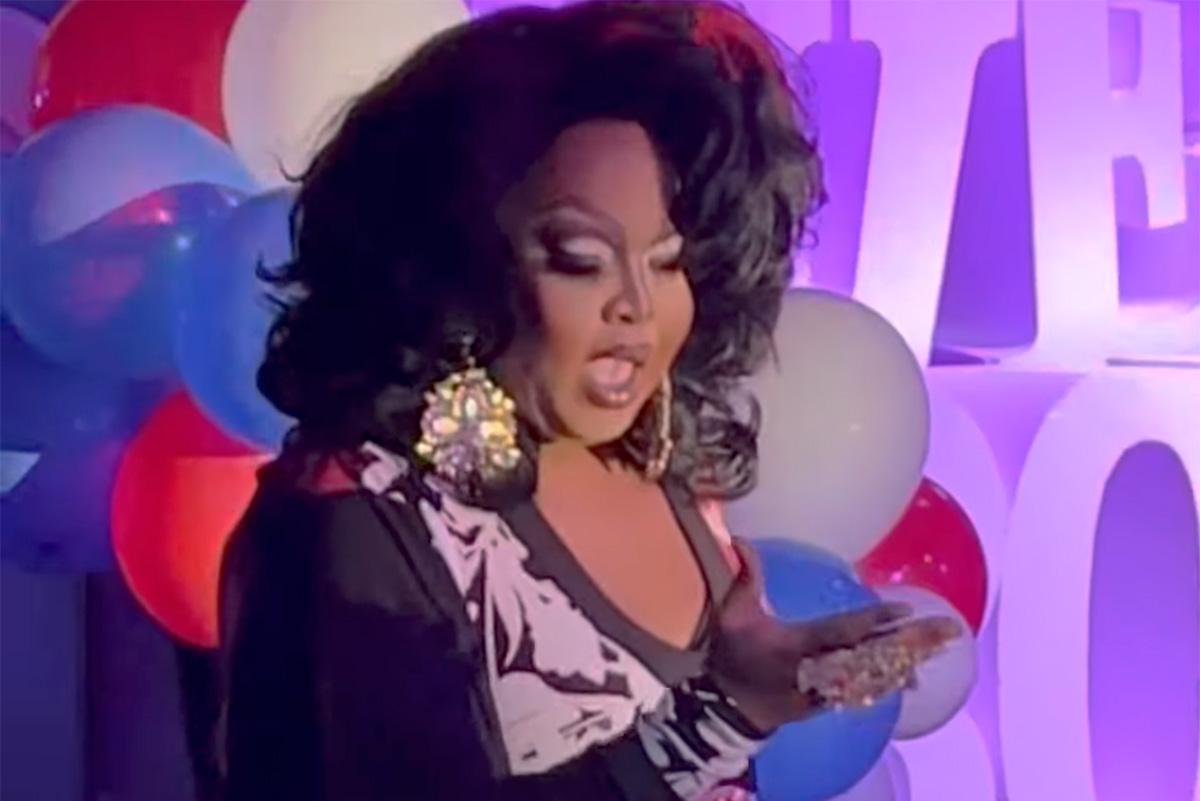
A gay man was murdered in Petersburg, Va., on March 13.
Shyyell Diamond Sanchez-McCray, who was also known as Saamel and Mable, was a drag queen who won the Miss Mayflower EOY pageant in 2015. Reports also indicate Sanchez-McCray, 42, was a well-known community activist in Virginia and in North Carolina.
Local media reports indicate police officers found Sanchez-McCray shot to death inside a home in Petersburg.
Sanchez-McCray’s brother, Jamal Mitchell Diamond, in a public statement the Washington Blade received from Equality Virginia and GLAAD, said Sanchez-McCray was not transgender as initial reports indicated.
“Our family has always embraced the fullness of who he was. He used the names Saamel, Shyyell, and Mable interchangeably, and we honor all of them. There is no division within our family regarding how he is being represented — only a shared commitment to preserving his truth with love and respect,” said Diamond.
“He was also deeply committed to community work through Nationz Foundation, where he worked and completed multiple state-certified programs to support marginalized communities,” added Diamond. “That work meant a great deal to him.”
Authorities have not made any arrests.
The Petersburg Bureau of Police has asked anyone with information about Sanchez-McCray’s murder to call Petersburg-Dinwiddie Crime Solvers at 804-861-1212.
Virginia
Virginia General Assembly’s 2026 legislative session ends
Voters in November will consider repealing marriage amendment
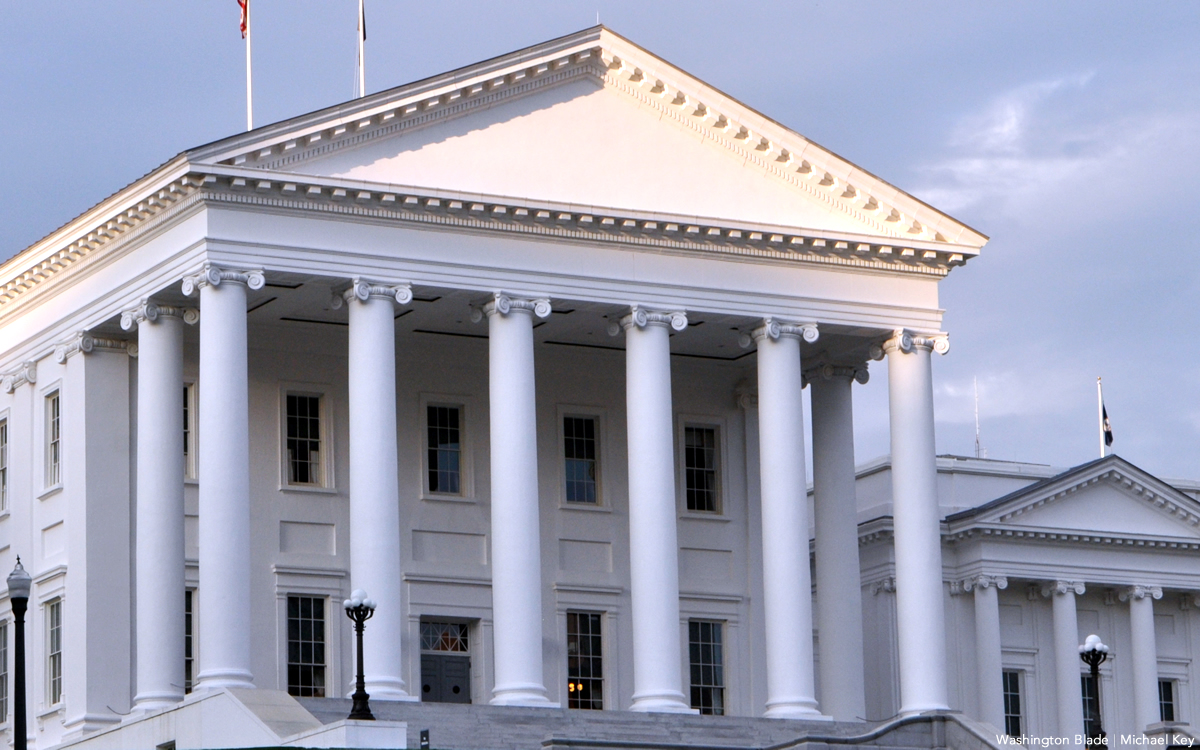
The Virginia General Assembly’s 2026 legislative session ended on March 14.
Lawmakers have yet to approve a budget, but they did pass a resolution that paves the way for a referendum on whether to repeal the state’s constitutional amendment that defines marriage as between a man and a woman. Lawmakers also advanced House Bill 60, which would protect PrEP users from insurance discrimination.
Democratic Gov. Abigail Spanberger has until April 13 to decide to pass, amend, or veto legislation before it goes back to the House of Delegates on April 22.
Spanberger on Feb. 6 signed the bill that sets the stage for the marriage amendment referendum. Voters will consider whether to “remove the ban on same-sex marriage; (ii) affirm that two adults may marry regardless of sex, gender, or race; and (iii) require all legally valid marriages to be treated equally under the law?”
Equality Virginia has been working during this legislative cycle to urge lawmakers to allocate funding towards LGBTQ rights. The budget would expand funding for schools, competency training for the 988 suicide hotline, and funding to provide gender affirming care to LGBTQ youth.
“As the budget moves through conference and the Reconvene Session approaches on April 22, Equality Virginia remains focused on ensuring our victories this session translate into durable protections,” Equality Virginia Executive Director Narissa Rahaman told the Washington Blade in a statement. “Progress on marriage equality, nondiscrimination protections, and HIV care funding was essential, but Virginia must do more.”
Virginia
Va. lawmakers consider partial restoration of Ryan White funds
State Department of Health in 2025 cut $20 million from Part B program
The Virginia General Assembly is considering the partial restoration of HIV funding that the state’s Department of Health cut last year.
The Department of Health in 2025 cut $20 million — or 67 percent of total funding — from the Ryan White Part B program.
The funding cuts started with the Trump-Vance administration passing budget cuts to federal HIV screening and protection programs. Rebate issues between the Virginia Department of Health and the company that provides HIV medications began.
Advocates say the funding cuts have disproportionately impacted lower-income people.
The Ryan White HIV/AIDS Program, a federal program started in 1990, provides medical services, public education, and essential services. Part B offers 21 services, seven of which remained funded after the budget cuts.
Equality Virginia notes “in 2025, a 67 percent reduction severely destabilized HIV services across the commonwealth.”
Virginia lawmakers have approved two bills — House Bill 30 and Senate Bill 30 — that would partially restore the funding. The Ryan White cuts remain a concern among community members.
Both chambers of the General Assembly must review their proposed changes before lawmakers can adopt the bills.
“While these amendments aren’t a full restoration of what community-based organizations lost, this marks a critical step toward stabilizing care for thousands of Virginians living with HIV,” said Equality Virginia Executive Director Narissa Rahaman. “Equality Virginia plans to continue their contact with lawmakers and delegates through the conference and up until the passing of the budget.”
“We appreciate lawmakers from both sides of the aisle who recognized the urgency of this moment and will work to ensure funding remains in the final version signed by the governor,” added Rahaman.

Trans activists gather on National Mall for Transgender Day of Visibility

The cost of speaking one’s mind

Senegalese president signs bill that further criminalizes homosexuality

Md. lawmakers reaffirm legislative priorities

Supreme Court rules against Colo. law banning conversion therapy for minors

Lorato ke Lorato: marriage equality, democracy, and the unfinished work of justice in Botswana

Celebrate cherry blossoms the drag way

Japanese Supreme Court to consider marriage equality

The outrage economy is not the LGBTQ community

Anti-trans visa ruling echoes Nazi regime destroying trans documents
-

 Out & About4 days ago
Celebrate cherry blossoms the drag way
-
Botswana5 days ago
Lorato ke Lorato: marriage equality, democracy, and the unfinished work of justice in Botswana
-
Japan4 days ago
Japanese Supreme Court to consider marriage equality
-
Opinions4 days ago
The outrage economy is not the LGBTQ community