Arts & Entertainment
Help choose the 2022 DC Brau Pride Pils can design
For the 5th time, DC Brau partners with the Blade Foundation & SMYAL on a specially packaged pilsner in honor of Pride.
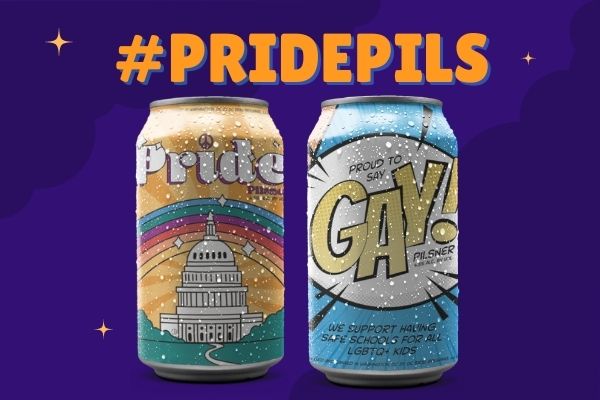
Pride is back and it is time for you to help us choose the 2022 Pride Pils can design. This year DC Brau, DC’s original craft brewery, has partnered with local artist Chord Bezzera of District Co-Op to design this year’s Pride Pils. Chord has designed two distinct cans for the public to choose from.
Restaurants, bars and retailers will be selling the specially branded DC Brau Pride Pils cans for the fifth year with 100% of the proceeds going to benefit SMYAL (smyal.org) and The Blade Foundation (bladefoundation.org). Since 2017, DC Brau has donated a total of $42,083.92 and sold over 81,576 cans through the Pride Pils program. This year the can labels have been generously donated by Blue Label Packaging Company.
The public can vote below or at washingtonblade.com/pridepils through March 31st. The winning design will be unveiled in June and will be available across the city for purchase during DC Pride.
Design 1 – Pride Pilsner
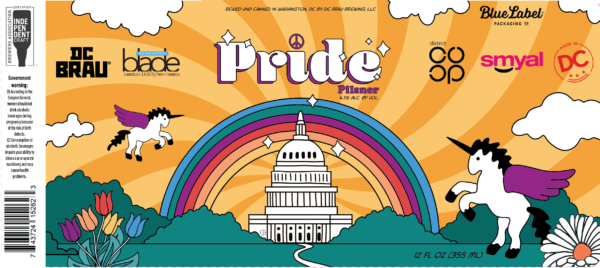
Design 1 was inspired by the 1970s, a transformational decade for LGBTQ+ culture that saw the rise of activism and the establishment of Pride Week. This design reflects the vibrant optimism and that freedom of thought that is still needed today.
Design 2 – Proud to Say Gay Pilsner
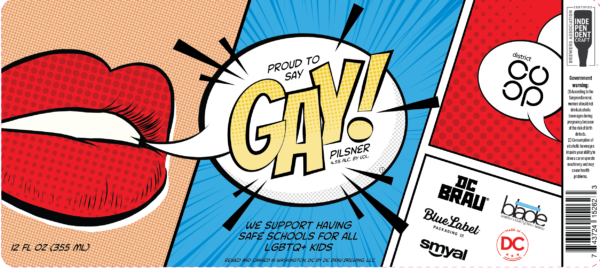
Design 2 is in direct response to the passage of Florida’s “Don’t Say Gay” bill, which limits what classrooms can teach about sexual orientation and gender identity thereby disenfranchising vulnerable youth. This design seeks to counter the bills harmful message and celebrate Pride across the LGBTQ+ community.
Vote below or by clicking HERE.
The Washington Blade was founded in 1969 and is known as the “newspaper of record” for the LGBT community both locally and nationally. For more information, visit washingtonblade.com and follow on Facebook (@WashingtonBlade) & Twitter (@WashBlade).
DC Brau has been producing award-winning craft beer at its brewery in Northeast DC since 2011. For more information, visit www.dcbrau.com, and follow on social media @dcbrau.
District CoOp is a collection of artists celebrating design, diversity and the culture of D.C. We’re all about supporting and empowering local artists and creating a brand for the people by the people. All designs are available in both men’s and women’s and as a tank or crew. Follow us on Instagram (@District_CoOp) or Facebook (@DistrictCoOp).



Theater
National tour of ‘Gatsby’ comes to National Theatre
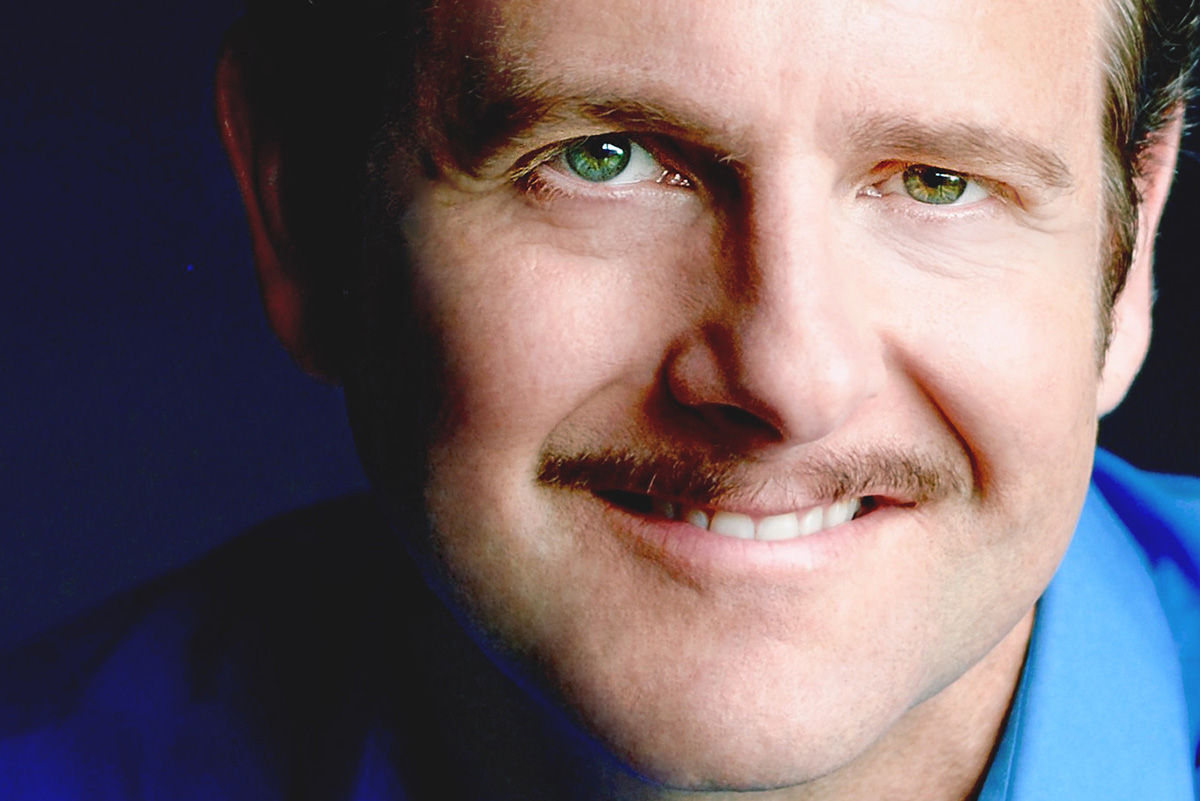
Out actor Edward Staudenmayer talks playing the show’s gangster
‘The Great Gatsby’
May 12-24
The National Theatre
1321 Pennsylvania Ave., N.W.
$59-$196
Thenationaldc.com
Often dubbed “The Great American Novel” for its depiction of ambition and self-invention alongside the reversals of success, F. Scott Fitzgerald’s “The Great Gatsby” says it all in a fast read.
Set against the excesses and energy of the Roaring Twenties, “The Great Gatsby,” novel and now the same-titled hit Broadway musical with a jazz/pop original score by Jason Howland and Nathan Tysen, tells the story of Nick Carraway and his friendship with Jay Gatsby, an enigmatic millionaire intent on reuniting with ex-lover, Daisy Buchanan.
It was during a four-month 2025 run in Seoul, South Korea, that out actor Edward Staudenmayer first played the show’s heavy, Meyer Wolfsheim, a gangster who helped Gatsby make his murkily acquired fortune. As Meyer, Staudenmayer opens the second act with, appropriately enough, “Shady.”
Now three months into a year-long North American tour, the show is poised to enjoy a brief run at Washington’s National Theatre (5/12-5/24).
While putting on his eyeliner prior to a recent Wednesday matinee at Chicago’s Cadillac Palace Theatre, the upstate New York-based actor shared about Gatsby and a life in theater.
WASHINGTON BLADE: Despite your good looks and terrific voice, you’re rarely the leading the man. How is that?
EDWARD STAUDENMAYER: I’m definitely a character man. I’ve been painting lines on my face to play old men since I was in high school. I was the youngest freshman in college playing old Uncle Sorin [in Chekhov’s “The Seagull”].
There have been many villains. Some darker than others. Meyer Wolfsheim is a very bad guy, but he doesn’t haunt me once I’m offstage. I play a lot of pickleball.
BLADE: Is it true that like so many of Fitzgerald’s characters, Wolfsheim is famously based on someone the writer encountered in life.
STAUDENMEYER: That’s true, Wolfsheim is pretty much a direct portrayal of real-life mobster and 1919 World Series fixer [Arnold Rothstein].
BLADE: When did the 1925 novel first surface on your radar?
STAUDENMAYER: Like many of us, I was assigned “The Great Gatsby” in high school. It was short, and filled with sex and illicit activities. I thought it was great. Definitely wasn’t a Judy Blume novel.
Interestingly, the book wasn’t originally a huge a success for Fitzgerald, but because it was about war and having the girl at home, they gave it to GIs leaving for WWII. After returning, a lot of those guys went on the GI Bill and became English teachers. They assigned the book to their students.
BLADE The idea that the book’s first-person narrator, Nick Carraway, is gay and enamored with Jay Gatsby is long discussed among readers and scholars. Does the musical touch on that?
STAUDENMAYER: Yes, there’s conjecture about Jay and Nick, and it’s implied in our show. It’s also implied about Jordan Baker, Jay’s fleeting romantic interest. Ultimately, she’s a confirmed bachelor, and a professional golfer who only wears pants.
Our performers are really good. Josh Grasso who plays Nick is fantastic. I’ve had to stop watching him in his last scene; it’s not good for Meyer Wolfsheim to take his curtain call crying. Our Gatsby, Jake David Smith, is good too. He’s gorgeous like Superman and sings like an angel.
BLADE: Do you ever imagine backstory for your characters whose sexuality is undefined?
STAUDENMAYER: I do, but not with Wolfsheim. I don’t see it. I’m trying to be as butch as possible with this ruthless killer.
BLADE: Have you had to do that in your career?
STAUDENMAYER: For a long time, I wore a mask to hide my gayness. I worked hard on being believable, that I was into the girl or that I was a tough guy.
It’s a different world now, and it’s so refreshing to be around the younger actors today; they’re remarkably open and comfortable.
BLADE: What was your coming of age like?
STAUDENMAYER: I played high school football in Palm Springs [he chuckles, alluding to the arid gay mecca], and I was pretty good too. But much to the chagrin of my parents and coaches, I quit the team to act in our senior year play. My super butch dad played semi-pro football and he was an ex-cop. I’m named after him. While I didn’t become my dad, I’ve played him often on stage. He was a true Gaston [the bumptious rival in “Beauty and the Beast”]. And like Gaston, he used antlers in all his interior decorating.
BLADE: Did he live to see your success in theater?
STAUDENMAYER: He did. Life was challenging growing up but the last 10 years of his life we couldn’t get off the phone with each other [his voice catches with emotion]. He accepted me entirely, and we became very close.
BLADE: Looking ahead, is there a part you’d especially like to play?
STAUDENMAYER: Like all baritones I’d love to play Sondheim’s “Sweeney Todd.” I’ve come close but it hasn’t happened yet. There’s still time.
Music & Concerts
DJ Chanel Santini is bringing the heat and some gender-fluid diversity to XBIZ Miami
Pool party celebrates most charismatic personalities, creative artists in adult entertainment
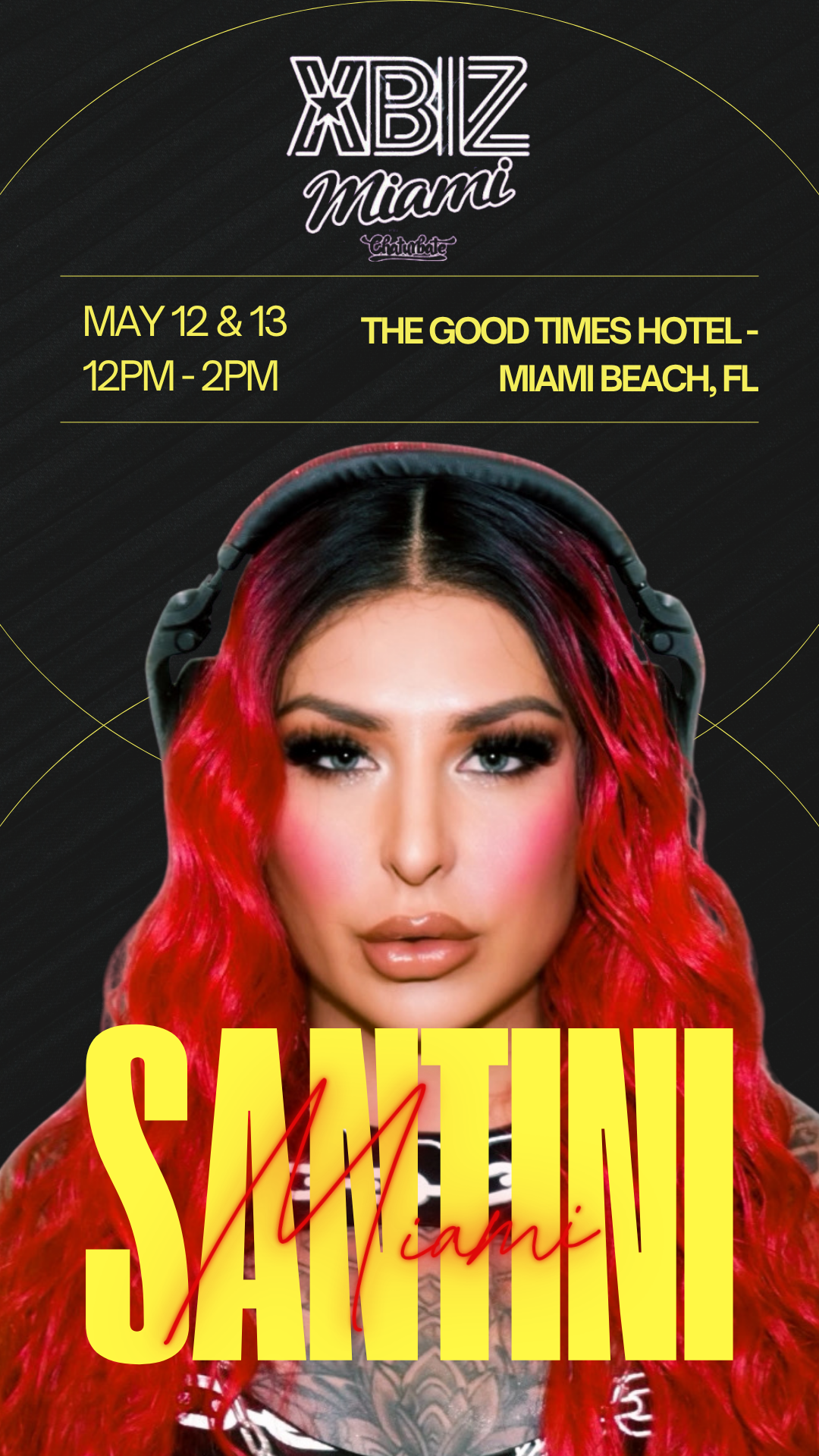
Chanel Santini has crossed over to being a DJ, performing at clubs all over the country. Now known as Santini, they will be making music and hyping the pool party, DJ-ing at XBIZ, the conference for adult creators and digital players, in Miami.
Taking place on Monday to Wednesday, the event honors the most charismatic personalities and creative artists in entertainment.
“I am honestly so excited — getting to DJ in Miami Beach is literally a DJ’s dream!” Santini told the Los Angeles Blade.
“I thought it would be a good opportunity because I haven’t been around my industry peers in a long time. It’s a great event to network and show off the new me!” said Santini.
While Santini is unsure what music they will be playing, they want everyone to have a good time. “My goal is to ignite the dance floor and play great music that everyone will vibe to. My sound includes house music, bass house, tech house, and I always like to throw a little bit of hip-hop in my sets.”
Santini loves how DJ-ing brings people together.
“Music really ignites us all! It is so universal, no matter what language you speak. I think it’s the best high in the world when you play a banger track, and everybody on the dance floor screams loudly. You can’t describe that feeling until you’re up there on that stage.”
Santini describes DJs as the “modern rock stars” in today’s world.
“I always feel like such a superstar when I’m up on that stage. The best feeling is after my set when I have people come up to me and say, ‘Thank you for sharing that amazing music.’ That’s how you know that you’re a good DJ — I love when I get those types of compliments!”
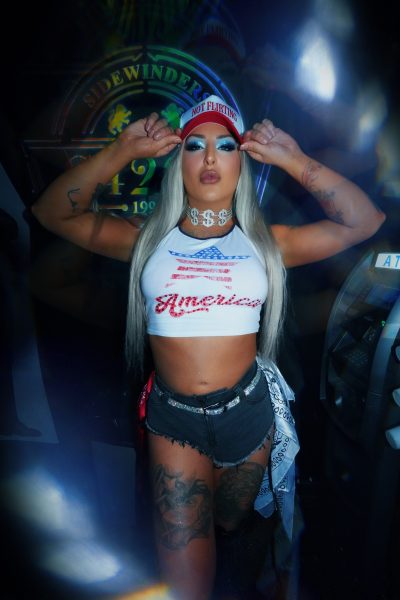
While sometimes it’s hard to please everyone’s musical tastes, Santini endeavors to try! “You just have to go out there and give it your all and be the best DJ that you can be,” he noted.
Santini, who had previously identified as transgender, recently decided to transition back to being gender fluid.
“It’s definitely been a journey, but I’m definitely happier in my own skin now than I was. I don’t go by he/him pronouns. I don’t go by they/them either. I guess I just really don’t have a preference. Whatever you see me as is your opinion. I’ve learned over the years that I’m not trying to be one specific thing. I’m just Santini. I’m just me.”
Santini acknowledged they felt respected more when dressed as a woman.
“I think it’s just because femininity runs the world. When I started to de-transition, I felt like I had to just be a boy all the time. But I’ve realized over the years that I don’t need to stick to one specific thing. I am always gonna be feminine, and that’s OK.”
Recently, Santini has been embracing their feminine side more.
“I definitely feel more comfortable in female presentation, and more powerful when I’m on stage dressed as Chanel. I love DJ-ing in drag because there are so many straight male DJs in the world. It’s almost like a superhero when he puts on his cape! I think it makes me confident and stand out more as an artist.”
And because Santini loves makeup and fashion, they can incorporate that into their sets. “I’m not just bringing you good vibes and good music. I’m bringing you a show/ production!”
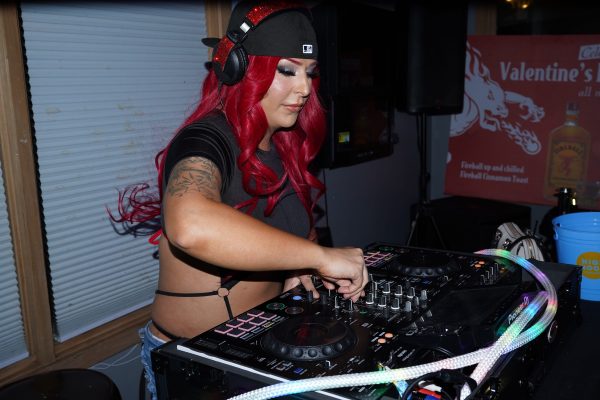
Santini is already working on big plans for the future.
“I’m opening up for a huge Pride block party in my hometown, Albuquerque, N.M., on June 12 and 13. It’s a two day festival and I’m super excited for this opportunity. I’m even hiring backup dancers and a choreographer.”
Santini plans to go “all out” for this show.
“It’s gonna be the biggest crowd that I’ve ever played for,” Santini enthused. “I’m putting my heart and soul into this performance, especially because it’s Pride in my hometown, and that means so much to me. I know the younger me would be so proud.”
Santini remembers going to Pride when they were younger and telling themself they couldn’t wait to be up on that stage.
“I’m truly living my dream right now, and I’m so excited for the future. The last 10 years of being in the adult entertainment business have been great and have given me major success. But I always knew that I didn’t want to be in this industry for long.”
Santini acknowledged that, in the recent past, it was a struggle.
“I’ve been trying to find myself and figure out what I wanna do next with my life. Now that I’ve found this passion for DJ-ing, it makes me want to go far in this business.”
In addition to being a DJ/artist, Santini is starting college next semester.
“I’m gonna get my degree in audio engineering,” Santini enthused. “I can’t wait to start producing my own tracks. I especially can’t wait till the day I’m headlining a major festival! I know with a little bit of patience and hard work that I can get there! I just have to continue believing in myself.”
Santini wanted to thank all of their fans for their support. “Truly, if it wasn’t for them, I wouldn’t be able to fund my art in the way that I have. I’m truly grateful. And I’m excited for the future!”
Out & About
Learn more about queer love
Friends of Dorothy Cafe hosts event at City-State Public House
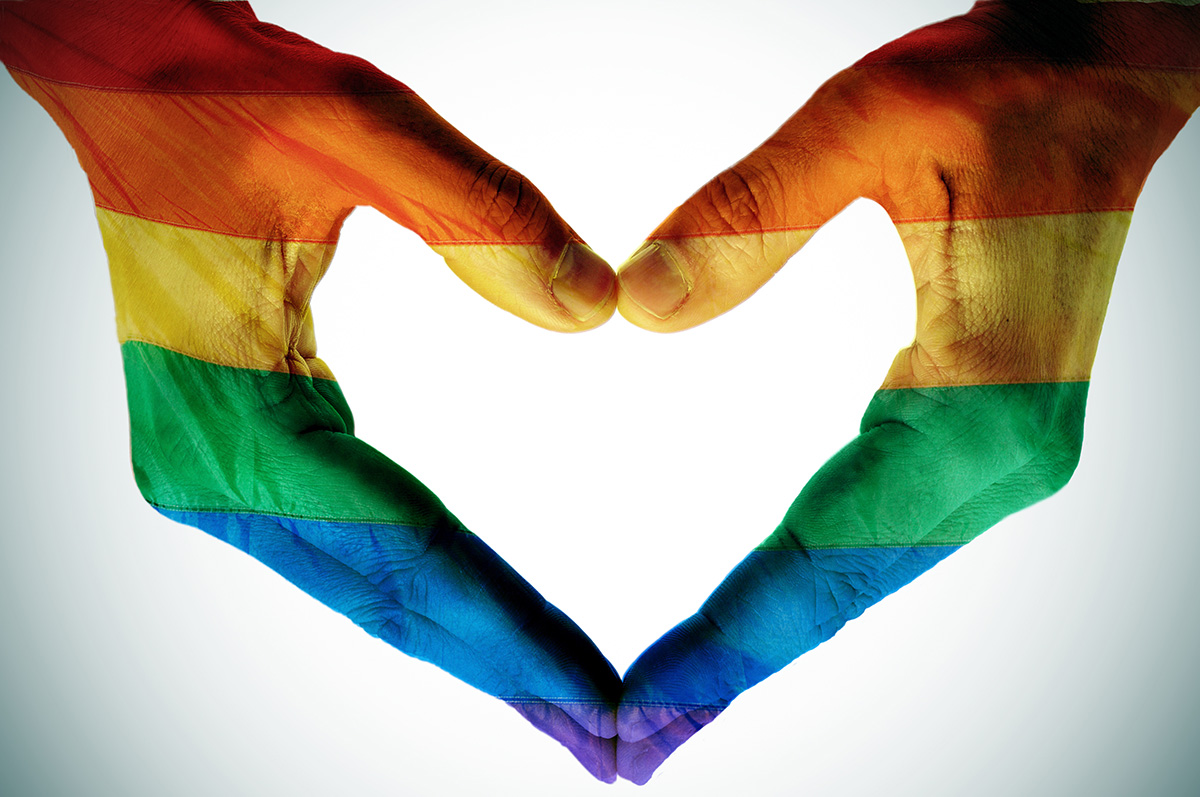
Friends of Dorothy Cafe will host “Living History: How We Loved” on Thursday, May 14 at 7:30 p.m. at City-State Public House.
Guests will hear how queer and trans people have loved and cared for one another, especially when legal, medical, and social systems did not recognize those relationships. We’ll reflect on chosen family, long-term partnerships before marriage equality, caregiving during the AIDS crisis, hidden romances, friendship as survival, chosen family, and the loves that changed the course of our lives. This evening is about honoring lived experience, preserving community memory, and strengthening the bridge between generations.
Tickets are $24.57 and are available on Eventbrite.

National tour of ‘Gatsby’ comes to National Theatre

DJ Chanel Santini is bringing the heat and some gender-fluid diversity to XBIZ Miami

New Hungarian prime minister takes office

Comings & Goings

Learn more about queer love

DOE investigates Smith College’s trans-inclusive policy

Key West Pride’s state funding pulled

PHOTOS: Miss Gay Western Maryland

Barney Frank on trans rights, 2028, and the need to ‘reform the left’