Sports
British Triathlon bans transgender women from competing with other women
Trans activists, athletes have condemned decision
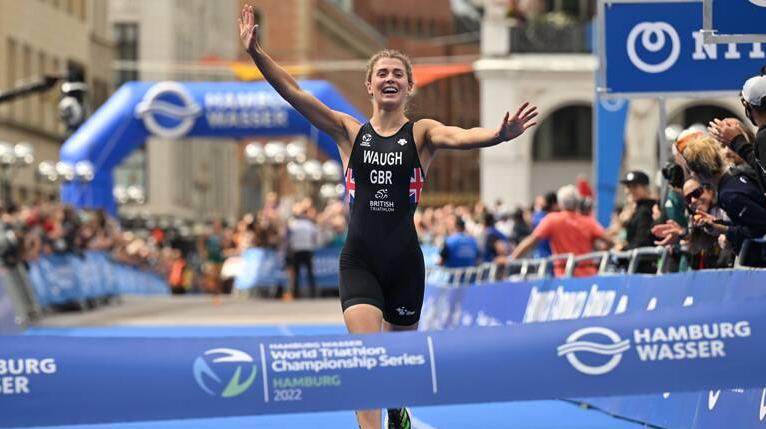
Organizers of Great Britain’s version of the combined sports of swimming, biking and running — the Triathlon — have made a landmark decision to resolve the question of whether transgender women athletes can compete with other women.
On July 6, they issued a new policy that creates a new, separate category, in which transgender and nonbinary athletes can compete alongside men, women and anyone who wishes to race.
But starting Jan. 1, 2023, trans female athletes can no longer compete with cisgender women. They will be banned from entering the new female category according to the new policy, which says, “Only people who are the female sex at birth will be eligible to compete in the female category.”
American trans athlete and activist Chris Mosier was swift to condemn the shift as transphobia.
By creating a transphobic policy, British Triathlon is showing it not only tolerates transphobic behavior, it is actually leading the way. Policies that ban trans people encourage transphobia towards trans people.
— The Chris Mosier (@TheChrisMosier) July 6, 2022
British trans advocates at the Trans Legal Project said British Triathlon made the change because they believe, “all trans women are appropriately classed as men not women.”
The ‘open’ category has been created for men to compete and they will likely make up nearly 100 percent of it. It is effectively the male category. Trans women will be included in it. This is can only be because @BritTri believes all trans women are appropriately classed as men not women.
— Trans Legal Project (@TransLegalProj) July 7, 2022
While admitting that scientific research regarding trans athletes is “somewhat limited,” officials point to findings that mirror talking points argued by opponents of transgender inclusion, even citing two of the most notorious critics: Drs. Emma Hilton and Tommy Lundberg.
“The science that does currently exist strongly challenges the idea that testosterone suppression alone sufficiently removes the retained sporting performance advantage of transwomen (when compared with pre-transition and/or cis women),” say the Triathlon officials.
However, they also cite research by Joanna Harper, a trans woman working at Loughborough University in the U.K. who also happens to be a trans athlete. The study she conducted concludes that the strength of trans women remains “above that observed in cisgender women, even after 36 months” of hormonal therapy. But Harper told the Los Angeles Blade back in March that there’s more to it than that.
“Although trans women do maintain athletic advantages after hormone therapy, there is no indication that these advantages have led to an overrepresentation of trans women at any level of sports,” she wrote in an email to the Blade. “We allow advantages in sport but not overwhelming advantage of one group over another when we divide sports into categories. It appears that hormone therapy reduces the advantages held by trans women to the point where we can have meaningful competition between trans and cis women in most sports.”
Harper has several more studies into trans athletes underway. But British Triathlon isn’t waiting, and plans to put this new solution into effect come the new year. Harper explained that a “level playing field in sport is illusory,” and that sports organizers who are moving swiftly to respond to complaints about trans athletes are forgetting something important she’s found:
“Trans women do maintain advantages over cis women, but also face disadvantages because their larger bodies are now being powered by reduced muscle mass and reduced aerobic capacity. These advantages and disadvantages play out differently in various sports, but trans women are not on the verge of taking over women’s sport.”
Organizers claim they are not discriminating against trans athletes with this new policy. “British Triathlon is determined that the transgender community can access triathlon without fear of discrimination or prejudice,” they said in a statement. “People who identify as transgender have the right to be treated with dignity and respect and British Triathlon operates a zero-tolerance policy on homophobia, biphobia, and transphobia.”
Under the existing policy, which terminates on Dec. 31, trans women who are 17 and older and have medically lowered their testosterone to female levels can compete with cis women, and trans men are allowed to compete with men. Once the new categories go into effect on New Year’s Day, trans men can choose to compete in the female category or in the new open category.
Recreational triathlon events will not be impacted, according to the new policy; participants can take part in the gender matching their identity.
Read the full policy announcement by clicking here.



Sports
New IOC policy bans trans women from Olympics
New regulation to be in effect at 2028 summer games in Los Angeles
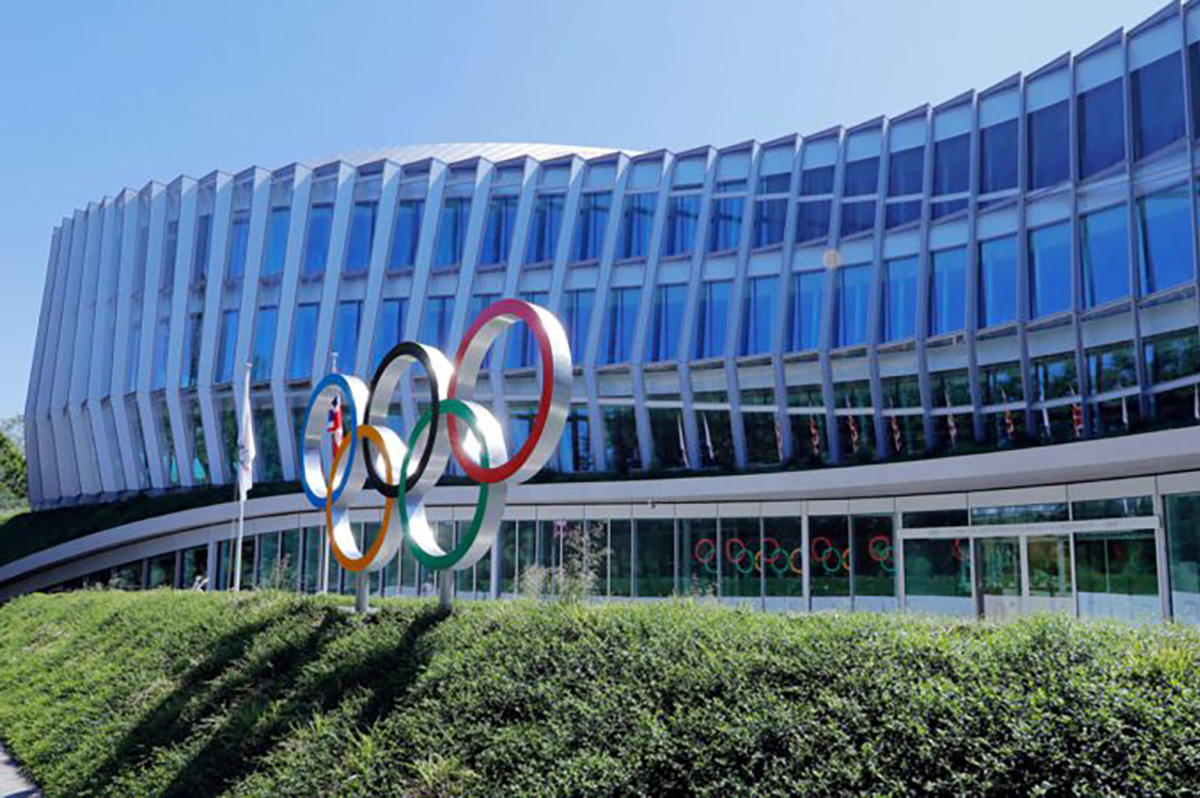
The International Olympic Committee on Thursday announced it will not allow transgender women from competing in female events at the Olympics.
“For all disciplines on the Sports Program of an IOC event, including individual and team sports, eligibility for any Female Category is limited to biological females,” reads the new policy.
The policy states “eligibility for the Female Category is to be determined in the first instance by SRY Gene screening to detect the absence or presence of the SRY Gene.”
“On the basis of the scientific evidence, the IOC considers that the SRY (sex-determining Region Y) Gene is fixed throughout life and represents highly accurate evidence that an athlete has experienced or will experience male sex development,” it reads. “Furthermore, the IOC considers that SRY Gene screening via saliva, cheek swab or blood sample is unintrusive compared to other possible methods. Athletes who screen negative for the SRY gene permanently satisfy this policy’s eligibility criteria for competition in the Female Category.”
The policy states the test “will be a once-in-a-lifetime test” unless “there is reason to believe a negative reading is in error.”
The new regulation will be in place for the 2028 Summer Olympics in Los Angeles.
“I understand that this a very sensitive topic,” said IOC President Kirsty Coventry on Thursday in a video. “As a former athlete, I passionately believe in the rights of all Olympians to take part in fair competition.”
“The policy that we have announced is based on science and it has been led by medical experts with the best interests of athletes at its heart. The scientific evidence is very clear: male chromosomes give performance advances in sport that rely on strength, power, or endurance,” she added. “At the Olympic Games, even the smallest margins can be the difference between victory and defeat. So, it is absolutely clear that it would not be fair for biological males to compete in the female category. In addition, in some sports it would simply not be safe.”
(Video courtesy of the IOC)
Laurel Hubbard, a weightlifter from New Zealand, in 2021 became the first trans woman to compete at the Olympics.
Imane Khelif, an Algerian boxer, won a gold medal at the 2024 Summer Olympics in Paris. Khelif later sued JK Rowling and Elon Musk for cyberstalking after they questioned her gender identity.
Ellis Lundholm, a mogul skier from Sweden, this year became the first openly trans athlete to compete in any Winter Olympics when he participated in Milan Cortina Winter Olympics in Italy.
President Donald Trump in February 2025 issued an executive order that bans trans women and girls from female sports teams in the U.S.
The U.S. Olympic and Paralympic Committee last July banned trans women from competing in female sporting events. Republican lawmakers have demanded the IOC ban trans athletes from women’s athletic competitions.
“I’m grateful the Olympics finally embraced the common sense policy that women’s sports are for women, not for men,” said U.S. Sen. Tom Cotton (R-Ark.) on X.
An IOC spokesperson on Thursday referred the Washington Blade to the press release that announced the new policy.

More than a dozen LGBTQ athletes won medals at the Milan Cortina Winter Olympics that ended on Sunday.
Cayla Barnes, Hilary Knight, and Alex Carpenter are LGBTQ members of the U.S. women’s hockey team that won a gold medal after they defeated Canada in overtime. Knight the day before the Feb. 19 match proposed to her girlfriend, Brittany Bowe, an Olympic speed skater.
French ice dancer Guillaume Cizeron, who is gay, and his partner Laurence Fournier Beaudry won gold. American alpine skier Breezy Johnson, who is bisexual, won gold in the women’s downhill. Amber Glenn, who identifies as bisexual and pansexual, was part of the American figure skating team that won gold in the team event.
Swiss freestyle skier Mathilde Gremaud, who is in a relationship with Vali Höll, an Austrian mountain biker, won gold in women’s freeski slopestyle.
Bruce Mouat, who is the captain of the British curling team that won a silver medal, is gay. Six members of the Canadian women’s hockey team — Emily Clark, Erin Ambrose, Emerance Maschmeyer, Brianne Jenner, Laura Stacey, and Marie-Philip Poulin — that won silver are LGBTQ.
Swedish freestyle skier Sandra Naeslund, who is a lesbian, won a bronze medal in ski cross.
Belgian speed skater Tineke den Dulk, who is bisexual, was part of her country’s mixed 2000-meter relay that won bronze. Canadian ice dancer Paul Poirier, who is gay, and his partner, Piper Gilles, won bronze.
Laura Zimmermann, who is queer, is a member of the Swiss women’s hockey team that won bronze when they defeated Sweden.
Outsports.com notes all of the LGBTQ Olympians who competed at the games and who medaled.
Sports
US wins Olympic gold medal in women’s hockey
Team captain Hilary Knight proposed to girlfriend on Wednesday
The U.S. women’s hockey team on Thursday won a gold medal at the Milan Cortina Winter Olympics.
Team USA defeated Canada 2-1 in overtime. The game took place a day after Team USA captain Hilary Knight proposed to her girlfriend, Brittany Bowe, an Olympic speed skater.
Cayla Barnes and Alex Carpenter — Knight’s teammates — are also LGBTQ. They are among the more than 40 openly LGBTQ athletes who are competing in the games.
The Olympics will end on Sunday.

Kristi Noem ‘devastated’ as husband’s alleged fetish spending surfaces

Colo. activists condemn SCOTUS conversion therapy ruling

Is Ghana’s selective justice a human rights contradiction?

Supreme Court ruling against conversion therapy bans could affect Md. law

Glisten report details hostile climate for LGBTQ students

‘Out for McDuffie’ event held at D.C. gay bar

The Oscar-losing performance that’s too good to miss

‘Jonah’ an undeniably compelling but unusual memory play

PHOTOS: ‘No Kings’ rally and march