District of Columbia
D.C. judge orders Casa Ruby placed under temporary receivership
Wanda Alston Foundation, Safe Haven being considered to take over
A D.C. Superior Court judge on Thursday, Aug. 11, approved a request by the Office of the D.C. Attorney General to place D.C.’s LGBTQ community services center Casa Ruby under temporary receivership to stabilize its finances and determine whether it can resume operating after it shut down its programs last month.
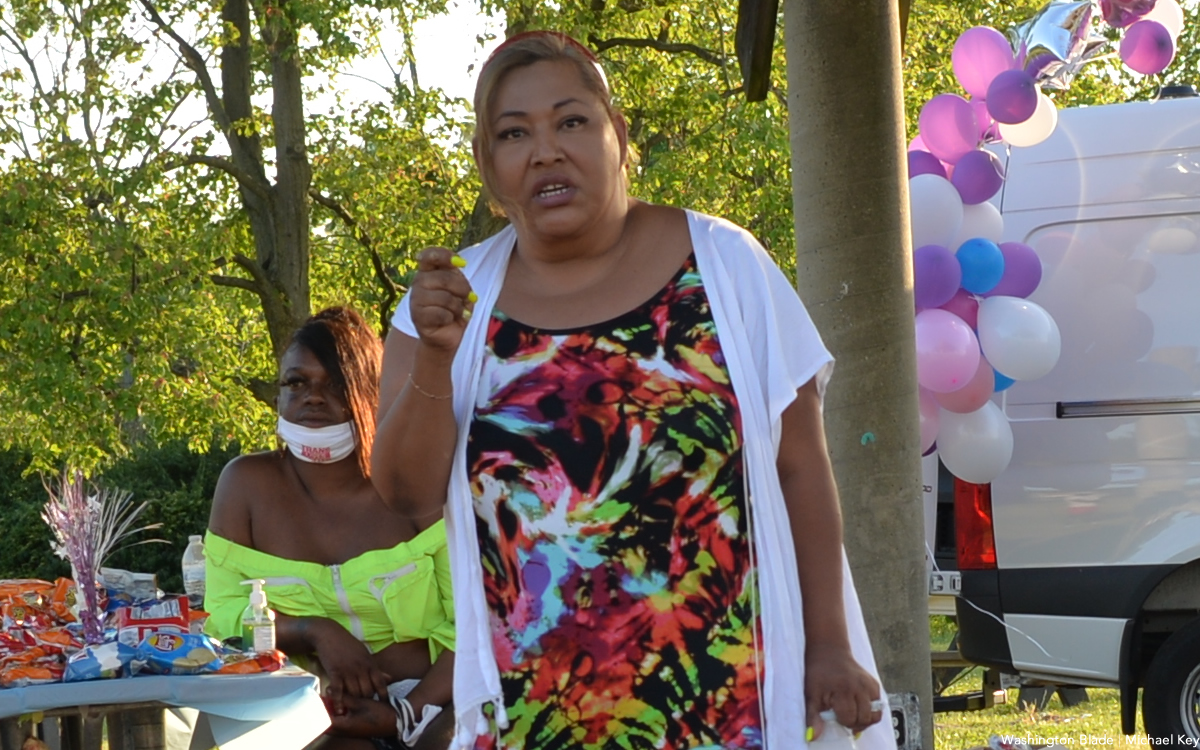
Among those who spoke at the virtual hearing was Casa Ruby founder and former executive director Ruby Corado, who said she did not oppose a limited receivership order. Corado spoke through an audio connection rather than appearing on video as did the judge and representatives of the Attorney General’s Office.
Also appearing on video for the hearing were representatives of two LGBTQ organizations that the AG’s office has named as candidates to become the Casa Ruby receiver – the D.C.-based Wanda Alston Foundation and the Baltimore-based Safe Haven, which has announced plans to open a facility in D.C.
In response to a request by Adam Gitlin, chief of the AG office’s Public Integrity Section, Judge Danya A. Dayson agreed to give the AG’s office one more day to decide which of the two groups would be named as the Casa Ruby receiver. After listening to testimony by June Crenshaw, the Alston Foundation executive director, and Iya Dammons, Safe Haven’s founder and executive director, Dayson said either of the two groups would be acceptable to her as the receiver.
The judge directed the AG’s office to submit a proposed order naming the receiver by the end of the business day on Friday, Aug. 12.
Dayson’s ruling approving a receivership for Casa Ruby came eight days after she approved a separate request by the D.C. AG’s office calling for a temporary restraining order to freeze all bank accounts and PayPal accounts held by Casa Ruby.
The call for both the restraining order and the receivership were introduced in court by the AG’s office on Aug. 1 in an emergency motion asserting that both Casa Ruby and Corado had violated the city’s Nonprofit Corporations Act in connection with their financial dealings.
“Casa Ruby’s operations suggest clear patterns of gross mismanagement and poor oversight of its programs and finances,” D.C. Attorney General Karl Racine said in a statement at the time the motion was filed in court. “Instead of fulfilling its important mission of providing transitional housing and support to LGBTQ+ youth, Casa Ruby diverted hundreds of thousands of dollars of District grants and charitable donations from their intended purpose,” Racine said.
He was referring to allegations in the AG office’s civil court filing that Corado used funds from the D.C. Casa Ruby to open a Casa Ruby LGBTQ shelter in El Salvador without any documented authorization from the Casa Ruby board of directors, which the court filings say rarely met and failed to provide oversight over Corado or Casa Ruby.
During the Aug. 11 virtual court hearing, Corado disputed the allegations, saying among other things, that claims that she was not in communication with the Casa Ruby board was a “misconception.”
Corado did not say in her remarks at the virtual court hearing where she is currently residing. Members of the Casa Ruby staff have said Corado had been in Salvador for most of the time this year and in recent weeks the staff was unable to reach her to discuss Casa Ruby related business. Staff members also reported that they had not been paid for over a month and a financial crisis prevented them from continuing any of Casa Ruby’s remaining programs.
In her comments at the Aug. 11 hearing, Corado said the funding crisis was caused by D.C. government agencies that she said failed to reimburse Casa Ruby close to $150,000 in grant funds that she said the city was committed to pay for services that Casa Ruby had already performed.
But email correspondence between officials with the D.C. Department of Human Services, which has provided most of the Casa Ruby grant funding, and Casa Ruby officials other than Corado, indicates the funding was withheld because Casa Ruby failed to comply with various grant requirements, including not having a functioning board of directors. One or more of the employees released the correspondence to the media.
“I believe that when the facts, as someone stated earlier, stop being allegations and actually become facts that you, Your Honor, will have an opportunity to understand the ramification of the allegations,” Corado said during the hearing. “There are people, including myself, who have received death threats over things that are not true,” she told the judge.
Gitlin of the AG’s office, while not specifically responding to Corado’s allegations, said his office has met the legal requirement needed to have Casa Ruby placed under receivership.
“In short, we do have reason to believe that Casa Ruby currently continues to be out of compliance with the Nonprofit Corporations Act, continues to be unable to meet its obligations, and its assets are in serious question,” he told the judge. “And so, we believe the requirements for the receivership statute have been met.”
He said the two groups under consideration to become the receiver are “both nonprofits in good standing with experience doing many of the services that Casa Ruby performed.” He added, “Both have pledged that even if they are not appointed receiver, they are happy to help because they care about the community that needs to be served.”
He concluded by saying the AG’s office would like whichever group is chosen as the receiver to “first assess the assets and liabilities that are outstanding for Casa Ruby, figure out whether a board can be reconstituted, and assess otherwise whether there is a path forward for the organizations.” Gitlin said the other option that the receiver should consider is whether its recommendation should be for “an orderly wind down in the way a nonprofit normally would” to end its operations.
Judge Dayson ordered that whichever group is chosen to be the receiver, which she was to approve the following day on Aug. 12, will be required to submit a report to the court on Sept. 13, 2022, on the status of its work. She scheduled a status hearing on the case for Sept. 29 at which time she directed Corado to arrange to have an attorney representing her.


District of Columbia
Mayor Bowser signs bill requiring insurers to cover PrEP
‘This is a win in the fight against HIV/AIDS’

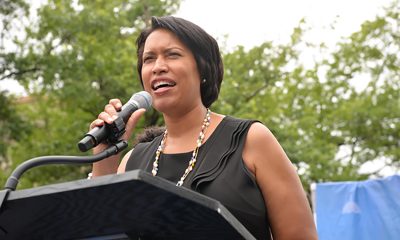
D.C. Mayor Muriel Bowser on March 20 signed a bill approved by the D.C. Council that requires health insurance companies to cover the costs of HIV prevention or PrEP drugs for D.C. residents at risk for HIV infection.
Like all legislation approved by the Council and signed by the mayor, the bill, called the PrEP D.C. Amendment Act, was sent to Capitol Hill for a required 30-day congressional review period before it takes effect as D.C. law.
Gay D.C. Council member Zachary Parker (D-Ward 5) last year introduced the bill.
Insurance coverage for PrEP drugs has been provided through coverage standards included in the Affordable Care Act, known as Obamacare. But AIDS advocacy organizations have called on states and D.C. to pass their own legislation requiring insurance coverage of PrEP as a safeguard in case federal policies are weakened or removed by the Trump administration, which has already reduced federal funding for HIV/AIDS-related programs.
Like legislation passed by other states, the PrEP D.C. Amendment Act requires insurers to cover all PrEP drugs approved by the U.S. Food and Drug Administration.
Studies have shown that PrEP drugs, which can be taken as pills or by injection just twice a year, are highly effective in preventing HIV infection.
“I think this is a win for our community,” Parker said after the D.C. Council voted unanimously to approve the bill on its first vote on the measure in February. “And this is a win in the fight against HIV/AIDS.”
District of Columbia
Blade editor to be inducted into D.C. Society of Professional Journalists Hall of Fame
Kevin Naff marks 24 years with publication this year
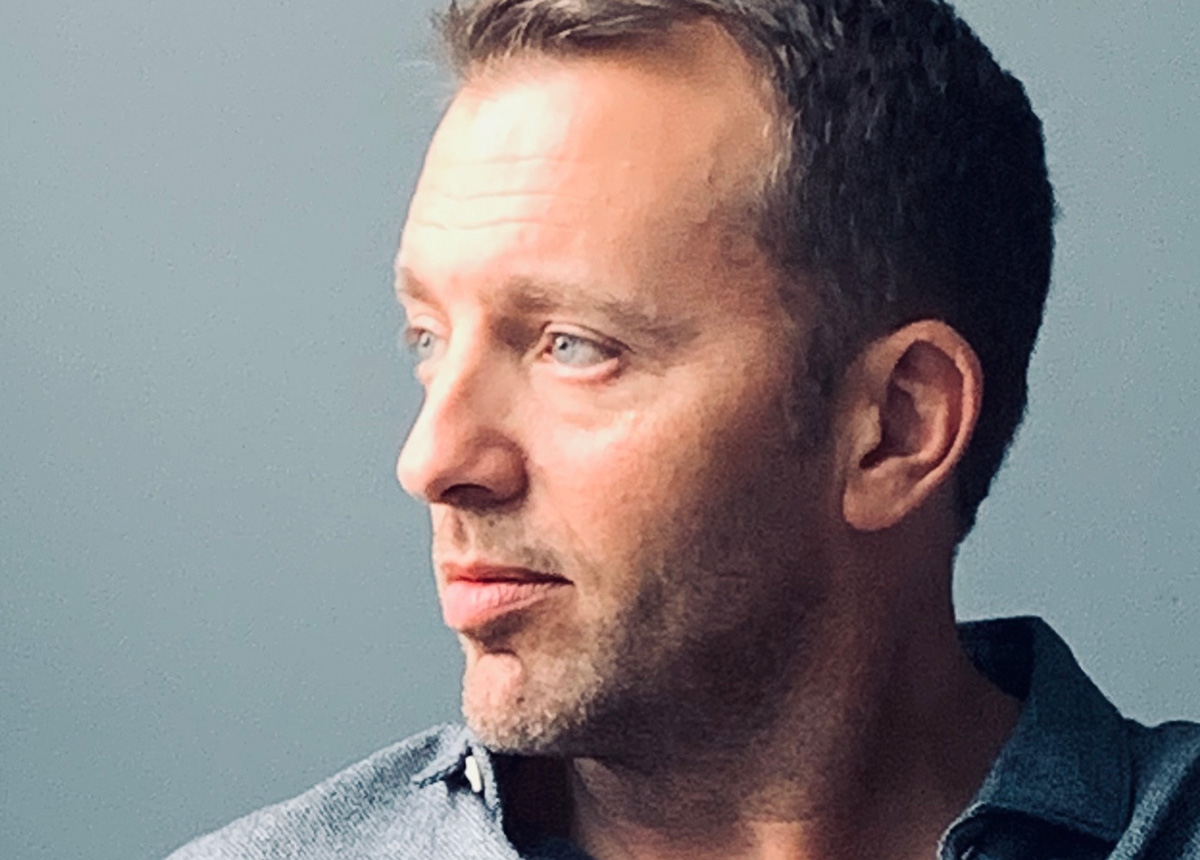
Longtime Washington Blade Editor Kevin Naff will be inducted into D.C.’s Society of Professional Journalists Hall of Fame in June, the group announced this week.
Hall of Fame honorees are chosen by the Society of Professional Journalists’ Washington, D.C., Pro Chapter. Naff and two other inductees — Seth Borenstein, a Washington-based national science writer for the AP and Cheryl W. Thompson, an award-winning correspondent for National Public Radio — will be celebrated at the chapter’s Dateline Awards dinner on Tuesday, June 9, at the National Press Club. The dinner’s emcee will be Kojo Nnamdi, host of WAMU radio’s weekly “Politics Hour.”
“I am tremendously honored by this recognition,” Naff said. “I have spent a lifetime in the D.C. area learning from so many talented journalists and am humbled to be considered in their company. Thank you to SPJ and to all the LGBTQ pioneers who came before me who made this possible.”
Naff joined the Blade in 2002 after years in print and digital journalism. He worked as a financial reporter for Reuters in New York before moving to Baltimore in 1996 to launch the Baltimore Sun’s website. He spent four years at the Sun before leaving for an internet startup and later joining the mobile data group at Verizon Wireless working on the first generation of mobile apps.
He then moved to the Blade and has served as the publication’s longest-tenured editor. In 2023, Naff published his first book, “How We Won the War for LGBTQ Equality — And How Our Enemies Could Take It All Away.”
Previous Hall of Fame inductees include luminaries in journalism like Wolf Blitzer, Benjamin Bradlee, Bob Woodward, Andrea Mitchell, and Edgar Allen Poe. The Blade’s senior news reporter Lou Chibbaro Jr. was inducted in 2015.
District of Columbia
As mayor’s race takes shape, candidates endorse LGBTQ equality
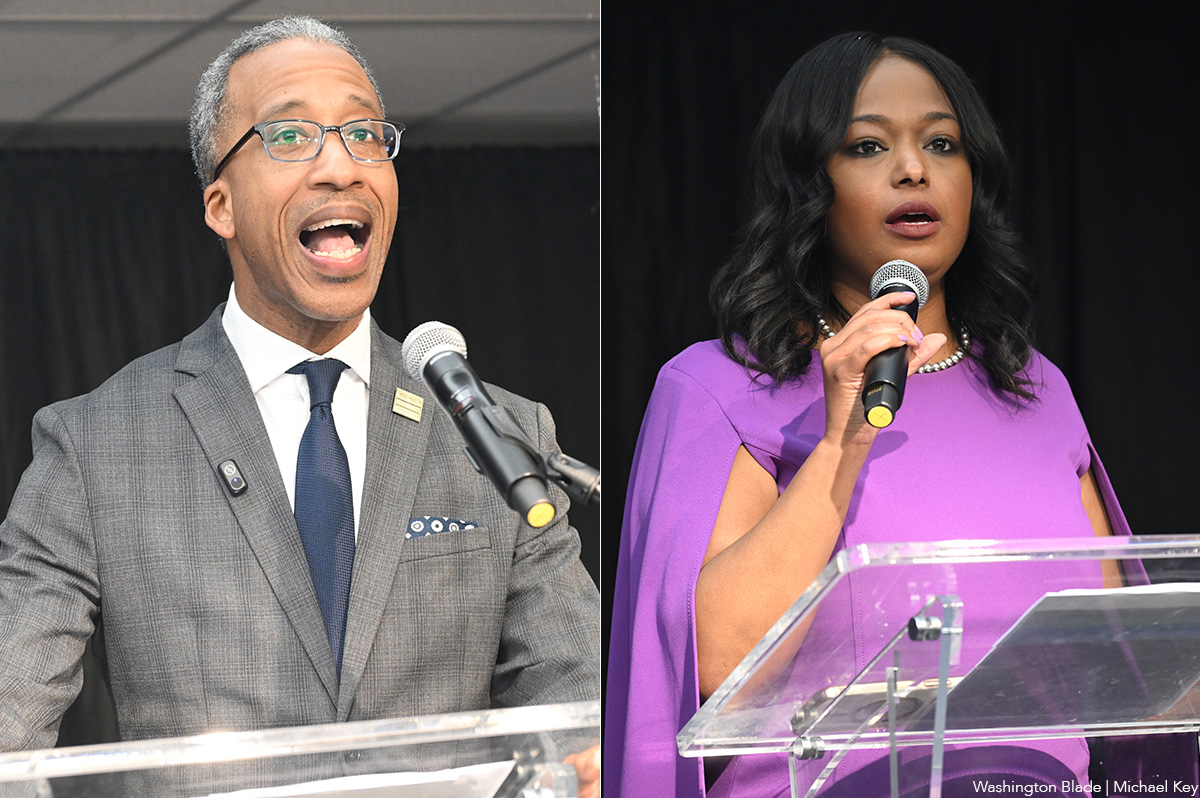
Like nearly all recent D.C. elections, LGBTQ voters will be choosing a candidate for mayor in 2026 from a list of mostly strong LGBTQ rights supporters in the city’s June 16 primary.
As of March 30, the D.C. Board of Elections’ list of candidates who submitted the required number of petition signatures for the June 16 primary ballot included 10 mayoral candidates: nine Democrats and one Statehood Green Party candidate.
Among those candidates, six, all Democrats, have issued statements expressing strong support for LGBTQ rights, including the two leading Democratic contenders, former D.C. Council member Kenyan McDuffie and current Council member Janeese Lewis George, who represents Ward 4.
One of the lesser-known Democratic candidates who released an LGBTQ supportive statement, Rini Sampath, a cyber security consultant, told the Washington Blade she identifies as queer, becoming one of the first known LGBTQ D.C. mayoral candidates to gain access to a major party primary ballot.
“We’re living in an extremely diverse community, an extremely unique community,” she told the Blade. “And being able to self-label, self-identify as queer is something that I just want to take pride in.”
Similar to McDuffie and Lewis George, Sampath released statements to the Blade and the Capital Stonewall Democrats, the city’s largest LGBTQ local political group, expressing support for LGBTQ rights and outlining plans for LGBTQ supportive policies if elected mayor.
Although many D.C. LGBTQ activists have said they have yet to decide whom to support for mayor, those who have decided appear to be divided between McDuffie and Lewis George. Most D.C. political observers consider McDuffie and Lewis George to be the two leading candidates in the mayoral race.
The other Democratic mayoral contenders who have released statements expressing support on LGBTQ issues include Gary Goodweather, a local real estate manager and developer who has been actively campaigning at LGBTQ events; Vincent Orange, a former At-Large and Ward 5 D.C. Council member; and Kathy Henderson, a longtime Ward 5 community activist and elected Advisory Neighborhood Commissioner.
The remaining two Democratic mayoral candidates, Hope Solomon, a former U.S. Department of Homeland Security contractor and Dupont Circle civic activist; and Ernest Johnson, a real estate broker and Ward 1 community activist, did not respond to inquiries from the Blade and Capital Stonewall Democrats seeking information about their position on LGBTQ related issues.
Robert Gross, the Statehood Green Party candidate who is running unopposed in the June 16 primary, also didn’t respond to inquires from the Blade about his position on LGBTQ issues.
D.C. Board of Elections records show that at least five Republican candidates filed papers to run for mayor in the June 16 GOP primary, but none of them remained as candidates as of March 30, when the election board issued its updated candidate list.
Just one of the five Republican candidates replied to an email message from the Washington Blade sent to all mayoral candidates in early March seeking their position on LGBTQ issues. That candidate, Esa Muhammad, whose website identifies him as an engineer, consultant, and local business owner, sent a reply expressing opposition to LGBTQ rights.
“Unfortunately, I do not support LGBTQ because The God only created 2 genders (Adam/Eve),” he wrote. “Anyway, I will be fair to you all despite your sick way of looking at life,” he stated.
Capital Stonewall Democrats President Stevie McCarty said his group sent questionnaires to all the Democratic mayoral candidates as well as to Democrats running for other offices such as D.C. Council. Information posted on the group’s website shows only four of the mayoral candidates returned a complete questionnaire: McDuffie, Lewis George, Goodweather, and Sampath.
Each of them provides detailed information of their plans for supporting LGBTQ policies if elected and their record of support on LGBTQ issues. McCarty said the questionnaire responses for all candidates that submitted them can be accessed at outvotedc.org.
He said Capital Stonewall Democrats will hold virtual LGBTQ forums in April, including a mayoral forum on April 8. He said the group’s members will vote on the candidate endorsements online from April 20 through May 11, and the group expects to announce its endorsements May 14.
GLAA DC, formerly known as the Gay and Lesbian Activists Alliance of Washington, has issued candidate ratings for most D.C. elections since the 1970s, and the nonpartisan LGBTQ group was expected to issue ratings for mayoral candidates this year. But like in recent years, the group is expected to base its ratings on mostly non-LGBTQ issues, with a progressive, left-leaning perspective, according to a nine-page “Back to Basics GLAA Policy Brief 2026” that the group released in March.
The LGBTQ activists who are backing McDuffie or Lewis George appear to be gravitating to the two based on their political leanings separate from LGBTQ issues, just like voters in general. Lewis George, who identifies as a democratic socialist, is popular among LGBTQ and non-LGBTQ “progressives.”
McDuffie, who is seen as a more moderate candidate along the lines of current D.C. Mayor Muriel Bowser, is being supported by LGBTQ activists who hold those views, some of whom currently work in the Bowser administration.
Among Lewis George’s LGBTQ supporters are longtime Ward 8 community leader Philip Pannell and former Capital Stonewall Democrats president Howard Garrett. Among the LGBTQ McDuffie backers are longtime D.C. Democratic activists John Fanning and David Meadows.
Longtime D.C. LGBTQ Democratic Party activist Peter Rosenstein, who is supporting McDuffie, has raised concerns about Lewis George’s backing by the national group Democratic Socialists of America. In Facebook postings, Rosenstein points to the Democratic Socialists of America’s opposition to Israel as a country and said it is viewed by many in the Jewish community as promoting antisemitism. He has criticized Lewis George for not speaking out against that and for accepting the DSA’s endorsement.
In an interview with the Blade, Lewis George strongly disputed that assessment, saying she has been a strong ally and supporter of the Jewish community.
“I’m a member of the Metro DSA here in D.C. that I work with to fight for labor and for tenant rights,” she said. “I’m also a member of the Democratic Party,” she added, saying, “There are things that the Democratic Party does that I don’t agree with. There are things that the national DSA does that I don’t agree with. That’s a group that I work with.”
“But I want to be clear that I am running for mayor to represent all of our community, and that includes our amazing and historical Jewish community here in D.C.,” she said. “I have had the amazing opportunity to spend time at synagogues and talking to Jewish leaders and groups and institutions. And so, there should be no worry here.”
Following are short excerpts from the detailed statements five of the nine Democratic mayoral candidates submitted to the Capital Stonewall Democrats or the Washington Blade.
Kenyan McDuffie: “As mayor, every piece of legislation I sign, craft, or endorse should also encompass the interest and input of the LGBTQ community members and advocates…From housing to health care and everything in between… We have a dire crisis regarding the rise in homelessness especially among the youth in our LGBTQ communities. In my administration that simply cannot be the status quo and will not be…I have been a consistent champion for our LGBTQ community and will remain so as Mayor of D.C.’
Janeese Lewis George: “As mayor, I will protect our LGBTQ+ neighbors against federal attacks on their identity, including their health care…On the Council I have been a strong supporter of pro-LGBTQ+ bills, including making D.C. a sanctuary for people seeking gender-affirming health care as well as addressing discrimination and harassment in nightlife and hospitality…And as mayor, I am prepared to move up and win those fights – a fight for D.C. statehood, a fight for our true economy, and a real opportunity to uplift our Black queer and trans youth.”
Gary Goodweather: “A Goodweather administration will defend every D.C. law protecting LGBTQ residents. I will establish a Defend DC office to coordinate the District’s legal and public response to federal overreach, with LGBTQ+ protections explicitly within its mandate…My affordable D.C. plan will produce 50,000 new homes with 36,000 affordable units, and I will ensure LGBTQ+ youth housing programs are funded as a budget priority.”
Rini Sampath: “I am an immigrant, proud queer woman, and a 10-year resident of Washington, D.C…For me, LGBTQ+ voters including transgender and nonbinary residents, are not a separate or symbolic constituency; they are a core part of a broader, multiracial, cross-ward coalition rooted in in equity and opportunity.”
Vincent Orange: “I have a long and consistent record of supporting LGBTQ+ equality and inclusion in the District of Columbia, grounded in both policy and personal commitment. As the District’s Democratic Committeeman from 2006 to 2015, I publicly supported marriage equality and voted accordingly … During my time on the D.C. Council, I worked to advance protections for LGBTQ+ residents, including authoring and passing legislation to prohibit discrimination against transgender individuals in the workplace.”
Kathy Henderson: Kathy Henderson has maintained a consistent record of treating all members of the community with dignity, compassion, and respect, regardless of gender, race, ethnicity, sexual orientation, identity, political party, national origin, or ideology. Kathy Henderson embraced the late Wanda Alston as a colleague and good friend…Alston was the first director of the Mayor’s Office of LGBTQ Affairs and Henderson helped to organize and facilitate the first LGBTQ citizens summit.”

Mayor Bowser signs bill requiring insurers to cover PrEP

JD Vance to travel to Hungary next week

Pam Bondi ousted as attorney general

VIDEO: Gay journalist detained for booing Trumps at ‘Chicago’ opening night

Idaho Gov. signs harshest anti-trans bathroom bill in the country

‘Out for McDuffie’ event held at D.C. gay bar

‘Jonah’ an undeniably compelling but unusual memory play

The Oscar-losing performance that’s too good to miss

Thousands attend ‘No Kings’ protests in D.C.