Maryland
Moore expresses strong support for LGBTQ rights in Md. guv race
Democratic candidate backs full access for trans students in public schools
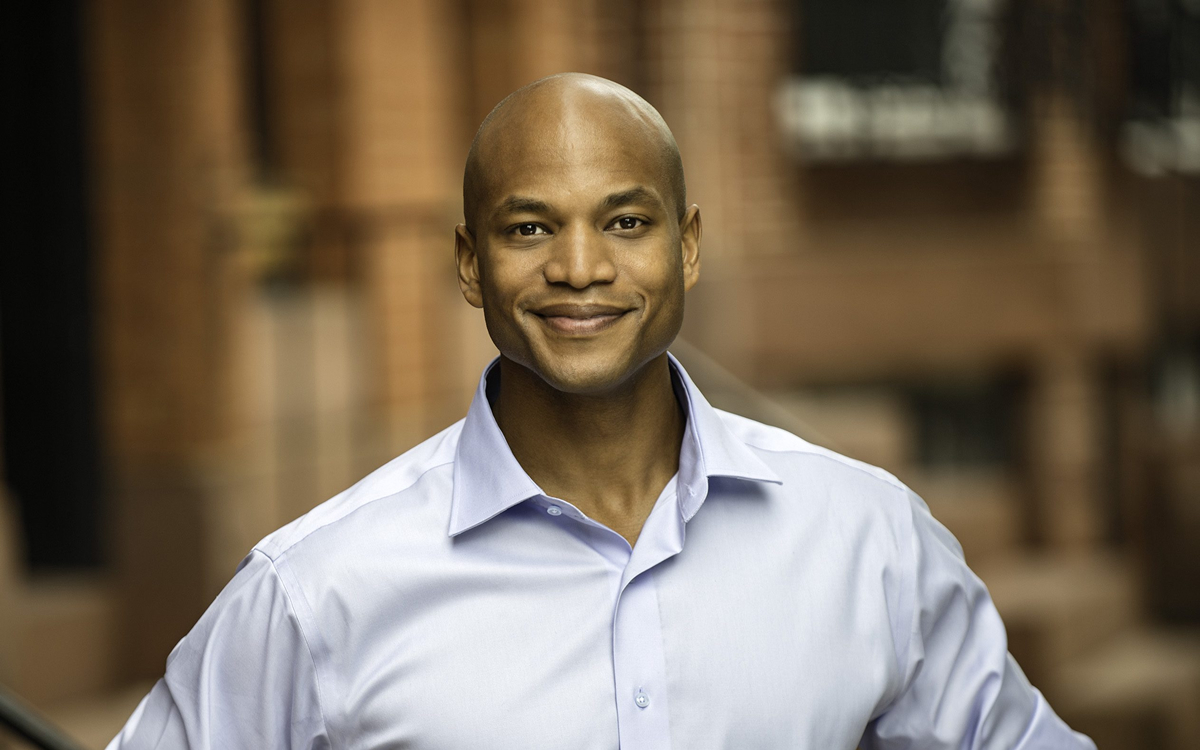
Since he launched his campaign for governor of Maryland earlier this year Democratic candidate Wes Moore has posted a page on his campaign website describing in detail his strong support for LGBTQ rights.
In a phone interview with the Washington Blade on Oct. 17, Moore said his Republican opponent, Dan Cox, has argued that those who support the rights of transgender students in the state’s public schools are advancing an agenda of “indoctrination” for school kids, a claim that Moore strongly disputes.
Cox, who was endorsed by Donald Trump after supporting the false claim that Trump won the 2020 presidential election, has been an opponent of LGBTQ rights, especially transgender rights. He currently serves as a member of the Maryland House of Delegates from Frederick and Carroll Counties.
“He has been very clear that he believes, when talking about our trans youth or trans children, that there should be extra restrictions put against them for being who they are,” Moore told the Blade. “So, my opponent and I, there cannot be a more stark difference in the way that we view the world, in the way that we view support for the LGBTQ+ community,” Moore said.
“I care deeply about the LGBTQ+ community,” he said. “And we’re always going to fight to ensure that Maryland is a state that is open and welcome to all, regardless of who you are, regardless of who you love.”
Moore began his career in the military, serving as a captain and paratrooper with the U.S. Army’s 82nd Airborne Division leading soldiers in combat in Afghanistan, according to his campaign biography. Upon returning home to Maryland Moore started a Baltimore-based small business and wrote a best-selling book called, “The Other Wes Moore,” before joining the nonprofit Robin Hood foundation, where he later became CEO.
Moore captured the Democratic nomination in July after emerging as the winner in a hotly contested primary, finishing ahead of four prominent political figures – Maryland comptroller Peter Franchot, former Democratic National Committee chair Tom Perez, former Education Secretary John King, and former Maryland Attorney General Doug Gansler.
A Washington Post-University of Maryland poll released on Oct. 1 showed Moore was leading Cox in a sample of 810 Maryland registered voters by a margin of 60 percent to 28 percent, with 9 percent saying they were undecided.
Moore told the Blade that among his priorities, if elected governor, will be to strictly enforce the Inclusive Schools Act, a law passed earlier this year by the Maryland General Assembly that bans discrimination in the state’s public schools based, among other areas, on sexual orientation and gender identity.
He said he would also call on the General Assembly to pass the Trans Health Equity Act, a bill that died in committee earlier this year. The bill calls for providing Medicaid coverage for gender-affirming treatment defined as any medically necessary treatment prescribed by a licensed health care provider for the treatment of a condition related to someone’s gender identity.
“And I think the thing that people will see is that this is not just a new thing to me,” Moore said. “We have a track record on working on these issues, whether it is the work I did on the repeal of ‘Don’t Ask, Don’t Tell,’ whether it is the work I did when I was running one of the largest poverty-fighting organizations in the country, and supporting organizations that were supporting LGBTQ plus homeless youth,” he said.
A transcript of the Blade interview with Wes Moore follows:
Washington Blade: Thank you, Mr. Moore, for doing this interview. Do you have any opening remarks before we get into some questions?
Wes Moore: Well one, thank you for making this time to do this. The only opening remarks I would have is, we’re excited about running this race because we have a leave no one behind agenda. And the leave no one behind agenda that we brought out really started in my days in the military, where we were taught that in our first days of military training there was a mantra that they asked us to live by. And it was leave no one behind. And that will be the new mission of the State of Maryland.
And when I say that I mean everybody. I care deeply about the LGBTQ+ community. And we’re always going to fight to ensure that Maryland is a state that is open and welcome to all, regardless of who you are, regardless of who you love.
And I think the thing that people will see is that this is not just a new thing to me. We have a track record on working on these issues, whether it is the work I did on the repeal of ‘Don’t Ask, Don’t Tell,’ whether it is the work I did when I was running one of the largest poverty fighting organizations in the country, and supporting organizations that were supporting LGBTQ+ homeless youth.
So, what you are going to see in our administration is really the continuation of the kind of work that we have been doing for years. And a commitment to making sure we’re leaving no one behind in the process.
Blade: Your campaign website includes a full page in which you express strong support for the LGBTQ community and equal rights for LGBTQ people. Has your Republican opponent, Dan Cox, or any of his supporters criticized you or attacked you for that?
Moore: Of course. The thing that I continue to focus on is that level of bigotry, it has no place in our campaign. It will have no place in our administration. You know, my opponent has been very clear about who he is. My opponent has been very clear in that he considers the push that we have to make sure that all voices are supported and heard, especially and including our LGBTQ+ youth, is quote unquote indoctrination.
He has been very clear that he believes, when talking about our trans youth or trans children, that there should be extra restrictions put against them for them being who they are. So, my opponent and I, there cannot be a more stark difference in the way that we view the world, in the way that we view support for the LGBTQ+ community.
But the reason that I know that our campaign has the momentum that it does is not because we are asking people to be afraid of the alternative. But it is asking people to believe in what we can actually get done together.
Blade: What message do you have for any LGBTQ voters in Maryland, some of whom are Republicans and support the current governor, who are undecided about whether to vote for you because they think you might be too liberal?
Moore: The message that I would send people is that we’re building a future for all Marylanders. And we’re going all around the state. In fact, later on today we’re on our way to Washington County, to Frederick County – to places that are pretty conservative areas. And people are saying, why are you going there if there are not a lot of Democrats out there? My answer is simple: It’s because there’s a lot of Marylanders. And I’m planning on being their governor too.
You know, when I was in the Army and leading soldiers in combat, one question I never wanted to ask my soldiers is, what’s your political party? It didn’t matter. We had one goal and one job and one mission.
When we were fighting for both the repeal of “Don’t Ask, Don’t Tell” or most recently for the for the PACT Act, which was supporting people who were exposed to these toxic burning bits and making sure that they are getting support, never once was the conversation that we’re focusing on about Democrats that need support or focusing on Democrats that were having their civil rights violated by the “Don’t Ask, Don’t Tell” law that was in place.
We wanted to support everybody. And so, the message I would have to Republicans who might support Governor Hogan and who are now trying to figure out what they want to do because they’re also very clear that Governor Hogan is not supporting my opponent. Governor Hogan has called him unfit. He has called him unstable. He has said he is not only not going to support him for governor, but he has also said I won’t even give him a tour of the governor’s office.
So, Governor Hogan has been very clear about his displeasure with my opponent. But the thing that I would say also to Republicans who are trying to figure out what they want to do in this election is, I humbly ask them for their support. And I humbly ask them to look at our policy page. And I think they will see in our policy page that we are focused on building a Maryland for everyone and not just some and not for a political party.
Blade: What are your thoughts on Virginia Gov. Glenn Youngkin and the controversial policy proposals he has made for transgender students in the Virginia public school system? His proposed school guidelines call for repealing the existing transgender school policy put in place by former Gov. Ralph Northam that allowed transgender students to use the name of their choosing and to use school facilities such as bathrooms that match their gender identity. This has become what many are saying is a wedge issue in Virginia. Do you have any thoughts on how this might play out in Maryland?
Moore: I have an 11-year-old daughter and an eight-year-old son. And the only thing that I ever want for my kids is for them to be heard and for them to be seen. And the thing is that’s what I want for every kid. That’s what I want for all children in the State of Maryland. And the danger of so many of these policies is, you know, if we’re asking our children to live lives of honor and lives of integrity but then we are also putting together policies that are restricting them from being able to live their own truth, then I have an issue with that.
I know in the State of Maryland, our policy and our positions are that we’re going to fully support students who identify as LGBTQ+. And we’re going to fully implement the Inclusive Schools Act, which ensures Maryland schools adopt LGBTQ+ affirming policies and creating partnerships with organizations. That we are going to support the passage of the Trans Health Equity Act ensuring transgender Marylanders receive the gender affirming health care that they need.
That we are going to abolish some of these outdated laws that criminalize HIV. So, we are going to make sure that Maryland is going to be an inclusive state, a state where people feel welcome and a state where we’re asking people to be comfortable with who they are. And to know that you’re going to have a state that ultimately enforces it.
Blade: You have said you will advocate for the passage of the Trans Health Equity Act, which died in the Maryland General Assembly this year for various reasons. Can you say a little about what you might do to urge the General Assembly to pass that next year?
Moore: Well, I think that bills require leadership. And we’ve had a General Assembly that has really been strong and heroic on a collection of different issues. But they’ve had to lead in conditions where – they haven’t had to just worry about do they have enough votes for passage. They’ve had to lead to worry about do we have enough votes for overrides. And the assurance that I’m going to get from the legislature is those days are long gone, because in January they’re going to have a partner in the Moore-Miller administration. They’re going to have an administration that’s going to work in partnership with the legislature to know that the bills we’re putting together, the issues that we’re working on, that we’re working on them together.
So that when they make it to my desk, it’s not going to be the first time that I’ve seen it. And so that’s some of the things that we’re going to do that will support the leadership that I think is going to be required and necessary in order to partner with the legislature.
Blade: Is there anything I didn’t ask you that you think people should know about regarding what you’re planning to do as governor?
Moore: You’ve asked good questions. The only thing I would say is with our leave no one behind agenda that we have in the campaign and that we will have in the administration, it is rock solid. And it’s making sure that everybody – and because we have an inclusive state, we are going to have an inclusive government. And I think when people look at our administration, and whether it’s cabinet secretaries, agency heads, etcetera, we are going to have an administration that looks like the State of Maryland.
And so, I’m excited for everybody to include our LGBTQ youth and individuals, that when they look at the Moore-Miller administration, they’re going to be able to look up and see themselves, and that matters.


Maryland
Md. groups receive state grants to fight hate crimes
Pride Center of Maryland among recipients
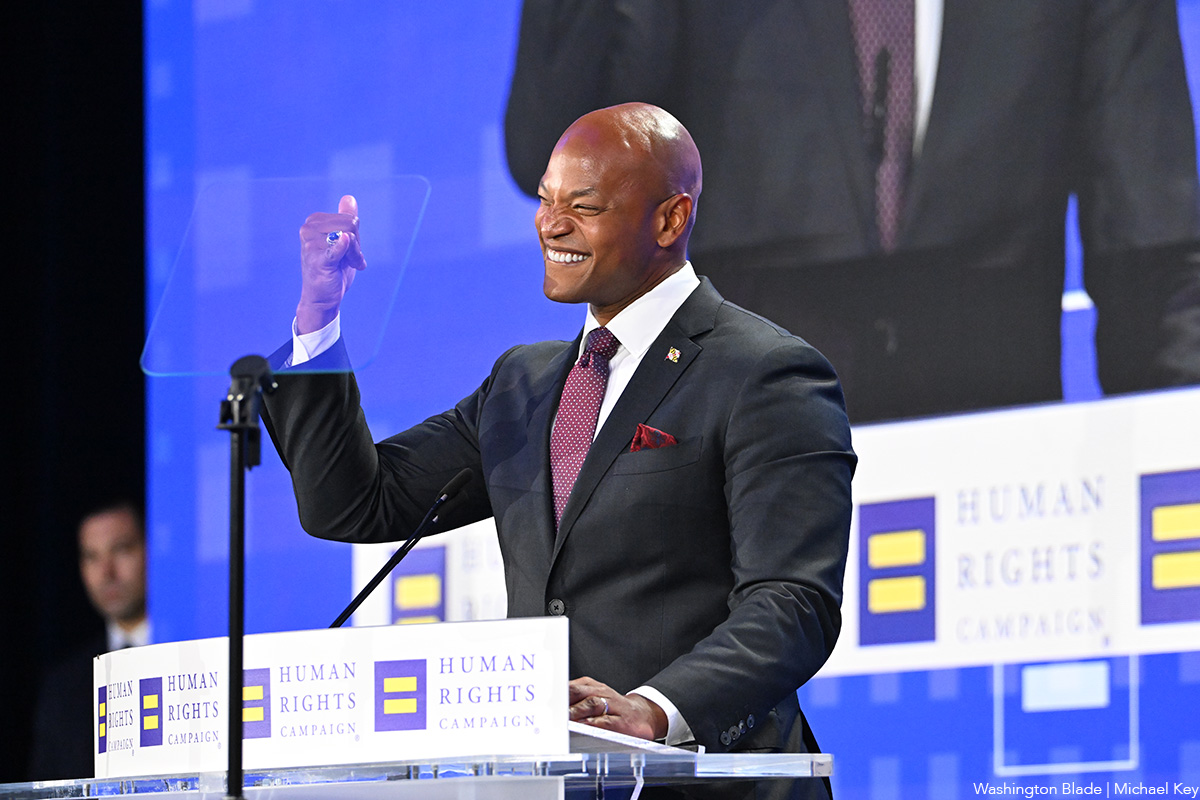
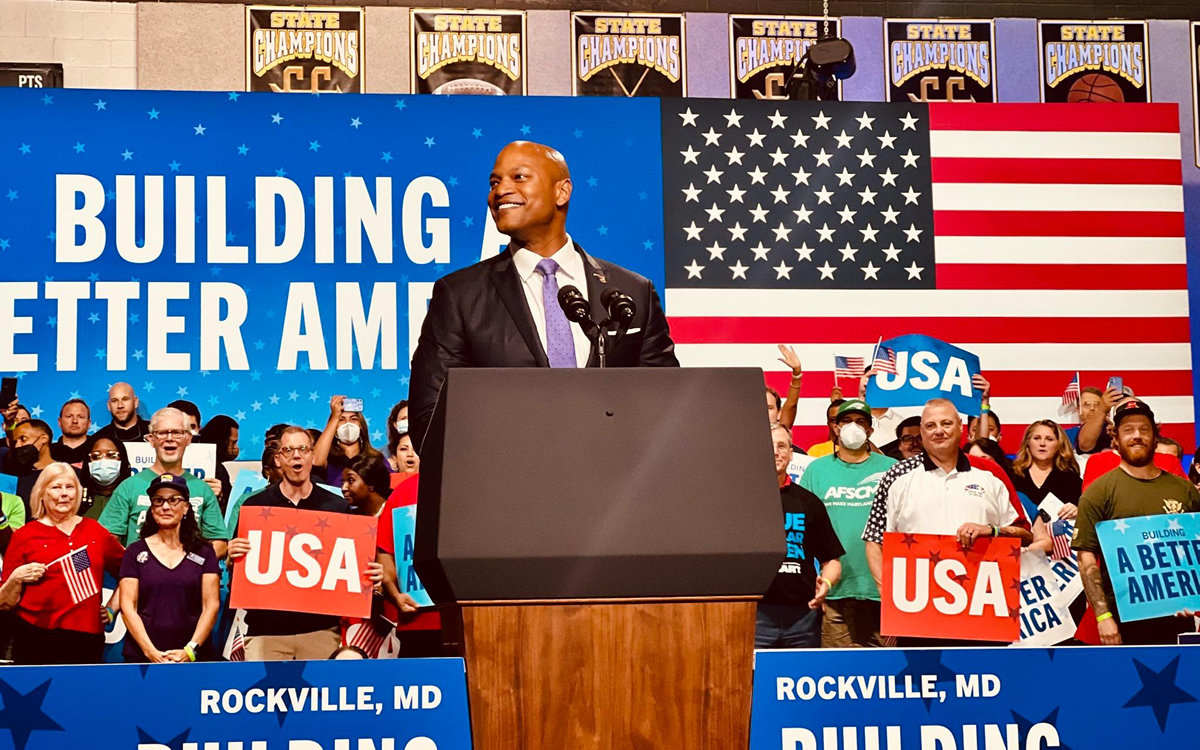
Maryland Gov. Wes Moore and the Governor’s Office of Crime Prevention and Policy are awarding a total of $10 million in grants in the 2027 fiscal year to nonprofit organizations that work to prevent hate crimes in the state.
The funds will be used to support those who feel targeted or discriminated against because of their race, religion, sexual orientation, gender identity, or disability status.
The Pride Center of Maryland is among the recipients. Churches, synagogues, mosques, and LGBTQ organizations are all eligible to receive grants
“The safety and security of all Marylanders is my top priority, so we are drawing a hard line because we have no tolerance for hate,” said Moore, according to media reports. “We are committed to protecting and ensuring safe and sacred spaces stay that way by investing in non-profit organizations, houses of worship, and community centers to protect and honor every community that makes our state so diverse and special.”
“Protection Against Hate Crime funding has strengthened the Pride Center of Maryland’s ability to protect, educate, and support the communities we serve … at a time of heightened concern associated with the Trump administration’s anti-LGBTQ/SGL (same-gender-loving) policies and pressures,” Pride Center of Maryland CEO Cleo Manago said. “PAHC funding helps us do more than improve physical security — it strengthens our community’s knowledge, preparedness, connection to resources, and ability to respond to hate with greater awareness and support.”
Maryland’s hate crimes law includes both sexual orientation and gender identity. The state’s nondiscrimination statute is also LGBTQ-inclusive.
Maryland
Anne Arundel schools now need parent permission to call trans students by preferred names
Conservative groups challenged system’s policy
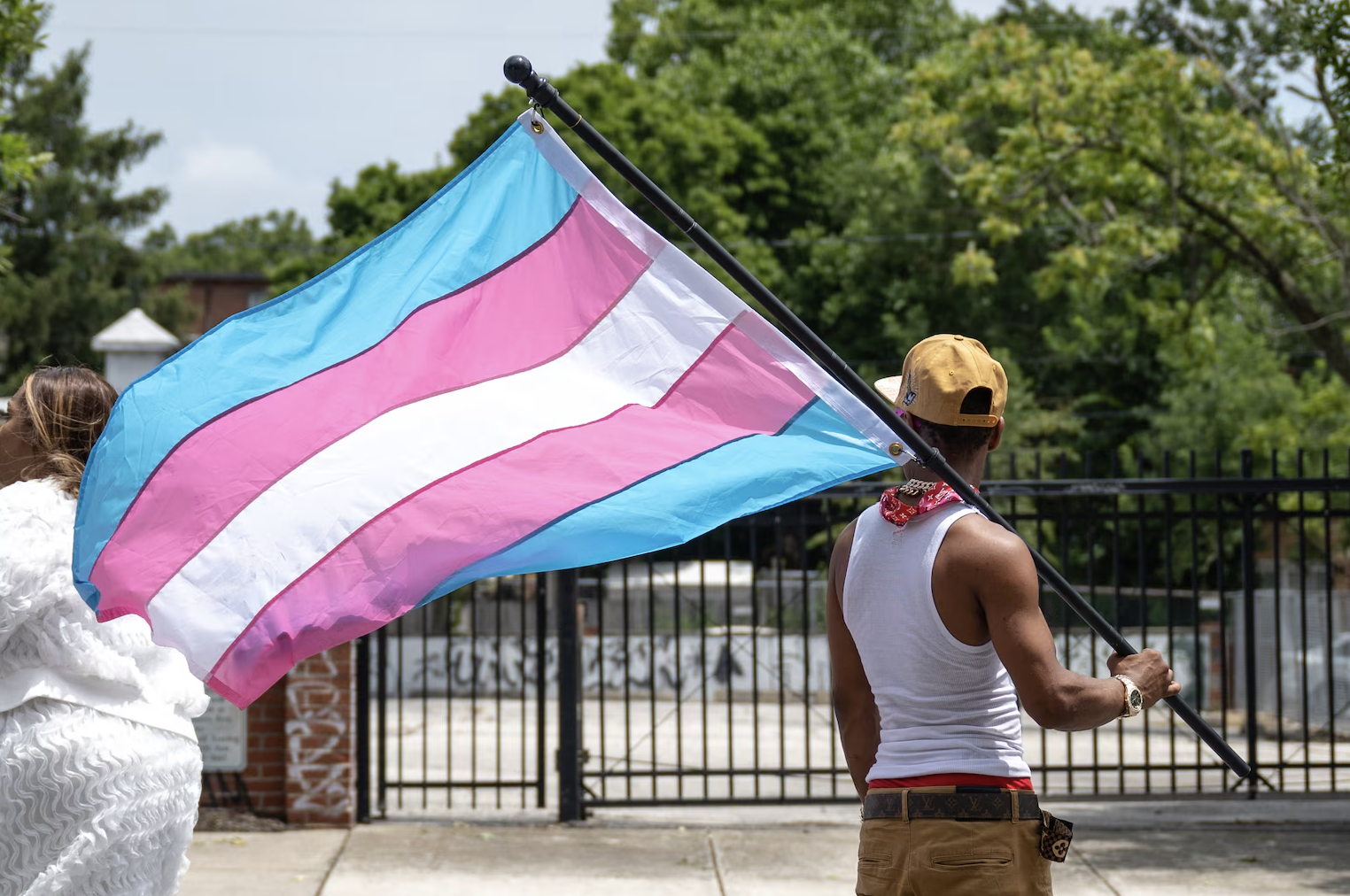
By JESSICA CALEFATI | Anne Arundel County Public Schools staff cannot use transgender students’ preferred names if their parents oppose it, according to an internal document reviewed by the Banner, a change that comes after conservative groups challenged the school system’s approach to gender identity.
Teachers union president Kristina Korona told members in an Aug. 20 email that the new guidance undermines district policy on acceptance and inclusivity and “will begin harming affected students immediately.”
Previously, the district didn’t require parental permission to use a high school student’s chosen name and pronouns corresponding to their gender identity, the internal document says. Now it does. The change comes as parents challenge the suburban school system’s gender identity policy and regulation in court and the Trump-Vance administration threatens the district’s funding.
The rest of this article can be found on the Baltimore Banner’s website.
Maryland
Girlfriends charged with Silver Spring murder to go on trial in 2027
Prosecutors charged both women with killing mother of one of them
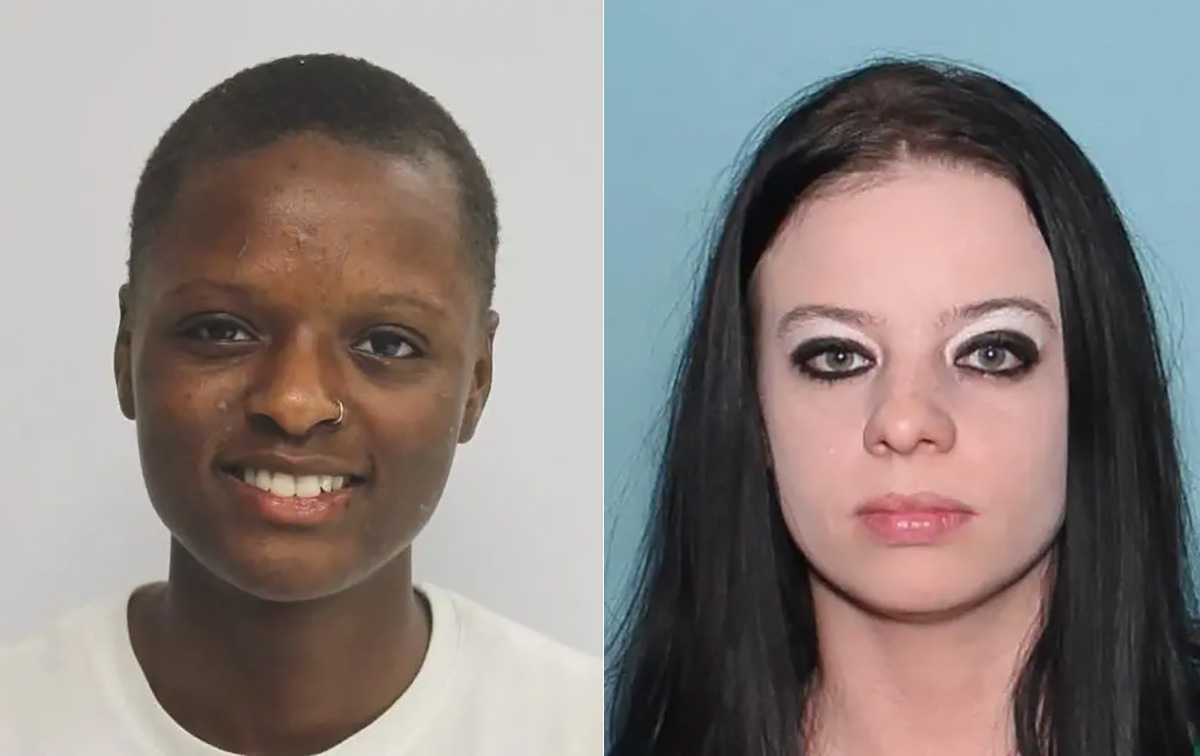
Two women identified as a couple who are charged with the May 22, 2026, murder of the mother one of them in her Silver Spring home and who were arrested three weeks later in Ohio are scheduled to go on trial for murder April 19, 2027.
According to online records filed with Montgomery County Circuit Court in Rockville, Vanessa Tjongarero-Henderson, 29, of Clarksburg, Md., and Samantha Raebel, 36, of Phoenix are being held without bond in the Montgomery County Correctional Facility until the time of their trial.
Statements from Montgomery County police show the two women were arrested June 10 in Genoa, Ohio, after fleeing from the scene of the murder in Silver Spring. Police statements and court records show they were extradited back to Maryland in July, where prosecutors with the Montgomery County State’s Attorney’s Office obtained indictments against them for murder.
Earlier statements from Montgomery County police say their investigation into the murder led to their decision to initially charge the two women with first-degree murder for the death of Hilde Henderson, 67, who was Tjongarero-Henderson’s mother.
“Through the course of the investigation, detectives identified Henderson’s daughter, Vanessa Tjongarero-Henderson, and Vanessa’s girlfriend, Raebel, as the suspects,” one of the police statements says. It says police obtained arrest warrants for both women and launched a nationwide search seeking help from the public in in locating them.
One of the police statements says an autopsy determined the cause of Hilde Henderson’s death was blunt-force trauma injuries brought about by a murder. Police and the State’s Attorney’s Office, which is prosecuting the case, have yet to disclose whether they have determined a motive for the murder.
Court records show that prior to the start of the April 19, 2027, trial a “motion” hearing was scheduled for Oct. 30, 2026, a pre-trail conference was scheduled for Feb. 12, 2027, and another motion hearing and a status hearing were scheduled for March 12, 2027.
Court records also show that Tjongarero-Henderson is being represented by attorneys with the Montgomery County court system’s public defender service. The records show that Raebel initially had been represented by a public defender service attorney, but updated records show Aug. 14 is listed as the “removal date” for that attorney.
The docket shows that on Aug. 20, two new attorneys with the prominent D.C. law firm of Covington & Burling made their official appearance as her attorneys in the murder case. One of them, Daniel Solomon, told the Washington Blade in response to an inquiry that the defense has no comment at this time on the case.
He confirmed that Covington & Burling is representing Raebel on a no-cost, pro bono bass.
The office of the Montgomery County public defender service didn’t immediately respond to a phone message from the Blade asking for a comment on the Tjongarero-Henderson case.

Bowser, Office of LGBTQ Affairs announce LGBTQ+ History Month events

PHOTOS: Winchester Pride

Evan Low is not the leader the Victory Fund needs at this moment

Transgender woman elected to Brazilian Chamber of Deputies

Lula, Flávio Bolsonaro to face off in second round of Brazilian presidential election

Gay Va. couple hopeful voters will enshrine marriage equality in state constitution

LGBTQ community must vote in big numbers

Victory Fund board investigates former staffers’ allegations against CEO Evan Low

The right to be an ordinary transgender man

Calif. governor signs 6 pro-LGBTQ bills, vetoes 1
-

 Virginia5 days ago
Gay Va. couple hopeful voters will enshrine marriage equality in state constitution
-
Opinions5 days ago
LGBTQ community must vote in big numbers
-
LGBTQ Non-Profit Organizations5 days ago
Victory Fund board investigates former staffers’ allegations against CEO Evan Low
-
Opinions5 days ago
The right to be an ordinary transgender man