Sports
Reliving a magical softball world series in D.C.
Jackson, Mace worked for years and through a pandemic to bring event to the city
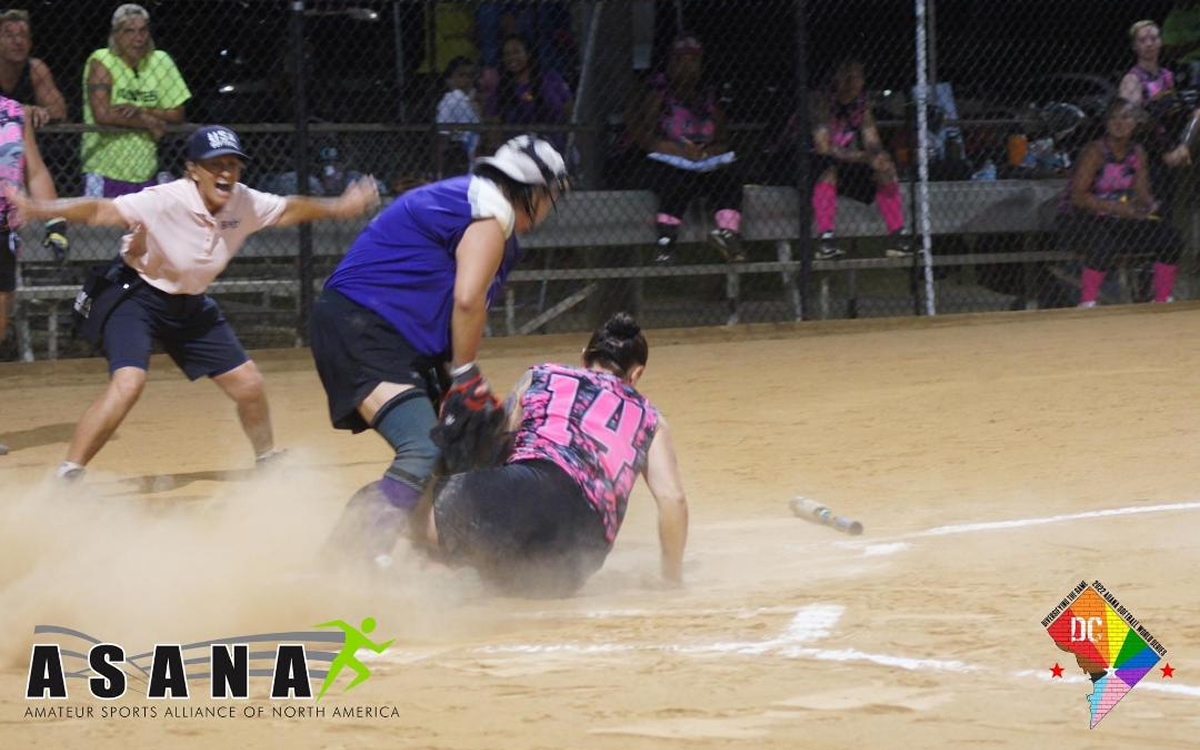
After almost two years of disruptions, the LGBTQ sports community in the District of Columbia is thriving once again.
Tournaments that were canceled have been rescheduled, leagues are back in action, and sports permitting within the District is working its way back to normal.
The Washington Blade checked in with two Chesapeake and Potomac Softball (CAPS) players who worked for several years to bring the Amateur Sports Alliance of North America (ASANA) Softball World Series to D.C.
The ASANA Softball World Series 2022 was held in D.C. in August and brought in more than 1,500 athletes, coaches and fans who celebrated sports and community over seven days.
Cis women, trans women, trans men and nonbinary athletes were eligible to play in the series, and cis men were welcome to coach or manage teams.
Rhonda Jackson and Tony Mace were co-hosts of the Host City Committee who brought the series to our nation’s capital.
Blade: Tell me about the journey to bring the ASANA World Series to D.C.
Tony Mace: We submitted our bid in 2019 to host the 2021 World Series, which was then rescheduled due to the pandemic. The 2020 Series was cancelled and eventually we received the 2022 award to host.
Blade: Was there a theme behind your bid?
Rhonda Jackson: Yes, our goal was to elevate the player experience both on and off the field. Every player was treated as if they were the best softball player on the planet. We wanted the players and the city to be the center of attention. We attended a Mystics game and a Nationals game, which were both great to experience as a community.
Mace: We were excited for the opportunity to show off D.C. and we are really proud of what we are doing here as an LGBTQ softball community. We wanted to share it.
Blade: Let’s talk softball. How was the Series?
Mace: ASANA has 28 member cities, and we had a total of 47 teams from 21 cities competing in the B through E Divisions. The games were held at Watkins Regional Park and Fairland Regional Park.
Jackson: Everyone was treated as an elite athlete, and it didn’t feel like a local or regional tournament. The D.C. Department of Parks and Recreation did an awesome job of getting the fields in shape for the Series. They were a big part of the player experience. When we arrived on the first day it was a spiritual moment. Everything was perfect and there were a lot of smiling faces. I hope we created memories that last a lifetime.
Blade: How many local teams competed?
Jackson: D.C. fielded five teams – DC Sharks won their division, DC Swag finished third in their division and Spartas finished fourth in their division.
Blade: And I understand congratulations are in order for you, RJ?
Jackson: During the Series, I was inducted into the ASANA Hall of Fame. My competitive teams, my local teams and the CAPS Board were all there. I could feel the love.
Mace: The Hall of Fame dinner was magical. Actually, every day of that week was incredible. It is truly amazing to have players from across the country come and play at your home ballpark. I made a ton of new friends and Friday night under the lights was a really special moment.
Jackson: The whole week was about special moments, connecting with new and old friends, giving folks an opportunity to thrive, and creating a safe, inclusive space to compete.
Blade: And congrats to you, too, Tony for being inducted into the CAPS Hall of Fame this year.Right after the ASANA World Series ended, you headed to Dallas to compete in NAGAAA Softball World Series with other CAPS travel teams. How was the tournament?
Mace: We had two teams from D.C. make it to the Division championships – DC Big Blue won the Masters D Division and DC Scruff finished second in the D Division. It is always great when your sister teams play well and seeing everyone pull together from the D.C. community to celebrate the DC Big Blue victory was heartwarming.
The Washington Capitals will host Pride Night on Saturday, Jan. 17, when they host the Florida Panthers at Capital One Arena. A special ticket offer featuring a Pride-themed Capitals rainbow jersey is available at washcaps.com.
Fans are invited to a pre-game Block Party at District E beginning at 5 p.m. The event will feature a performance by the band NovaKane. Specialty happy hour food and beverages will be available, as well as giveaways. There will also be a presence by several local LGBTQ+ community organizations.
Egypt
Iran, Egypt object to playing in Seattle World Cup ‘Pride Match’
Game to take place on June 26
Iran and Egypt have objected to playing in a “Pride Match” that will take place in Seattle during the 2026 World Cup.
The Egyptian Football Association on Tuesday said it told FIFA Secretary General Mattias Grafström in a letter that “it categorically rejects holding any activities related to supporting (homosexuality) during the match between the Egyptian national team and Iran, scheduled to be held in Seattle, USA, on June 26, 2026, in the third round of the group stage of the 2026 World Cup.” Football Federation Islamic Republic of Iran President Mehdi Taj told ISNA, a semi-official Iranian news agency that both his country and Egypt “protested this issue.”
The 2026 World Cup will take place in the U.S., Canada, and Mexico. The draw took place at the Kennedy Center on Dec. 5.
Iran is among the handful of countries in which consensual same-sex sexual relations remain punishable by death.
The State Department’s 2023 human rights report notes that while Egyptian law “did not explicitly criminalize consensual same-sex sexual activity, authorities regularly arrested and prosecuted LGBTQI+ persons on charges including ‘debauchery,’ prostitution, and ‘violating family values.’” Egyptian authorities “also reportedly prosecuted LGBTQI+ individuals for ‘misuse of social media.’”
“This resulted in de facto criminalization of same-sex conduct and identity,” notes the report.
The 2024 human rights report the State Department released earlier this year did not include LGBTQ-specific references.
Soccer has ‘unique power to unite people across borders, cultures, and beliefs’
The June 26 match between Iran and Egypt coincides with Seattle Pride. The Washington Post reported the Seattle FIFA World Cup 2026 Local Organizing Committee decided to hold the “Pride Match” before last week’s draw.
“As the Local Organizing Committee, SeattleFWC26’s role is to prepare our city to host the matches and manage the city experience outside of Seattle Stadium,” said SeattleFWC26 Vice President of Communications Hana Tadesse in a statement the committee sent to the Washington Blade on Wednesday. “SeattleFWC26 is moving forward as planned with our community programming outside the stadium during Pride weekend and throughout the tournament, partnering with LGBTQ+ leaders, artists, and business owners to elevate existing Pride celebrations across Washington.”
“Football has a unique power to unite people across borders, cultures, and beliefs,” added Tadeese. “The Pacific Northwest is home to one of the nation’s largest Iranian-American communities, a thriving Egyptian diaspora, and rich communities representing all nations we’re hosting in Seattle. We’re committed to ensuring all residents and visitors experience the warmth, respect, and dignity that defines our region.”
The 2034 World Cup will take place in Saudi Arabia.
Consensual same-sex sexual relations remain punishable by death in the country. The 2022 World Cup took place in neighboring Qatar, despite concerns over the country’s anti-LGBTQ rights record.
Sports
Gay speedskater racing toward a more inclusive future in sports
Conor McDermott-Mostowy says anti-DEI push is driving away corporate sponsors
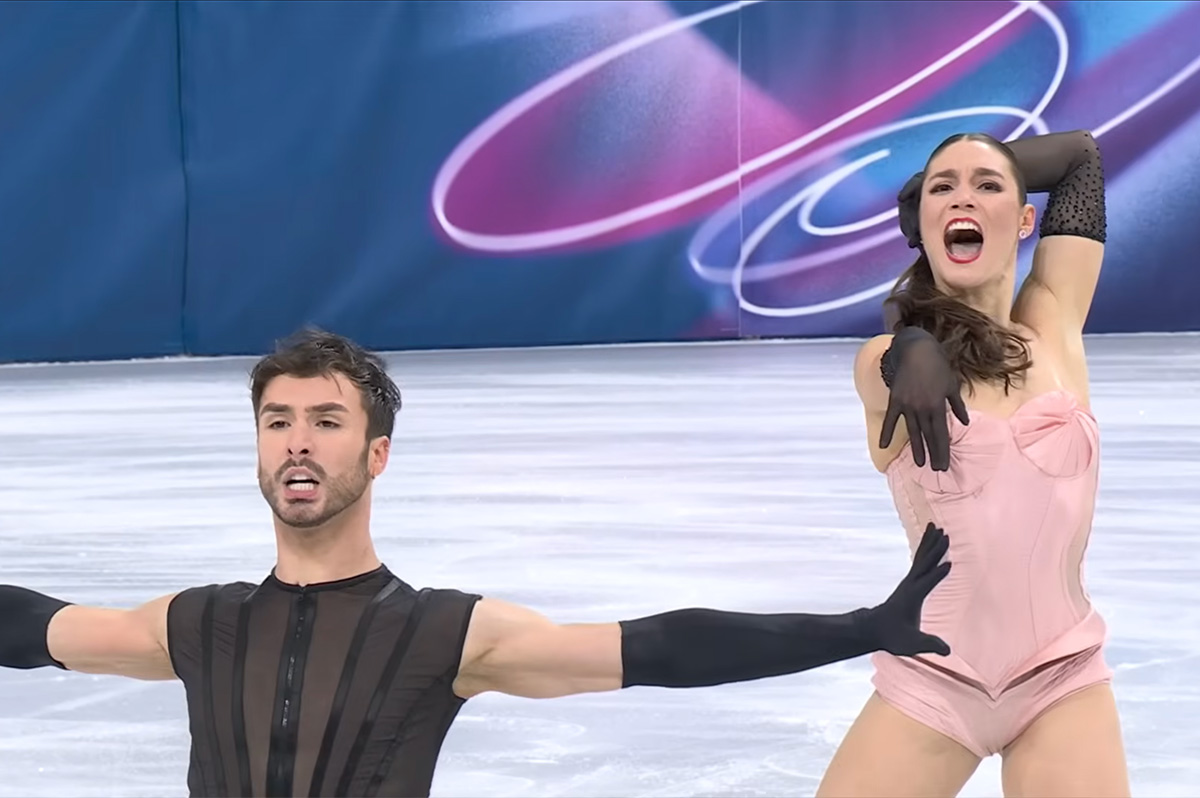
LOS ANGELES — As the countdown begins to the February Winter Olympic Games in Milan, Pride House LA is shining a spotlight on queer athletes who are breaking boundaries both on and off the field. Among them is Team USA speedskater Conor McDermott-Mostowy – a fierce competitor and proud member of the queer community. With blistering speed on the ice and a steadfast commitment to equity in sports, Conor is doing so much more than winning medals – he’s redefining what it means to represent one’s country while representing one’s community.
McDermott-Mostowy is one step closer to the 2026 Winter Olympics after winning the recent silver and bronze medals at the U.S. Championships in speedskating. He appeared at a Nov. 1 event presented by Out Athlete Fund/Pride House LA in the organization’s efforts to raise funds to support Conor and other out athletes as they pursue their Olympic dreams in Milan 2026 and beyond.The Blade spoke to the star athlete to talk about resilience, representation, and the legacy he hopes to leave one day.
Blade: Huge congrats, Conor! Winning a World Cup gold is no small feat. Do you feel like this win proved something to the world – or more importantly, to yourself?
McDermott-Mostowy: Winning gold with my team last year was definitely a major goal achieved. That said, the event we won isn’t yet an Olympic event. The races that have had the most profound impact on me actually happened two years ago.
The first was the team pursuit in Obihiro, Japan. I’d always been more of an alternate for that event, since it’s typically raced by skaters who compete in both the 1500m and 5000m. But I’d been itching for the opportunity to race it at the World Cup level. I finally got that chance when a teammate had to pull out at the last minute due to a back issue. We led the race through six of eight laps, ultimately finishing third. While it was a little disappointing to fall out of the lead, I was proud to prove that I could contribute meaningfully and help the team medal.
The second race was later that year in Salt Lake City, my home ice. After competing in Japan, I came down with a lung infection that affected my performance at the next few World Cups. Fortunately, I had time to recover before the North American World Cups and World Championships. At the Salt Lake City World Cup, I was balancing competition with completing my undergraduate degree. I didn’t know what to expect, but I ended up finishing fifth in the 1000m—my highest individual finish ever—and posted a time of 1:06.91. That’s a very significant time in speedskating; only three other Americans have gone under 1:07 in that event, all of whom became world champions. That result felt like a turning point, showing me that an Olympic or World Championship medal wasn’t just a dream—it was within reach.
Blade: This PrideHouse LA event is a huge moment. What does that support from the queer community mean to you?
McDermott-Mostowy: It’s incredibly meaningful. Being queer in Olympic sport can be very isolating, both inside and outside the sport. I barely have time to socialize outside of skating, and relocating to Salt Lake City doesn’t exactly help when it comes to queer community. So having that kind of solidarity and support from the wider LGBTQ+ community really means a lot.
Blade: Do you remember the moment you realized skating could take you all the way to the Olympics?
McDermott-Mostowy: There hasn’t been one single moment. It’s been a series of them. Over the years, I’ve had many races that shattered the limits I thought I had and inspired me to reach higher. That Salt Lake City race was one of them. It made me realize I shouldn’t just aim for the Olympics. I should aim for medals.
Another key moment came in 2018 at my last Junior World Cup, when my teammate and I finished 2nd and 3rd in the mass start. That event is similar to short track but held on a long track. It was my first full year focusing on long track after previously dabbling in it, and we had no expectation of medaling. But after we did, I realized I might actually have a future in this discipline—and that I could be competitive on the world stage. It was a pivotal realization, especially as I was trying to decide whether to continue skating or pursue a traditional college experience.
Blade: What initially drew you to speedskating? How did you get into the sport—and what’s kept you motivated?
McDermott-Mostowy: I grew up on skates. I started at age two and became a strong skater early on. But I never had any interest in hockey or figure skating. One winter, I was skating with my family on the C&O Canal in Washington, D.C., when a guy skated past us on these wild-looking speed skates. I was immediately intrigued. My parents found a local club, which happened to be run by three-time Olympian Nathaniel Mills, and I was hooked.
What’s kept me going is simple: I love it. This isn’t a sport you get rich in. I’ve only earned more than $20,000 a year twice in my career, and you can’t use it to pay for college either. The motivation has to come from within—the pursuit of excellence, the dream of going to the Olympics, and pure love for the sport.
Blade: What’s been your toughest race to date, and what did it teach you?
McDermott-Mostowy: That would be the team pursuit in Japan. I wasn’t expecting to race it and had already competed in a full weekend of events before getting the call. Team pursuit is arguably the toughest event in speedskating. Stepping up without being mentally or physically prepared was a challenge, but I did it. It showed me I could push through, even under extreme circumstances.
Blade: You’ve made headlines not just for your speed, but for your openness. What was it like coming out publicly in the world of elite sport?
McDermott-Mostowy: By the time I was publicly identified as gay, I had already been out to anyone who asked. So “coming out” doesn’t feel like the right term. It wasn’t a big declaration. I had the benefit of growing up seeing openly gay athletes and being part of a supportive community. I never felt the need to hide who I was.
Eventually, as I started achieving more on the ice, people began noticing me and the content I posted, and they put two and two together. When I was asked to speak publicly about being an openly gay athlete in speedskating, I didn’t hesitate.
Blade: What have been the biggest challenges in your career – physically, mentally, or otherwise?
McDermott-Mostowy: Honestly, my entire career has been about overcoming challenges. The two biggest obstacles have been illness and finances.
I’ve dealt with asthma, a norovirus that derailed my chances in 2022, and a fatigue condition last season that affected my performance. These setbacks take a toll. Not just physically, but mentally. When you invest everything into your sport, being forced to pause or scale back is a huge emotional hurdle.
Financially, speedskating is a tough path. Even as a consistent top-20 skater in the world, I’ve only broken $20k twice in a year, and we’re paid for just nine months, even though we train year-round. I’ve leaned on friends and family for support many times just to make ends meet.
Blade: Have you ever been told – explicitly or implicitly – that being openly gay could hurt your chances with sponsors or coaches?
McDermott-Mostowy: Never with coaches. In our sport, selections are based on the clock, not someone’s opinion. My coaches have always been great.
But when it comes to sponsorships, especially over the past year, I’ve noticed a shift. As anti-DEI sentiment grows, brands are backing away from anything that could be seen as “controversial.” Being openly gay seems to fall into that category now. Since most of our income comes from sponsorships, that retreat is deeply felt.
-
Real Estate4 days agoTop buyer-friendly markets for the LGBTQ community
-
Virginia4 days agoAbigail Spanberger sworn in as Va. governor
-
Autos4 days agoHot rod heaven: Chevy Corvette, Dodge Charger
-
Virginia3 days agoTwo gay candidates running in ‘firehouse’ Va. House of Delegates primary in Alexandria