Asia
India’s Odisha state launches program to empower transgender people
Upwards of 300 trans people have received jobs through Sweekruti

Despite being celebrated as iconic characters in ancient texts; dancing at a wedding for someone else; clapping and dancing while blessing a newborn baby at any home; transgender Indians are still ostracized and not able to get a job, get married or live a decent life.
Such was the consequence of 200 years of British colonial suppression in India, but things are changing for trans people in India. Several states began to introduce measures to help the trans community after the Indian Supreme Court‘s 2014 ruling that recognized a trans person as a “third gender,” and the passage of the Transgender Person (Protection of Rights) Act, 2019 in the Indian Parliament. Odisha, a state in eastern India, is working to make trans people part of mainstream society through its Sweekruti “acceptance” program.
The program provides critical health care, scholarships, counseling, legal aid, a certificate and skill training. According to a recent report, about 300 trans people have received jobs through Sweekruti.
“It will help create an ecosystem of equal opportunities, social justice, protection of transgender rights and full participation in society. It is opening various avenues of employment and self-employment for the community,” said Anushree Dash, a social reformer and human rights activist who founded the website ADiBha She Vision. “(The) focus is mostly on skill development and low paying jobs instead of higher education and high paying (so-called respectable) jobs. There is no trans inclusion in social sector and government sector jobs. The government’s research and scheme need to be applauded, but it needs more and more public participation. I believe there is a scope for strengthening the existing implementation machinery.”
The 2011 Census notes there are 20,322 trans people in Odisha, but 14.5 percent of respondents who participated in an online survey the state’s Social Security and Empowerment of Persons with Disabilities Department conducted in 2017 reported no income and were living in poverty.
The Odisha government in 2020 tried to improve the social and economic conditions of the trans community by introducing a monthly pension program for elderly and differently-abled trans people, but the Sweekruti program has been hailed as a successful initiative because it directly provides low-paying jobs to trans people and helps trans youth gain acceptance.
“First of all, I want to appreciate our chief minister, Naveen Patnaik, because he designed this project to empower the transgender community. This scheme mainstreams the transgender community by providing skills and jobs. So, this is a very good initiative,” said Meera Parida, a trans woman who is a State Advisor for Urban and Housing Development under the MUKTA (Mukhyamantri Karma Tatpara Abhiyan Yojana) program. “On many areas under the scheme, the work is already underway. Although it is not sufficient that it can provide everything, it is a good project for any transgender woman or man thinking about startups or wanting to get skills so they can improve their life.”
While talking with the Washington Blade, Parida said the trans community started to feel respect after the 2014 Supreme Court ruling and the passage of the 2019 law. She said it is more about dignity.
“People and government have started to talk about us and started to respect and include us in different government schemes,” said Parida. “It recognizes our presence.”
The Odisha High Court in May 2022 ordered the state government to release the family pension of a dead government employee to a trans person who was dependent on a pensioner. The Odisha government amended the pension rules nine months later. According to the new rule, a single trans child of a government employee or pensioner who died on or after Jan. 10, 2020, will be treated as an unmarried daughter for the family pension.
“Sweekruti is a good initiative, and works well in Odisha, but sometimes it is not as efficient as it should be. So, the government should fix the issue,” said Ashisha Behera, a trans activist who works with the Center for Advocacy and Research. “The initiative requires identification which is important, and it’s happening also, but sometimes the beneficiary belongs to a rural background, and many of them do not have idea about Sweekruti scheme, so government should spread awareness about it.”
While talking with the Blade, Biswa Bhusan Pattanayak, assistant director of the Bhubaneswar office of SAATHII, an LGBTQ and intersex rights group, said that one of the key components of the Sweekruti program is to facilitate access to social protection, livelihood and mainstream measures. This has been instrumental in addressing the livelihood needs of some trans people. Pattanayak, however, said mainstreaming initiatives need much larger efforts, in terms of expanding the scale and reach of livelihood initiatives.
Pattanayak added the government also simultaneously needs to address the root causes, such as discrimination and exclusion, that lead to trans and gender non-conforming children dropping out of educational institutions and being deprived of mainstream employment.
“The formulation of schemes is not enough. We need to see the issues around transgender persons from a development perspective,” said Pattanayak. “The development approach to the transgender community needs to converge initiatives and stakeholders from all sectors. We need to stop seeing transgender persons as just beneficiaries of governmental largesse; rather; recognize them as equal stakeholders in development actions.”
Ankush Kumar is a freelance reporter who has covered many stories for Washington and Los Angeles Blades from Iran, India and Singapore. He recently reported for the Daily Beast. He can be reached at [email protected]. He is on Twitter at @mohitkopinion.





Taiwan
Taiwan’s government has failed to update process to change gender markers on ID documents
Interior Ministry’s 2008 directive remains in place
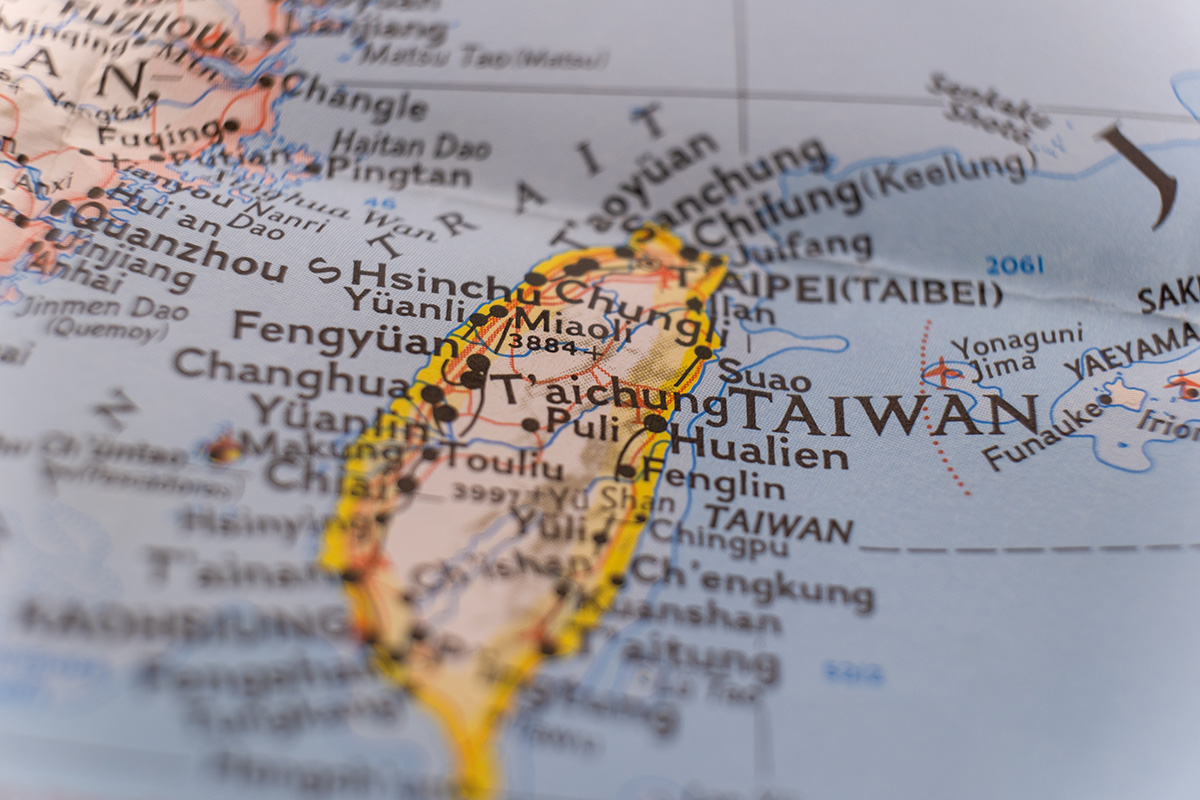
More than four years after Taiwan began formally studying legislation to overhaul its legal gender recognition system, and despite repeated recommendations from international human rights experts, the government has yet to introduce a bill that would replace decades-old administrative rules governing how transgender people can change the gender marker on official documents.
On May 15, an independent international review committee examining Taiwan’s implementation of the International Covenant on Civil and Political Rights and the International Covenant on Economic, Social and Cultural Rights urged the government to enact legislation governing legal gender recognition. The committee said Taiwan’s continued reliance on an administrative order, despite a 2023 Supreme Administrative Court ruling that mandatory gender-affirming surgery violates constitutional rights, has created legal uncertainty for transgender people, administrative authorities and judges.
In Taiwan, legal gender recognition has long been governed by a 2008 Interior Ministry administrative directive rather than legislation.
Under the directive, applicants seeking to change the gender marker on their national identification documents are generally required to provide diagnoses of gender dysphoria from two psychiatrists and proof that they have undergone gender-affirming surgery. For trans men, this typically involves the removal of the breasts, uterus, and ovaries, while trans women generally must undergo the removal of the penis and testicles. Because these requirements are established through an administrative directive rather than a law enacted by the legislature, trans rights activists and human rights organizations have argued they violate human rights.
Although Taiwanese courts have increasingly allowed trans people to change the gender marker on their official documents without undergoing gender-affirming surgery, the Interior Ministry’s 2008 directive requiring surgery remains in force. As a result, Taiwan’s administrative rules and judicial decisions are no longer fully aligned.
In a landmark ruling in May 2024, the Taipei High Administrative Court ordered a household registration office to approve a trans man’s application to change the gender marker on his household registration without requiring gender-affirming surgery. The court held that the Interior Ministry’s 2008 administrative directive, which requires applicants to submit proof of surgery, cannot be treated as an absolute prerequisite for legal gender recognition. Instead, it found that the applicant had provided sufficient medical evidence of a stable and long-standing gender identity and that denying the application solely because he had not undergone surgery was unlawful.
The Executive Yuan began work on legislation in April 2020, when it decided to commission an academic study examining international legal gender recognition systems rather than immediately drafting a law.
The government subsequently commissioned Shih Hsin University to prepare a report reviewing foreign legal models and developing legislative recommendations, including a bill. Since 2022, the Executive Yuan has held a series of inter-agency meetings involving multiple ministries to consider the study’s recommendations and legislation governing legal gender recognition, though no bill has yet been enacted.
In September 2023, Taiwan’s Supreme Administrative Court set aside a lower court ruling that had upheld the Interior Ministry’s refusal to change a trans person’s legal gender without proof of surgery and ordered the case to be reheard.
The court held that the ministry’s 2008 administrative directive requiring surgery could not be treated as the controlling legal standard because it lacked a clear statutory basis and implicated constitutional protections, including bodily autonomy and personality rights. Rather than treating surgery as an automatic prerequisite, the court instructed the lower court to determine whether the applicant had established a stable gender identity based on the evidence presented.
“From our perspective, the primary goal should be lowering the barriers to legal gender recognition, particularly by abolishing the mandatory surgery requirement,” the Taiwan Tongzhi (LGBTQ+) Hotline Association, a nonprofit LGBTQ advocacy and support organization founded in 1998, said in an email to the Washington Blade.
The Taiwan Tongzhi (LGBTQ+) Hotline Association said several factors have stalled progress toward comprehensive legislation.
The organization told the Blade the complexity of the issue and the lack of constructive dialogue are among the primary obstacles. It said legal gender recognition requires extensive discussion, with views differing even within the trans community itself. The Taiwan Tongzhi (LGBTQ+) Hotline Association added that opinions also vary widely within the legislature and across Taiwanese society, while effective channels for dialogue remain lacking.
The Taiwan Tongzhi (LGBTQ+) Hotline Association also attributed the lack of progress to what it described as a lack of political will and an over reliance on “social consensus.”
According to the organization, the executive branch lacks the political momentum to advance legal gender recognition reforms. The Taiwan Tongzhi (LGBTQ+) Hotline Association said the Interior Ministry and other relevant agencies have often adopted a passive approach in the face of opposition from conservative groups, delaying progress by arguing that there is no social consensus or that further discussion is needed.
The Taiwan Tongzhi (LGBTQ+) Hotline Association also said progress has been hindered by what it described as a backlash following the legalization of same-sex marriage. According to the organization, groups opposed to gender equality and trans rights, including some conservative religious and anti-trans organizations, shifted their focus to trans issues after marriage equality became law. The Taiwan Tongzhi (LGBTQ+) Hotline Association said these groups have promoted fear-based narratives, including concerns about safety in public restrooms, leading many politicians to view trans rights as a politically risky issue and reducing momentum for legislative action.
“The existing system makes changing one’s legal gender marker extremely difficult. Forced surgical removal of reproductive organs imposes a heavy financial burden since it must be paid out-of-pocket, and not every trans person can afford, desires, or is medically advised to undergo organ removal,” the Taiwan Tongzhi (LGBTQ+) Hotline Association said. “Additionally, requiring psychiatric evaluations is problematic because specialized medical resources are scarce and concentrated in major cities. These obstacles severely impact transgender individuals in their daily lives.”
The Taiwan Tongzhi (LGBTQ+) Hotline Association said the continued reliance on an administrative directive rather than legislation has created systemic uncertainty for trans people. The organization said the absence of a statutory framework allows executive agencies to alter requirements without legislative oversight, leaving trans people uncertain whether future policies will become more restrictive or more permissive. The Taiwan Tongzhi (LGBTQ+) Hotline Association added that while several trans people have secured favorable court rulings since 2023, those decisions apply only to the individual cases before the courts and do not guarantee similar outcomes for others. The group also said pursuing litigation requires significant time, financial resources, and emotional investment, making it an inaccessible path for many trans people seeking legal recognition.
The Executive Yuan and the Interior Ministry did not respond to the Blade’s requests for comment.
India
Expected India Supreme Court ruling could shape future LGBTQ rights cases
Decision to determine whether courts can use constitutional morality doctrine
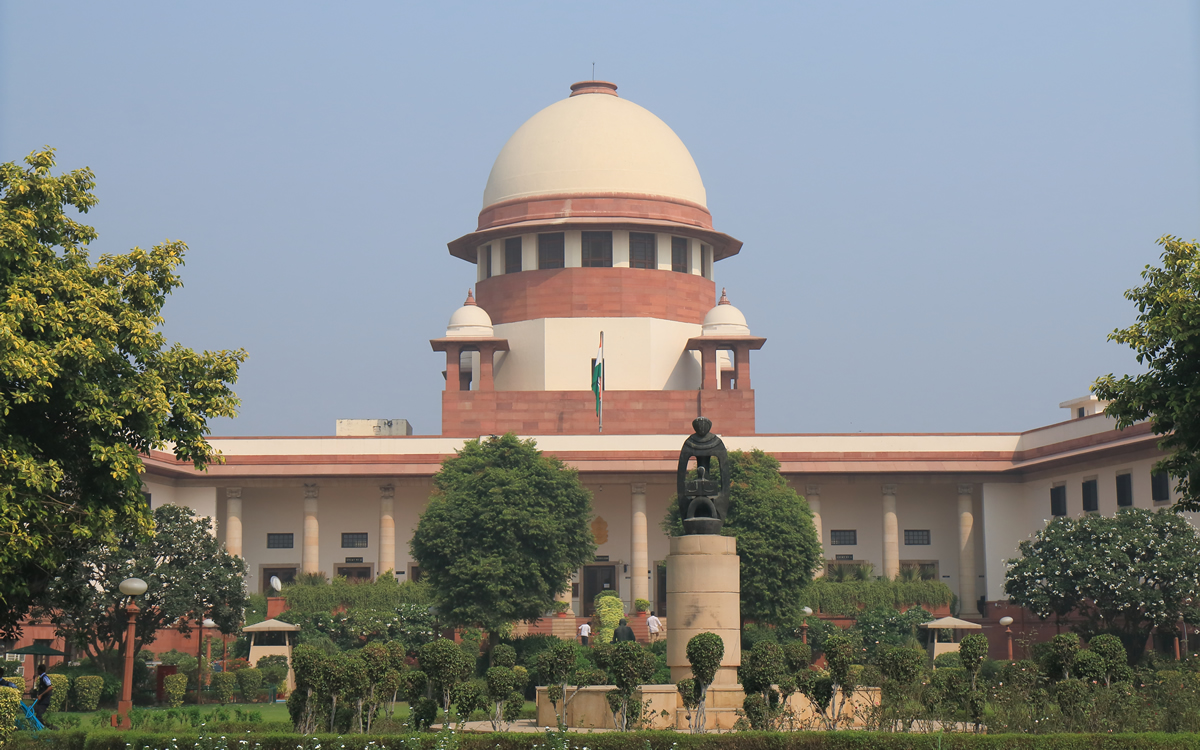
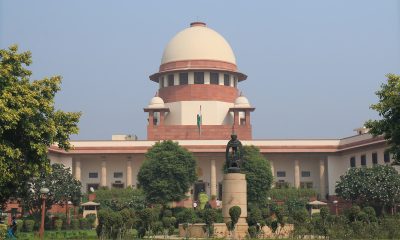
India’s Supreme Court is expected to issue a closely watched constitutional ruling that could shape the future of LGBTQ rights litigation.
The decision will determine whether courts can continue to rely on the doctrine of constitutional morality, a principle that has underpinned several landmark rights decisions. During hearings in April, the Indian government urged the Supreme Court to reject the doctrine, arguing that it has no basis in the Constitution and should not guide judicial decision-making.
For years, the Supreme Court has relied on the constitutional morality doctrine to treat the Constitution as a living document: one whose enduring promises of justice, liberty, equality, and fraternity must be applied to the realities of a changing society rather than remain frozen in the era in which it was written.
The Indian government in April asked the Supreme Court to revisit the constitutional reasoning behind two landmark judgments: one that struck down the country’s adultery law and another that decriminalized consensual same-sex relations, arguing that both relied on a subjective invocation of constitutional morality and should no longer be treated as good law.
Arguing before a 9-judge bench considering constitutional questions referred from the Supreme Court’s 2018 Sabarimala temple case, which allowed women of menstruating age to enter one of Hinduism’s holiest shrines after a centuries-old ban, Solicitor General Tushar Mehta, India’s second-highest law officer, argued that “constitutional morality” has no textual basis in the Constitution and is instead a judicially evolved concept that is vague and indeterminate.
Mehta said the government did not oppose the Supreme Court’s decision to strike down Section 497 of the Indian penal code, which criminalized adultery, if it was based on Article 14 of the Constitution, which guarantees equality before the law and equal protection of the laws. Instead, he argued that the court should not have relied on what he described as the “vague and subjective” doctrine of constitutional morality to reach its conclusion.
Mehta told the Supreme Court that its 2018 Navtej Singh Johar v. Union of India ruling that decriminalized consensual same-sex relations wrongly equated “morality” with majoritarian or mob morality while relying on constitutional morality as the basis for its reasoning.
To support his argument against relying on constitutional morality, Mehta quoted extensively from then-Justice Antonin Scalia’s dissent in the U.S. Supreme Court’s 2003 decision in Lawrence v. Texas.
Scalia argued that courts should not import foreign legal trends or allow evolving social values to drive constitutional interpretation, contending that judges must remain neutral arbiters rather than participants in broader cultural debates.
Referring to the Supreme Court’s landmark decisions in Navtej Singh Johar and Joseph Shine, Mehta questioned whether the judgments reflected the constitutional vision of India’s founding generation.
“If these judgments, Navtej Johar, Joseph Shine, etc., were to be read by Dr. Ambedkar or Kanhaiyalal Munshi or Alladi Krishnaswamy Iyer, I do not know whether they would be surprised, shocked or they would say that this is what we wanted. I believe, they did not want this to happen,” he told the bench.
“A new trend starts, which is Naz Foundation v. Government of NCT of Delhi,” Mehta said. “This is the judgment of Delhi High Court which was ultimately affirmed in Navtej Johar, sodomy … ‘In our scheme of things, constitutional morality must outweigh the argument of public morality, even if it be the majoritarian view.’ In case of a country governed by democratic principles, the view which is always majoritarian will prevail. When it is question of testing a law, it is always the majority which passes the law. How can you define morality based on this?”
The Naz Foundation case marked the beginning of a landmark constitutional challenge to Section 377 of the Indian penal code, a colonial-era provision that criminalized consensual same-sex relations between adults as “against the order of nature.” The public interest litigation, filed in 2001 by the Naz Foundation, an NGO working on HIV/AIDS and sexual health, argued that the law violated fundamental rights guaranteed under the Constitution.
In 2009, the Delhi High Court ruled in the organization’s favor, holding that Section 377 violated the rights to equality under Article 14, protection against discrimination under Article 15, and life and personal liberty under Article 21 of the Constitution.
The Delhi High Court’s ruling was short-lived.
In 2013, the Supreme Court, in Suresh Kumar Koushal v. Naz Foundation overturned the decision, recriminalizing homosexuality under Section 377.
The court held that the law affected only a “minuscule fraction” of the population and said it was for Parliament — not the judiciary — to decide whether the provision should remain on the statute books. Five years later, the Supreme Court’s Constitutional Bench in Navtej Singh Johar, unanimously overruled its 2013 judgment, holding that Section 377 was unconstitutional. The decision marked the culmination of the Naz Foundation’s long legal challenge to the colonial-era provision.
Anish Gawande, the first openly gay person to serve as a national spokesperson for a major political party in India, the Nationalist Congress Party (Sharadchandra Pawar), told the Washington Blade that the doctrine of constitutional morality, which he said underpinned not only Navtej Singh Johar but also forms one of the foundational principles of India’s constitutional jurisprudence, is “an incredibly important concept.”
“It provides a moral backbone to the document in a way that prevents any amendments to the Constitution from being out into place that would violate the very ethos upon which the Constitution was framed,” Gawande said. “Constitutional morality is an incredibly important antidote to societal morality. It’s been what has allowed us to clamp down on things like dowry. It’s been something that has allowed us to bar even regressive religious practices that might go against human dignity. It’s also been an incredibly important framework that has allowed for the advancement of LGBTQ rights in opposition to arguments made by practitioners and leaders of various religious denominations about the societal immorality of queerness.”
“The most critical part of constitutional morality, which is a doctrine that has been put in place by the courts, is that it is a very effective bulwark against majoritarianism and the unilateral diktat of the executive over the judiciary and, in some ways, also the legislature,” he added.
Gawande said those factors make constitutional morality “an incredibly important concept” in Indian constitutional jurisprudence.
If the Supreme Court were ultimately to narrow or reject the doctrine, he said, judgments that have relied on constitutional morality, including the landmark Navtej Singh Johar ruling could come under renewed scrutiny. He added, however, that he did not believe the Supreme Court would take that step because it would run contrary to its own institutional interests.
Gawande said the government has advanced several reasons for challenging the doctrine of constitutional morality. One of them, he said, is that the solicitor general has opposed the doctrine in cases involving religious issues, arguing that courts should not rely on it in constitutional adjudication.
“The downward repercussions of this, however, could extend to LGBTQ rights and to the rights of all sorts of persecuted minorities in the future,” he said.
“The second thing is that, in principle, the section 377 judgment, of course, rests upon constitutional morality, but it is also resting upon so many other fundamental rights, including the right to privacy that Puttuswamy upheld before the Navtej Singh Johar verdict,” Gawande added. “In Navtej, the right to privacy was also cited as an incredibly important condition upon which the decriminalization of ‘carnal intercourse against the order of nature’ could be permitted. In many ways, the fact that Section 377 does not exist on the statute books at all in the present updated penal codes, Bharatiya Nyaya Sanhita and Bharatiya Nagarik Suraksha Sanhita, provides some respite. The entry of Section 377, at least immediately after a reading down of constitutional morality, is not imminent yet. However, it opens the door for a new Section 377 to be introduced and the judicial mechanism available to counter that new section 377, if it were to be introduced, to be reduced significantly.”
Ankit Bhupatani, an LGBTQ activist, said he does not believe the Supreme Court’s reconsideration of constitutional morality would lead to the recriminalization of consensual same-sex sexual relations.
He argued the 2018 Navtej Singh Johar decision rests on multiple constitutional principles beyond constitutional morality, but warned that weakening the doctrine could make it more difficult to secure future LGBTQ rights through the courts.
“If we have to take an informed guess on why the government does not like the concept of constitutional morality, it is because it wants a narrower field of judicial review and an elected legislature restored as the primary author of social policy,” Bhupatani said. “But we have already seen parliament’s ability to make laws related to LGBT rights, and it does not give optimism.”
“The only practical way forward for LGBT rights in India is the judiciary,” he added. “But if the government’s argument is accepted by the Supreme Court, it means the next gay Indian who walks into a court for marriage, for adoption, for inheritance, or for a job they were fired from, finds it more difficult to secure these rights from the only institution from which we could hope for a positive outcome.”
Bhupatani said the decriminalization of consensual same-sex sexual relations would probably survive because the Navtej Singh Johar judgment also rests on the constitutional principles of privacy and equality. However, he warned that weakening the doctrine of constitutional morality could stall broader progress for LGBTQ rights.
“The community keeps the floor and loses the staircase,” he said. “Nobody is criminalized, but nobody moves up.”
“The clever thing about this is that it lets the government have it both ways. To its so-called base, who think that making the law, especially on social issues, is the work of elected parliamentarians and not judges,” said Bhupatani. “It signals that the 2018 verdict was a judicial overreach that ought never to have happened. To everyone else, truthfully, that it never asked to recriminalize anyone. Both messages, one filing.”
Bhupatani said the implications of the government’s position extend beyond LGBTQ rights, arguing that asking the Supreme Court to treat the reasoning in Navtej Singh Johar as “not good law” raises broader questions about India’s commitment to constitutional rights. He said such a move could also affect how India’s constitutional democracy is perceived internationally.
Asia
LGBTQ rights gains in Asia come through courts, not legislatures
Marriage equality lawsuits filed in Japan

In recent years, some of Asia’s most significant legal developments involving LGBTQ rights have unfolded not in parliamentary chambers but in courtrooms. From marriage equality lawsuits in Japan to litigation over same-sex spousal benefits in South Korea and constitutional challenges in countries including India and Nepal, courts across the region have increasingly been asked to decide questions that lawmakers have yet to resolve. The trend raises a broader question: Why has constitutional litigation become a recurring pathway for LGBTQ people seeking legal recognition in parts of Asia?
The pattern has unfolded over nearly two decades.
In 2007, Nepal’s Supreme Court issued one of Asia’s earliest landmark rulings recognizing the rights of sexual and gender minorities, directing the government to end discriminatory laws and examine legal recognition for same-sex couples. A decade later, Taiwan’s Constitutional Court ruled that denying same-sex couples the right to marry violated the constitution, paving the way for the region’s first marriage equality law. In India, the Supreme Court recognized transgender people as a third gender in 2014 before striking down a colonial-era ban on consensual same-sex relations four years later.
The pattern continued across Asia.
Japan’s courts repeatedly questioned the exclusion of same-sex couples from marriage. The rulings intensified pressure for legal reform. Parliament, however, has yet to act.
South Korea’s judiciary expanded legal protections for same-sex couples. It recognized spousal health insurance benefits. A recent district court also awarded damages after a same-sex relationship ended. The ruling added momentum to the country’s marriage equality movement.
China’s courts took a different path.
Landmark constitutional rulings never emerged. Still, litigation prompted the Supreme People’s Court to acknowledge anti-LGBTQ discrimination. The developments reflected courts’ growing role in LGBTQ rights disputes.
The Philippines added another dimension.
Marriage equality remains unresolved, yet the Supreme Court recently recognized property rights for some same-sex couples. The ruling stopped short of recognizing marriage. Still, it acknowledged legal protections for LGBTQ relationships. The decision reflected another way courts have shaped LGBTQ rights across Asia.
Constitutional courts occupy a distinct place in democratic systems. Legislatures enact laws. They also respond to political priorities and public opinion. Constitutional courts serve a different function. They decide whether laws or government actions comply with constitutional guarantees. They resolve legal disputes brought before them. Their role is not to measure a policy’s popularity. It is to determine whether it is constitutionally valid. That distinction has placed constitutional courts at the center of many of Asia’s most consequential LGBTQ rights disputes.
Nepal offers an early example.
In 2007, LGBTQ activists turned to the Supreme Court through a public interest petition. They argued that discriminatory laws and government practices violated constitutional guarantees of equality. They also sought legal recognition for gender and sexual minorities. The government urged the court to dismiss the petition. It argued existing laws already protected all citizens. It also said the claims relied on assumptions rather than specific instances of discrimination. The court disagreed. It held that sexual orientation and gender identity are natural variations of human identity. It directed the government to eliminate discriminatory laws and policies. The ruling also ordered a study on legal recognition for same-sex couples, laying the foundation for future reforms.
“Since it is the absolute jurisdiction of the legislature to decide as to what type of law should be made and amended on a particular issue, and as this matter does not fall under the jurisdiction of this office, therefore, there does not seem any pertinent reason and valid ground to make this Office a respondent,” said Office of Prime Minister and Council of Ministers in its 2007 affidavit. “Let the writ petition be dismissed on the ground that the unconcerned office is being made as an opposite party in the case.”
In India, a prominent leader of the ruling Bharatiya Janata Party, Subramanian Swamy, described homosexuality as a “genetic disorder” in 2015. He also wrote on social media that it was a “genetic handicap,” reflecting the political discourse surrounding LGBTQ rights before the Supreme Court’s landmark ruling in 2018.
The Supreme Court’s landmark 2018 ruling decriminalized consensual same-sex relations. The decision did not end the debate. Soon afterward, the Rashtriya Swayamsevak Sangh, a right wing, Hindu nationalist volunteer and paramilitary organization, an ideological parent of the ruling Bharatiya Janata Party, said it did not consider same-sex relationships a crime. It added, however, that it did not support such relationships.
After the Supreme Court’s landmark 2018 ruling, Arun Kumar, a senior Rashtriya Swayamsevak Sangh leader, told the media that same-sex relationships and marriage were neither “natural” nor “desirable.”
During the 2023 marriage equality hearings, the Indian government repeatedly argued that the issue belonged before Parliament, not the judiciary. Solicitor General Tushar Mehta told the Constitution Bench that the case involved a “very complex subject” with “profound social impact” and that “all the questions in this case must be left to the Parliament.” He argued that recognizing same-sex marriage through judicial interpretation would require rewriting the Special Marriage Act and could have unintended consequences across multiple laws. During the hearings, Mehta also questioned how existing marriage laws would operate for same-sex couples, asking, “Who will be the wife in a lesbian relationship?”
The Washington Blade covered these arguments as the hearings unfolded.
Three years have passed since the Supreme Court declined to recognize same-sex marriage, holding that creating such a legal framework was a matter for Parliament. Marriage equality, however, remains unrecognized in India. Parliament has not enacted legislation extending civil marriage to same-sex couples. The legal position has remained unchanged since the court’s 2023 ruling.
Similar tensions have surfaced elsewhere in Asia.
In Japan, a growing number of courts have questioned the constitutionality of denying marriage to same-sex couples, even as Parliament has yet to amend the law. In South Korea, courts have steadily expanded legal protections for same-sex couples, while the government has argued that recognizing same-sex marriage is up to lawmakers. In the Philippines, marriage equality and civil partnership bills have repeatedly failed to secure congressional approval amid religious and political opposition. The legislative stalemate has prompted advocates to pursue constitutional litigation before the Supreme Court.
Indonesia presents a different picture.
Rather than debating legal recognition, much of the political discourse has focused on restricting LGBTQ rights. In a landmark 2017 case, however, rights groups successfully opposed a petition that sought to criminalize all consensual same-sex relations nationwide. The Constitutional Court rejected the petition, ruling that creating new criminal offences was a matter for Parliament, not the judiciary.

PHOTOS: Petal Release Party

Madonna headlines World Pride Music Festival in Amsterdam

Reggie White relishing first season as artistic director of Woolly Mammoth

PHOTOS: Amsterdam Pride Canal Parade

Amsterdam Pride Canal Parade draws hundreds of thousands

Madonna to perform at World Pride in Amsterdam

BLADE ENDORSEMENT: Susan Stewart for mayor of Rehoboth Beach

PHOTOS: Lambda Legal in the Pines

Calendar: July 31-August 6