South America
Chilean lawmakers reject complaint against gay education minister
Marco Antonio Ávila faced insults about sexual orientation
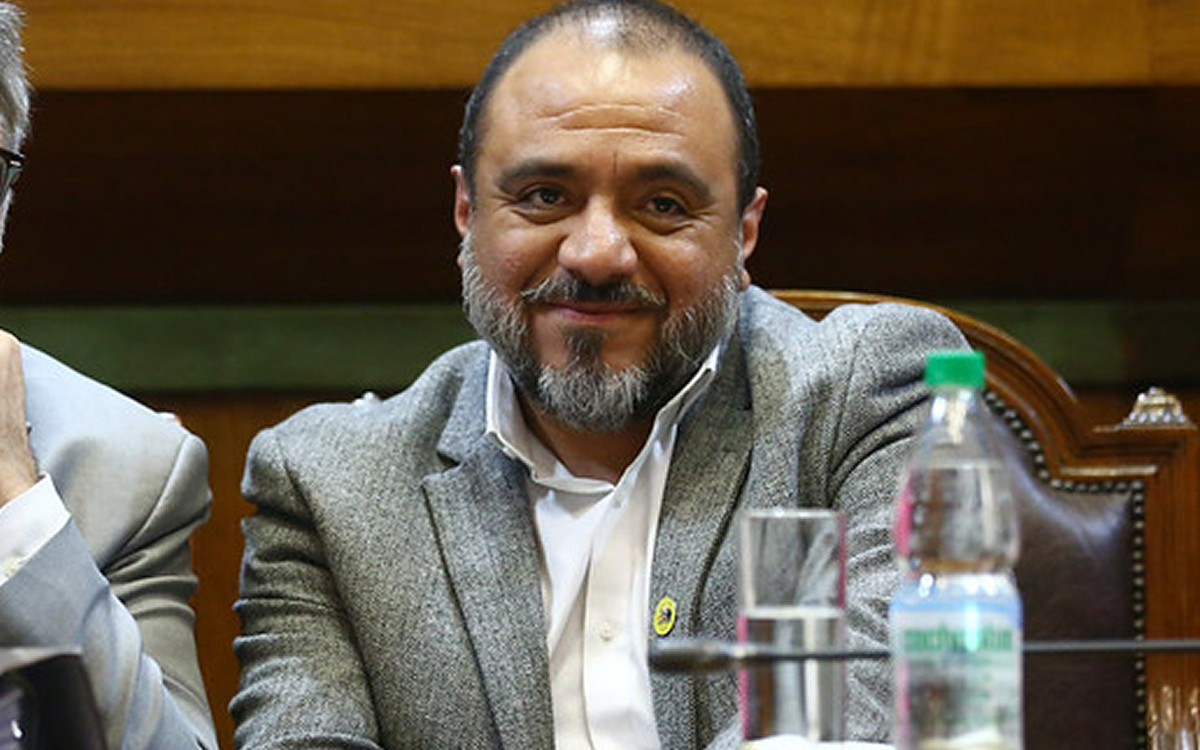
The Chilean Congress on Wednesday rejected a complaint against openly gay Education Minister Marco Antonio Ávila that a group of conservative lawmakers filed against him.
President Gabriel Boric himself denounced and repudiated the series of homophobic statements against his Cabinet member.
The traditional right and the extreme right voted as a block in favor of dismissing Ávila. They accused him of infringing upon parents’ rights to educate their children and failing to fulfill his responsibilities to address an alleged “deep educational crisis.”
Lawmakers voted 78-69 to reject the complaint that 10 conservative lawmakers filed.
Four of the complaint’s seven chapters contained references to the Education Ministry’s gender or sexual education policies they said Ávila implemented. These policies, however, have been in place since leftist President Michelle Bachelet and right-wing President Sebastián Piñera were in office.
“I have never broken the laws or (violated) the constitution,” said Ávila after the vote. “I am a firm defender of democracy, of the constitution and of the tools it contains to control and improve the actions of authorities. But I am also certain that it is through constructive dialogue that the vast majority of those of us who participate in politics can move forward to improve the lives of hundreds and thousands of students, children and young people.”
Boric on Twitter reiterated his rejection of the accusation against Ávila and once again emphasized those who brought it showed “homophobic character.”
“The constitutional complaint against the Education Minister and professor Marco Ávila is the fourth filed by the right wing in less than a year and a half of government has been rejected,” wrote Boric. “Its lack of legal support and homophobic character were on display. Justice and reason have triumphed.”
Congress seemed poised to approve the complaint until the lawmakers who introduced it invited Christian Legislative Observatory Director Marcela Aranda to testify against Ávila.
Aranda is the former spokesperson of the Freedom Bus, which Hazte Oir, an ultra-Catholic organization from Spain, brought to Chile in 2017.
She testified that Avila’s “LGTBIQ+ activism and his condition has exceeded the limit of what is private.” Congresswoman María Luisa Cordero accused Ávila of encouraging child perversion.
“I find it unusual, inadmissible, nauseating and disgusting that the Minister of Education … is concerned about the incitement to sexuality and whether they have an active and reactive clitoris … I would have already asked for the famous Ávila to be imprisoned for inciting precocity and child sexual perversion if he were not Education Minister,” said the congresswoman.
She added Ávila “is a fatty liver patient with high bilirubin levels.”
“This attacks the neurons and causes mental incompetence,” said Cordero. “He is a person about whom nobody worries because he should be evaluated physically and biologically.”
Ávila (and his ministry), according to Cordero “has a perverse preoccupation with the sexual anticipation and development of schoolchildren.”
“They are a bunch of perverts who work from the crotch.”
Her statements, which El Mercurio, Chile’s leading conservative newspaper, and LGBTQ and intersex organizations documented, made lawmakers from Evópoli, a center-right party, and from the center-left Christian Democracy Party, which is not part of the government, reevaluate whether to vote in favor of dismissing Ávila. The coalitions votes were key.
The Movement for Homosexual Integration and Liberation condemned the anti-gay statements.
“The statements of these people, especially Cordero, are clearly a response to the minister’s sexual orientation and the policies of the Education Ministry to promote LGBTIQ+ human rights,” said Movilh. “These are homophobic speeches that go as far as the irrationality of insulting an authority with child abuse just for being gay.”
Fundación Iguales Executive Director María José Cumplido told the Washington Blade “it is very good news that the constitutional complaint has been rejected because it had no legal arguments and instead was a ruse to personally attack the minister for his sexual orientation. Therefore, from Fundación Iguales’ persepctive we celebrate that there has been a rejection to those homophobic attacks that personally attacked Minister Ávila.”
Emilia Schneider, a pro-government congresswoman, pointed out to the Blade that “the constitutional accusation against Minister Antonio Ávila was rejected for being an accusation without legal grounds, based on lies and homophobia.”
Schneider is the first transgender woman to win a seat in the Chilean Congress.
“It is a very good sign that the National Congress in its majority is not supportive of this civilizational setback, I regret that we have wasted time in this show of the right and ultra-right,” Schneider emphasized.
Finally, Ávila said that “my call today, after this accusation, is to improve (the treatment of people) in the political world, to respect each other beyond differences, not to turn the fair differences between one and the other into personal attacks.”






Federal Government
Gay Venezuelan man ‘forcibly disappeared’ to El Salvador files claim against White House
Andry Hernández Romero had asked for asylum in US

A gay Venezuelan asylum seeker who the U.S. “forcibly disappeared” to El Salvador has filed a claim against the federal government.
Immigrant Defenders Law Center, who represents Andry Hernández Romero, on Friday announced their client and five other Venezuelans who the Trump-Vance administration “forcibly removed” to El Salvador under the Alien Enemies Act of 1798, filed “administrative claims” under the Federal Tort Claims Act.
The White House on Feb. 20, 2025, designated Tren de Aragua, a Venezuelan gang, as an “international terrorist organization.”
President Donald Trump less than a month later invoked the Alien Enemies Act of 1798, which the Associated Press notes allows the U.S. to deport “noncitizens without any legal recourse.” The White House then “forcibly removed” Hernández, who had been pursuing his asylum case in the U.S., and more than 250 other Venezuelans to El Salvador.
Immigrant Defenders Law Center disputed claims that Hernández is a Tren de Aragua member.
Hernández was held at El Salvador’s Terrorism Confinement Center, a maximum-security prison known by the Spanish acronym CECOT, until his release on July 18, 2025. Hernández, who is back in Venezuela, claims he suffered physical and sexual abuse while at CECOT.
“As a Venezuelan citizen with no criminal record anywhere in the world, I would like to tell not only the government of the United States but governments everywhere that no human being is illegal,” said Hernández in the Immigrant Defenders Law Center press release. “The practice of judging whole communities for the wrongdoing of a single individual must end. Governments should use their power to help every person in the nation become more aware and informed, to strengthen our cultures and build a stronger generation with principles and values — one that multiplies the positive instead of destroying unfulfilled dreams and opportunities.”
Immigrant Defenders Law Center filed claims on behalf of Hernández and the five other Venezuelans less than three months after American forces seized then-Venezuelan President Nicolás Maduro and his wife, Cilia Flores, at their home in Caracas, the Venezuelan capital.
Maduro and Flores have pleaded not guilty to federal drug charges. Delcy Rodríguez, who was Maduro’s vice president, is Venezuela’s acting president.
‘Due process and accountability cannot be optional’
Immigrant Defenders Law Center on Friday also made the following demands:
- The Trump administration must officially release the names of all people the United States sent to CECOT to ensure that everyone has been or will be released.
- The federal government must clear the names of the 252 men wrongfully labeled as criminal gang members of Tren de Aragua.
- DHS (Department of Homeland Security) must end the practice of outsourcing torture through third‑country removals, restore humanitarian parole, and rebuild a functioning, humane asylum system.
- DHS must reinstate Temporary Protected Status for all individuals who cannot safely return to their home countries, halt mass deportations and unlawful raids and arrests, and guarantee due process for everyone navigating the immigration system.
- Congress must pass the Neighbors Not Enemies Act, which would repeal the Alien Enemies Act.
“In all my years as an immigration attorney, I have never seen a client simply vanish in the middle of their case with no explanation,” said Immigration Defenders Legal Fund Legal Services Director Melissa Shepard. “In court, the government couldn’t even explain where he was — he had been disappeared.”
“When the government detains and transfers people in secrecy, without transparency or access to the courts, it tears at the basic protections a democracy is supposed to guarantee,” added Shepard. “What this experience makes painfully clear is that due process and accountability cannot be optional. They are the only safeguards standing between people and the kind of lawlessness our clients suffered. We must end third country transfers, restore the asylum system, and humanitarian parole, and reinstate temporary protective status so this nightmare never happens again.”
Ecuador
Adolescentes trans en Ecuador podrán cambiar datos en su cédula, pero con condicionamientos
Pueden modificar el campo de género en su documento de identidad con requisitos

Por VICTOR H. CARREÑO | En una sentencia del 5 de febrero de 2026, la Corte Constitucional declaró inconstitucional el requisito legal de mayoría de edad para modificar el campo de sexo o género en la cédula de identidad y fija lineamientos para que adolescentes trans puedan cambiar estos datos.
El máximo organismo de control e interpretación constitucional incorpora dos requerimientos: que la persona adolescente se presente al procedimiento administrativo con sus padres y que informes psicosociales acrediten un grado de madurez.
El fallo resuelve una consulta de constitucionalidad de una unidad judicial que lleva una acción de protección contra el Registro Civil presentada por la familia de un adolescente trans que solicitó, en junio de 2023, modificar el campo de género en la cédula.
La institución se negó porque la Ley Orgánica de Gestión de la Identidad y Datos Civiles establece que la rectificación de sexo o género es un procedimiento para personas mayores de 18 años.
El adolescente, cuya identidad se protege en la sentencia, cuenta con el apoyo de sus padres en su transición, que inició en 2020. En una audiencia, su madre expuso que si bien en el ámbito familiar y en el sistema educativo se respeta la identidad de su hijo, fuera de estos hay situaciones, como en consultas médicas en el Seguro Social, en que debe presentar la cédula de él y quienes la reciben preguntan si es el documento equivocado.
En el desarrollo de la sentencia, la Corte expone por qué el requisito de tener mayoría de edad para acceder a la modificación de datos en la cédula es inconstitucional.
Entre varios motivos, explica que restringe los derechos al libre desarrollo de la personalidad e identidad, que la edad no puede exigirse como “criterio determinante y único” para determinar la madurez de un adolescente, y que la medida puede generar impactos negativos en el bienestar psicológico y emocional.
Por ello, indica que existen mecanismos alternativos como la evaluación individualizada, el acompañamiento técnico y la consideración del contexto familiar.
En ese sentido, la Corte dispone al Registro Civil que debe proceder al cambio de los datos de adolescentes trans cuando acudan acompañades de sus representantes legales y con el respaldo de informes psicosociales.
Estos informes, agrega la sentencia, deben ser de profesionales acreditados o de órganos técnicos públicos competentes que sean considerados por el Registro Civil.
El fallo tiene efectos para este caso y otros similares. A diferencia de otras sentencias, la Corte no ordena una reforma a la legislación.
La organización Silueta X, que difundió el caso en un comunicado el 11 de marzo, calificó el fallo como histórico y explicó que este crea jurisprudencia de cumplimiento obligatorio.
🏳️⚧️🌈Un chico trans de 15 años le dijo al Estado ecuatoriano “yo sé quién soy”. Y la Corte Constitucional le dio la razón. 🏛️✊
Este fallo es nuestro. Es tuyo.
🔗 Lee la comunicado completa en nuestra bio.#DerechosTransEcuador #SiluetaX #CorteConstitucional #AdolescentesTrans pic.twitter.com/aXE4FU9VeS
— Asociación SILUETA 'X' (@SiluetaX) March 11, 2026
Sin embargo, otras organizaciones cuestionan los requisitos. Fundación Pakta indica que si bien la sentencia derriba la barrera etaria de la mayoría de edad, la inclusión de informes psicosociales contradice la tendencia global y regional hacia la despatologización.
Pakta menciona, por ejemplo, la Opinión Consultiva 24/17 de la Corte Interamericana de Derechos Humanos, instrumento que reconoce la identidad autopercebida de las personas y los derechos patrimoniales de parejas del mismo sexo.
El documento, recuerda Pakta en un comunicado, establece que para el reconocimiento de la identidad de género no se debe exigir certificados médicos ni psicológicos. Además, que la Organización Mundial de la Salud reconoció que la identidad trans no es una patología psiquiátrica.
Mientras que la activista Nua Fuentes, de Proyecto Transgénero, considera que los requisitos impuestos por la Corte pueden ser problemáticos. Menciona que frente al desconocimiento y prejuicios, profesionales de salud patologizan la identidad trans.
La Sentencia 4-24-CN/26 sobre la inconstitucionalidad de negar a adolescentes trans cambio de su sexo o género en la cédula es un acto que entreabre la puerta para los derechos, pero también sostiene algunas barreras y es problemático para adolescentes trans #Ecuador
Abro hilo🧵 pic.twitter.com/aKBUlmnU1A— Nua Elizabeth Fuentes Aguirre (@NuaEliz) March 11, 2026
Además, señala que puede haber casos de que la familia y psicólogos expresen rechazo a la identidad trans y limiten los derechos de adolescentes trans. O también menciona casos de abandono de niñes y adolescentes trans y pregunta cómo reconocer su identidad si no cumplen con el requisito de acudir sin representantes legales.
Los condicionamientos para el cambio del campo de sexo o género en la cédula para adolescentes trans marcan también una diferencia con el procedimiento en personas trans de más de 18 años, pues estas —desde las reformas vigentes en 2024— no deben presentar requisitos. Solo su declaración expresa de ser una persona trans que desea que los datos de su cédula estén conformes a su identidad de género.
La madurez de niñeces y adolescencias ha sido un tema abordado en convenciones o instrumentos internacionales. La Convención sobre los Derechos del Niño de la ONU del 2009 es contundente al reconocerles como seres autónomos y capaces de formar sus propias opiniones a través de la experiencia, el entorno, las expectativas sociales y culturales.
Esta convención es mencionada en una sentencia de la Corte Constitucional en que reconoció la identidad de infancias y adolescencias trans en el sistema educativo.
En las Observaciones Generales del Comité de los Derechos del Niño, documentos de interpretación para los alcances de la mencionada Convención, se explica que la madurez es “la capacidad de comprender y evaluar las consecuencias de un asunto determinado”, lo cual debe considerarse en relación con su capacidad individual, contextos, entornos, experiencias de vida y familiar, desarrollo psicológico y no únicamente con su edad biológica.
Además, que la edad cronológica no determina la evolución de las capacidades de las niñeces y adolescencias porque estas crecen a lo largo del tiempo.
Chile
Far-right Chilean President José Antonio Kast takes office
Former congressman opposes LGBTQ rights

Chilean President José Antonio Kast took office on Wednesday.
Kast — the far-right leader of the Republican Party who was a member of the country’s House of Deputies from 2002-2018 — defeated Jeannette Jara — a member of the Communist Party of Chile who was the former labor and social welfare minister in former President Gabriel Boric’s government — in last year’s presidential election.
The Chilean constitution prevented Boric from running for a second consecutive term.
The Washington Blade has previously reported Kast has expressed his opposition to gender-specific policies, comprehensive sex education, and reforms to Chile’s anti-discrimination laws. Kast has also publicly opposed the country’s marriage equality law that took effect on March 10, 2022, the day before Boric took office.
The Movement for Homosexual Integration and Liberation, a Chilean LGBTQ and intersex rights group known by the acronym Movilh, declared a “state of alert” after Kast’s election, “given this leader’s (Kast’s) public and political trajectory, characterized for decades by systematic opposition to laws and policies aimed at equality and nondiscrimination of LGBTIQ+ individuals.”
Argentine President Javier Milei, Deputy U.S. Secretary of State Christopher Landau, and Venezuelan opposition leader María Corina Machado are among those who attended Kast’s inauguration that took place in the Chilean Congress in Valparaíso.

Menaka Guruswamy celebrated as India’s first openly LGBTQ MP

Trans-led HIV clinic in Portsmouth struggles amid funding cuts

D.C. goes gaga for Gaga

Gay priest credited with boosting church support for LGBTQ Catholics

HRC to host National Rainbow Seder

‘How We Survived’ panel set for March 25

Calendar: March 21-26

‘Inherit the Wind’ isn’t about science vs. religion, but the right to think

Small is beautiful: subcompact SUVs